
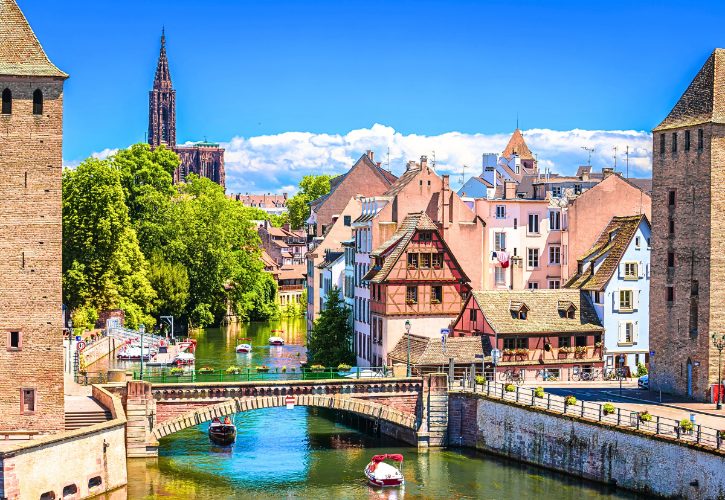
Picture a place where narrow canals wind past half-timbered houses painted in soft pinks, ochres, and creamy whites.
Imagine cobblestone streets lined with flower boxes, and a rose-colored cathedral towering over the rooftops like something from a medieval painting.
This is Strasbourg, a city in northeastern France that feels like stepping inside a storybook.
It has stunning waterways, breathtaking architecture, and one of Europe’s most impressive Gothic cathedrals. It is also easier to explore than you might expect.
This guide covers where to go, what to eat, how to get around, and when to visit. Here is why Strasbourg belongs on your France travel list. 😊
1. Why Strasbourg Feels Like a Real-Life Fairytale
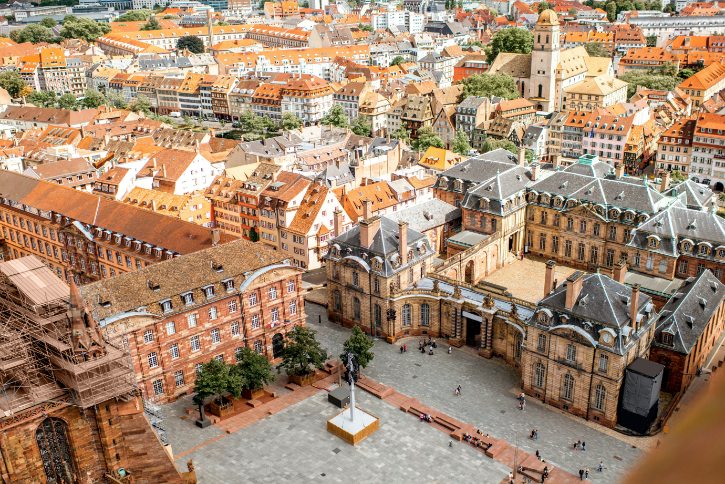
The moment you arrive in Strasbourg, you will notice something different about this city.
The Ill River wraps around the historic center and splits into smaller channels, creating a landscape of water, stone, and reflections.
Wooden bridges cross the canals. Flowers hang from balcony. And colorful half-timbered houses, some over 400 years old, line the narrow streets.
These traditional houses, called colombages, feature exposed wooden frameworks filled with plaster or brick.
They come in shades of deep ochre, soft rose, and pristine white. Many have steeply pitched roofs and intricate carvings that tell stories from centuries past.
But Strasbourg is not just pretty. Its unique atmosphere comes from history.
The city has changed hands between France and Germany five times over the centuries.
This bicultural heritage shaped everything, from the architecture to the food to the local Alsatian dialect.
You can see it in the bilingual street signs, taste it in the cuisine, and feel it in the way Strasbourg balances French refinement with Germanic warmth.
This is not a manufactured tourist experience. The fairytale feeling here is real and genuine, built layer by layer over hundreds of years of French and German history.
2. Explore the Historic Grande Île
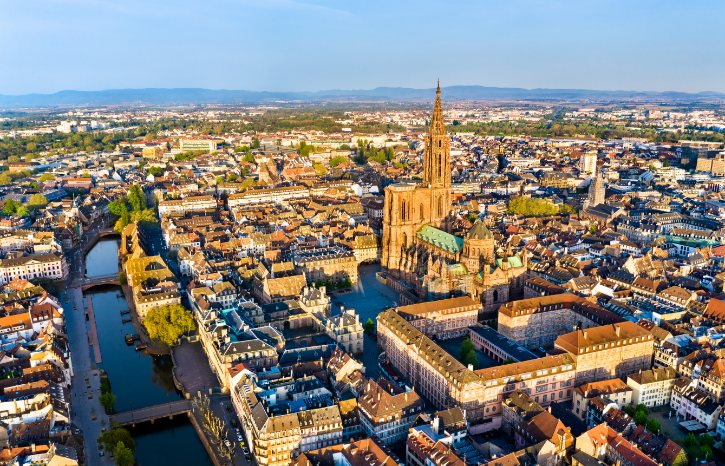
The Grande Île, or “Large Island”, is the heart of Strasbourg.
Enclosed by the Ill River and a canal, this island became the first entire city center to be listed as a UNESCO World Heritage Site in 1988.
UNESCO called it an “exceptional urban ensemble” that captures multiple periods of European history in one walkable area.
What makes Grande Île special is how well it has preserved its medieval layout.
The footprint of the streets today is essentially the same as it was in the 1300s. The old merchant houses, stone palaces, and narrow lanes have survived centuries of change.
With 21 bridges connecting the island to the rest of the city, Grande Île remains easy to explore on foot.
Most major attractions are within 15 minutes of each other. This is where you will find the cathedral, the prettiest squares, the best restaurants, and the most photogenic streets.
Think of it as the soul of Strasbourg. Walking here feels like stepping back in time, and this is the best place to start your visit.
3. Strasbourg Cathedral
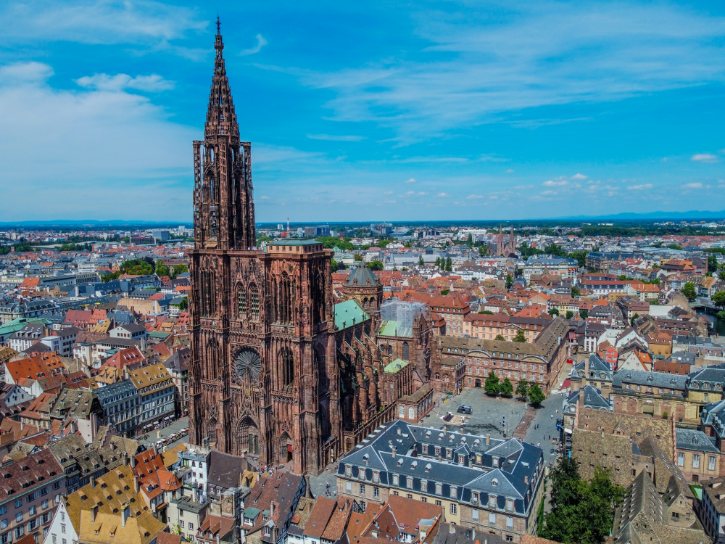
The Cathédrale Notre-Dame de Strasbourg is the city’s most famous landmark, and it will take your breath away.
Construction took over four centuries, starting in 1015 and finishing in 1439.
For 227 years, this cathedral held the title of the tallest building in the world. Even today, its single spire rises 142 meters into the sky and can be seen from miles away.
Built from pink sandstone quarried in the nearby Vosges Mountains, the cathedral has a unique glow.
In the morning light, it looks warm and rosy. At sunset, it turns deep ochre. On stormy days, it becomes dramatic and almost amber.
The facade is covered with thousands of intricate sculptures.
Writer Victor Hugo described it as “a skillful combination of monumental size and delicateness”. Many call the exterior a “picture book of the Middle Ages”.
The Astronomical Clock
Inside the cathedral, do not miss the Renaissance Astronomical Clock.
This mechanical masterpiece dates to 1842 and puts on a theatrical show every day at 12:30 pm.
Figures representing the ages of life parade past Death, the twelve apostles process before Christ, and a rooster crows to mark the moment.
The Cathedral Tower Views
For the best view of Strasbourg, climb the 330 spiral steps to the cathedral platform.
At 66 meters up, you can see across the city’s timbered rooftops, the canals of La Petite France, and all the way to the Black Forest in Germany and the Vosges Mountains in France.
Trust me, the climb is worth it.
4. La Petite France
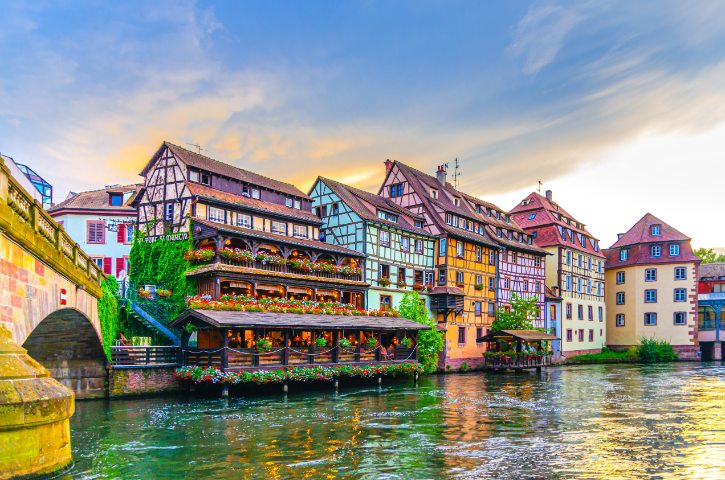
If you visit only one neighborhood in Strasbourg, make it La Petite France.
This is the most picturesque part of the city, located where the Ill River splits into four channels at the southwestern tip of Grande Île.
The canals here are lined with 16th-century half-timbered houses that look like they belong in a painting.
Flower-filled balconies hang over the water. Narrow bridges connect the streets. And the reflections of colorful buildings shimmer on the still surface of the canals.
In the Middle Ages, this area was home to millers, fishermen, and tanners. The winding waterways that make it so beautiful today were originally used for these industries.
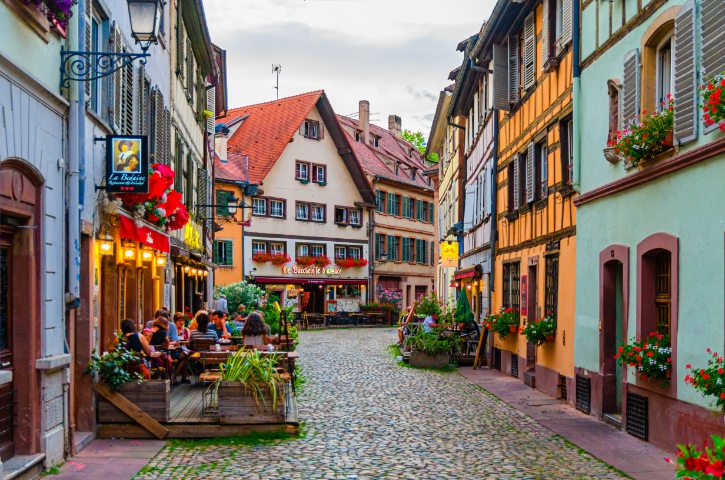
Today, the smells of bakeries have replaced the tanneries, and the area is pedestrianized, perfect for slow walks and endless photos.
Watch for the Pont du Faisan, a unique swiveling bridge that rotates to let tour boats pass.
Come in the morning for softer light, or in the evening when the buildings glow warm against the water.
La Petite France captures everything people love about Strasbourg in one small, unforgettable area.
5. Best Things to Do in Strasbourg
Strasbourg offers a wonderful mix of medieval history, grand architecture, and modern European culture. Here are the key attractions worth your time.
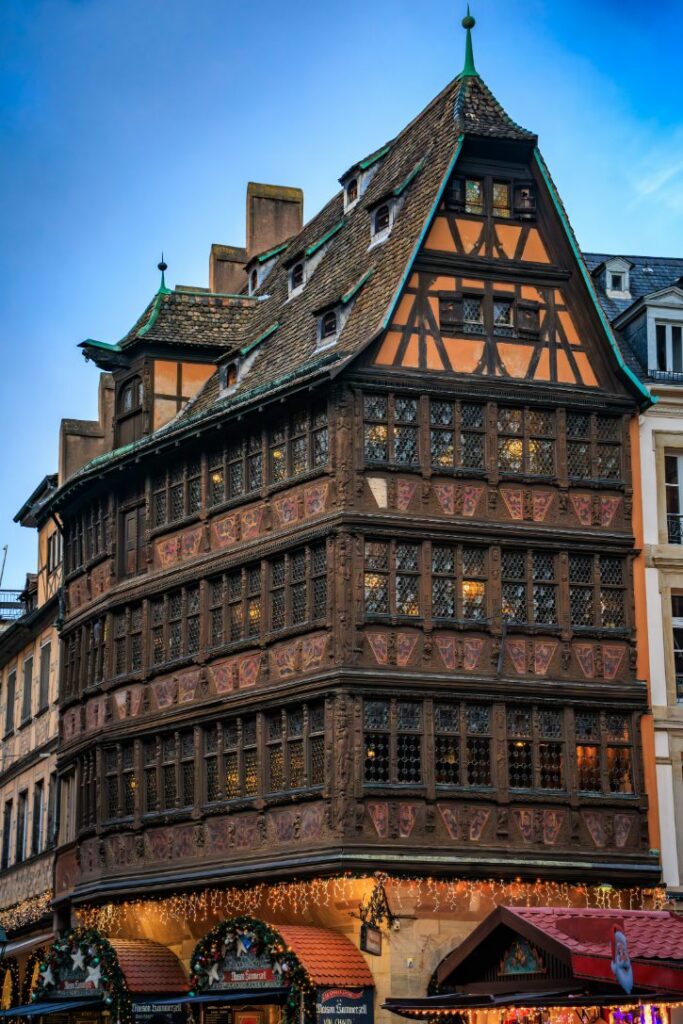
Maison Kammerzell: The most beautiful half-timbered house in Strasbourg, located next to the cathedral. The ornate upper floors date to 1589 and feature stunning woodcarvings of biblical figures and Greek heroes. Today, it serves traditional Alsatian food.
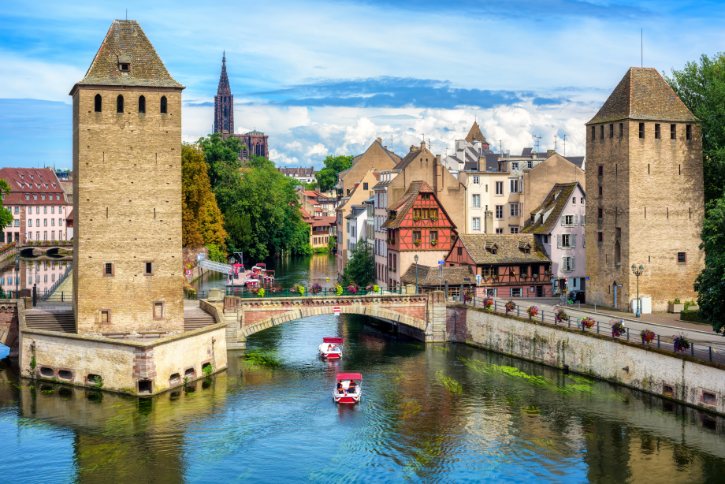
Ponts Couverts: Three bridges and four massive towers that once formed part of the city’s 14th-century defenses. A great spot for photos of the canals.
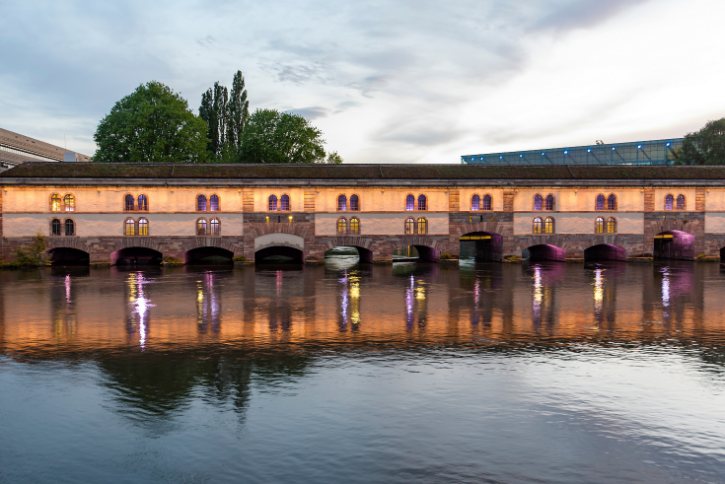
Barrage Vauban: A 17th-century fortification with a rooftop terrace offering the best panoramic view of La Petite France, the canals, and the cathedral spire.
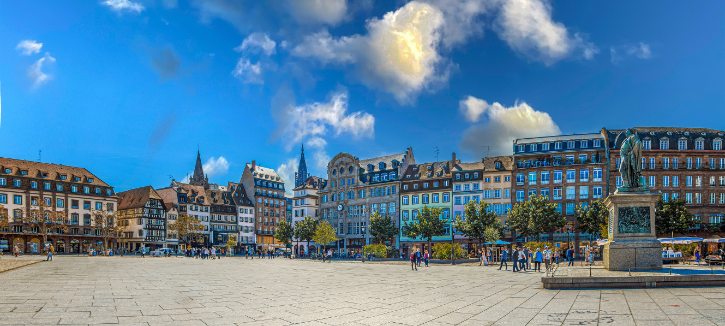
Place Kléber: The main square and commercial heart of Strasbourg. Hosts the famous Christmas tree during the winter market.
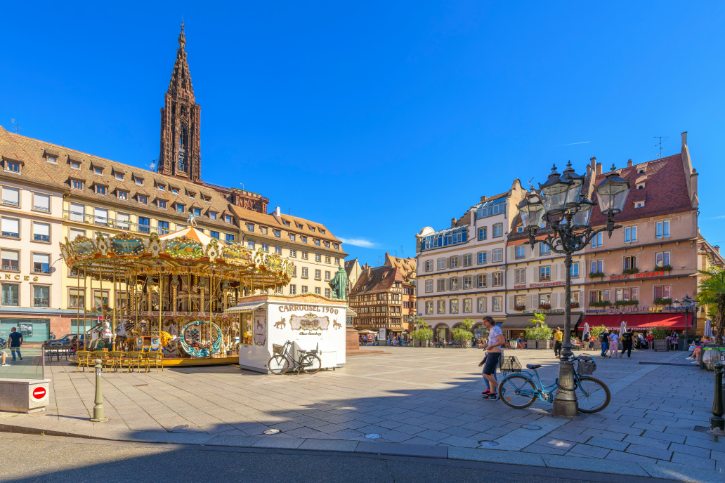
Place Gutenberg: A charming square celebrating Johannes Gutenberg, who developed his printing press while living in Strasbourg. Perfect for a coffee break.
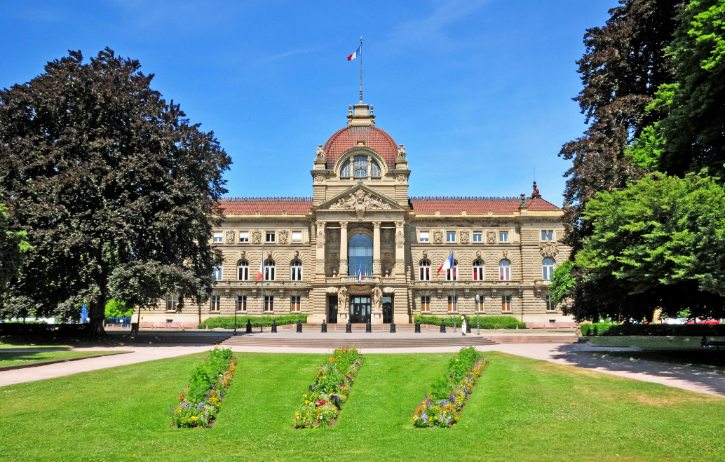
Palais du Rhin: A grand neo-Renaissance palace built for Kaiser Wilhelm I during the Prussian era. Now houses the Central Commission for Navigation on the Rhine.
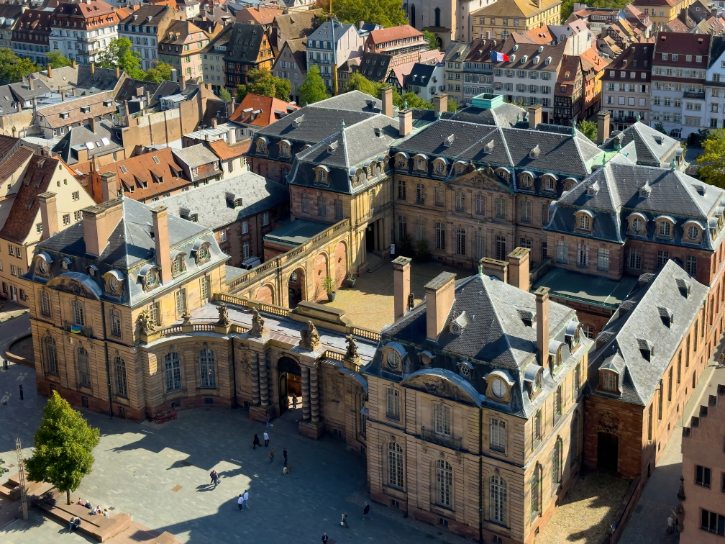
Palais Rohan: A stunning French Baroque palace built in the 1730s, containing three museums: Archaeological, Decorative Arts, and Fine Arts. Once hosted royalty including Louis XV.
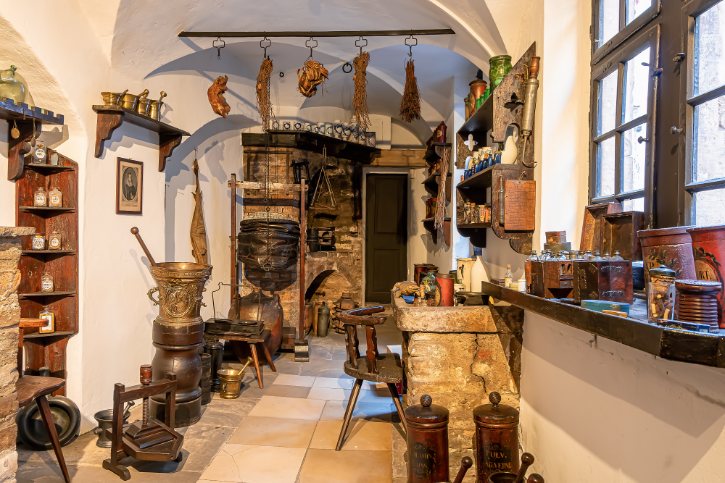
Alsatian Museum: A wonderful collection of traditional objects showing rural life in Alsace over the centuries. Great for understanding the region’s culture.
Strasbourg Museum of Modern and Contemporary Art: An impressive collection of works from 1870 to the present in a striking glass-and-stone building.
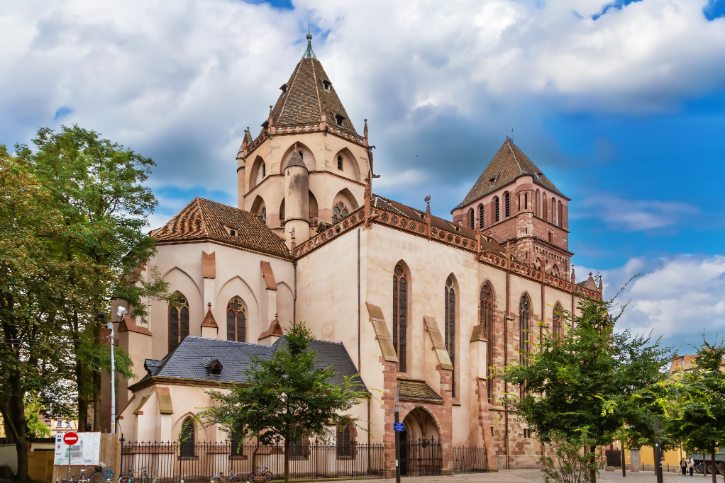
St. Thomas Church: Alsatian Gothic architecture and a key site for the Protestant Reformation. Famous for its Silbermann organ.
European Parliament: The Louise Weiss building represents Strasbourg’s role in modern European democracy. Tours are available.
Parc de l’Orangerie: The city’s largest green space with beautiful gardens, a lake, and a stork reintroduction center. The stork is the beloved symbol of Alsace.
6. The Unique Culture and Food of Strasbourg

Strasbourg has a culture unlike anywhere else in France.
The Alsatian identity blends French elegance with Germanic heartiness.
You hear it in the local dialect, see it in the architecture, and taste it in the food.
The traditional winstub is the best place to experience this. These cozy taverns serve hearty dishes paired with excellent local wines.
Local Dishes to Try
- Choucroute Garnie: The signature dish of Alsace. Fermented cabbage served with sausages, smoked bacon, and boiled potatoes. Rich, warming, and deeply satisfying.
- Flammekueche (Tarte Flambée): Thin-crust flatbread with crème fraîche, onions, and lardons. Crispy and perfect with local wine.
- Baeckeoffe: A hearty slow-cooked stew with beef, lamb, and pork marinated in white wine, layered with potatoes.
- Munster Cheese: Local soft cheese with a strong aroma, often served with cumin seeds.
- Kougelhopf: A fluted, crown-shaped brioche with raisins and almonds. Perfect for breakfast or an afternoon treat.
The white wines here are world-class. Look for Riesling, Gewurztraminer, and Pinot Gris. Their acidity pairs beautifully with the rich local cuisine.
Eating and drinking in Strasbourg is not just about food. It is about experiencing the region’s unique way of life.
7. Best Time to Visit Strasbourg
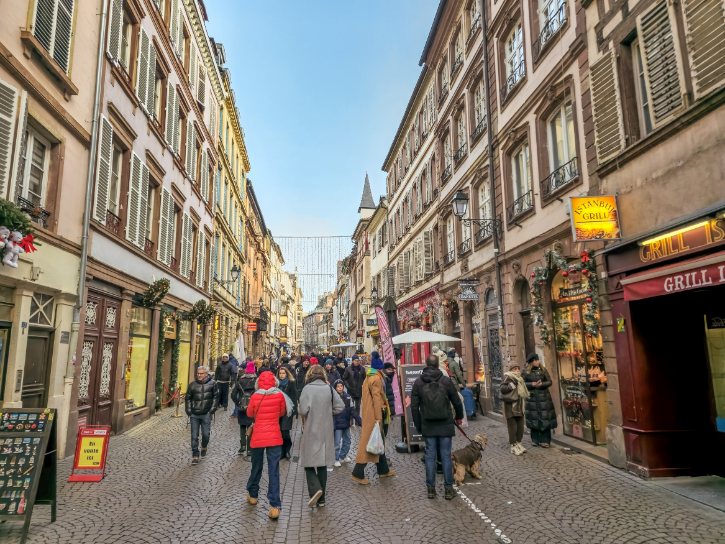
Each season offers something different in Strasbourg.
- Spring (April to June): Pleasant weather, blooming flowers, and great conditions for cycling and outdoor dining.
- Summer (July to August): Warm evenings, light shows at the cathedral, and terrace dining along the canals.
- Autumn (September to November): The grape harvest brings activity to the nearby Alsace wine route. Cooler temperatures make the warm winstubs even more inviting.
- Winter (Late November to December): The famous Christkindelsmärik transforms the city into something magical. Dating back to 1570, this Christmas market features over 300 chalets, a giant Christmas tree on Place Kléber, millions of lights, and the scent of Christmas cookies and mulled wine. A true bucket-list experience for winter travelers.
8. How to Get Around the City
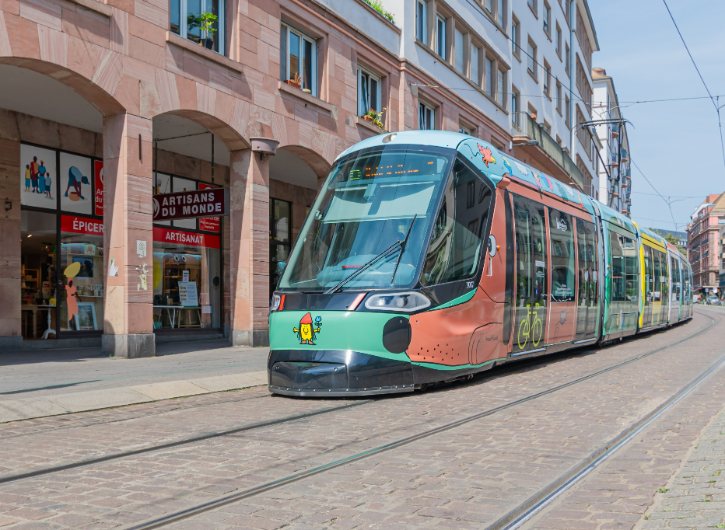
Getting around Strasbourg is easy, and you have several good options.
- Walking: The Grande Île is compact and pedestrian-friendly. Most attractions are within 15 minutes of each other. This is the best way to explore the historic center.
- Tram: Strasbourg has France’s best tramway network with six modern lines connecting the historic center to the suburbs and even across to Germany.
- Bus: Useful for neighborhoods beyond the historic center.
- Cycling: France’s top cycling city with hundreds of kilometers of dedicated bike lanes. The Vélhop bike-sharing system makes renting a bike easy and affordable.
For most visitors, walking the Grande Île and using the tram for the European district works perfectly. The city is very easy to navigate, even if this is your first time here.
9. How Long to Stay
Here is a realistic breakdown.
- 1 Day: Enough for the highlights. Visit the cathedral and its astronomical clock, walk through La Petite France, and consider a boat tour.
- 2 Days: Ideal for a first visit. Add the Neustadt imperial architecture, Palais Rohan museums, and a relaxing afternoon in Parc de l’Orangerie.
- 3 Days or More: Strasbourg makes an excellent regional base. Take day trips to Colmar, Haut-Koenigsbourg Castle, or the Alsace Wine Route villages. The longer you stay, the more you will discover.
10. Map of Strasbourg
11. Why Strasbourg Should Be on Your France Travel List
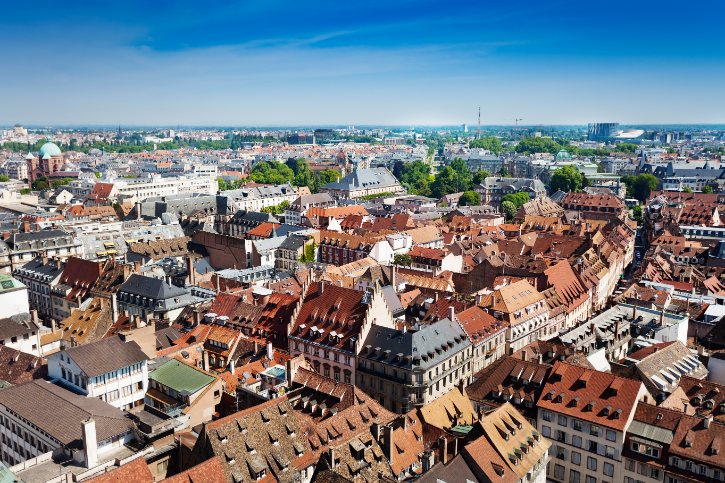
Strasbourg is not like other French cities.
It is a place where medieval canals meet modern European democracy. Where French refinement blends with Germanic warmth. Where a rose-colored cathedral rises over half-timbered houses, and every street feels like a storybook.
Whether you wander the canals of La Petite France, climb the cathedral for panoramic views, or warm up in a cozy winstub with choucroute and a glass of Riesling, Strasbourg will leave an impression.
Few cities in Europe combine history, beauty, and culture quite like this. Strasbourg is one of those rare places that looks even better in person than in photos.
This is one of Europe’s most special treasures. And it is waiting for you to discover it.