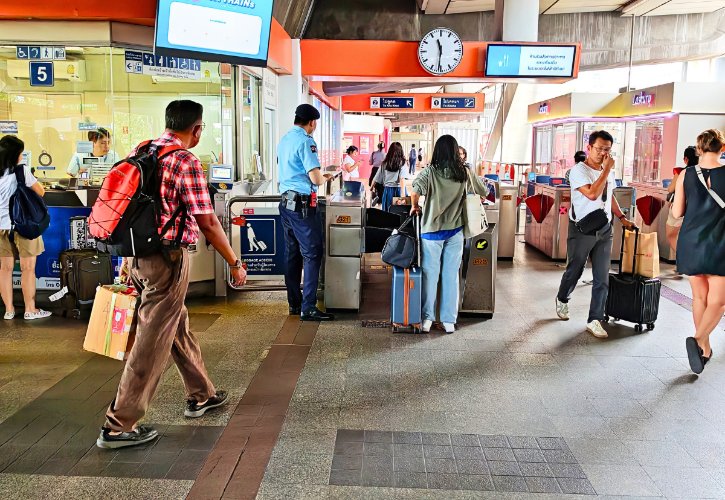
Bangkok’s train system looks simple on a map, but once you’re on the ground, things get confusing fast.
Different ticket gates, separate operators, and “interchanges” that aren’t quite what they seem catch travelers off guard every day.
These small mistakes can cost you real time, extra fares, or that sweaty “why is this so hard?” moment in the heat.
Here are the 10 train mistakes I see visitors make, and how to avoid each one.
1. Not Realizing MRT Is Moving Toward a Cashless System
a. What most people assume
If you’ve read older travel blogs or visited Bangkok a few years ago, you probably expect to grab a plastic token or top up a stored-value card at the MRT station.
That’s how things used to work. But times have changed.
b. What actually happens
The MRT (Blue, Purple, Yellow, and Pink lines) has been phasing out its old payment system throughout 2026.
Here’s the timeline you need to know:
- March 1, 2026: Refunds began for old MRT and MRT Plus card balances
- April 1, 2026: Top-ups for legacy cards stopped completely
- June 1, 2026: Old stored-value cards no longer work at the gates
- January 1, 2027: Physical tokens will be replaced by QR codes
If you show up expecting to buy a token the old way, you might find yourself stuck at a machine that doesn’t do what you need.
c. The smarter way
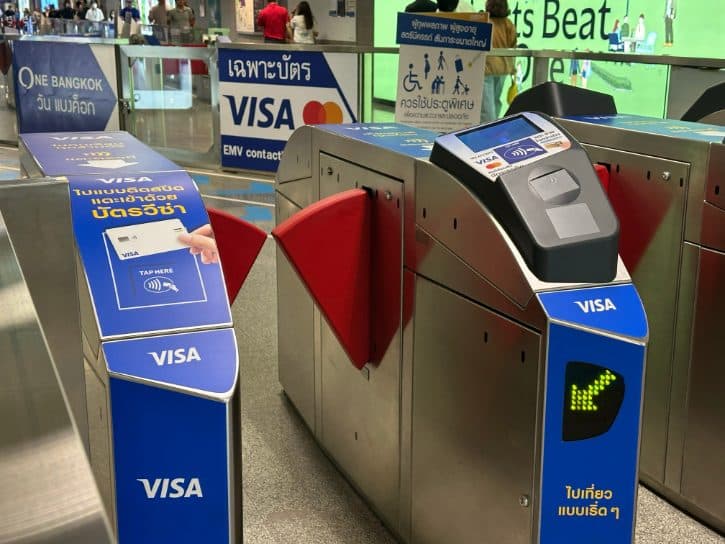
Skip the ticket machines. Just tap your contactless credit or debit card (Visa, Mastercard, or UnionPay) directly at the turnstile.
This “tap-and-go” method is now the standard. It’s faster, you won’t end up with leftover baht on a card you’ll never use again, and it keeps you moving.
2. Assuming You Can Tap One Card Everywhere
a. What most people assume
You’d think one transit card would cover all the trains in Bangkok, right? That’s how it works in most major cities.
But Bangkok isn’t most cities.
b. Why it’s more confusing than expected
Bangkok’s rail network isn’t one unified system. It’s actually run by several different companies:
- BTS Skytrain: Operated by BTSC
- MRT (Blue, Purple, Yellow, Pink): Operated by MRTA
- Airport Rail Link and Red Line: Operated by SRT
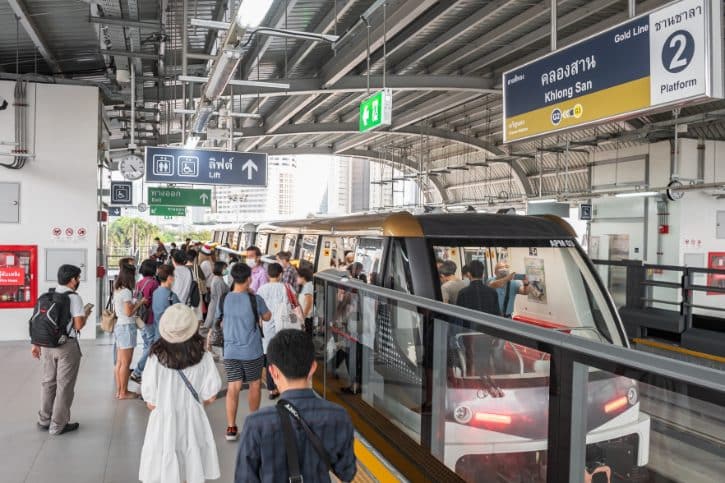
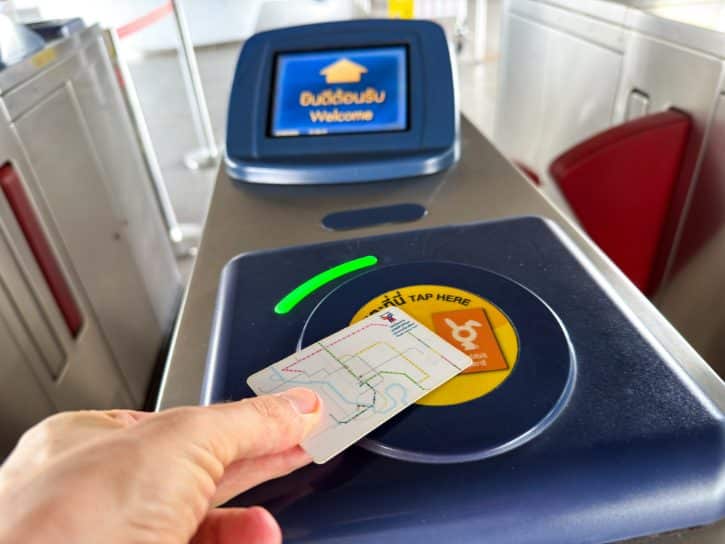
The Rabbit Card works on the BTS Skytrain (Green Lines), Gold Line, and the MRT Yellow and Pink lines. But it does not work on the MRT Blue and Purple lines.
Meanwhile, your contactless bank card works great on the MRT, but it won’t tap through BTS gates without registering through the Thai government’s Tang Rat app (which requires a Thai phone number).
c. The simple way to handle it
Use a dual-payment approach:
- For the BTS Skytrain: Grab a Rabbit Card or a One-Day Pass
- For the MRT lines: Tap your contactless credit or debit card
It’s not elegant, but it works. Trust me, trying to use the wrong card at a turnstile will send you back to the ticket counter.
3. Thinking All Train Systems Are Connected
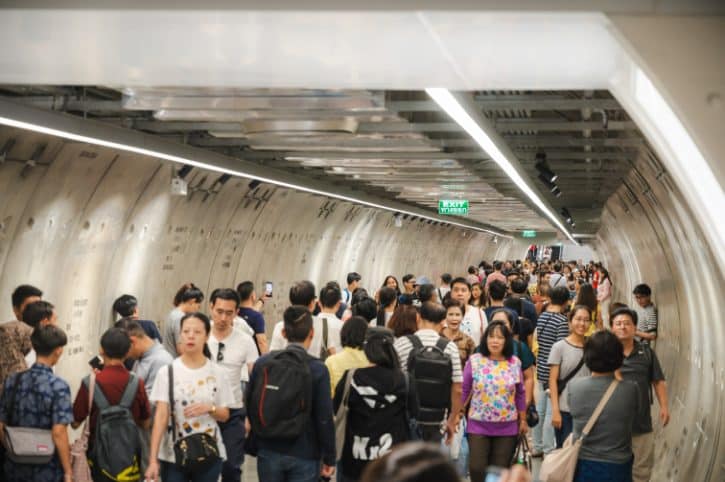
a. It looks connected… but here’s where it goes wrong
Online maps show clean “transfer” icons, so you assume it’s like a single metro network where you stay inside and switch platforms.
b. What actually happens when you try to transfer
When you transfer between different systems (like BTS to MRT), you have to:
- Exit through the fare gates of the first system
- Walk to the entrance of the second system
- Pay a completely new fare to continue
At the Asok-Sukhumvit interchange, for example, the BTS station is elevated above the street while the MRT is deep underground. You’ll navigate escalators, a skywalk, and two separate sets of fare gates. This can easily take 5 to 10 minutes.
c. The smarter way to plan your route
Minimize transfers. Sometimes a slightly longer ride on one line beats a “shortcut” that involves switching systems.
Use apps like Google Maps or ViaBus to get realistic travel times. They factor in those transfer walks so you won’t be caught off guard.
4. Getting on the “Wrong” Airport Rail Link
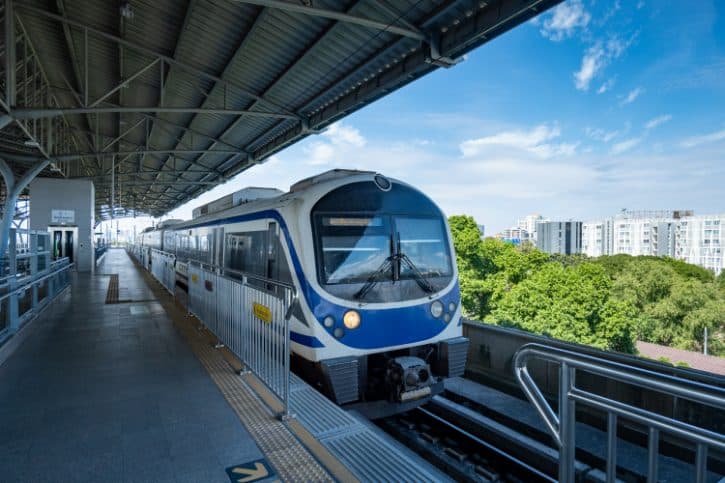
a. Where travelers get mixed up
Two airports, two “airport train” stories, and tourists blur them together.
The Airport Rail Link serves Suvarnabhumi Airport. It runs from Suvarnabhumi through stations like Makkasan and ends at Phaya Thai (where you can connect to BTS).
But Don Mueang International Airport appears on the suburban Red Line timetable. That’s a completely different system.
b. Why this mistake can throw off your whole route
If you plan for one airport but navigate as if you’re at the other, your entire arrival plan breaks. Wrong station, wrong line, wrong transfer, and often the wrong end of the city for your hotel.
Also, the Airport Rail Link is not a 24/7 rescue option. It runs 05:30 to midnight. A late arrival can leave you stranded if you assumed the airport train runs all night.
c. How to make sure you’re on the right train
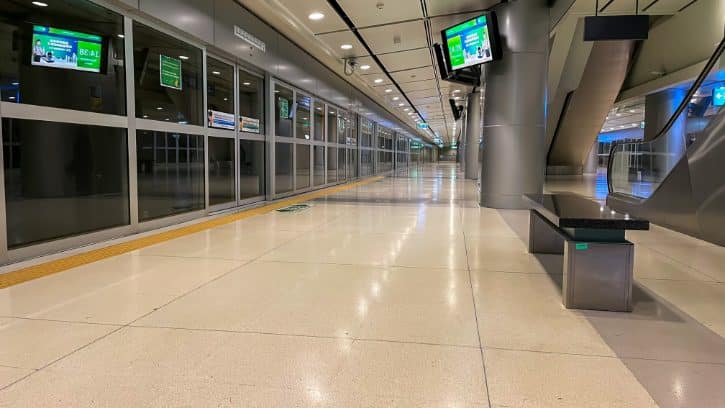
Start with one question: which airport are you actually using today?
If it’s Suvarnabhumi, follow the Airport Rail Link signs to the City Line (located at the airport’s B floor). City-bound trains point toward Phaya Thai. Airport-bound trains point toward Suvarnabhumi.
Simple as that.
5. Not Knowing Which Line Goes Where
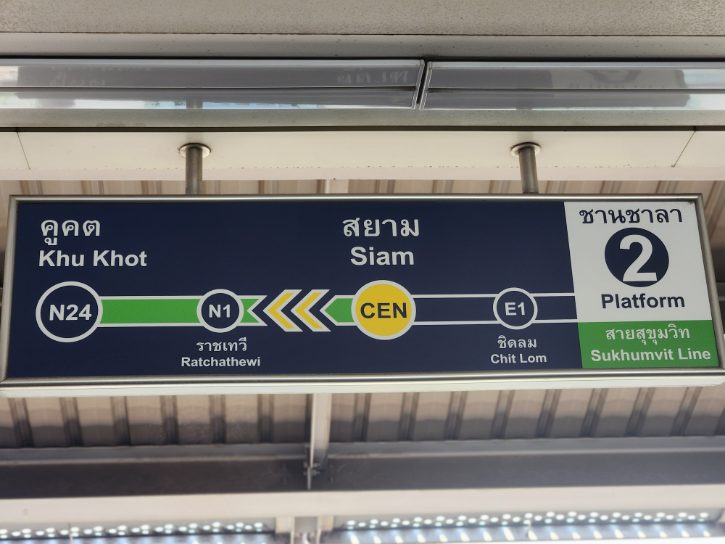
a. What catches most people off guard
Bangkok’s train signs don’t use cardinal directions like “North” or “South”. Instead, they show the name of the final station on that line.
So if you want to go to Chatuchak Market, you won’t see a sign saying “Chatuchak”. You’ll need to look for “Khu Khot”, because that’s the northern terminus of the Sukhumvit Line.
b. Why this leads to wrong-direction travel
It’s easy to guess wrong. And if you do, you’ll need to exit at the next station and cross to the opposite platform.
At some stations, this means paying a new fare because the platforms aren’t connected internally.
c. The easiest way to get it right
Check the large system maps near the ticket machines or on the platforms before boarding. Identify the final stop in the direction you need to go.
Here are the key terminals to remember:
- BTS Sukhumvit: Khu Khot (north) and Kheha (southeast)
- BTS Silom: National Stadium (west) and Bang Wa (southwest)
- MRT Blue Line: Tha Phra and Lak Song (it’s a loop, so pay attention)
6. Tapping your Credit Card at BTS Gates
a. What looks like it should work… but doesn’t
Since the MRT accepts contactless cards, you’d expect the BTS to work the same way.
It doesn’t.
b. The awkward moment at the gate
You tap your card, nothing happens, the gate stays closed, and you’re holding up the line. It’s not a great feeling.
As of late 2025, the BTS launched a 20-baht flat-fare contactless system. But here’s the catch: you need to register through the Tang Rat government app, which requires a Thai phone number and digital identity verification. That’s not realistic for most tourists.
c. What to use instead
For the BTS, stick with these options:
- Rabbit Card: Buy and top up at any station (passport required for registration)
- One-Day Pass: Around 150 THB, no registration needed
- Single-Trip Ticket: Cash or QR code at the machines
The BTS system is moving toward broader contactless support, but for now, it’s still more “closed” than the MRT.
7. Forgetting your Passport for a Rabbit Card
a. What many travelers don’t realize
You can’t just walk up and buy a Rabbit Card anonymously anymore.
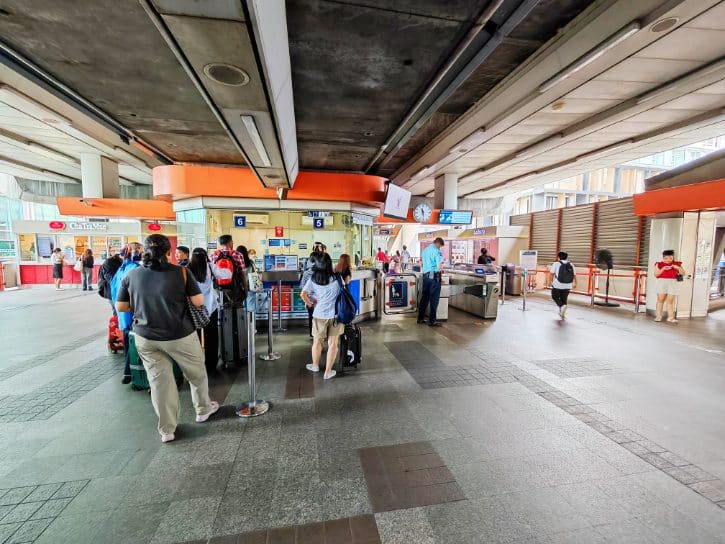
The BTS now requires identity verification for all Rabbit Card users. This means you need your passport, the original, to purchase a card.
b. Why this can slow you down at the station
If you show up without your passport, the staff can’t help you. Some stations might accept a photo of your passport, but officially, they need the real thing.
This realization usually hits at the worst time, like when you’re in a hurry to catch a train.
c. The better way to handle it
Bring your passport on day one. Once the card is registered, you usually won’t need the passport for future top-ups.
If you’d rather not carry your passport around, get a One-Day Pass instead. It’s the only smart-card option that doesn’t require registration.
8. Underestimating the “Interchange” Walk
a. It says “interchange”… but it’s not that simple
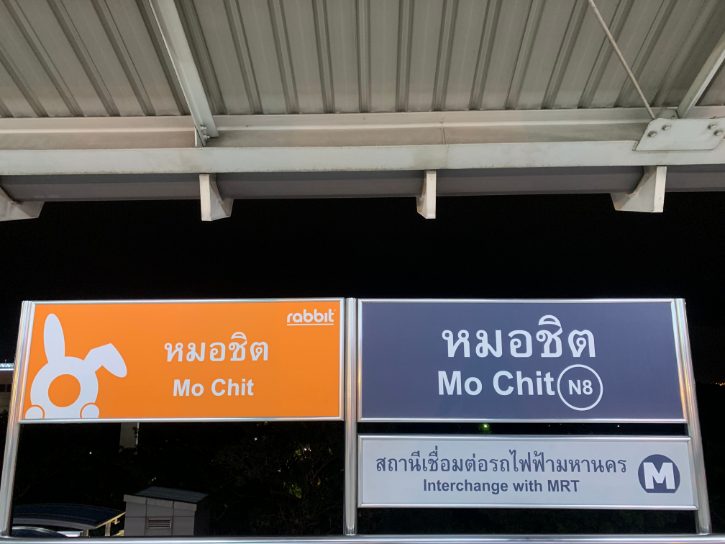
Because Bangkok’s rail lines were built by different companies at different times, the “connections” between them aren’t actually inside the same station.
You’ll often find yourself walking through skywalks, down escalators, and through separate fare gates.
b. Why transfers take longer than you expect
Here’s how long some common interchanges actually take:
- Asok (BTS) to Sukhumvit (MRT): 5 to 7 minutes
- Sala Daeng (BTS) to Silom (MRT): 5 to 8 minutes
- Makkasan (ARL) to Phetchaburi (MRT): 8 to 10 minutes (200-meter skywalk)
- Mo Chit (BTS) to Chatuchak Park (MRT): 6 to 8 minutes
If you budget only 2 or 3 minutes, you’ll be running.
c. How to avoid rushing and missing trains
Allow at least 10 to 12 minutes for any interchange between different rail systems.
Also, during rainy season, some “covered” walkways still get wet from wind-blown rain. Take your time, especially if you’re carrying luggage.
9. Wearing Your Backpack on Your Back
a. The small habit that stands out instantly
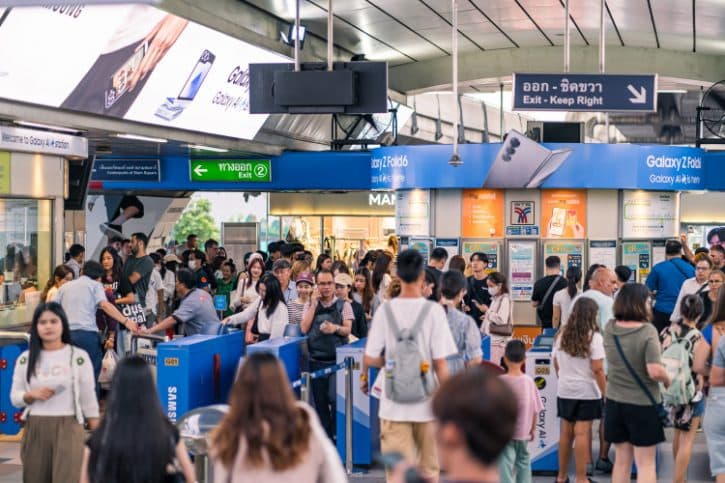
During rush hour (7:00 to 9:00 AM and 5:00 to 7:00 PM), Bangkok’s trains get seriously crowded.
In those conditions, wearing a backpack on your back immediately marks you as a tourist, and not in a good way.
b. Why it becomes a problem during busy hours
A backpack on your back takes up space that could fit another person. It also bumps into people every time you turn or the train moves.
Both the BTS and MRT run public awareness campaigns asking passengers to keep bags in front.
c. The simple fix locals follow
Wear your backpack on your chest or hold it by the handle between your legs.
This does three things:
- Makes more room for other passengers
- Protects your belongings from pickpockets
- Keeps your bag from getting caught in closing doors
It’s a small adjustment that helps you blend in and travel more comfortably.
10. Thinking the Trains Run All Night
a. What most people expect
Bangkok has a reputation as a city that never sleeps. So it’s natural to assume the trains run all night too.
They don’t.
b. What actually happens late at night
All rail systems, including the BTS, MRT, and Airport Rail Link, shut down around midnight.
If you’re counting on catching a train after a late dinner or night out, you might find yourself staring at a closed station.
Last train times vary by station and direction. For example:
- BTS from Kheha departs at midnight, but from Mo Chit it’s 00:12
- At Siam station, you need to be on the platform by around 00:15 for final connections
- The Airport Rail Link runs until midnight from both ends
c. How to avoid getting stuck
Plan to finish your train journeys by 23:30 to be safe.
If you’re staying out past midnight, your options are taxis, tuk-tuks, or ride-hailing apps like Grab and Bolt. Know the last train time for your station, and you’ll never be caught off guard.