Japan is evolving, and if you’re planning a trip in 2026, there are some important updates you’ll want to know before you go.
From how you shop and pay for trains to where you can take your suitcase, the rules are shifting in ways that could affect your budget, your itinerary, and even your safety.
The good news? Once you know what’s coming, you can plan ahead and travel smarter.
Here’s everything you need to know. 😊
1. The New Tax-Free Refund System

a. What’s Actually Changing for Shoppers
If you’ve shopped tax-free in Japan before, you know the drill. Show your passport, get an instant 10% discount at checkout. That’s going away.
Starting November 1, 2026, Japan is switching to a refund-based system.
You’ll pay the full price, including the 10% consumption tax, when you buy. Then you’ll claim your refund at the airport before you leave.
It’s a bigger change than it sounds, so let’s break it down.
b. Why Japan Is Overhauling the System
Japan loved offering instant tax-free shopping. But there was a problem.
Some people were buying goods tax-free, then reselling them inside Japan and pocketing the tax savings. It became a widespread issue.
The new system fixes this by verifying that tax-free purchases actually leave the country. Customs will check your goods at departure before issuing any refund.
On the bright side, the new rules also simplify things:
- No more confusing “general goods” vs. “consumables” categories
- No more sealed bags you can’t open until you leave
- The daily ¥500,000 cap on consumables is gone
c. Key Date Travelers Must Know
- November 1, 2026: Full rollout of the new refund system nationwide
Any purchase before November 1, 2026 still uses the old instant-exemption method. After that date, everything is refund-based.
d. How the New Refund Journey Works Step-by-Step
Here’s what to expect when you shop under the new system:
- At the store: Pay the full price including tax. Show your passport so the purchase is recorded.
- Register your refund method: The store will give you a QR code or link to Japan’s official J-TaxRefund Register your preferred refund method (credit card, e-wallet, bank account, or cash pickup). You only need to do this once.
- At the airport: Before departing, visit a customs kiosk or counter. Scan your passport to confirm your purchases. Be ready to show the actual items if asked.
- Receive your refund: Once customs confirms everything, the refund is sent to your registered account.
Important: You must leave Japan within 90 days of your purchase and complete the customs check, or you lose the refund.
e. What Travelers Need to Prepare Before Shopping
A little prep goes a long way here.
- Register early: Set up your refund account on the J-TaxRefund platform at the start of your trip, not on your last day.
- Carry your passport: You’ll still need it for every tax-free purchase.
- Save all receipts: Customs may ask for documentation along with your goods.
- Don’t use or open items until after the customs check, especially items that used to require sealed bags.
- Arrive early at the airport: Budget extra time to complete the refund process before check-in.
- Consider luggage delivery: If you have large purchases, remember you may need to show them to customs. Plan accordingly.
Trust me, doing this prep upfront makes the whole process smoother.
2. Dual Pricing at Select Locations
a. Why Japan Is Moving Toward Tiered Pricing
Japan has always been known for its “one price for everyone” approach. That’s starting to change.
A growing number of tourist sites are now charging different prices for locals versus visitors from outside the area.
This includes international tourists and, in some cases, even Japanese visitors from other regions.
Why the shift?
- Overtourism: Nearly 37 million visitors came to Japan in 2024. Popular sites are feeling the strain.
- Preservation funding: Higher fees help pay for maintenance, repairs, and conservation.
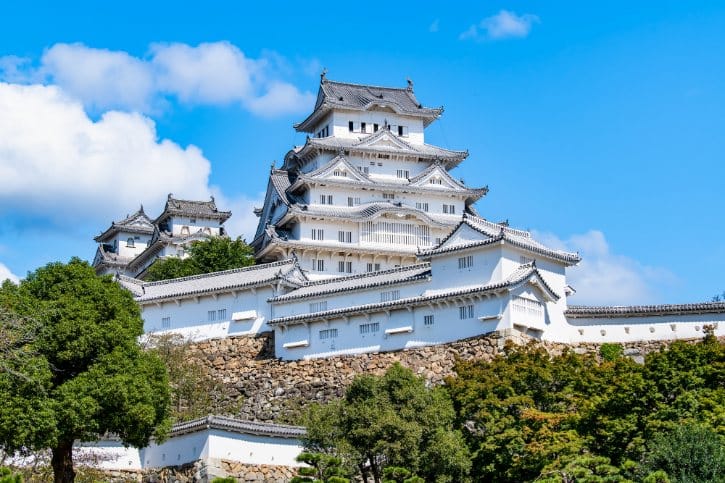
b. Himeji Castle: Japan’s Biggest Dual-Pricing Shift
Himeji Castle, one of Japan’s most iconic UNESCO World Heritage sites, is leading this change.
Starting March 1, 2026, the castle will charge:
- ¥1,000 for Himeji City residents
- ¥2,500 for everyone else (including Japanese visitors from other cities and international tourists)
That’s a 150% difference.
The pricing is residency-based, not nationality-based. If you live in Himeji and can prove it with ID, you get the local rate. Everyone else pays the visitor price.
c. Junglia Okinawa: How Its Domestic vs. International Pricing Works
Junglia Okinawa, a new theme park that opened in July 2025, uses a different model.
Tickets are sold as “Domestic” or “International”:
- Domestic rate: ¥6,930 (for Japanese residents)
- International rate: ¥8,800 (for foreign visitors)
That’s about a 27% difference.
d. What This Means for Travelers’ Budgets and Planning
Here’s what you should know:
- Budget accordingly: A family of four at Himeji Castle will pay ¥10,000 instead of ¥4,000.
- Check official websites for current pricing before you go. Guidebooks may have outdated prices.
- Carry your passport: You’ll likely need ID when buying tickets at dual-pricing sites.
On the positive side, your extra contribution goes directly to preserving these incredible places. And if higher prices thin the crowds a bit, your experience might actually improve.
3. Tokyo’s Expanded Tap-to-Pay System
a. What’s Being Rolled Out Across Tokyo Transit
Big news for anyone who’s ever fumbled with ticket machines in Tokyo.
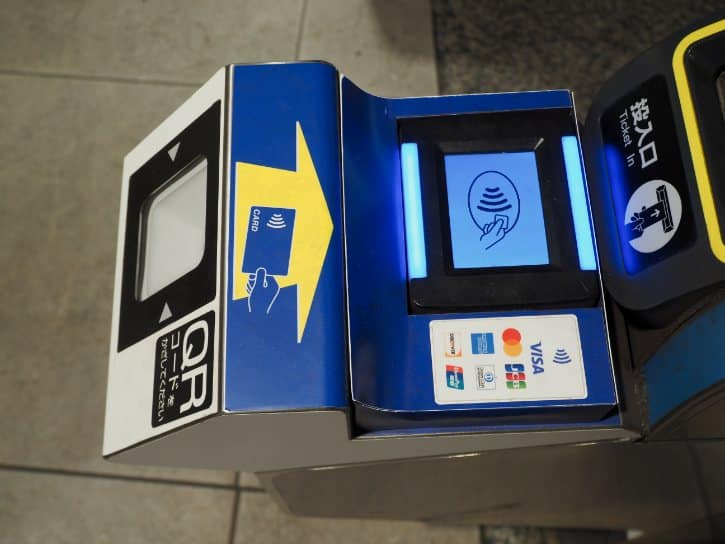
Starting spring 2026, you’ll be able to tap a contactless credit card, debit card, or smartphone at train gates across most of Tokyo’s rail network.
No more buying a Suica. No more figuring out complicated fare maps. Just tap and go, the same way you would in London or Singapore.
b. The 11 Railway Operators Participating
Here’s who’s on board:
- Tokyo Metro
- Toei Subway
- Odakyu
- Keio
- Tokyu
- Tobu
- Seibu
- Sagami Railway (Sotetsu)
- Keikyu
- Yokohama Minatomirai Line
Who’s not included (yet)?
- JR East: Japan’s largest rail operator is not part of this rollout. That means the Yamanote Line, Narita Express, and Shinkansen still require a Suica/PASMO or paper ticket.
So, you can ride most subways and private commuter lines with a credit card tap, but JR routes still need another payment method.
c. Why This Upgrade Matters for Travelers
This is a game-changer for visitors.
You can land at Haneda Airport, walk to the Keikyu or Toei gate, tap your Visa or Mastercard, and head straight into the city. No lines at ticket machines, no figuring out fares, no ¥500 deposit for an IC card.
For short trips or layovers, this removes a major hassle.
d. How Tap-to-Pay Works (Cards, Phones, Gate Readers)
Accepted payment methods:
- Visa, Mastercard, JCB, AMEX, Diners, Discover, UnionPay
- Mobile wallets (Apple Pay, Google Pay) linked to those cards
How it works:
- Find the contactless reader at the ticket gate (many gates now have a second reader pad labeled for credit cards).
- Tap your card or phone at entry.
- Tap again when you exit.
- The fare is calculated and charged to your card.
It’s post-paid, so you’ll never “run out of balance” mid-trip.
e. Important Limitations Travelers Should Know Before Using It
Before you ditch your Suica completely, keep these in mind:
- No child fares: A credit card tap charges full adult fare. Kids still need child tickets or a child IC card.
- No commuter passes or discounts: Transfer discounts that normally apply between certain lines don’t work with open-loop payments.
- Foreign transaction fees: If your bank charges fees on international purchases, those will apply to each fare.
- Slightly slower than Suica: Credit card taps require a network check, so they’re a fraction of a second slower at the gate. Not a big deal, but worth knowing during rush hour.
4. New Luggage Rules on Kyoto City Buses
a. What’s Changing on Kyoto’s Bus Network
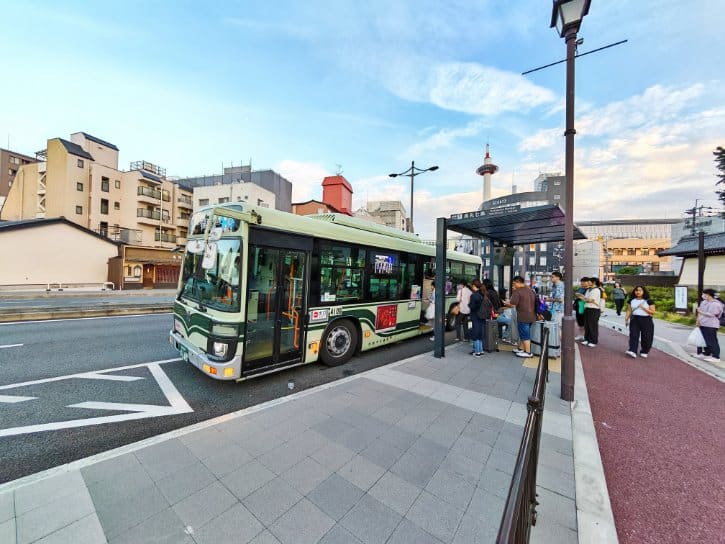
If you were planning to roll your suitcase onto a Kyoto city bus, think again.
Kyoto has essentially banned large luggage on its municipal buses.
While it’s not a legal prohibition with fines, the city has made it very clear: big suitcases are no longer welcome.
You’ll see stickers on over 90% of buses showing a suitcase with a red “X” and multilingual signs asking you to leave large bags behind.
Drivers have authority to deny entry or ask you to step off if your luggage is too bulky or the bus is crowded.
b. Why Kyoto Is Cracking Down on Big Suitcases
This wasn’t a random decision. It came from years of complaints.
Kyoto’s city buses are often standing-room-only. When tourists started rolling suitcases into the aisles, problems piled up:
- Elderly residents couldn’t board or exit
- Wheelchairs and strollers were blocked
- People tripped over luggage
- Boarding times slowed down
The buses simply weren’t designed for luggage. They have no storage compartments and narrow aisles. Even one large suitcase creates congestion.
With inbound tourism surging again, the city decided to act.
c. How the Rules Are Being Enforced Day-to-Day
Here’s what “enforcement” looks like in practice:
- Visual warnings: Stickers on doors and windows with “Please refrain from bringing large luggage” in Japanese, English, and Chinese.
- Driver discretion: Drivers may announce reminders or politely ask you to wait for another bus if yours is too bulky.
- No fines: There’s no fee or penalty. It’s strong encouragement, not legal punishment.
d. What Travelers Must Do Instead (Luggage Delivery, Subways, Taxis)
Kyoto wants you to travel “hands-free”. Here’s how:
- Luggage delivery services: Drop your suitcase at Kyoto Station and have it sent to your hotel the same day. The official “Hands Free Kyoto” program has counters and maps online.
- Coin lockers: Available at stations and popular attractions. Stash your bags while you explore.
- Subway: Kyoto’s two subway lines are more luggage-tolerant than buses and cover some tourist areas.
- Taxis: Costlier, but drivers are used to travelers with bags and can easily fit a suitcase in the trunk.
- JR lines: The train to Arashiyama and other JR routes can handle luggage better than buses.
e. Tips for Sightseeing Comfortably Under the New Rules
Here’s how to make it work:
- Drop bags first: Head to your hotel or a locker before sightseeing. Don’t drag luggage to temples.
- Use delivery from the station: If you arrive by train, send your suitcase ahead and start exploring immediately.
- Carry only a daypack on buses: Even then, hold it in your lap rather than putting it on the floor or an empty seat.
- Take backpacks off: The city asks riders to hold backpacks rather than wearing them.
- Check the Hands Free Kyoto website: It has English maps of storage options and delivery counters.
Trust me, traveling light in Kyoto makes your day so much easier. And the locals will appreciate it.
5. Increase in Bear Attacks and High-Risk Areas for Tourists
a. Why Bear Encounters Are Increasing
This one might surprise you.
Japan is experiencing a surge in bear attacks, reaching levels never seen before.
In 2023, there were 219 injuries and 6 deaths from bear attacks. By late 2025, casualties exceeded 220 with at least 13 deaths, setting new records.
What’s driving this?
- Food scarcity: Poor acorn and beech nut harvests are pushing hungry bears out of the mountains and into villages.
- Growing bear population: Conservation efforts have worked. Hokkaido’s brown bear population doubled in 30 years. Black bears on Honshu have tripled since 2012.
- Shrinking rural communities: Depopulated villages mean less human presence to keep bears wary. The buffer between bear habitat and human areas has eroded.
- Climate changes: Warmer autumns may be delaying hibernation, keeping hungry bears active longer.
b. Regions With the Highest Bear Risks
Not all of Japan has this problem. The risk is concentrated in specific areas.
Highest-risk prefectures:
- Akita: 56 casualties between April and October 2025, including at least 4 fatalities. Bear sightings have risen sixfold this year, and bears have attacked more than 50 people since May. The military was deployed here in November 2025.
- Iwate: 34 casualties between April and October 2025, with 5 deaths, the highest fatality count of any prefecture.
- Hokkaido: 2 deaths reported in 2025. Home to an estimated 11,000+ brown bears, with sightings passing 100 by April.
- Fukushima: 20 casualties between April and October 2025.
- Nagano: 15 casualties and 1 fatality.
- Miyagi: 1 fatality reported.
Other areas with notable bear activity:
- Gunma (a bear attacked shoppers in a supermarket in October 2025)
- Yamagata (a bear was spotted on the airport runway in June 2025)
- Parts of Chubu-Sangaku National Park
Specific hotspots to be cautious around:
- Shirakami-Sanchi (Aomori/Akita), a World Heritage forest
- Towada-Hachimantai region
- Daisetsuzan National Park and Shiretoko National Park (Hokkaido)
- Lake Tazawa and Nyuto Onsen areas (Akita)
c. Safety Advice: What Travelers Must Avoid and How to Stay Safe
If your trip includes hiking or rural areas in bear country, take this seriously.
What to avoid:
- Hiking alone in forests or mountains in high-risk regions
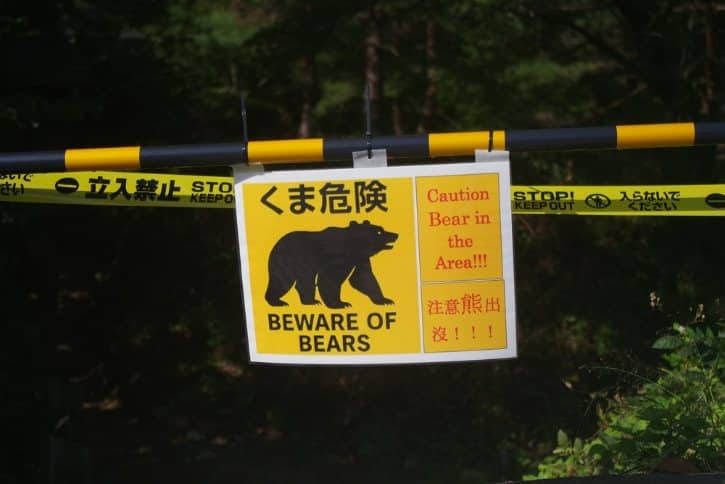
- Ignoring closed trails or bear warning signs
- Walking at dawn or dusk when bears are most active
- Leaving food or garbage outside if camping
- Approaching or photographing bears if you spot one
How to stay safe:
- Travel in groups: Bears typically avoid larger parties. Consider hiring a local guide.
- Make noise: Carry a bear bell or talk loudly while hiking. Most bears will avoid you if they hear you coming.
- Check for warnings: Look for yellow bear warning signs at trailheads. If posted, be extra cautious or reconsider your route.
- Carry bear spray: Available at some outdoor shops in Hokkaido and Nagano. It’s legal for animal defense.
- Stay on main paths: Don’t venture off the beaten track in bear areas.
- Heed local advice: If your ryokan or hotel warns about bears, listen.
- Report sightings: If you see a bear, report it to local authorities.
Consider timing: If you planned an autumn hiking trip in Tohoku, you might choose a different season or region instead.