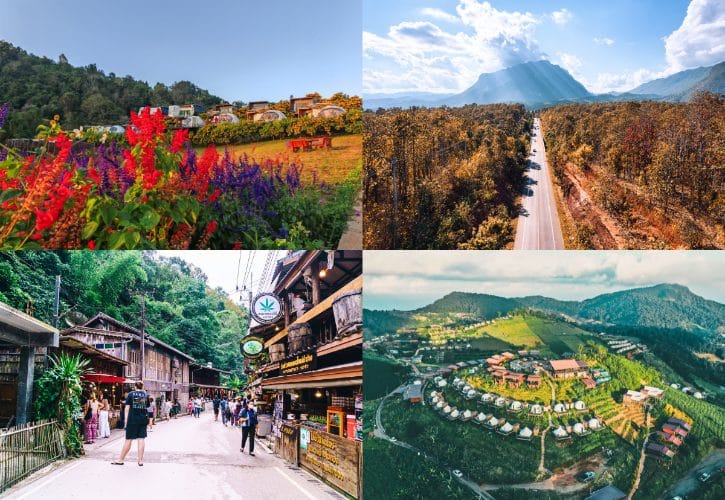
Chiang Mai’s temples will always be beautiful. But if you want to see what travelers are really talking about these days, head beyond the Old City walls.
Out there, you’ll find something temples can’t offer: the feeling of true discovery, the quiet of genuine wilderness, and the kind of views that stay with you long after you’ve flown home.
Pack layers. Bring a good camera. And give yourself time to slow down.
These are the places worth your time. 😊
1. Mon Jam
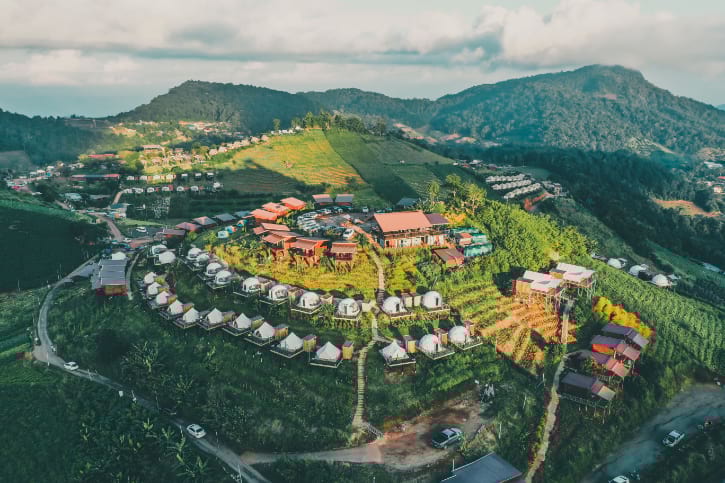
Perched on a scenic ridge in Mae Rim, Mon Jam has become one of the most photogenic escapes in Chiang Mai.
What was once an opium-growing region is now a thriving hub for sustainable farming and glamping.
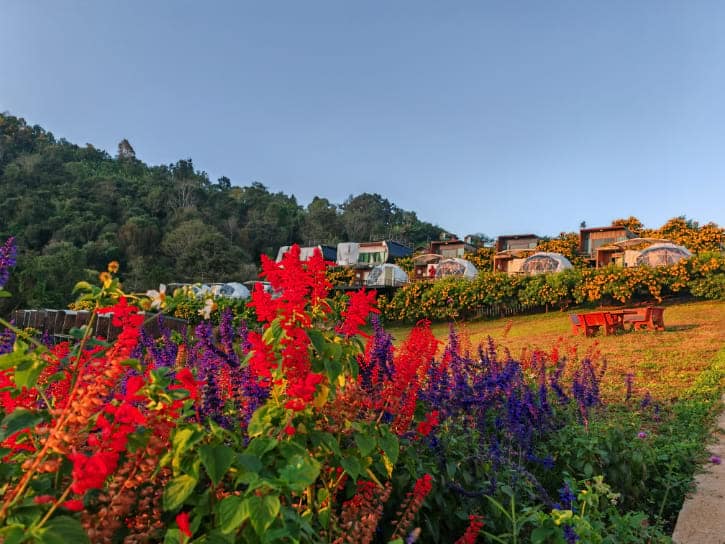
The Royal Project transformed this hillside into something special.
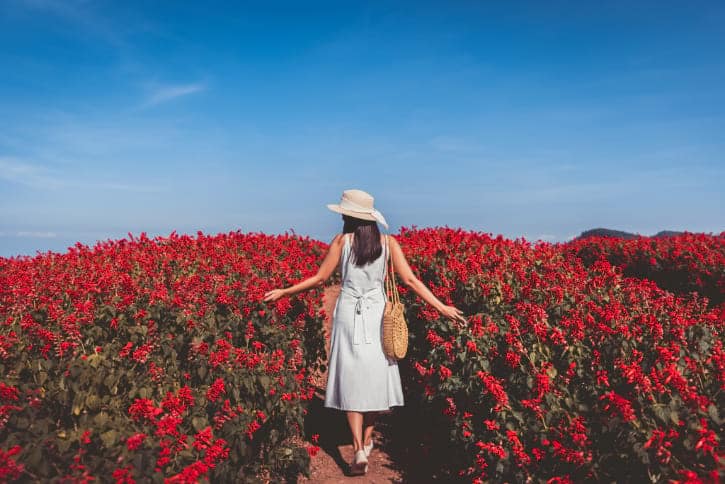
Today, it’s covered with flower gardens, organic vegetable plots, and cozy tented camps overlooking the Mae Sa Valley.
There’s a certain magic here, especially when the morning mist rolls in.
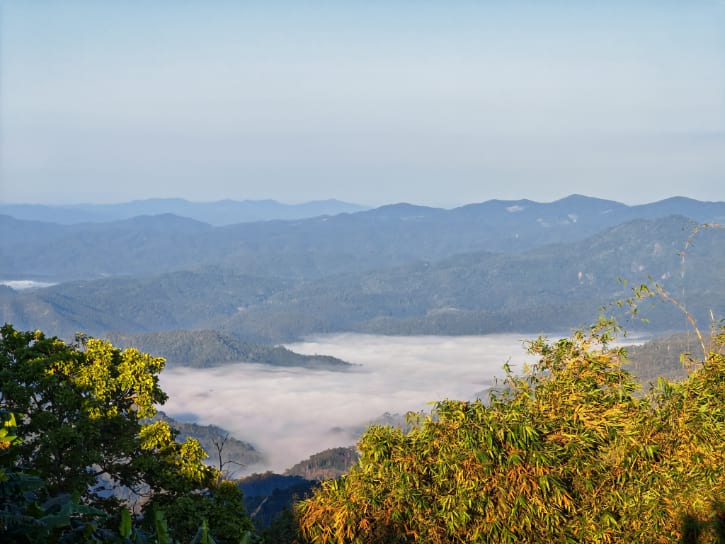
Why travelers love it:
- Sunrise views over a “sea of fog” that blankets the valley at dawn
- Hillside glamping tents and cozy bungalows perched on the slopes
- Hmong village culture, including traditional costumes and the fun “Formula Hmong” gravity go-karts
- Farm-fresh arabica coffee and famous strawberry smoothies from cliffside cafes
- Flower fields that explode with color from October to December
Best time to visit: November to February brings the best flower displays and the coolest, most comfortable weather. Late September and October are also lovely, with green hills and morning fog.
Good to know: Arrive before 6 AM for sunrise, or come on a weekday morning for a quieter experience. Most cafes take cash only. If camping overnight, book weeks ahead and pack warm layers for cold nights.
2. I Love Flower Farm
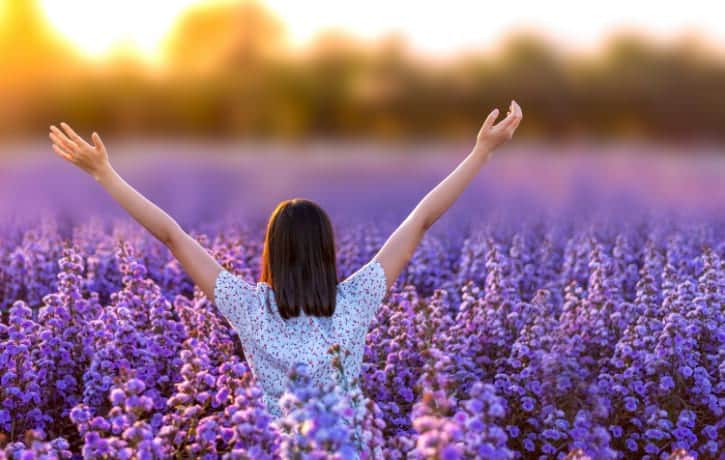
Tucked into the Mae Rim hills, I Love Flower Farm has become a destination in its own right.
This isn’t a wild meadow. It’s a carefully curated garden where seasonal blooms are planted in perfectly groomed rows.
Every corner here is designed for photographs. Rows of marguerites, lavender, and celosia stretch toward the mountains.
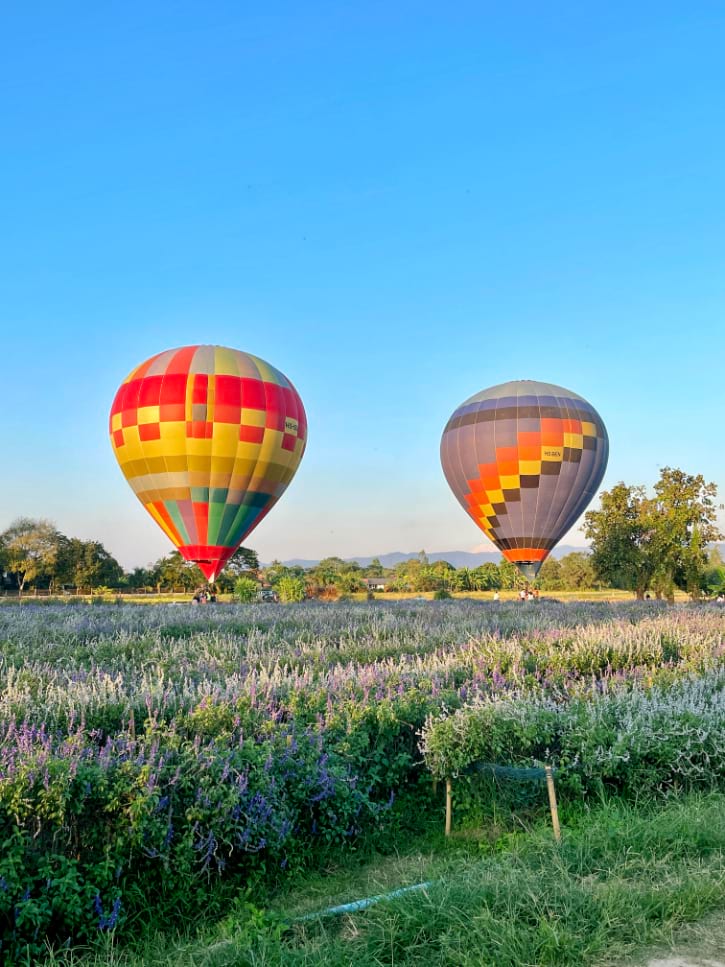
During the winter season, the farm sometimes hosts sunset hot air balloon displays, adding an extra layer of magic to an already dreamy setting.
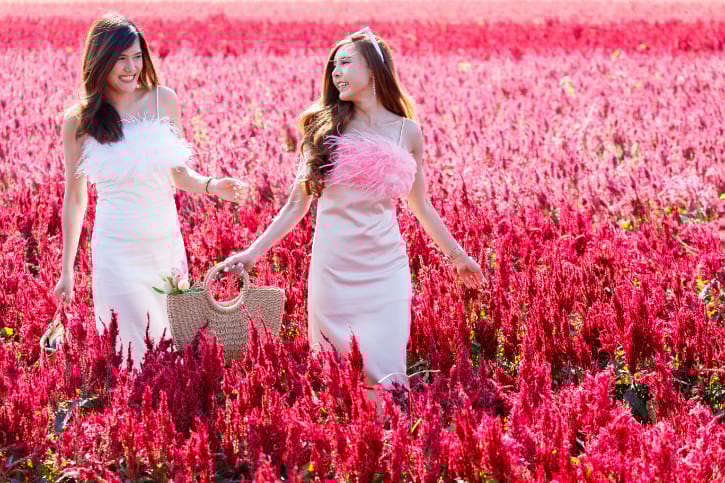
Why travelers love it:
- Picture-perfect rows of seasonal flowers against a mountain backdrop
- A welcome drink and snack included with entry
- Hot air balloon displays above the fields during special winter events
- Small farmers’ market selling dried flowers and handmade soaps
Best time to visit: The farm only opens during the cool season, typically November to March, when the flowers are at their peak. Always check their Facebook page before visiting.
Good to know: Arrive early on weekends since it can get busy by late morning. Wear light, bright-colored clothing that pops against the flowers.
3. Coconut Market
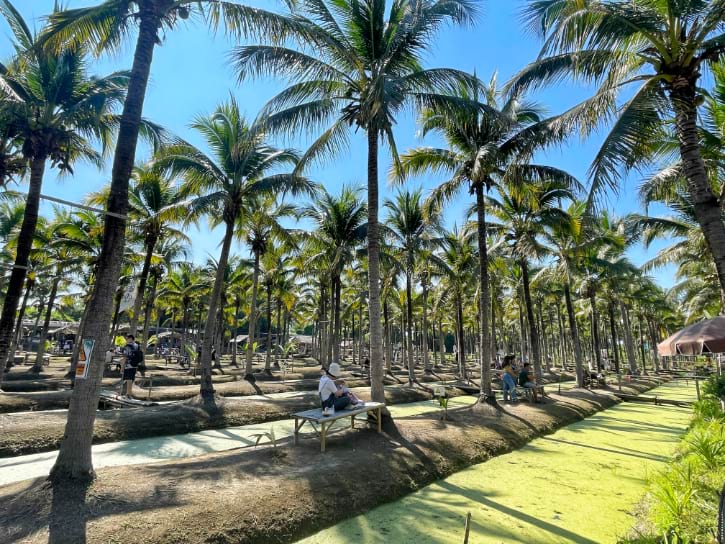
This farmers’ market sits in a coconut palm plantation, with tall palms and little canals creating a tropical oasis feel.
Local farmers and artisans sell everything from organic produce to handmade crafts while acoustic bands play on a small wooden stage.
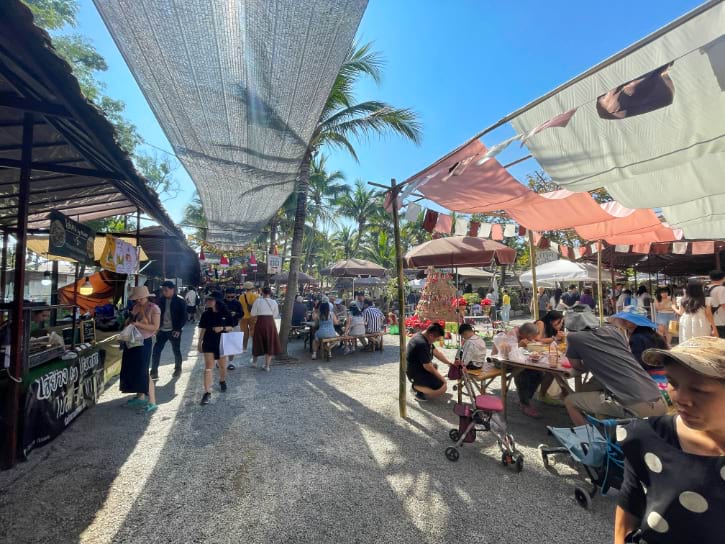
Why travelers love it:
- Charming setting under coconut palms with canals running through
- Local northern Thai treats like coconut ice cream in a shell and grilled sai ua sausage
- Hill-tribe woven bags, organic veggies, and homemade jams
- Rope swings and wooden bridges perfect for photos
- Live folk music every weekend
Best time to visit: Early morning on a cool-season weekend (November through February), around 8 to 10 AM. The market runs Friday, Saturday, and Sunday only. For fewer crowds, try Friday morning.
Good to know: Bring cash since most vendors don’t accept e-payments. Very family-friendly, but keep an eye on little ones near the unfenced canals.
4. Mae Kampong Village
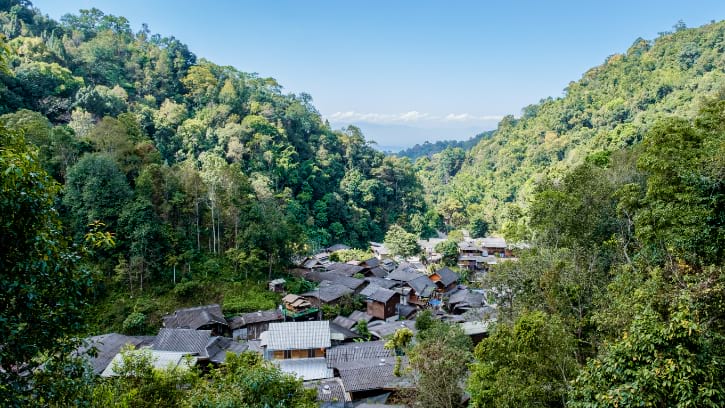
About 50 kilometers east of Chiang Mai, Mae Kampong has become a global model for community-based tourism.
This small village, nestled in a cool mountain forest, runs entirely as a cooperative.
Every homestay, every meal, every guided walk benefits the residents directly.
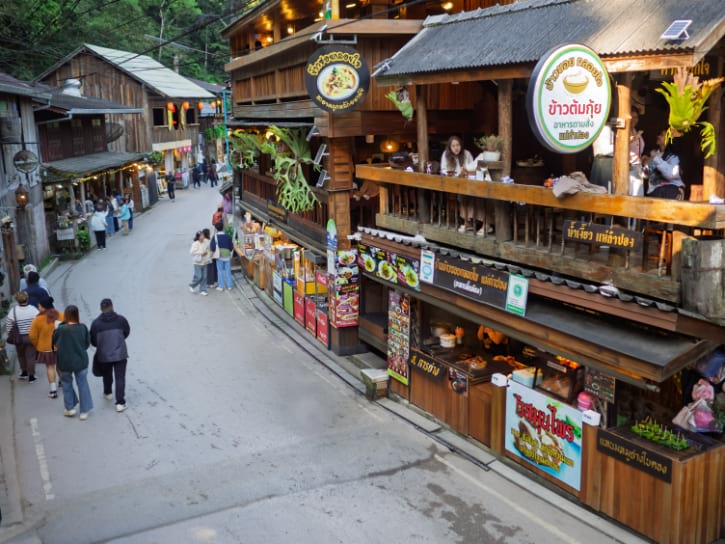
The village has deep roots in producing fermented tea, called “Mieng”, and shade-grown coffee.
Walking its narrow lanes reveals wooden heritage homes, a temple with a chapel built over a stream, and a seven-tiered waterfall just steps from the village center.
Why travelers love it:
- Authentic overnight homestay experience with local families
- Wat Khantha Pruksa, a temple with a chapel dramatically set over a flowing stream
- Mae Kampong Waterfall, a pretty 7-tier cascade just a short hike away
- Locally grown coffee in a forest setting noticeably cooler than the city
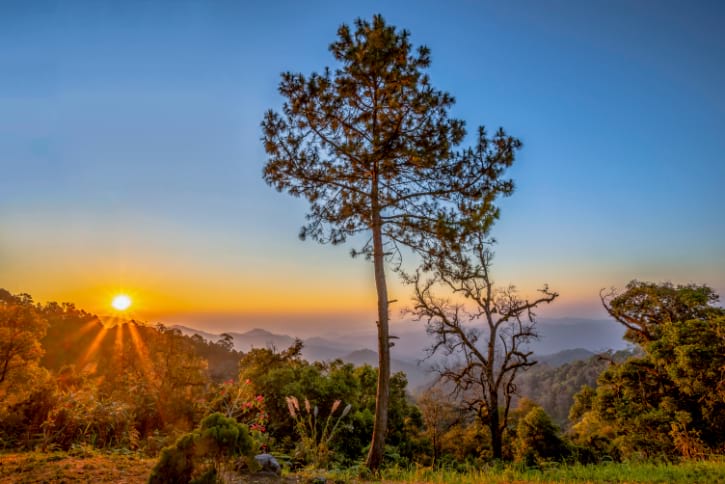
- Sunrise views from Kew Fin viewpoint
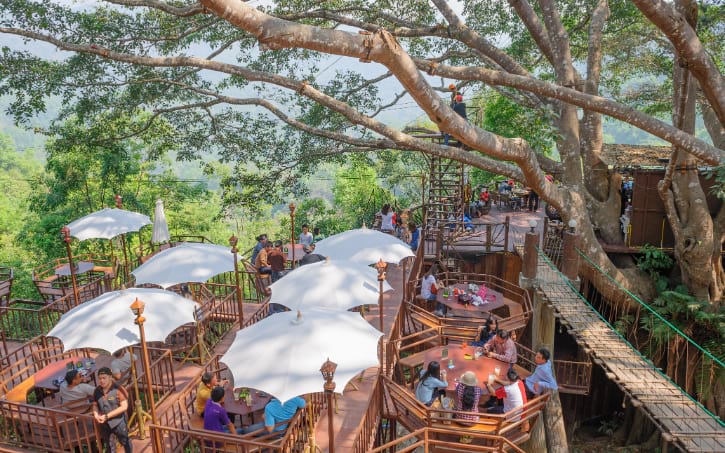
- The Giant Chiangmai, a famous treehouse cafe built in a huge rain tree
Best time to visit: October to February for clear, cool weather. October is particularly lovely with fewer crowds and fresh post-monsoon air. Skip mid-March to mid-April when burning season dims the beauty.
Good to know: Nighttime temperatures can drop to single digits during the cool season, so pack warm layers.
5. Ban Pa Bong Piang
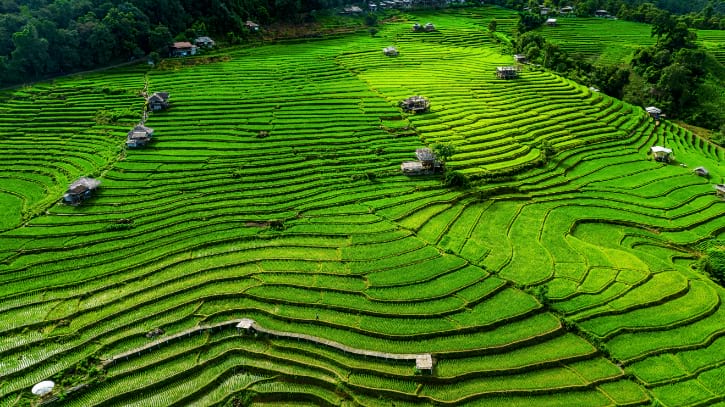
Deep in the Mae Chaem district, Ban Pa Bong Piang is home to the most beautiful terraced rice fields in Thailand.
This Karen village remains intentionally off-grid, offering travelers a rare chance to disconnect and witness agricultural traditions that have shaped these hillsides for generations.
The landscape here changes dramatically with the seasons.
The terraces flood into mirrors, turn emerald green, then shift to gold as harvest approaches.
It’s the kind of place where time moves differently, and that’s exactly the point.
Why travelers love it:
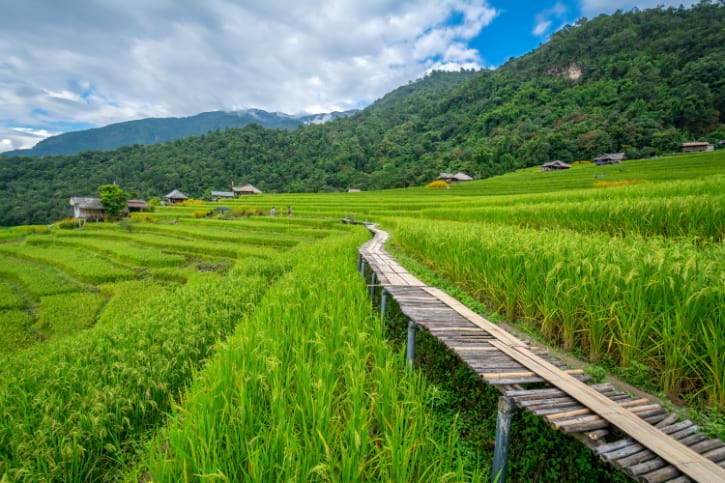
- Spectacular green rice terraces in August and September, turning golden by late October
- Sunrise and sunset views over the terraces that are truly unforgettable
- Simple bamboo huts perched right among the rice fields
- Dark skies perfect for stargazing and Milky Way photography
- A complete disconnect from the digital world in the best possible way
Best time to visit: July to November offers the most dramatic scenery, from the lush green growing season through the golden harvest. June and July bring the reflective “mirror season” when the terraces are flooded.
Good to know: There’s no electricity here, only solar lighting, and no hot water. Bring a power bank, warm clothing for nights that can reach 15°C, and insect repellent. Arriving by mid-afternoon allows time to settle in before the light softens.
6. Doi Inthanon National Park
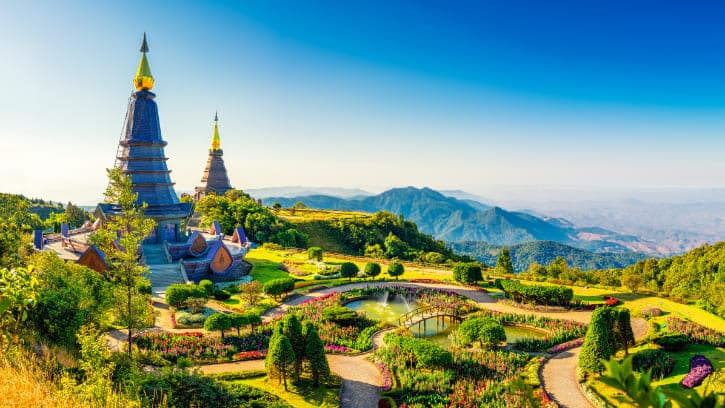
Standing at 2,565 meters, Doi Inthanon is the highest point in Thailand.
This isn’t just a mountain peak. It’s a complex biological sanctuary at the tail end of the Himalayan range, wrapped in mist and home to ecosystems found nowhere else in the country.
The park’s “cloud forest” stays cool and humid year-round, with temperatures often hovering between 10°C and 15°C.
The Ang Ka Luang Nature Trail winds through a mossy, almost prehistoric landscape on a short boardwalk.
It’s widely considered the best spot for “forest bathing” in Northern Thailand.
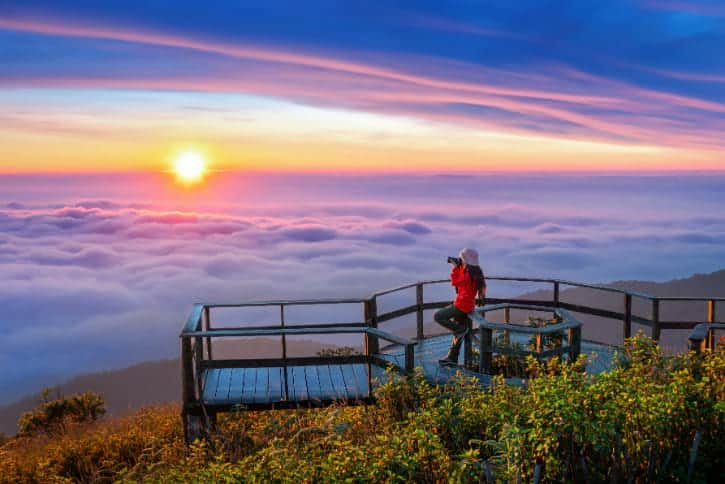
Why travelers love it:
- Standing at the highest point in Thailand
- Cool mountain air that feels worlds away from the tropical lowlands
- Kew Mae Pan Nature Trail, a stunning 3.2 km loop through cloud forest with cliffside views
- The Royal Twin Pagodas surrounded by immaculate flower gardens
- Ang Ka Nature Trail, a boardwalk through primeval forest at 2,500 meters
Best time to visit: Late November through January for cool weather and clear visibility. The Kew Mae Pan trail is open November 1 to May 31, with sunrise views before 6:30 AM being the highlight.
Good to know: Arrive before 6 AM for sunrise at the summit. Kew Mae Pan Trail requires a local Hmong guide. Dress in layers since summit mornings feel close to freezing, but midday at lower elevations could be 25°C.
7. Wachirathan Waterfall
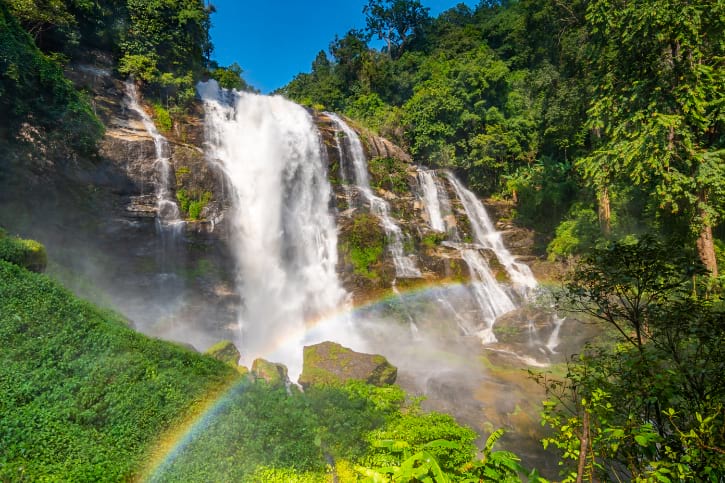
Wachirathan is one of Chiang Mai’s most powerful waterfalls, a thundering 80-meter cascade within Doi Inthanon National Park.
It runs strong year-round, even in dry season.
The real draw? On sunny days, sunlight through the perpetual mist creates brilliant rainbows arcing across the base.
Why travelers love it:
- Thundering water you can hear and feel from far away
- Rainbows appearing in the mist, especially mid-morning
- Very easy access, just a short walk from parking
- Cool mist that refreshes you on hot days
- A wooden bridge at the base, perfect for long-exposure shots
Best time to visit: July through October for maximum drama at full power, or December through January for pleasant weather with still-impressive flow. For rainbows, aim for 10 to 11 AM.
Good to know: Paths get slippery from constant mist, so wear shoes with grip and use the railings. The spray will get you wet, especially in rainy season. A poncho helps if you want to stay dry.
8. Pha Chor Canyon at the Mae Wang National Park
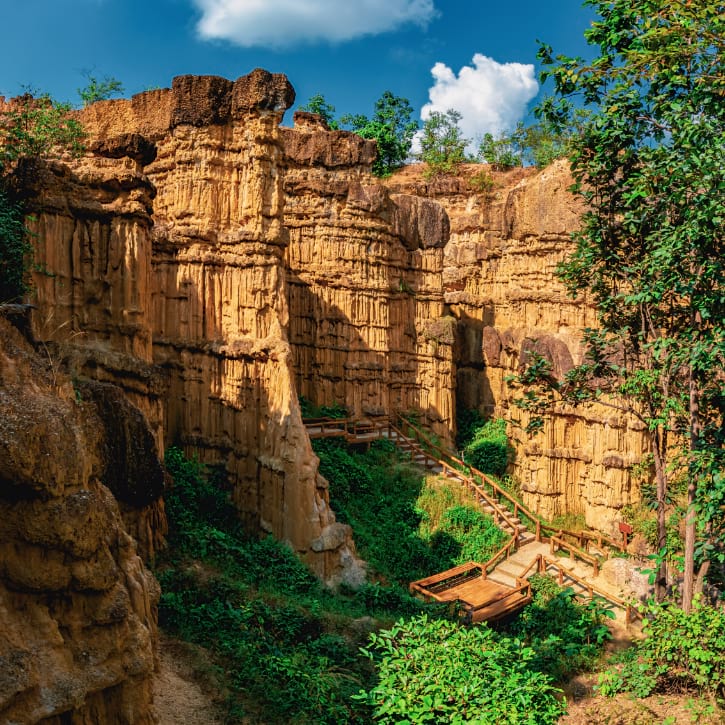
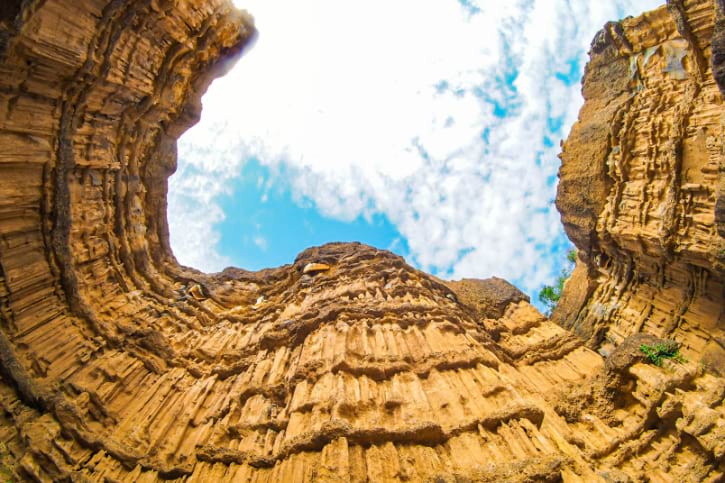
Often called “Thailand’s Grand Canyon”, Pha Chor is a geological wonder created by the ancient Ping River.
Over thousands of years, the river carved and uplifted this landscape, leaving behind towering soil pillars and eroded cliffs reaching heights of 30 meters.
A 400-meter circular trail winds through the canyon, with stairs and narrow pathways passing between the dramatic golden-hued formations.
Early morning light brings out the warm yellows and oranges of the rock, making it a photographer’s paradise.
Why travelers love it:
- Towering earth pillars that look like something from another planet
- Golden-yellow cliffs that glow in the morning light
- A well-maintained trail with stairs and pathways between dramatic rock formations
- A landscape completely different from Chiang Mai’s forests and mountains
- A quieter, less-visited natural wonder
- Dramatic proof of what water and time can create over thousands of years
Best time to visit: Early morning, before 10:00 AM, offers the best light for photography and helps avoid the midday heat in this relatively exposed area.
Good to know: Bring your own water and snacks since facilities are minimal. Don’t arrive too late since you need time to hike in and out before the park closes at 4:30 PM.
9. Mae Ya Waterfall
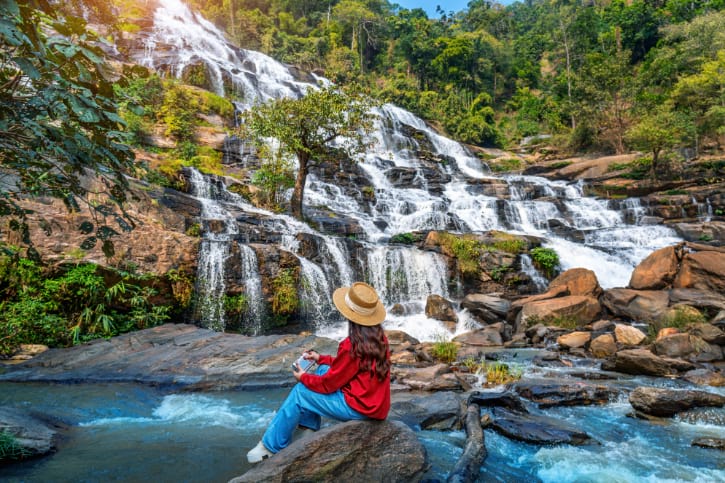
Hidden about 15 kilometers from the main Doi Inthanon entrance, Mae Ya is the waterfall that serious photographers and experienced travelers seek out.
It cascades over 30 tiers, reaching a total height of roughly 250 to 260 meters, creating a stunning fan-like structure.
While many visitors stick to the more accessible falls, Mae Ya rewards those who make the journey.
The multi-tiered cascade has a serene, almost reverent quality, and the morning light here is extraordinary.
Why travelers love it:
- Thailand’s largest and most photogenic waterfall
- Multi-tiered “lace curtain” appearance as water fans across the rock face
- Peaceful forest walk to reach the viewing area
- Quieter and less crowded than other Inthanon waterfalls
- Cool, refreshing spray on hot days
Best time to visit: October and November for spectacular flow combined with clearing skies. Skip late March through April when flow is at its lowest.
Good to know: The trail is easy, about 10 to 15 minutes through forest. Good footwear helps when crossing rocks near the river. Plan your timing since the checkpoint usually stops entry after 4 PM.
10. Doi Luang Chiang Dao
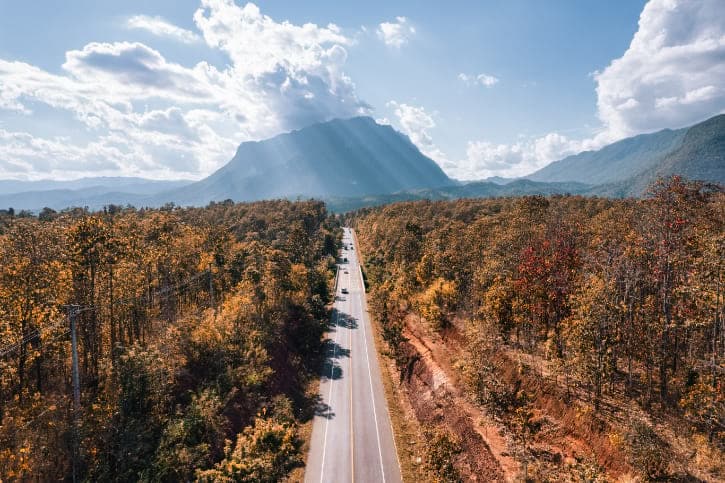
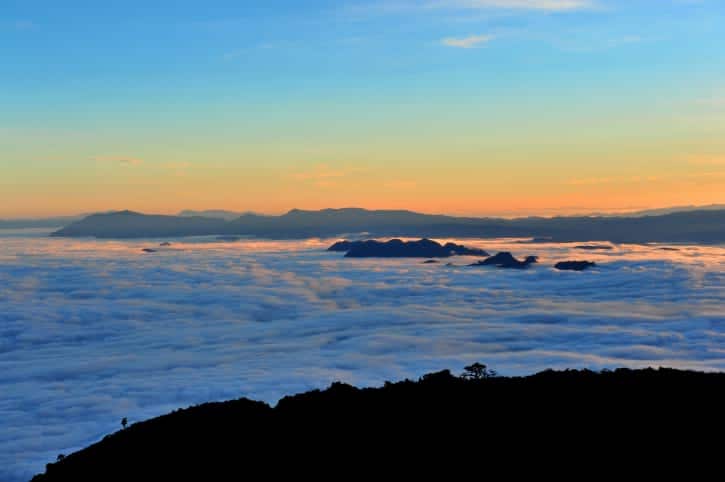
Doi Luang Chiang Dao is Thailand’s third-highest peak at 2,275 meters, often called “the last tooth of the Himalayas”. This is where serious hikers come for the views.
From the summit, limestone peaks stretch as far as you can see, and at night, the stars are incredible.
Why travelers love it:
- A UNESCO Biosphere Reserve with some of Thailand’s most dramatic scenery
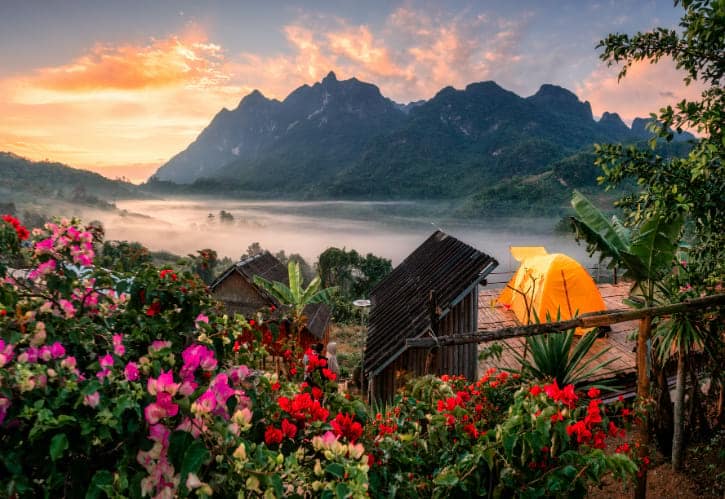
- 360-degree panoramic views from the peak
- Rare Himalayan-style plants found nowhere else in Thailand
- Sea of fog at sunrise from Kew Lom viewpoint
- Prime birding destination with diverse forest zones
- True mountain adventure away from casual tourist crowds
Best time to visit: The trekking season runs from November to February. The mountain is closed during the rainy and hot seasons to protect its fragile sub-alpine ecosystem.
Good to know: Advance registration is mandatory and often requires booking weeks or months ahead. The most common route involves an eight-hour round-trip hike after a one-hour truck ride to the trailhead. Come prepared for a real mountain adventure.