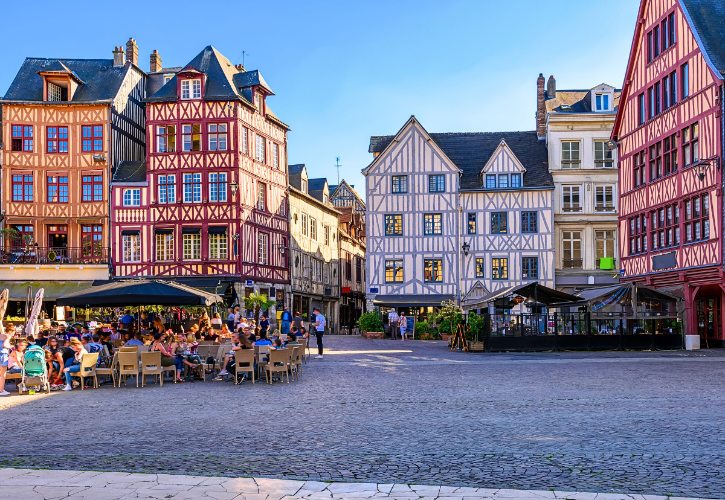
Rouen is one of those rare cities that feels plucked straight from a storybook.
Towering Gothic spires rise above half-timbered houses, and cobblestone streets wind through centuries of history. Best of all, it’s only about 90 minutes from Paris by train.
Here’s what makes Rouen truly special: everything is close together. The cathedral, the famous astronomical clock, the charming squares, they’re all just a short stroll apart.
In this guide, I’ll show you how to get there from Paris, the best things to see and do, local food to try, and two walking routes to help you explore this medieval gem entirely on foot. 😊
1. How to Get to Rouen from Paris
Getting to Rouen is refreshingly simple.
- Departure station: Paris St-Lazare
- Train type: TER
- Duration: About 1 hour 15 minutes to 1 hour 30 minutes
- Arrival station: Rouen Rive Droite
The best part? Rouen Rive Droite station is only 1 to 1.5 kilometers from the historic Old Town. That’s about a 12 to 15-minute walk straight to the cathedral.
You won’t need a taxi, bus, or metro. Just follow Rue Jeanne d’Arc south from the station, and you’ll stroll right into the pedestrianized medieval heart of the city. Trust me, the walk itself is part of the experience.
2. Why Rouen Is So Easy to Explore on Foot
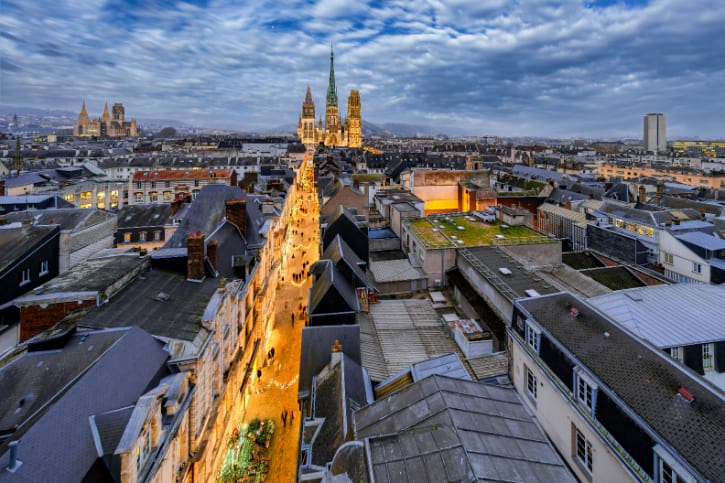
Rouen was made for walking. The historic center is remarkably compact, and major landmarks sit within a few hundred meters of each other.
Here’s what makes it such a walker’s paradise:
- Compact historic center: The Cathedral, Gros-Horloge, and Place du Vieux-Marché are all within easy walking distance.
- Flat terrain: Unlike many older European cities, Rouen’s core is largely flat, so your legs won’t tire out.
- Pedestrian-friendly streets: In 1971, Rue du Gros-Horloge became the first pedestrian-only street in all of France. Today, a whole network of cobbled lanes is reserved for foot traffic.
Quick walking times between major sights:
- Station to Cathedral: 12 to 15 minutes
- Cathedral to Gros-Horloge: 3 to 5 minutes
- Gros-Horloge to Place du Vieux-Marché: 5 to 7 minutes
- Cathedral to Saint-Maclou: 4 to 5 minutes
You can see centuries of Norman history, from 12th-century Gothic spires to 20th-century modernism, without ever checking a bus schedule.
3. Best Things to Do in Rouen
a. Cathédrale Notre-Dame de Rouen
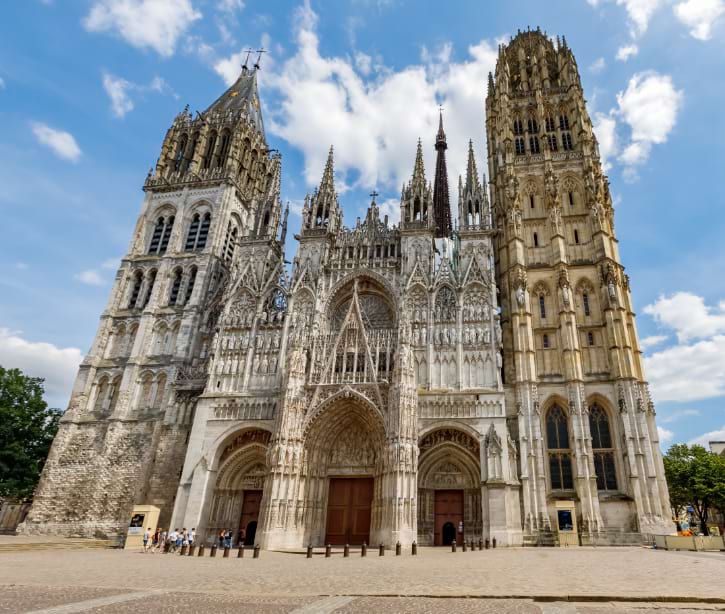
Why visit: This is one of the finest Gothic cathedrals in the world. Claude Monet painted over 30 canvases of its facade, capturing how Normandy’s changing light transforms the stone throughout the day. The cathedral also holds the heart of Richard the Lionheart, buried here as a symbol of his love for Normandy.
What to expect: The facade tells the story of centuries of construction. On the left stands the 12th-century Saint-Romain Tower, while the ornate “Butter Tower” on the right dates to the 16th century. Inside, soaring vaults reach 28 meters high, and stained-glass windows from the 13th century fill the space with color. The cast-iron spire rises 151 meters, making it the tallest in France.
b. Historial Jeanne d’Arc
Why visit: This innovative museum sits in the exact building where Joan of Arc was tried in 1431 and later cleared of charges in 1456. Instead of static exhibits, it uses immersive video projections to bring the trial transcripts to life. You’ll feel like you’re witnessing the cross-examinations firsthand.
What to expect: The 75-minute guided tour takes you through 15 rooms of the medieval Archbishop’s Palace. High-resolution projections and audio guides recreate the courtroom drama. The tour ends in the State Room where the final judgment was read. It’s powerful stuff.
c. Le Gros-Horloge
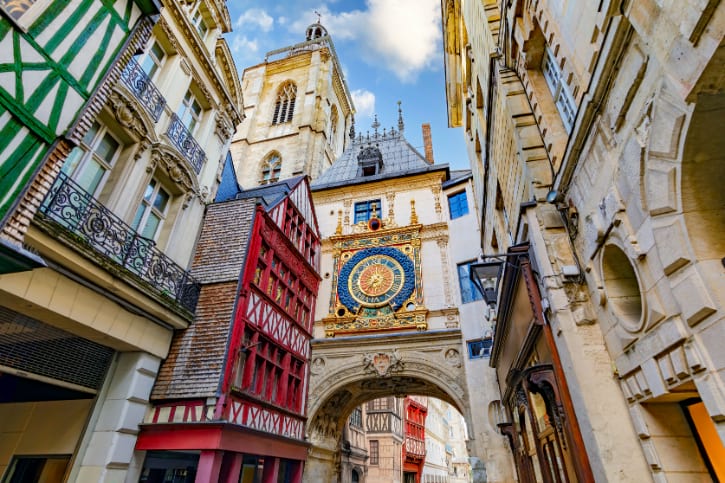
Why visit: This Renaissance astronomical clock is one of Rouen’s most beloved symbols. Dating to 1389, it’s one of the oldest working mechanical clocks in Europe. The gilded dial features 24 sun rays, and a silver sphere above shows the moon’s phases.
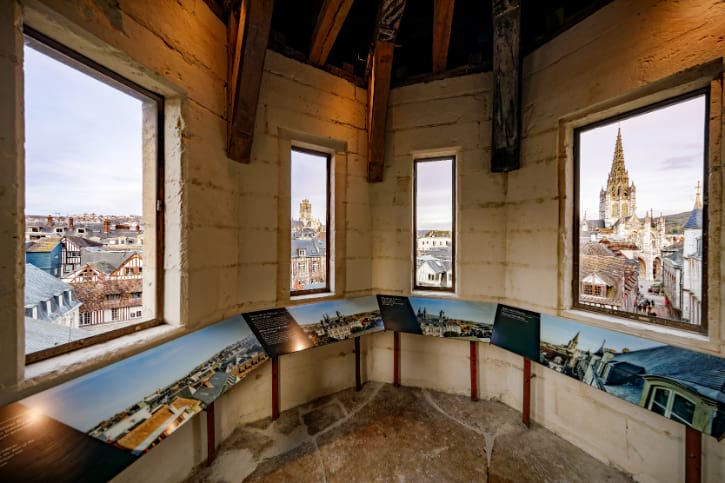
What to expect: As you walk beneath the elegant archway spanning the main pedestrian street, look up. You’ll see intricate stone carvings of Jesus as the Good Shepherd and scenes of rural life. The tower is open to visitors, offering a view of the 14th-century clockwork and panoramic views over the Old Town rooftops.
d. Place du Vieux-Marché
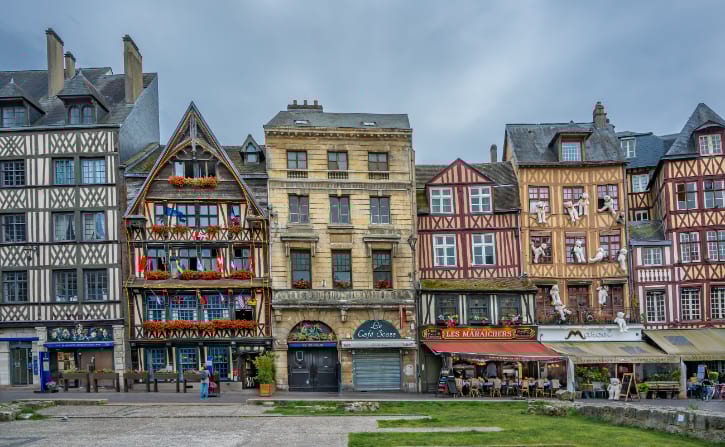
Why visit: This is where Joan of Arc was burned at the stake on May 30, 1431. Today, the square balances its somber history with the energy of a modern French market. It’s surrounded by some of Normandy’s most beautiful half-timbered houses, including the 14th-century La Couronne inn.
What to expect: A large modern cross marks the exact spot of the execution. The square buzzes with activity, especially around the covered market halls where locals sell cider, cheese, and fresh produce. Cafe terraces offer the perfect spot to take in the atmosphere.
e. Église Sainte-Jeanne-d’Arc
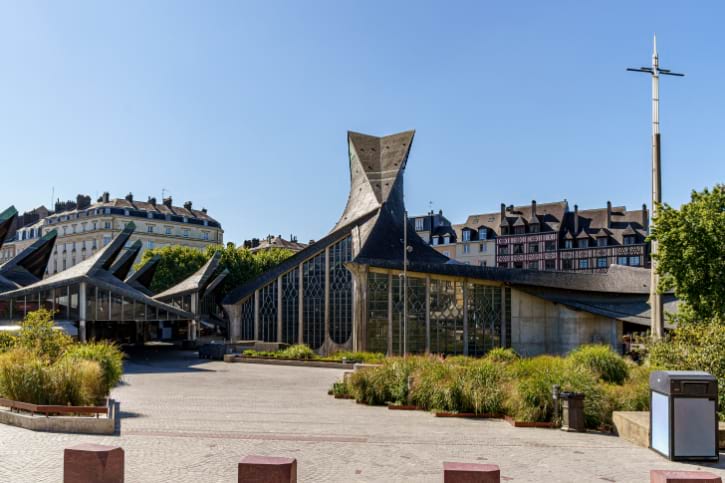
Why visit: Completed in 1979, this modernist church is both a place of worship and a memorial to Joan of Arc. Its sweeping roofline mimics an overturned Viking ship, a nod to Normandy’s Nordic heritage, while the scales of the roof evoke the flames of the stake.
What to expect: Step inside to find a surprisingly bright interior. The church houses 13 Renaissance stained-glass windows rescued from a church destroyed in 1944. These 16th-century windows cover 500 square meters and create stunning walls of color against the clean wooden ceiling beams.
f. Musée des Beaux-Arts de Rouen
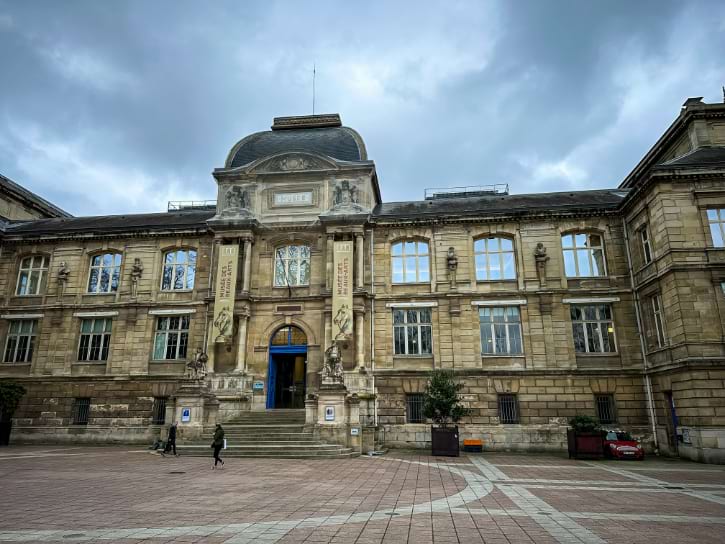
Why visit: This is one of France’s top five regional museums. The collection spans Caravaggio, Velázquez, and Rubens, plus an extensive gallery dedicated to the Impressionists who were drawn to Rouen’s special light.
What to expect: The elegant 19th-century building offers spacious, naturally lit galleries. Best of all, the permanent collections are free. You can spend as much time as you like with Monet’s famous “Rouen Cathedral” paintings and Pissarro’s depictions of the city.
g. Aître Saint Maclou
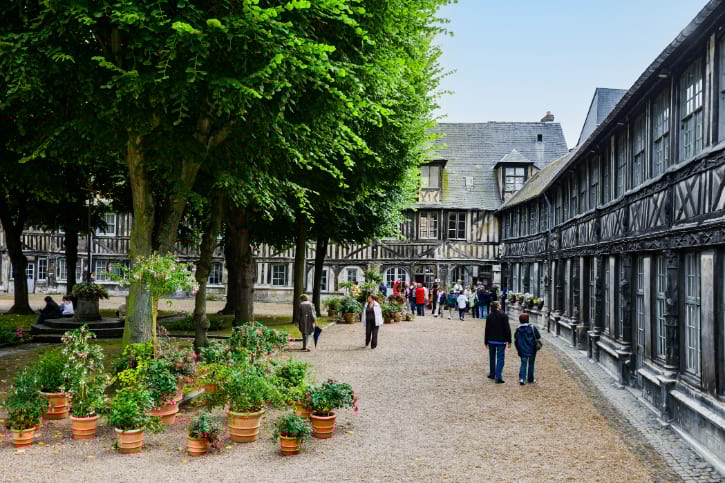
Why visit: This former medieval ossuary was established during the Black Death of 1348. It’s one of the few remaining plague cemeteries in Europe. The half-timbered buildings around the courtyard are decorated with 16th-century wood carvings of skulls, crossbones, and grave-digging tools, depicting the “Danse Macabre”.
What to expect: Despite its dark history, the courtyard feels surprisingly peaceful. Recently restored, it now houses arts and crafts galleries and workshops. The contrast between the macabre carvings and the vibrant contemporary art scene makes it truly unique.
h. Église Saint-Maclou
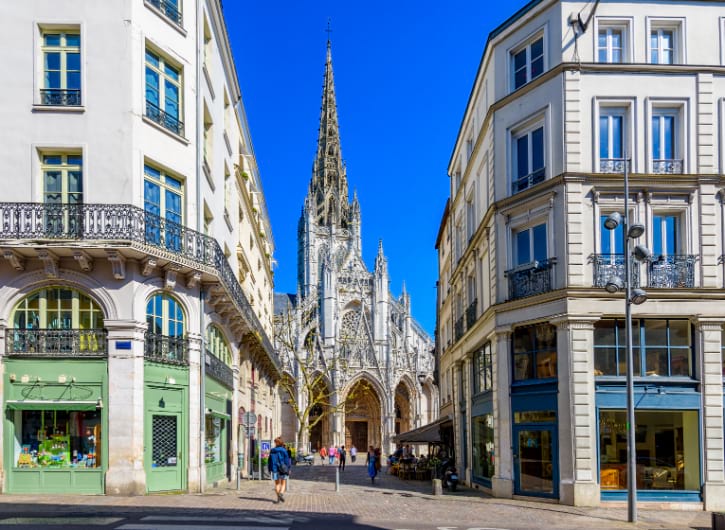
Why visit: Often called a “monumental church in miniature”, this is a masterpiece of Flamboyant Gothic architecture. The stone tracery is so delicate it looks woven rather than carved. The five-arched porch arranged in a semicircle is particularly striking.
What to expect: The exterior is the main draw, with intricate sculptures that have survived centuries of turmoil. Inside, the church is more restrained but beautifully elegant. The square around the church is wonderfully atmospheric, with historic buildings and quiet cafes.
i. Saint-Ouen Abbey Church
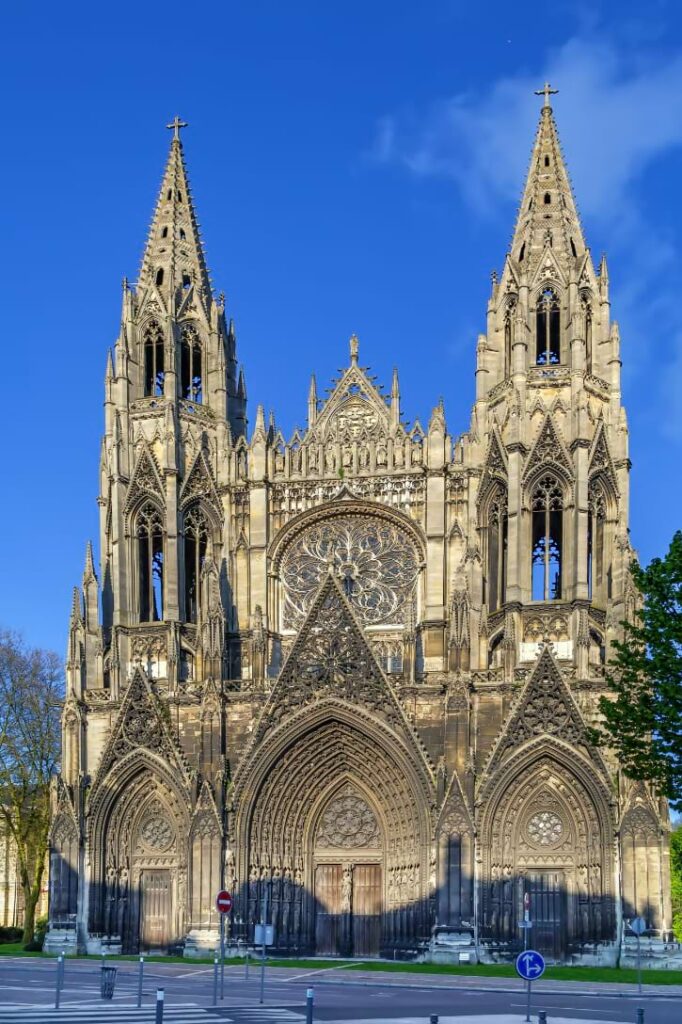
Why visit: This former Benedictine church rivals the cathedral in scale. It’s world-famous for its 1890 Cavaillé-Coll organ, which composer Charles-Marie Widor called the “Michelangelo of organs”. The Rayonnant Gothic architecture emphasizes light and soaring height.
What to expect: The interior is breathtaking, with 80 stained-glass windows and a nave stretching 137 meters. The central tower, known as the “Crown of Normandy”, rises 82 meters in elaborate Flamboyant style. Public gardens surround the abbey, offering a rare green space in the historic center.
j. Hôtel de Ville
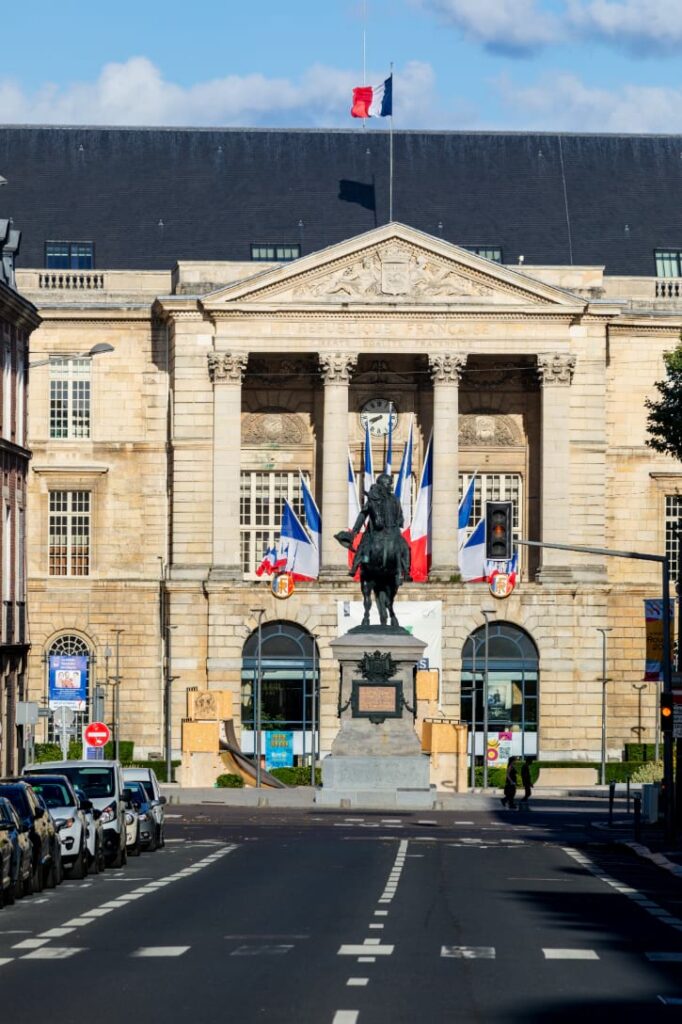
Why visit: Rouen’s City Hall occupies the former dormitories of Saint-Ouen Abbey’s monks. The Neoclassical building offers a striking contrast to the medieval architecture nearby.
What to expect: While the interior is used for city business, the facade is worth admiring. Look for the central portico with Corinthian columns and the equestrian statue of Napoleon in the square.
k. Rue du Gros Horloge
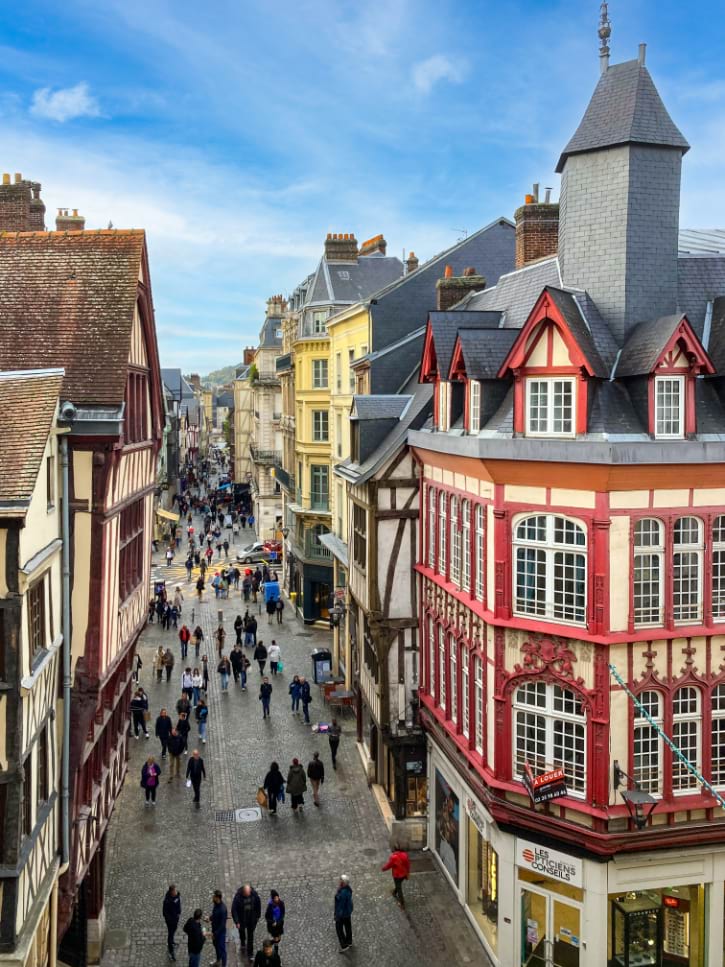
Why visit: This is Rouen’s most famous street, the first pedestrian street in France. It connects the Cathedral to Place du Vieux-Marché and offers the classic “postcard” view of the city, with half-timbered houses framing the Gothic belfry and astronomical clock.
What to expect: A lively mix of international brands and local boutiques fill the historic timber-framed buildings. The street is always bustling, with a vibrant energy that feels both historic and modern at once.
l. Rue Eau de Robec
Why visit: This picturesque street follows a small stream and reflects Rouen’s history as a textile center. It offers an almost Venice-like atmosphere with small bridges and colorful half-timbered houses. Many buildings still have “greniers-étentes”, the hanging attics dyers used to dry fabrics.
What to expect: This is a quieter, more residential street. You’ll find antique shops, cozy cafes, and the National Museum of Education. The atmosphere is wonderfully tranquil and photogenic, especially in late afternoon light.
m. Rue Damiette
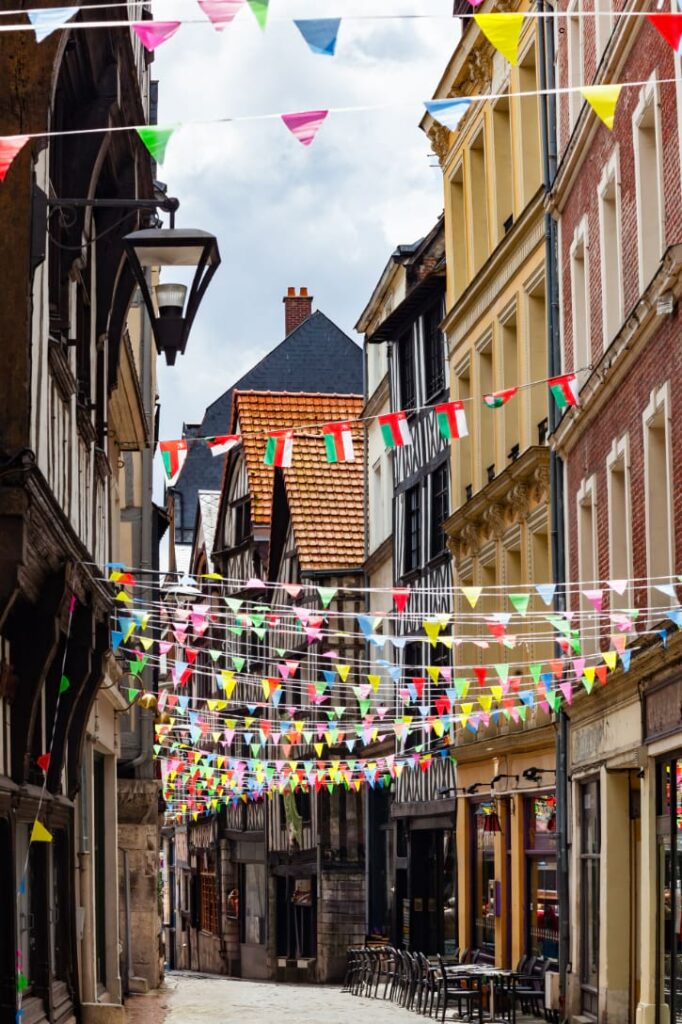
Why visit: In the heart of the Saint-Maclou antique district, this is one of the most historically intact streets in Rouen. It’s home to antique dealers and master luthiers, and it’s famous for its “leaning” houses where upper floors jut out over the cobblestones.
What to expect: Walking here feels like stepping back in time. Shops sell rare books, vintage furniture, and handcrafted violins. The view looking north toward Saint-Ouen Abbey tower is iconic.
n. Rue Saint Romain
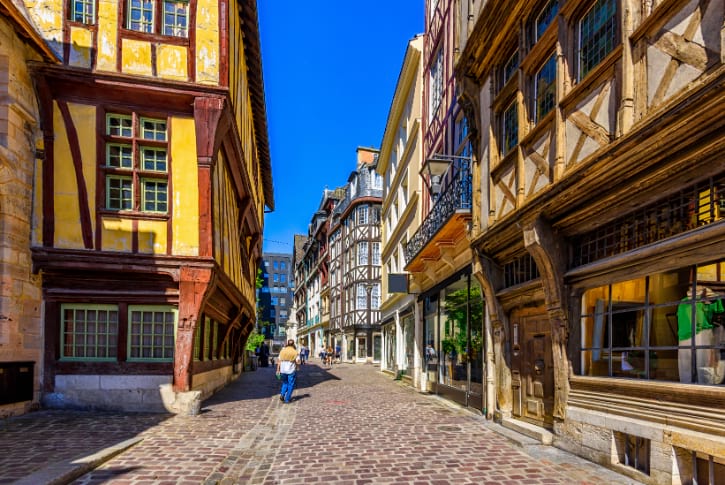
Why visit: Running alongside the Cathedral, this is arguably the most atmospheric street in the historic center. It has escaped major modern development, preserving architecture from the 14th to 18th centuries. The entrance to Historial Jeanne d’Arc is here.
What to expect: Narrow and winding, the street is framed by timber-framed houses that lean over the path. It’s often quieter than the main thoroughfares, giving you time to appreciate the textures of ancient stone and wood while catching unique close-up views of the Cathedral.
4. The Perfect Walking Routes
Here are two routes that let you see the best of Rouen, depending on your interests.
Route 1: The Artistic & Medieval Heart
This route focuses on art, architecture, and the charming back streets.
- 9:00 AM – Rouen-Rive-Droite Train Station
- 9:15 AM – Musée des Beaux-Arts de Rouen
- 11:00 AM – Saint-Ouen Abbey Church & Hôtel de Ville
- 12:00 PM – Rue Eau de Robec
- 12:15 PM (Lunch) – Les Gens Heureux/ LE P’TIT BEC
- 1:30 PM – Eglise Saint-Maclou & Aitre Saint Maclou
- 2:30 PM – Rue Damiette & Cathédrale Notre-Dame de Rouen
- 4:00 PM – Historial Jeanne d’Arc (Adjacent to Cathedral)
- 5:00 PM – Le Gros-Horloge & Rue du Gros Horloge
- 6:30 PM – Place du Vieux-Marché & Église Sainte-Jeanne-d’Arc
- 7:30 PM (Dinner) – Le 6ème Sens/ Rest’O’Rock
Route 2: Joan of Arc & Historic Landmarks
This route follows the story of Joan of Arc and hits the major landmarks.
- 9:00 AM – Rouen-Rive-Droite Train Station
- 9:20 AM – Place du Vieux-Marché & Église Sainte-Jeanne-d’Arc
- 10:30 AM – Le Gros-Horloge via Rue du Gros Horloge
- 11:30 AM – Cathédrale Notre-Dame de Rouen
- 12:30 PM (Lunch) – Dame Cakes
- 2:00 PM – Historial Jeanne d’Arc & Rue Saint Romain
- 3:30 PM – Eglise Saint-Maclou & Rue Damiette
- 4:15 PM – Saint-Ouen Abbey Church & Hôtel de Ville
- 5:15 PM – Musée des Beaux-Arts de Rouen
- 7:00 PM (Dinner) – Le Bouillon d’Or/ Brasserie Chéri
5. What to Eat in Rouen
Norman cuisine is all about rich dairy, local fruit, and artisanal sweets. Here are five things to try:
- Duck à la Rouennaise – A rare pressed duck served in a rich red wine and blood sauce, a local specialty.
- Mirliton de Rouen – A delicate tartlet filled with smooth almond and orange blossom cream.
- Douillon d’Elbeuf – A whole apple wrapped in puff pastry and baked until tender.
- Sucre de Pomme – A firm, apple-flavored candy that’s been a city specialty for centuries.
- Larmes de Jeanne d’Arc – Roasted almonds coated in dark chocolate and cocoa, named “Tears of Joan of Arc”.