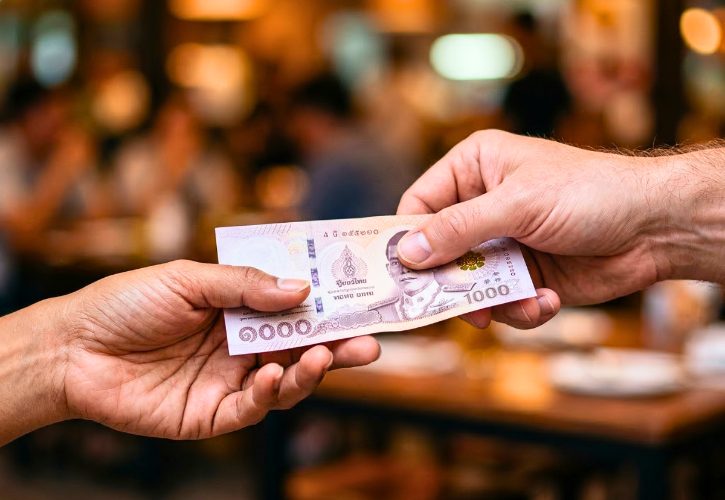
Should you tip in Thailand? How much? When? If you’ve searched online, you’ve probably found answers that completely contradict each other.
One source says “never tip”, another says “always leave 10%”, and then your restaurant bill shows a mystery service charge you weren’t expecting.
Here’s the truth: tipping in Thailand is not mandatory, but it is situational.
In certain moments, a small, thoughtful tip is normal and genuinely appreciated. This guide breaks it all down so you can stop second-guessing every receipt. 😊
1. Do You Need to Tip in Thailand?
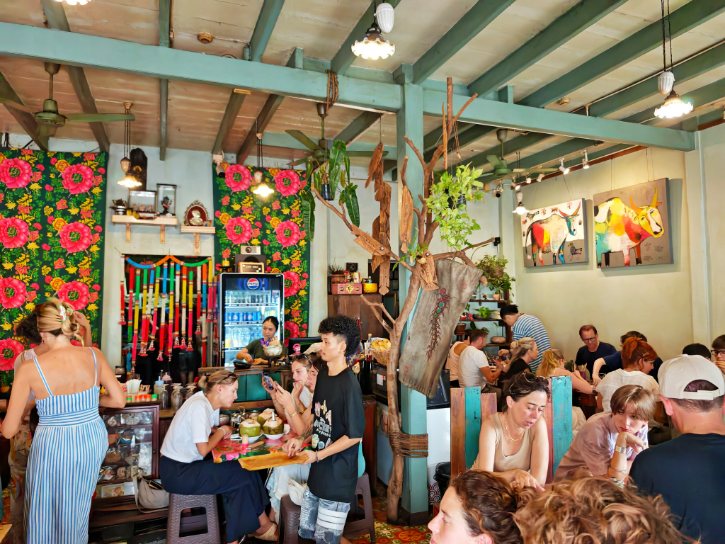
Think of tipping in Thailand as a thank-you, not a requirement.
Unlike the U.S., where tipping is built into how service workers are paid, Thailand doesn’t have that system.
You won’t be expected to tip in most everyday situations. But when someone gives you personal, genuinely helpful, or above-and-beyond service, a small tip is a nice way to show appreciation.
The simplest mindset to carry with you:
- Tipping = appreciation, not obligation
- When in doubt, rounding up is almost always the safest and most natural move
That’s really all you need to remember as a baseline. The sections below cover the specifics.
2. Tipping at Restaurants
a. Local Eateries and Casual Spots
Tipping is not expected. Most Thai diners just leave behind small coin change or maybe a 20 THB note. Prices are usually all-inclusive.
b. Mid-Range Restaurants
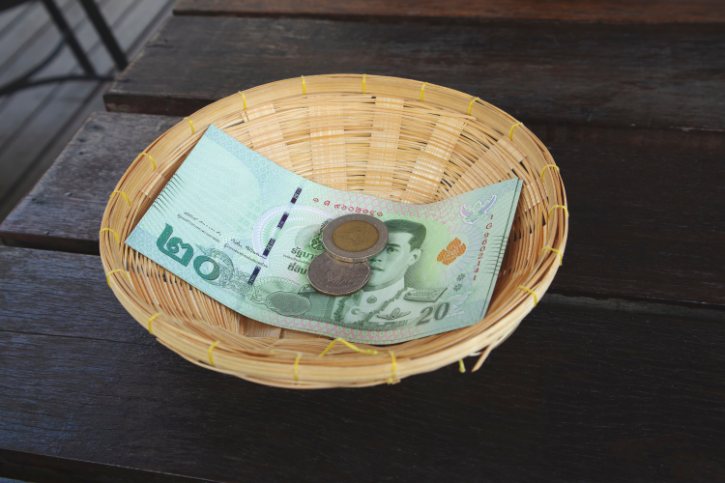
Rounding up becomes more common here. If your bill is 470 THB, leaving 500 THB is a simple and appreciated gesture. Check the bill for a service charge before deciding on anything extra.
c. Fine Dining and the “Plus-Plus” (++) System
If you see “++” next to menu prices, it means the listed price does not include the 10% service charge or the 7% VAT. The math is cumulative. A 1,000 THB menu item actually costs 1,177 THB after both are applied.
Trust me, this is where many travelers get confused.
When a service charge is already on the bill, you do not need to tip on top of it. That charge functions as a built-in gratuity. If a server was truly outstanding, handing them 50 to 100 THB directly is a nice personal touch.
d. Quick Summary
- Street food: Not expected. Round up to the nearest 5 or 10 THB.
- Local eatery: Not expected. Small change or 20 THB.
- Mid-range/cafe: Round up to the next 100 THB, or leave 5% to 10%.
- Fine dining: Service charge usually included. Optional 50 to 100 THB for exceptional personal service.
3. Tipping Street Food and Markets
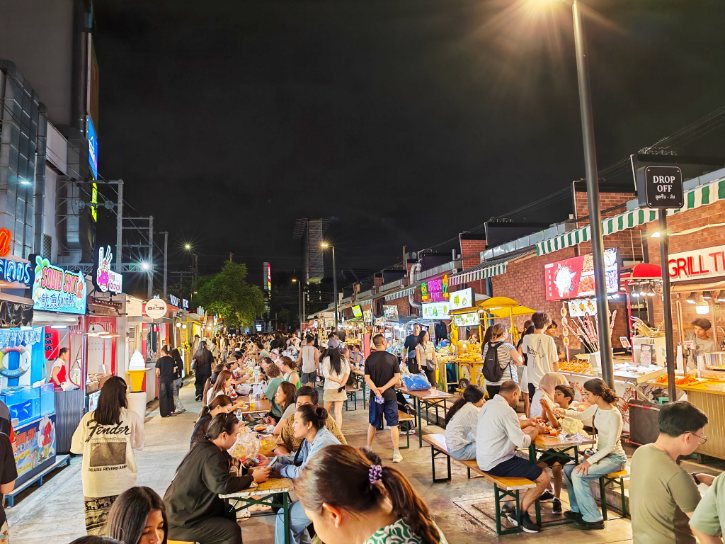
a. Why Tipping Is Not Expected Here
Street food is the heart and soul of eating in Thailand, but this is one area where tipping can actually backfire.
Most street meals cost 40 to 80 THB. If you try to leave a 20 THB tip on a 50 THB bowl of noodles, the vendor might genuinely think you misunderstood the price or left money behind by accident.
b. The Only Exception
If a vendor goes above and beyond, like spending extra time customizing a dish or explaining Thai ingredients, rounding up is a nice gesture. Hand over 100 THB on a 95 THB bill and say “keep the change” (in Thai: Mai tong thon).
4. Tipping in Hotels
a. Bellboys and Porters
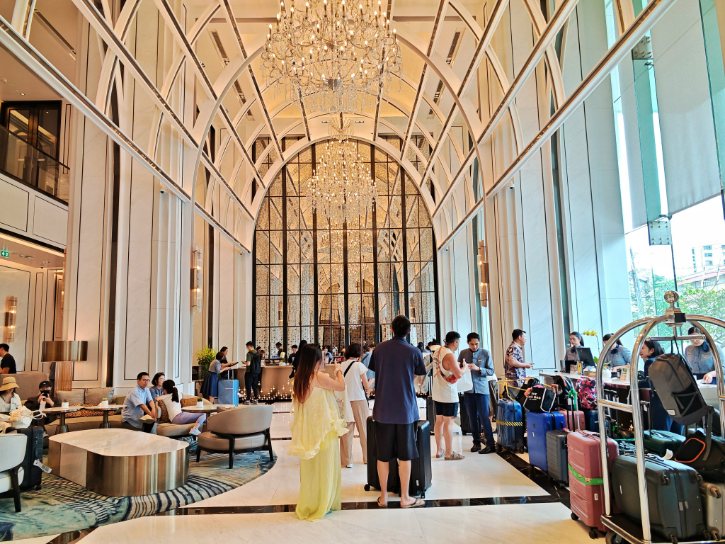
20 to 50 THB per bag is the standard. If the porter navigates multiple flights of stairs (common in boutique resorts without elevators), tip toward the higher end.
b. Housekeeping
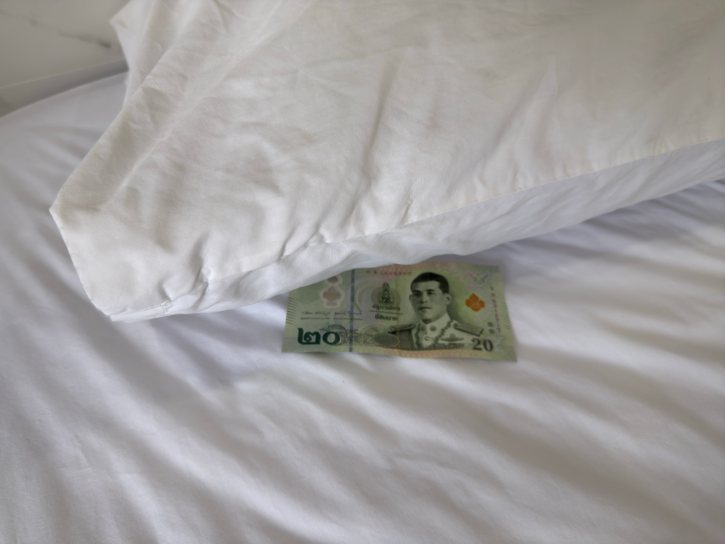
This is probably the most overlooked tipping situation. Leave 20 to 50 THB per day, and do it daily rather than at the end of your stay. This way, the person who actually cleaned your room that day receives it.
Leave the cash somewhere visible like the pillow or nightstand. A small “thank you” note next to it makes your intention clear. At luxury resorts, up to 100 THB per night is considered generous.
c. Concierge
No tip needed for simple tasks like booking a taxi. But if they secure a table at a fully booked restaurant or coordinate a complex itinerary, 50 to 100 THB is a standard courtesy.
d. Room Service
Check the bill first. Most room service orders include a 10% service charge. If it is there, no extra tip is needed. If not, 20 to 50 THB is appropriate.
5. Tipping Taxi and Grab Drivers
a. Metered Taxis
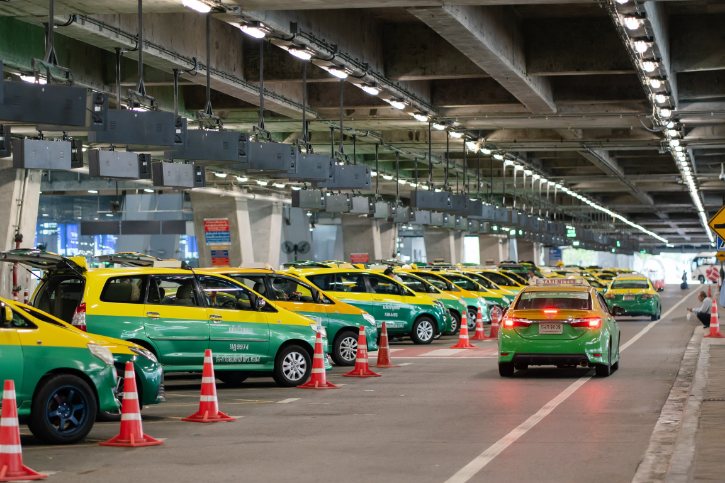
For short rides, round up to the nearest 5 or 10 THB. It saves the driver from digging for change and serves as a small thank-you for an honest, metered ride.
- Fare is 63 THB: Hand over 70 THB.
- Fare is 87 THB: Hand over 90 or 100 THB.
- Fare is 92 THB: Round up to 100 THB.
For longer rides to the airport, a 50 THB tip is appropriate, especially if the driver helped with luggage.
b. Grab and Bolt (Ride-Hailing Apps)
Tipping is entirely optional. The apps let you add 20, 50, or 100 THB after the ride. During extreme weather like heavy rain, adding a small tip is a really thoughtful gesture.
c. Tuk-Tuks and Motorbike Taxis
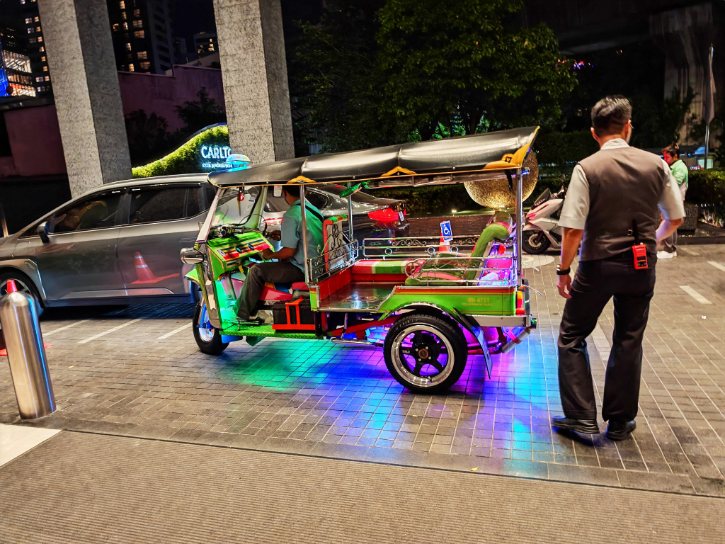
The price is always negotiated before you get on. Because these rates already include a “tourist premium”, no additional tip is expected.
6. Tipping Tour Guides and Drivers
a. Group Tours
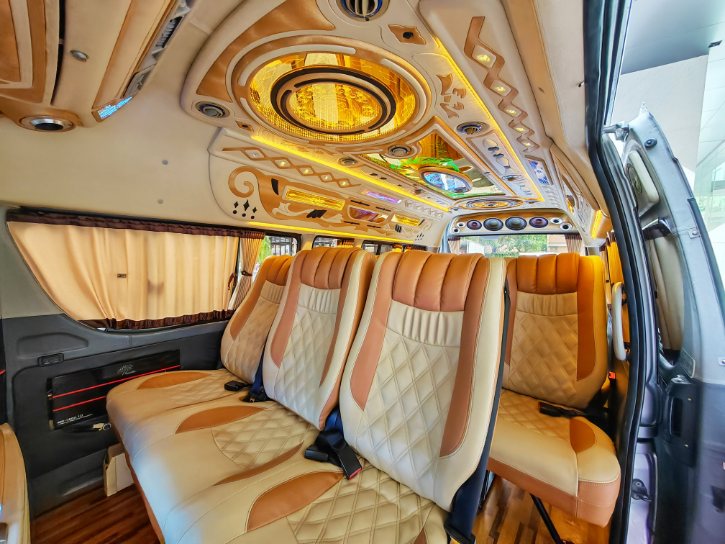
For large group tours (20+ people), 100 THB per person is standard, handed to the guide at the end of the day. For very large groups (40+), 50 THB per person is also acceptable.
b. Private Tours
For excellent full-day service, 300 to 500 THB is standard and generous. If the guide was truly exceptional, up to 1,000 THB is a high-level mark of appreciation.
c. Separate Drivers
If your tour has a dedicated driver, tip them independently. A driver who drove safely, kept the vehicle cool, and offered cold water deserves 100 to 300 THB for a full day.
d. Quick Summary
- Large group: 50 to 100 THB per person for the guide.
- Small group: 100 to 200 THB per person for the guide. 50 to 100 THB for the driver.
- Private full-day: 300 to 500 THB for the guide. 100 to 300 THB for the driver.
- Private multi-day: 500+ THB per day for the guide. 200+ THB per day for the driver.
7. Tipping Massage Therapists
a. The Commission Reality
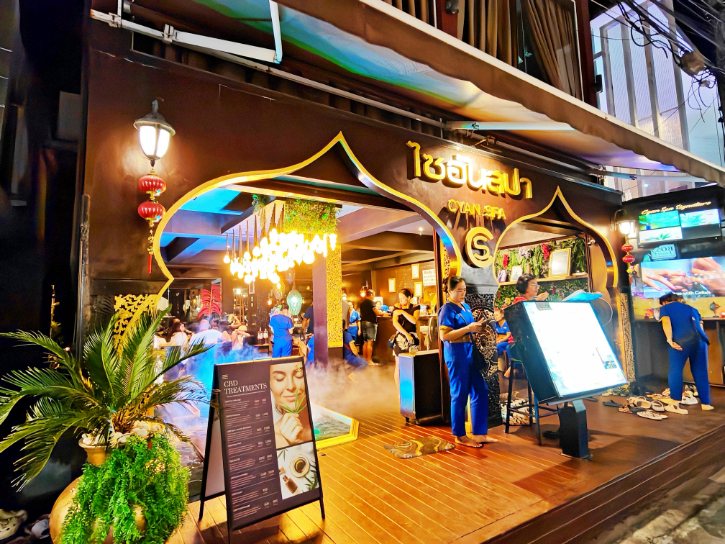
In most standard massage shops, the therapist earns a commission of just 30% to 40%. If you pay 300 THB for a foot massage, the therapist might only take home 100 to 120 THB for an hour of physically demanding work. The tip is a vital part of their income.
b. How Much to Tip
- Standard massage (250 to 400 THB): Tip 50 to 100 THB.
- Premium spa or hotel treatment (1,000 THB+): Tip 10% to 15%.
c. Important Etiquette
Always hand the tip directly to the therapist. Tips left at the front desk or added to a card may be shared with management or reduced by processing fees.
8. Tipping Boat Tours and Island Trips

a. Shared Boat Tours
For shared island-hopping excursions on speedboats or catamarans, 100 THB per person is common.
This is typical for popular trips around Phuket, Krabi, or the Phi Phi islands. The tip is usually pooled among the entire crew, including the captain and deckhands, at the end of the trip.
b. Private Boat Charters
The group should provide a collective tip. 500 to 1,000 THB total for the crew is considered fair for a full-day experience.
c. Luxury Yacht Charters
Luxury yachting follows international standards. The general guideline is 5% to 15% of the base charter fee, with 10% being the standard. Hand it in an envelope to the Captain on the final day.
9. When You Should NOT Tip
Situations Where Tipping Is Unnecessary
- Street vendors (goods): The negotiated price is the final price. No tip on top.
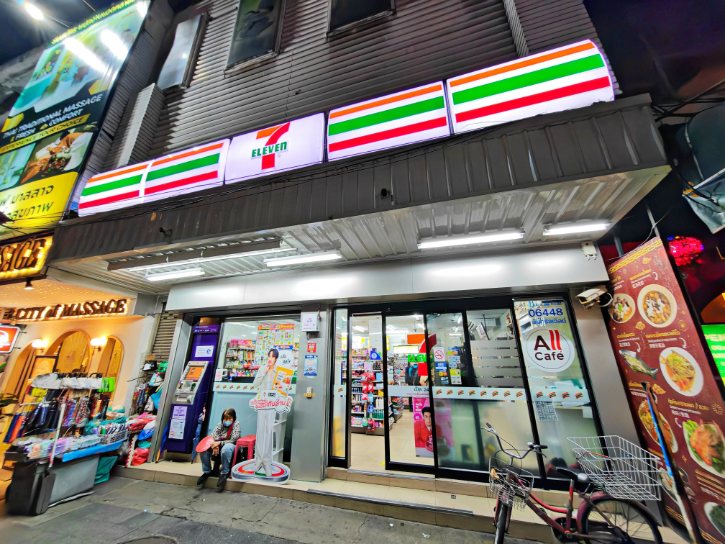
- Convenience stores: 7-Eleven, Family Mart, and similar shops have no tipping culture.
- Retail and department stores: Employees in malls do not expect tips.
- Fast food and counter service: No tip needed at places like Starbucks or McDonald’s.
- “Nett” pricing: If a menu says “Prices are Nett”, all taxes and charges are included. No extra tip expected.
10. Common Tipping Mistakes to Avoid
a. Tipping with Coins
A pile of small coins as a tip for a porter or therapist comes across as less thoughtful. Use 20 or 50 THB notes whenever possible.
b. Ignoring the Service Charge
Always check your receipt for “SC” or “Service Charge”. Tipping an additional 15% on top of a 10% service charge is unnecessary and can create unrealistic expectations for staff.
c. Tipping Out of Pressure
Thai people rarely ask for tips directly. If you feel pressured by an aggressive guide or driver, you are likely in a tourist-trap scenario. Tipping should always be your choice.
d. Giving Foreign Banknotes
Always tip in Thai Baht. Handing a driver or server a $10 USD or €5 EUR note might seem generous, but it means the worker has to visit a currency exchange on their own time, often losing money to poor rates or fees.
e. Using the Left Hand
When handing over a tip, always use your right hand or both hands. In Thai culture, the left hand is considered less appropriate for social interactions.
My Final Thoughts
Tipping in Thailand is simpler than most people expect. Keep a stash of small bills (20, 50, and 100 THB notes), check the bill for service charges, hand tips directly to the person when you can, and round up for taxis and casual meals.
When in doubt, don’t stress. Thai people are incredibly gracious. A genuine smile and a warm “thank you” are always appreciated, with or without a tip.