Thailand is one of the most welcoming destinations in Southeast Asia, but even experienced travelers can stumble into avoidable problems.
Some mistakes cost you money. Others waste precious time. A few can cause real embarrassment or even safety issues.
The good news? Most of these are easy to avoid once you know what to watch for.
Here are 10 mistakes that trip up visitors, and exactly how to avoid them. 😊
1. Miscalculating Airport Transfer Times
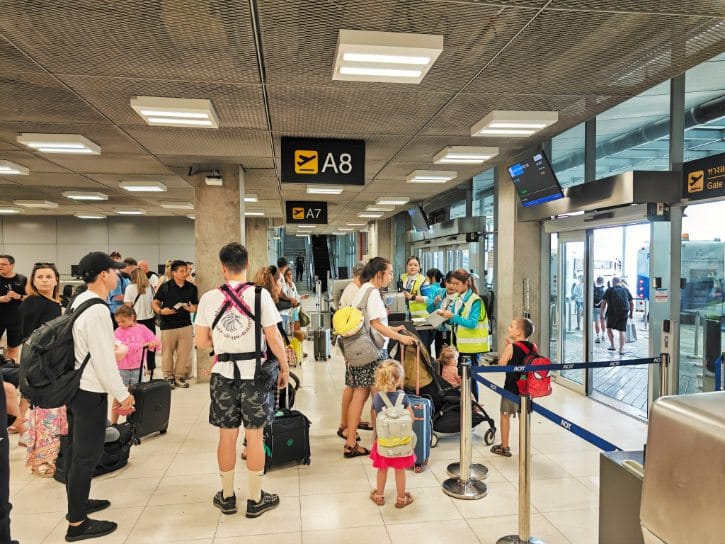
Getting from the airport to your hotel in central Bangkok takes longer than most visitors expect. Underestimating this is one of the fastest ways to start your trip stressed.
a. Two Airports, Different Locations
Bangkok has two major airports, and neither is close to the city center.
- Suvarnabhumi (BKK) sits about 30 kilometers east of central Bangkok. Most international flights land here.
- Don Mueang (DMK) is roughly 24 kilometers north of the city center. Budget airlines and many domestic flights use this airport.
In light traffic, the drive to popular areas like Sukhumvit, Silom, or Khao San Road takes 30 to 45 minutes. But light traffic in Bangkok is rare.
b. The Traffic Reality
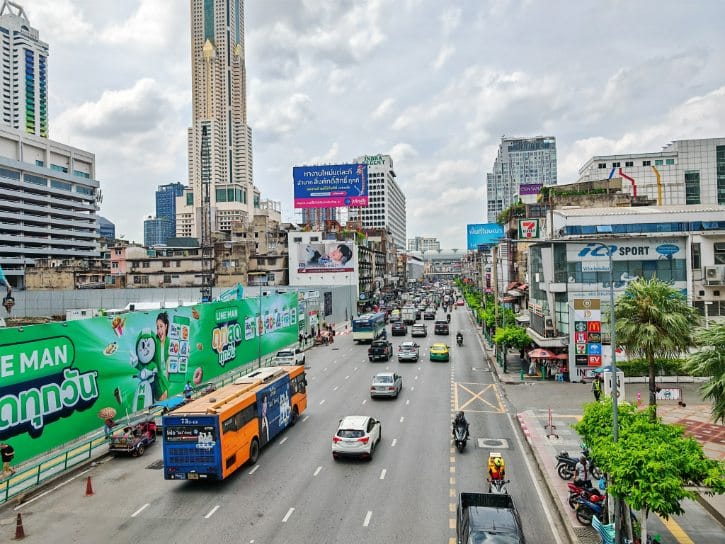
Bangkok traffic is unpredictable and often brutal.
- Rush hours (7:00 to 10:00 AM and 4:00 to 8:00 PM) can turn a 30-minute drive into 90 minutes or more.
- Monsoon rains cause flooding and slowdowns that can double your travel time.
If your flight lands during peak hours, plan for the worst.
c. Do Not Forget Immigration and Baggage
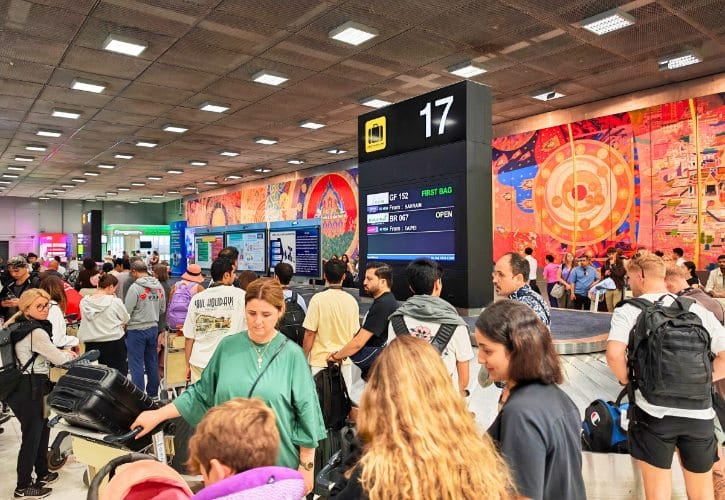
At Suvarnabhumi, immigration queues can stretch to 1 to 2 hours when multiple flights land at once. Add another 30 to 45 minutes for baggage claim.
Budget at least 90 minutes from landing to stepping outside the terminal.
d. Your Transport Options
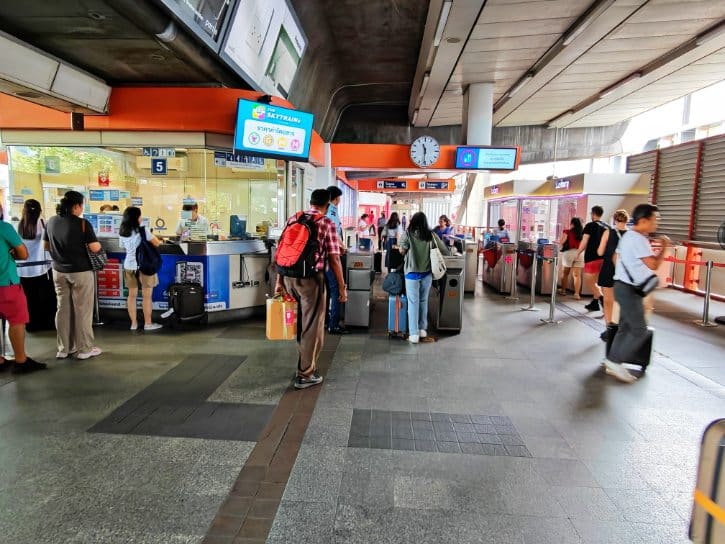
From Suvarnabhumi: The Airport Rail Link is fastest, reaching Phaya Thai station in about 30 minutes with BTS connections. Metered taxis cost ฿300 to ฿500 plus tolls, taking 45 minutes to 1 hour depending on traffic.
From Don Mueang: No direct rail link exists. Metered taxis cost ฿250 to ฿450 plus tolls. Travel time ranges from 30 minutes to well over an hour.
Grab or Bolt works from both airports with fixed pricing and a digital record.
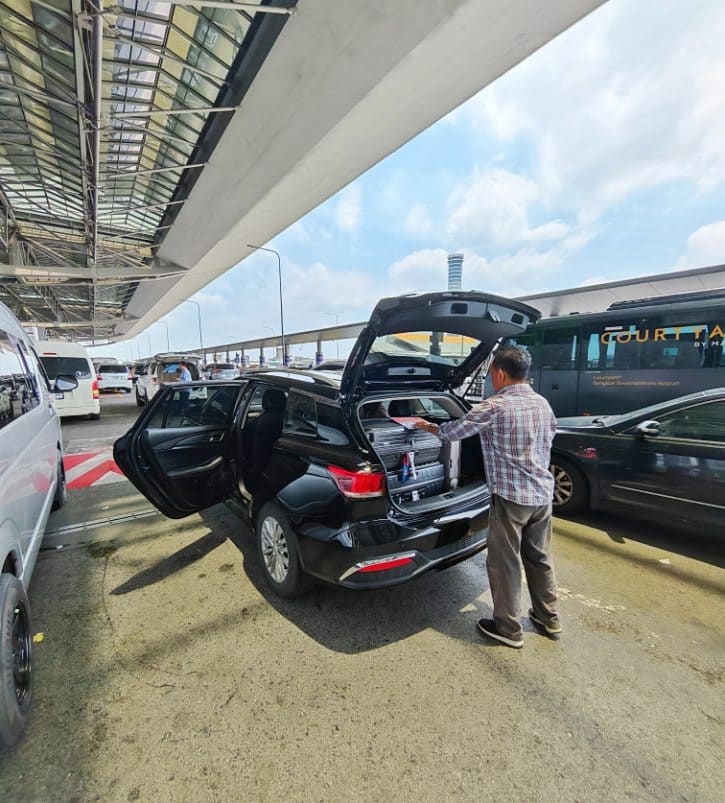
Private airport transfers can be pre-booked through platforms like Klook or GetYourGuide. A driver meets you at arrivals with a name sign and takes you directly to your hotel. This is a good option if you want a stress-free arrival, especially after a long flight or when traveling with family or heavy luggage.
e. The Smart Buffer
For arrivals: Give yourself at least a 3-hour buffer from landing to any fixed appointment. Immigration, baggage, and traffic can easily eat up 2.5 hours or more.
For departures: Leave your hotel at least 3.5 to 4 hours before international flights and 2.5 to 3 hours before domestic flights. Check-in closes 60 minutes before international departures and 45 minutes before domestic.
During rush hour or rainy season, add extra time. Missing a flight because of Bangkok traffic is an expensive lesson no one wants to learn.
2. Forgetting the Thailand Digital Arrival Card (TDAC)
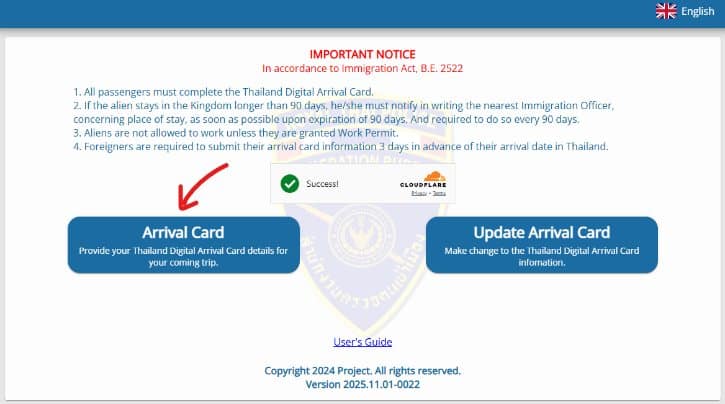
The old paper arrival card is gone. Thailand requires all foreign visitors to submit a Thailand Digital Arrival Card (TDAC) before entering the country by air, land, or sea.
a. How to Submit Your TDAC
Submit the TDAC within 72 hours of arrival at the official website: tdac.immigration.go.th. It is completely free.
The form asks for passport details, flight information, accommodation, and vaccination history if arriving from yellow fever zones. Once approved, you receive a QR code. Screenshot it and save it offline.
b. Watch Out for Scam Websites
Fake sites charge $20 to $50 for something that costs nothing and steal your passport data. If the website ends in .com or .org instead of .go.th, close it immediately.
c. What Happens If You Forget?
No TDAC means you get pulled out of the main immigration line. You will need to fill it out on your phone or at a kiosk in the arrivals hall before joining the queue again.
Bottom line: Treat the TDAC as part of your pre-flight checklist.
3. Handing Items Over With Your Left Hand
In Thailand, which hand you use matters more than you might expect.
a. Why the Left Hand Is a Problem
Traditionally, the left hand is associated with personal hygiene, while the right hand is used for social interactions.
Handing someone money, a gift, or a business card with your left hand can come across as disrespectful, especially with elders or officials.
b. The Polite Way
Use your right hand for exchanges. For extra respect, use the “supported arm” gesture: extend the item with your right hand while your left hand gently touches your right forearm. You will see Thai people do this often when paying bills or giving gifts.
4. Misusing “Ka” and “Khrap” When Speaking
These two words are the building blocks of polite Thai. Using them correctly makes a great impression.
a. The Basic Rule
- Women say “Ka” at the end of sentences
- Men say “Khrap”
Examples:
- Hello: Women say “Sawasdee ka” / Men say “Sawasdee khrap”
- Thank you: Women say “Khob khun ka” / Men say “Khob khun khrap”
- Yes: Women say “Chai ka” / Men say “Chai khrap”
- Sorry or Excuse me: Women say “Kho thot ka” / Men say “Kho thot khrap”
b. The Common Mistake
Many tourists hear a Thai woman say “Ka” and repeat it back. This is incorrect.
The particle reflects your own gender, not the person you are speaking to. A man always uses “Khrap”. A woman always uses “Ka”.
5. Stepping on Door Thresholds
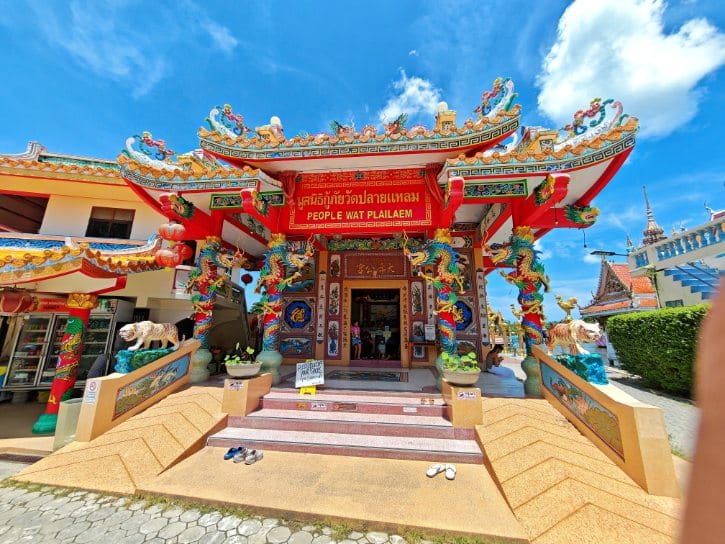
This small action carries big cultural meaning.
a. Why Thresholds Are Sacred
In Thai tradition, the raised threshold at the bottom of a doorway is believed to house a guardian spirit.
Stepping on it is seen as stepping on the spirit’s head, a serious insult that may bring bad luck.
b. Where You Will Encounter Them
You will find raised thresholds at temple halls, traditional teak houses, and heritage sites like the Jim Thompson House.
c. The Simple Fix
Step over the threshold, never on it. Watch any Thai person enter a temple and you will see a deliberate, high step to clear the wood.
6. Ignoring Beach Safety Warning Flags
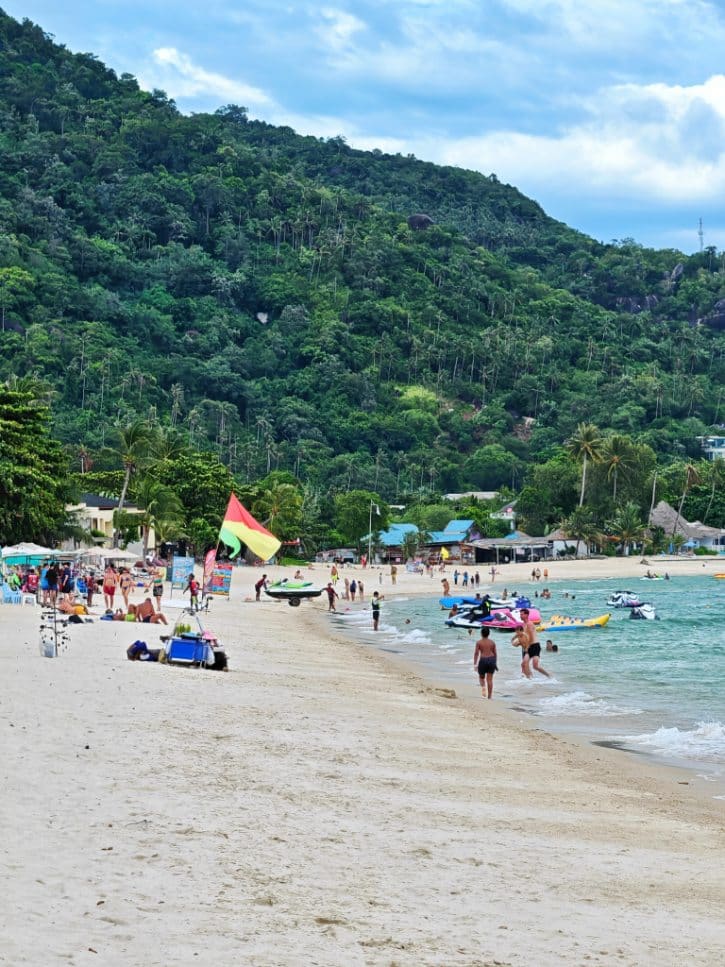
Thailand’s beaches are beautiful, but the water can be dangerous. The flag system exists to keep you safe.
a. Know the Flag Colors
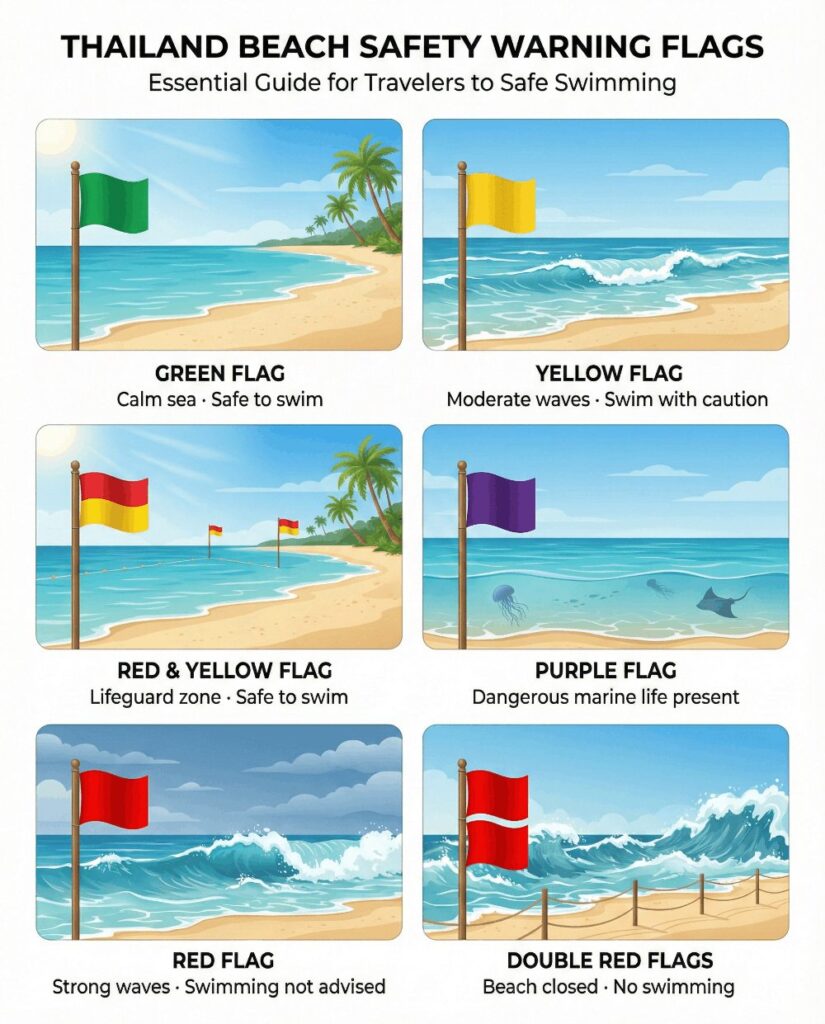
- Green = Safe to swim
- Yellow = Caution, moderate currents
- Red and Yellow = Lifeguard zone, safest area
- Purple = Dangerous marine life
- Red = No swimming, strong currents
- Double red = Beach closed
b. The Purple Flag Is Deadly
A purple flag can fly over calm, inviting water. That is what makes it dangerous.
It signals the presence of box jellyfish or Portuguese man o’ war. Box jellyfish are among the most venomous creatures on earth. A sting can cause cardiac arrest within minutes.
If you see a purple flag, stay out of the water entirely. If stung, do not rub the area. Seek medical help immediately.
c. Insurance Implications
Here is something many travelers do not realize: swimming past a red flag can void your travel insurance.
Most policies exclude coverage for “reckless behavior” or “prohibited activities”.
If you ignore a clear “No Swimming” warning and need rescue or medical care, you may be paying out of pocket.
7. Dressing Inappropriately for Temples
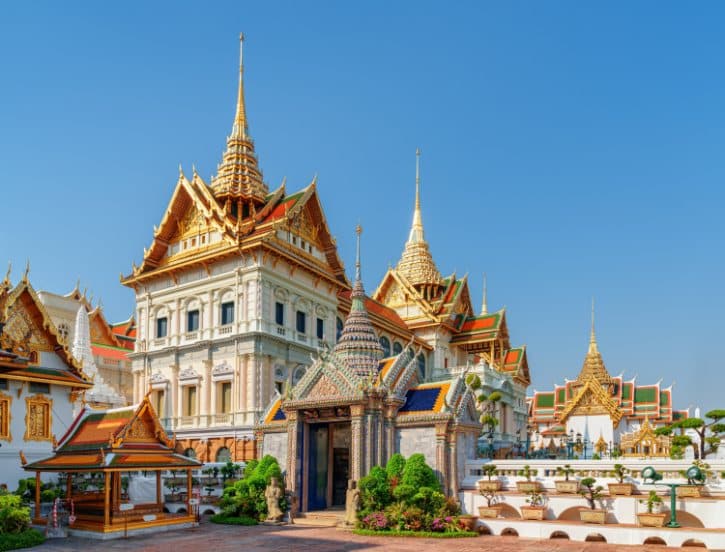
Dress codes vary by site. What passes at a small temple may get you turned away at the Grand Palace.
a. The Grand Palace Has Zero Tolerance
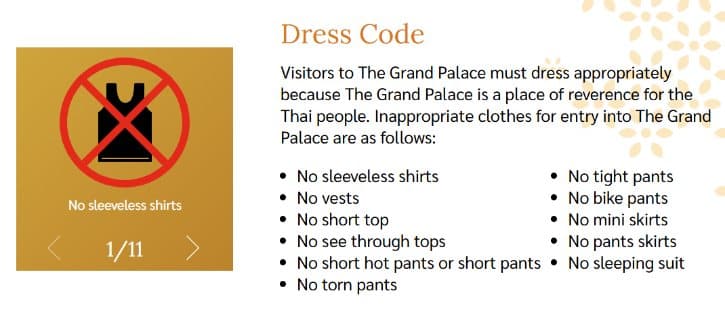
The Grand Palace and Wat Phra Kaew enforce the strictest dress code in Thailand. Guards check every visitor.
Not allowed:
- Sleeveless tops (draping a shawl over a tank top is often rejected)
- Shorts of any length
- Ripped or distressed jeans
- Tight leggings
You need ankle-length pants or skirts and tops with sleeves.
b. Local Temples
At most temples, you need to cover your shoulders and knees.
Many temples offer sarongs for rent, but carrying a lightweight scarf in your bag is more hygienic and convenient.
Always remove your shoes before stepping onto the raised platform or entering the main hall. Look for the pile of footwear near the entrance and follow suit. Socks are fine and can protect your feet from hot tiles.
8. Not Carrying Cash Smartly
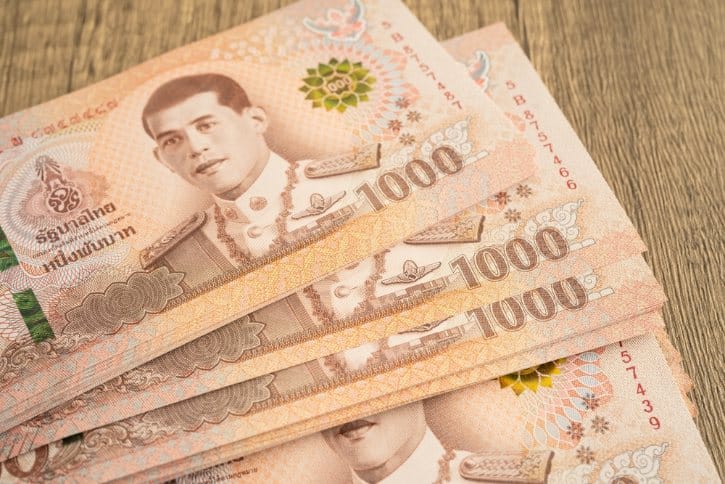
Thailand has embraced digital payments, but the system does not always work for visitors.
a. The PromptPay Problem
QR codes are everywhere in Thailand, and most use PromptPay, a Thai bank-to-bank payment system.
If you are from China, Singapore, Malaysia, Japan or Hong Kong, you can pay through PromptPay QR codes using your home banking apps.
However, if you are from other countries like the US, UK, Australia, or Europe, PromptPay does not connect to your banking apps.
Foreign credit cards work at hotels and malls, but for markets, tuk-tuks, and small eateries, you will need cash.
b. ATM Strategy
Thai ATMs charge a flat ฿250 fee (about $7–8) per foreign withdrawal.
Smart approach:
- Withdraw the maximum allowed (usually ฿20,000 to ฿30,000) to reduce the fee percentage.
- When the ATM asks to convert to your home currency, always say no. Their rate includes a 5 to 10% markup.
9. Getting Scammed by Tuk-Tuks and Taxis
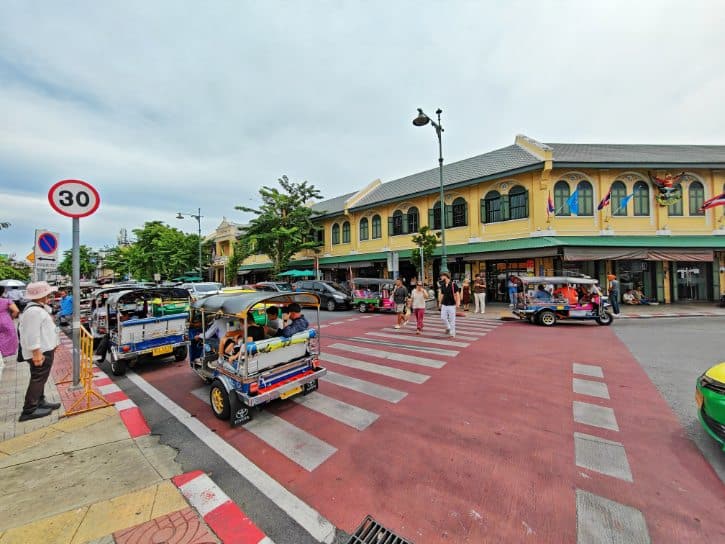
These scams have been around for years because they keep working.
a. The “Grand Palace Is Closed” Trick
A friendly local near the Grand Palace tells you it is closed for a “royal ceremony” or “monk cleaning day”. They offer a cheap tuk-tuk ride to other sites.
The real destination is a gem shop or tailor where you get pressured to buy.
The truth: The Grand Palace is open almost every day. Ignore the touts and walk directly to the ticket office.
b. Taxi Meter Games
Some drivers refuse the meter and quote inflated rates. Others use rigged meters that jump while stopped at red lights.
If something feels wrong, politely exit when safe.
c. Use Ride-Hailing Apps
Grab and Bolt operate under strict regulations with licensed drivers and registered vehicles. Using the app gives you a digital record of your trip and verified driver identity.
One warning: If a driver asks you to cancel the booking and pay cash, decline. Once you go off the app, there is no trip record and no protection if something goes wrong.
10. Women Touching Buddhist Monks
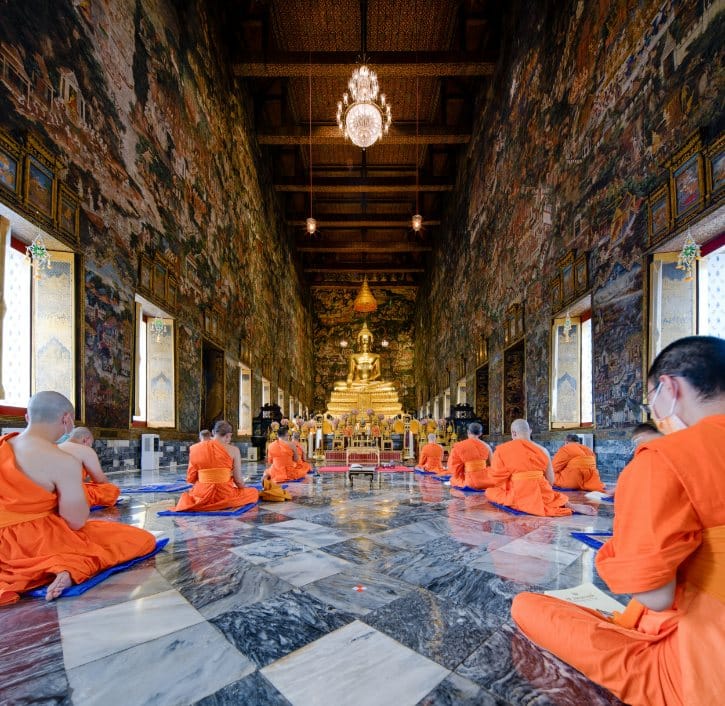
This rule surprises many female travelers, but it is one of the most important to understand.
a. Why Contact Is Prohibited
Thai monks follow monastic rules that prohibit physical contact with women. This protects the monk’s vows of celibacy and focus.
A monk cannot touch a woman, her clothing, or receive anything directly from her hand.
b. Public Space Etiquette
On public transport, avoid sitting directly next to a monk. If a monk enters a crowded carriage, women nearby should move to create space.
c. How to Offer Alms
If you want to give offerings to a monk:
- Do not hand items directly. The monk will pull back.
- The monk places a saffron cloth on the ground or his alms bowl.
- Place your offering on the cloth.
- The monk retrieves it without direct contact.
- Kneel or crouch so your head is lower than the monk’s.
The key principle: Maintain distance and show deference.