
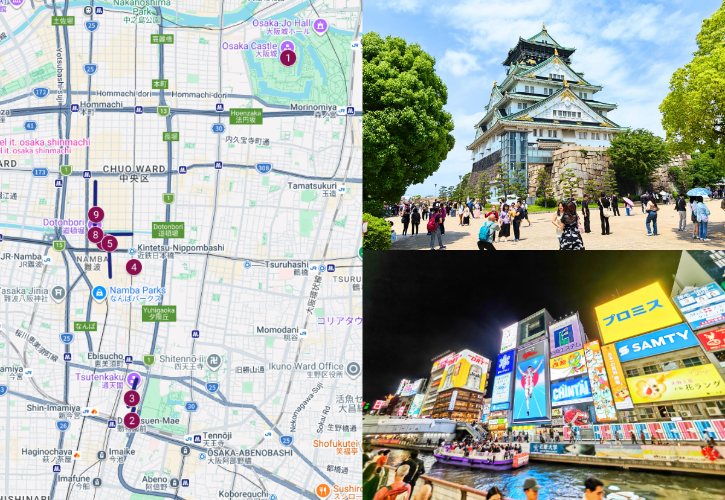
Osaka is vibrant, loud, and absolutely obsessed with food. It’s a city where ancient castle grounds sit just minutes from neon-lit streets packed with sizzling street stalls and retro arcades.
The best part? You don’t need a week to experience the highlights.
With the right route, one well-planned day is all it takes to hit Osaka’s most iconic spots, from its famous castle to its glowing canal-side nightlife.
This guide walks you through the perfect full-day itinerary, stop by stop. Let’s get into it.
9:00 AM: Osaka Castle
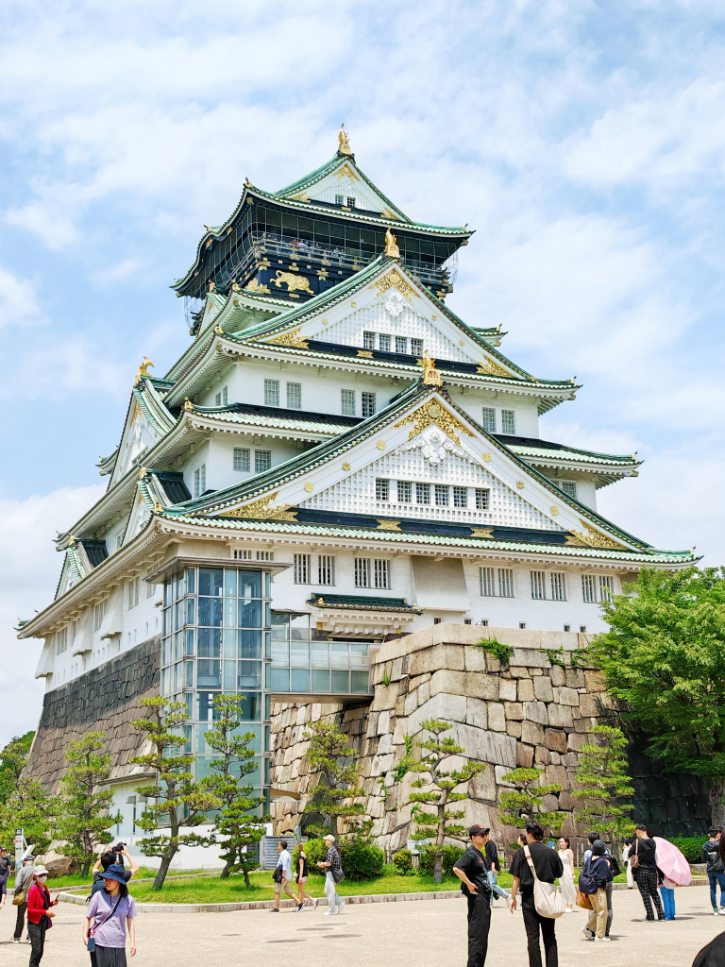
Start your morning at Osaka Castle, the city’s most iconic landmark.
The castle sits inside a massive park stretching over 100 hectares.
The original fortress was built in 1583 by Toyotomi Hideyoshi, one of Japan’s most powerful warlords.
What you see today is a 1931 reconstruction, and here’s the cool part: it was funded entirely by donations from Osaka’s citizens.
From the outside, the tower looks like it has five floors. But step inside and you’ll find eight stories. That mismatch was intentional, designed to confuse attackers back in the day.
What to See and Do
- Walk through the Otemon Gate to reach the main tower and take in the scale of the grounds.
- Explore the museum inside the tower. Each floor covers a different chapter of the castle’s history, with over 10,000 artifacts including samurai armor, weapons, and paintings.
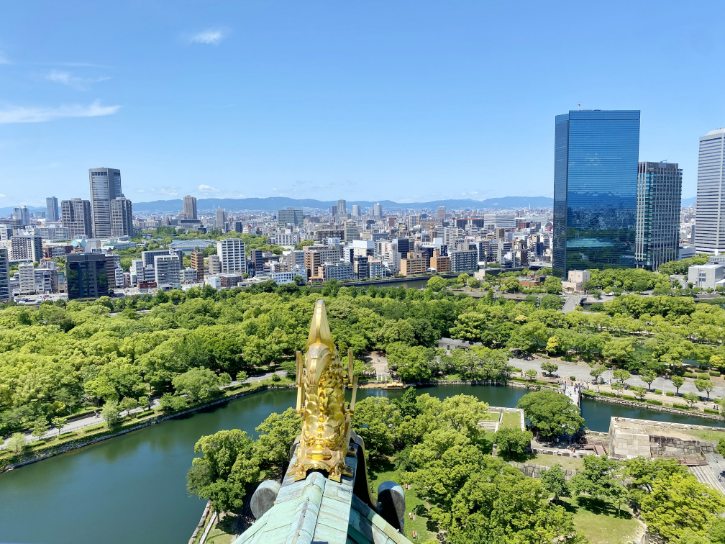
- Head to the 8th-floor observation deck for a panoramic view of the Osaka skyline. Trust me, it’s worth the climb.
- Visit the Nishinomaru Garden for a quieter moment and one of the best photo spots of the castle tower, especially during cherry blossom season.
12:00 PM: Janjan-Yokocho
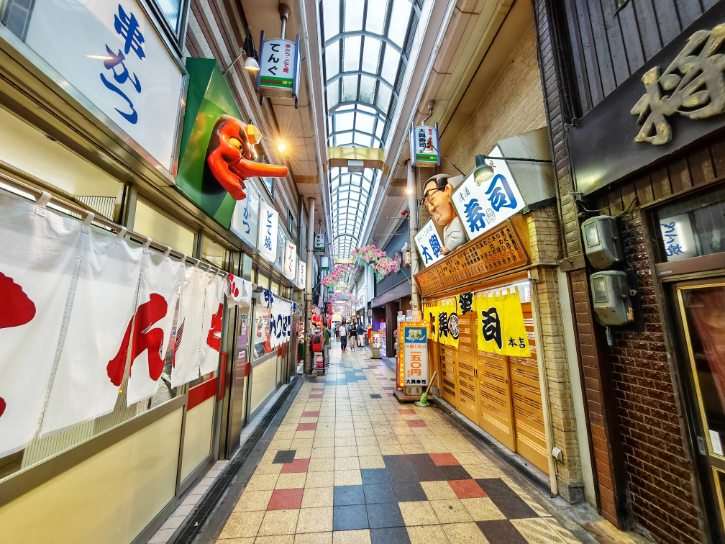
Welcome to “Deep Osaka”.
Janjan-Yokocho (officially Nanyo-dori Shopping Street) is a narrow covered alleyway, only about 2.5 meters wide and 180 meters long, in the Ebisu-Higashi district.
The name comes from the sound of shamisen and drums that shopkeepers used to play to draw in customers after World War II.
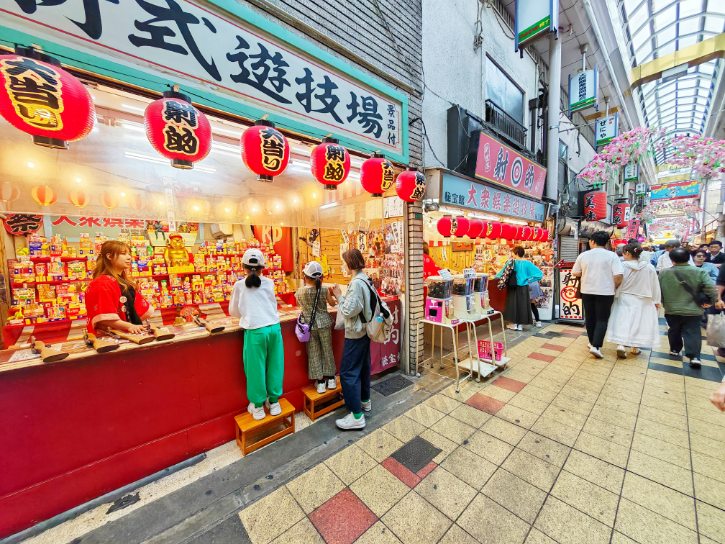
That post-war energy still lingers. You’ll find standing bars, old-school shogi (Japanese chess) parlors, and retro shooting galleries that have disappeared from the rest of the city.
This is not a polished tourist zone. It’s gritty, warm, and completely real.
1:00 PM: Shinsekai + Lunch
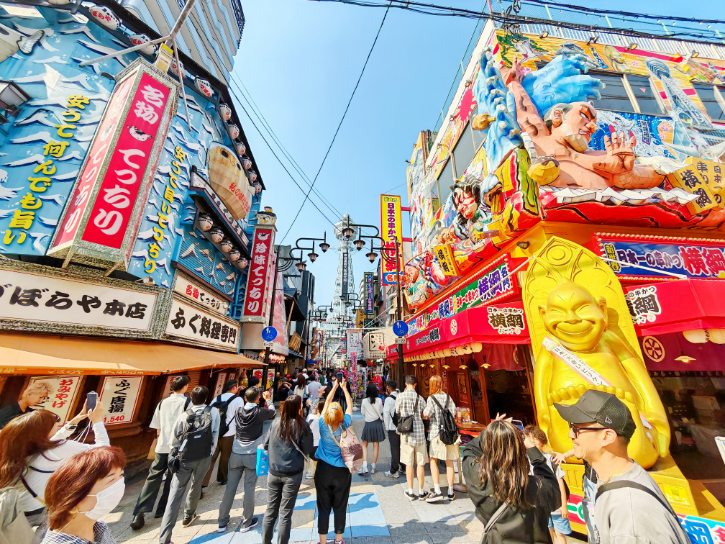
Step out of Janjan-Yokocho and you’re in Shinsekai, a district designed in 1912 to be a “New World” of modern entertainment. The northern half was modeled after Paris, the southern half after Coney Island.
Those grand ambitions didn’t quite work out as planned, but what Shinsekai became is arguably more interesting.
Today it’s a loud, colorful, retro neighborhood full of oversized 3D restaurant signs (giant blowfish, octopuses, sumo wrestlers) and a vibe that feels frozen somewhere between the 1960s and a fever dream.
What to See and Do
- Go up the Tsutenkaku Tower for views of both the modern Abeno Harukas skyscraper and the traditional low-rise rooftops of Tennoji.
- Rub the feet of the Billiken statue at the top for good luck. He originated from an American illustrator but has become totally inseparable from Shinsekai’s identity.
- Walk along Shinsekai Hondori Shopping Street for photos. The giant colorful signs here are iconic, some stretching up to 20 meters wide.
- Check out specialty knife shops like Tower Knives, where you can watch artisans hand-craft Japanese blades.
Lunch:
- Option 1: KURA SUSHI Shinsekai Tsutenkaku Branch
- Option 2: Kushikatsu Daruma – Dobutsuen-mae
3:00 PM: Kuromon Market
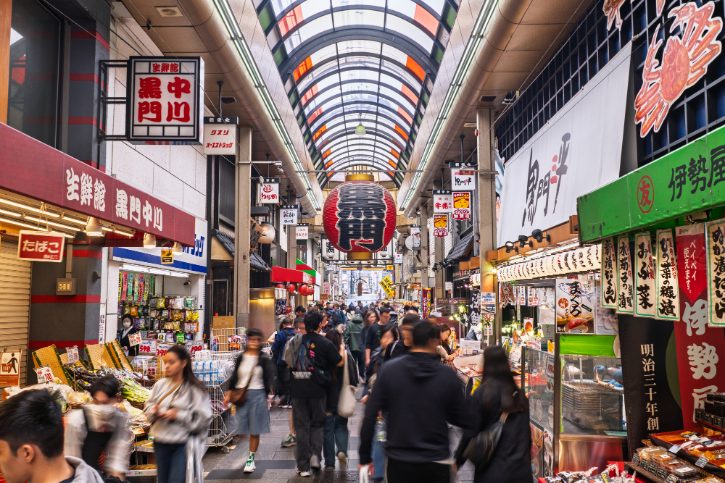
Now it’s time for Osaka’s most famous food market.
Kuromon Market is a 580-meter street lined with roughly 150 stalls.
It’s been the go-to source for fresh seafood and produce for over 170 years. Professional chefs shop here. That tells you everything about the quality.
What to Eat
This is where the “tabe aruki” (walk and eat) culture shines. You buy premium ingredients and have them prepared right in front of you.
- Freshly grilled scallops and wagyu skewers. Simple and perfect.
- Strawberry daifuku (strawberries wrapped in soft mochi).
- Toro (fatty tuna) sashimi. Some of the best you’ll find anywhere.
- Feeling brave? Try fugu (blowfish) prepared by a licensed chef.
4:30 PM: Sennichimae Street and Doguyasuji
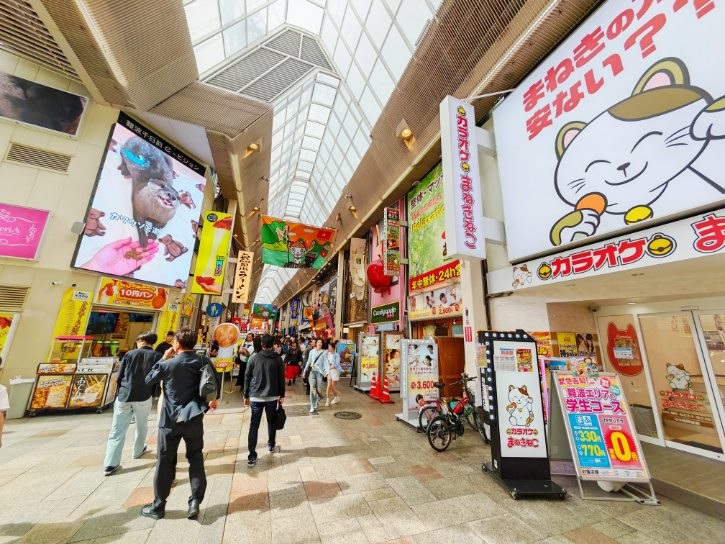
A short walk from Kuromon brings you to Sennichimae Street. The real highlight here is Doguyasuji, a 150-meter covered arcade dedicated entirely to kitchen tools and restaurant supplies. This is the backstage of Osaka’s food scene.
Professional chefs from across Japan come here for hand-forged Sakai knives, considered some of the sharpest in the world.
What to See and Do
- Browse the food sample shops. You can buy or even make those incredibly realistic plastic food models you see in Japanese restaurant windows. It’s a uniquely Japanese craft and a great souvenir.
- Look for takoyaki pans, okonomiyaki spatulas, ceramics, and lacquerware.
5:00 PM: Hozenji Yokocho
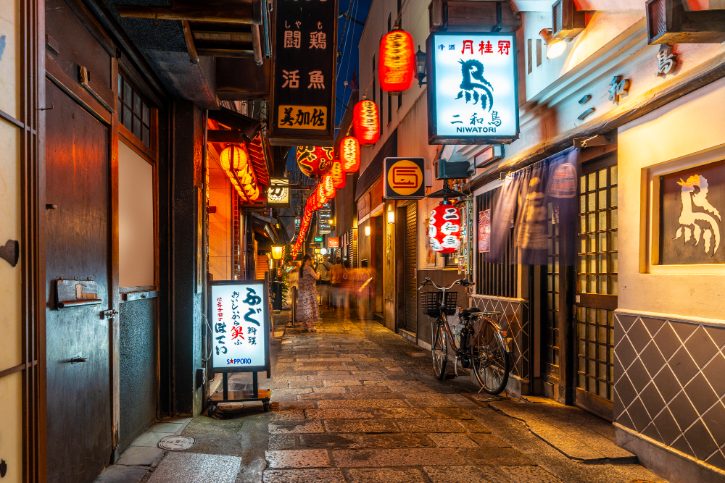
One moment you’re in the buzz of Sennichimae. The next, you step into Hozenji Yokocho, and everything goes quiet.
This pair of cobblestone alleys, each about 80 meters long, feels like a portal to old Osaka.
Stone paths, traditional wooden buildings, and swinging lanterns create an atmosphere that’s worlds apart from the neon just around the corner.
Despite being destroyed in the 1945 air raids, the area was carefully rebuilt to preserve its traditional character.
Today, it’s lined with over 60 high-end kappo restaurants, bars, and okonomiyaki shops.
What to Do
- Stop at the “Meoto Zenzai” sweets shop. They serve red bean soup split into two bowls. Tradition says couples who share it will enjoy a happy relationship. It’s charming, and the soup is delicious.
- If you’re looking for a special dinner spot, this is one of the best areas for long-established restaurants with intimate counter seating.
5:30 PM: Hozen-ji Temple
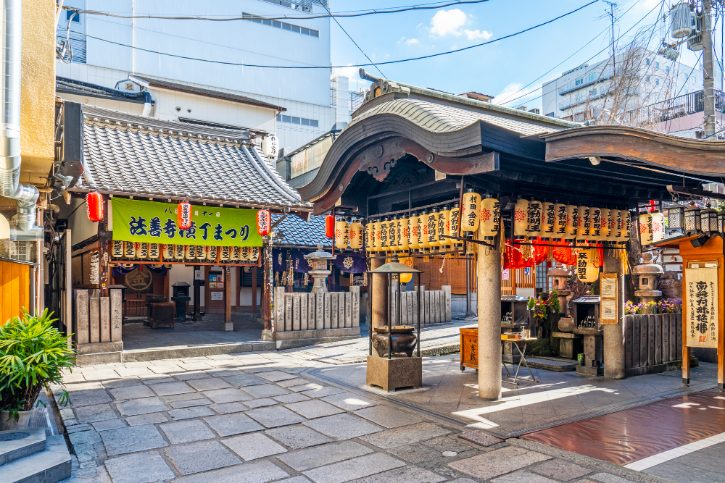
At the end of Hozenji Yokocho sits Hozen-ji Temple, a small Buddhist temple established in 1637.
It’s tiny, just a few hundred square meters, but what it lacks in size, it makes up for in character.
The Moss-Covered Fudo Myoo
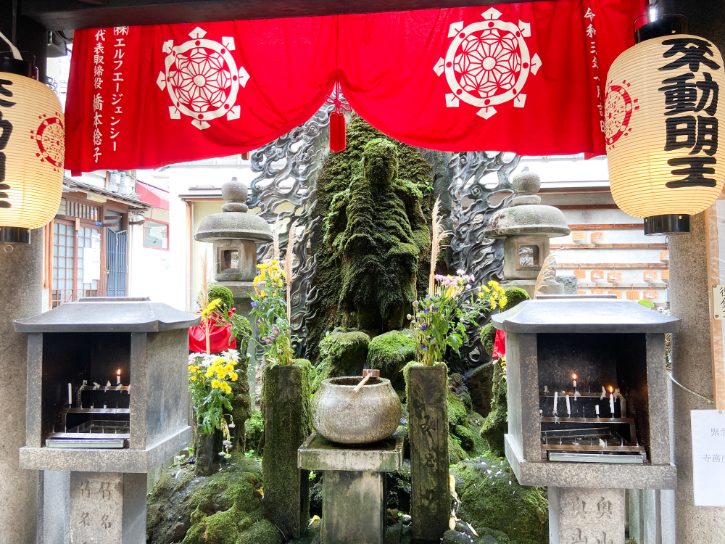
The main draw is the Mizukake Fudo (Water-Splashing Fudo) statue. Unlike polished bronze statues at most temples, this one is completely covered in thick green moss.
For decades, worshippers have been splashing water over it while making wishes.
Over time, the moss grew and gave the figure a striking, almost otherworldly appearance.
What to Do
- Take part in the ritual. Pick up a wooden ladle, scoop water, and pour it over the statue. It’s a simple, calming experience.
- Visit in the early evening. The warm orange glow of the surrounding lanterns makes this the most photogenic time.
6:00 PM: Dotonbori + Dinner
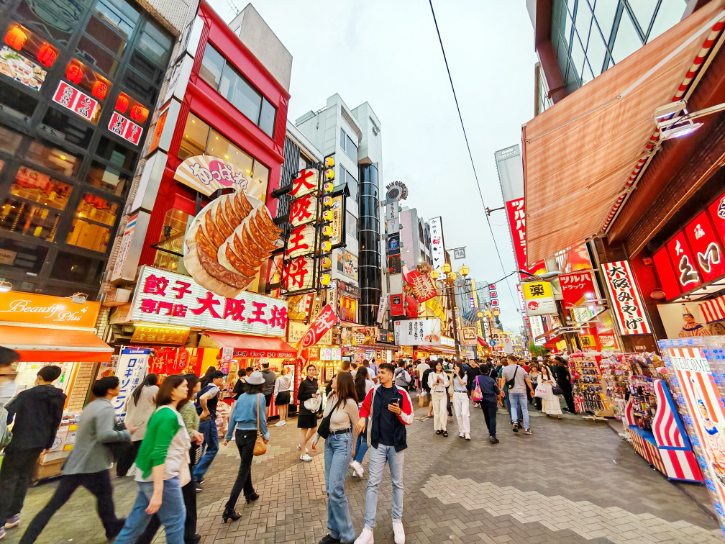
Here’s where the energy cranks up to maximum.
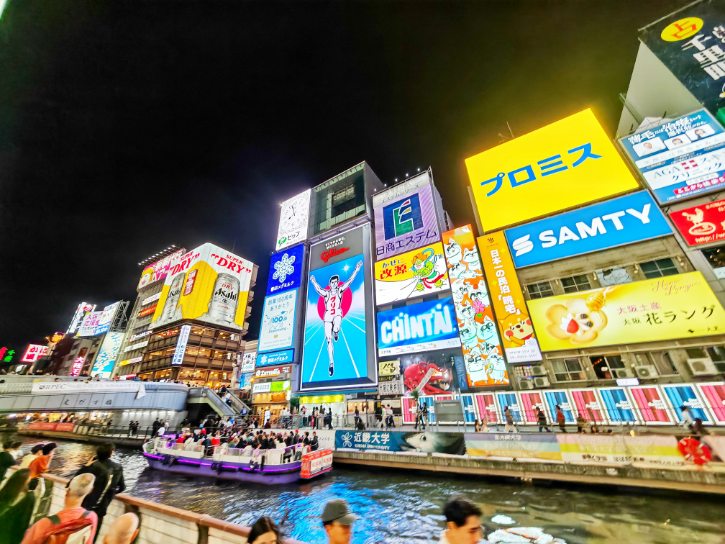
Dotonbori is Osaka’s most famous entertainment strip, running along the canal of the same name.
This is the beating heart of the city’s “kuidaore” (eat until you drop) culture: giant neon signs, enormous mechanical crabs, and streets packed with people eating, laughing, and taking photos.
The area has been an entertainment hub since the early 1600s, when it started life as a theater district.
The kabuki stages are mostly gone now, replaced by restaurants, cinemas, and street food stalls. But the theatrical energy is very much alive.
What to See and Eat
- The Glico Running Man sign at Ebisubashi Bridge. Getting a photo here is basically a rite of passage.
- The giant mechanical crab at Kani Doraku. It moves. It’s mesmerizing. It’s peak Osaka.
- The Tonbori River Walk along the canal is worth a stroll. The neon signs reflected in the water at night are stunning.
- Takoyaki (octopus balls) from the riverside stalls. Crispy outside, soft and gooey inside.
- Okonomiyaki (savory pancakes) from legendary spots like Chibo or Mizuno.
- Take a Tonbori River Cruise (about 20 minutes) for a completely different view of the neon-lit district from the water.
Dinner:
- Option 1: Daiki-suisan kaitenzushi Dotombori
- Option 2: Kinryu Ramen Dotonbori
- Option 3: Dotombori Kamukura – Dotombori
7:00 PM: Shinsaibashi-Suji Shopping Street
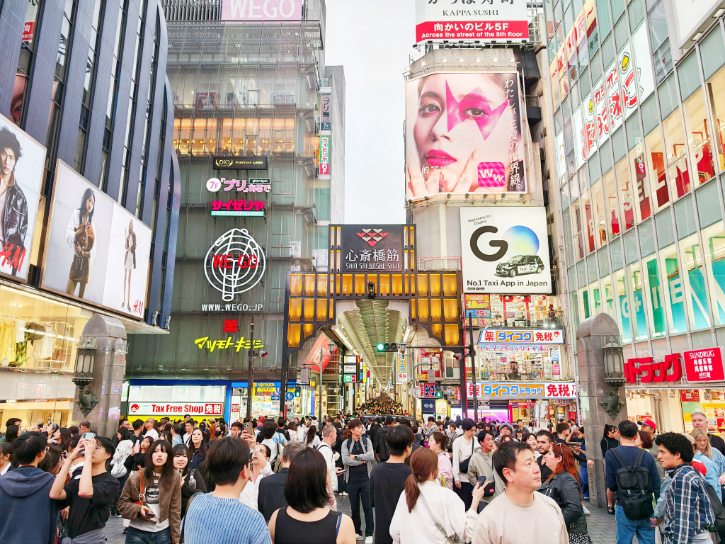
End the day at Shinsaibashi-Suji, a 600-meter covered shopping arcade that has been Osaka’s main shopping street for over 380 years.
On weekends, it draws up to 120,000 visitors per day. And because it’s fully covered, rain doesn’t matter.
The main drag is packed with international brands and big-name stores, but the real charm is in the side streets, where small boutiques and specialty shops still hold their ground.
What to See and Do
- Daimaru Shinsaibashi is the anchor department store. Don’t skip the basement food floor (depachika), packed with beautifully packaged Japanese sweets that make perfect souvenirs.
- Take a detour to Amerikamura (American Village) for vintage clothing stores and Osaka’s youth fashion scene.
- Many drugstores and lifestyle shops stay open late for tax-free shopping before you call it a night.
Osaka One-Day Route (Google Maps)
Related Posts

Photo Credit:
Photos by: PIXTA