Most people rush through Kyoto’s top sights, ticking off temples like items on a grocery list. But Higashiyama is where you slow down.
This is Kyoto’s most atmospheric walking district, a place where ancient stone-paved streets, thousand-year-old temples, and traditional culture quietly come together in a way that just feels right.
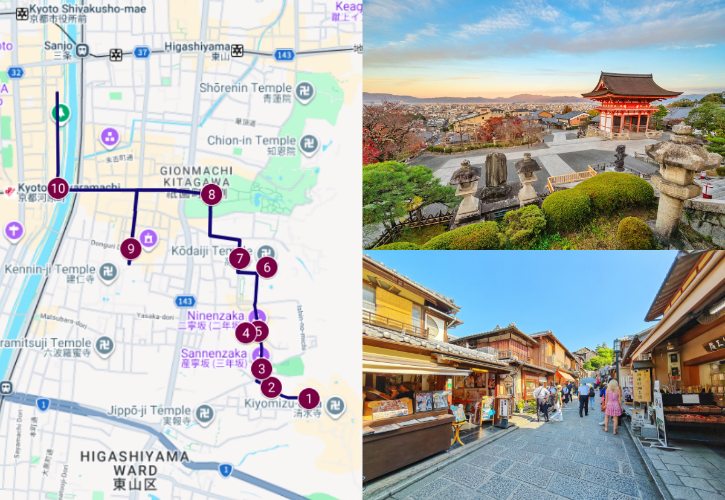
This route connects Kyoto’s most iconic sights into one perfect day on foot, from a clifftop temple at sunrise to lantern-lit riverside dining after dark. Check out the route below. 😊
9:00 AM: Kiyomizu-dera
a. What Makes It Special
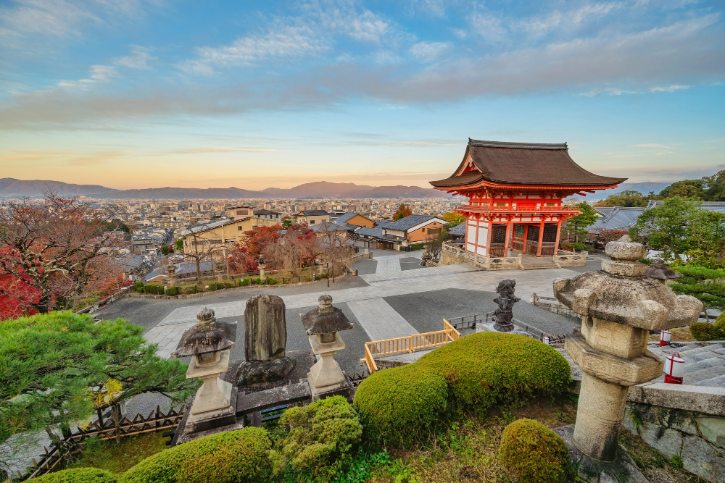
Kiyomizu-dera has been standing guard over Kyoto’s eastern mountains for over 1,200 years.
Founded in 778, it’s one of the city’s most important temples and a UNESCO World Heritage Site.
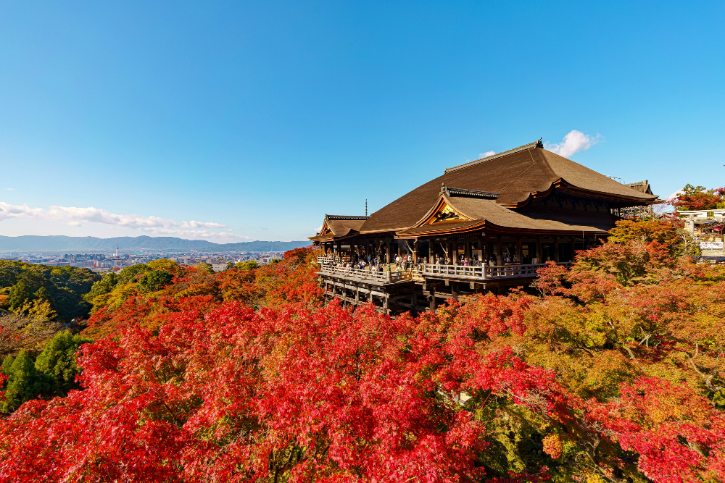
The star attraction is the famous Kiyomizu Stage, a wooden platform that juts out 13 meters above the hillside, roughly the height of a four-story building.
Here’s what’s remarkable: the entire structure was built without a single metal nail.
Instead, it relies on 18 massive pillars of 400-year-old zelkova wood and an interlocking joint system that flexes with earthquakes rather than fighting them.
The current buildings date to 1633, rebuilt under orders from Tokugawa Iemitsu after the temple was destroyed by fire (which has happened more than ten times over the centuries).
b. What to Do Here
Stand on the famous stage and take in the panoramic view of Kyoto rising out of a forest of maples and cherry trees. The scenery changes completely with the seasons.
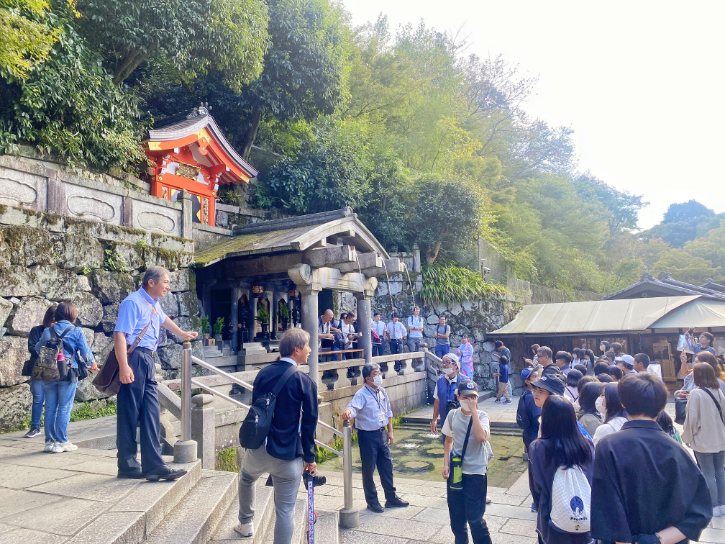
Visit the Otowa Waterfall below the main hall. Three streams of water flow down, each said to grant a different blessing: longevity, academic success, or a fortunate love life. Pick one stream and take a sip using the long-handled ladles. A local tip: drinking from all three is considered greedy and is said to cancel out the blessings.
Try the Tainai Meguri experience at Zuigudo Hall near the entrance. You’ll walk through a pitch-black underground passage symbolizing spiritual rebirth, guided only by a handrail until you reach a single glowing stone. It’s a short but surprisingly memorable experience.
11:00 AM: Matsubara Street
a. What Makes It Special
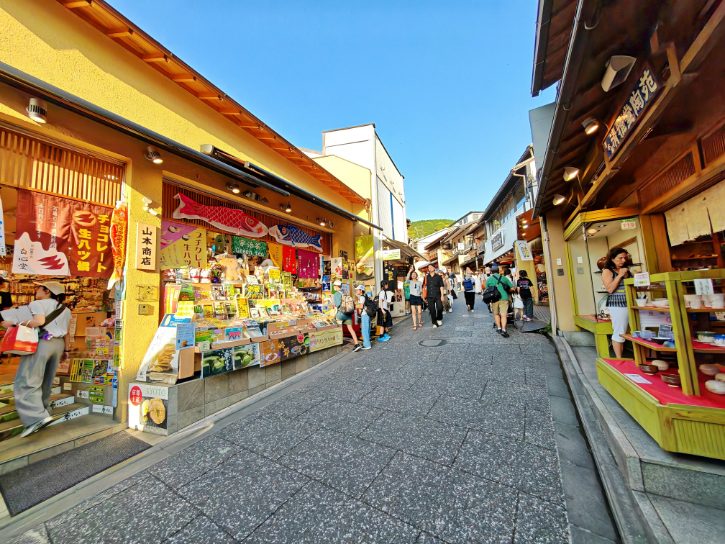
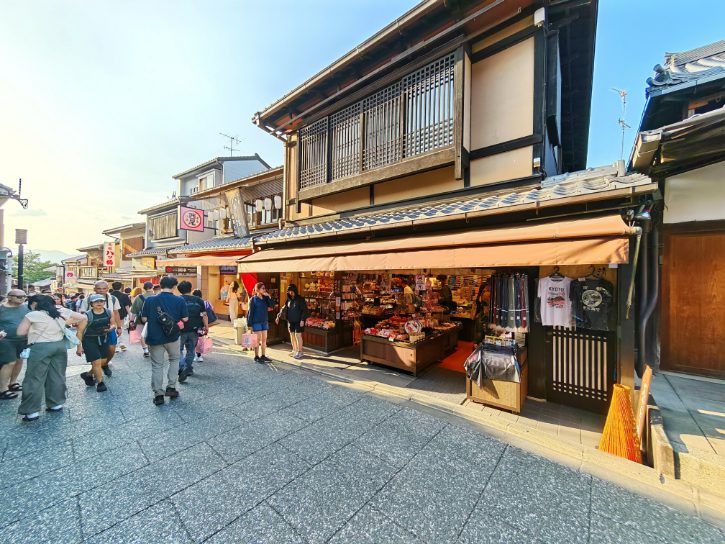
As you leave the temple gates, you’ll walk straight into Matsubara Street, the historic shopping street that has served pilgrims heading to Kiyomizu-dera for centuries.
This is a classic example of a monzen-machi, a “gate town” where shops and food stalls grew up to support travelers visiting a nearby temple.
The street has a gentle downhill slope and is lined with traditional wooden shophouses.
b. What to Do Here
Pick up Yatsuhashi, the quintessential Kyoto souvenir. These are soft, triangular mochi sweets flavored with cinnamon and filled with red bean paste. You’ll find free samples at almost every shop.
Browse Kiyomizu-yaki pottery. This area is the ancestral home of Kiyomizu ware, a style of hand-painted ceramics that emerged in the 16th century to meet the demands of the tea ceremony. Look for pieces with intricate designs and glass-like glazes.
Try yudofu (traditional simmered tofu), a local specialty that’s simple but surprisingly satisfying, especially in cooler weather.
11:30 AM: Sannenzaka + Lunch
a. What Makes It Special
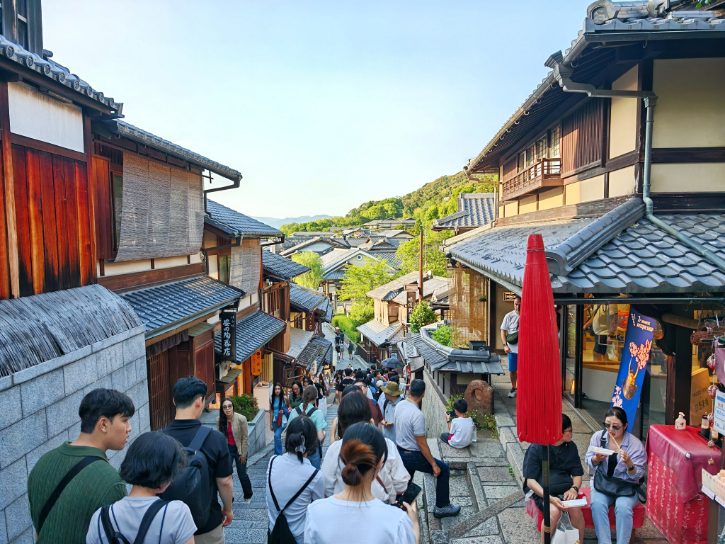
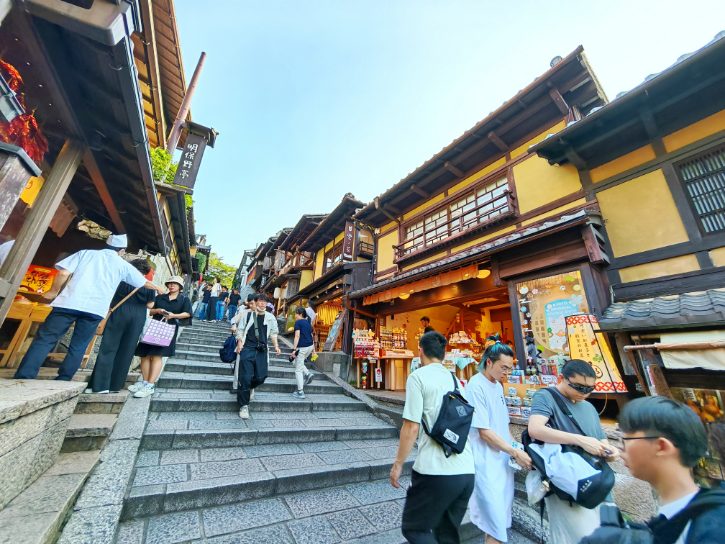
Branching off the main path, you’ll find Sannenzaka, or “Three-Year Slope”.
This steep, stone-paved pedestrian lane is one of the most photographed streets in all of Kyoto, and for good reason.
It’s part of the Higashiyama Important Preservation District, recognized in 1976 for its well-preserved Edo-period atmosphere.
The city actually buried all power lines and cables underground here, so nothing interrupts the view of the traditional machiya townhouses with their lattice windows and tiled roofs.
There’s a fun local legend, too. It’s said that if you trip and fall on this slope, you’ll have bad luck for three years. (Historians think the name actually comes from women who walked this route to pray for safe childbirth at Kiyomizu-dera, but the superstition makes for a better story.)
b. What to Do Here
Walk slowly. The steep, uneven stones naturally force a leisurely pace, which is perfect for peeking into the small shops selling incense, traditional fans, and handmade crafts along the way.
Just take it in. Trust me, few streets in Japan feel as timeless as this one.
c. Best Places to Savor Local Delicacies + Lunch
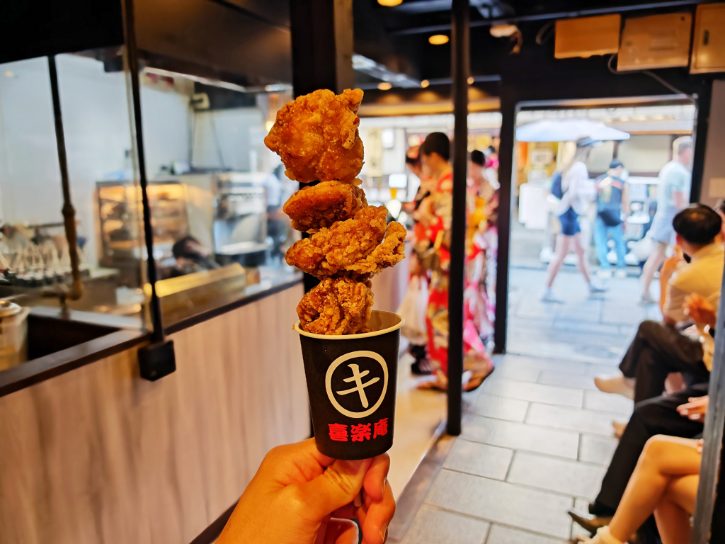
- Kirakuan Okamoto Sanneizaka: Famous for its “Maiko-yaki”, geisha-inspired snacks with fillings like red bean, cream, matcha, and ham & cheese. Their croquettes are also very popular.
- Fujinami: A great spot for classic Kyoto flavors, especially known for its refreshing iced matcha and soy sauce glazed dango.
- Okutan Kiyomizu: Specializes in traditional tofu cuisine, with highlights like fresh soy milk and black honey shaved ice, loved for its rich homemade taste.
- Umezono Kiyomizu: Established in 1927, this long-standing shop serves classic Japanese sweets such as matcha desserts, shiratama zenzai, warabi mochi, and seasonal treats.
- Ukiya Kiyomizu Kiseian: Well known for handmade soba noodles, but their oyakodon, especially the fried shrimp version, stands out with crispy batter and juicy shrimp. (Lunch)
1:20 PM: Yasaka Pagoda Photo Spot
a. What Makes It Special
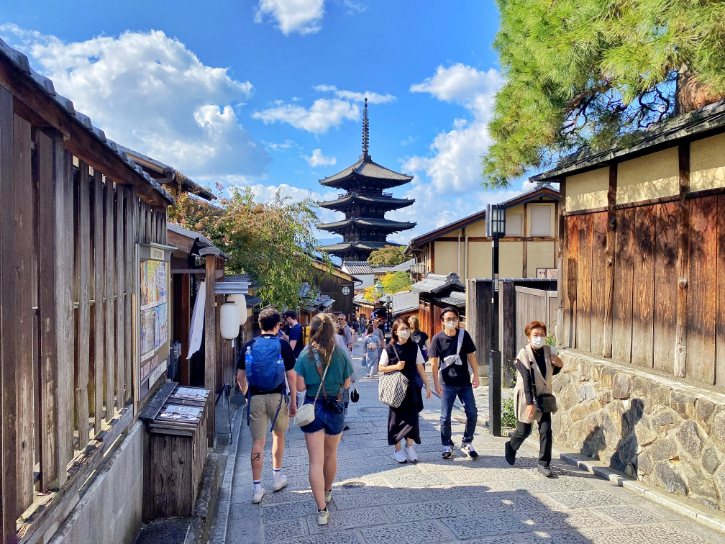
As you reach the bottom of Sannenzaka and turn toward Yasaka Street, the Yasaka Pagoda comes into view.
Standing 46 meters tall, this five-story pagoda is the architectural signature of the Higashiyama skyline.
What makes it unique in Kyoto is that it rises directly out of a residential neighborhood.
Most pagodas sit across wide temple grounds, but this one is framed by narrow lanes and the low rooftops of traditional houses, which gives it a dramatic sense of scale.
It’s a 15th-century reconstruction, but the original site dates all the way back to 589.
b. What to Do Here
Get the classic photo from the stone-paved section of Yasaka Street, looking west toward the pagoda. The contrast of the dark, weathered wood against the warm tones of the traditional storefronts is exactly the Kyoto postcard shot you’re hoping for. Around 1:20 PM, the afternoon light hits the pagoda’s tiers beautifully.
Go inside on weekends. If you’re visiting on a Saturday or Sunday, you can enter the pagoda and climb to the second floor. You’ll get a rare look at the central heart pillar (shinbashira) that has kept this tower standing through centuries of earthquakes.
1:30 PM: Ninenzaka
a. What Makes It Special
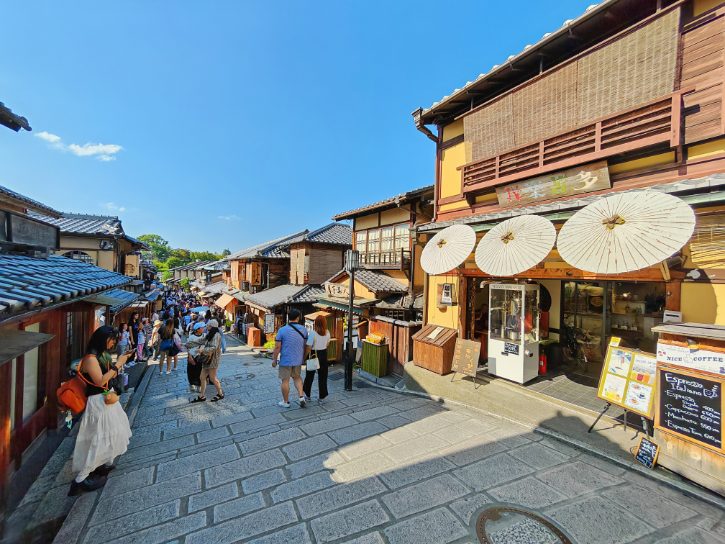
Continuing north, you’ll enter Ninenzaka, or “Two-Year Slope”. It mirrors Sannenzaka’s traditional feel but has a slightly gentler incline and a more curated mix of old and new.
The street is famous for its “eel’s bed” (unagi no nedoko) houses, buildings with narrow fronts and surprisingly deep interiors.
This clever design was a response to historical property taxes based on street frontage.
One of the most popular stops here is the Starbucks Kyoto Ninenzaka Yasaka Chayaten, which occupies a century-old traditional townhouse.
It’s the first Starbucks in the world with tatami-mat seating. You’ll need to take off your shoes to sit in the upstairs rooms.
It sounds like a gimmick, but it’s actually a pretty seamless blend of modern coffee culture and traditional Japanese domestic space.
b. What to Do Here
Check out the tatami Starbucks, even if just for a quick look inside. The second-floor rooms are worth seeing.
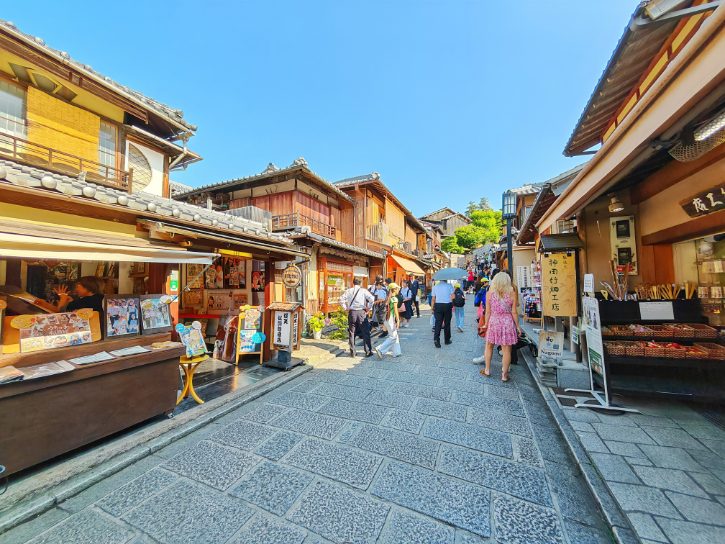
Rent a kimono. Ninenzaka is a popular spot for professional kimono rentals, and walking through the historic streets in traditional dress is a memorable experience (and makes for great photos).
Browse the specialty shops selling Kyo-gashi (Kyoto-style sweets) and traditional fragrance products made from centuries-old recipes.
c. Best Places to Savor Local Delicacies
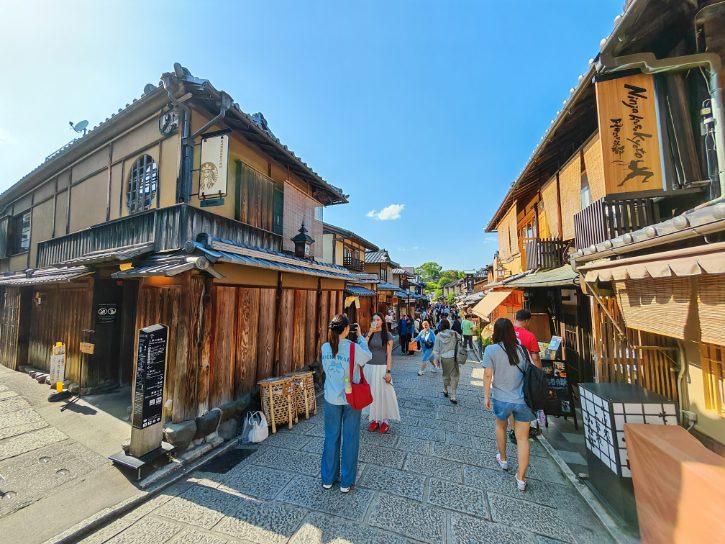
- Starbucks Kyoto Nineizaka Yasaka Chaya: A unique Starbucks featuring tatami-style seating, blending modern coffee culture with a traditional Japanese atmosphere.
- Fujinami Kodai-ji Temple Store: Offers authentic Kyoto-style sweets, with a focus on handcrafted dango and mochi made from high-quality ingredients.
- Ishidatami: Known for its premium soft-serve ice cream, especially the rich matcha flavor made with a homemade sauce.
- Kasagiya: A historic sweet shop with a Taisho-era feel, famous for classic treats like o-hagi rice cakes and zenzai sweet bean soup.
2:30 PM: Kōdaiji Temple
a. What Makes It Special
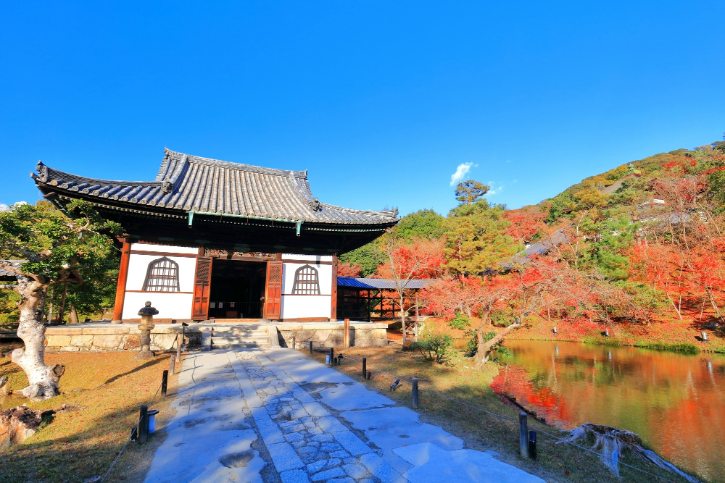
A short walk brings you to Kodai-ji, an elegant Zen Buddhist temple founded in 1606.
It was built by Nene, the widow of Toyotomi Hideyoshi (one of Japan’s great unifiers), as a memorial to her late husband.
There’s an interesting political layer here. Despite the defeat of the Toyotomi clan, Tokugawa Ieyasu himself financed the temple’s construction to honor Nene and Hideyoshi.
The result is a complex that’s both beautiful and historically significant.
Kodai-ji is the primary home of Kodai-ji Makie, a specialized lacquer technique where gold and silver powder is sprinkled onto wet lacquer to create shimmering patterns of autumn grasses and flowers. It’s stunning up close.
b. What to Do Here
Explore the gardens designed by the master landscape architect Kobori Enshu. The stone and pond gardens are officially designated as historical scenic sites. Look for the Garyu-chi (Reclining Dragon Pond), which reflects a covered wooden walkway said to resemble the back of a dragon.
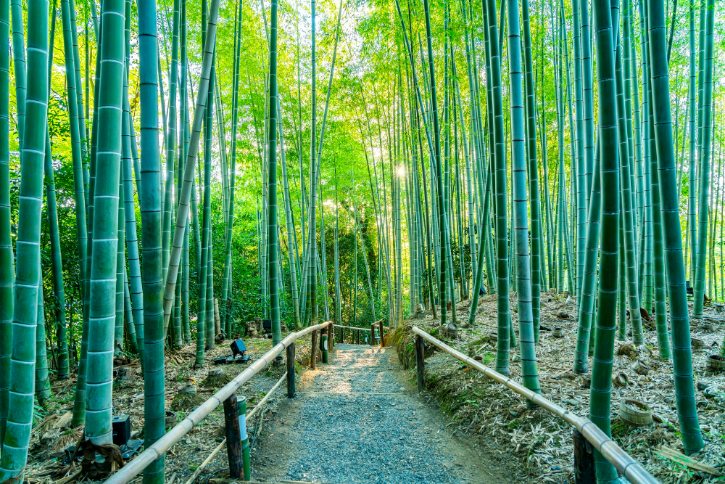
Walk through the bamboo grove. It’s small but atmospheric and much less crowded than the famous one in Arashiyama.
See the historic teahouses, Kasatei and Shiguretei, which were reportedly moved here from Hideyoshi’s Fushimi Castle.
4:00 PM: Nene no Michi (The Path of Nene)
a. What Makes It Special
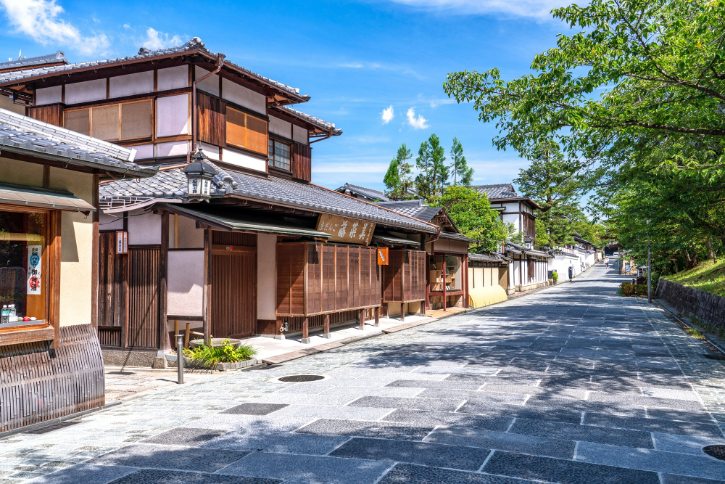
Exiting Kodai-ji brings you to Nene no Michi, a wide, flagstone walkway named after Hideyoshi’s widow.
This 400-meter path is a peaceful contrast to the busier shopping slopes, lined with high stone walls and a calm, open feel.
It’s also the gateway to Ishibe-koji, a narrow stone-walled alley often called the most beautiful lane in Kyoto.
Lined with luxury ryokans and traditional teahouses, Ishibe-koji feels like stepping 300 years into the past.
b. What to Do Here
Make this your reset segment. Slow down, enjoy the texture of the stone paving and the walls, and let yourself breathe a little. There’s no headline attraction here, and that’s the point.
Duck into Ishibe-koji. Even just a few minutes in this alley is worth it. The sound of the city fades away almost completely.
4:30 PM: Yasaka Shrine
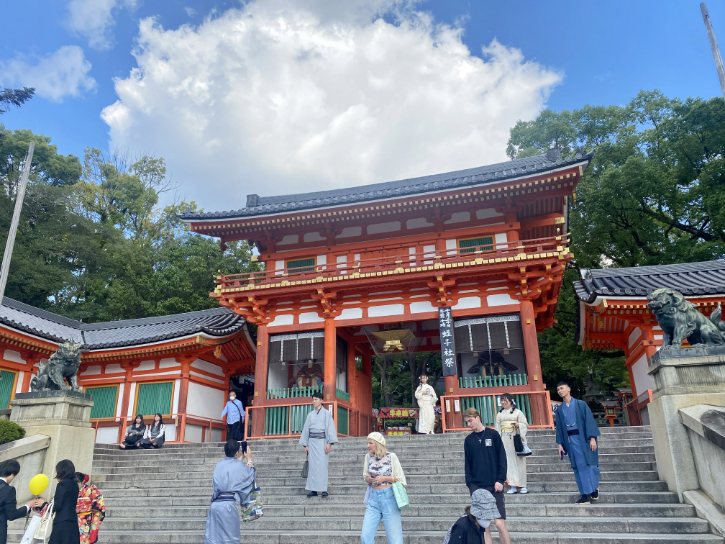
a. What Makes It Special
At the northern end of Higashiyama stands Yasaka Shrine, the spiritual guardian of the Gion district.
Its history stretches back to at least 876 AD, when it was established to protect the city from epidemics.
The shrine’s Main Hall is built in a distinctive style called Gion-zukuri, which places the inner sanctuary and the offering hall under a single large roof.
Yasaka Shrine is also the spiritual center of the Gion Matsuri, Japan’s most famous festival, held every July.
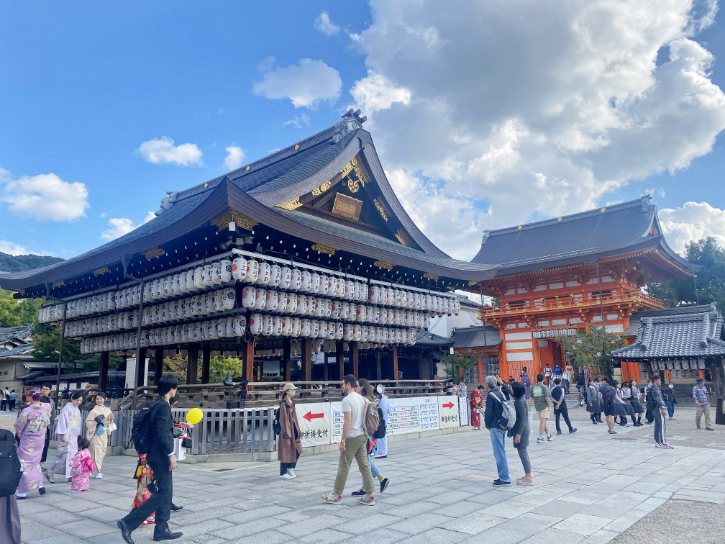
b. What to Do Here
Visit the Utsukushii Gozen-sha, a smaller shrine within the grounds dedicated to three goddesses of beauty.
In front of it, you’ll find the Biyosui (Beauty Water) fountain. The tradition is to apply a few drops to your face for purification of both skin and heart.
Maiko and geiko from the nearby Gion district are regular visitors here.
See the lantern-lit stage. Hundreds of paper lanterns hang from the central stage, each bearing the name of a local business or geisha house that supports the shrine. They’re especially beautiful as dusk settles in.
Write an ema (wooden wishing plaque) at the beauty shrine, a popular tradition for visitors.
6:00 PM: Hanamikoji Street
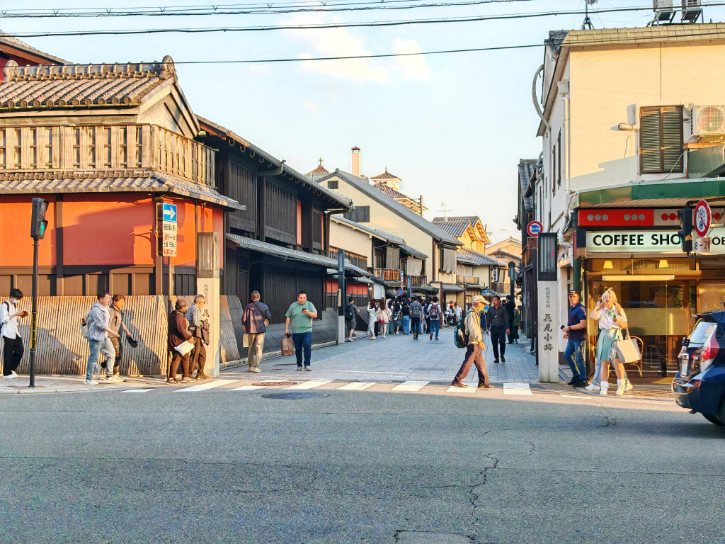
a. What Makes It Special
As the sun sets, the route enters Hanamikoji, the main street of Gion Kobu, Kyoto’s most prestigious geisha district.
This is where the “flower and willow world” comes alive in the evening.
The street is lined with beautifully preserved machiya townhouses, many of which now function as exclusive ochaya (teahouses) and Michelin-starred restaurants.
If you’re lucky, you may catch a glimpse of geiko (Kyoto’s term for geisha) or maiko (apprentices) hurrying to their evening appointments.
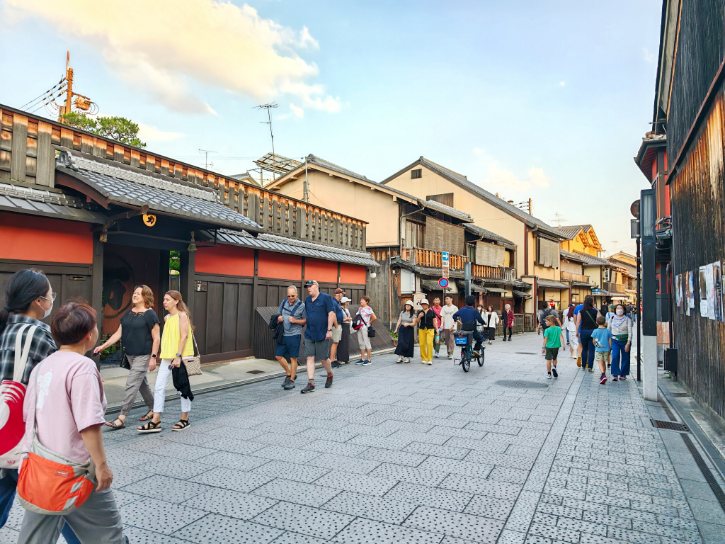
b. What to Do Here
Walk the street and soak in the atmosphere. The glow of lanterns, the quiet shuffle of wooden sandals on stone. It doesn’t get more “old Kyoto” than this.
Respect the etiquette rules. This is important. Do not touch or block the path of geiko or maiko, and do not take photos in the restricted private alleys. Fines are enforced to protect the privacy of residents and these professional artists.
7:30 PM: Pontocho Alley + Dinner
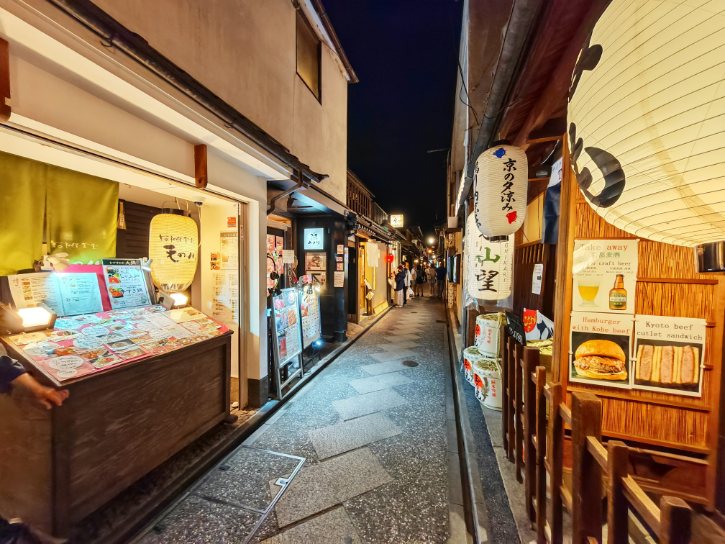
a. What Makes It Special
The final stop of the day is Pontocho Alley, a slender lane running parallel to the Kamo River.
This district was established in the 1670s and is one of Kyoto’s five official hanamachi (geisha districts).
The name “Pontocho” is thought to blend the Portuguese word “ponte” (bridge) with the Japanese “cho” (town), a nod to Kyoto’s early contact with European traders.
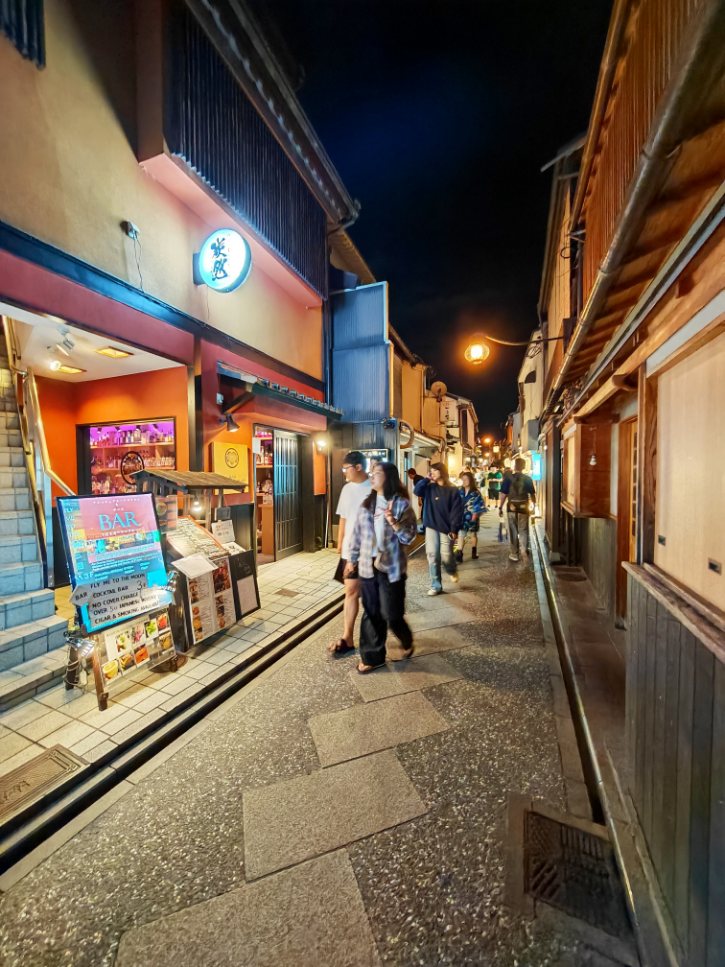
The alley is barely wide enough for two people to pass, lit by red lanterns bearing the chidori (water plover) emblem.
The plover is said to represent perseverance, as it flies over the waves of the Kamo River.
b. What to Do Here
Have dinner here. From May through September, many restaurants build kawayuka, elevated wooden platforms extending out over the river. Dining on one of these platforms with a cool evening breeze is one of Kyoto’s great experiences. You’ll find everything from traditional kaiseki to modern international cuisine.
Simply wander. Even outside of kawayuka season, the narrow lantern-lit alley, with its mix of traditional and contemporary restaurants, is the perfect place to end your Higashiyama day.
c. Dinner Options
- Sushi Kizaemon
- Kichi Kichi Omurice
- Kyoto Yakiniku Hiro Pontocho