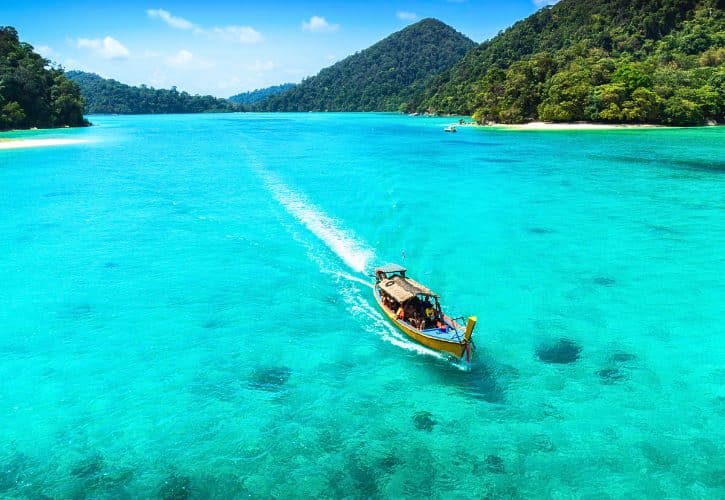
Picture this: turquoise water so clear it practically disappears beneath your feet, and sand so soft it feels like powder between your toes.
That instant calm you feel when the noise of everyday life fades into gentle waves? These islands deliver exactly that.
Beyond the famous beaches everyone knows, Thailand hides quieter shores where nature still runs the show.
Here are 10 islands where the water stays crystal clear and the right one is waiting for you. 😊
1. Similan Islands
a. Why This Island Feels Special
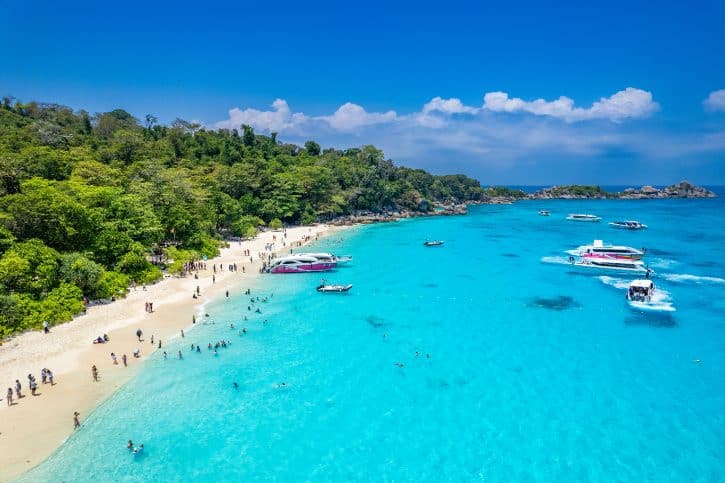
The Similans look like nowhere else in Thailand. Instead of the typical limestone cliffs, you’ll find giant granite boulders smoothed by centuries of wind and waves, sitting on beaches with some of the whitest sand in Southeast Asia.
What makes this place feel exclusive? Thailand’s national park authorities limit daily visitors to just over 3,300 people. There are no hotels or paved roads on the islands. Just forest, beach, and sea.
The famous Sail Rock on Island No. 8 towers over Donald Duck Bay. Climb up and you’ll understand why people travel so far to get here.
b. What the Water Is Like
The water clarity here is exceptional. During peak season from January to April, you can often see more than 30 meters ahead underwater.
The color shifts from pale aquamarine in the shallows to deep indigo where the reef drops off.
Thanks to seasonal closures and coral recovery efforts, the underwater world is thriving again.
Beneath the surface, granite formations create canyons and swim-throughs covered in soft corals and sea fans.
This is where you might spot manta rays, whale sharks, leopard sharks, and hawksbill sea turtles.
c. What It’s Best For
- Serious divers and underwater photographers chasing world-class visibility
- Marine life enthusiasts hoping for megafauna sightings
- Travelers who prioritize water quality over beach amenities
Good to know: The islands close from May 15 to October 15 every year for environmental recovery.
2. Koh Wai
a. Why This Island Feels Special
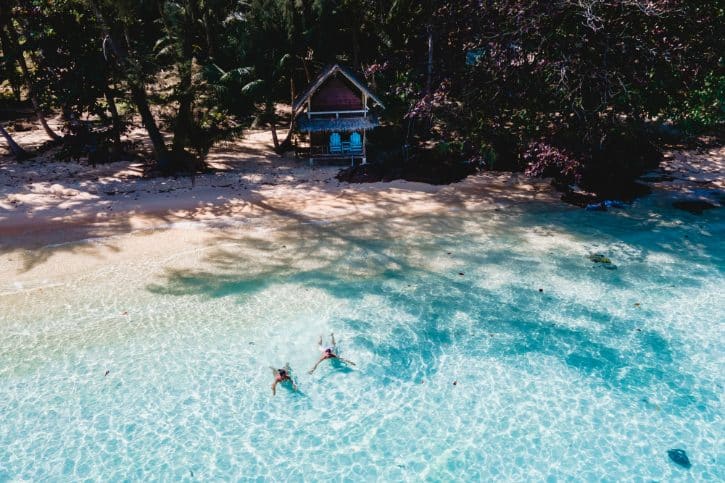
Koh Wai is the quiet neighbor that refuses to change. While nearby Koh Chang has developed rapidly, this tiny island (just 1.65 square kilometers) keeps things delightfully simple.
No cars. No motorbikes. No paved roads.
Electricity often runs on generators and switches off at night, which sounds inconvenient until you realize it means you actually sleep well.
b. What the Water Is Like
The water here is remarkably calm and shallow, making it perfect for snorkeling right from the beach.
A fringing reef starts almost immediately from the sand, filled with massive coral heads and branching staghorn formations. Between November and April, visibility is at its best. Sea turtles and leopard sharks regularly cruise the sandy bottoms.
Giant clams sit visible among the rocks even in the shallowest areas. And because there’s so little boat traffic, the water stays clear and undisturbed.
c. What It’s Best For
- Snorkelers who want to walk straight into the reef from shore
- Digital detox seekers ready to disconnect
- Travelers who love the “castaway” experience without roughing it completely
- Anyone craving simplicity and the sound of waves
3. Koh Tao
a. Why This Island Feels Special
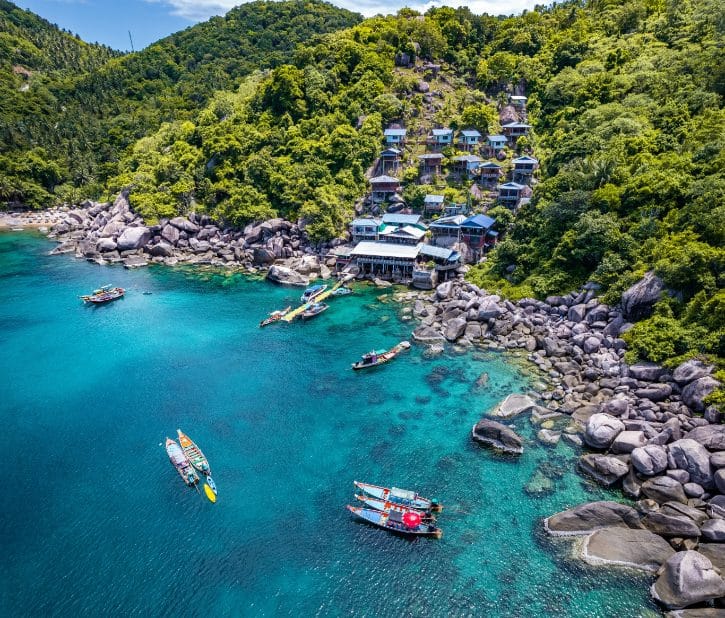
Koh Tao (Turtle Island) pulls off a neat trick. It’s one of the world’s top dive training destinations, yet it still has hidden bays that feel completely untouched.
While Sairee Beach is the social hub, the island’s steep jungle hills create natural barriers. Spots like Mango Bay and Hin Wong Bay stay protected from the bustle.
The island has been recognized as one of the top 100 global destinations for sustainable tourism.
The vibe here is purposeful relaxation. Days are spent exploring rocky outcrops, and evenings involve cold drinks and sunsets at Freedom Beach.
b. What the Water Is Like
With over 25 dive sites, Koh Tao offers something for everyone. Beginners can learn in calm nursery areas while advanced divers explore deep-water pinnacles like Chumphon.
The water stays warm and visibility can reach 30 meters between July and September. Shark Bay is the star snorkeling spot, where blacktip reef sharks and green sea turtles glide through the shallows throughout the day.
Deeper pinnacles host huge schools of trevally and barracuda. Whale sharks occasionally appear between March and April.
c. What It’s Best For
- Diving certification in a professional, supportive environment
- Snorkelers wanting reliable marine life encounters
- Active travelers who enjoy wellness, good food, and nature combined
- Budget-conscious divers looking for excellent value
4. Koh Lipe
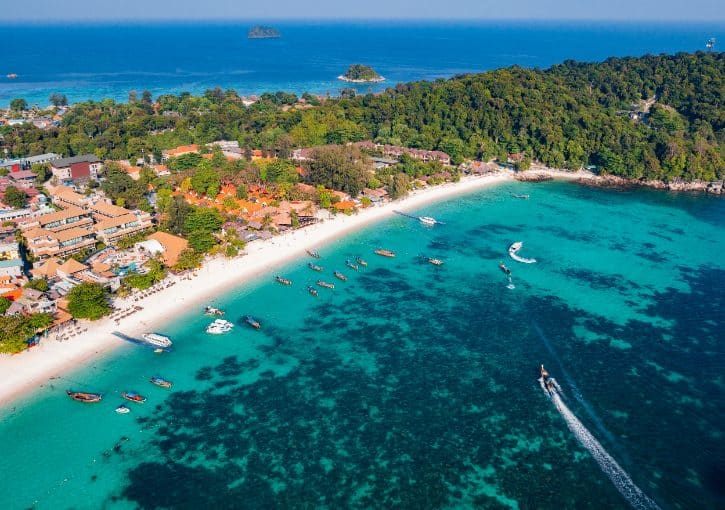
a. Why This Island Feels Special
People call Koh Lipe the “Maldives of Thailand”, and it’s easy to see why.
This is Thailand’s southernmost inhabited island, tucked inside the protected Tarutao National Marine Park.
The island is small enough to walk everywhere (roughly 3 square kilometers), which keeps things relaxed.
Sunrise Beach on the east side offers a wide stretch of white sand where morning light hits glassy turquoise water.
The local Chao Ley fishing community adds authentic character. Walking Street provides evening entertainment without the aggressive party atmosphere of larger islands.
b. What the Water Is Like
The water clarity around Koh Lipe is famous. That vibrant turquoise color stays transparent even during busy season.
Here’s the best part: the reef starts just two meters from shore at Sunrise Beach. You can snorkel world-class coral without ever boarding a boat. Anemonefish, parrotfish, and soft corals fill these shallow waters.
For even more pristine conditions, take a short trip to the uninhabited islands of Koh Adang or Koh Rawi. Stingrays and sea turtles are common, and the water feels like a private pool.
c. What It’s Best For
- Travelers wanting white sand and neon-blue water with hotel convenience
- Couples seeking romantic sunrise views
- Families who need safe, shallow swimming right off the beach
- Seafood lovers looking for fresh catches and boutique dining
5. Koh Munnork
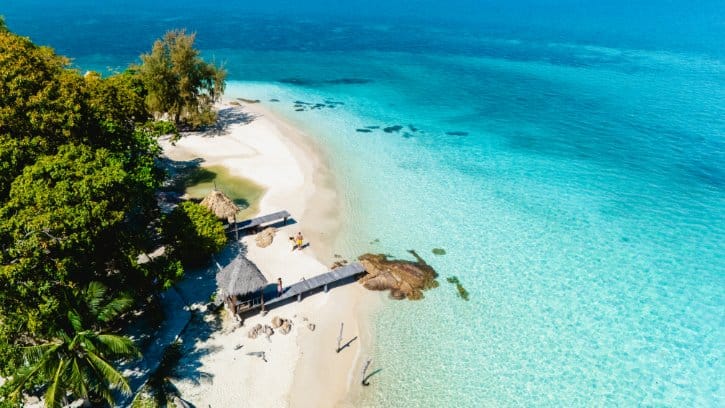
a. Why This Island Feels Special
This is Thailand’s true private island experience. Koh Munnork has exactly one resort with just 22 to 23 bungalows. That’s it.
The surprising part? It’s only three hours from Bangkok.
The island’s defining feature is its resident peacock population. These birds roam freely through the forest and along the beach, their iridescent feathers catching the sunlight against the blue Gulf of Thailand backdrop.
No roads. No shops. No noise. Just a quiet retreat designed for disappearing from the world for a few days.
b. What the Water Is Like
For an island so close to the mainland, the water is remarkably clear. From February to May, visibility here rivals islands much further south.
The sea is calm and shallow with a soft sandy floor that transitions to rocky areas perfect for exploring. Snorkeling happens right from the beach, and you can watch reef fish and healthy coral patches in therapeutic clear water.
c. What It’s Best For
- Privacy seekers who want a true escape without long travel
- Couples and families prioritizing quiet and nature
- Creatives looking for inspiration in solitude
- Anyone wanting “castaway” vibes with comfortable accommodation
6. Koh Kood
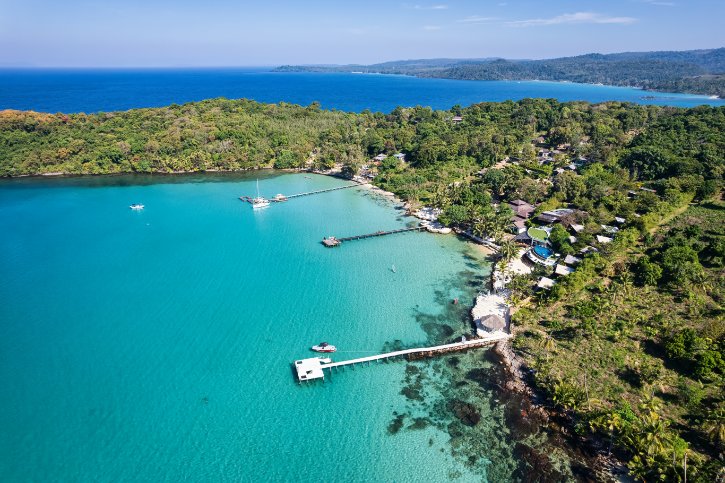
a. Why This Island Feels Special
Koh Kood is Thailand’s “hidden jewel” near the Cambodian border. It’s large but remarkably quiet, having somehow resisted the development that transformed other islands.
The interior is dense rainforest with ancient trees, including a famous 100-year-old Makha tree. Klong Chao waterfall flows into a cool freshwater pool perfect for a post-beach swim.
Life here centers on fishing and farming. There’s no major nightlife, which keeps the atmosphere genuinely peaceful.
Bays like Ao Tapao and Klong Chao Beach offer huge stretches of sand shaded by tall palms.
b. What the Water Is Like
Koh Kood’s water is known for its emerald color and exceptional clarity. Visibility often hits 30 meters during the dry season from November to May.
Nearby Mu Ko Rang National Park offers some of the Gulf of Thailand’s best snorkeling, with vibrant reefs and thriving underwater life.
The island even has an underwater sculpture park at Koh Raet, showing its commitment to reef restoration.
Stingrays, moray eels, pufferfish, and occasional sea turtles all call these waters home.
c. What It’s Best For
- Nature lovers who want beaches and jungle exploration combined
- Waterfall trekkers and eco-tourists
- Slow travel enthusiasts seeking an unhurried pace
- Families wanting space and eco-conscious destinations
7. Koh Mak
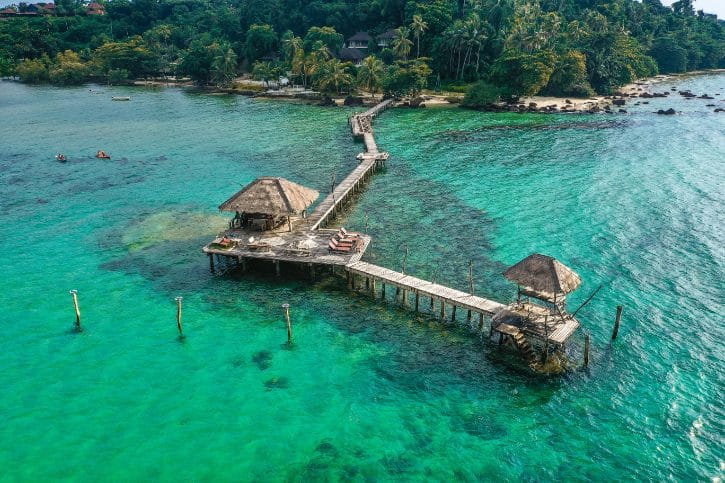
a. Why This Island Feels Special
Koh Mak pioneered ecotourism in Thailand. The island operates under a community-led “Low-Carbon” charter that puts the environment first.
Here’s what that means in practice: 80% of the island is owned by five local families who’ve pledged to keep out high-rise resorts, jet skis, and 24-hour convenience stores. Rubber and coconut plantations remain the main features.
The flat terrain makes this the perfect cycling island. Trails wind through shaded palm groves to spots like the quirky “Kingdom of Somchai” sculpture garden and the Cinnamon Boardwalk, which stretches nearly 500 meters over the sea.
b. What the Water Is Like
The waters are calm, shallow, and clear, especially along the western and southern coasts.
Several smaller islands sit nearby, including Koh Kham and Koh Rayang, both easy to reach by kayak.
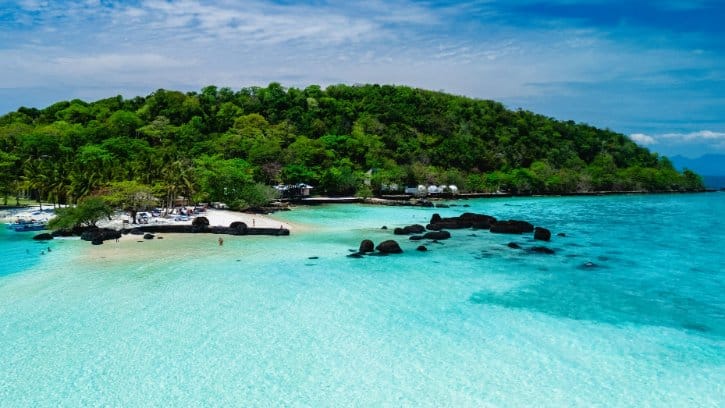
Koh Kham is particularly stunning, with a man-made white sand bar and emerald water set against dramatic black volcanic rocks.
Because motorized water sports are banned, the water stays peaceful. Snorkeling and paddleboarding feel like drifting through a private lagoon.
c. What It’s Best For
- Cyclists looking for scenic island trails
- Families wanting a quiet, community-oriented atmosphere
- Anyone who prefers local ownership over resort chains
8. Koh Klum
a. Why This Island Feels Special
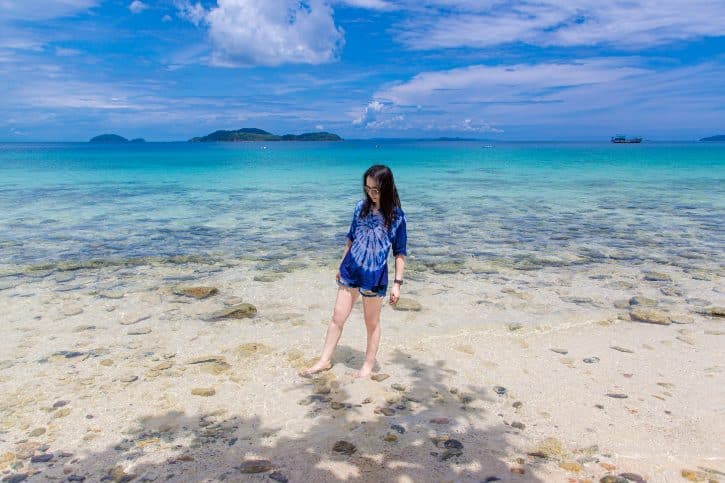
Koh Klum is the rugged, nearly uninhabited island for travelers who think nearby Koh Chang feels too developed.
The island has real history. During World War II, it served as a hiding spot for battleships during the Battle of Koh Chang. Today it’s a sanctuary of silence and untouched nature.
b. What the Water Is Like
Local fishermen favor Koh Klum for the health of its surrounding reefs.
While it’s not as famous for snorkeling as other islands, the northeastern tip and southeastern shore have excellent spots where coral grows close to the surface. Fish are abundant.
From the island’s only sandy beach, you can watch marine life without even getting in the water.
The reef starts just a short swim away, and without commercial boat traffic, the water stays undisturbed.
c. What It’s Best For
- Off-grid enthusiasts wanting a true deserted island feel
- Fishermen and nature walkers seeking solitude
- Private boat charters looking for a quiet anchor spot
- History buffs interested in WWII stories
9. Koh Kradan
a. Why This Island Feels Special
Koh Kradan was voted “World’s Best Beach” in 2023. Despite that recognition, it remains remarkably peaceful.
The island has no roads, no villages, and no permanent stores. Most of it sits within Hat Chao Mai National Park.
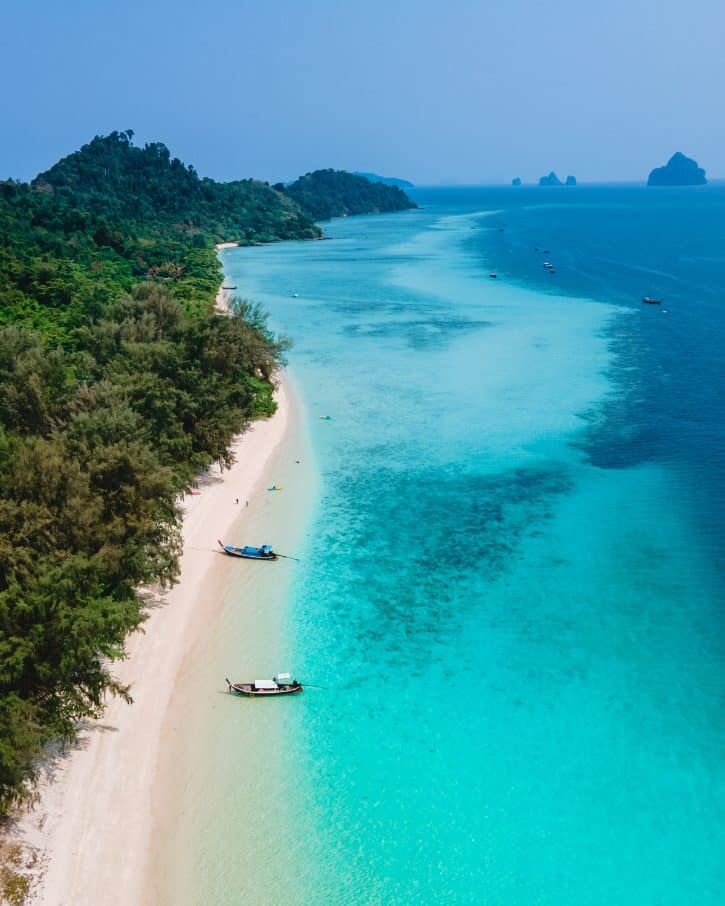
The main Paradise Beach is a mile-long stretch of powdery white sand.
At low tide, you can walk through knee-high turquoise water for over a hundred meters.
Once the day-trip boats leave around 2:00 PM, the island returns to perfect silence under the stars.
b. What the Water Is Like
The water here is often described as “turquoise perfection”. Visibility is so good you can spot sea life from the deck of a boat.
The sea is warm and shallow, ideal for leisurely swimming and wading through crystal shallows.
Snorkeling is world-class and starts right at the beach, where hundreds of tropical fish swarm around swimmers.
Starfish and sea urchins dot the seabed, and the fringing reefs remain vibrant with marine life.
c. What It’s Best For
- Beach lovers who prioritize stunning aesthetics
- Shallow-water snorkelers wanting easy access to reef life
- Couples seeking a romantic, quiet getaway
- Travelers who dislike nightlife and commercial infrastructure
10. Koh Surin
a. Why This Island Feels Special
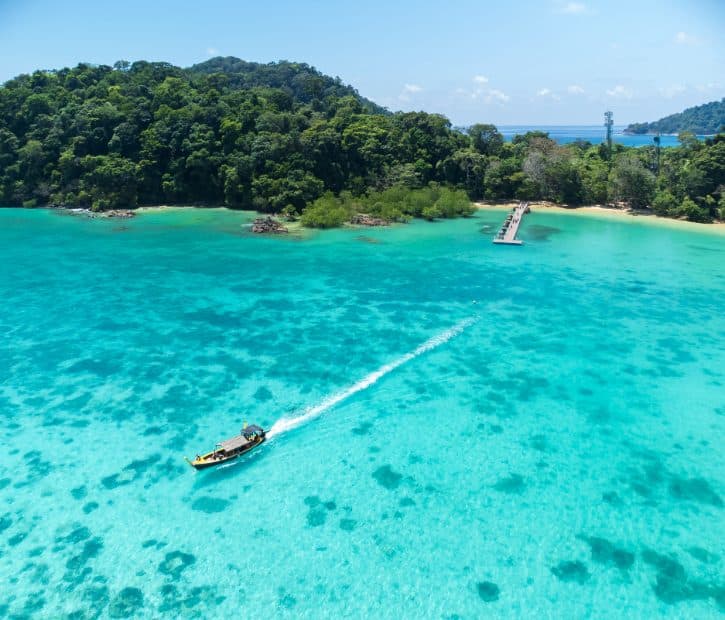
The Surin Islands may be Thailand’s most pristine marine sanctuary.
Located 60 kilometers offshore and 100 kilometers north of the Similans, these islands feel genuinely remote.
What makes Surin truly special is the Moken people. This semi-nomadic community has lived in harmony with these waters for centuries.
A visit to their village on Koh Surin Tai offers rare insight into freediving traditions and deep knowledge of the sea.
There are no commercial buildings here. Just park headquarters and traditional bamboo stilt houses. The word “untouched” actually applies.
b. What the Water Is Like
Many consider Koh Surin to have the best snorkeling in Thailand.
Shallow coral gardens sit close to shore, making them accessible even for beginners. The waters are full of clownfish, parrotfish, reef sharks, and three species of nesting sea turtles.
Nearby Richelieu Rock, a horseshoe-shaped reef, attracts whale sharks and manta rays between February and April.
Because of the park’s remote location and strict protections, coral health here is among the best in the country.
c. What It’s Best For
- Serious snorkelers seeking Thailand’s best underwater visibility
- Travelers interested in indigenous maritime culture
- Nature purists who prefer national park campsites over resorts
- Anyone willing to travel far for truly pristine conditions
Good to know: Like the Similans, Koh Surin closes from mid-May to mid-October for environmental recovery.