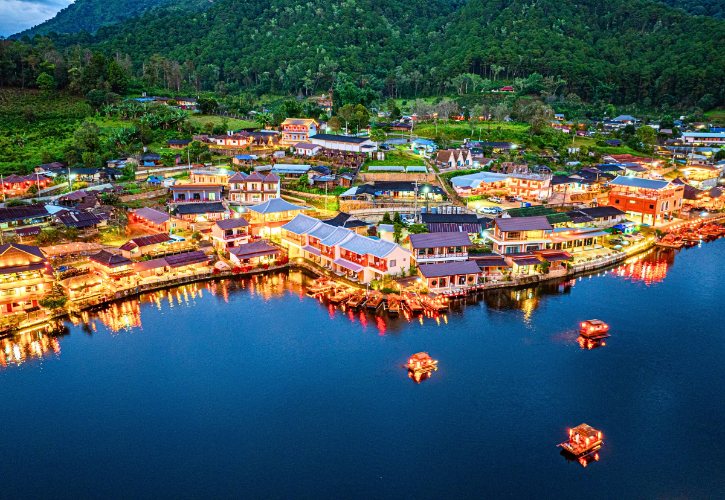
Thailand in 2026 isn’t just about the famous spots anymore. Travelers are seeking something different: quieter beaches, authentic culture, and experiences that feel genuinely special.
These five destinations deliver exactly that. Whether you’re floating through ancient caves, waking up on a misty lake, or finding your own slice of empty beach, you’ll discover a Thailand that feels both timeless and refreshingly uncrowded.
Trust me, these places are worth the extra planning. Get there before everyone else figures it out. 😊
1. Mae Hong Son
Tucked away in Thailand’s mountainous northwest corner, Mae Hong Son feels like stepping into a different world.
This remote province is wrapped in morning mist, dotted with traditional Shan villages, and far removed from the usual tourist trail.
The pace here is slow. Roads wind through pine forests and rice terraces.
Roosters crow at dawn while temple bells echo across misty valleys.
If you’re craving peace, culture, and stunning mountain scenery, Mae Hong Son delivers.
a. Temples and Scenic Spots
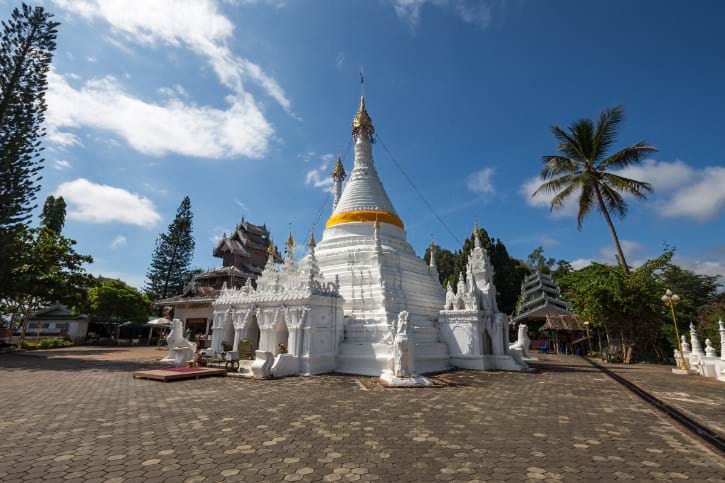
Wat Phra That Doi Kong Mu sits high on a hill overlooking town. Climb up early to watch mist roll through the valley.
The twin white chedis are iconic, and on clear days you can see the Myanmar border.
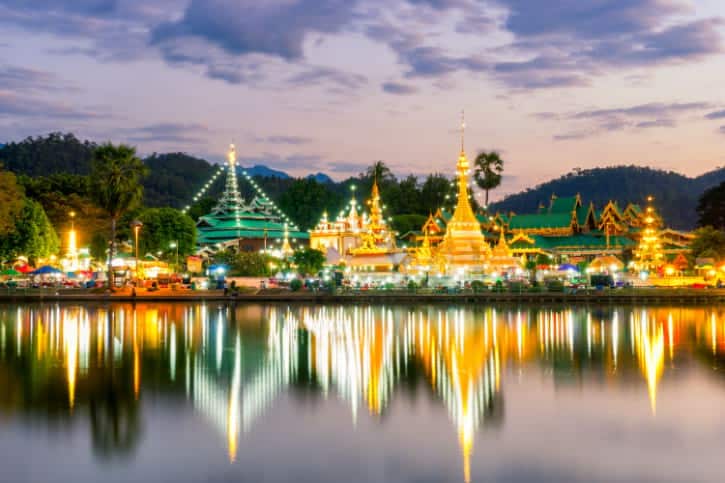
Wat Jong Kham and Wat Chong Klang stand side by side on a small lake in town.
These Burmese-style temples with tiered roofs and golden spires are especially beautiful at sunset when the water reflects their silhouettes.
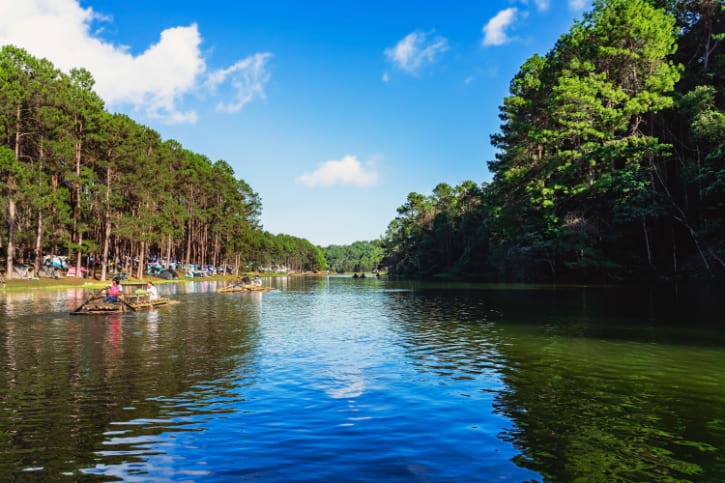
Pang Oung is often called “Switzerland in Thailand”. This pine-ringed reservoir is lovely for bamboo rafting or simply enjoying coffee by the shore.
It is best in the cool season when temperatures can drop near freezing.
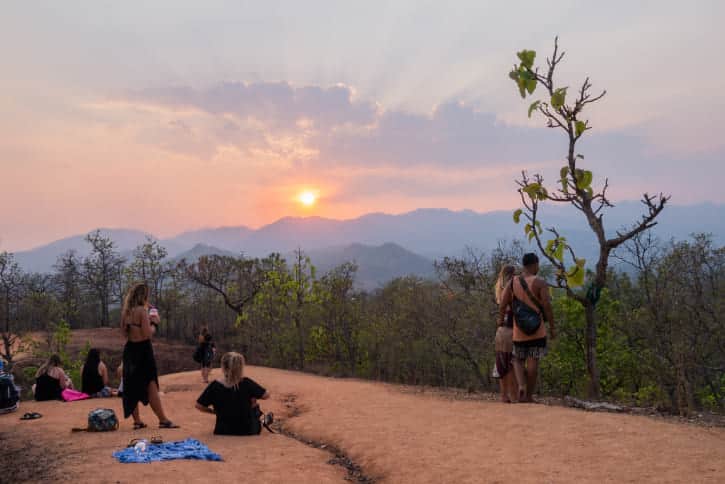
Pai Canyon offers dramatic views of eroded sandstone ridges.
Come for sunset when the light turns everything golden. Watch your step on the narrow paths.
b. Seasonal and Cultural Highlights
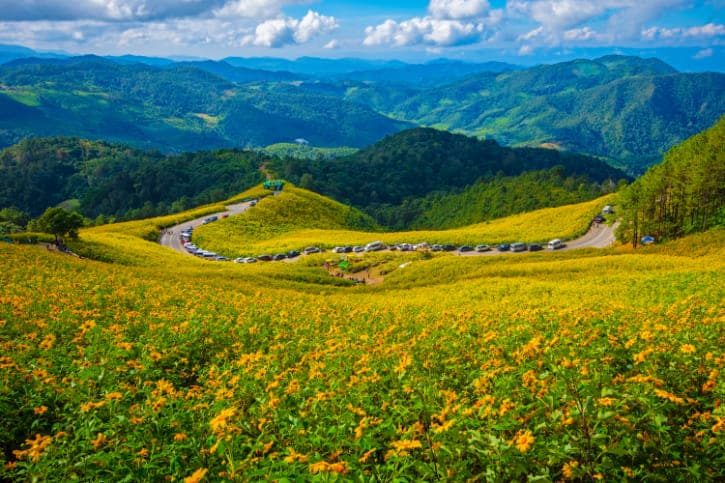
Thung Bua Tong Fields at Doi Mae U Kho bloom for just a few weeks, usually early November through early December.
The hillsides explode with wild Mexican sunflowers, creating a golden sea across 400 acres. Miss the window, miss the show.
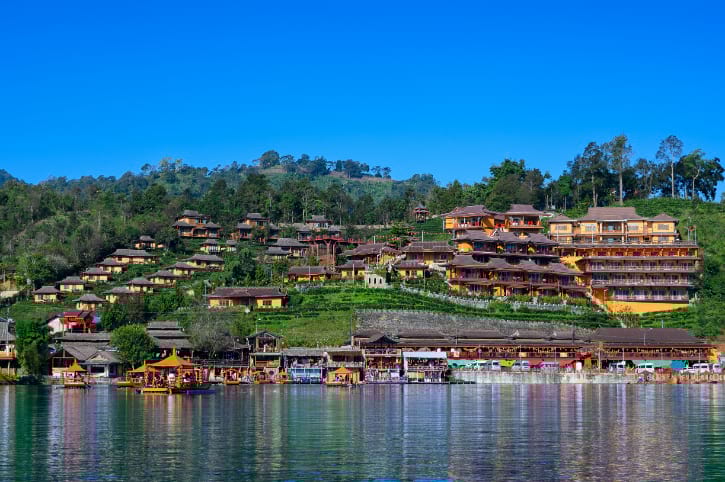
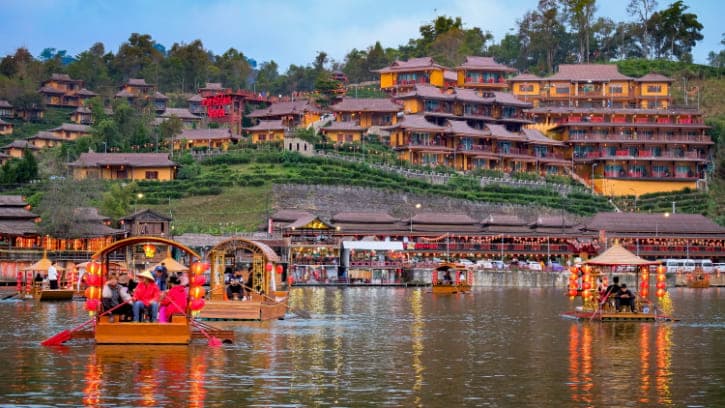
Ban Rak Thai is a Yunnanese village settled by former Chinese Nationalist soldiers.
Red lanterns, mud-brick houses, and excellent oolong tea define this unique enclave.
The morning mist over the reservoir is magical from November through February.
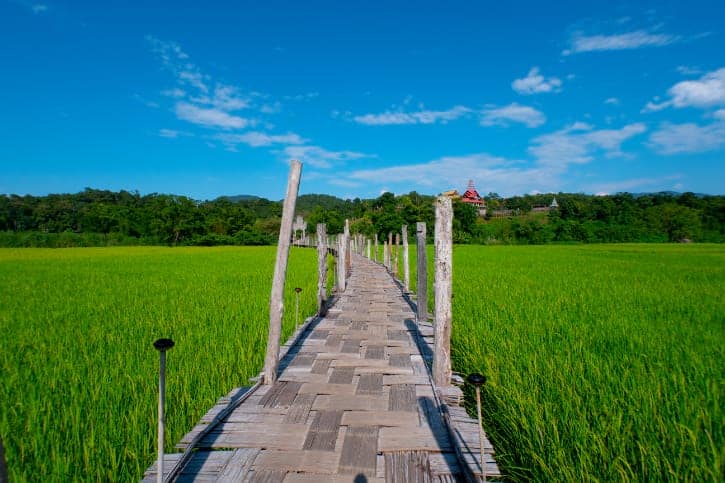
Su Tong Pae Bridge stretches 500 meters across rice paddies to a hilltop temple.
Walk across early morning to see monks on alms rounds. The bamboo construction is maintained entirely by the local community.
c. Caves and Waterfalls
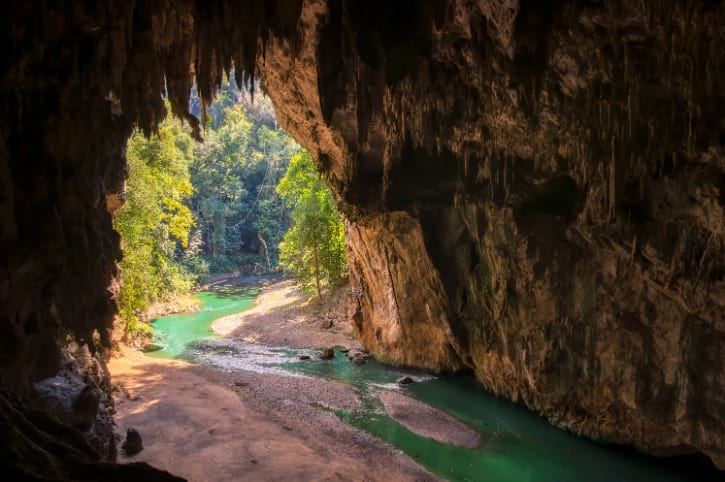
Nam Lod Cave is one of northern Thailand’s most impressive cave systems.
Local guides navigate the pitch-dark interior by gas lantern, leading you through by bamboo raft.
Three chambers feature massive stalactites, ancient wall paintings, and prehistoric teak coffins.
Heavy rain in August and September can limit access.
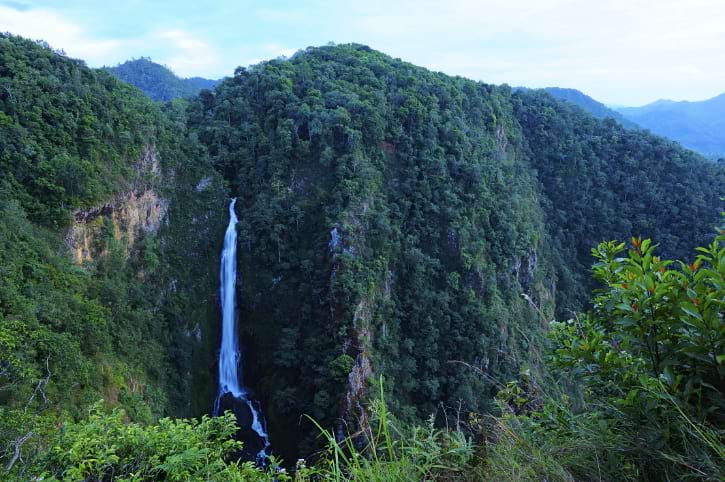
Nam Tok Mae Surin plunges roughly 80 meters down a limestone cliff.
It is most impressive during and just after rainy season when water flow peaks.
Best time to visit: November through February
2. Khao Sok National Park
Khao Sok is home to one of the world’s oldest rainforests, older and more biodiverse than even the Amazon by some measures.
This is Thailand’s wild heart, where limestone karsts rise from an emerald lake and gibbons call through the mist at dawn.
If you want to truly disconnect and immerse yourself in nature, Khao Sok is the place.
a. Lake and Viewpoints
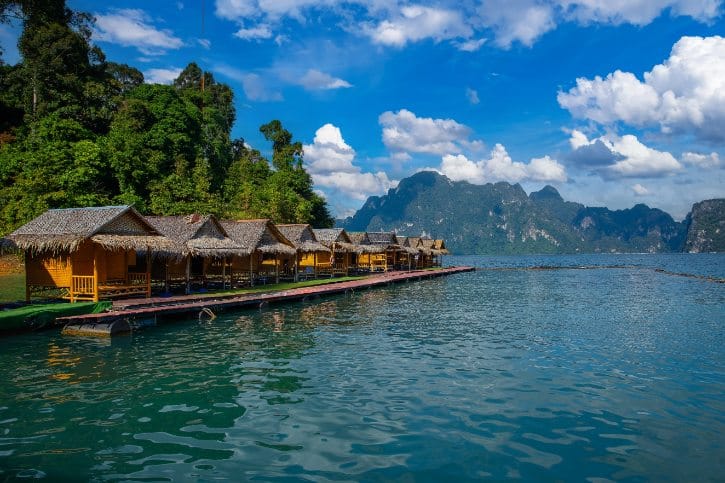
Cheow Lan Lake is the main draw. The 165-square-kilometer reservoir is dotted with dramatic limestone formations.
Most visitors spend at least one night on a floating raft house to experience the stillness.
All boats depart from Cheow Lan Municipal Pier (Ratchaprapha Municipal Pier).
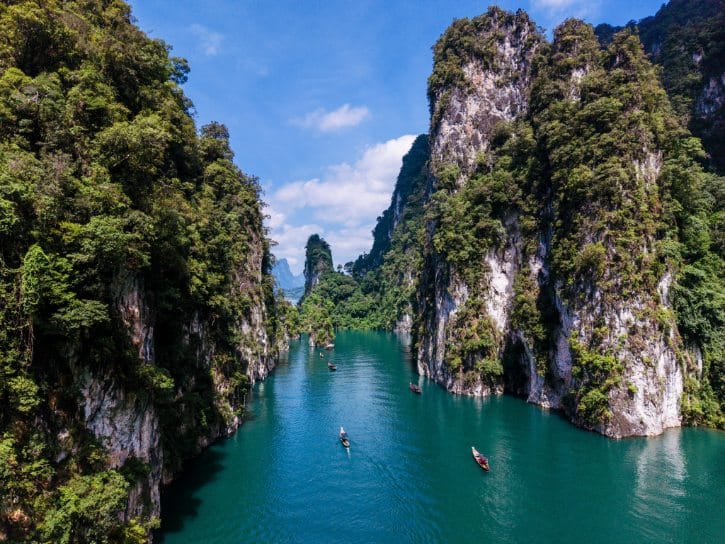
Khao Sam Kloe (Three Rocks) is one of the lake’s most photographed spots.
Three massive limestone pillars rise from the water, looking almost prehistoric. Most longtail boat tours stop here.
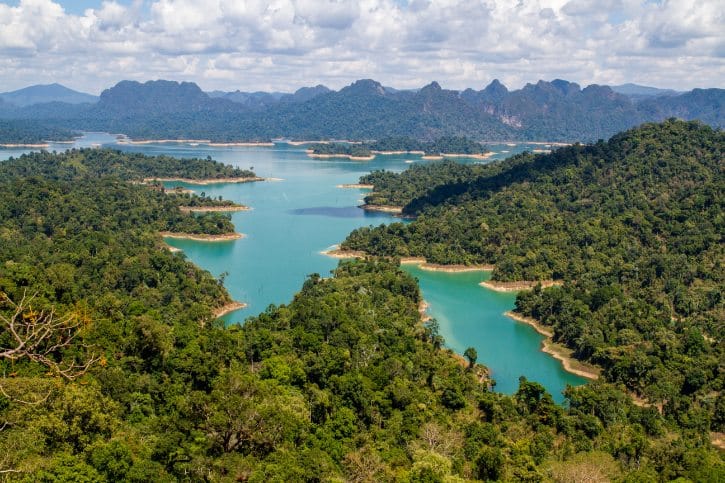
Krai Sorn Viewpoint offers panoramic views over the lake and karst landscape.
The morning hike is moderate but rewarding when mist clings to the peaks.
b. Waterfalls and Caves
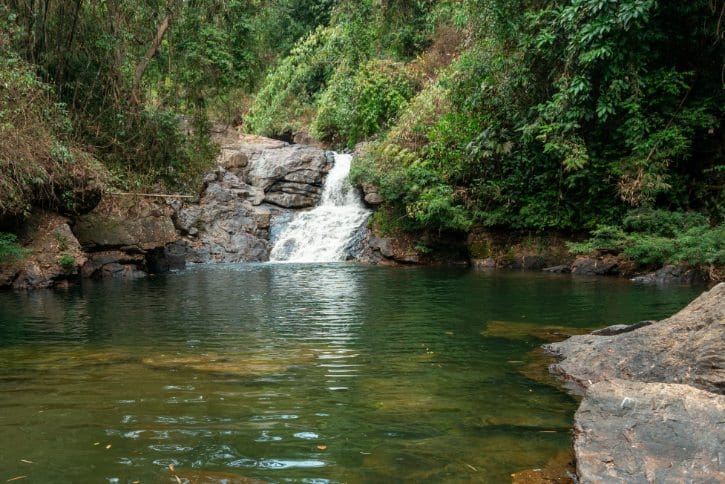
Ton Kloi Waterfall flows through several tiers with natural swimming pools.
Accessible by jungle trail from park headquarters, it gets busy on weekends with Thai families.
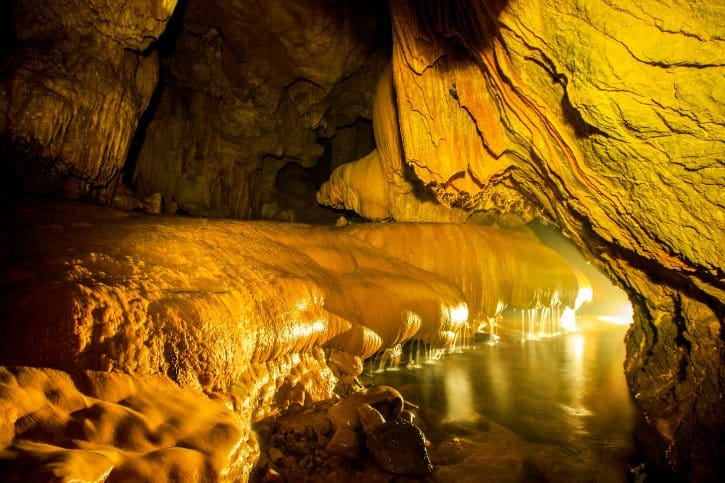
Nam Talu Cave is a dramatic through-cave you can trek with a guide, wading through an underground river by headlamp. Important: Closed June 1 through November 3 due to flash flood risk.
Best time to visit: December through April
3. Kanchanaburi
Just two and a half hours west of Bangkok, Kanchanaburi has evolved far beyond its World War II heritage.
While the Death Railway and River Kwai Bridge remain powerful draws for history enthusiasts, the province has become a full lifestyle destination with dramatic waterfalls, Instagram-worthy cafes, and easy weekend escapes from the capital.
a. Waterfalls
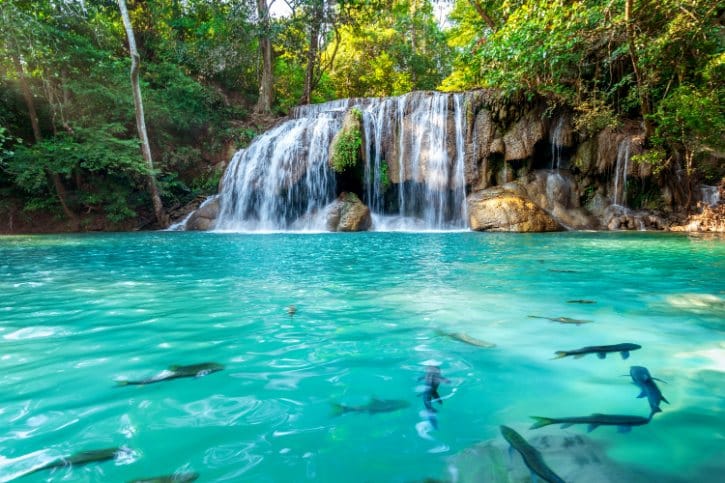
Erawan National Park (Erawan Falls) is the crown jewel. Seven tiers cascade through emerald pools where fish nibble your feet.
Single-use plastics are banned, and you will need a deposit for bottles past the second tier. Visit midweek to avoid crowds.
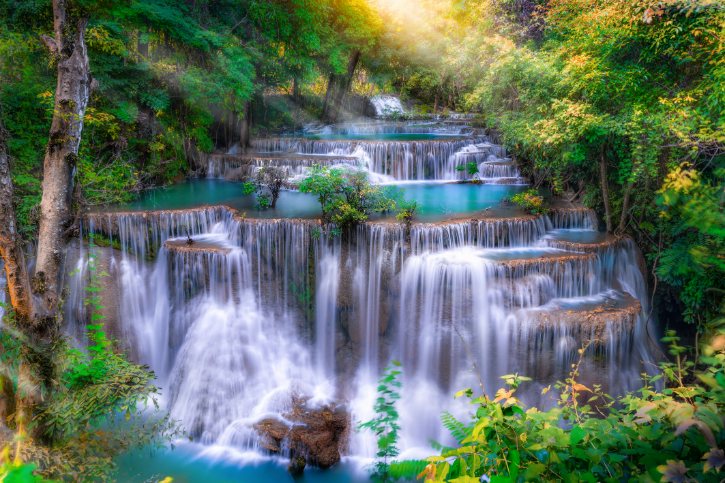
Huay Mae Khamin Waterfall is Erawan’s quieter twin.
Seven tiers with turquoise pools, fewer visitors, and equally stunning scenery. Best flow is September through December.
b. Historical Sites
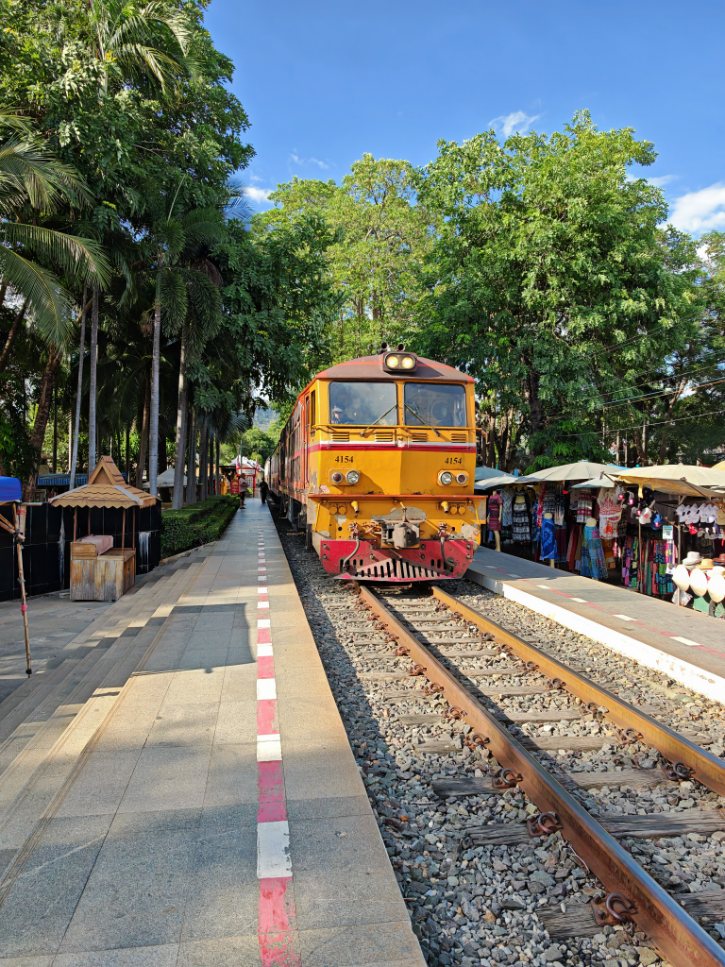
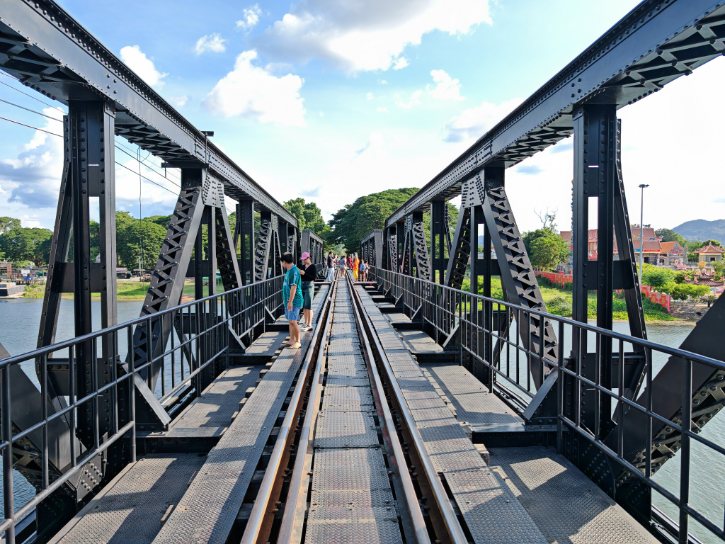
River Kwai Bridge was built by Allied POWs during the Japanese occupation. Walk across and visit the adjacent museum for context on its tragic history.
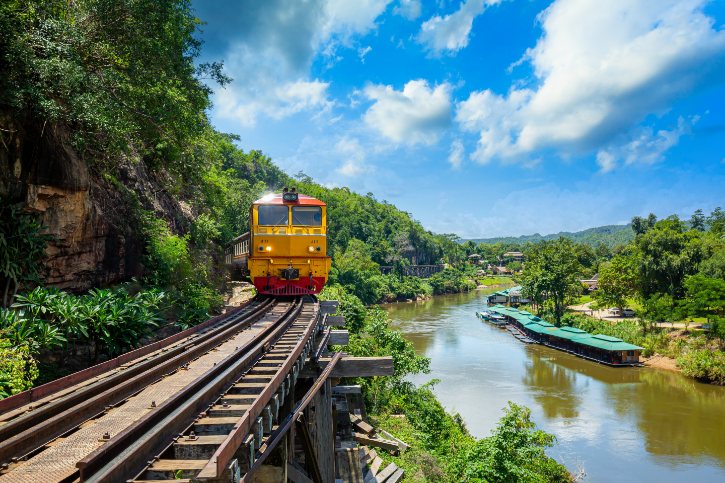
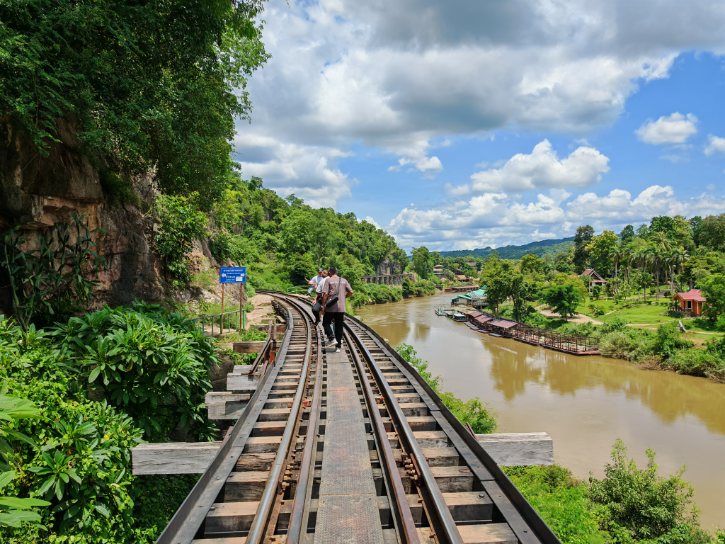
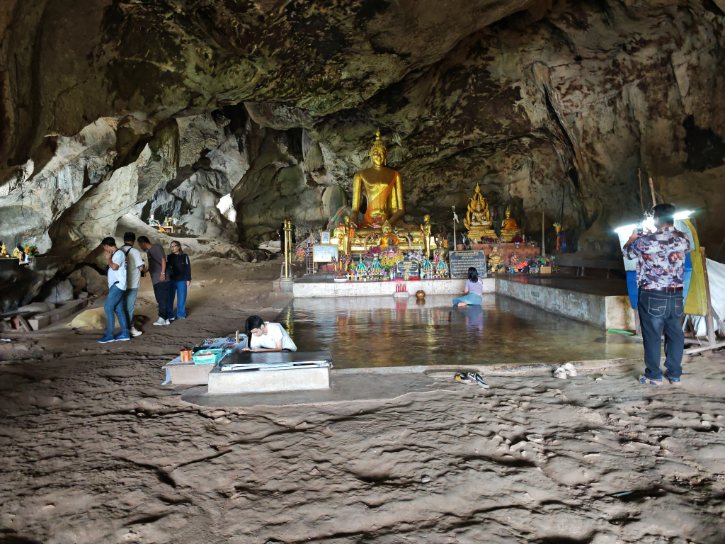
Tham Krasae Death Railway Bridge clings to a cliff face above the river, with a cave temple built into the rock.
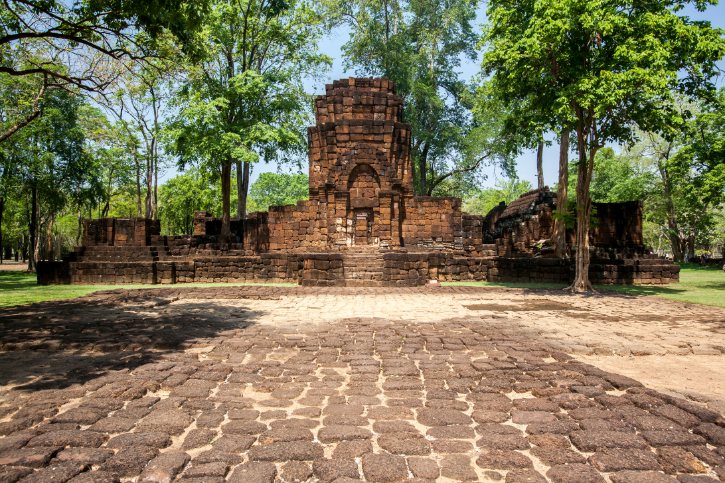
Prasat Muang Sing Historical Park preserves 13th-century Khmer ruins on the empire’s western edge. Smaller than Angkor but atmospheric and rarely crowded.
c. Temples and Landmarks
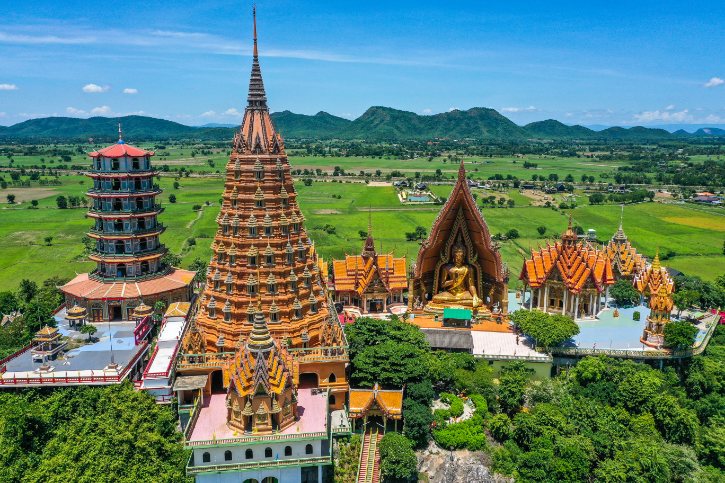
Wat Tham Suea (Tiger Cave Temple) features a massive golden Buddha on a hilltop with sweeping countryside views.
The complex includes caves with religious murals.
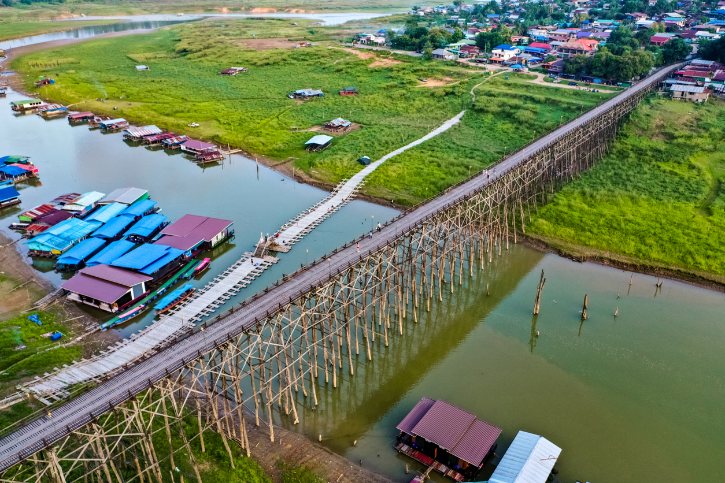
Mon Bridge stretches over 800 meters across Songkalia River.
Thailand’s longest wooden bridge connects to a Mon village with temples and local cuisine.
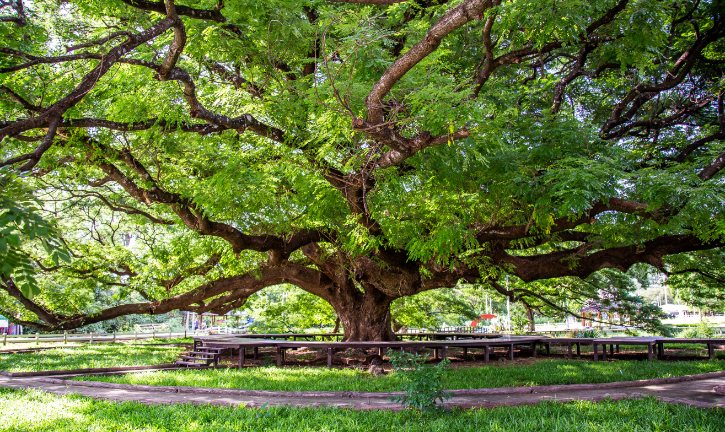
Giant Raintree (Monkey Pod Tree) is a 100-year-old tree with a canopy so wide it creates its own ecosystem. Surrounding cafes make it a pleasant coffee stop.
d. Experiences
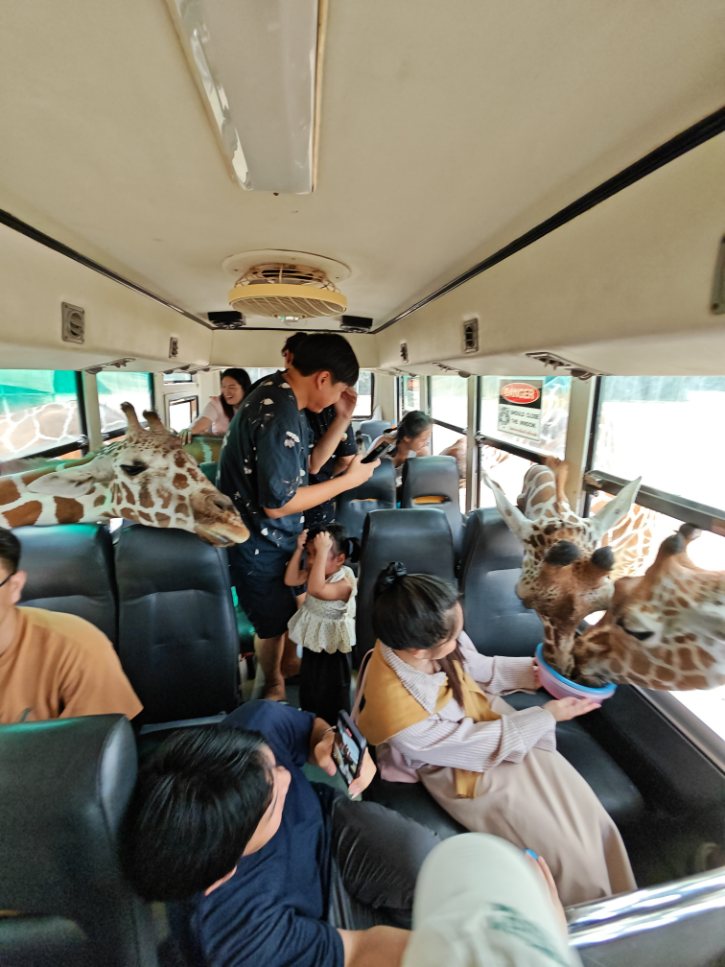
Safari Park Kanchanaburi lets you get remarkably close to giraffes, tigers and zebras.
You can drive your own car through the enclosures or hop on one of the park’s safari buses if you do not have a vehicle.
Either way, the animals often approach windows for feeding. Families love it.
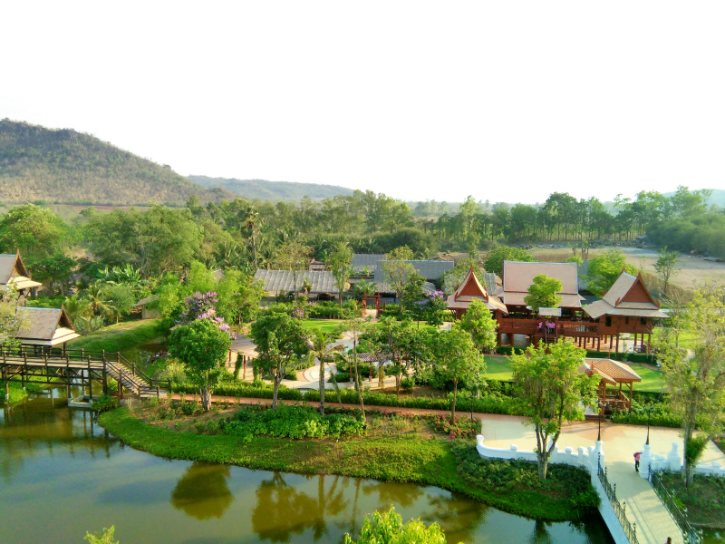
Mallika R.E 124 recreates life during King Rama V’s reign (around 1905). Rent traditional costumes, use old-style currency, and wander reconstructed streets.
e. Cafe Culture
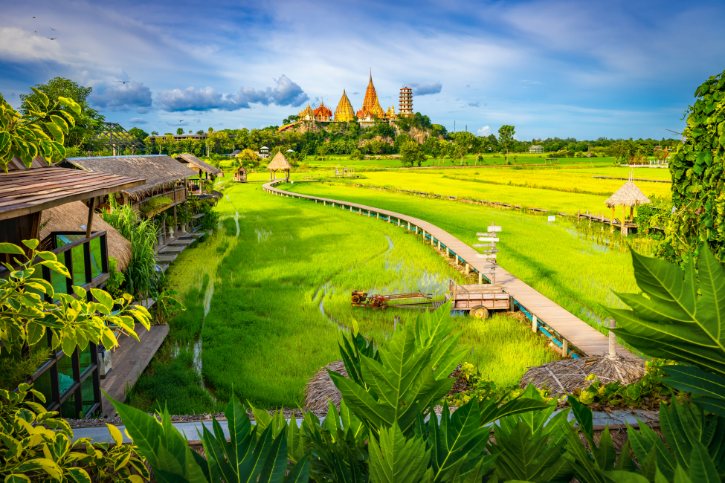
MEENA Cafe started the rice field cafe trend. Multi-level wooden structures overlook paddies with Wat Tham Suea in the distance.
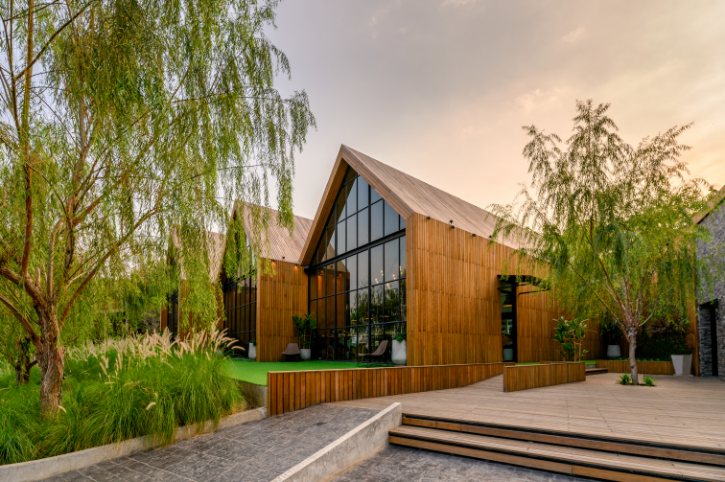
The Village Farm To Cafe is an award-winning farm-style venue with extensive grounds designed for photography.
Best time to visit: Year-round, but March and April can exceed 38°C.
4. Trat Islands
The islands of Trat province offer what Thailand’s famous beaches used to be: quiet, uncrowded, and breathtakingly beautiful.
Located in the eastern Gulf, these islands are gaining recognition as low-impact alternatives to mass-tourism destinations.
Koh Mak even won international sustainability awards for its low-carbon tourism initiatives. No 7-Elevens, no high-rise hotels. Just palm trees, clear water, and island time.
a. The Islands
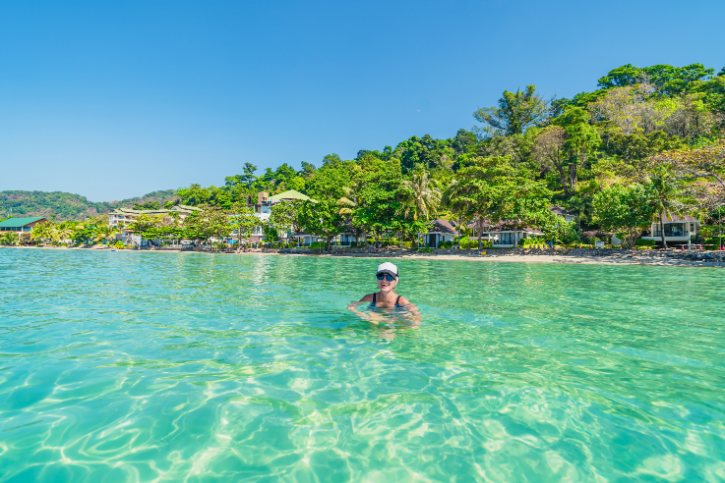
Koh Chang is the largest island in the group and the most developed, though “developed” here is relative.
The western coast has resorts and nightlife, while the eastern side remains largely jungle with small fishing villages and empty beaches.
Klong Plu Waterfall offers cool forest escapes from the sand.
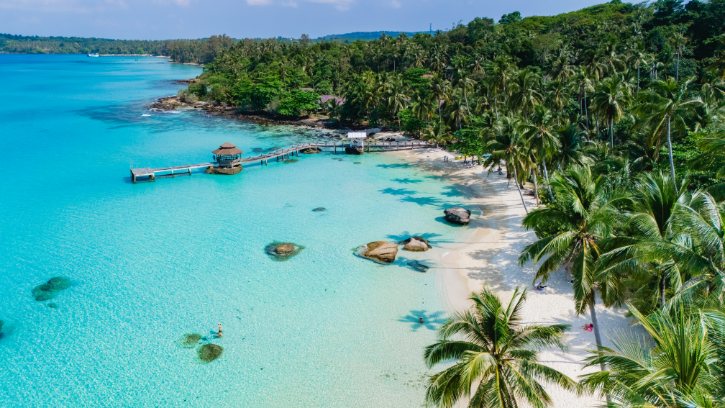
Koh Kood (also spelled Koh Kut) may be the most beautiful island in eastern Thailand.
Larger than Koh Mak but far less developed, it has pristine beaches, clear water, and a genuine end-of-the-road feeling.
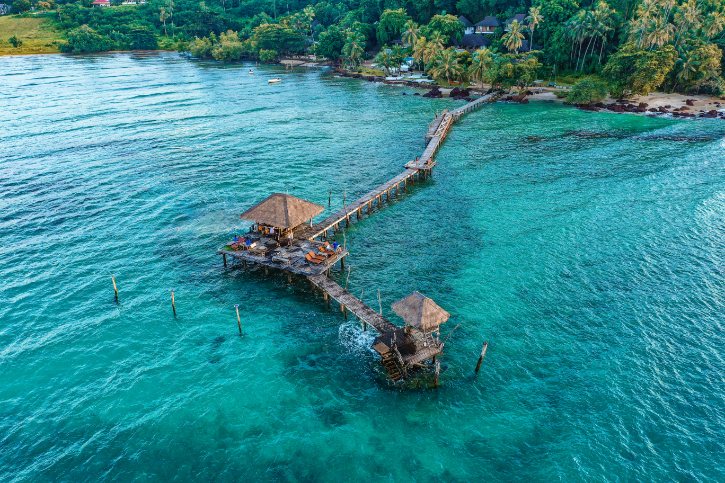
Koh Mak is small, flat, and incredibly peaceful. No jet skis, no loud bars, no high-rises.
Just bicycles, hammocks, and waves. Perfect for families seeking quiet.
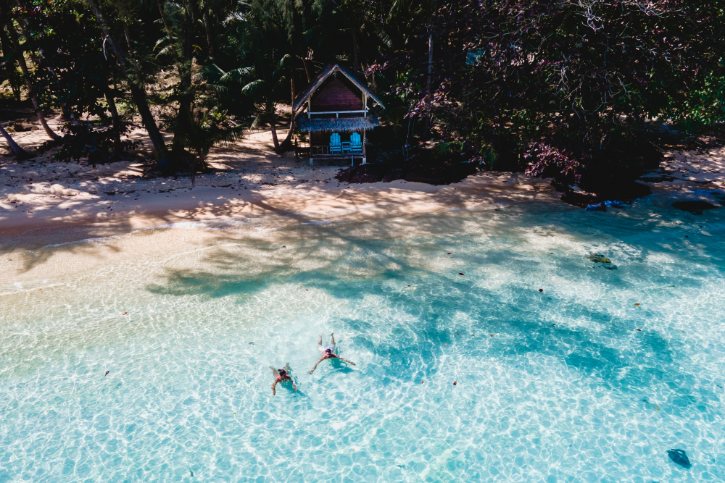
Koh Wai has no cars and limited accommodation. Day-trippers come for excellent snorkeling, but overnight guests get beaches to themselves.
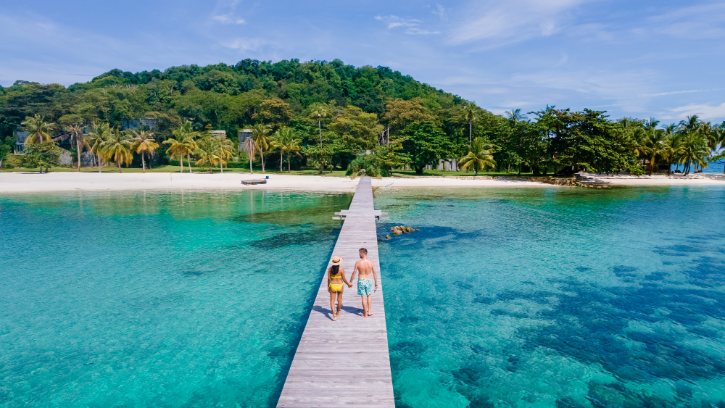
Koh Kham is the Emerald Pearl of Trat. Volcanic rock formations against white sand and crystal-clear water create an almost surreal contrast. Day access only (around 200 THB), keeping it pristine.
b. Practical Notes
Medical facilities: Koh Kood has no hospital, only clinics. Travel insurance is essential.
ATMs are limited: Koh Mak often has none working. Carry sufficient cash in Thai Baht.
Best time to visit: November through April. Monsoon season (late May to October) brings rough seas and reduced ferry schedules.
5. Trang Islands
The Trang archipelago sits in the Andaman Sea, south of Krabi and far from Phuket’s crowds.
These islands offer the same stunning karst scenery and crystal-clear water as their more famous neighbors, but with a fraction of the visitors.
Trang is Thailand’s Dugong Capital. These gentle sea cows (similar to manatees) graze in the seagrass beds around the islands, and their presence has helped drive a conservation-first approach to tourism development here.
a. The Islands
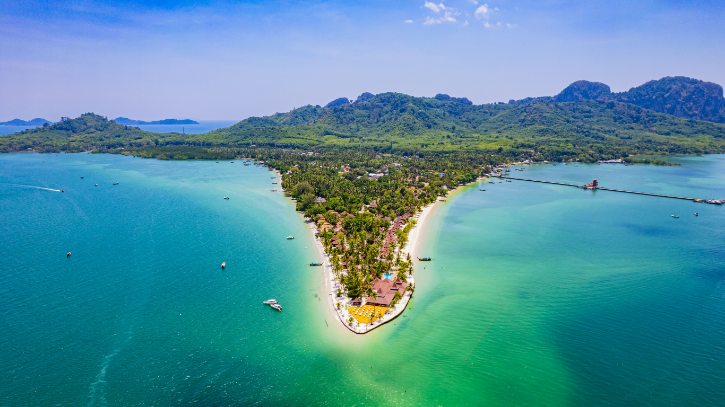
Koh Mook (also spelled Koh Muk) is home to the famous Emerald Cave (Tham Morakot).
To reach it, you swim through an 80-meter limestone tunnel in near-total darkness before emerging into a hidden lagoon surrounded by towering cliffs.
It is one of Thailand’s most magical experiences. Closed August 1 through September 30 for annual rehabilitation.
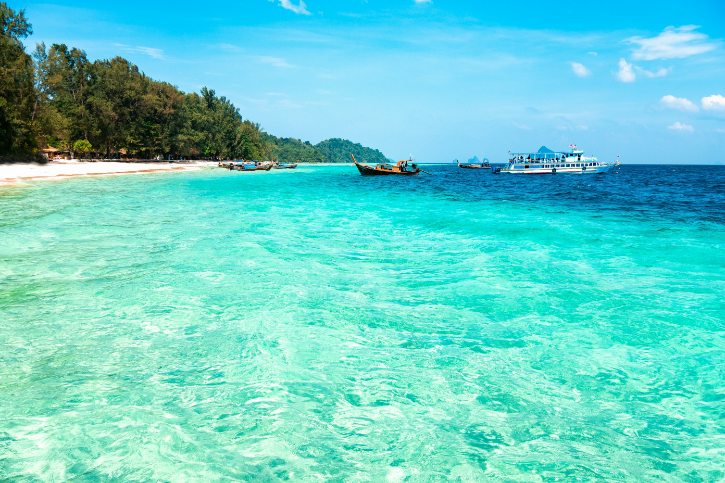
Koh Kradan regularly appears on lists of the world’s best beaches, and the hype is actually justified.
The white sand and gin-clear water are genuinely exceptional.
The island is small enough to walk around in an hour, and there are only a handful of low-key resorts.
Typically closed August 1 through September 30 for ecosystem recovery.
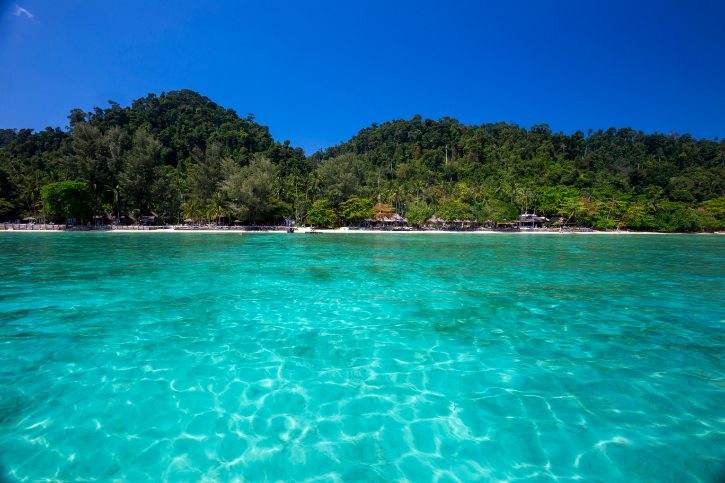
Koh Ngai has the most tourist infrastructure (which is not much).
A few resorts, excellent snorkeling, and a good base for island-hopping.
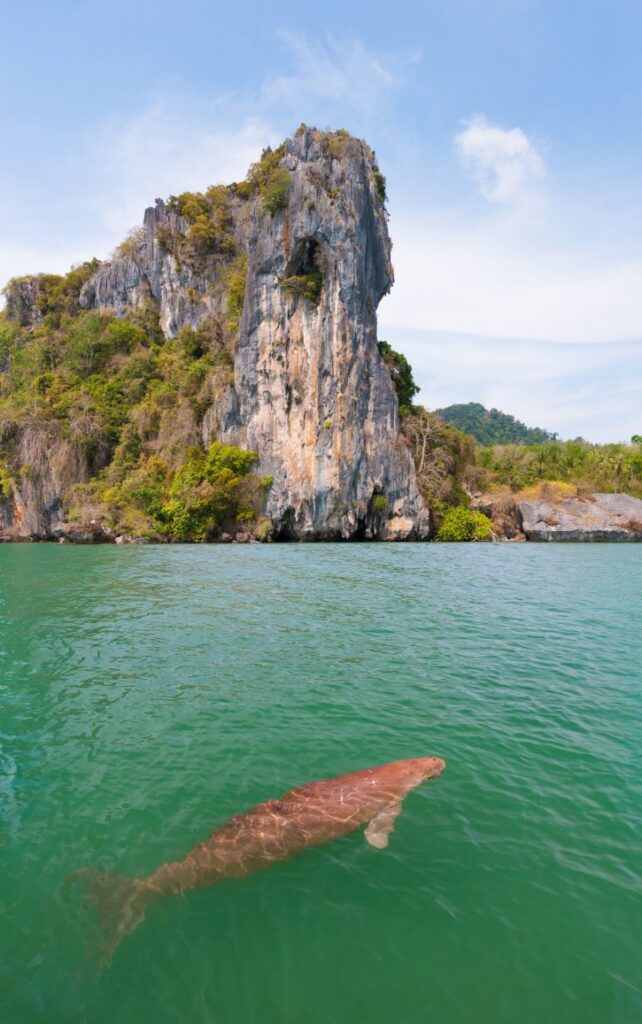
Koh Libong is the largest Trang island and best for dugong spotting.
Seagrass meadows on the eastern side attract these endangered animals. Very low-key tourism.
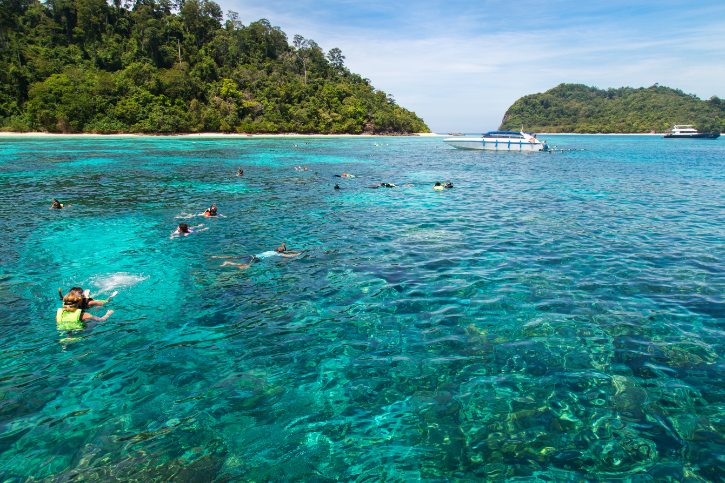
Koh Rok (accessed from Trang, part of Mu Ko Lanta National Park) is considered one of Thailand’s most beautiful islands.
Two islands separated by a coral channel draw Maldives comparisons. Day trips only. Closed May 16 through October 14.
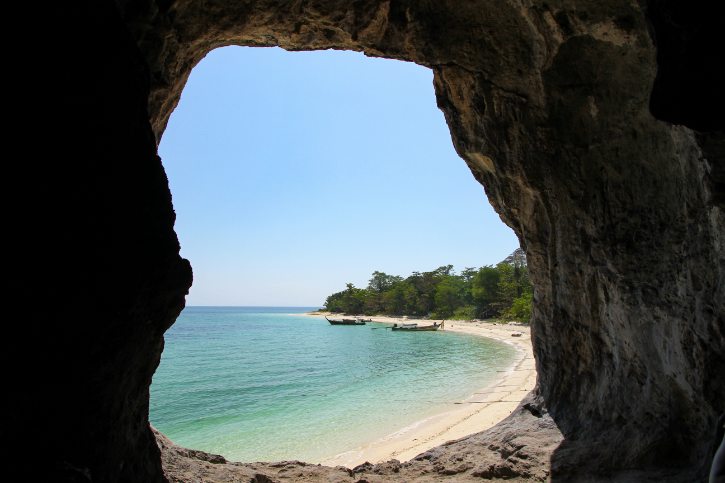
Koh Lao Liang features twin limestone islands with dramatic cliffs and no permanent development.
Rock climbing, snorkeling, and genuine digital detox. Closed May 16 through October 14.
Read More: 7 Hidden Islands in Thailand That Are Pure Paradise
b. Practical Notes
Bring essentials: Sunscreen, medications, reef-safe products. Limited supplies on islands.
Best time to visit: November through April. Do not plan island-hopping mid-year.