
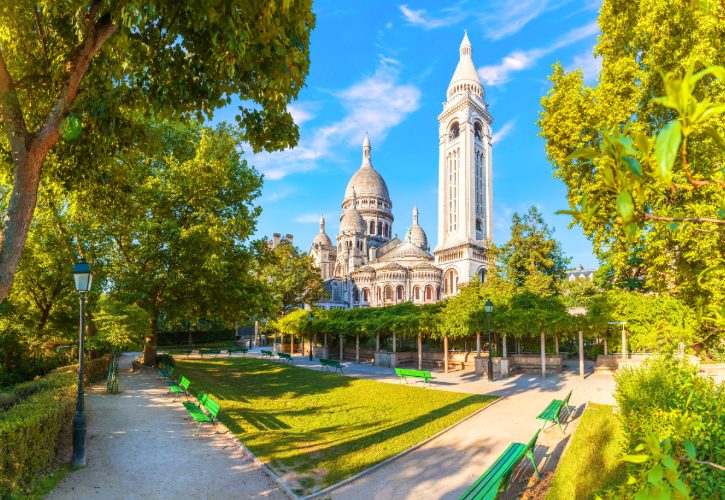
Montmartre is one of the most visited areas in Paris. There are dozens of spots scattered across this hilltop neighborhood, but not all of them deserve your time.
Focusing on the right places helps you avoid rushing and saves energy for what really matters. That means more time to explore other parts of Paris beyond this famous hill.
Here are the 12 spots that truly define the heart of the Butte. 😊
1. Basilique du Sacré-Cœur de Montmartre
a. Why This Spot Is Worth It
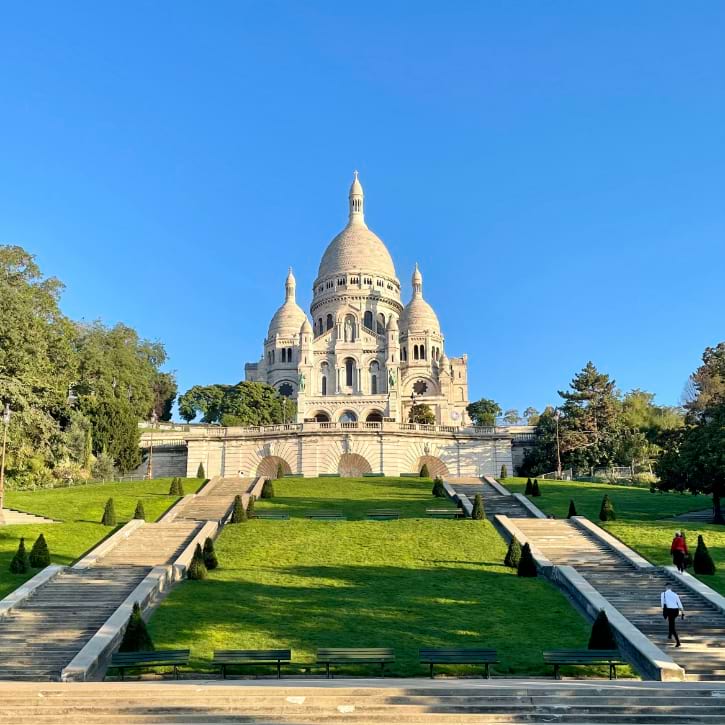
The Sacré-Cœur is the visual heart of Montmartre and one of the most recognizable landmarks in Paris.
Its Romano-Byzantine design stands out from the Gothic churches you’ll see elsewhere in the city.
For travelers short on time, it delivers a two-in-one experience: a stunning religious monument with one of the world’s largest mosaics, plus the best free panoramic view in Paris.
b. What You Can Expect
Getting here feels like a journey upward, whether you take the stairs through Square Louise Michel or ride the funicular.
Once you reach the top, the esplanade buzzes with street performers and visitors from around the world.
Inside, the mood shifts completely. It’s quiet and reverent. The highlight is the Apse Mosaic, a 480-square-meter masterpiece showing Christ in Glory.
The basilica also houses the Savoyarde, a 19-tonne bell that’s among the heaviest in the world.
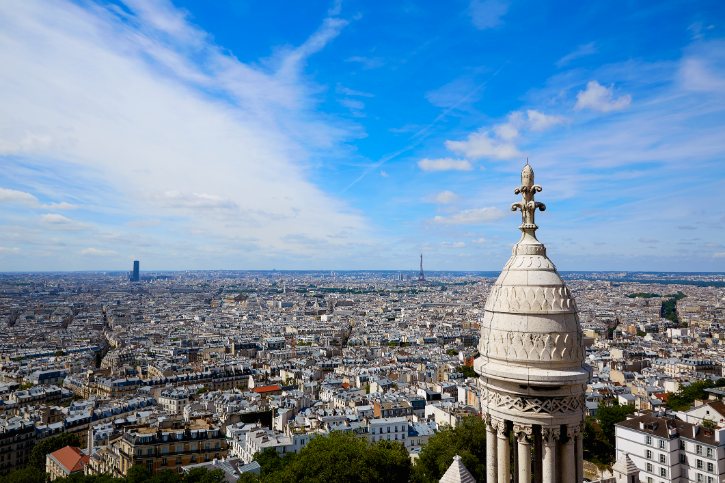
For the best panoramic view, climb to the dome. At 83 meters high, it offers one of the most expansive views of Paris, stretching across the city rooftops to the Eiffel Tower and beyond.
c. Quick Tips
- Arrive before 9:00 AM to avoid the biggest crowds and pushy vendors
- Watch out for the bracelet scam near the steps. People try to tie string on your wrist and demand payment. A firm “non, merci” while walking away works best.
2. Église Saint-Pierre de Montmartre
a. Why This Spot Is Worth It
This is the quiet escape most visitors miss.
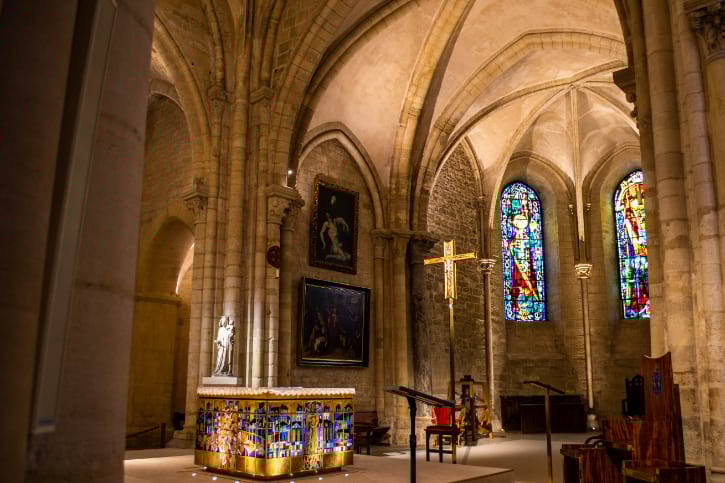
As the second oldest surviving church in Paris (founded in 1133), it offers a direct connection to the medieval roots of Montmartre.
If you want to avoid the crowds at Sacré-Cœur while still experiencing genuine Romanesque and early Gothic architecture, this is your spot.
b. What You Can Expect
The entrance is tucked behind a tree-filled courtyard, adding to its hidden charm.
Inside, it’s peaceful and still. You’ll find ancient columns with Merovingian capitals from the 6th and 7th centuries, salvaged from a Roman Temple of Mars that once stood here.
The bronze doors, added in 1980, depict scenes from the lives of Saint Peter and Saint Denis.
c. Quick Tips
- The adjacent Cemetery of Calvary only opens on November 1st
- Check the mass schedule online to avoid visiting during services
- This is a wonderful spot for a personal, reflective moment away from the tourist rush
3. Place du Tertre
a. Why This Spot Is Worth It
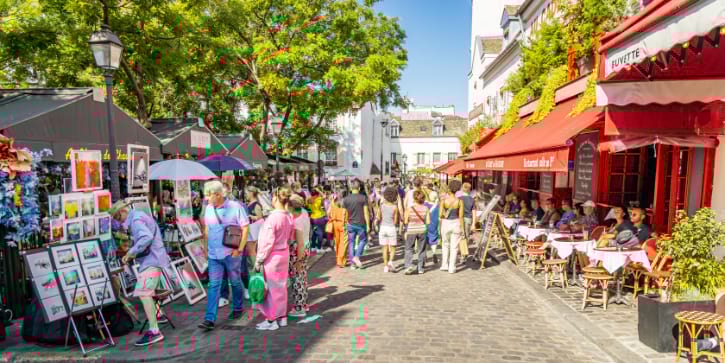
This is the historical center of the Montmartre artistic community.
Yes, it’s touristy. But it’s also the only place where 140 regulated artists still paint, sketch, and create in the open air. That tradition goes back to the early 20th century. If you want to see the “Artists’ Village” in action, this is it.
b. What You Can Expect
The square is lively and colorful, filled with easels, umbrellas, and café terraces.
You’ll see everything from quick caricatures to detailed oil paintings of Parisian streets.
The surrounding lanes are where legends like Picasso and Van Gogh once walked. Today, the edges of the square have souvenir shops, but the artistic core remains.
c. Quick Tips
- Best time for photos: Before 10:00 AM
- Avoid spontaneous portrait commissions without agreeing on a price first. Some artists try to double-charge by bringing in a second sketcher mid-session.
4. The Wall of “I love you”
a. Why This Spot Is Worth It
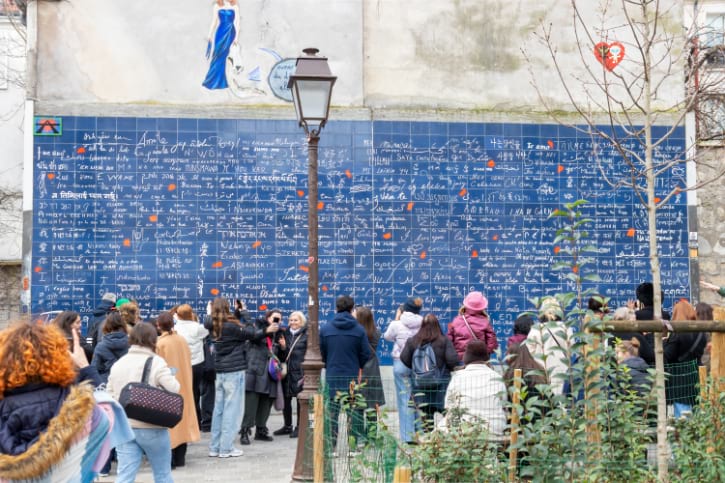
This modern landmark captures the romantic spirit of Paris in a fresh, artistic way.
Located in Square Jehan Rictus, it’s a free and highly accessible stop that offers a nice contrast to the historical monuments nearby.
b. What You Can Expect
The installation covers 40 square meters and features 612 tiles of enameled lava.
The phrase “I love you” appears 311 times in over 250 languages.
The typography was designed by calligrapher Claire Kito, and the red splashes on the dark blue tiles represent pieces of a broken heart, symbolically brought together.
The park around it is calmer than the hilltop, making it a pleasant stop for couples and families.
c. Quick Tips
- It’s right next to the Abbesses metro, making it a perfect first stop
- This spot was featured in Emily in Paris, so expect it to be popular on social media
5. La Maison Rose
a. Why This Spot Is Worth It
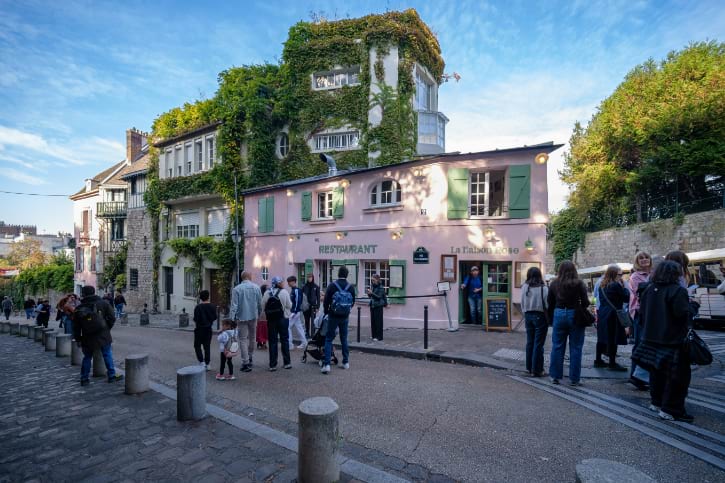
This pale pink building with green shutters is one of the most photographed spots in Montmartre.
The painter Maurice Utrillo featured it in his work, and it has become a symbol of the neighborhood’s rustic, village-like charm.
b. What You Can Expect
La Maison Rose sits at the corner of Rue de l’Abreuvoir and Rue des Saules, one of the prettiest junctions in the city.
Today, it operates as a restaurant serving French-Italian cuisine with fresh, seasonal ingredients.
The surrounding streets are especially beautiful in spring and autumn when the ivy and trees change color.
c. Quick Tips
- Best photography time: Sunrise or very early morning
- Reservations strongly recommended if you want to dine here
- Combine this stop with a visit to the nearby Musée de Montmartre or a walk down Rue de l’Abreuvoir
6. Rue de l’Abreuvoir
a. Why This Spot Is Worth It
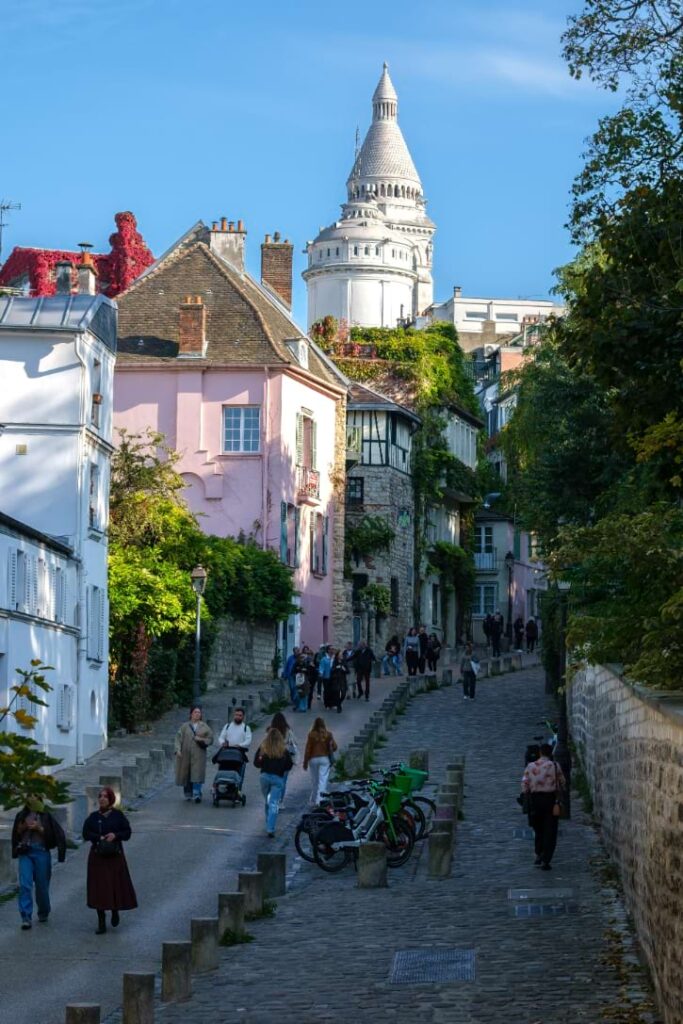
Often called the prettiest street in Paris, this curved cobblestone lane feels completely removed from the busy city below.
It gives you the most authentic “hidden village” experience, with ivy-covered houses and historical markers around every corner.
b. What You Can Expect
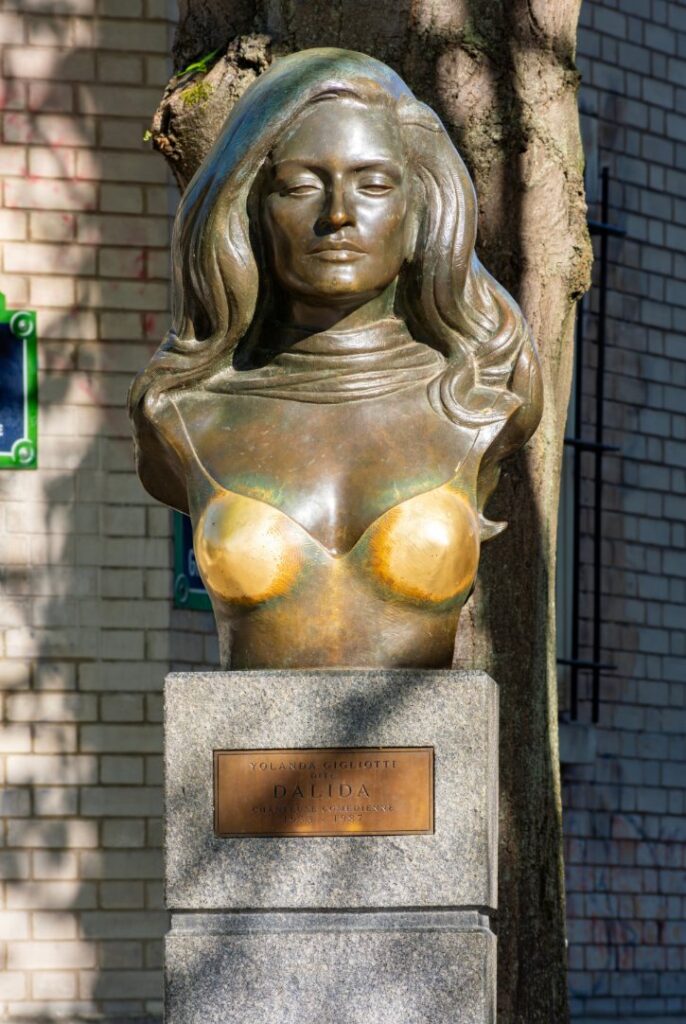
At the western end, you’ll find Place Dalida, featuring a bronze bust of the legendary French-Egyptian singer.
As you walk uphill toward La Maison Rose, the domes of the Sacré-Cœur gradually appear over the rooftops. It’s one of the most famous photo compositions in Paris.
The street was featured in Emily in Paris, but it still feels peaceful, especially before afternoon tour groups arrive.
c. Quick Tips
- Arrive before noon on weekdays to enjoy the street’s beauty in quiet
- Walk downhill from Sacré-Cœur toward Place Dalida to minimize climbing
- This is one of the best spots for high-quality photography without commercial noise
7. Rue Norvins
a. Why This Spot Is Worth It
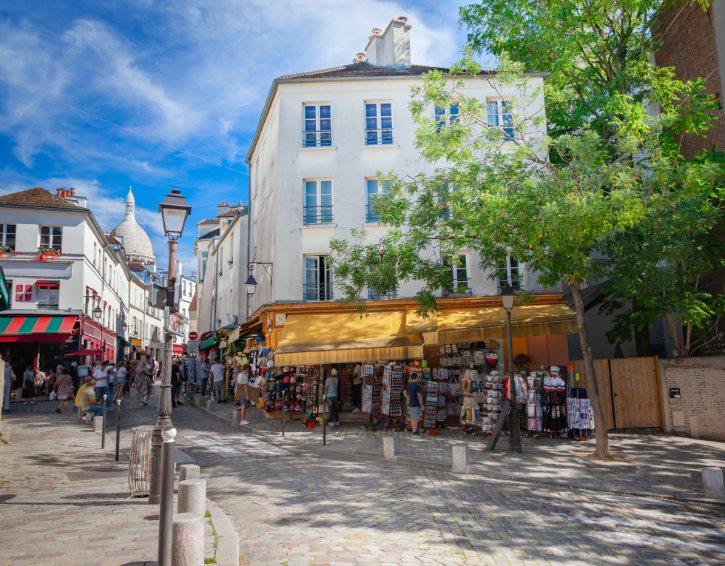
Rue Norvins is the main street running through the heart of upper Montmartre, connecting many of the neighborhood’s key landmarks.
It’s one of the oldest streets on the Butte and retains a charming, village-like atmosphere. Walking here ties together spots like Place du Tertre, Le Passe-Muraille, and the approaches to Sacré-Cœur.
b. What You Can Expect
The street is lined with a mix of historic buildings, small restaurants, and artist studios.
Near the intersection with Place du Tertre, it gets busier with tourists.
But as you walk further along, the crowds thin out and the street becomes quieter and more picturesque.
Place Marcel Aymé, home to Le Passe-Muraille statue, is just off Rue Norvins, making it easy to combine both stops.
c. Quick Tips
- Use this street as a connector between Place du Tertre and Le Passe-Muraille
- The western end toward Rue Junot is quieter and great for photos
- Avoid the restaurants directly on the busy stretch near Place du Tertre, as they tend to be overpriced
8. Le Passe-Muraille
a. Why This Spot Is Worth It
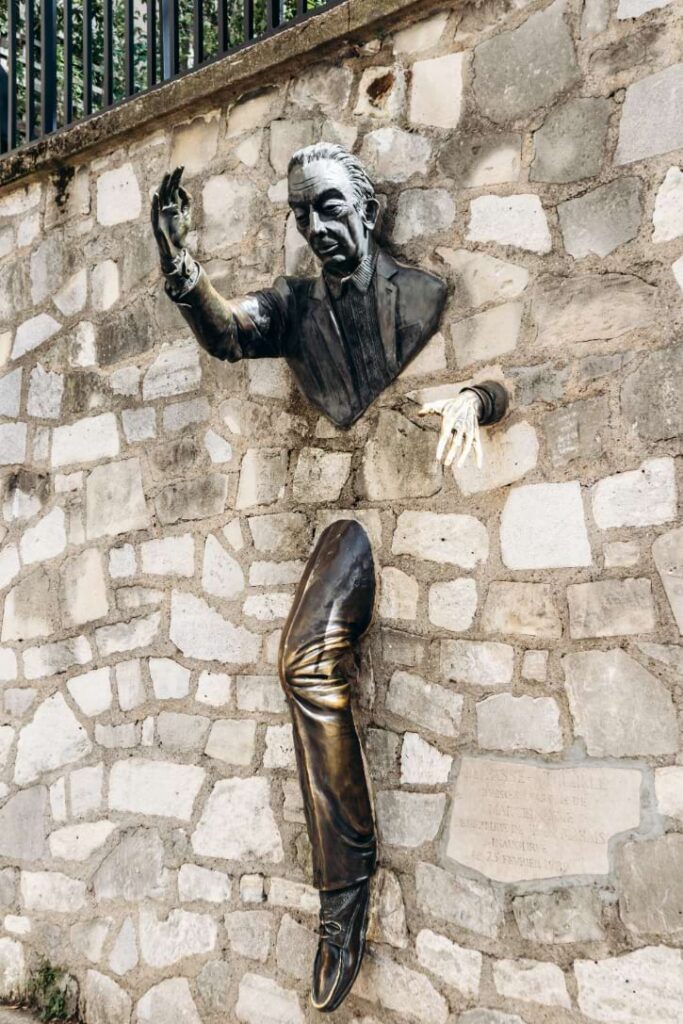
This playful bronze sculpture is a tribute to French literature and the creative spirit of Montmartre.
It shows a man caught mid-walk through a solid stone wall. It’s an unexpected hidden gem that adds a storytelling layer to your visit, far from the crowded main attractions.
b. What You Can Expect
The sculpture sits in Place Marcel Aymé and was created in 1989 by actor and artist Jean Marais.
It honors author Marcel Aymé, who lived nearby on Rue Junot.
The statue is based on Aymé’s 1941 short story about a man named Dutilleul who could walk through walls, until his powers failed and left him stuck forever.
Visitors love taking funny photos “shaking hands” with the figure or pretending to pull him out.
c. Quick Tips
- It’s away from the main tourist paths, so it’s a quieter stop
- Touch the lower hand for luck, according to local tradition
- A great spot for a lighthearted break from the heavy historical monuments
9. Rue Lepic
a. Why This Spot Is Worth It
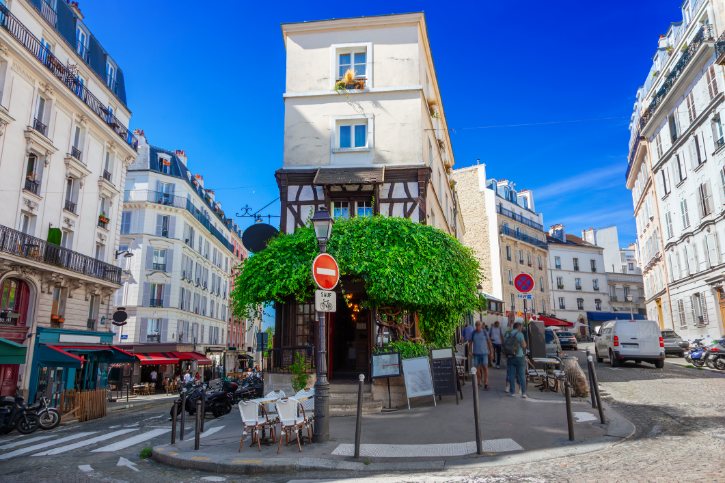
Rue Lepic is one of the most iconic streets in Montmartre and the main artery connecting the lower neighborhood to the summit.
It’s famous for being home to the Café des Deux Moulins (the Amélie café) and for passing by the historic Moulin de la Galette, one of the last remaining windmills in Paris.
Walking this street gives you a true sense of the neighborhood’s layers, from lively shops at the bottom to quiet residential charm near the top.
b. What You Can Expect
The street begins near Blanche metro station and winds uphill through a mix of food shops, bakeries, and local cafés.
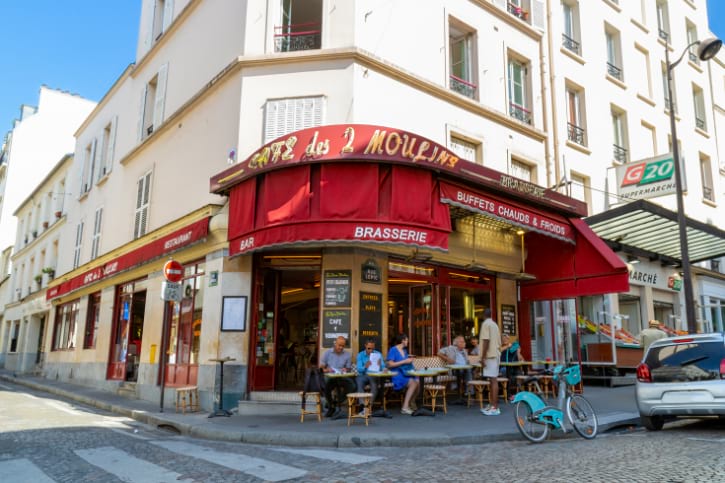
As you climb, you’ll pass the Café des Deux Moulins on your left.
Further up, the pace slows and the street becomes more residential.
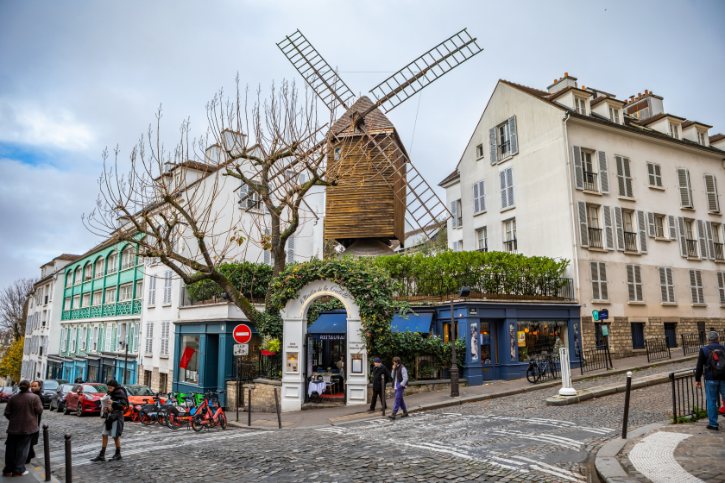
Near the top, you’ll spot the Moulin de la Galette, a 19th-century windmill immortalized by Renoir in his famous painting.
The street eventually connects to Rue Norvins and the heart of upper Montmartre.
c. Quick Tips
- Stop at local bakeries along the way for fresh croissants or baguettes
- The upper section is steeper, so pace yourself
10. Café des Deux Moulins
a. Why This Spot Is Worth It
This cozy bistro became world-famous as the main filming location for the 2001 film Amélie.
It preserves the authentic Art Deco charm of an early 20th-century Parisian café while celebrating its place in cinema history. For fans of the movie, it’s a must-visit.
b. What You Can Expect
The café sits on Rue Lepic and is named after the two nearby windmills: the Moulin Rouge and the Moulin de la Galette.
Inside, you’ll find a zinc bar, tiled floors, and a molded ceiling with neon accents.
There’s an “Amélie corner” with a photo of actress Audrey Tautou.
The menu includes the famous crème brûlée, which fans order to recreate Amélie’s signature moment of cracking the crust with a spoon.
c. Quick Tips
- Peak lunch and dinner hours get crowded with fans waiting for tables
- It’s a convenient stop when walking from Blanche metro up toward the summit
11. Moulin Rouge
a. Why This Spot Is Worth It
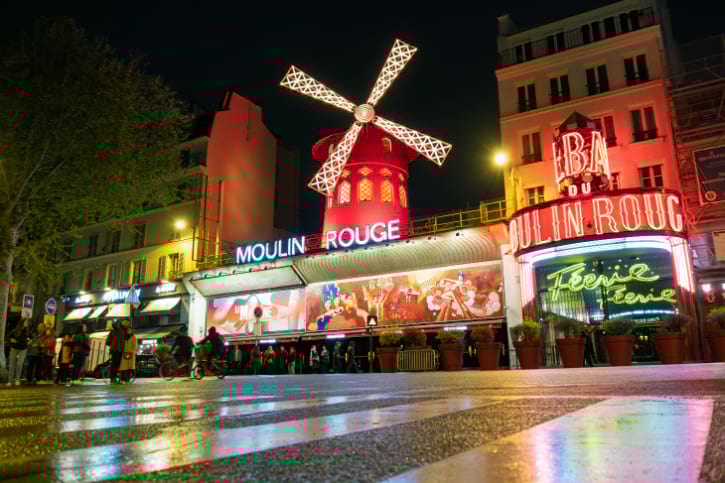
The Moulin Rouge is the world’s most famous cabaret and an essential piece of Parisian culture.
Opened in 1889, it’s credited with inventing the modern can-can dance. Even if you don’t attend a show, the iconic red windmill is a must-see landmark and photo stop.
b. What You Can Expect
Located on Boulevard de Clichy, the venue is known for its high-energy show called Féerie, featuring elaborate costumes, feathers, and a large cast of performers.
The surrounding Pigalle district is livelier and more chaotic than the quiet streets of upper Montmartre.
This area has been immortalized by artists like Toulouse-Lautrec and represents the glamorous, decadent side of Parisian history.
c. Quick Tips
- Book tickets well in advance, often weeks or months ahead
- Be careful with your belongings in the crowded plaza. Pickpockets operate here.
- For photos, visit at dusk when the red neon windmill lights up
- The area has late-night dining and bars, making it a good start or end point for an evening out
12. Rue des Abbesses
a. Why This Spot Is Worth It
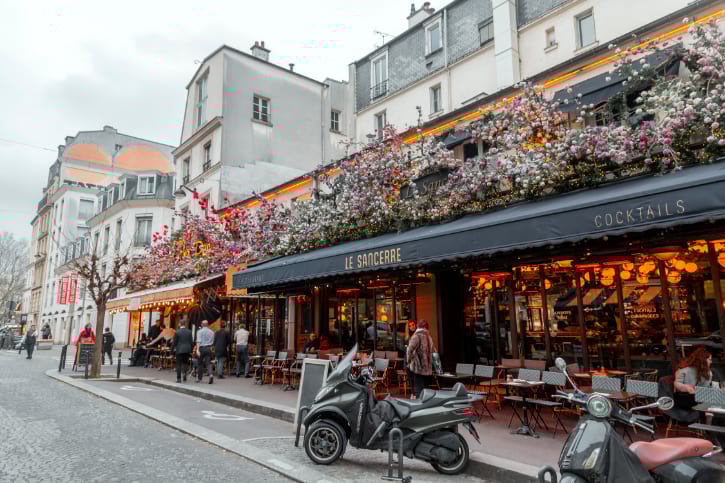
This is the vibrant commercial heart of lower Montmartre and the best place to experience the neighborhood’s everyday “village” life.
It’s lined with artisan food shops, fashion boutiques, and bustling café terraces. Unlike the more performative tourist areas, this street feels genuinely local.
b. What You Can Expect
The street has strong Art Nouveau influences, especially at the Abbesses metro entrance designed by Hector Guimard.
You’ll find traditional bakeries, specialty cheese shops, and unique vintage stores.
The atmosphere stays lively and safe into the evening, making it a great spot for a stroll or dinner. It blends traditional Parisian charm with a modern “SoPi” (South Pigalle) vibe.
c. Quick Tips
- Use the elevators at Abbesses metro to avoid 285 steps to the surface
- This is a great starting point before climbing the hill, or a rewarding end point for a downhill tour
- The retail environment here is more relaxed and respectful than the summit areas
Montmartre Map
How to Get Around Montmartre
Walking is the main way to explore Montmartre, and honestly, it’s the best way to soak in the charm.
But here’s the reality: the neighborhood is built on a steep hill. You’ll face long staircases, sloped streets, and terrain that requires real physical effort. A poorly planned route can wear you out fast.
Walking Strategies
Top-down approach: The most efficient method. Start at the highest point (Sacré-Cœur) and walk downhill through the village streets toward the lower metro stations.
The Montmartre Funicular
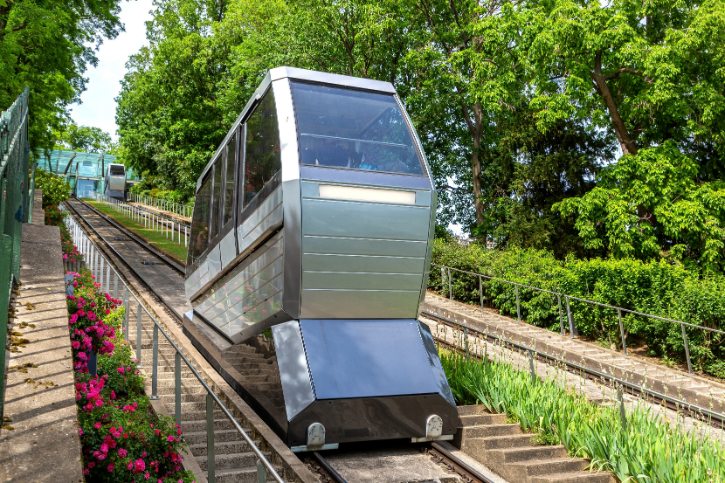
If you want to skip the 197+ steps to the Sacré-Cœur, the funicular is your best friend.
- What it is: An automated cable car linking the base of the hill (near Place Saint-Pierre) to the summit near the basilica
- Ride time: About 90 seconds
- Cost: Same as a single metro ticket (T+ ticket). Navigo and Paris Visite passes also work.
- When to use it: Highly recommended for families with children, travelers with luggage, or anyone visiting on a hot or rainy day
How to Get to Montmartre
The metro station you choose sets the direction and energy of your visit. Two stations work best for a structured itinerary.
Abbesses Station (Line 12)
This station drops you right into the heart of the village atmosphere.
- Line 12 connects to major hubs like Concorde and Montparnasse
- Exiting here puts you steps away from the Wall of Love and the shops of Rue des Abbesses
- Best for: Travelers who want to start in the “real” neighborhood vibe
Tip: Use the elevators to avoid 176 steps to the surface. Abbesses is the deepest station in Paris at 36 meters.
Blanche Station (Line 2)
This is the best choice for starting at the bottom of the hill or ending your trip after walking downhill.
- Line 2 runs across northern Paris and connects to Charles de Gaulle-Étoile
- Exiting here puts you directly in front of the Moulin Rouge
- Best for: Travelers who want to walk up Rue Lepic, passing Café des Deux Moulins on the way to the summit, or those ending a downhill walk from Sacré-Cœur