
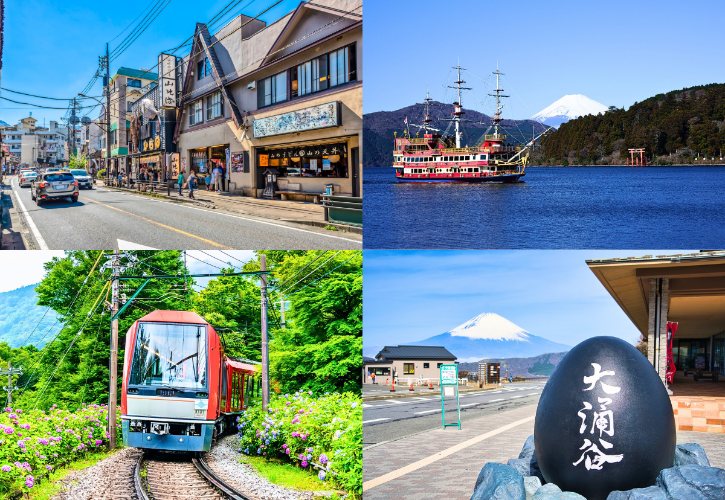
Hakone is one of Japan’s most rewarding day trips from Tokyo, and honestly, it’s easier to explore than you might think.
Tucked inside a volcanic caldera with hot springs, a stunning lake, and views of Mount Fuji, this little mountain escape feels worlds away from the city.
In this guide, I’ll walk you through the 10 best things to do, show you exactly how to get here from Tokyo, and explain how to get around once you arrive. Let’s dive in. 😊
1. Hakone-Yumoto Shopping Street
a. Why Visit
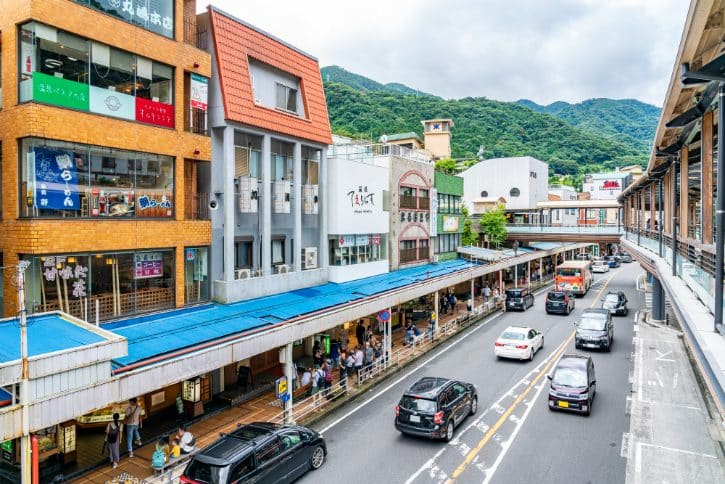
Hakone-Yumoto is where your Hakone adventure begins.
This charming shopping street runs along the Hayakawa River and feels like stepping into a traditional Japanese hot spring town.
It’s the perfect place to ease into Hakone’s slower pace while picking up snacks, souvenirs, and local crafts.
b. Best Things to Do
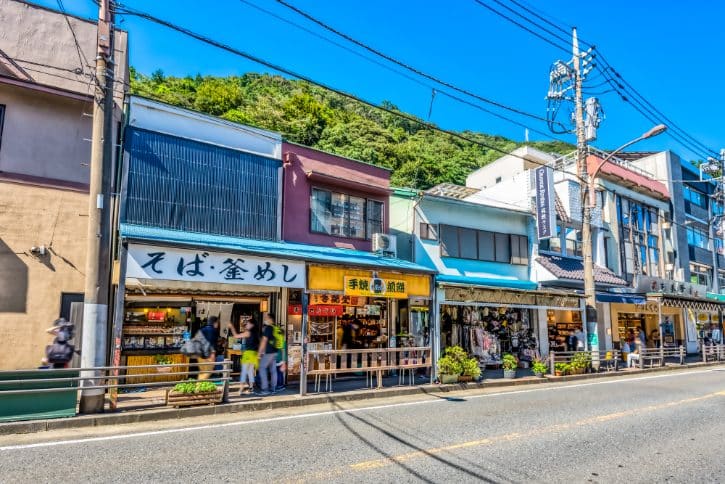
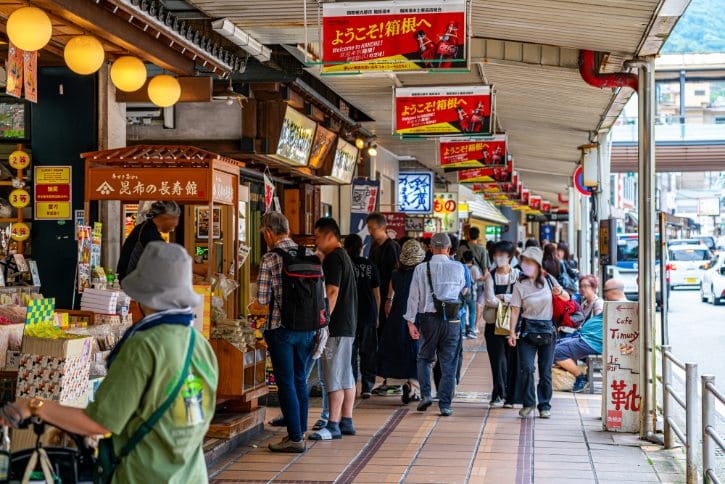
- Stroll through the shops starting from Hakone-Yumoto Station’s 2nd-floor ticket gate
- Try tabearuki (eating while walking), a fun Japanese tradition here
- Sample local treats like onsen manju (sweet steamed buns) and kamaboko (fish cake)
- Stop by Hakone-no-ichi for over 2,500 local products, including beautiful yosegi zaiku wooden mosaic crafts
- Watch fresh manju being made at Kikukawa Shoten
- Grab a coffee at Hakone Cafe inside the station if you arrive early
- Walk the riverside paths toward day-trip onsen like Hakone Yuryo (free shuttle from the station)
2. Hakone Tozan Railway
a. Why Visit
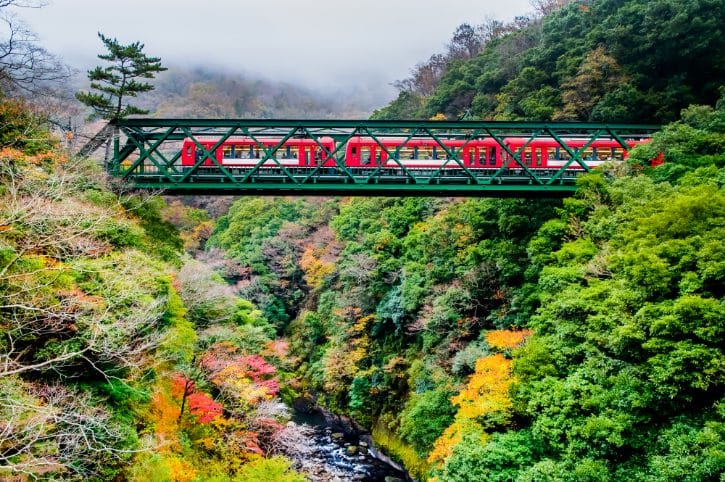
This is Japan’s oldest mountain railway, and riding it is an experience in itself.
The train climbs steeply through forests, tunnels, and over iron bridges, with views that change beautifully with each season.
What makes it special? The train uses switchback maneuvers to climb the steep terrain.
You’ll actually see the driver and conductor swap positions as the train reverses direction. Trust me, it’s fascinating to watch.
b. Best Things to Do
- Enjoy the 40-minute ride from Hakone-Yumoto to Gora
- Watch for the three switchbacks at Deyama, Ohiradai, and Kami-Ohiradai
- Sit near the large windows of the Allegra carriages for the best views
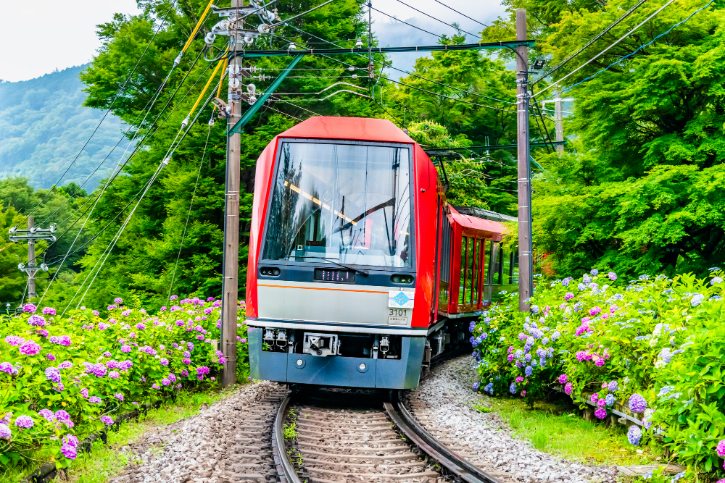
- Visit in June when nearly 10,000 hydrangea bushes bloom along the tracks (evening light-ups are magical)
- Come in November for stunning autumn foliage
- Stop at Miyanoshita Station to explore antique shops
- Visit Tonosawa Station for the Fukasawa Zeniarai Benzaiten Shrine, located right beside the platform
3. The Hakone Open-Air Museum
a. Why Visit
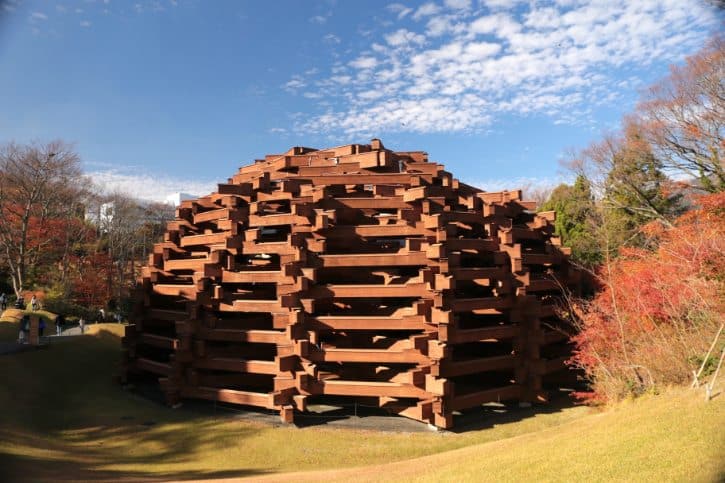
This was Japan’s first open-air museum, and it’s still one of the best.
Over 120 sculptures are displayed across a sprawling 70,000-square-meter garden, with the Hakone mountains as a stunning backdrop.
The outdoor setting means the art looks different depending on the weather, time of day, and season. It’s a refreshing change from traditional museums.
b. Best Things to Do
- Walk through the Sculpture Garden featuring works by Rodin, Bourdelle, and Miró
- Visit the Picasso Pavilion, which houses over 300 works including ceramics and paintings
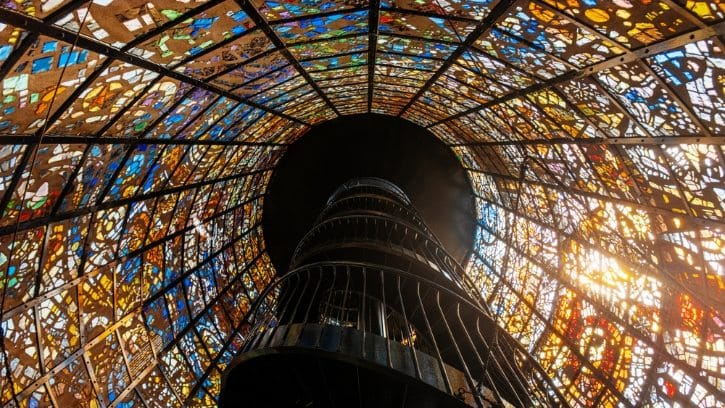
- Climb the Symphonic Sculpture by Gabriel Loire, a stained-glass tower with a viewing platform at the top
- Let kids play at the Woods of Net, a colorful textile climbing structure
- End your visit at the Forest Footbath, a hot spring foot soak using natural spring water
4. Hakone Gora Park
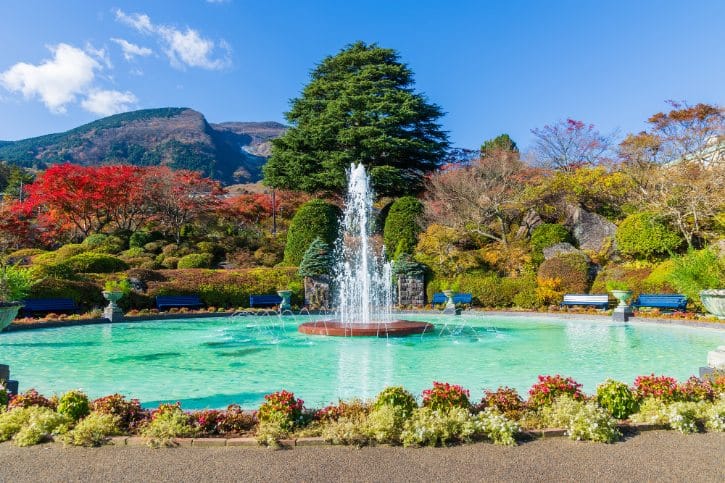
a. Why Visit
Opened in 1914, this is Japan’s oldest French-style formal garden.
Unlike traditional Japanese gardens, Gora Park features symmetrical landscaping, a central fountain, and gorgeous seasonal flowers.
The park is free with the Hakone Freepass, which makes it an easy add to your itinerary.
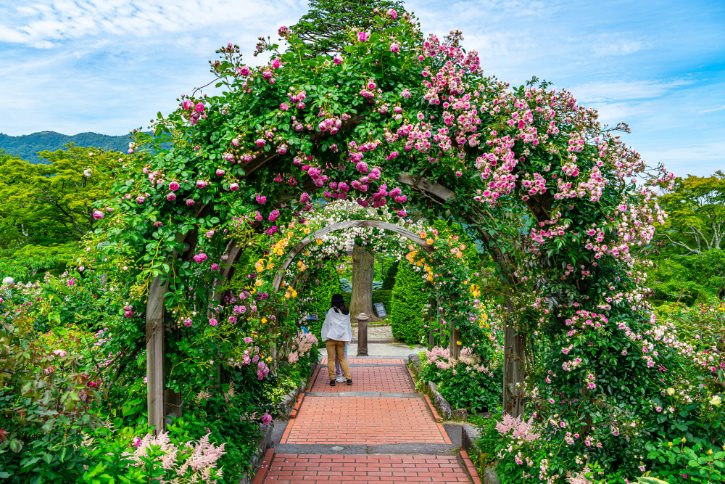
b. Best Things to Do
- Join a workshop at the Hakone Crafthouse for glass blowing, pottery, or ceramics painting
- Experience a traditional tea ceremony at the Hakuun-do Tea Garden
- Stroll through the Rose Garden during May to June or October to November
- Visit the Bougainvillea Pavilion for tropical plants year-round
- Have lunch at Cafe PIC with views of the fountain, or try Isshikido for quality sandwiches
5. Hakone Venetian Glass Museum (Glass Forest)
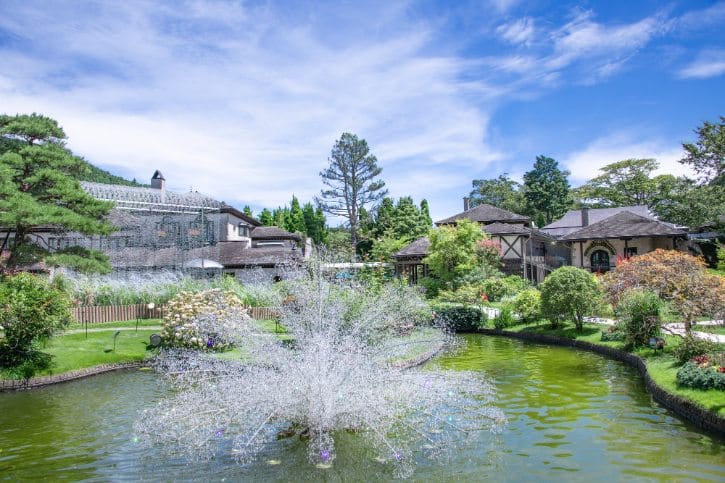
a. Why Visit
This is Japan’s first museum dedicated to Venetian glass, and the setting is magical.
The grounds are designed to feel like a medieval Italian estate, complete with sparkling crystal installations in the garden.
Inside, you’ll find about 100 masterpieces of Venetian glass dating from the 15th to 19th centuries.
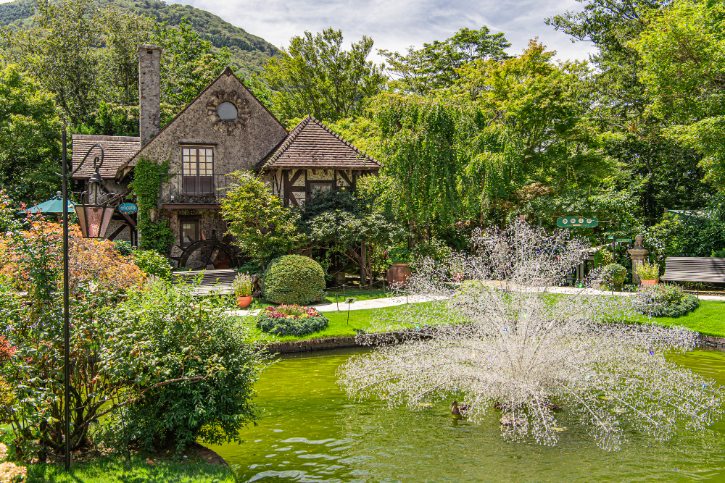
b. Best Things to Do
- Walk through the garden to see the Crystal Glass Trees and Crystal Bridge made from 160,000 pieces of crystal
- Explore the galleries showcasing intricate Millefiori and lace glass techniques
- Try sandblasting at the Experience Corner to create your own personalized glass design
- Enjoy lunch at Caffe Terrazza Ukai, which features live Italian canzone performances
- Shop at the tax-free museum store for Italian glass accessories and unique gifts
6. Owakudani
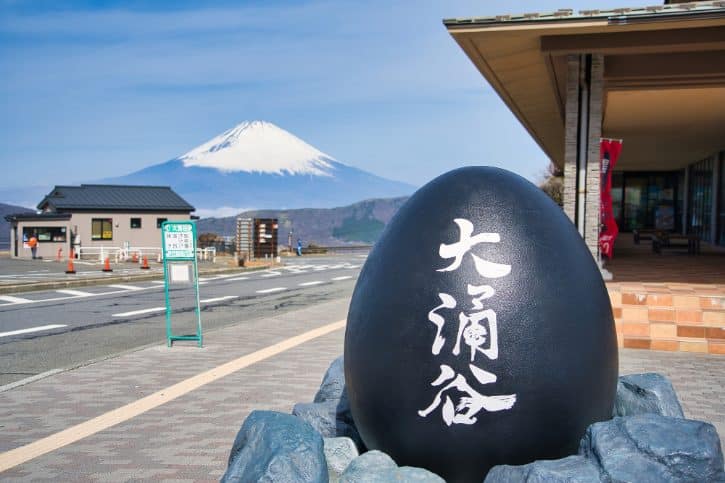
a. Why Visit
This is Hakone at its most dramatic. Owakudani is an active volcanic valley formed about 3,000 years ago, and you can see (and smell) the sulfur vents and bubbling hot springs firsthand.
On a clear day, the views of Mount Fuji from here are absolutely iconic.
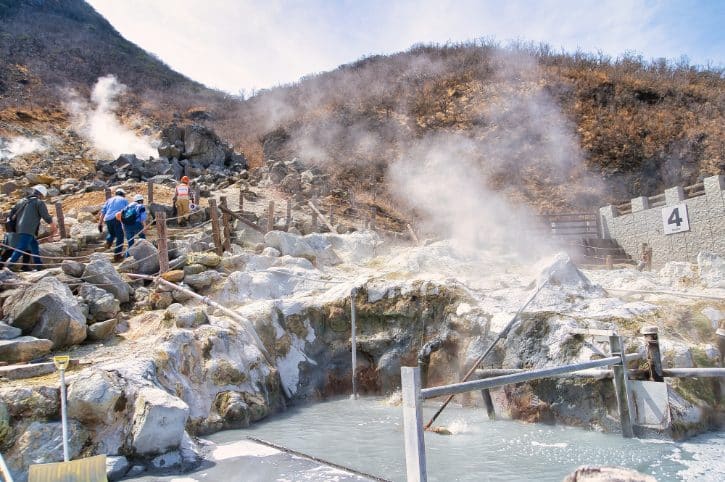
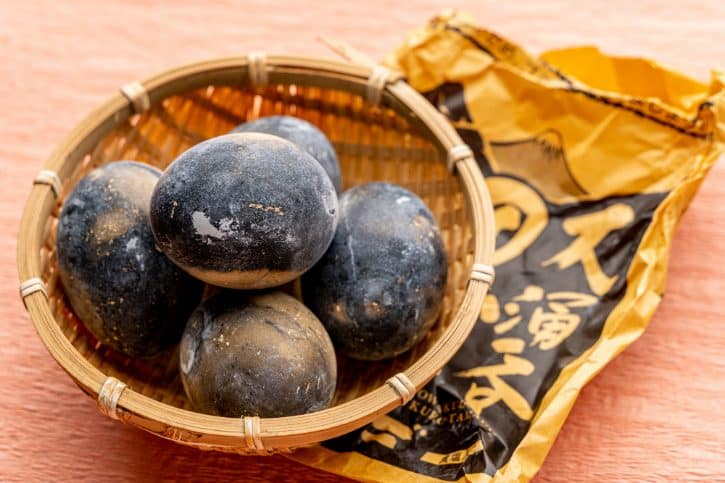
b. Best Things to Do
- Eat a kuro-tamago (black egg), boiled in the natural hot springs until the shell turns black from the sulfur
- Try the Owakudani Curry at Owakudani-eki Shokudo, colored black to match the famous eggs
- Book a 700-meter guided walk into the geothermal zone (advance reservation required)
- Take the Hakone Ropeway between Sounzan and Owakudani for aerial views of the “valley of hell”
Important: Visitors with heart or respiratory conditions should limit time here due to volcanic gases.
7. Lake Ashi
a. Why Visit
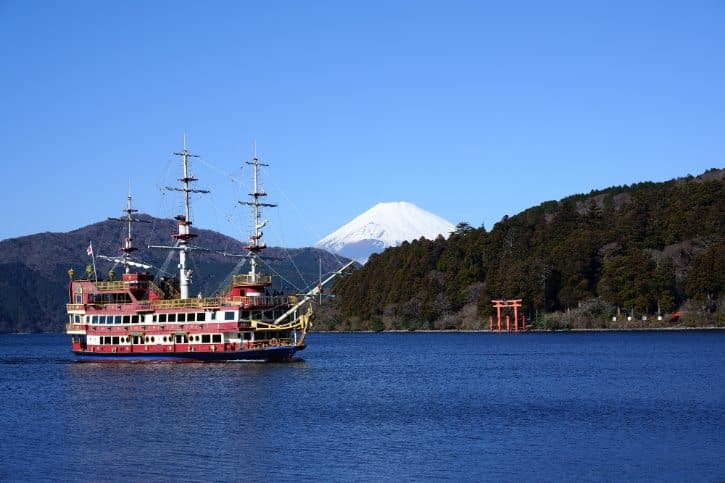
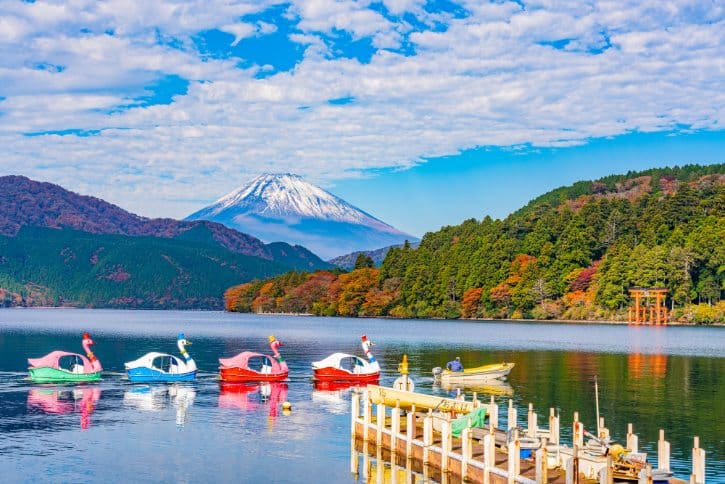
Lake Ashi is the scenic heart of Hakone. This caldera lake offers that classic “postcard” view of Mount Fuji reflected on the water, surrounded by cedar forests.
It’s also a key transit point on the Hakone Round Course, so you’ll likely pass through anyway.
b. Best Things to Do
- Take the Hakone Sightseeing Cruise on one of three pirate-themed ships: Queen Ashinoko, Royal II, or Victory (25 to 40 minutes between ports)
- Upgrade to the premium cabin for exclusive deck access
- Walk through Onshi Hakone Park, a former imperial retreat with elevated viewpoints
- Rent a swan paddle boat at Motohakone or Hakonemachi ports for a quieter experience
- Grab a bite at Bakery & Table Hakone, which has a footbath terrace overlooking the lake
8. Heiwa-no-Torii (Hakone Shrine)
a. Why Visit
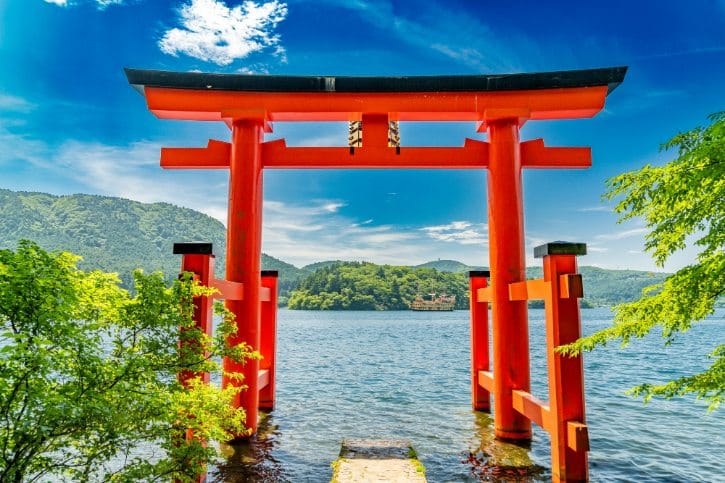
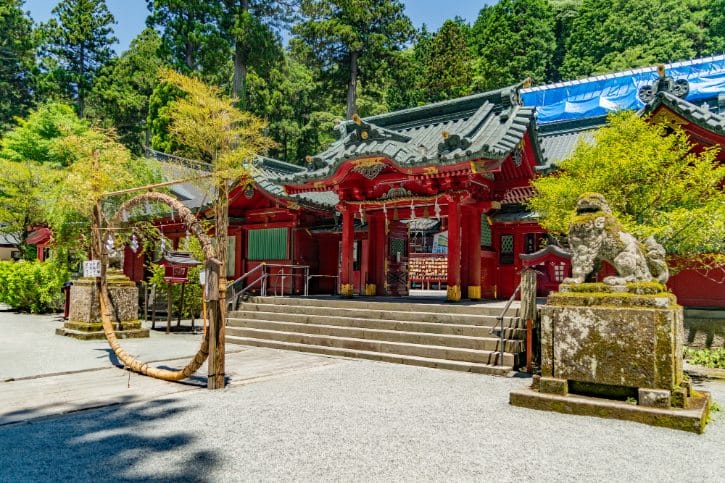
Hakone Shrine is tucked inside a forest of ancient cedars, and it’s best known for the Heiwa-no-Torii, a striking vermilion gate standing right in the waters of Lake Ashi.
The shrine dates back to the 8th century and was historically a place of prayer for samurai and travelers. Today, it’s popular for those seeking good fortune and success.
b. Best Things to Do
- Photograph the Heiwa-no-Torii from the lakeside
- Walk up the main approach lined with 800-year-old cedar trees and red lanterns
- Visit the main hall (Haiden) for traditional Shinto prayers
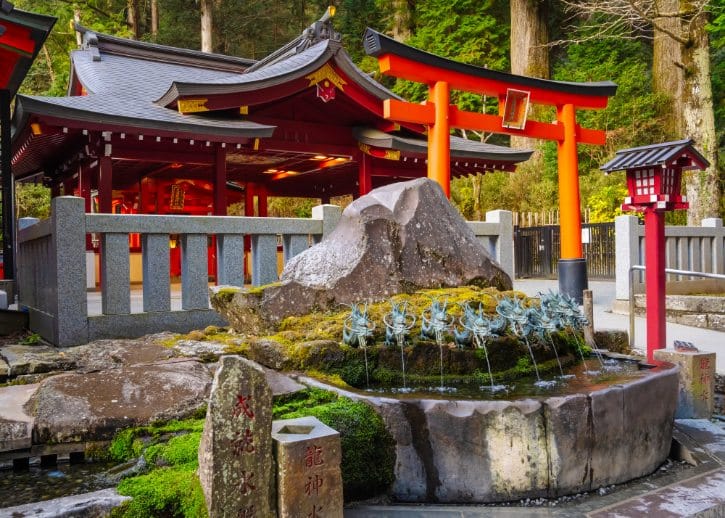
- Stop by Kuzuryu Shrine Shingu where nine dragon-headed fountains dispense sacred water
- Explore the Treasure Museum for artifacts related to the shrine’s history
9. Hakone Checkpoint
a. Why Visit
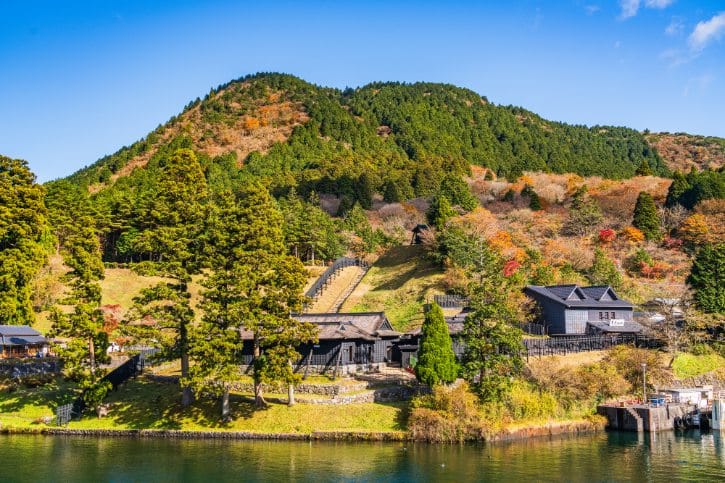
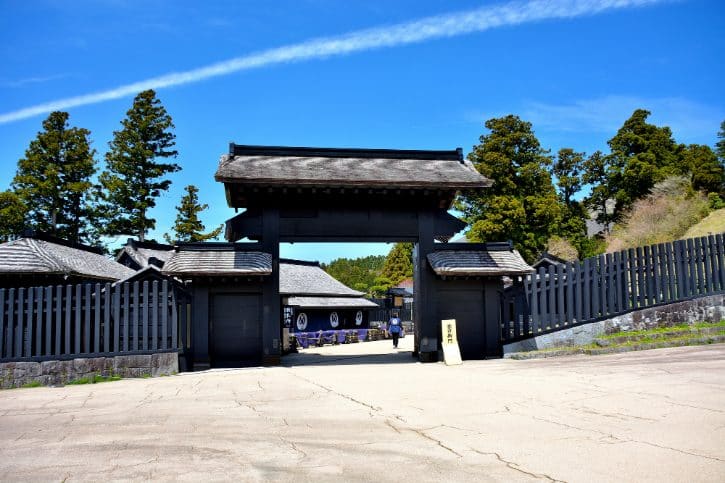
This is a faithful reconstruction of an Edo-period checkpoint that once guarded the Tokaido highway.
Built in 2007 using authentic materials and historical records, the complex gives you a fascinating look at how Japan controlled travel 400 years ago.
b. Best Things to Do
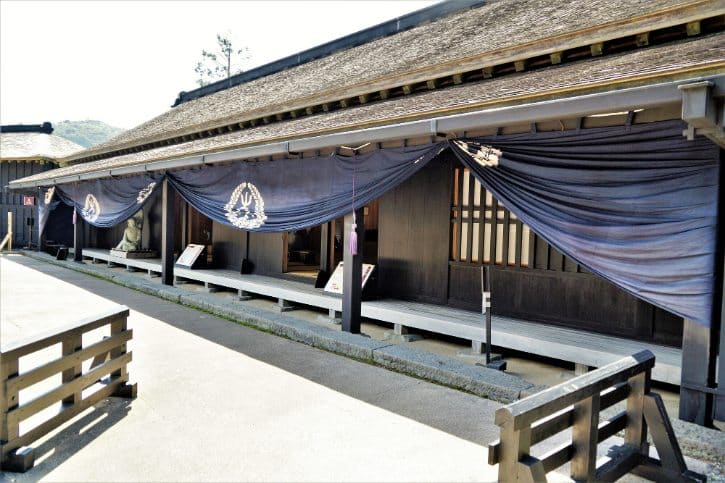
- Explore the 13 reconstructed buildings, including the guardhouse, dining room, and jail cell
- See the life-size mannequins depicting the inspection process, especially the De-Onna checks for women travelers
- Climb the stone steps to the Toomi Bansho lookout tower for panoramic views of Lake Ashi
- Visit the adjacent museum displaying 300 artifacts including travel permits and samurai weapons
10. Hakone Amazake Tea House
a. Why Visit
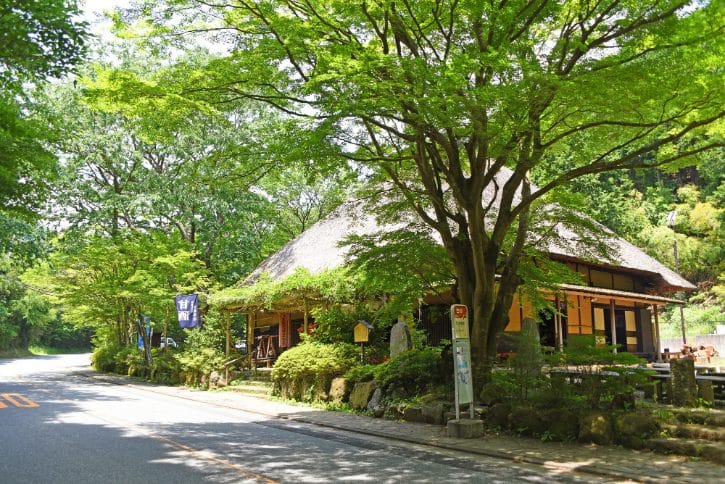
This teahouse has been serving travelers on the Old Tokaido Road for over 400 years.
Now run by the 13th generation of the Yamamoto family, the teahouse preserves its traditional thatched roof and earthen floors, though they have been restored over the years.
The menu hasn’t changed much since the 17th century. Here’s the fun part: you’re basically eating the same snacks as travelers from centuries ago.
b. Best Things to Do
- Order their signature amasake, a naturally sweet, non-alcoholic drink made from fermented rice (served hot in winter, cold in summer)
- Try the chikara-mochi (power mochi), grilled rice cakes available in black sesame, soy sauce, or green soybean powder
- Explore the small free on-site museum with life-size reconstructions of historical travel scenes
How to Get to Hakone
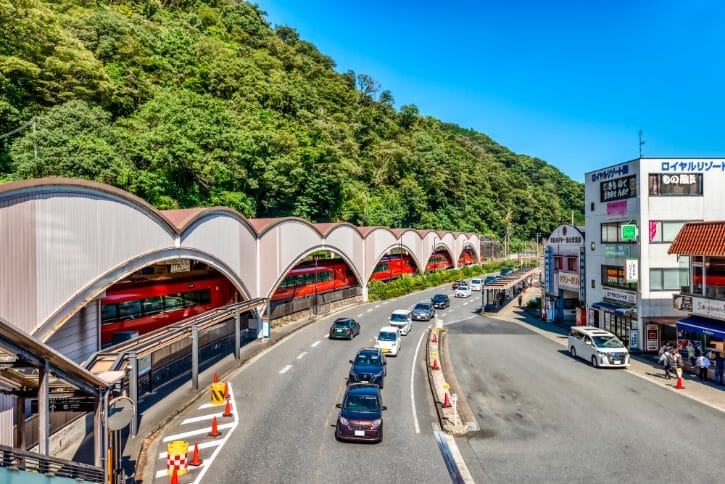
Most visitors arrive at Hakone-Yumoto Station, the gateway to the Hakone area. Here’s how to get there from major Tokyo stations.
a. From Tokyo Station
Fastest option (JR Pass friendly):
- Line: Tokaido Shinkansen (Kodama or Hikari)
- Route: Tokyo to Odawara (33 to 35 minutes)
- Transfer: Hakone Tozan Line to Hakone-Yumoto (14 minutes)
- Total time: 55 to 60 minutes
- Fare: About 3,970 yen
- IC Cards: Accepted on Hakone Tozan Railway. Shinkansen requires separate ticket purchase.
Budget option:
- Line: JR Tokaido Main Line
- Route: Tokyo to Odawara (about 80 minutes)
- Transfer: Hakone Tozan Line to Hakone-Yumoto (14 minutes)
- Total time: 100 to 110 minutes
- Fare: About 1,880 yen
- IC Cards: Accepted on both lines
b. From Shinjuku
Premium option:
- Line: Odakyu Romancecar (Limited Express, direct)
- Route: Shinjuku to Hakone-Yumoto
- Duration: 90 to 100 minutes
- Fare: About 2,470 yen (1,270 yen base + 1,200 yen surcharge, all seats reserved)
- IC Cards: Accepted for base fare. Limited express surcharge is separate.
*This is the most convenient option if you’re starting from Shinjuku.
Budget option:
- Line: Odakyu Rapid Express
- Route: Shinjuku to Odawara (about 95 minutes)
- Transfer: Hakone Tozan Line to Hakone-Yumoto (14 minutes)
- Total time: 110 to 120 minutes
- Fare: About 1,270 yen
- IC Cards: Accepted on all lines
Bus option:
- Departure: Shinjuku Expressway Bus Terminal (Busta Shinjuku)
- Destination: Lake Ashi (direct)
- Duration: About 140 minutes
- Fare: 2,200 yen
c. From Shibuya
- Line: JR Shonan-Shinjuku Line (Special Rapid)
- Route: Shibuya to Odawara (75 to 80 minutes)
- Transfer: Hakone Tozan Line to Hakone-Yumoto (14 minutes)
- Total time: 90 to 100 minutes
- Fare: About 1,880 yen
- IC Cards: Accepted on all lines
d. From Ikebukuro
- Line: JR Shonan-Shinjuku Line (Special Rapid)
- Route: Ikebukuro to Odawara (about 86 minutes)
- Transfer: Hakone Tozan Line to Hakone-Yumoto (14 minutes)
- Total time: 95 to 105 minutes
- Fare: About 2,050 yen
- IC Cards: Accepted on both lines
e. From Ueno
- Line: JR Ueno-Tokyo Line (Rapid)
- Route: Ueno to Odawara (about 92 minutes)
- Transfer: Hakone Tozan Line to Hakone-Yumoto (14 minutes)
- Total time: 100 to 110 minutes
- Fare: About 1,880 yen
- IC Cards: Accepted on both lines
f. From Asakusa
Asakusa requires a two-stage transfer since there’s no direct route.
Recommended route:
- Step 1: Ginza Line to Ueno
- Step 2: Transfer to JR Ueno-Tokyo Line toward Odawara
- Step 3: Hakone Tozan Line to Hakone-Yumoto
- Total time: 110 to 130 minutes
- Fare: About 2,060 yen
- IC Cards: Accepted on both lines
How to Get Around Hakone
1. Main Transport Types in Hakone
Hakone’s sightseeing network connects several unique transport modes:
- Hakone Tozan Railway (Hakone-Yumoto to Gora) – The switchback mountain train experience
- Hakone Tozan Cable Car (Gora to Sounzan) – Connects Gora to Sounzan
- Hakone Ropeway (Sounzan to Togendai via Owakudani) – Aerial gondola crossing volcanic terrain
- Hakone Sightseeing Cruise (Togendai to Motohakone/Hakonemachi) – “Pirate ship” style boats on Lake Ashi
- Hakone Tozan Bus – Extensive network connecting major stops
2. The Hakone Round Course
The classic way to explore Hakone is the Hakone Round Course (also called the “Hakone Golden Course”). It’s a loop that connects all the major transport types into one continuous circuit.
A typical loop goes like this:
- Hakone-Yumoto → Gora (mountain railway)
- Gora → Sounzan (cable car)
- Sounzan → Togendai (ropeway)
- Togendai → Lake Ashi ports (sightseeing cruise)
- Lake Ashi area → Hakone-Yumoto (bus)
You can do this loop in either direction depending on your preferences.
3. IC Card Usage in Hakone
If you’re paying as you go (without a Freepass), here’s what accepts IC cards:
- Hakone Tozan Railway – IC cards accepted
- Hakone Tozan Cable Car – IC cards NOT accepted
- Hakone Ropeway – Suica/PASMO accepted
- Hakone Sightseeing Cruise – Suica/PASMO accepted
- Hakone Tozan Bus – Suica/PASMO accepted on all routes
Contactless credit card tap payments are also available on buses, the cruise, and ropeway at designated terminals.
4. Is the Hakone Freepass Worth It?
The Hakone Freepass offers unlimited rides on Hakone’s main transport network for 2 or 3 days.
a. What’s included:
- Hakone Tozan Railway
- Hakone Tozan Cable Car
- Hakone Ropeway
- Hakone Sightseeing Cruise
- Hakone Tozan Bus (Designated bus routes)
b. Current prices (adults):
- From Shinjuku: ¥7,100 (2 days) / ¥7,500 (3 days)
- From Odawara: ¥6,000 (2 days) / ¥6,400 (3 days)
Important: The pass is day-based, not hour-based. A 2-day pass is valid through the last service on the following day.
c. When it’s worth buying:
The Freepass makes sense if you plan to ride multiple transport modes (railway + cable car + ropeway + cruise and/or multiple bus segments). The unlimited access quickly adds up to savings.
d. When to skip it:
If you’re only doing a simple out-and-back trip without using the full circuit, compare the Freepass price against point-to-point tickets for your specific route.
Note: The Odakyu Romancecar limited express requires a separate surcharge even with the Freepass.
Related Posts

Photo Credit:
Photos by PIXTA