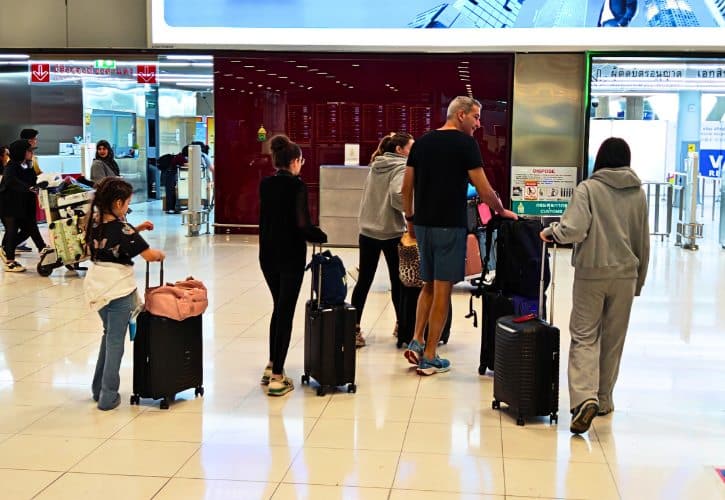
Flying into or out of Thailand? What you bring through the airport matters more than many travelers expect.
Some rules apply when entering Thailand, others are enforced when you depart, and not all of them are limited to carry-on bags.
These 7 airport rules highlight what commonly causes delays, inspections, or confiscation.
I hope this helps you move through the airport smoothly and enjoy your trip with less stress. 😊
1. E-Cigarettes and Vapes Are Illegal in Thailand (Entry)

This one catches many travelers off guard. Electronic cigarettes and vapes are completely illegal in Thailand.
You cannot import them, sell them, or use them anywhere in the country.
a. What Is Banned
- E-cigarette devices
- Vape pens
- E-liquid
- All related accessories
b. Penalties Are Severe
The consequences are no joke.
- Jail time: Up to 10 years imprisonment
- Fines: Five times the value of the goods
- Confiscation: Items are seized and destroyed immediately
c. Enforcement Is Active
Thai Customs uses X-ray scanners to detect e-cigarette devices in luggage. Officers know exactly what to look for.
Local police also conduct crackdowns within the country. Even using a vape discreetly can lead to public complaints and police action.
The bottom line: Leave your vape at home. Do not rely on travel forums where someone says they got through fine. They were lucky. The law is clear, and enforcement is routine.
2. Medications and Prescription Drugs (Entry)
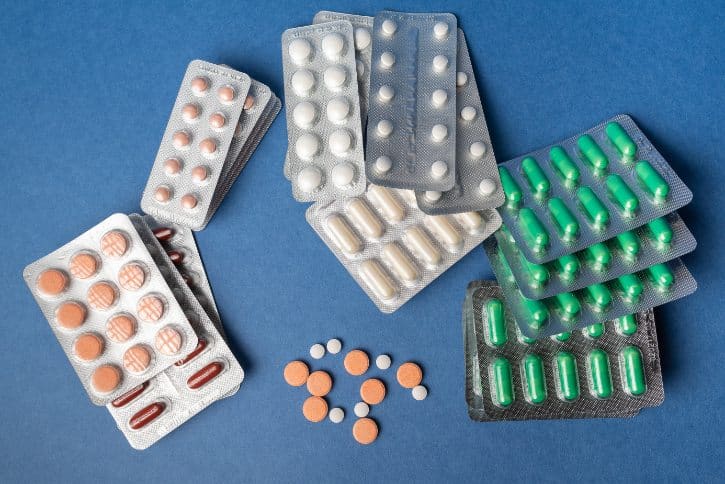
This one catches more travelers off guard than almost anything else.
Thailand does not automatically recognize prescriptions from your home country.
If you take certain medications, you could be breaking Thai law the moment you step off the plane.
a. What You Need to Know
Category 2 Narcotics like Codeine, Fentanyl, Morphine, and Methadone require a permit before you arrive.
- Maximum allowed: 90 days supply
- Permit required: Yes, Form IC-2 from the Thai FDA
- Apply at least: 15 days before your trip
- Processing time: About 3 working days
Psychotropic substances like Xanax, Valium, and Ativan have tighter limits.
- Maximum allowed: 30 days supply
- Permit required: No, but you must carry a doctor’s prescription
- Prescription must include: Your name, medical condition, medication name, dosage, and your doctor’s details
Helpful Info: https://permitfortraveler.fda.moph.go.th/nct_permit_main/Main/FRM_knowledge
b. Medications That Are Completely Banned
Here is where it gets serious.
Adderall and similar ADHD medications containing Amphetamine or Dexamphetamine are classified as Schedule I narcotics in Thailand. They are treated the same as illegal drugs.
If you take Adderall, you cannot bring it to Thailand. Talk to your doctor about legal alternatives before you travel.
Cannabis products are also heavily restricted for travelers. Even if cannabis is legal where you live, do not pack it.
Quick tips:
- Keep medications in their original pharmacy bottles with your name on the label
- Carry a fresh letter from your doctor in English
- Count your pills before packing. If you have more than the allowed supply, leave the extras at home
- Apply for permits through the Thai FDA’s online portal well in advance
3. Cash Declaration Rules on Arrival (Entry & Exit)
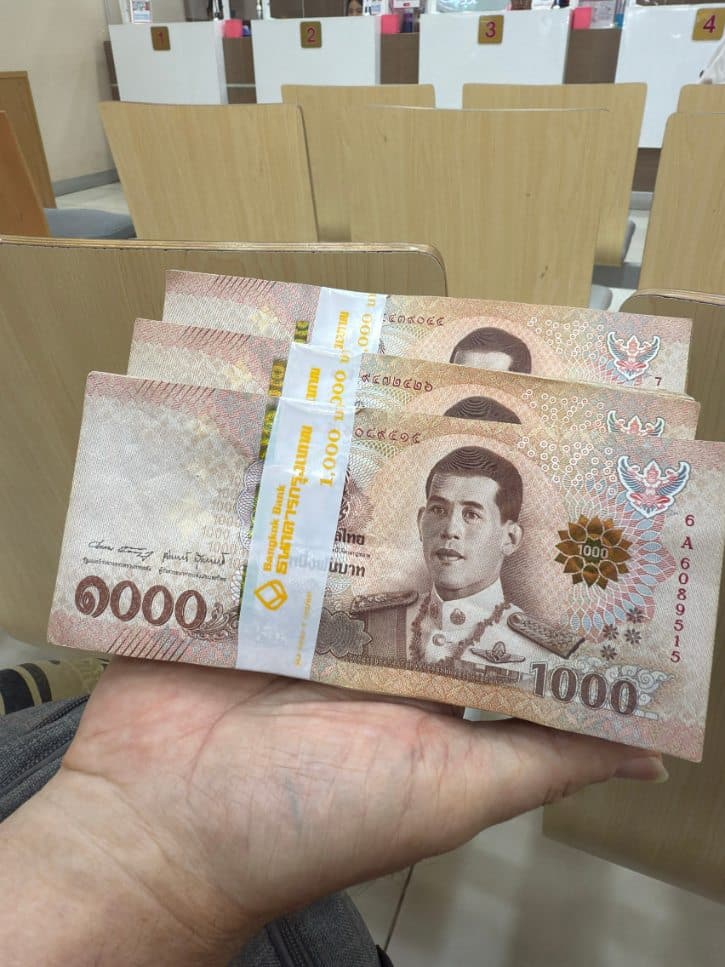
Thailand has strict rules about how much cash you can bring in and take out.
a. Bringing Foreign Currency Into Thailand
You can bring as much foreign currency as you want. However, if you are carrying more than USD 20,000 or its equivalent, you must declare it.
b. How to Declare
Use the Red Channel (Goods to Declare) at the airport. Fill out the declaration form stating the amount and origin of the money.
There is no tax or fee on bringing cash. The declaration is for reporting purposes under anti-money laundering laws.
If you have less than $20,000, you can go through the Green Channel without declaring.
c. Penalties for Not Declaring
Do not attempt to hide large sums of cash. If caught with more than $20,000 without declaring, you could face:
- Cash being seized
- Criminal charges for false declaration or currency smuggling
d. Taking Thai Baht Out of Thailand
This is where many travelers slip up.
- General limit: You can only take out ฿50,000 per person
- Border countries exception: If you are traveling to Malaysia, Myanmar, Laos, Cambodia, or Vietnam and carrying over ฿450,000, you must declare it at customs.
Quick tip: Exchange your leftover Thai Baht back to your home currency before you go through passport control. Walking out with more than ฿50,000 in your pocket is breaking the law.
4. Drones Can Be Confiscated at the Airport (Entry)
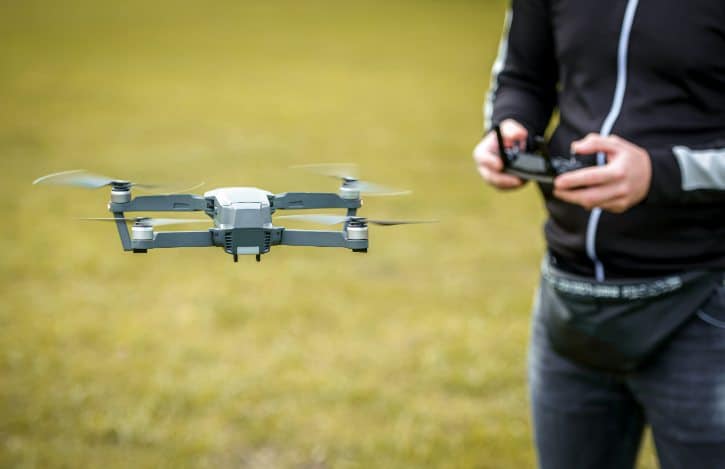
You can bring a drone into Thailand, but flying it legally is complicated.
a. Transport Rules
- Drone batteries: Must go in your carry-on bag (same rules as power banks)
- Drone body: Can go in carry-on or checked luggage
b. The Double Registration Problem
To legally fly a drone in Thailand, you need two separate registrations.
NBTC Registration (Radio Rule):
- Your drone’s radio equipment must be registered with the National Broadcasting and Telecommunications Commission
- Penalty for unregistered equipment: Up to 5 years imprisonment or ฿100,000 fine
CAAT Registration (Pilot Rule):
- Both you and your drone must be registered with the Civil Aviation Authority of Thailand
- Requires third-party liability insurance with minimum ฿1 million coverage
The reality: For a short vacation, the paperwork process can take weeks. It is often not worth the bureaucratic effort for a one or two week trip.
Quick tip: You can bring your drone through customs, but do not fly it without completing registration. The penalties are real.
5. Fresh Fruit, Vegetables and Meat Are Restricted (Entry)
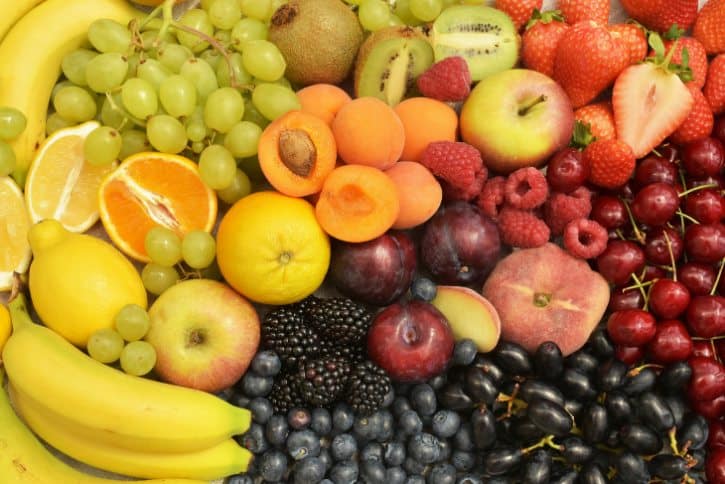
Thailand is serious about protecting its agriculture from invasive pests and diseases.
a. Plants and Produce
All plants, fruits, vegetables, seeds, and flowers are classified as restricted goods for import.
To legally bring any of these into Thailand, you would need an official permit from the Thai Department of Agriculture, along with a phytosanitary certificate from the country of origin.
For ordinary travelers, this is not practical.
Do not pack:
- Fresh fruit or vegetables
- Oranges, apples, bananas, plant cuttings
- Seeds or uncooked vegetables
- Soil or raw rice
b. Meat and Animal Products
Live animals, fresh meat, seafood, poultry, and animal products are also restricted without permits.
You cannot bring fresh sausages, dried meats, or raw meat in your bag. Even certain dairy or eggs can be restricted.
c. Why These Rules Exist
Thailand protects its agriculture from foreign pests like fruit flies, fungal diseases, and African swine fever.
Customs works with quarantine inspectors who may inspect luggage. Items found will be confiscated and destroyed.
Important notes:
- If you have fruit or a sandwich from the plane, finish it or dispose of it before customs
- Throw stray fruit in quarantine bins on arrival
- These restrictions are there to keep Thailand’s farms and ecosystems safe
Traveler tip: Enjoy Thailand’s local fruits instead. They are abundant and delicious, and you will not run afoul of the law.
6. Power Bank Capacity Limits at Thai Airports (Exit)
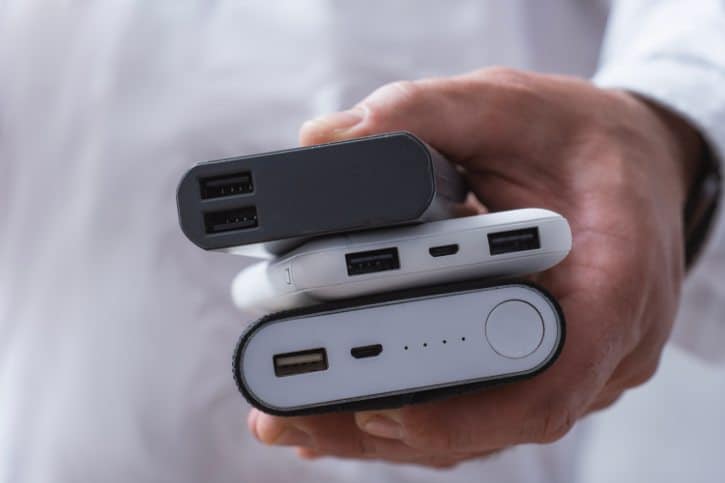
Power banks are essential travel gear, but Thai airports have strict rules about them.
a. The Carry-On Only Rule
Power banks must go in your carry-on bag. They are banned from checked luggage.
If security finds a power bank in your checked bag, they will flag it, open your suitcase, and remove it. If you are not there, they may break your lock to do it.
b. Capacity Limits
The key restriction is battery capacity measured in Watt-hours (Wh).
- 100 Wh or below: Allowed freely in carry-on. This covers most standard phone chargers (roughly up to 20,000 mAh).
- 100 to 160 Wh: Allowed in carry-on with airline approval, limited to 2 units per passenger.
- Above 160 Wh: Completely prohibited on passenger aircraft.
c. The Label Must Be Readable
This is important. Security officers will check the Wh or mAh rating on your power bank.
If the label is worn off or unreadable, they can confiscate it immediately. They have no way to verify it falls within safe limits.
Quick tips:
- Check your power bank before packing. A 20,000 mAh power bank is safe
- If it is over 30,000 mAh, you can only bring two
- If the label is rubbed off, consider replacing the power bank or leaving it home
7. Liquids, Gels, and Aerosols Rules at Thailand Airports (Exit)
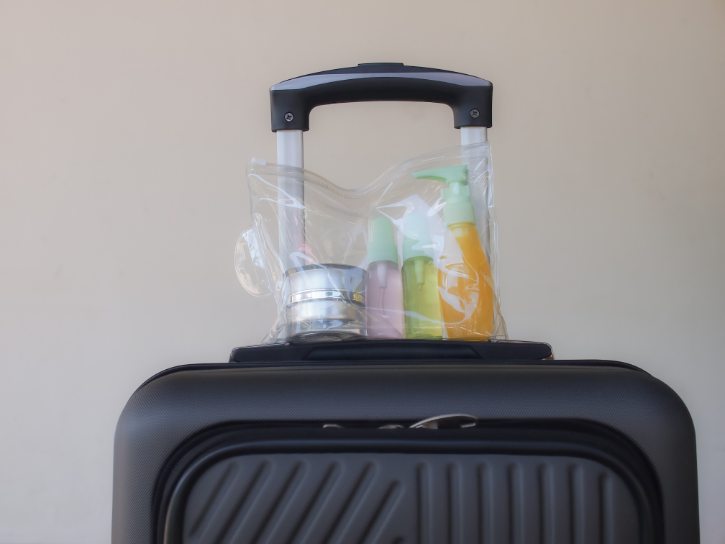
Thailand follows standard international airport security rules for carrying liquids in hand luggage on departing flights.
Important: If you have recently traveled through European airports, be aware that Thailand’s rules are different. Some airports in Europe have introduced new CT scanners that allow passengers to keep liquids in their bags without size restrictions. Thailand has not adopted this technology. The traditional 100 ml rule still applies at all Thai airports.
a. 100 ml Per Container
Any liquid, gel, cream, paste, or aerosol you bring through the security checkpoint must be in a container of 100 milliliters (ml) or less.
If a container is larger than 100 ml, you cannot bring it even if it is half-full. The bottle itself must be under the limit.
b. One Liter Bag Rule
All your small liquid containers must fit into one transparent, resealable plastic bag of up to 1 liter capacity.
This is typically a 20 cm x 20 cm zip-lock bag. You are allowed one bag per passenger.
You must remove this bag from your carry-on and place it in a separate tray during screening.
c. Screening Procedure
At security, take out your liquids bag and put it in the tray separately from your carry-on.
If you forget and have a larger liquid in your bag, security will confiscate it on the spot. Thai airports enforce this strictly, with no exceptions.
d. Exemptions
- Medicines: Liquid prescription medicine or essential over-the-counter meds are allowed in needed quantities. Inform the officers.
- Baby supplies: Baby formula, breast milk, or baby food is allowed in reasonable quantity when traveling with an infant.
During COVID, Thailand temporarily allowed larger bottles of hand sanitizer (up to 350 ml), but check current policies as they may have returned to normal.
e. Duty-Free Purchases
Liquids bought at airport duty-free after security or on board the plane can exceed 100 ml.
When transiting through Thailand, duty-free liquids in a sealed tamper-evident bag with receipt are generally allowed.
Important notes:
- Do not assume European airport rules apply in Thailand
- Use travel-sized containers for toiletries
- Things like snow globes or jars of spreadable food count as liquids
- Empty water bottles before security and refill them after
Quick tip: Security at Bangkok and Phuket is strict. If your toothpaste tube says 120g, they will throw it away, even if it is almost empty. Buy travel-sized toiletries under 100 ml and pack them in a clear ziplock bag before you reach the airport.