If you’re planning a trip to Thailand, there’s a major change that is now in effect.
On September 15, 2026, Thailand officially ended the 60-day visa-free stay for tourists and replaced it with a shorter, tiered entry system.
The change is no longer a proposal. It is now the active rule at the border.
Here’s what you need to know, based on official Thai government sources.
1. What Thailand Changed
The rollback happened in stages. On May 19, 2026, the Thai Cabinet first approved scrapping the 60-day visa-free scheme, then revised some of the details on July 14, 2026. The four Ministry of Interior announcements were published in the Royal Gazette on August 31, 2026, and took effect 15 days later, on September 15, 2026.
The announcements came from Thailand’s Ministry of Foreign Affairs, the Ministry of Interior, and the Ministry of Tourism and Sports.
Here’s what changed:
- The 60-day visa-free scheme (known as “Por. 60”), which covered 93 countries and territories, has been revoked
- A 30-day visa exemption now applies to 60 countries and territories
- A new 15-day visa exemption applies to two countries
- The Visa on Arrival (VOA) program has been reduced from 31 eligible countries to just three
- Visa-free entries through land-border checkpoints are now generally limited to two per calendar year, with some exceptions
- Each country is assigned to one visa category only, following a “one country, one visa exemption” principle
These rules are now live. If you arrive from September 15 onward, the new system applies to you.
2. What Applies at the Border Right Now
Here’s the important part for anyone traveling soon. The change is now active.
As of September 15, 2026, the 60-day visa-free stamp is gone for most nationalities. If your country is on the new 30-day list, you now receive a 30-day stamp on arrival for tourism.
What’s in place right now:
- 30-day stamp on arrival for the 60 eligible countries and territories (for tourism)
- 15-day stamp for Mauritius and Seychelles
- A one-time 30-day extension available at local immigration offices for those in the 30-day tier
- Land-border visa-free entries generally capped at two per calendar year
- Thailand Digital Arrival Card (TDAC) still required before arrival
The change is not retroactive. If you entered Thailand before September 15, 2026, you keep the 60-day stamp you were given, and you can stay until the date printed in your passport. The Tourism Authority of Thailand (TAT) confirmed that travelers keep whatever period of stay was granted under the rules that applied when they entered.
3. How the New Tiered System Works
Thailand’s visa-free system now runs on a tiered structure based on nationality. Here’s how it breaks down.
a. 30-Day Visa Exemption (60 countries)
Most major tourism markets now receive a 30-day visa-free stay for tourism.
According to the Royal Gazette announcement, the 60 countries and territories are:
Australia, Austria, Bahrain, Belgium, Bhutan, Brunei Darussalam, Bulgaria, Canada, Croatia, Cyprus, Czech Republic, Denmark, Estonia, Fiji, Finland, France, Georgia, Germany, Greece, Hungary, Iceland, India, Indonesia, Ireland, Israel, Italy, Japan, Jordan, Kuwait, Kyrgyzstan, Latvia, Liechtenstein, Lithuania, Luxembourg, Malaysia, Maldives, Malta, Netherlands, New Zealand, Norway, Oman, Philippines, Poland, Portugal, Qatar, Romania, Saudi Arabia, Singapore, Slovakia, Slovenia, South Africa, Spain, Sweden, Switzerland, Taiwan, Türkiye, Ukraine, United Arab Emirates, United Kingdom, United States.
Note that India moved into this 30-day tier. It was originally slated for Visa on Arrival, but the government reversed that decision, and Indian passport holders now get 30 days visa-free with no fee.
b. 15-Day Visa Exemption (2 countries)
A shorter 15-day visa-free entry applies to: Mauritius, Seychelles.
c. Visa on Arrival (3 countries only)
The VOA program has been cut to just three countries: Azerbaijan, Belarus, Serbia. Visa on Arrival is issued at designated checkpoints for tourist stays of up to 15 days, with a fee of 2,000 THB.
d. Bilateral Agreements (separate from the above)
Some countries have separate bilateral visa exemption agreements with Thailand. These remain in effect and are not affected by the changes above. Examples include:
- 90-day exemption: Argentina, Brazil, Chile, Peru, South Korea
- 30-day bilateral exemption: China, Hong Kong, Kazakhstan, Laos, Macao, Mongolia, Russia, Timor-Leste, Vietnam
- 14-day bilateral exemption (airports only): Cambodia, Myanmar
Important: The new 30-day list covers 60 countries and territories, down from 93 under the old scheme. That means around 21 nationalities that previously qualified for visa-free entry no longer appear on any exemption list. If your country is not on any of the lists above, you will likely need to apply for a visa before traveling. Check with the nearest Royal Thai Embassy or Consulate for your specific entry requirements.
4. The New Land-Border Rule
One new rule is worth flagging on its own, because it did not exist under the old system.
Visa-free entries through land-border checkpoints are now generally limited to two per calendar year. This is aimed at “visa runners” who cross in and out by land to reset their stay repeatedly.
The rule applies to both the 30-day and 15-day exemption categories. It does not apply to every arrival in Thailand. Air arrivals are not affected by this two-entry cap.
The regulation also carves out exceptions for nationals of Brunei Darussalam, Indonesia, Malaysia, and Singapore, who are not subject to the land-border limit. The Minister of Interior can designate further exceptions.
5. Why Thailand Made This Change

The Thai government gave several reasons for rolling back the 60-day policy.
a. Security Concerns
Since the 60-day window took effect in July 2024, authorities reported a rise in foreigners misusing the system.
This includes illegal work, unauthorized businesses, and using Thailand as a transit point for cross-border crime.
b. Protecting the Local Job Market
Tourism industry groups raised concerns about foreigners working illegally as tour guides (a profession reserved for Thai nationals), setting up nominee businesses, and running unlicensed short-term rental operations.
c. Most Tourists Don’t Need 60 Days Anyway
Government data shows foreign tourists stay an average of about nine days. Even long-haul visitors typically stay well under 30 days. The government views the shorter stay as matching actual travel patterns.
d. Reducing Confusion
Under the old system, some countries had overlapping visa exemptions under different programs. The new “one country, one privilege” approach aims to simplify things.
e. Expanding the e-Visa System
Thailand is encouraging longer-stay travelers to apply through its electronic visa system (thaievisa.go.th) rather than relying on visa-free entry.
6. Who Is Most Affected
a. Typical Vacationers (Under 21 Days)
Very little impact. Most holiday trips fall well within the 30-day window, and well within 15 days for countries in that tier.
b. Digital Nomads Working Informally
Significant impact. If you need more than 30 days, you should look into the Destination Thailand Visa (DTV), which allows stays of up to 180 days per entry.
c. “Visa Runners” Doing Repeat Entries
Significant impact. Shorter stay periods, plus the new two-entry-per-year cap on land-border crossings, mean frequent re-entries will be scrutinized much more closely.
d. Travelers Planning 31 to 60 Day Trips
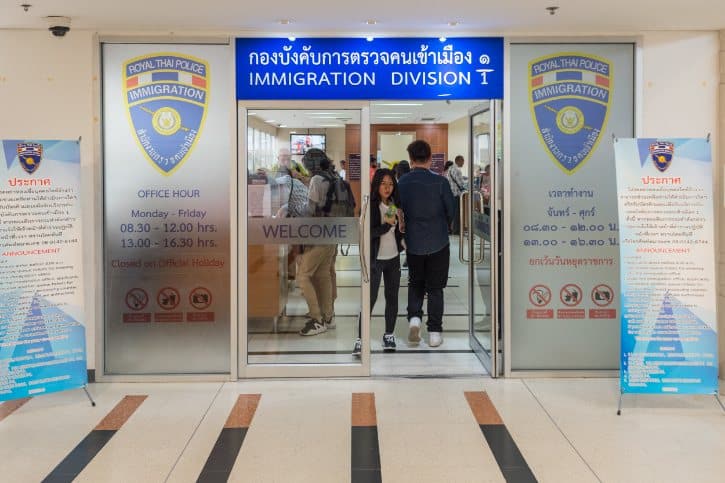
Moderate impact. You can still reach 60 days by extending at a local immigration office. But you’ll need to apply in person after your initial 30 days. See the next section for details.
e. Nationalities Dropped From the Exemption List
Direct impact. Around 21 nationalities that had visa-free entry under the old 93-country scheme are no longer on any exemption list. If that includes your country, you now need to arrange a visa before traveling.
f. Retirees Exploring Long Stays
Indirect impact. Long-stay and retirement visa options are managed separately, but the overall tightening signals more scrutiny across all visa categories.
7. Can You Extend the 30 Days
Yes. Thai authorities have confirmed that travelers in the 30-day visa exemption category can still extend their stay by another 30 days, for a total of up to 60 days.
Here’s how it works:
- Extension duration: 30 days
- Total possible stay: 60 days (30 initial + 30 extension)
- Fee: 1,900 THB (approximately $58 USD)
- Process: Apply in person at a local Thai immigration office with a TM.7 form and proof of accommodation
The key difference from before is timing. Under the old rule, you didn’t need to visit immigration unless you wanted to stay past 60 days. Under the new rule, you’ll need to visit after 30 days if you want to stay longer.
Note: Whether the 30-day extension applies to the 15-day visa exemption category (Mauritius and Seychelles) has not been confirmed.
8. What You Should Do Now
If your trip is under 30 days. No changes needed. Plan your trip as usual. The new 30-day allowance covers you.
If your trip is between 30 and 60 days. Be prepared to apply for a 30-day extension at a Thai immigration office during your stay. Or consider applying for a tourist visa (TR) or e-Visa before you travel.
If you need more than 60 days. Look into the Destination Thailand Visa (DTV) or other long-stay visa options through Thailand’s e-Visa system at thaievisa.go.th.
If you plan to enter by land. Remember that visa-free land-border entries are now generally capped at two per calendar year (with ASEAN exceptions for Brunei, Indonesia, Malaysia, and Singapore).
For all travelers, carry these documents at immigration:
- Valid passport (at least six months validity remaining)
- Proof of onward or return travel
- Proof of accommodation
- Evidence of sufficient funds (20,000 THB in cash or equivalent)
- Completed Thailand Digital Arrival Card (TDAC), submitted online before travel
Immigration officers may ask for these documents, and random checks are becoming more common.
Check your country’s specific rules. Entry conditions now vary by nationality. Before you book flights, check the latest requirements with the Royal Thai Embassy or Consulate in your country, or visit the Thai Ministry of Foreign Affairs website.