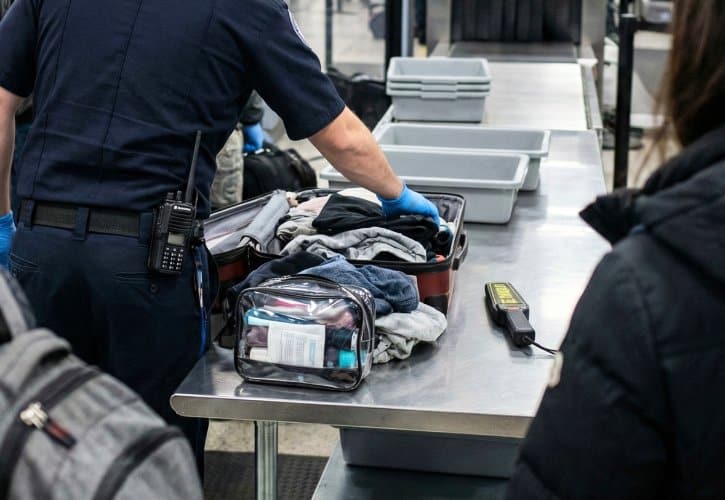
One small forgotten item can turn a smooth flight into a long, uncomfortable one. And packing the right item the wrong way can be worse, leading to security delays, a confiscated item, or trouble at the gate.
Smart flight packing comes down to two things: keeping your essentials within reach, and knowing the rules that apply to you.
Those rules shift depending on your airline, your airport, any country you connect through, your destination, and whether an item goes in your carry-on or checked bag. Let’s start with what you’ll be glad you brought.
1. Keep Essential Medications in Your Carry-On
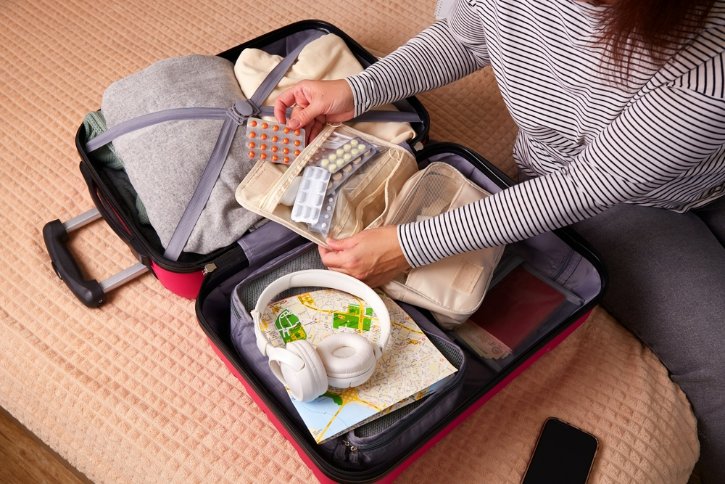
If you take medication you truly need, it belongs with you in the cabin, not in a checked bag you might not see for hours.
a. Why the cabin, not the cargo hold
Checked bags get delayed, lost, and knocked around, and cargo areas can get too hot or too cold for sensitive drugs. Anything you might need during the flight, at the airport, on a layover, or right after landing should ride in your personal item under the seat, within easy reach.
b. Bring a little extra and a simple list
- Carry a few extra doses beyond your exact trip length, in case of delays or an extra night away.
- Keep a short medication list with generic names, brand names, dosages, and what each is for.
- Knowing the generic name helps abroad, where your brand may not exist.
c. The TSA rules to know
- Pills and solid medicine have no quantity limit in carry-on.
- Medically necessary liquids are allowed above the usual 3.4 ounce (100 mL) limit and do not need to fit in your quart-sized bag.
- Declare them before screening starts, and expect possible extra checks.
- Syringes, insulin, inhalers, and injectors are fine when the medicine is with them.
- TSA does not require original bottles at a US checkpoint, but keeping labeled containers is strongly recommended.
Remember, TSA clearing your medicine is not the same as an airline or a foreign country approving it.
d. Flying internationally
A drug that is legal in the US can be restricted or banned elsewhere. Check the rules for your destination and every transit country, especially for stimulants, strong painkillers, sleep aids, controlled substances, and anything cannabis-related.
Some places require advance permission or set quantity limits, and a doctor’s letter with the generic name and dosage can help or be required. Start checking a few weeks before you fly, using official government sources.
e. Common mistakes to avoid
- Packing your whole supply in checked baggage.
- Bringing only the exact doses with no buffer.
- Mixing medicines together with no labels.
- Assuming a US prescription makes a drug legal abroad.
2. Store Your Travel Documents in a Small Pouch
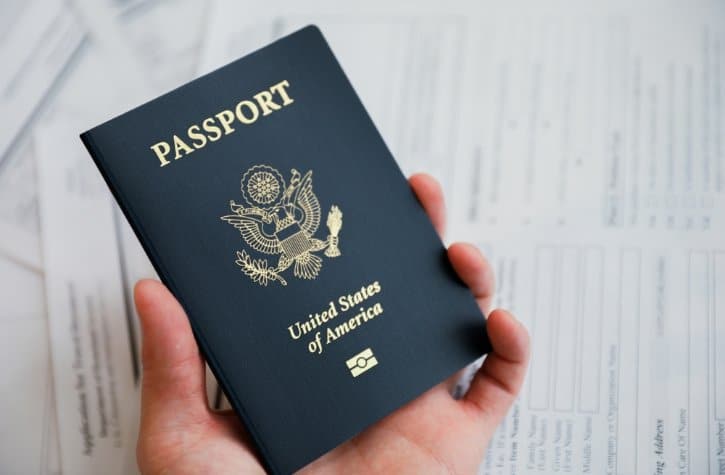
A slim document pouch keeps everything important protected, organized, and easy to grab at every step of your journey.
a. What to keep inside
- An acceptable ID for domestic flights, or a passport for international travel.
- Boarding passes, visas, and travel authorizations.
- Travel insurance and emergency contacts.
- Your hotel address and any documents for
- A few secure backup copies and anything you’d need if your phone dies.
Not everyone needs every item. Your route, destination, and trip type decide what matters.
b. Flying inside the US
Every traveler 18 and older now needs a REAL ID-compliant license, an enhanced license, a valid passport, or another accepted federal ID to clear the checkpoint.
REAL ID enforcement is active. Without acceptable ID, you may face extra screening, delays, or being turned away. Never treat an emergency verification process as a backup plan.
c. Flying internationally
- Check the passport validity rule for your destination. Many countries want it valid at least six months beyond your dates, though this is not universal.
- Some want blank pages for stamps.
- Confirm whether you need a visa or online declaration, and whether transit requires separate paperwork.
- The name on your ticket must match your passport.
Keep in mind that airline boarding rules and a country’s entry rules are not always the same thing, so check both.
d. How to organize it
Choose a slim, water-resistant pouch with secure zippers that fits inside your personal item. Keep everyday documents separate from backups, store digital and offline copies, and don’t keep all your cash, cards, and ID in one place. Watch that the pouch doesn’t get left in a seat pocket, tray, or restroom.
e. Common mistakes to avoid
- Using expired or non-compliant
- Keeping your only copy of key info on your phone.
- Booking a ticket in a name that doesn’t match your document.
3. Pack a Charging Cable and an Airline-Approved Power Bank
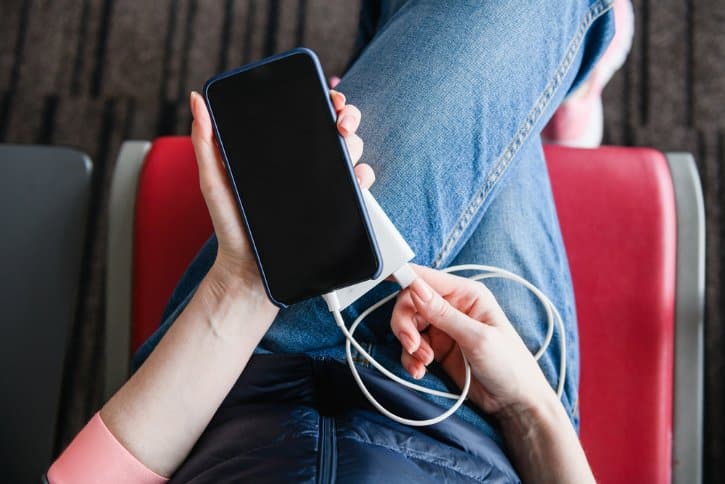
Your phone runs your whole trip, from boarding passes to maps to emergencies. A dead phone at the wrong moment is a real problem, so bring a charging cable and a power bank in your carry-on.
a. Don’t count on airport power
Airport outlets, seat power, USB ports, and wireless pads are often busy, slow, or broken. A power bank means you’re never stuck.
b. “Airline-approved” really means “compliant”
That phrase usually does not mean an airline tested the product. What matters is that yours meets the rules. Check the battery type, the watt-hour rating, that the capacity label is readable, and whether your airline has stricter rules.
c. The current battery rules
- Power banks and spare batteries go in carry-on only, never checked.
- 100 Wh or less: allowed for personal use with no set quantity limit.
- 101 to 160 Wh: need airline approval, max two spares.
- Over 160 Wh: banned from passenger aircraft.
- Protect the terminals, and never fly with a damaged or swollen
TSA screens you at the checkpoint, but the FAA and your airline set the battery rules, and they don’t always match.
d. How to read the capacity
If your battery only shows milliamp hours (mAh) and voltage (V), convert it: Wh = (mAh ÷ 1000) × V. For example, 20,000 mAh at 3.7V is about 74 Wh, comfortably under the limit. Size alone does not confirm compliance, so avoid unmarked batteries.
e. Common mistakes to avoid
- Packing it in checked luggage or a gate-checked
- Skipping the watt-hour check.
- Assuming every airline follows the same policy.
- Ignoring battery recalls.
4. Keep a Multi-Port Universal Travel Adapter in Your Carry-On
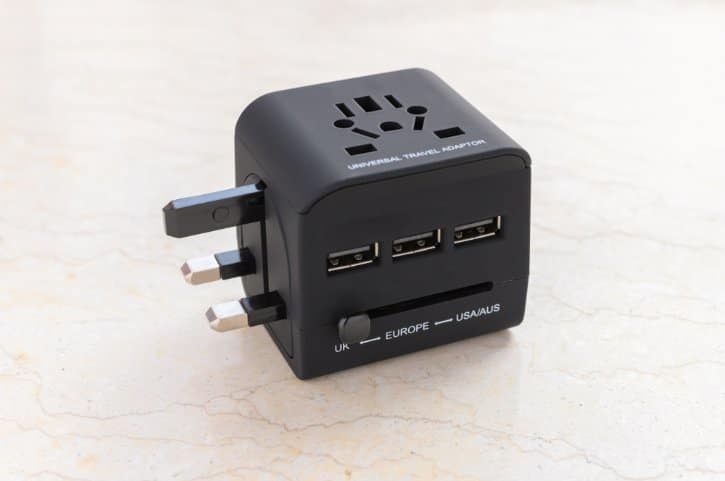
If your trip stays in the US, you may not need this. But the moment you go international, a good multi-port adapter earns its place, especially with several devices to charge.
a. Know what it does and doesn’t do
A plug adapter changes only the shape of your plug. It does not change voltage. A voltage converter is a different device entirely. Mixing these up is where trouble starts.
b. Check your devices first
- Look at the input voltage printed on each charger. Most phone, tablet, camera, and laptop chargers accept a wide voltage range
- High-power appliances like hair dryers and styling tools are often single voltage and can be damaged on the wrong supply.
- The word “universal” does not mean it fits everywhere.
- Research the plug type and voltage for every destination.
c. Why it belongs in your carry-on
You may need it at the departure airport, during a layover, or right after landing. It can be damaged in a checked bag, and it’s a lifesaver when checked luggage is delayed. A multi-port design cuts down how many chargers you carry, just don’t run several high-power devices at once.
d. When it really helps
- International departures and long connections.
- Foreign lounges, older hotels, and cruise cabins.
- Families charging several devices.
- Destinations where your US plug simply won’t fit.
e. Common mistakes to avoid
- Assuming a plug adapter converts voltage.
- Overloading it with high-wattage devices.
- Buying one without checking destination plug types.
- Packing your only adapter in checked baggage.
5. Bring an Empty Reusable Water Bottle
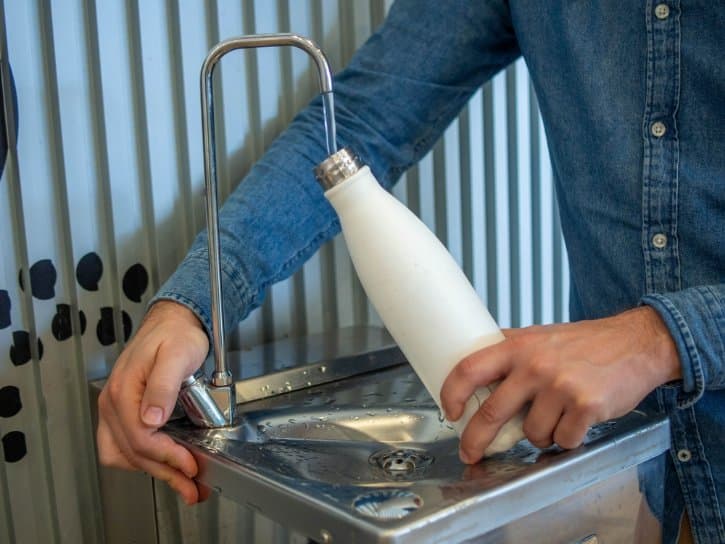
Cabin air is dry and airport water is pricey. An empty reusable bottle solves both. Fill it after security and you’re set.
a. The TSA rule in one line
An empty bottle passes with no problem. A filled bottle is treated as a liquid and won’t pass the 3.4 ounce limit, so empty it completely, including melted ice, before the security line.
b. Watch out at second checkpoints
Clearing one checkpoint does not mean a second checkpoint, such as during an international transit, will let you carry a filled bottle through. You may have to empty it again.
c. Choosing a bottle
- A medium size that fits your personal item works best.
- A secure, leak-resistant lid matters more than you’d think.
- Stainless steel is durable, collapsible saves space, and glass is heavy and breakable, so it’s usually less practical.
d. A few practical notes
Cabin pressure changes can push liquid out, so open a bottle slowly. Keep it away from documents, electronics, and medication in case of leaks, and expect to stow it during taxi, takeoff, landing, and turbulence. Don’t assume crew can refill a large bottle.
e. Know your water source
Not every airport has filling stations, and tap water safety varies, especially internationally. Verify local water is safe rather than assuming, and don’t count on refill stations being everywhere.
6. Pack a Small In-Flight Hygiene Kit
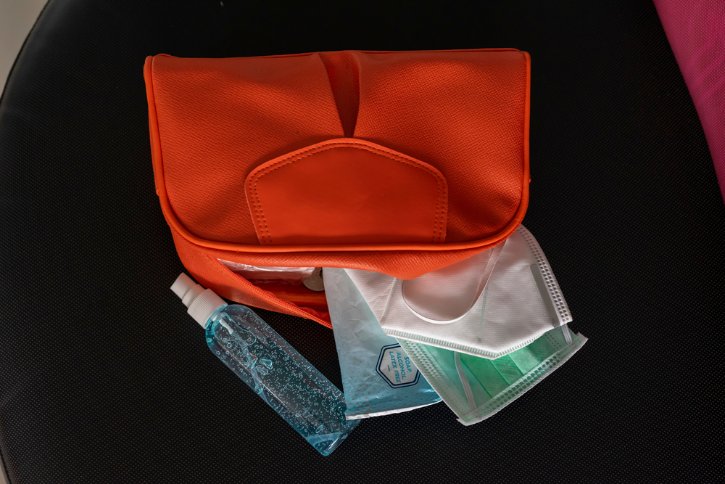
A tiny hygiene kit makes a big difference on a long or overnight flight. Keep it small and practical. This is not your full toiletry bag.
a. What to include
- Toothbrush and travel-sized toothpaste (toothpaste counts as a liquid).
- Lip balm and a small moisturizer for dry air.
- Hand sanitizer (a liquid, so 3.4 oz max).
- Wet wipes and disinfecting wipes (good news, these count as solids).
- Tissues, floss, bandages, and personal items you need after landing.
b. The 3-1-1 liquids rule
- Liquids, gels, and aerosols must be 4 ounces (100 mL) or less per container.
- They all fit in one quart-sized clear bag, usually one per passenger.
- Solid alternatives like bar soap and solid deodorant skip the liquid rules entirely.
Don’t assume all wipes work like bottled liquids. They’re treated as solids, which is a handy space-saver.
c. How to pack it
Use travel-sized containers, keep the liquids bag easy to reach for screening, and add a second layer of leak protection. Store the kit in your personal item, and favor fragrance-free products out of courtesy to nearby passengers.
d. When it helps most
- Overnight and long-haul flights.
- Early-morning arrivals and heading straight to work.
- Delayed checked luggage.
- Families with children and contact lens wearers.
e. Common mistakes to avoid
- Packing full-sized toiletries in carry-on.
- Forgetting that toothpaste and gels count as liquids.
- Flushing wipes down the aircraft toilet.
- Leaving the pouch in the restroom.
7. Block Out Cabin Noise With Earplugs or Good Headphones
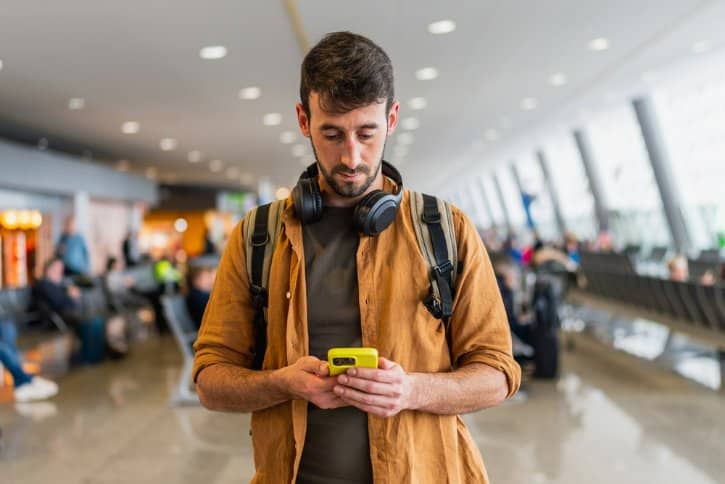
The right earplugs or headphones won’t give you total silence, but they make a real difference for rest, focus, and entertainment.
a. Your main options
- Foam or reusable earplugs: cheap, tiny, great backup.
- Wired earbuds: work with seat entertainment, no battery worry.
- Noise-canceling headphones: best against steady engine hum, but bulkier and battery-dependent.
- A simple backup pair: cheap insurance if your main pair fails.
b. Charge and download ahead
Charge wireless headphones before you leave home and pack the right cable. Many aircraft systems need a wired connection, sometimes with a special adapter, and Bluetooth isn’t on every plane. Download your entertainment before departure as a backup.
c. Stay safe and aware
- Keep the volume at a safe level.
- Noise cancellation must never stop you from hearing safety instructions.
- Remove or lower headphones when crew speak to you.
d. What to expect realistically
Noise cancellation works best on steady low-frequency hum, not sudden voices, and no product removes all cabin noise. Some people find in-ear products uncomfortable, and large headphones make headrest sleeping awkward.
8. Wear Light Compression Socks on Longer Flights

Compression socks can be a nice comfort item, and for some travelers a helpful support. But they are not required for everyone and not a guaranteed shield against blood clots.
a. The health context, handled carefully
Sitting still for hours can cause leg swelling and, in some cases, contributes to a clot known as deep vein thrombosis. For most healthy travelers the overall risk is low. This is general information, not medical advice.
b. Who should check with a professional first
Some factors can raise the risk, including pregnancy, recent surgery, a previous clot, cancer, limited mobility, older age, certain medications, obesity, and inherited clotting conditions. If any apply to you, talk to a healthcare professional before your flight.
c. Choosing and wearing them
- Graduated compression socks differ from ordinary tight socks, firmer at the ankle and easing upward.
- Stronger is not automatically better.
- Get the right size, put them on early, and they should feel snug but never painful.
- Stop and reassess if you feel pain, numbness, tingling, or see discoloration.
d. Move your body too
Movement is the real workhorse on a long flight. Do ankle circles and calf exercises, change position, walk when it’s safe, stay hydrated, and avoid long stretches of complete stillness. Compression socks do not replace moving around.
e. Know the warning signs
Ignoring sudden one-sided leg swelling or symptoms like chest pain, shortness of breath, or fainting is dangerous. These are emergencies. Don’t take aspirin just for flight clot prevention unless a professional recommends it.
9. Bring a Simple Black Ballpoint Pen
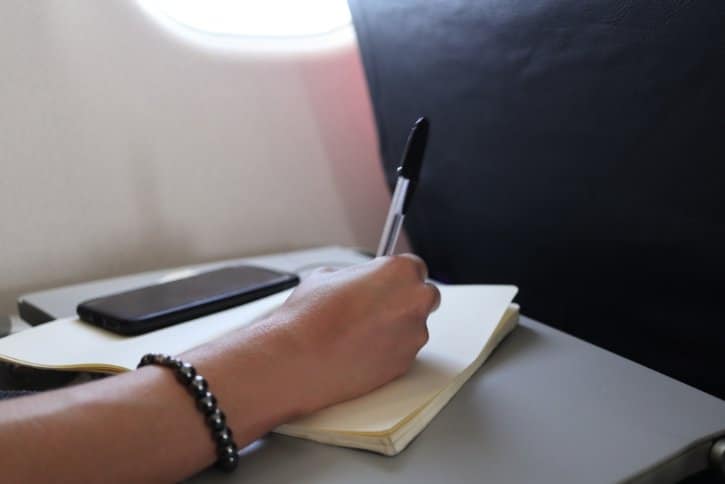
Most travel is digital now, yet a plain black ballpoint pen still saves the day more often than you’d expect. It weighs nothing and asks for nothing.
a. When a pen still comes in handy
- Filling in a paper customs, immigration, or health form.
- Writing a lost-baggage report or airline form.
- Jotting an emergency contact or hotel address.
- Making notes when your phone battery is dead.
b. Why a black ballpoint
Black ink is widely accepted on official forms, and a ballpoint won’t leak like a fountain pen. A retractable design or secure cap prevents stains, and an inexpensive pen is perfect here.
c. Keep it realistic
Many arrivals are now digital, so treat the pen as a backup, not a guarantee that a paper form is coming. If a country requires online registration, do it before you fly. A pen does not replace a required digital form.
d. How to pack it
Keep it in your document pouch, test it before departure so you’re not stuck with a dead pen, and prevent ink leaks. A spare is worth it for families or groups.
10. Pack Large, Heavy-Duty Zip-Top Bags
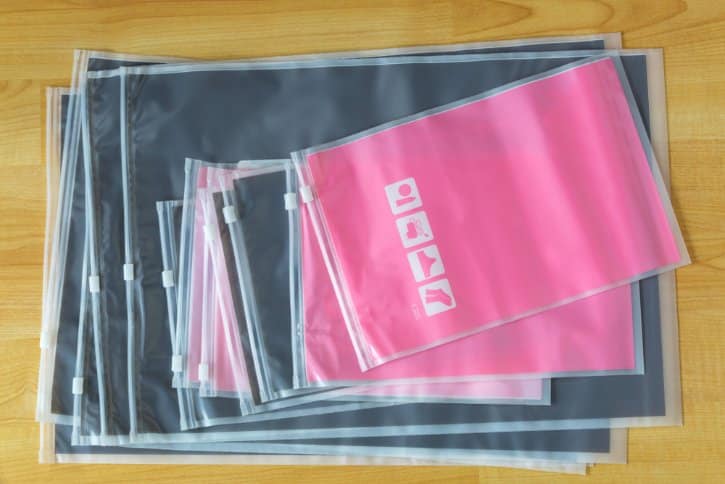
A few large, heavy-duty zip-top bags handle a surprising number of travel messes for almost no cost. Just remember, they’re for organization and don’t change any security or customs rules.
a. What they’re great for
- Isolating wet clothing or a leaking bottle.
- Separating dirty clothes from clean.
- Protecting cables and small electronics from moisture.
- Keeping medication organized while preserving its labels.
b. The TSA distinction that trips people up
The official carry-on liquids bag is quart-sized. A gallon-sized bag does not replace it at the checkpoint. Large bags are fine for general organization, but any toiletries inside them still must follow the individual size limits. Putting a prohibited item in a clear bag does not make it allowed.
c. Packing advice
Choose freezer-grade bags, bring only a few, and fold them flat. Keep one empty bag easy to reach, press out excess air, and double-bag anything that might leak.
d. What they can’t do
A plastic bag isn’t armor. It won’t waterproof valuables or protect fragile items on its own, and loose batteries still need proper terminal protection. Food and farm products may need to be declared at international borders, and a bag doesn’t make a banned food legal.
Avoid 1: Too Many or Oversized Power Banks
This isn’t about fear of batteries. It’s about excess. Carrying several unnecessary power banks or one huge one can trigger safety concerns, screening questions, delays, or confiscation.
The rules in short
- Power banks are carry-on only, and if your bag gets gate checked, take them out first.
- 100 Wh or less: fine for personal use. 101 to 160 Wh: need airline approval, max two. Over 160 Wh:
- Portable power stations for camping usually fall outside passenger allowances.
Know which rule is the FAA’s and which is your airline’s, since foreign airlines and each flight segment can be stricter.
A better approach
Carry one reliable power bank with a clearly marked watt-hour rating, comfortably within your airline’s limit. Inspect it for damage, protect the terminals, keep it in your personal item, and charge your devices before you leave home.
Avoid 2: Loose, Unlabeled, or Improperly Packed Medication
The real concern isn’t just that medicine left its box. It’s identification, legality, documentation, and safe storage. Poorly organized medicine can cause trouble at security, customs, or in a medical emergency.
What counts as improper packing
- Loose pills in a pocket or at the bottom of a bag.
- Several medicines mixed together with no labels.
- Medicine in someone else’s container.
- Essential medicine stored only in checked baggage.
- Controlled medicine carried without checking foreign laws.
A better approach
Use a dedicated medication pouch with clearly labeled medicine, keep original packaging where practical or required, and carry prescription copies and a doctor’s letter using generic names. Bring a reasonable quantity plus backup doses, store it in your personal item, and confirm the rules with destination and transit authorities in advance.
Avoid 3: Rigid Denim or Tight-Waistband Pants
This one is purely about comfort. It’s not an airline or TSA rule, and stiff jeans won’t directly cause a medical condition. But a few hours in rigid denim or a tight belt can make a flight miserable.
Why it gets uncomfortable
Over several hours, tight clothing limits your movement, makes leg exercises and restroom trips harder, and presses on you through ordinary bloating or swelling. Fabric that feels fine on a short trip feels very different after hours in a seat.
What to wear instead
- Soft, breathable fabrics with a little stretch.
- A flexible waistband and removable layers for warm terminals and cool cabins.
- Comfortable shoes that allow for normal swelling.
- Properly fitted compression socks when suitable.
A quick health note
Movement matters far more than clothing. Flex your ankles, work your calves, change position, and walk when it’s safe. Comfy pants don’t prevent blood clots, and ordinary tight socks are not the same as graduated compression socks.