
There’s a shift happening among experienced Japan travelers, and it’s not subtle.
While first-timers still flock to Tokyo and Kyoto, repeat visitors are quietly heading somewhere else entirely.
They’re choosing a region where you can still walk into a great restaurant without a reservation, where trains aren’t packed to the breaking point, and where daily life moves at a pace that actually lets you enjoy it.
That place is Kyushu, and here’s why it deserves your attention. 😊
1. Travelers Are Quietly Skipping the Usual Japan Route
a. The Golden Route Still Works, But It’s Getting Harder
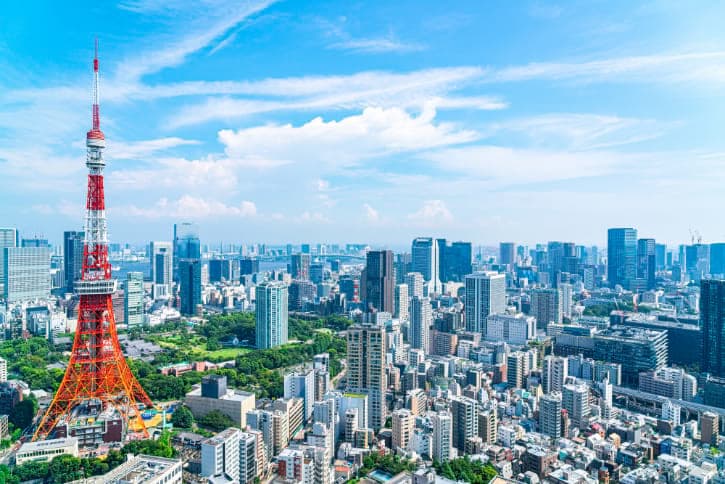
The classic Tokyo to Osaka to Kyoto route remains the perfect introduction to Japan.
The efficiency of the Tokaido Shinkansen, the iconic temples, the food scenes. For a first trip, it delivers.
But here’s the reality in 2025: that route has hit its limits. Kyoto now restricts tourists from certain neighborhoods. Hotel prices in Tokyo have surged.
Popular attractions require reservations weeks out. The friction of traveling this corridor has increased significantly.
b. Why Repeat Visitors Are Looking Elsewhere
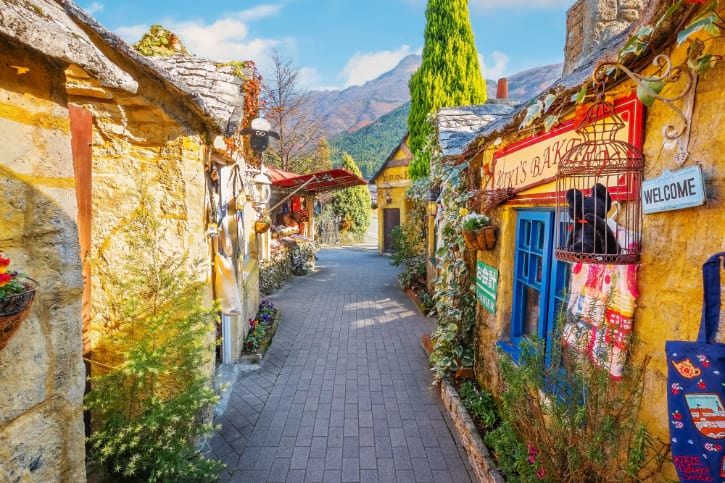
First-time visitors keep Tokyo and Kyoto busy. That won’t change anytime soon.
But repeat visitors, the ones who’ve already done the Golden Route, are making different choices now.
They’re not checking boxes anymore. They’re seeking depth, ease, and authenticity.
The simple math driving this shift:
- Tokyo and Kyoto: Demand exceeds capacity, meaning high prices, crowds, and advance planning required
- Kyushu: Capacity exceeds demand, meaning walk-in dining, spontaneous travel, and reasonable prices
This is geographic arbitrage. Smart travelers are getting the same quality Japanese experience with far less hassle.
2. This Region Feels Like Japan Before the Crowds
a. Introducing Kyushu
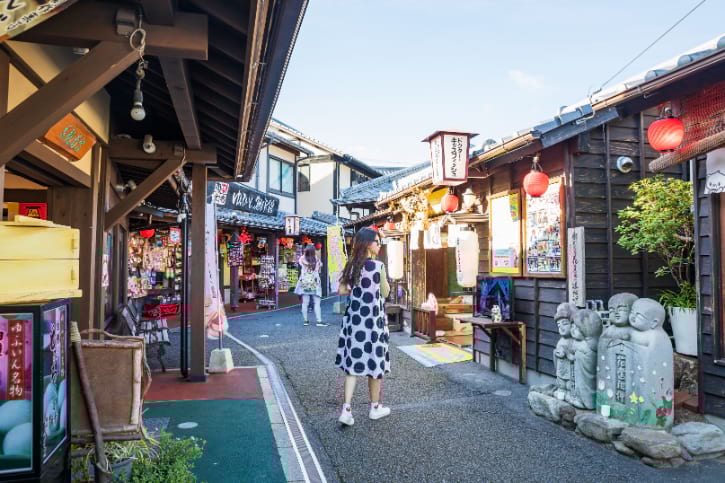
Kyushu is Japan’s third-largest island, located in the southwest. It has major cities, world-class hot springs, rich history, and excellent food. What it does not have, at least not yet, is overwhelming tourism.
The numbers tell a clear story: Kyushu sees far fewer international visitors than the Golden Route corridor. The difference is immediately noticeable when you arrive.
b. What “Before the Crowds” Actually Means
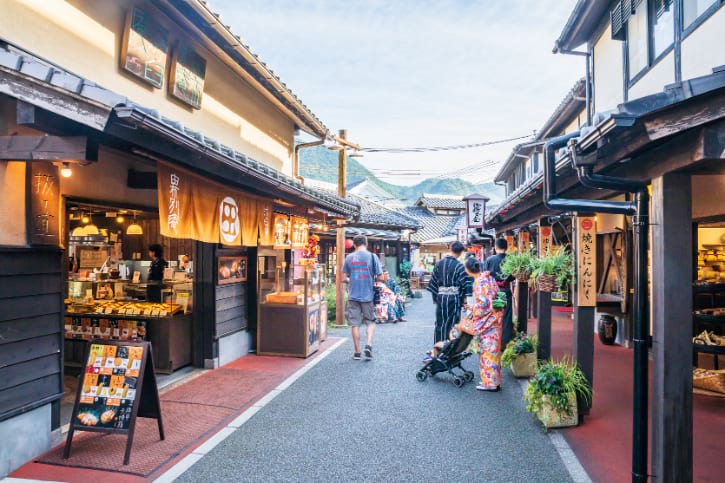
This is not about empty streets or abandoned villages. Kyushu’s cities are modern and lively.
Fukuoka, the largest, has 1.6 million residents, excellent shopping, and a thriving food scene.
The difference is in the rhythm. You will hear local languages far more than tourist chatter.
Restaurants serve primarily to regulars, not guided groups. Festival preparations happen for the community, not for spectators.
Even in Fukuoka’s busiest districts, the density of international tourists is noticeably lower than central Tokyo or Kyoto.
You feel less like you are visiting a famous destination and more like you are living in a Japanese city for a while.
3. Cities That Feel Easy, Lived-In, and Rewarding
a. Fukuoka: Compact, Walkable, and Delicious
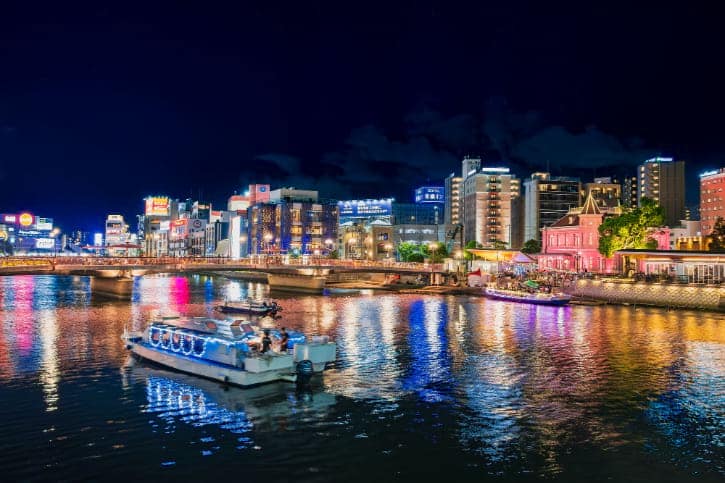
Fukuoka consistently surprises visitors with how manageable it feels. The downtown areas of Tenjin and Hakata are walkable, the subway is simple, and somehow this city of 1.6 million never feels overwhelming.
One reason: the airport is just a five-minute subway ride from downtown. That alone changes the entire trip.
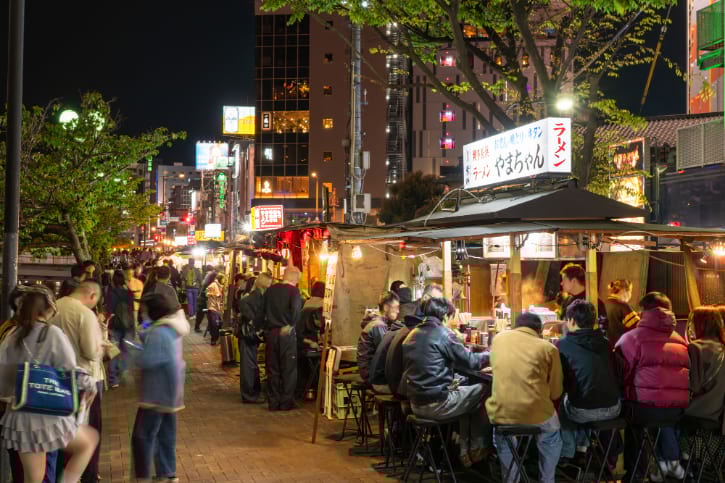
But the real draw is the food culture, especially the yatai. These are small open-air food stalls that appear each evening around 6pm in areas like Nakasu and Tenjin.
About 100 yatai operate nightly, each seating roughly 8 to 10 people at a time.
What makes them special is who eats there. Locals have been eating at Fukuoka’s yatai for over 80 years.
You will find yourself shoulder to shoulder with office workers and students, all slurping Hakata ramen and sharing conversation over beer.
b. Kumamoto: A Castle Town That Feels Like Home
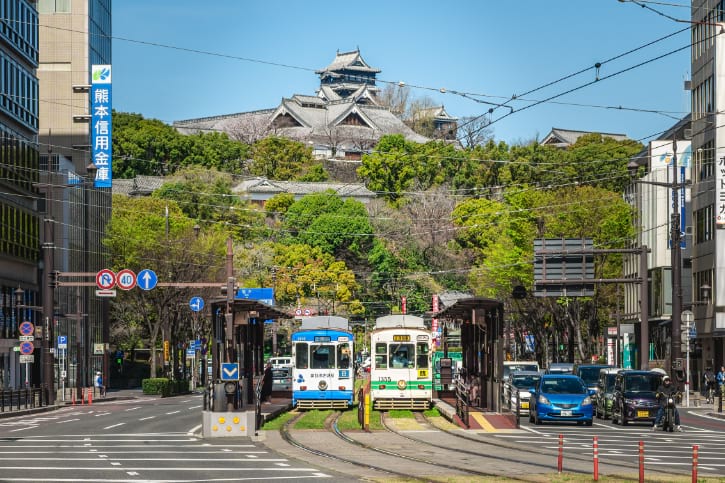
Kumamoto is smaller and quieter than Fukuoka. The city centers around its impressive castle, but what makes Kumamoto rewarding is how naturally the history blends into daily life.
The castle grounds are where local families picnic. The streetcars are used by commuters, not just tourists.
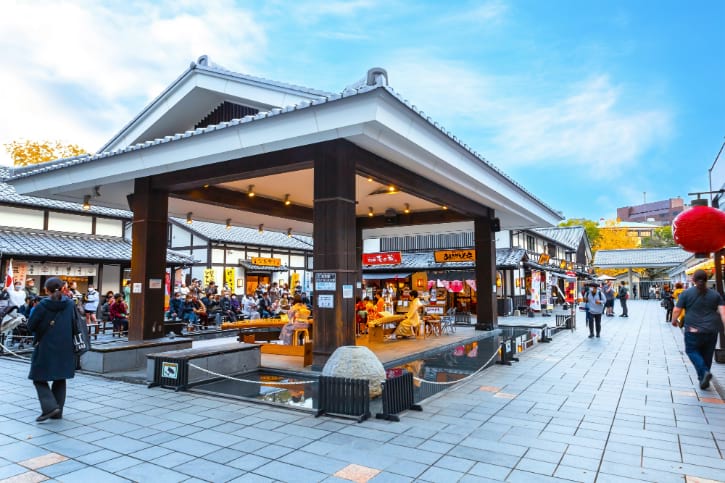
You can walk from the castle to the main shopping district in under 15 minutes, and the entire time you feel like you belong there.
Many visitors stop in Kumamoto for just a few hours, which means evenings belong to locals.
The restaurants and izakayas at night are filled with residents, with just a handful of independent travelers.
c. Nagasaki: Unlike Anywhere Else in Japan
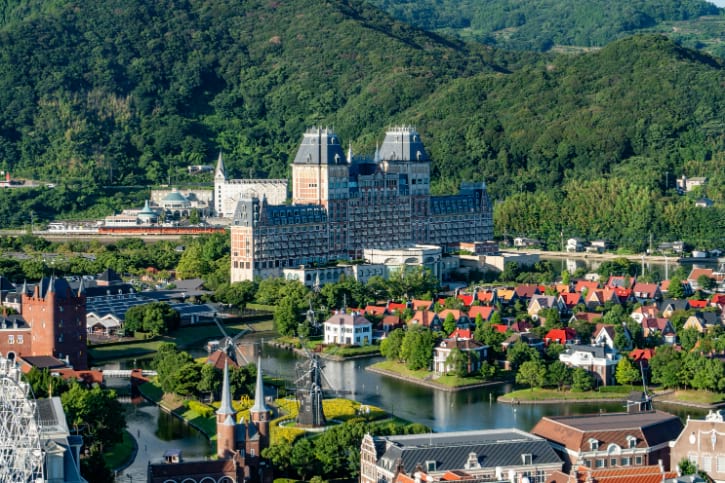
Nagasaki genuinely feels different from other Japanese cities.
For over 200 years during Japan’s isolation period, Nagasaki was the country’s only window to the outside world. Chinese merchants, Dutch traders, and Christian missionaries all left their mark.
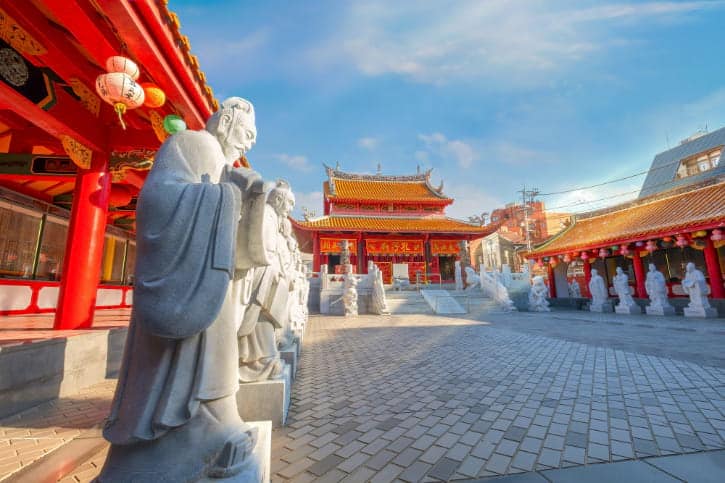
Walk through Nagasaki today and you might turn a corner to find a Chinese Ming-style temple, then a few streets later encounter a Gothic church, then pass colonial Western-style homes in Glover Garden.
The city blends Japanese, Chinese, and European influences in ways you simply will not find anywhere else.
The geography adds to the atmosphere. Nagasaki is built on hills around a harbor, with houses climbing slopes and streetcars winding through valleys.
It has one of Japan’s top three night views from Mount Inasa, and you can often enjoy it without the crowds you would face at Tokyo Tower.
d. Oita Prefecture: A Base for Slower Exploration
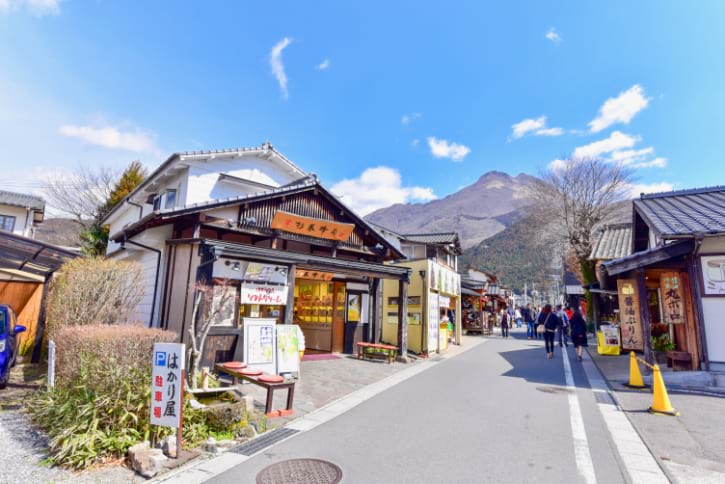
Oita is famous for its hot springs, but the prefecture also offers unexpected historical depth.
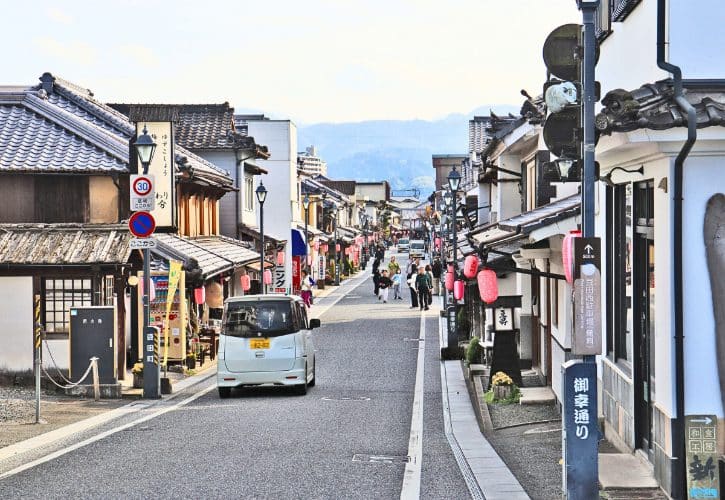
Mamedamachi in Hita City deserves special attention. This preserved Edo-period merchant quarter has earned the nickname “Little Kyoto of Kyushu”. Rows of white-walled kura storehouses, traditional merchant houses, and old sake breweries line the streets.
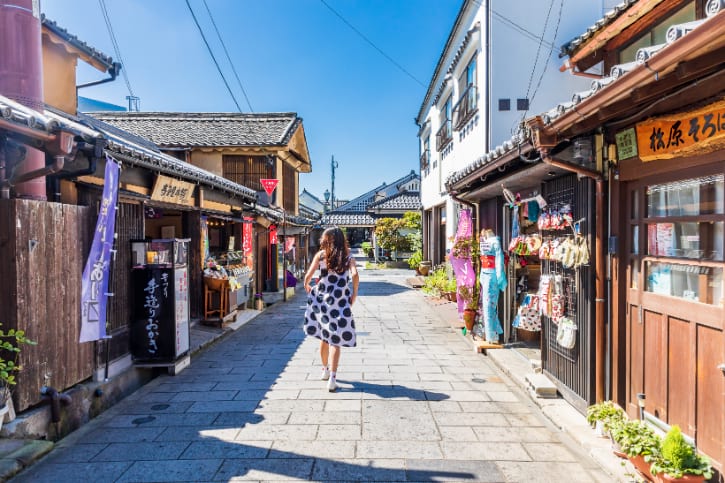
The difference from actual Kyoto? You can often stroll Mamedamachi’s lanes with barely anyone else around. The district even won a national “Beautiful Townscape” award, but it has not become heavily commercialized.
e. Kagoshima: The Southern Gateway
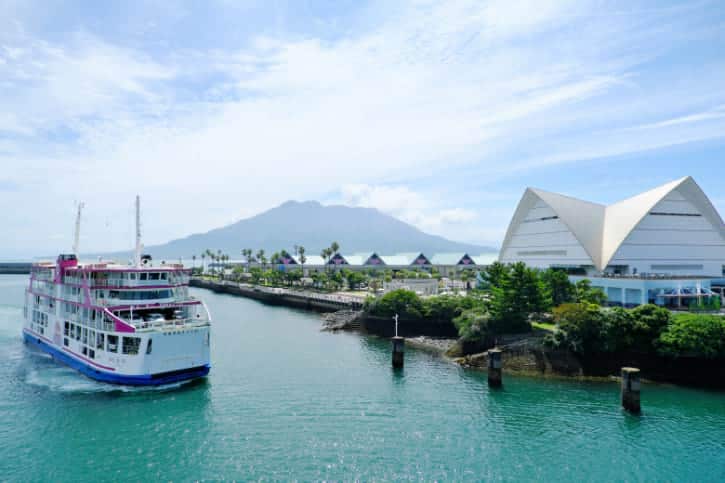
Kagoshima sits at Kyushu’s southern tip, with the active Sakurajima volcano smoking gently across the bay. The city has a distinct regional identity rooted in its history as the Satsuma domain’s capital.
What you will notice first is the warmth. Residents here are genuinely welcoming of visitors. People are curious, friendly, and often happy to chat.
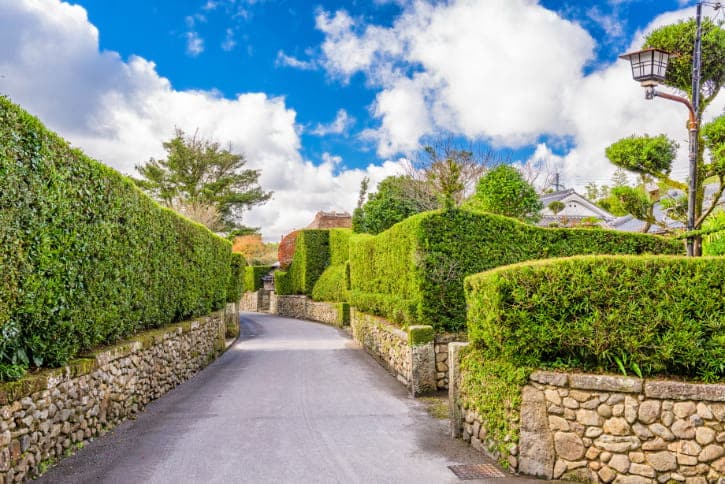
About an hour south of the city, the Chiran Samurai District offers one of Japan’s best-preserved glimpses into samurai-era life.
The district has about 500 historic residences, with seven houses and gardens open to visitors. Stone walls, traditional hedges, and defensive design features remain intact.
Unlike Kyoto’s more famous historical areas, Chiran rarely feels crowded.
4. Hot Springs Without the Tourist Chaos
Kyushu is Japan’s hot spring heartland. The onsen towns here deliver relaxing baths and traditional atmosphere without overwhelming crowds.
a. Beppu: Where Onsen Is Everyday Life
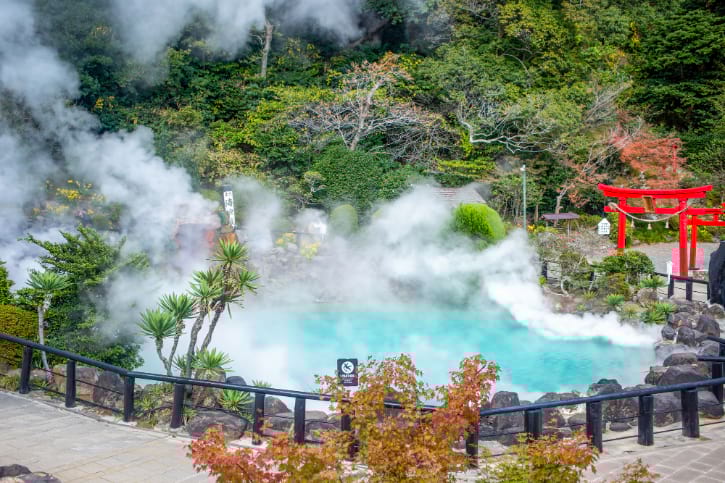
Beppu has nearly 3,000 hot spring sources and over 100 public bathhouses. What makes it different from polished resort towns is that onsen here remains part of daily routine for locals.
Many neighborhood baths charge just 100 to 300 yen. You will find yourself soaking alongside grandmothers from the area who have bathed in the same spot their whole lives.
Timing tip: Visit baths early morning or late evening when day-trippers have left.
b. Yufuin: Two Different Towns
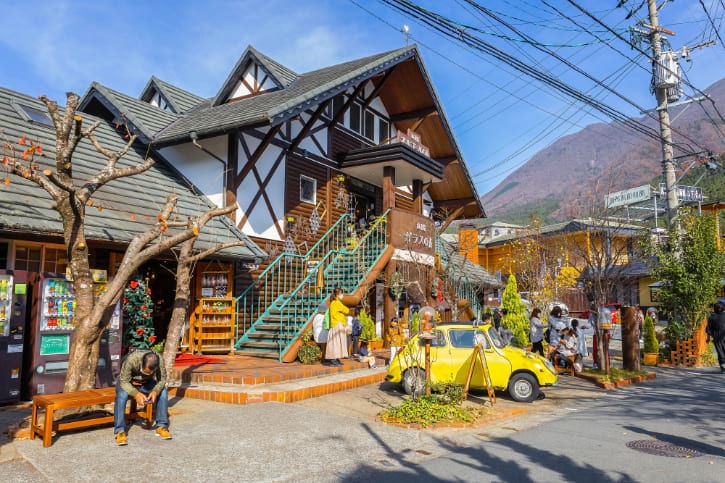
Yufuin is gorgeous, a rural spa town beneath Mount Yufu. Its main street, Yunotsubo Street, gets busy midday with day-trippers.
But here is what changes everything: stay overnight. When day-trippers leave, the town transforms.
Early morning at Kinrin Lake, with mist rising and practically no one around, is exactly the Japan moment you came looking for.
c. Kurokawa Onsen: Preserved on Purpose
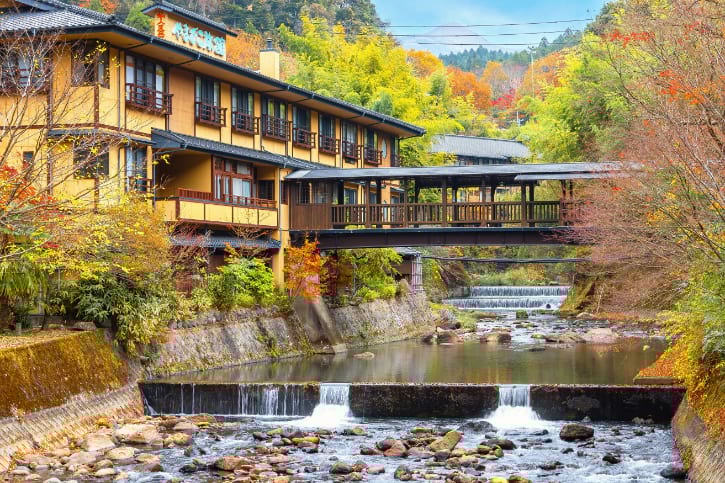
Kurokawa is what happens when a hot spring village deliberately chooses to stay small.
The town has about two dozen ryokans, no high-rise hotels, no neon signs, and a preserved atmosphere that feels centuries old.
The result is a village that looks like something from a Ghibli film, with wooden buildings, earthen paths, and guests wandering in yukata robes.
Because accommodations are limited and the location is somewhat remote, Kurokawa never feels crowded.
d. Takeo Onsen: 1,300 Years of Quiet Bathing
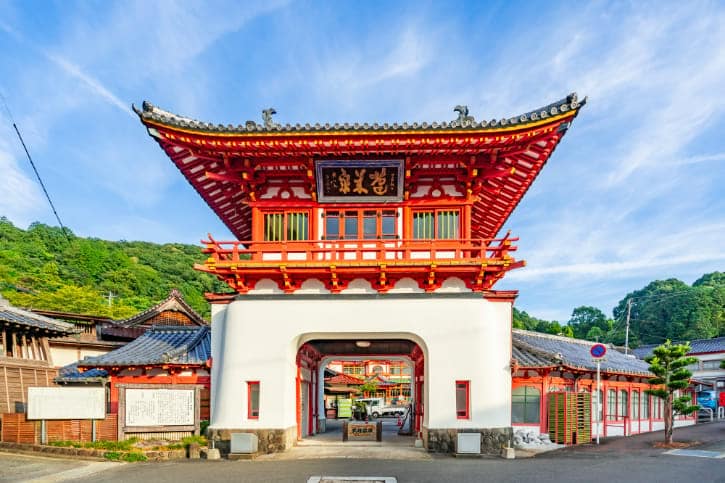
Takeo is the least famous of these four, which is exactly why it belongs on this list.
The town has been a hot spring destination for 1,300 years.
Its landmark Romon Gate, built in 1914, is designated an Important Cultural Property. Inside sits the Motoyu bath from 1876, the oldest existing wooden public bathhouse in Japan.
People still bathe there daily. The whole experience feels nostalgic and authentic in ways that larger onsen towns cannot match.
5. Which Airport Makes the Most Sense to Start and End
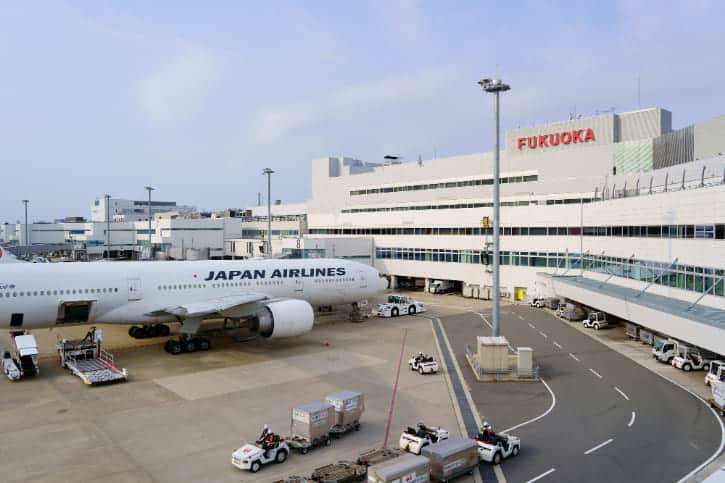
For most Kyushu itineraries, Fukuoka Airport (FUK) is the obvious choice.
The defining advantage: The airport sits inside the city. A 5-minute subway ride reaches Hakata Station. An 11-minute ride reaches downtown Tenjin.
Compare this to Narita (60+ minutes to Tokyo), Kansai (40-50 minutes to Osaka), or even Haneda (30 minutes to Tokyo Station). The time and hassle saved on arrival and departure is significant.
6. How to Get Around Kyushu
a. Easier Than You Might Expect
If you have traveled by train anywhere in Japan, Kyushu will feel familiar. JR Kyushu operates an extensive network covering virtually every major destination.
The backbone is the Kyushu Shinkansen, running from Hakata (Fukuoka) to Kagoshima-Chuo. What once took half a day now takes as little as 80 minutes.
b. Key Travel Times
- Hakata to Kumamoto: about 40 minutes (shinkansen)
- Hakata to Kagoshima-Chuo: about 80 to 90 minutes (shinkansen)
- Hakata to Nagasaki: about 1 hour 30 minutes (includes one transfer)
- Hakata to Beppu: about 2 hours 15 minutes (Limited Express Sonic)
- Hakata to Yufuin: about 2 hours 15 minutes (Limited Express Yufuin no Mori)
Final Thought
Kyushu is not a replacement for the Golden Route. If Tokyo, Kyoto, and Osaka are calling you, answer that call.
But if you have already been, or if the thought of constant crowds makes you hesitate, Kyushu offers something increasingly rare: the chance to experience Japan at a comfortable pace, surrounded by locals going about their daily lives, with world-class food, history, and hot springs along the way.
The smart travelers have already figured this out. Now you know too.
Related Posts

Photo Credit:
Photos by PIXTA