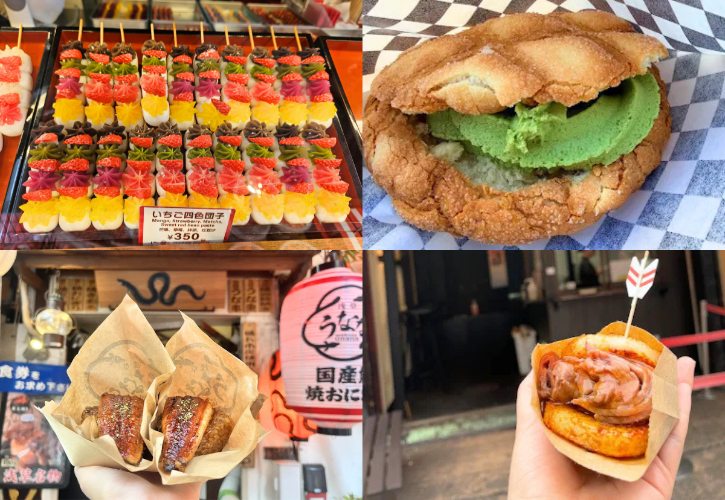
If there’s one neighborhood in Tokyo where you should show up hungry, it’s Asakusa.
The streets around Senso-ji Temple are packed with food stalls serving everything from century-old traditional sweets to creative modern snacks.
Most visitors come for the temple, but they always end up staying for the food. Trust me, you’ll eat way more than you planned.
These are the 17 street food spots worth stopping at. 😊
1. Asakusa Silk Pudding
a. What to Eat
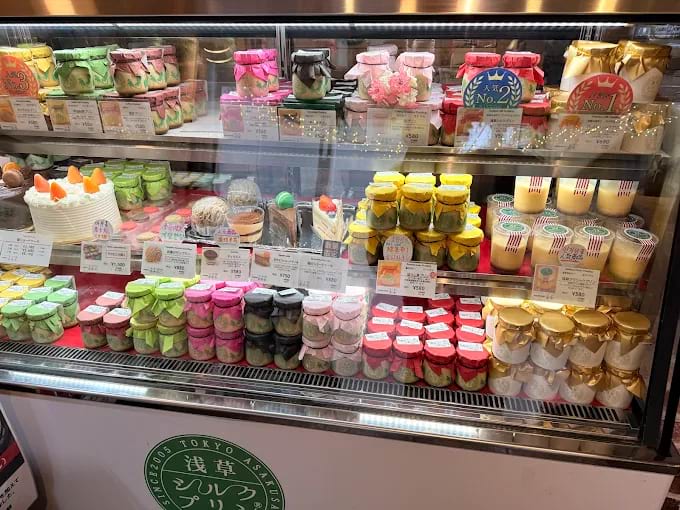
This shop serves ultra-smooth custard puddings in glass and porcelain jars, with over nine flavors including the signature Asakusa Classic, a rich Premium Silk made with Hokkaido cream, and options like Matcha, Black Sesame, and Royal Milk Tea.
b. Why It’s Worth Trying
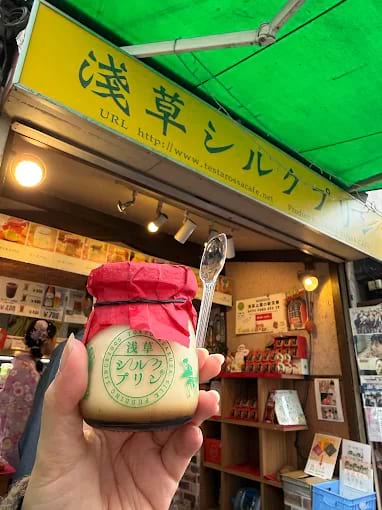
The texture is unbelievably silky, nothing like regular store-bought pudding, and each jar has a thin layer of slightly bitter caramel at the bottom that balances the creaminess perfectly.
Everything is made without preservatives, so it tastes fresh and clean.
2. Kagetsudō Kaminarimon
a. What to Eat
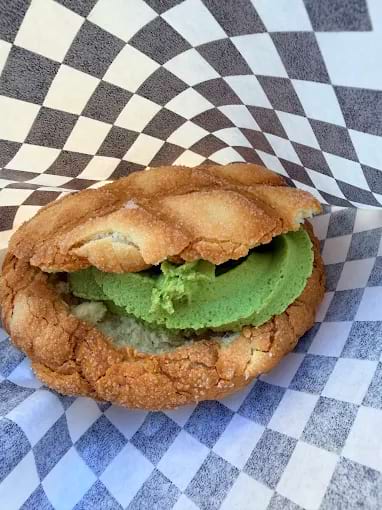
This shop is famous for its Jumbo Melon Pan, a massive 15-centimeter bun with a crispy sugar crust and a fluffy interior, available plain or stuffed with vanilla ice cream, matcha ice cream, or seasonal fruits.
b. Why It’s Worth Trying
A three-hour fermentation process gives the bread an incredibly light, airy texture that melts in your mouth.
Eat it right away though, because putting it in a bag will flatten those delicate air pockets, and try to arrive before 16:00 since they close once the batch sells out.
3. Kibidango Azuma
a. What to Eat
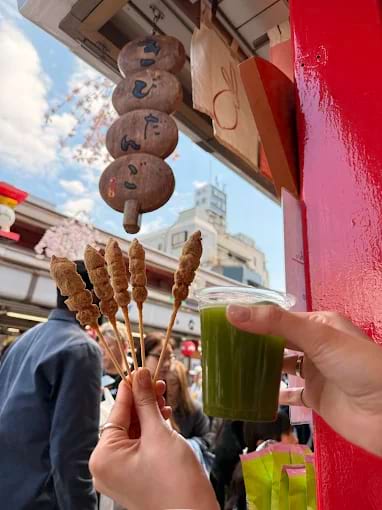
Kibidango Azuma serves small, chewy millet dumplings on skewers, generously coated in kinako (roasted soybean powder), sold in sets of five.
Pair them with chilled matcha in summer or warm amazake in winter.
b. Why It’s Worth Trying
These dumplings are softer and more “melting” than the firmer dango you’ll find elsewhere, with a gentle sweetness that comes from the natural grain and nutty kinako rather than heavy sugar.
You can watch the staff in traditional attire prepare them fresh right in front of you.
4. Asakusa Soratsuki
a. What to Eat
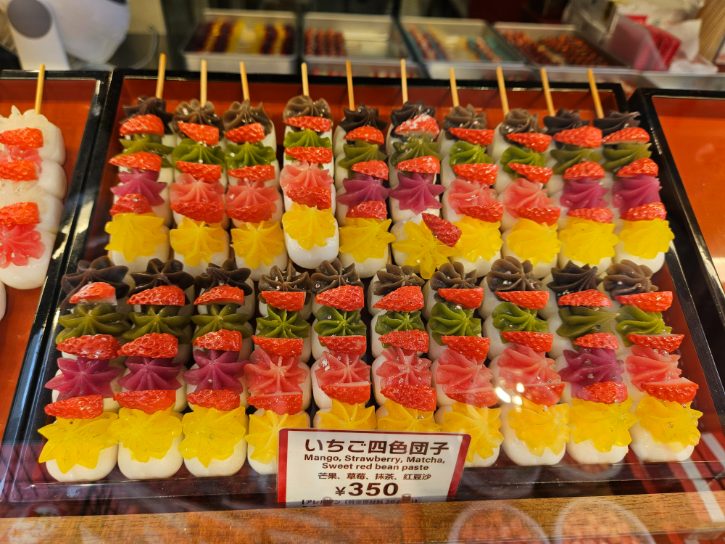
Soratsuki is known for its Strawberry Dango, beautiful skewers of chewy mochi topped with artisanal pastes like matcha, mango, strawberry and red bean, each crowned with a fresh Japanese strawberry.
They also serve giant mitarashi dango coated in a thick, glossy sweet soy sauce glaze.
b. Why It’s Worth Trying
The strawberries are always at peak ripeness with a sweetness that pairs beautifully with the bean pastes, and the stretchy mochi holds its shape even under those generous toppings.
It’s conveniently located in the Uranaka area near Senso-ji, making it an easy stop between the temple and the shopping streets.
5. Ginkado
a. What to Eat
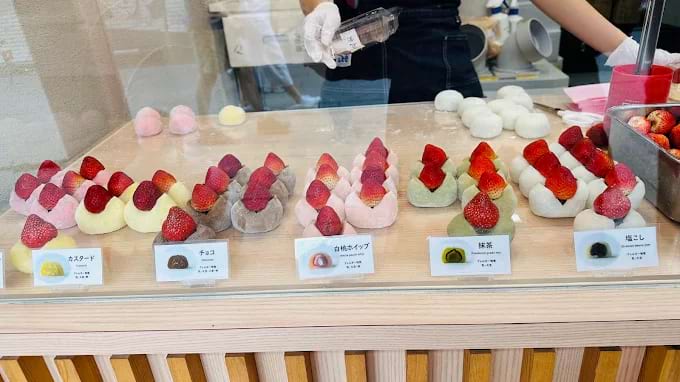
Ginkado offers Ichigo Ame (candied strawberries) with a thin, glass-like sugar shell that shatters on the first bite, plus Strawberry Daifuku in creative flavors like White Peach Creme and Chestnut and Custard.
They also serve a strawberry soft-serve with authentic fruit flavor.
b. Why It’s Worth Trying
Everything is presented like a little jewel, making it perfect for photos, but the taste absolutely backs it up.
The mochi is perfectly tender and chewy, and the fruit quality is consistently excellent.
6. Taco-Taco Asakusa Koromo Brothers
a. What to Eat
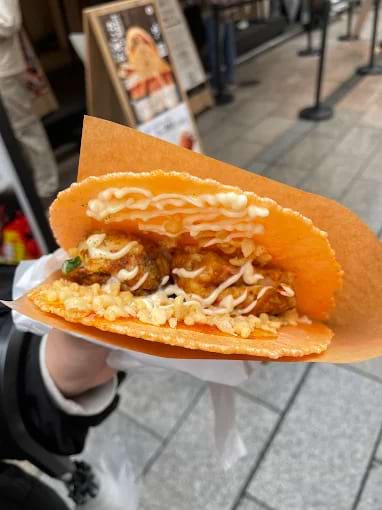
The star here is the Takosen, two hot takoyaki balls pressed between crispy shrimp crackers and drizzled with takoyaki sauce, mayo, and crunchy tempura bits.
They also serve standalone takoyaki with a creamy, almost liquid-like center, plus a ring-shaped black wagyu croquette and deep-fried manju with fillings like camembert cheese.
b. Why It’s Worth Trying
The Takosen is one of the most portable and satisfying street snacks in Asakusa, giving you a perfect mix of crunchy and creamy in every bite.
The staff are accommodating to English speakers, which makes ordering easy.
7. Naruto Taiyaki Honpo
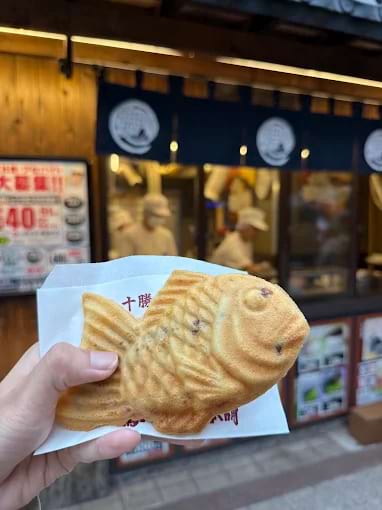
a. What to Eat
This shop makes taiyaki (fish-shaped cakes) using the traditional single-mold method, grilling each one individually over an open flame.
Go for the Red Bean filling or the Naruto Kintoki Potato, which uses premium sweet potatoes for a naturally sweet, creamy center.
b. Why It’s Worth Trying
The crust is noticeably thinner and crispier than other taiyaki shops, sometimes so thin you can see the filling through the shell.
A bonus: they stay open until 23:00, making this one of the few spots for quality street food late at night.
8. Chacha Futatsume
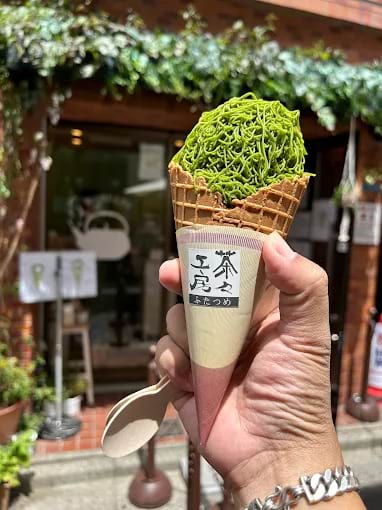
a. What to Eat
This is the spot for the viral Matcha Mont Blanc, where a rich matcha-chestnut paste is pressed live into noodle-like strands over layers of soft-serve, matcha sponge cake, lemon jam, red bean paste, and mascarpone cream.
b. Why It’s Worth Trying
The lemon jam adds a bright acidity that keeps all those rich layers from becoming too heavy, and the live preparation is fun to watch.
Have your camera ready, because the “squeezing spectacle” happens fast once your order is called.
9. Kuroge Wagyu Ichinoya Asakusa Denpōin
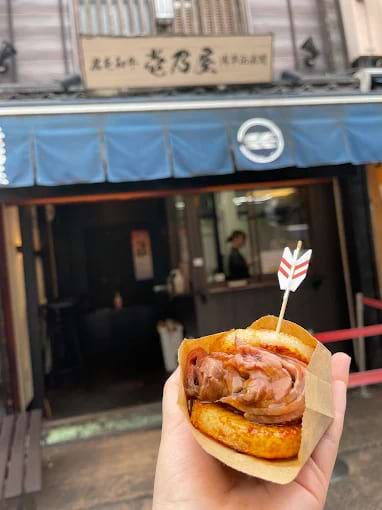
a. What to Eat
This takeaway stall serves Wagyu Grilled Rice Balls topped with thin slices of low-temperature cooked Kuroge Wagyu, glazed with savory soy sauce and finished with wasabi or sesame.
For a bigger meal, the Rare Steak Rice Bowl is meant to be eaten in three stages: plain, with seasonings, and then as “ochazuke” with hot beef broth.
b. Why It’s Worth Trying
It’s a way to enjoy premium, melt-in-your-mouth wagyu without the price of a full sit-down restaurant.
The rice soaks up all the juices and sauce, so every bite is packed with flavor.
10. Asakusa Menchi
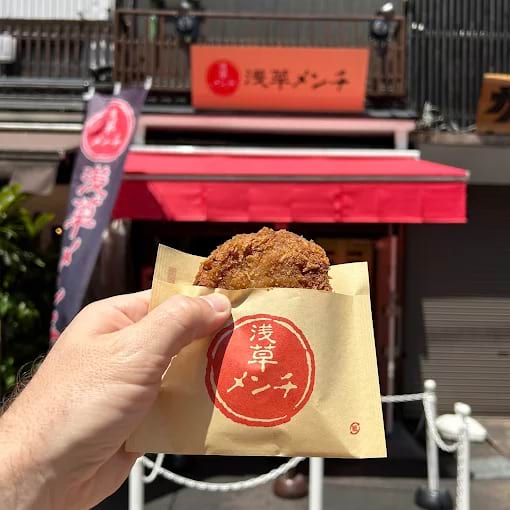
a. What to Eat
The signature Asakusa Menchi is a deep-fried meat cutlet made from a blend of premium Koza Pork and Japanese black wagyu, served piping hot with an ultra-crispy breadcrumb coating.
Add a dab of Japanese mustard (karashi) from the condiment stand for a sharp kick.
b. Why It’s Worth Trying
The first bite often releases a burst of hot, savory meat juices, and the sweetness comes naturally from caramelized onions rather than added sugar, giving it a distinctly Japanese flavor.
Even when the line looks long, the staff works fast, so the wait is shorter than you’d expect.
11. Asakusa Kokonoe
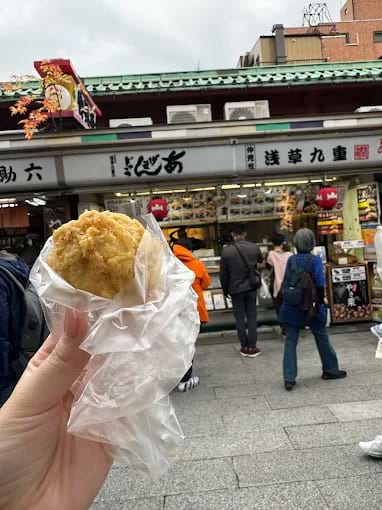
a. What to Eat
Kokonoe specializes in Agemanju, steamed buns dipped in tempura-style batter and deep-fried until crispy and puffy, with 13 flavors available.
The Koshi-An (smooth red bean) is the classic, but the Monja and Curry flavors are great if you want something savory.
b. Why It’s Worth Trying
They use a blend of three premium oils for frying, so the buns come out crispy without feeling greasy or heavy, which means you can comfortably try two or three flavors.
The shop is right on Nakamise-dori, just three stores from the Senso-ji side, so it’s impossible to miss.
12. Kimuraya Ningyo-yaki Main Shop
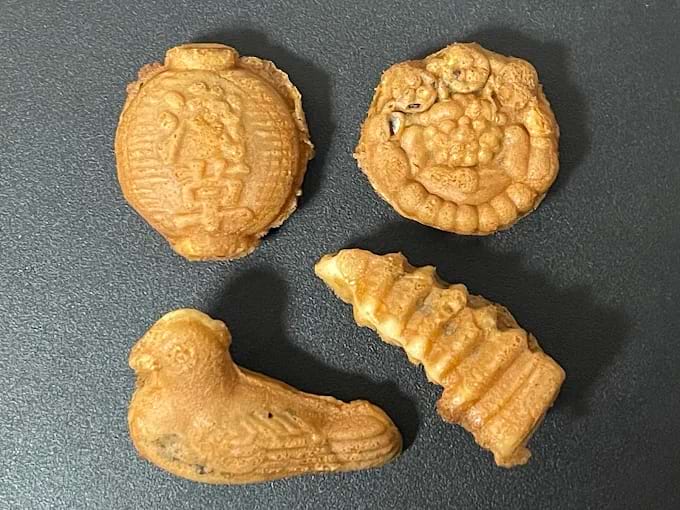
a. What to Eat
Kimuraya serves Ningyo-yaki, small doll-shaped sponge cakes baked in cast-iron molds into Asakusa icons like the Kaminarimon lantern, the pagoda, and the pigeons of Senso-ji.
They come filled with sweet red bean paste or as a simpler plain sponge.
b. Why It’s Worth Trying
This is one of the oldest ningyo-yaki shops in the area, dating back to the Meiji era, and the cakes are best eaten warm when the outside has a slight crispness before softening into a moist sponge.
You can watch the baking process through the shop window, and they sell both small snacking bags and larger boxed sets for gifts.
13. Benizuru Pancake
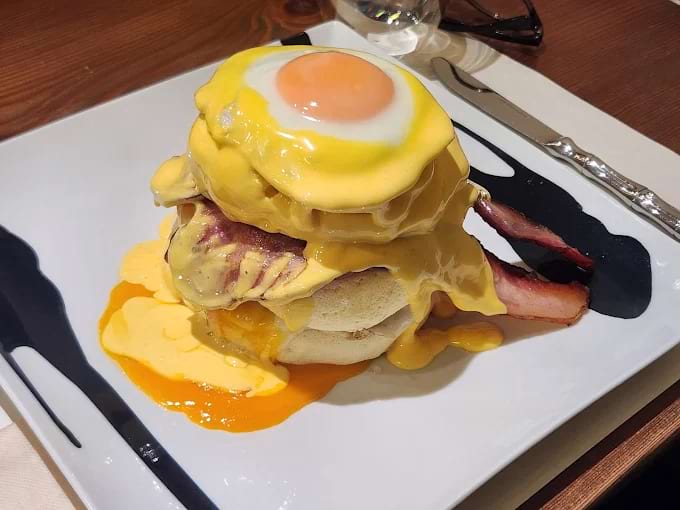
a. What to Eat
Benizuru serves tall, fluffy soufflé-style pancakes with a cloud-like texture.
The most popular dish is the Bacon and Egg Pancake with thick-cut bacon, a fried egg, and a drizzle of honey.
b. Why It’s Worth Trying
These pancakes are impressively light and airy, and watching the chef flip the wobbling stacks is part of the fun.
Get there at 07:00 AM to grab a timed ticket, because all 120 daily servings are usually gone by mid-morning.
14. Asakusa Chaya Tabanenoshi
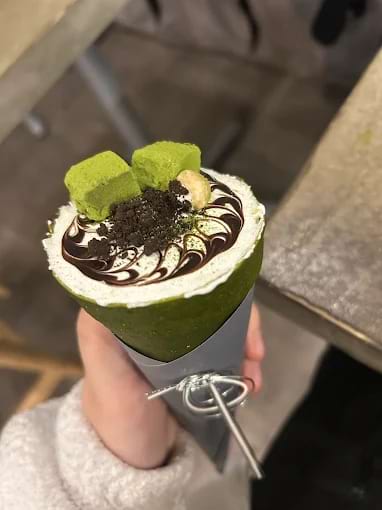
a. What to Eat
This shop serves beautifully crafted matcha crepes made with authentic Kakegawa green tea from Shizuoka, used in both the batter and the cream filling.
They also offer Strawberry and Hojicha (roasted green tea) varieties, each decorated with a traditional “mizuhiki” cord.
b. Why It’s Worth Trying
The flavor comes from the quality of the tea leaves, not from sugar, which makes these crepes popular with adults who appreciate authentic Japanese tea flavors.
Inside, you’ll find textural surprises like chocolate chip cookies or crunchy cereal that contrast nicely with the smooth matcha cream.
15. Asakusa Unana
a. What to Eat
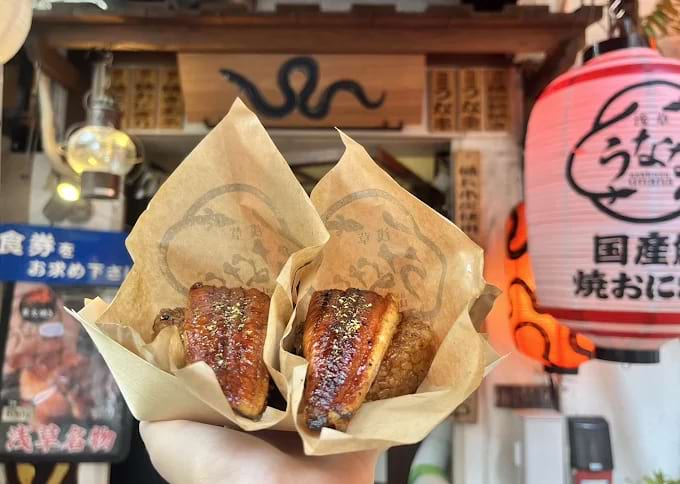
Unana serves Unagi Onigiri, a grilled rice ball topped with a generous slab of domestic freshwater eel, charcoal-grilled and brushed with sweet-savory tare sauce and a sprinkle of sansho pepper.
For a bigger meal, they also have Unaju boxes with the same high-quality eel over steamed rice.
b. Why It’s Worth Trying
This is one of the most affordable ways to enjoy premium Japanese eel in Tokyo, with a fluffy, tender texture and rice that’s soaked in all the juices and sauce.
Try to arrive before 09:30 AM on weekends because the eel sells out fast.
16. Daigakuimo Chibaya
a. What to Eat
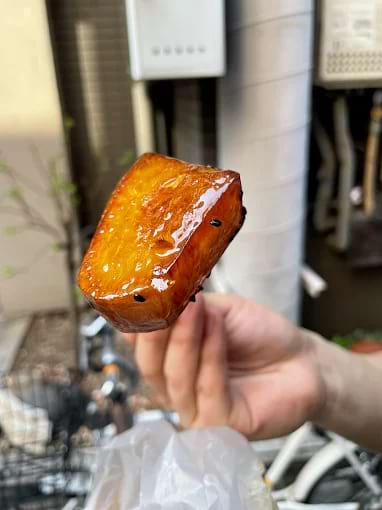
Chibaya serves Daigakuimo (university sweet potato), large chunks of deep-fried sweet potato coated in a thick, glass-like caramelized sugar glaze and topped with black sesame seeds.
For a crunchier option, try the Kiri-age, thinly sliced fried potatoes with the same sweet coating.
b. Why It’s Worth Trying
This shop has been perfecting this one snack for over seven decades, and the contrast between the hot, tender potato and the hardening sugar shell is deeply satisfying.
It was even selected as one of the top 100 sweets shops in Tokyo.
17. Suzukien Asakusa Matcha Gelato
a. What to Eat
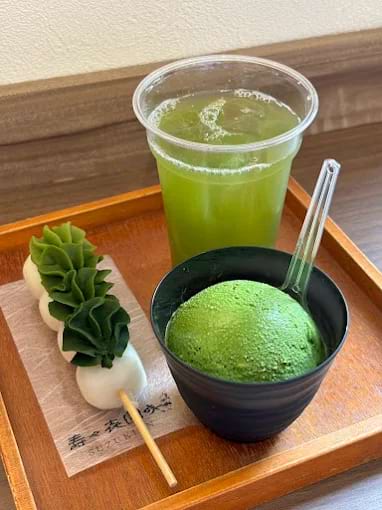
Suzukien offers matcha gelato in seven intensity levels, from Level 1 (mild and creamy) all the way to Level 7, one of the most intense matcha experiences you’ll find anywhere.
b. Why It’s Worth Trying
Order a double scoop pairing Level 1 and Level 7 to taste the dramatic difference, from milky sweetness to rich, bitter umami.
The shop uses only top-quality, single-origin tea leaves from Shizuoka, and trust me, the Level 7 is an experience you won’t forget.