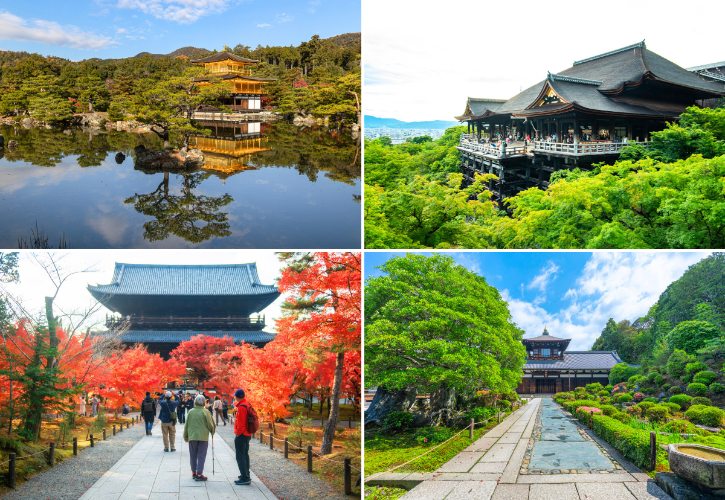
Kyoto is one of the best cities in Japan for temple-hopping, and here is why. Its temples are not all the same. Some are known for golden architecture that glows against a pond.
Others draw visitors with Zen gardens, autumn leaves, dramatic wooden halls built into hillsides, or sacred Buddhist statues lined up by the hundreds.
This guide will help you understand what makes each temple worth visiting, so you can plan around what actually interests you, not just where to take photos. 😊
1. Kinkaku-ji Temple
Why Visit
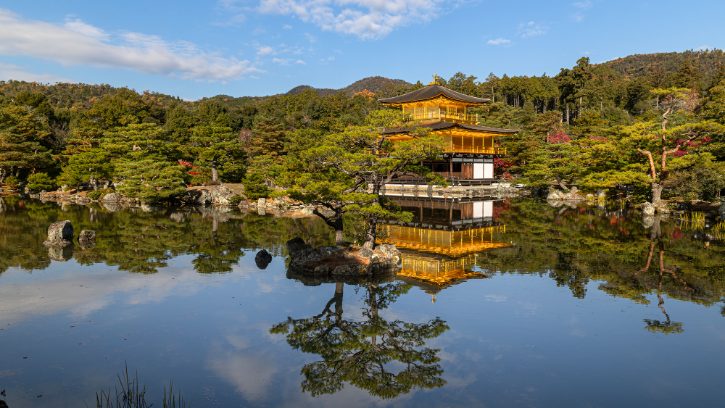
- This is Kyoto’s most recognizable temple. The top two floors of the three-story Golden Pavilion are coated in real gold leaf.
- The pavilion sits at the edge of Kyoko-chi (Mirror Pond), and when the water is calm, the reflection creates one of the most iconic views in Japan.
- Originally a private villa, it was purchased in 1397 by Shogun Ashikaga Yoshimitsu and later converted into a Rinzai Zen temple. It now holds UNESCO World Heritage Site
What Makes It Special
- The visual power comes from contrast. Bright gold stands against dark green trees, moss-covered grounds, and the calm surface of the pond.
- The pavilion blends three architectural styles: Heian aristocratic, samurai, and Zen temple design.
- A strolling path around the pond takes you through moss gardens, streams, and historic teahouses, with each turn revealing a new angle.
- The experience is about exterior beauty and atmosphere. You do not go inside the pavilion itself.
Visitor Tips
- Kinkaku-ji is exceptionally popular and often crowded. Go in expecting that.
- Even with the crowds, the visual impact makes it worth your time.
- Think of it as a short but powerful stop rather than a quiet retreat.
Best For
- First-time Kyoto visitors and photography lovers
- Travelers who want Kyoto’s most iconic postcard view
Read More: Osaka, Nara and Kyoto: The Best 7-Day Travel Itinerary
2. Tenryu-ji Temple
Why Visit
- Tenryu-ji is the most important temple in the Arashiyama area and fits naturally into a day exploring the bamboo grove and surrounding nature.
- It gives you both culture and nature in one stop, without needing to travel across the city.
What Makes It Special
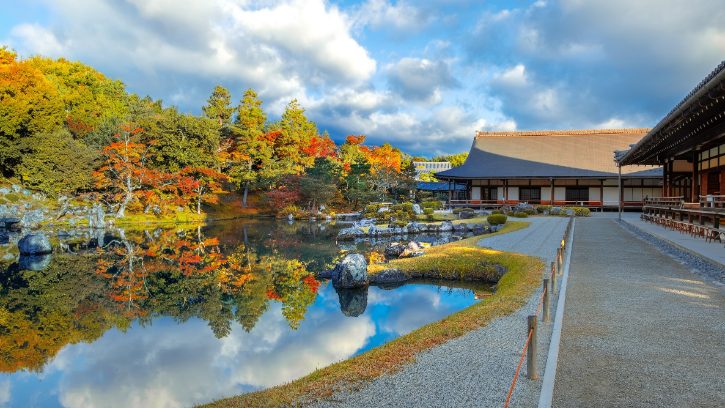
- The landscape garden, designed in the 14th century by Zen master Muso Soseki, has been preserved in its original state for over 600 years.
- Sogen Pond uses shakkei (borrowed scenery), aligning with the distant mountains of Kameyama and Arashiyama to create a sense of vastness beyond its actual borders.
- The Dragon Gate Falls stone arrangement symbolizes the Zen breakthrough of attaining enlightenment.
- The temple’s northern gate opens directly into the Arashiyama Bamboo Grove, so you can walk straight from the Zen garden into the towering bamboo.
Visitor Tips
- Visit before or after the bamboo grove for a smooth, easy itinerary.
- The atmosphere here is calmer and more contemplative than Kinkaku-ji.
Best For
- Garden lovers and Arashiyama first-timers
- Travelers who want culture and nature in one easy stop
3. Ginkaku-ji Temple
Why Visit
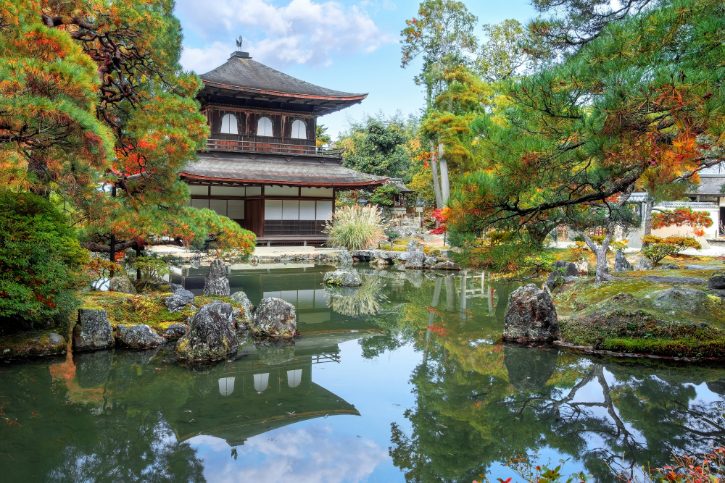
- Ginkaku-ji, known as the Silver Pavilion, was never actually coated in silver. It was left in its natural dark wood state.
- Built in the late 15th century by Shogun Ashikaga Yoshimasa, it represents wabi-sabi, the appreciation of simplicity and understated elegance.
- The beauty here is subtle and quiet, ideal for travelers who enjoy slowing down.
What Makes It Special
- Ginshadan (Sea of Silver Sand) is a wide expanse of raked white sand designed to mimic ocean waves. Next to it, the Kogetsudai is a perfectly shaped sand cone.
- A walking route climbs a gentle hillside through a dense moss garden, leading to a sweeping view of the temple and northern Kyoto.
- Ginkaku-ji sits at the northern end of the Philosopher’s Path, a scenic stone walkway along a cherry-tree-lined canal.
Visitor Tips
- It works perfectly as a starting or ending point for a walk along the Philosopher’s Path.
- You do not need to rush this temple. The beauty here rewards patience.
Best For
- Slow travelers who appreciate quiet, refined spaces
- Visitors walking the Philosopher’s Path
4. Eikan-do Temple
Why Visit
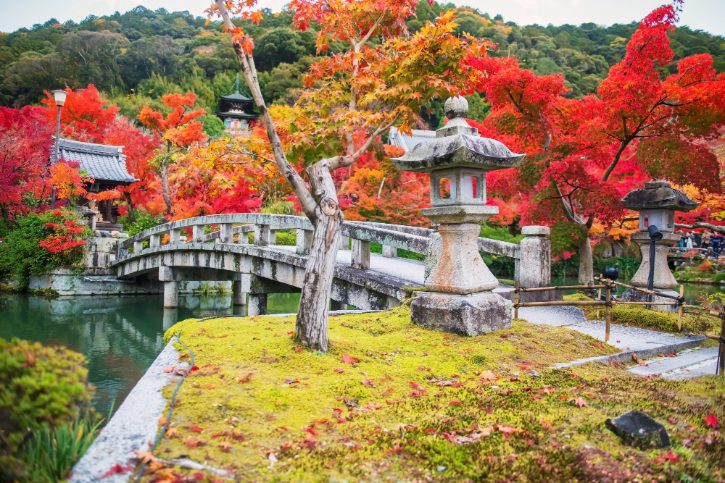
- Eikan-do is one of Kyoto’s most celebrated temples for autumn colors, but the appeal goes well beyond the leaves.
- The temple is built into a steep hillside, with wooden halls connected by covered, winding corridors that climb the mountainside.
What Makes It Special
- The Garyu-rokku (Dragon’s Back Corridor) curves upward like the scales of a sleeping dragon. Walking through it feels immersive and tactile.
- Hojo Pond sits at the base of the grounds, crossed by a stone bridge, while the Taho-to Pagoda on the hillside offers city views.
- Inside, look for the Mikaeri Amida, a 12th-century statue of the Amida Buddha with his head turned over his left shoulder, symbolizing compassion toward those who have fallen behind.
- During peak autumn, the temple holds evening illuminations where lit-up maples reflect on the pond surface.
Visitor Tips
- During peak foliage, expect large crowds.
- Visiting outside autumn is highly recommended. In spring and summer, the temple is calm enough to fully appreciate the architecture without seasonal pressure.
- Eikan-do is close to Nanzen-ji, so the two pair well together.
Best For
- Autumn travelers and couples who enjoy romantic temple scenery
- Visitors interested in hillside architecture and Buddhist art
5. Nanzen-ji Temple
Why Visit
- Nanzen-ji feels bigger and more spacious than most Kyoto temples.
- Originally an imperial villa from 1264, it rose to the highest rank in Kyoto’s Zen temple hierarchy.
What Makes It Special
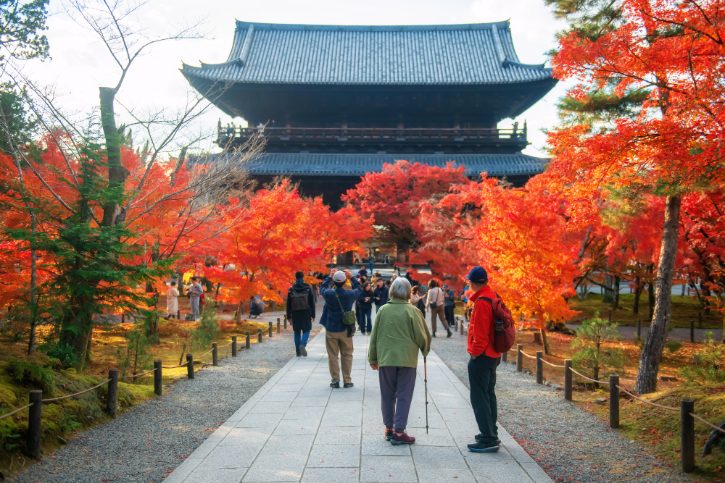
- The Sanmon Gate is a colossal two-story wooden structure. You can climb to the second-story balcony for a dramatic view of the forested grounds and the distant city.
- The Suirokaku Aqueduct, built in 1890, is a red-brick, Roman-style archway that carries water from Lake Biwa. Over the decades, the moss-covered brickwork has blended naturally with the ancient trees. It is the one thing that makes Nanzen-ji visually unlike any other temple in Kyoto.
- Several sub-temples like Nanzen-in, Konchi-in, and Tenju-an are also worth exploring.
Visitor Tips
- Nanzen-ji sits a short walk from Eikan-do and the Philosopher’s Path. You can combine all three in one eastern Kyoto route.
- The grounds have wide, flat paths through cedar groves, so the walking is comfortable.
Best For
- Architecture lovers and history enthusiasts
- Travelers who enjoy spacious, walkable temple complexes
6. Kodai-ji Temple
Why Visit
- Kodai-ji sits in the heart of Higashiyama, a short walk from Gion, Ninenzaka, Sannenzaka, and Kiyomizu-dera.
- It offers elegance and refinement without the overwhelming scale of Kyoto’s biggest temples.
What Makes It Special
- Founded in 1606 by Nene as a memorial for her late husband, Toyotomi Hideyoshi, who unified Japan.
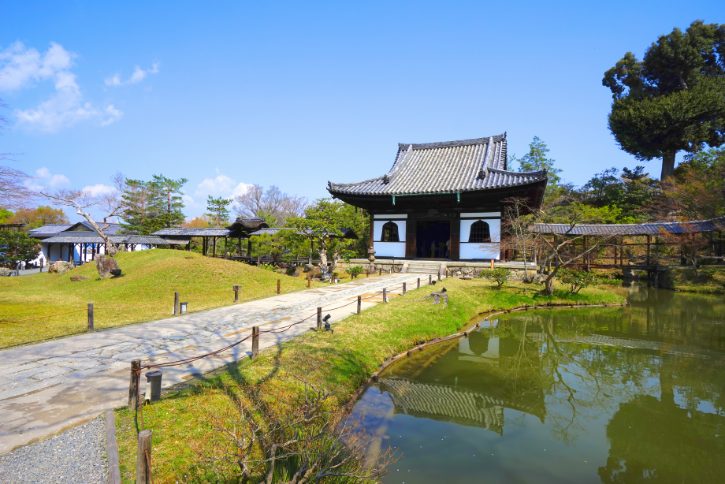
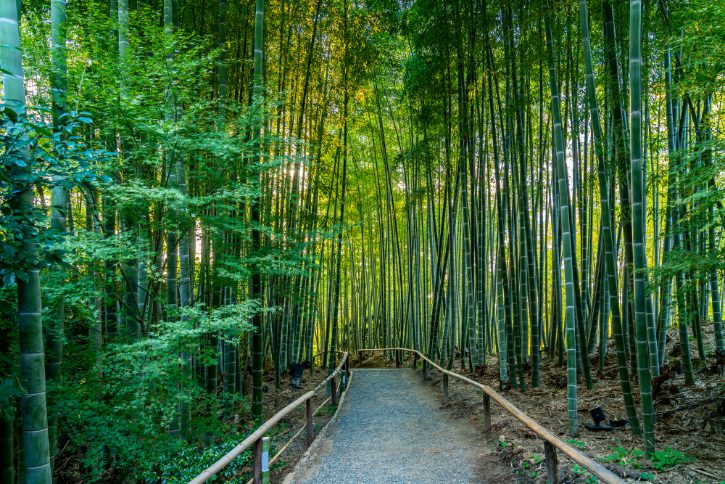
- The strolling pond garden by Kobori Enshu blends a dry landscape, maple groves, and a bamboo forest into one refined walking experience.
- Inside the mausoleum, look for Kodai-ji Makie, a lacquerware technique using gold and silver powder in wet lacquer. For contrast, the temple’s two teahouses by tea master Sen no Rikyu are beautifully rustic.
- Kodai-ji is known for creative seasonal night illuminations with modern art installations and light projections.
Visitor Tips
- Visit before or after walking the historic Higashiyama streets. It works well as a quieter cultural stop between more crowded attractions.
- Compared with nearby Kiyomizu-dera, Kodai-ji feels more intimate.
Best For
- Higashiyama visitors looking for a graceful temple near old streets
- Travelers interested in Momoyama-period art and elegant garden design
7. Kiyomizu-dera Temple
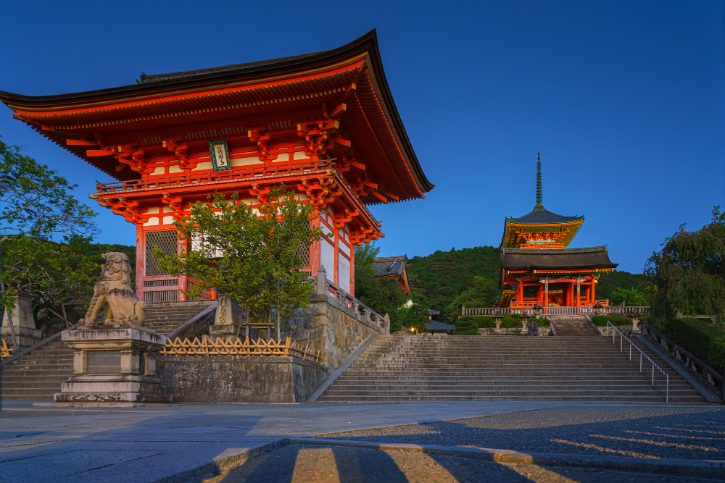
Why Visit
- Kiyomizu-dera is one of Kyoto’s most famous temples, perched on the slopes of Mount Otowa.
- Founded in 778 and dedicated to the Thousand-armed Kannon, it combines scenery, history, sacred rituals, and old Kyoto energy into one visit.
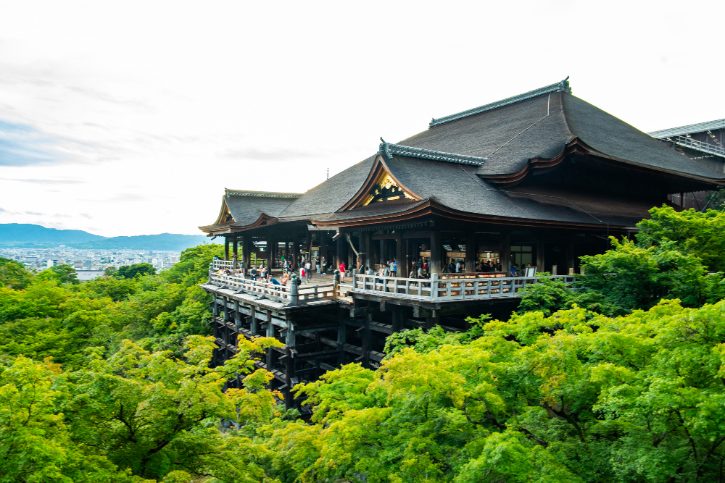
What Makes It Special
- The Hondo (Main Hall), rebuilt in 1633, extends over a steep cliff on a massive wooden stage built entirely without nails using traditional kigumi joinery.
- Below the stage, Otowa Waterfall channels water into three streams for health, longevity, and success.
- Zuigu-do Hall offers Tainai meguri, a pitch-black underground walk symbolizing spiritual rebirth.
- The approach through steep shopping streets like Matsubara-dori and the historic lanes of Sannenzaka and Ninenzaka makes the walk up part of the experience.
Visitor Tips
- Kiyomizu-dera is very popular and often crowded. Plan for it.
- Allow extra time for the surrounding streets. The combination of hillside views, sacred water, and lively merchant energy makes this a full-experience stop.
Best For
- First-time visitors who want a classic Kyoto temple experience
- Travelers who enjoy combining temples with old streets and shopping lanes
Read More: Top 17 Things to Do in Kyoto
8. Sanjusangen-do Temple
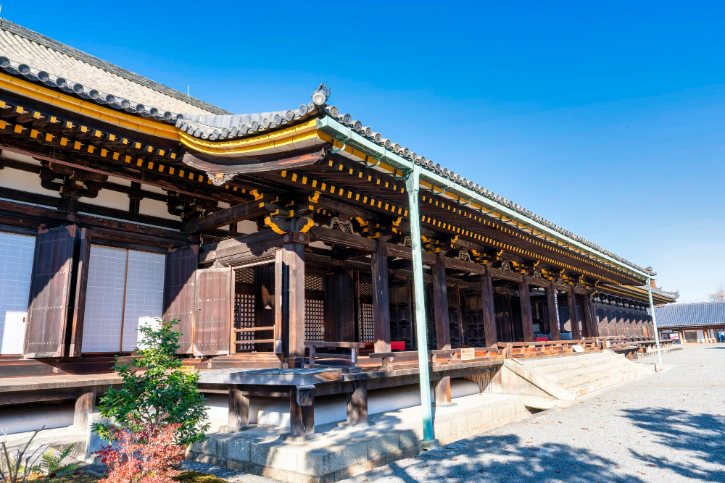
Why Visit
- Sanjusangen-do has no gardens, no ponds, and no mountain views. The entire experience happens inside a single 120-meter-long wooden hall, the longest wooden building in the world.
- If you want something beyond gardens and outdoor scenery, this is the temple to visit.
What Makes It Special
- At the center sits a monumental Thousand-armed Kannon carved by master sculptor Tankei at age 82.
- Flanking it are 1,001 life-sized standing Kannon statues in ten rows and fifty columns, each carved from gilded Japanese cypress with eleven heads and forty-two hands.
- In front of the rows stand 28 guardian deity sculptures and dramatic statues of Fujin (Wind God) and Raijin (Thunder God), all designated National Treasures.
Visitor Tips
- Photography is strictly prohibited inside the hall.
- You walk the hall slowly in socked feet. The repetition, golden glow, and sheer scale create a quiet emotional weight that is hard to describe until you are standing there.
Best For
- Culture lovers interested in Buddhist art and sculpture
- Travelers who want something completely different from garden temples
9. To-ji Temple
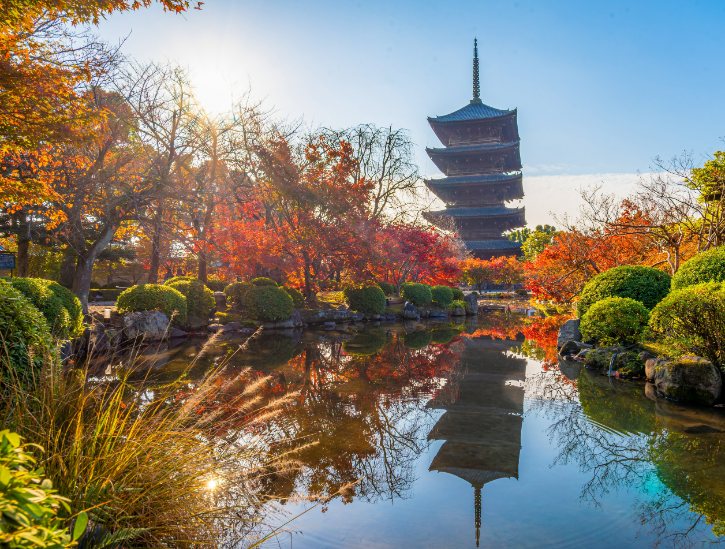
Why Visit
- To-ji’s five-story pagoda stands at 55 meters, the tallest historical wooden pagoda in Japan.
- Founded in 796 to protect the capital and later entrusted to Kobo Daishi (Kukai), the founder of Shingon Esoteric Buddhism.
What Makes It Special
- The Kodo (Lecture Hall) contains a “3D mandala” of twenty-one statues arranged to visually represent Shingon teachings. This is one of the most unusual displays in any Kyoto temple.
- On the 21st of every month, the grounds host the Kobo-san Flea Market with vendors selling textiles, ceramics, and street food.
- In spring, the Fujizakura, a 120-year-old weeping cherry tree, creates one of Kyoto’s most photogenic scenes against the pagoda.
Visitor Tips
- To-ji is a short walk south of Kyoto Station, making it a practical stop on an arrival or departure day.
- Do not just photograph the pagoda and leave. The Kodo’s statue mandala is well worth going inside for.
Best For
- Kyoto Station area visitors and travelers with limited time
- Pagoda lovers and anyone interested in esoteric Buddhist art
10. Tofuku-ji Temple
Why Visit
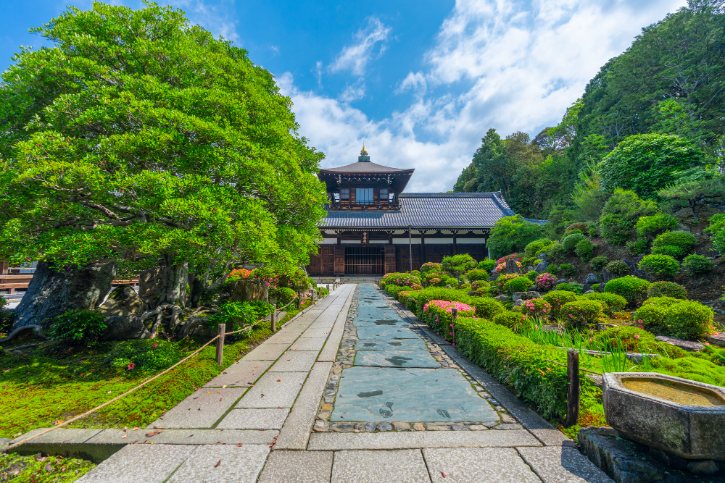
- Tofuku-ji is widely known for autumn leaves, but the Zen gardens and large grounds give it strong appeal year-round.
- It spans a deep ravine filled with maple trees, crossed by three famous wooden bridges.
What Makes It Special
- The Tsuten-kyo (Bridge Crossing Heaven) is a covered wooden walkway. During peak autumn, the maple leaves below turn crimson and gold, creating the effect of the bridge floating over a sea of red clouds. In spring and summer, the same view is a refreshing green canopy.
- The Hojo houses four Zen gardens designed in 1939 by modern landscape architect Mirei Shigemori, each occupying one direction around the building. These are not traditional Zen gardens. They are modern art expressed through landscape.
- Where Eikan-do draws autumn drama from hillside corridors and pond reflections, Tofuku-ji delivers it through bridge perspectives and ravine views.
Visitor Tips
- Tofuku-ji is just one stop from Kyoto Station on the JR Nara Line.
- It pairs well with nearby Fushimi Inari Taisha (a Shinto shrine, not a temple).
- Even outside autumn, the Shigemori gardens alone are a reason to visit.
Best For
- Autumn travelers who want dramatic bridge and ravine foliage
- Zen garden lovers interested in modern, abstract garden design