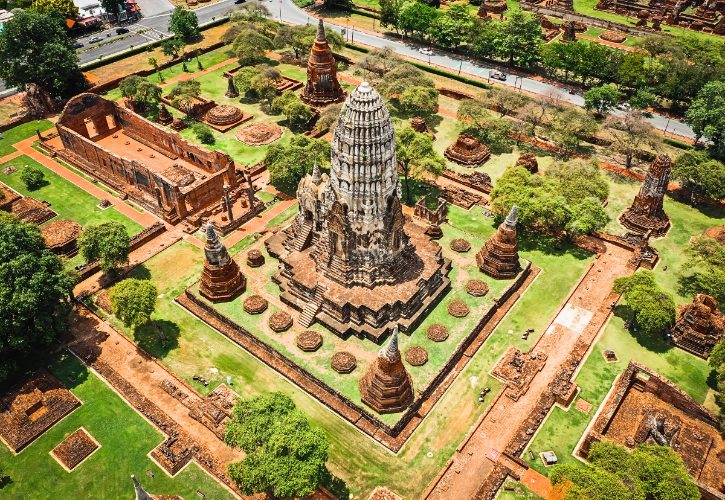
Less than two hours from Bangkok, Ayutthaya feels like a completely different world.
This was once the capital of Siam, a powerful city of royal temples, towering prangs, and riverside grandeur that lasted over 400 years.
Today, the ancient ruins, giant Buddha images, and quiet riverside views make it one of the most rewarding day trips you can take from the capital.
Here are 10 spots that make Ayutthaya absolutely worth visiting.
1. Wat Chaiwatthanaram
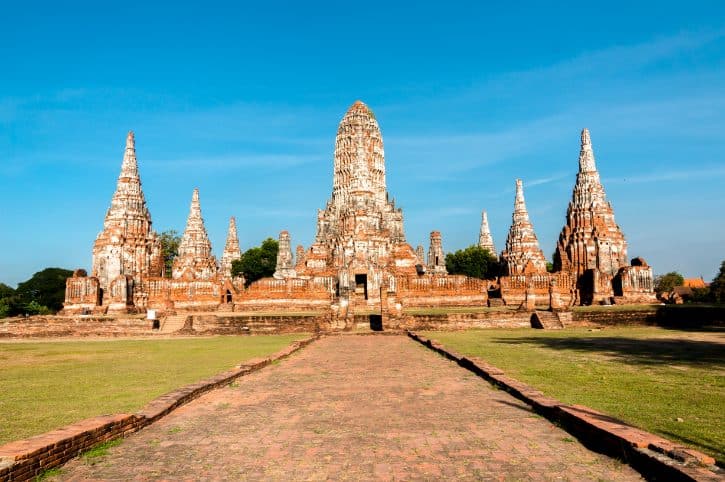
Wat Chaiwatthanaram is one of Ayutthaya’s most impressive temple ruins, sitting on the west bank of the Chao Phraya River.
What You Will See
- A massive 35-meter central prang surrounded by four smaller prangs at the cardinal directions, all sitting on a raised rectangular platform.
- Rows of weathered, headless Buddha statues along the remains of a gallery that once held 120 gilded sitting Buddhas.
- Eight chedi-shaped chapels with traces of stucco reliefs that once depicted scenes from the life of the Buddha.
History and Significance
- Built in 1630 by King Prasat Thong as a memorial to his mother.
- Designed in a Khmer-influenced style, which makes it visually different from most other Ayutthaya ruins.
- The layout represents Buddhist and Hindu cosmology, with the central prang symbolizing Mount Meru, the mythical center of the universe.
Why Visit
- One of Ayutthaya’s best spots for photography and sunset views. As the sun goes down, the red brick towers reflect in the river.
- The combination of scale, symmetry, and riverside setting makes this one of the most visually powerful temple experiences in the entire historical park.
2. Wat Lokayasutharam
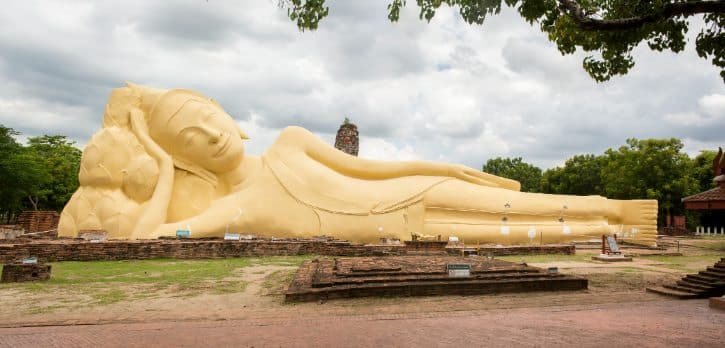
Wat Lokayasutharam is famous for its massive outdoor reclining Buddha, known as Phra Buddha Sai Yat.
What You Will See
- A reclining Buddha measuring 42 meters long and 8 meters high, the largest of its kind in Ayutthaya.
- The Buddha lies in the open air, resting his head on a lotus flower, shown in the posture of entering Nirvana.
- Behind the statue, the remains of a 30-meter central prang and 24 octagonal brick pillars from the original assembly hall that collapsed centuries ago.
Details Worth Noticing
- All of the Buddha’s toes are sculpted to be of equal length, a traditional artistic convention representing the perfection of an enlightened being.
- Locals and visitors offer incense, flowers, and gold leaf at a smaller replica altar in front of the main image.
Why Visit
- This stop gives you a different kind of experience compared to Ayutthaya’s tall prangs and larger temple complexes. It is quieter, simpler, and focused on a single powerful image.
- The reclining Buddha against the open sky is one of Ayutthaya’s strongest visual landmarks and adds welcome variety to your itinerary.
3. Wat Phra Si Sanphet
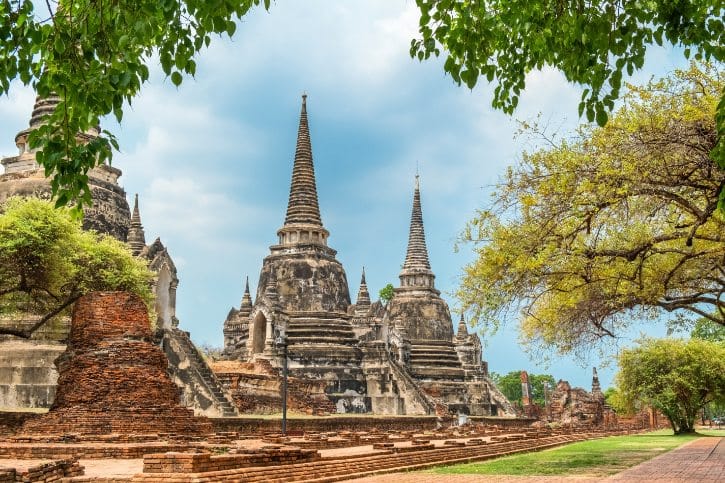
Wat Phra Si Sanphet was the most important temple in the Ayutthaya kingdom.
It served as the royal chapel inside the Grand Palace grounds, reserved exclusively for royal ceremonies.
What You Will See
- A row of three large, bell-shaped chedis built to hold the ashes of three Ayutthaya kings. These have become the iconic symbol of Ayutthaya province.
- The elevated platform where the chedis sit, surrounded by the remains of walls and foundations that once housed hundreds of Buddha statues.
- The massive foundations of the former royal assembly hall.
History and Significance
- The site was originally the residence of King U Thong when the city was founded. It was later converted into a sacred space.
- In 1500, a 16-meter standing Buddha covered in over 340 kilograms of gold was commissioned here. It was destroyed during the Burmese invasion of 1767.
Why Visit
- This temple is about royal heritage and political power, not everyday devotion. It shows you the ceremonial heart of the Siamese court.
- The three chedis are one of Ayutthaya’s most recognizable sights and among the strongest visual landmarks in the park.
4. Wihan Phra Mongkhon Bophit
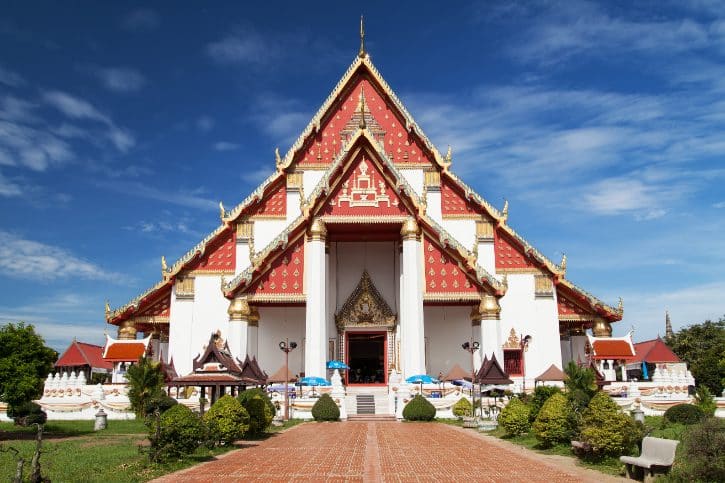
Directly next to Wat Phra Si Sanphet, Wihan Phra Mongkhon Bophit offers something most Ayutthaya stops do not: a living, active place of worship.
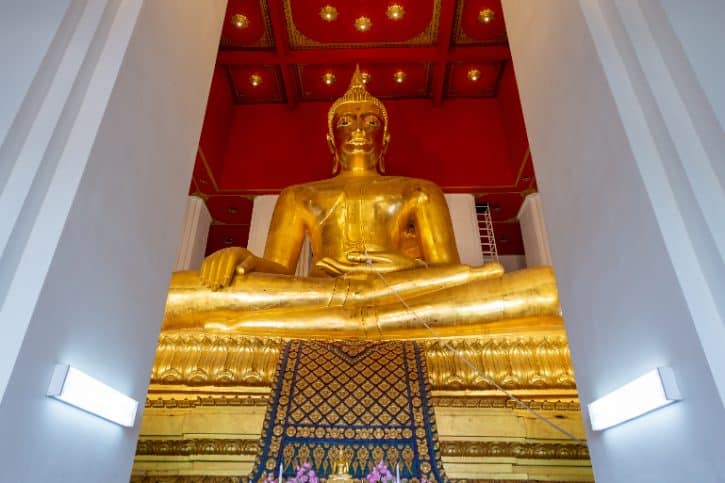
What You Will See
- One of Thailand’s largest bronze Buddha images, Phra Mongkhon Bophit, measuring approximately 12.5 meters in height and 9.5 meters across the lap.
- A restored hall filled with the scent of incense and the quiet sounds of locals paying their respects.
History and Significance
- Originally sculpted in 1538. Over the centuries, it survived lightning strikes, fires, and the 1767 invasion before being fully restored in the mid-20th century.
- During restoration in 1955, artisans discovered hundreds of small, ancient Buddha images hidden inside the left shoulder of the statue.
Why Visit
- After spending time among broken walls and headless statues, stepping into this hall is a meaningful shift. It reminds you that Ayutthaya’s religious traditions are still very much alive.
- This stop adds a calmer spiritual experience and a living religious element to an itinerary focused mostly on ruins.
5. Wat Phra Ram
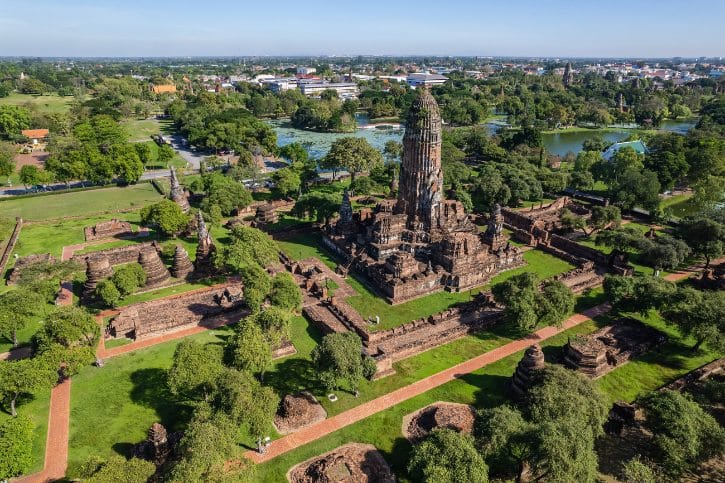
Wat Phra Ram is one of Ayutthaya’s quieter, more atmospheric temple ruins, located in the heart of the historical park beside a large lily-filled pond.
What You Will See
- A tall, slender central prang with traces of original stucco work, including figures of Garuda and walking Buddha images.
- Beautiful reflections of the prang in the surrounding pond, making it a favorite for landscape photography.
- Open green space and a calm, almost garden-like atmosphere.
History and Significance
- Built in 1369 by King Ramesuan on the cremation site of his father, King U Thong, the founder of Ayutthaya.
- The layout follows the Khmer concept of a Temple Mountain, symbolizing the center of the Buddhist universe.
- The pond once provided the earth used to build the foundations of the nearby Grand Palace.
Why Visit
- This is not the grandest temple on the list, but that is exactly the point. It gives you space to slow down and take in the landscape.
- Wat Phra Ram offers a peaceful break between the busier, grander sites and adds balance to your itinerary.
6. Wat Mahathat
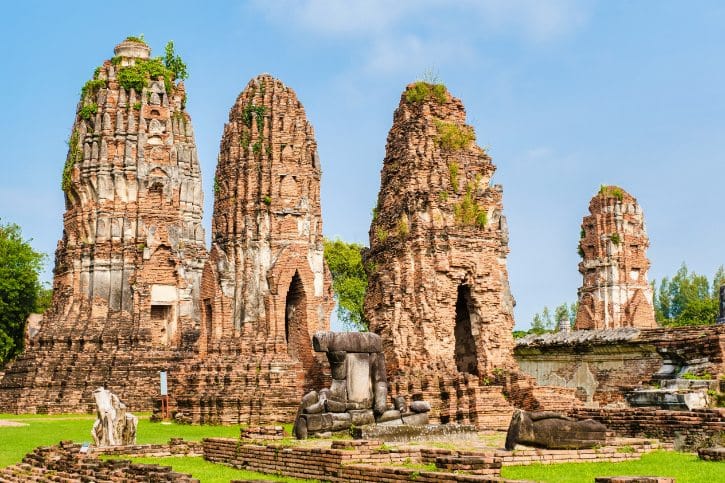
Wat Mahathat is one of Ayutthaya’s most famous and essential temple ruins.
The Famous Buddha Head
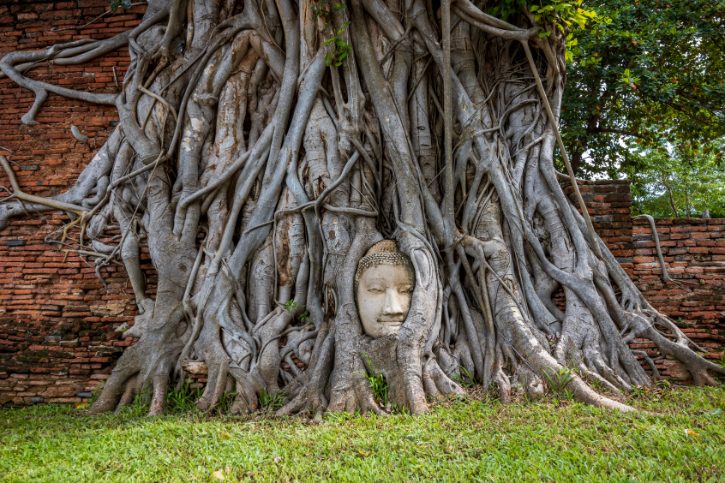
- The temple’s most iconic feature is a sandstone Buddha head entwined in the roots of a banyan tree.
- After the 1767 invasion, a fallen head was gradually embraced by the growing tree roots, which lifted the face upright in what looks like a protective, almost miraculous position.
- This is a deeply respected image. Visitors are reminded to keep their own heads lower than the Buddha’s when taking photographs.
Beyond the Tree
- Founded in 1374 by King Borommaracha I, the temple served as the seat of the Supreme Patriarch of Thai Buddhism.
- The original central prang once rose nearly 50 meters before collapsing in the early 20th century. A massive brick base still shows the scale of the original structure.
- Across the grounds you will find crumbling prangs, octagonal chedis, rows of headless stone Buddhas, and the remains of assembly and ordination halls.
Why Visit
- Wat Mahathat captures Ayutthaya’s beauty, history, sacredness, and sense of time in one place. The contrast between the serene Buddha head and the surrounding ruins is unforgettable.
- This is essential for understanding the cultural and spiritual heart of the ancient capital.
7. Wat Ratchaburana
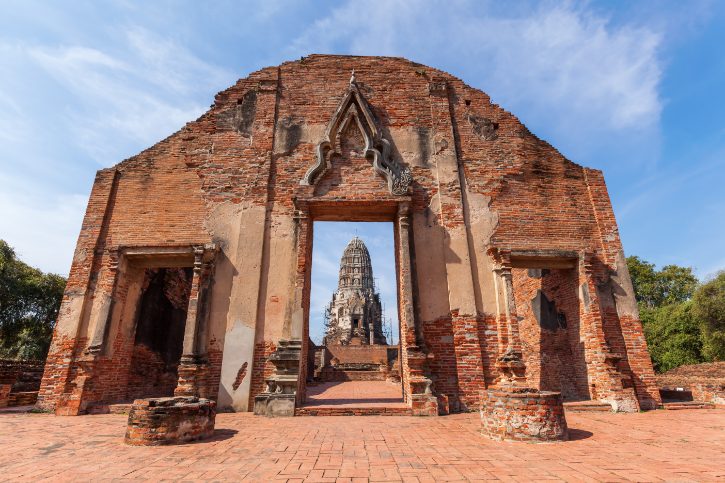
Directly across the road from Wat Mahathat, Wat Ratchaburana stands out for its dramatic architecture and compelling royal history.
What You Will See
- One of the finest and most well-preserved prangs in Ayutthaya, still featuring original stucco work depicting mythical creatures like Garudas and Nagas.
- A steep stairway inside the prang leading down into a two-level underground crypt with rare early Ayutthaya-period murals.
- The main assembly hall with massive standing walls that frame a clear view of the central prang from within.
History and Significance
- Founded in 1424 by King Borommarachathirat II on the cremation site of his two elder brothers, who died in a duel on elephant back while fighting for the throne.
- In 1957, a treasure trove of over 100 kilograms of gold artifacts, jewelry, and more than 100,000 votive tablets was discovered inside the crypt.
Why Visit
- Compared to neighboring Wat Mahathat, this site feels more vertical, more architectural, and more layered in its details.
- The chance to descend into the crypt and see the height and detail of the prang makes Wat Ratchaburana a standout stop in the park.
8. Wat Phanan Choeng
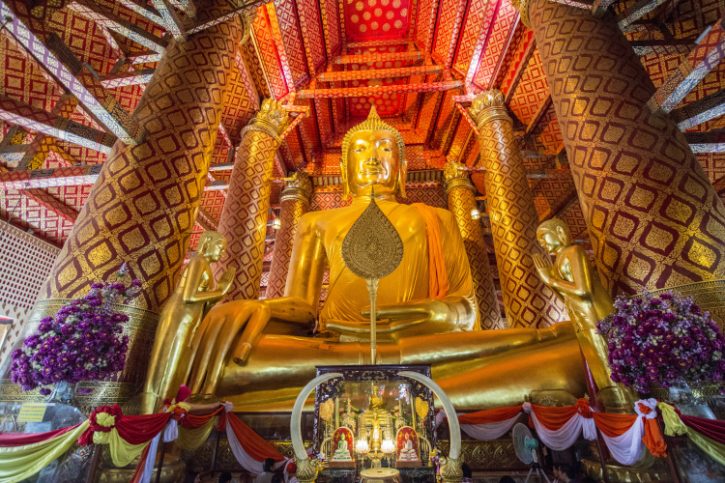
Wat Phanan Choeng is a powerful reminder that Ayutthaya is not just about ancient ruins.
This is an active, thriving temple with records tracing it back to 1324, predating the founding of the city itself.
What You Will See
- Luang Pho Tho, an enormous 19-meter-high seated Buddha that barely fits inside the tall-roofed hall, stretching 14 meters across the lap.
- A dedicated Chinese-style shrine within the complex, decorated with traditional dragon and phoenix designs.
- Active worship filled with chanting, the scent of candles, and devotees receiving blessings.
Cultural Importance
- The temple sits at the confluence of the Chao Phraya and Pa Sak rivers and remains a major pilgrimage site for both Thai and Chinese communities.
- The Ming Admiral Zheng He visited the temple in 1407 during his second imperial voyage.
- During certain ceremonies, large orange robes are draped from the Buddha’s shoulder over worshippers below.
Why Visit
- The energy here is completely different from the quiet ruins inside the historical park. It is vibrant, spiritual, and deeply local.
- This stop helps you see Ayutthaya as a living religious city, not only a place of crumbling walls and ancient statues.
9. Ayothaya Floating Market
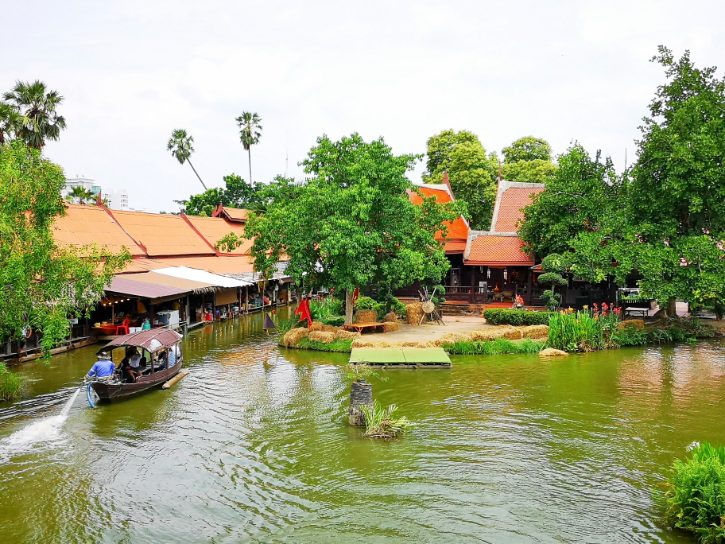
After a day of exploring temple ruins, the Ayothaya Floating Market gives you something completely different: food, color, and a lighter pace.
What to Expect
- This is not an ancient ruin. It is a modern, tourist-friendly market designed to recreate the atmosphere of the traditional canal-side markets that once lined Ayutthaya’s waterways.
- Wooden walkways wind past traditional-style houses along a staged canal, with a relaxed, nostalgic feel.
Food, Shopping, and Activities
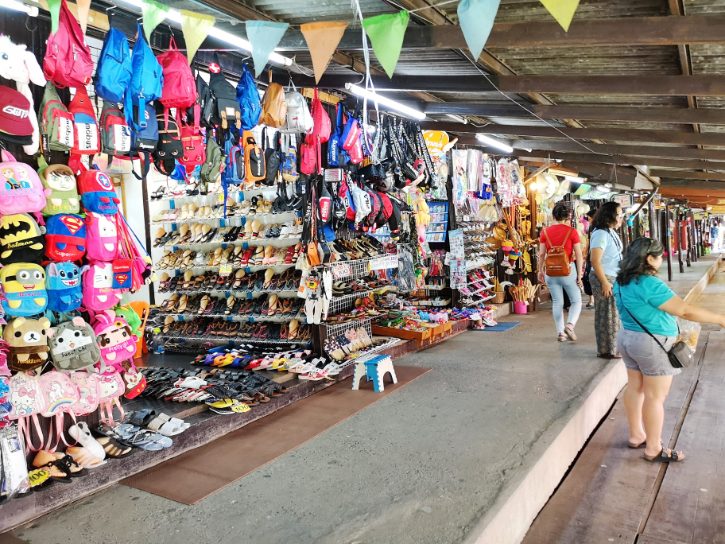
- Vendors sell fresh fruits, boat noodles, papaya salad, grilled seafood, and a wide range of Thai snacks. Some vendors paddle small boats through the canal while serving.
- Wooden stalls offer handmade Thai textiles, wood carvings, and accessories.
- You can take a leisurely boat ride around the market and see the stalls from the water.
- The market hosts cultural performances including traditional Thai music, dance, and Muay Thai demonstrations throughout the day.
Why Visit
- Be honest with your expectations. This is more of a tourist-oriented experience than a deep historical site. But after hours of walking through ruins, it is a welcome change of pace.
- Ayothaya Floating Market gives you food, color, and a relaxed cultural stop to round out your Ayutthaya visit.
10. Bang Pa-In Royal Palace
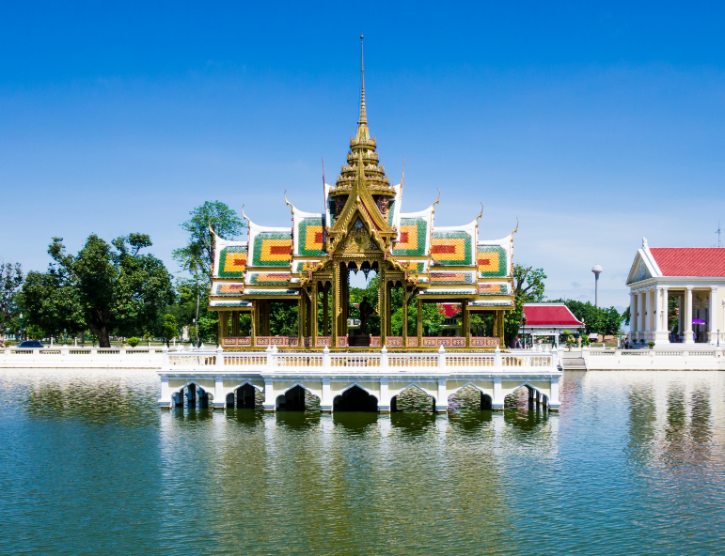
Bang Pa-In Royal Palace is a former summer palace of the Thai kings, located about 20 kilometers south of the main Ayutthaya Historical Park along the Chao Phraya River.
It is a completely different experience from the ancient temple ruins, offering manicured gardens, elegant architecture, and a peaceful riverside setting.
What You Will See
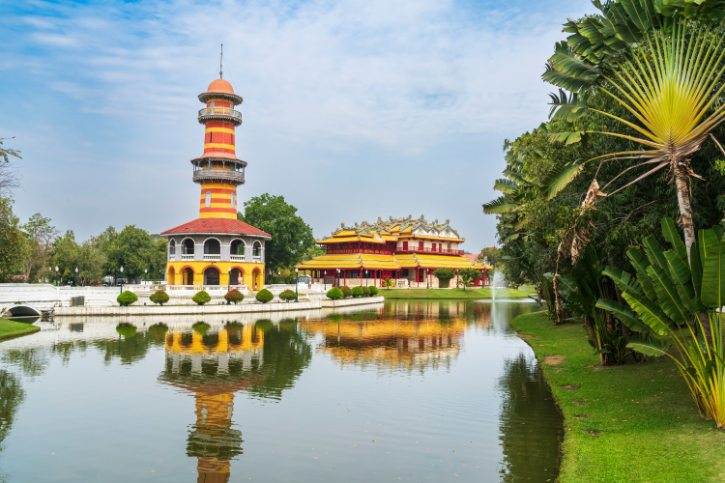
- A large palace complex spread across roughly 50 acres, featuring royal buildings, ornamental ponds, landscaped gardens, and tree-lined walkways.
- Aisawan Thiphya-Art, a Thai-style pavilion set in the middle of an ornamental pond. It is the most photographed spot in the complex.
- Wehart Chamrun, a Chinese-style throne hall with intricate decorative tiles. It is one of the few buildings open for interior viewing.
- Warophat Phiman, a European neo-classical palace that is still used by the royal family for occasional ceremonies.
- Ho Withun Thasana, a colorful lookout tower rising about 30 meters above the grounds.
History and Significance
- Originally constructed in 1632 by King Prasat Thong during the Ayutthaya period. The palace fell into disuse after the fall of Ayutthaya in 1767.
- Most of the buildings seen today were built between 1872 and 1889 by King Chulalongkorn (Rama V), who restored and expanded the complex as a royal summer residence.
- The architecture reflects King Chulalongkorn’s international outlook, blending Thai, Chinese, and European styles across different buildings within the same grounds.
Why Visit
- Bang Pa-In gives you a side of Ayutthaya’s royal history that the temple ruins cannot. The well-maintained grounds, mix of architectural styles, and calm riverside atmosphere make it feel like a world apart.
- It pairs well with the historical park as a contrast stop, showing how Thai royal architecture evolved from the ancient Ayutthaya period to the more modern Rattanakosin era.
How to Get from Bangkok to Ayutthaya
The easiest way to visit Ayutthaya from Bangkok is to join a guided group tour or book a private car with a driver.
Both options handle the transport, routing, and logistics for you, so you can focus on the temples and sights without worrying about navigation or parking.
You can easily book from the options below.
Guided Group Tours from Bangkok
- From Bangkok: Ayutthaya & Ayothaya Floating Market Day Trip
- From Bangkok: Ayutthaya Historical Park Guided Day Trip
- From Bangkok: Ayutthaya Temples Guided Tour with Lunch
Private Car Charters from Bangkok
- From Bangkok: 8, 10, or 12-Hour Ayutthaya Private Charter
- From Bangkok: Ayutthaya Full-Day Trip with Driver