France is so much more than Paris. Once you leave the capital, you will find towering cliffs, turquoise canyons, fairy-tale villages, medieval fortresses, and mountain scenery that takes your breath away.
From the tidal island of Mont Saint-Michel to the sun-warmed streets of Menton on the Italian border, every corner of this country tells a different story.
Here are the 10 most beautiful places in France you need to see at least once. 😊
1. Mont Saint-Michel, Normandy
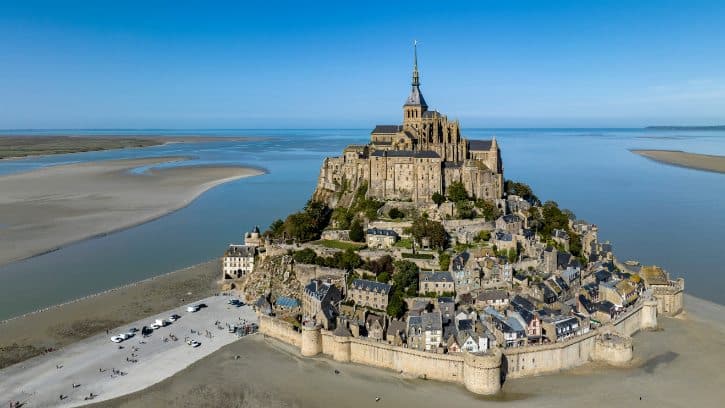
A medieval abbey sitting on top of a rocky island, surrounded by the most dramatic tides in continental Europe.
When the tide comes in, the mount looks like it is floating on the sea. It has been a UNESCO World Heritage site since 1979.
Why It Feels Special
- The tides can pull back as far as 15 kilometers before rushing in again, completely changing the landscape around the island
- The 13th-century Gothic complex known as “The Marvel” includes a cloister that sits between the sky and the sea
- Narrow stone lanes climb through the village to the abbey at the top
What to See
- The abbey, cloister, and refectory inside The Marvel
- The 14th-century ramparts with views over the bay
- The Grand Rue, the main village street lined with old shops
Travel Tips
- Arrive early or late in the day to avoid heavy crowds on the Grand Rue
- Guided bay crossings are available but require a certified guide because of quicksand
- Staying overnight is worth it for the quiet atmosphere after the day-trip crowds leave
- Try the local salt-meadow lamb, a specialty unique to this area
2. Étretat, Normandy
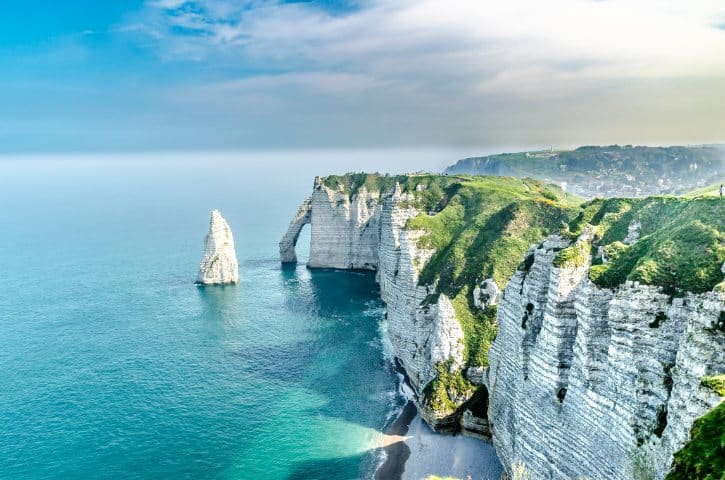
A small coastal town famous for its towering white chalk cliffs and dramatic natural arches.
This is the scenery that inspired Monet, Courbet, and other Impressionist painters.
Why It Feels Special
- Three massive natural arches (Porte d’Amont, Porte d’Aval, and Manneporte) frame the coastline
- The Aiguille, a 70-meter needle of rock, rises straight out of the water
- The views from the cliff tops are completely different from what you see at beach level
What to See
- The Porte d’Aval and the Aiguille, the most iconic landmarks
- Jardins d’Étretat, cliff-top gardens with sculptures and panoramic views
- The GR21 hiking trail along the coast for wider views beyond the town
Travel Tips
- Visit in spring (May/June) or autumn (September/October) to avoid summer crowds
- Stay on marked cliff paths as the chalk edges can be slippery
- Electric bike rentals and shuttles are available for exploring without driving
- Allow at least half a day for both cliff-top walks and the beach
3. Château de Chenonceau, Loire Valley
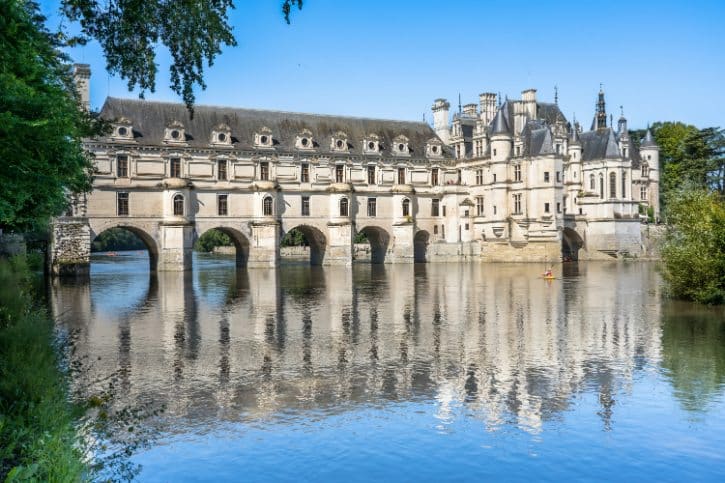
Often called the most beautiful castle in France, Chenonceau stretches directly across the River Cher on a series of graceful arches.
Its reflection on the water is one of the most photographed scenes in the Loire Valley.
Why It Feels Special
- Known as the “Château des Dames” because it was shaped by remarkable women across centuries
- Diane de Poitiers built the bridge over the river, and Catherine de’ Medici added the famous two-story gallery on top
- Fresh flowers are arranged throughout the rooms, maintained by an on-site floral workshop
What to See
- The two-story gallery stretching over the River Cher
- The gardens of Diane de Poitiers and Catherine de’ Medici
- Art collections featuring works by Rubens, Tintoretto, and Veronese
- A hedge maze made of 2,000 yew trees
Travel Tips
- Arrive when the château opens to beat the tour groups
- Summer night walks through the illuminated gardens are a highlight
- Pairs well with nearby Loire Valley castles like Chambord and Amboise
- Allow 2 to 3 hours for the château, gardens, and grounds
4. Colmar, Alsace
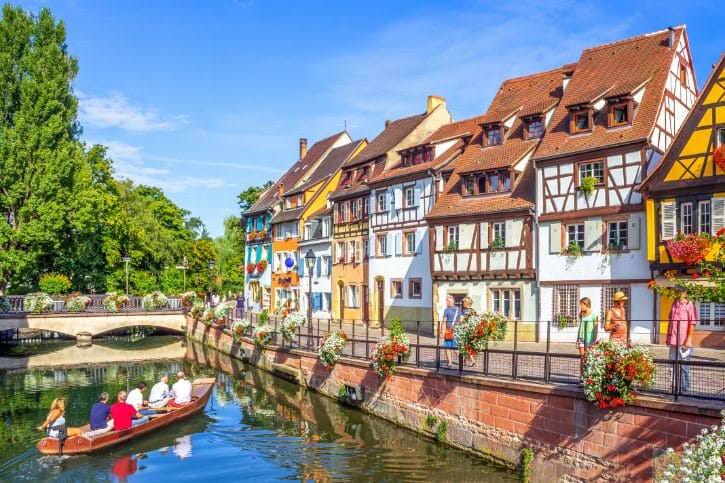
One of the most picturesque towns in France, with colorful half-timbered houses, quiet canals, and cobbled streets that feel like a storybook.
Why It Feels Special
- Little Venice (La Petite Venise) is one of the most photographed spots in France, with pastel houses reflected in the Lauch River
- The Maison des Têtes has 111 small stone faces carved into its facade
- Colmar blends French and Germanic traditions in its architecture, food, and culture
What to See
- Little Venice and the canal area
- Maison des Têtes and Maison Pfister, two stunning historic buildings
- Unterlinden Museum, home to the Isenheim Altarpiece
- Traditional winstubs (wine taverns) serving flammekueche and local wines
Travel Tips
- The old town is very walkable, and you can see the highlights in a few hours
- An overnight stay lets you enjoy the town after the day-trip crowds leave
- Christmas markets (late November through December) transform Colmar into a magical winter scene
- Nearby villages like Eguisheim, Riquewihr, and Kaysersberg make great add-ons along the Alsace Wine Route
5. Chamonix-Mont-Blanc, French Alps
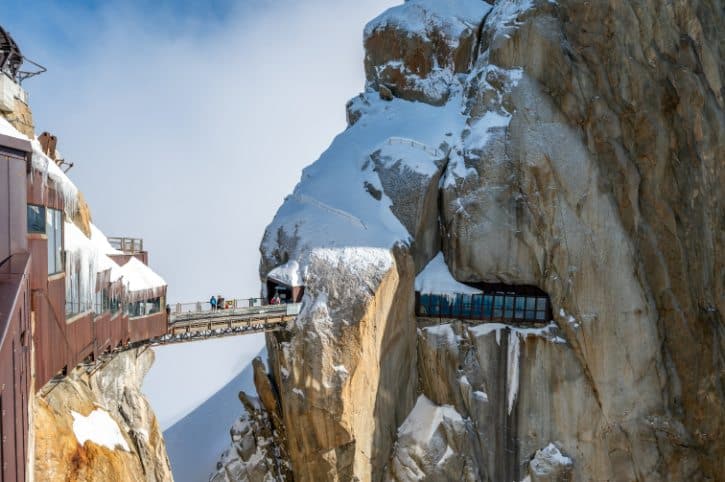
Chamonix sits at the foot of Mont Blanc, the highest peak in Western Europe.
Glaciers, jagged peaks, and deep valleys surround the town, and the scale of the mountains here is something photos cannot capture.
Why It Feels Special
- The Aiguille du Midi cable car climbs nearly 2,800 vertical meters in 20 minutes to reach 3,842 meters
- “Step into the Void” is a glass box suspended over a 1,000-meter drop at the summit
- The Mer de Glace (Sea of Ice) is France’s longest glacier, reached by a charming cog railway
What to See
- Aiguille du Midi summit with 360-degree views of the French, Swiss, and Italian Alps
- Mer de Glace glacier and the Glaciorium exhibition on climate change
- The Mont Blanc massif panorama from various viewpoints around the valley
Travel Tips
- Dress warmly even in summer, as the summit is much colder than the town
- Children under three are not allowed on the cable car
- Check weather and lift conditions before planning mountain activities
- Summer is best for hiking and sightseeing, while winter is world-class for skiing
- Plan at least one full day, ideally two
6. Annecy, French Alps
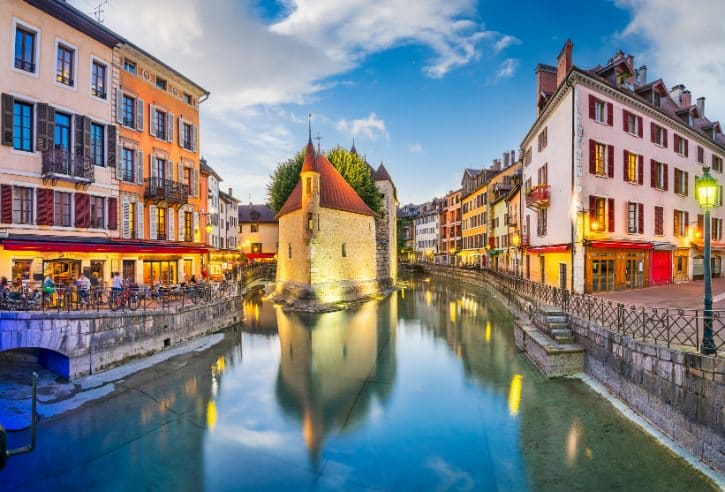
Often called the “Venice of the Alps”, Annecy combines a fairy-tale old town with one of Europe’s cleanest lakes, all backed by the French Alps.
Why It Feels Special
- Lake Annecy has stunning turquoise water surrounded by mountains on every side
- The Palais de l’Île, a stone building sitting in the middle of a canal, is one of the most recognizable landmarks in France
- The Voie Verte (Greenway) cycling path follows the lakeshore with views of the water and lakeside châteaux
What to See
- Lake Annecy by foot, bike, boat cruise, or kayak
- The Old Town (Vieille Ville) with its canals, bridges, and pastel facades
- Palais de l’Île, the iconic island building
- Château de Menthon-Saint-Bernard along the lakeside path
Travel Tips
- Works as a day trip, but an overnight stay lets you enjoy the lake in the morning and the old town in the evening
- The Semnoz plateau above town offers some of the best panoramic views
- Summer is popular for swimming and water sports, while spring and autumn are quieter
- The International Animation Film Festival takes place every June
7. Menton, French Riviera
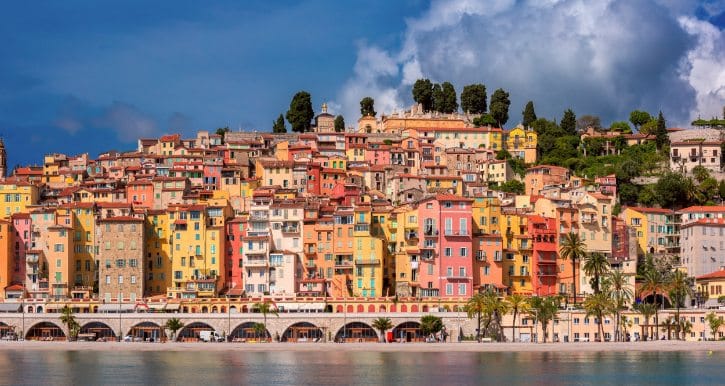
Menton sits right on the Italian border and feels completely different from Nice, Cannes, or Monaco.
It is quieter, warmer, and more relaxed, with a colorful old town and a famous lemon culture.
Why It Feels Special
- Pastel buildings in peach, yellow, and terracotta stack up the hillside above the sea
- Menton enjoys the warmest microclimate on the French Riviera
- The Fête du Citron (Lemon Festival) every February fills the town with enormous sculptures made from thousands of lemons and oranges
What to See
- The colorful old town climbing the hillside
- Plage des Sablettes for the classic waterfront view
- Basilica of Saint-Michel, a beautiful Baroque church
- Old Château cemetery viewpoint with panoramic bay views
Travel Tips
- Comfortable walking shoes are essential because the old town has a lot of stairs
- Half a day is enough for a quick visit, but a full day lets you explore at a relaxed pace
- Spring and early autumn offer pleasant weather without heavy crowds
- Ideal for travelers who want the Riviera experience without the intensity of the bigger resort towns
8. Gorges du Verdon, Provence-Alpes-Côte d’Azur
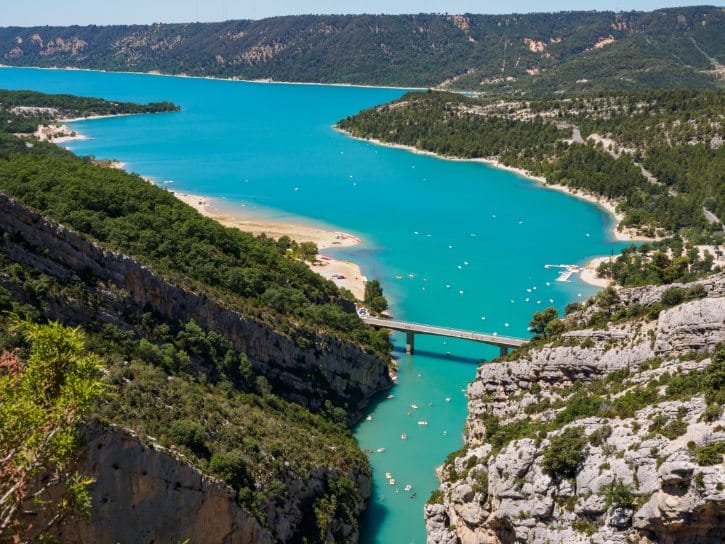
The most spectacular canyon in Europe. Massive limestone cliffs drop hundreds of meters into a gorge filled with vivid turquoise water. This is France at its most wild and natural.
Why It Feels Special
- The canyon looks nothing like the rest of France, with raw, dramatic landscape instead of castles and cobbled streets
- Lake Sainte-Croix at the mouth of the canyon has striking turquoise water from its mineral content
- The village of Moustiers-Sainte-Marie, perched between two cliffs with a golden star on a chain, is one of the most charming villages in Provence
What to See
- Point Sublime and the Route des Crêtes (D23) for the best viewpoints from above
- Corniche Sublime, a scenic drive along the south rim
- Lake Sainte-Croix for kayaking, swimming, and electric boating
- Blanc-Martel trail, a 14-kilometer hike through the canyon floor with tunnels and staircases
Travel Tips
- May, June, and September are the best months to visit, as summer brings heat and heavy traffic on the narrow roads
- Kayaking from Lake Sainte-Croix is easy enough for beginners
- The Blanc-Martel hike is for intermediate hikers and takes five to seven hours
- Canyoning is available for advanced adventurers with a certified guide
- Families can enjoy the lake and scenic
9. The Palais des Papes, Avignon
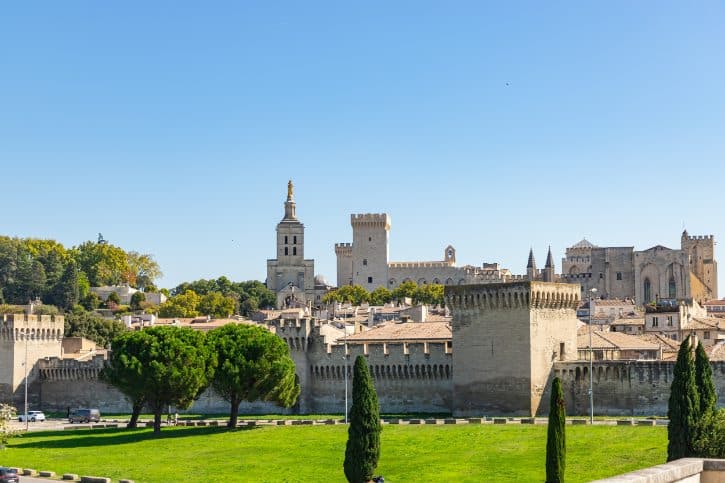
The largest Gothic palace in the world, built as the seat of papal power in the 14th century.
From the outside it looks more like a fortress than a church, with thick walls and ten massive towers dominating the Avignon skyline.
Why It Feels Special
- The popes lived, ruled, and held major gatherings in Christendom within these walls
- The private papal apartments contain frescoes by Italian painter Matteo Giovannetti
- Today it is also the heart of the Avignon Festival, one of the world’s leading theater festivals
What to See
- The ceremonial halls and towers of the Old and New Palace
- Giovannetti’s frescoes in the papal private apartments
- The Cour d’Honneur, an open-air theater in summer
- The recently restored Papal Gardens
- Pont d’Avignon, a short walk from the palace
Travel Tips
- Allow around 1.5 to 2 hours for a visit inside the palace
- The “Keys to the Palace” web app provides interactive maps and historical context on your phone
- Best for history lovers, architecture fans, and travelers who want to understand why a place matters
- The Avignon Festival runs in July, making the city lively but more crowded
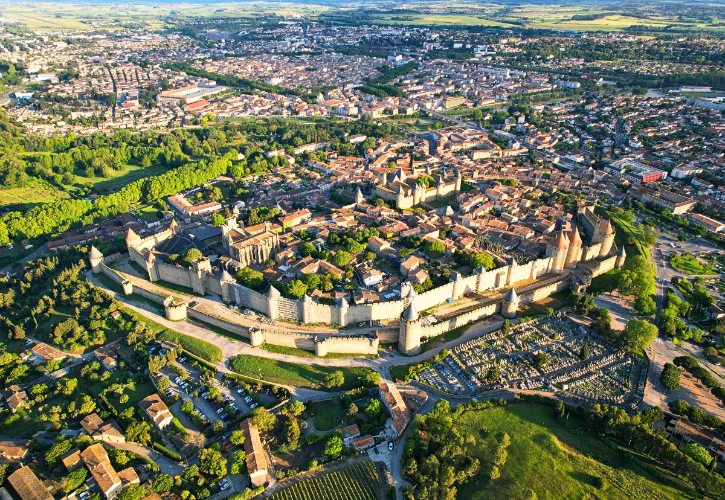
10. Carcassonne, Occitanie
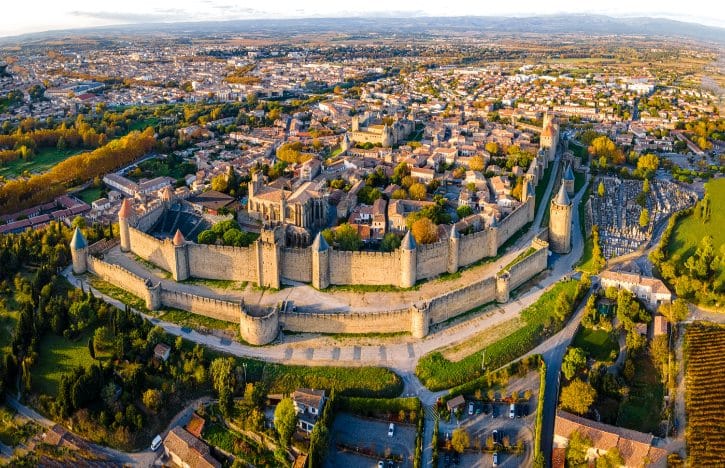
The largest intact fortified medieval city in Europe, with double walls, 52 towers, and narrow streets sitting on a hilltop above the Aude Valley.
A UNESCO World Heritage site that feels like stepping into another century.
Why It Feels Special
- The fortress holds layers of history from Gallo-Roman, Visigothic, and medieval periods
- Architect Eugène Viollet-le-Duc saved the city from demolition in the 19th century and gave it the pointed towers that define its silhouette today
- Walking the Lices (the space between the two concentric walls) shows the true scale of the defenses
What to See
- The Lices between the inner and outer walls
- Château Comtal, with its museum and upper rampart access
- Narbonnaise Gate, the fortified main entrance with drawbridge and portcullis
- Basilica of Saint-Nazaire, with beautiful stained glass and Romanesque stonework
- Views from the west ramparts over the Bastide and the valley
Travel Tips
- The classic photograph of the entire Cité comes from the Pont Vieux (Old Bridge)
- Consider staying overnight inside the walls for a completely different atmosphere after dark
- Bastille Day (July 14th) features world-famous fireworks over the fortress
- Allow at least half a day to walk the walls, explore the castle, and wander the streets