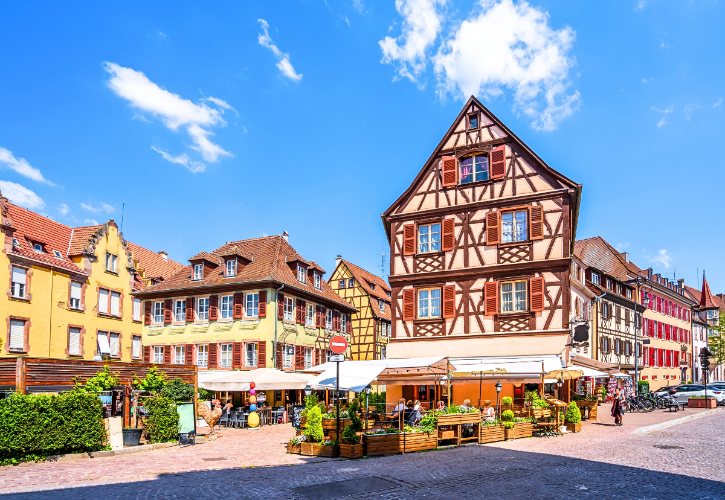
Everyone rushes to the same famous corners of France.
But there’s one town in the northeast that still feels like it belongs in a fairytale.
Picture this: a canal so still it mirrors the sky. Half-timbered houses in mint green, pale peach, and deep crimson. Geraniums and petunias tumbling from the balconies. Streets that smell of damp stone and wood-fired ovens.
This isn’t a painting. It’s real. And it’s surprisingly easy to reach.
Welcome to Colmar.
In this guide, you’ll find everything you need: the best streets and landmarks, what to eat, when to visit, how to get there, and day trips worth taking.
1. Why Colmar Feels Like a Real-Life Fairytale
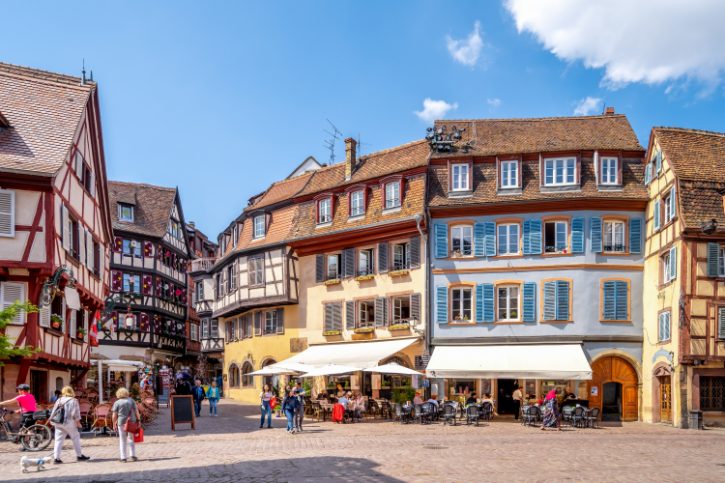
Colmar sits in northeastern France, in the Alsace region. It’s tucked between the Vosges Mountains and the Rhine River, right beside Germany and close to Switzerland.
That geography explains a lot about this town.
Colmar has long been a crossroads. Its architecture blends French elegance with Germanic charm. The result is a style that feels unique, as if borders have blurred into something beautiful.
But what really sets Colmar apart is how well-preserved it is.
The historic center still looks much like it did centuries ago. Medieval and Renaissance-era streetscapes shape everyday life here. It’s not a museum.
It’s a living town where beauty is simply part of the daily rhythm: canal walks, market errands, café tables pulled into the sun.
Alsace’s broader identity adds another layer. You’ll notice it in the cuisine, the wine traditions, the place names, and the architectural details. Everything feels both French and Rhineland at once.
2. Wander the Storybook Streets of Colmar’s Old Town
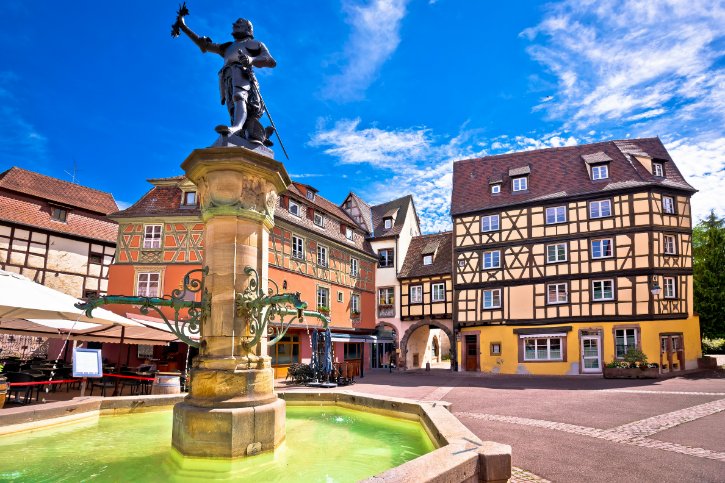
Colmar’s old town is compact and wonderfully walkable.
The best way to experience it is slowly. Forget the “sightseeing march”. This is a place for strolling.
Let the details do the talking: carved beams, painted facades, oriel windows, tiled roofs, and corners that suddenly open onto water.
Two areas deserve a place on any first walk:
- Rue des Marchands is one of the town’s medieval-era main streets. Even if you don’t know the architecture terms, you’ll recognize the feeling. It’s a street designed at human scale, where every house seems to have its own personality.
- Place de l’Ancienne Douane is a square that naturally gathers people, especially when the light starts to soften and the town seems to glow. The historic customs house stands beside it, along with a landmark fountain by Colmar-born sculptor Bartholdi.
Here’s a simple plan: choose a direction, walk until you hear water, then follow it. In Colmar, canals and streets are part of the same choreography.
3. Discover Little Venice (La Petite Venise)
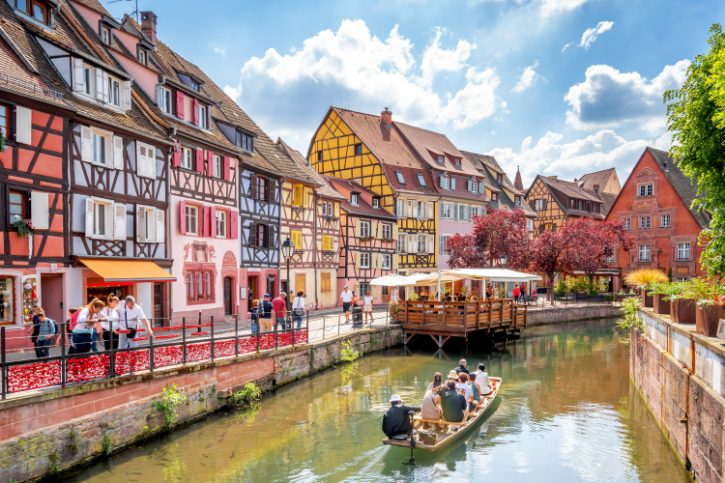
If there’s one neighborhood that captures Colmar’s magic, it’s La Petite Venise.
Located in the Krutenau district, Little Venice was historically home to tanners, wine producers, and boatmen. The Lauch River winds through a corridor of half-timbered houses painted in pink, blue, and yellow.
The name comes from how the buildings line both sides of the water, creating a scene that echoes Venice’s canals. But the style here is distinctly Alsatian.
This is one of the most photographed spots in France. The still water creates perfect reflections of the colorful facades and flower-filled balconies hanging over the riverbank.
Here’s the best way to experience it: take a boat ride.
Traditional flat-bottomed barques offer a peaceful 25-minute journey along the canal. These boats were originally used by market gardeners to deliver produce directly to the covered market.
From the water, you’ll drift past the Quartier des Tanneurs and under small stone bridges. You’ll see hidden gardens and architectural details invisible from street level.
It’s worth every minute.
4. The Most Beautiful Places to See in Colmar
Colmar’s landmarks aren’t frozen relics. They’re living pieces of the town’s story. Each one opens a window into a different era.
a. Maison Pfister
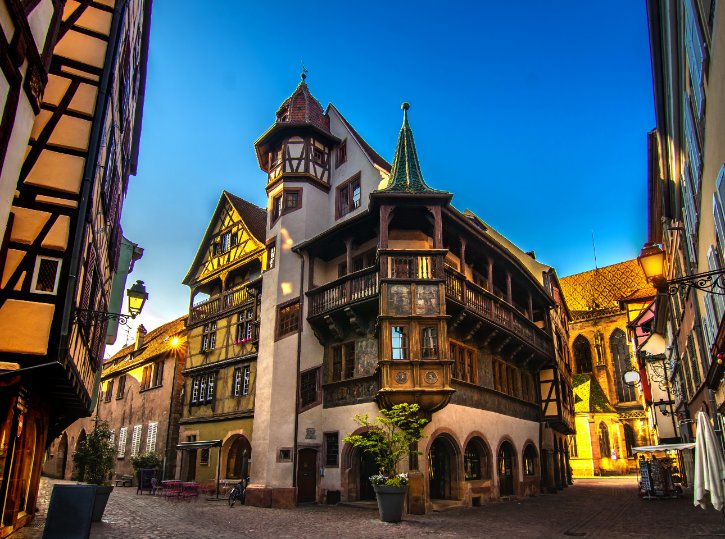
Built in 1537 for a wealthy hatmaker, Maison Pfister is considered the finest Renaissance building in Colmar.
It keeps some medieval elements, like a stone ground floor and half-timbering. But its two-story corner oriel, octagonal turret, and wooden gallery mark it as a symbol of 16th-century prosperity.
The facade features mural paintings of biblical scenes and German emperors. It’s a beautiful snapshot of the artistic trends of its time.
b. Koïfhus (Old Customs House)
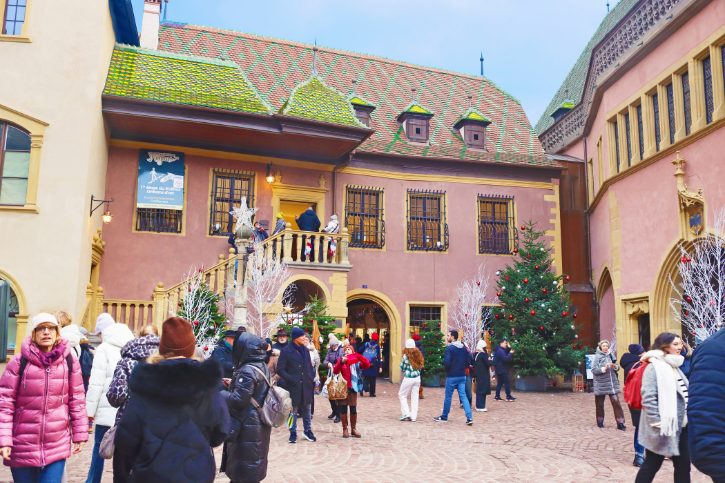
Finished in 1480, the Koïfhus is Colmar’s oldest public building.
Its location at the junction of Rue des Marchands and Grand’Rue made it ideal for taxing imported and exported goods. The ground floor handled commerce. The upper floor hosted meetings of the Décapole, an alliance of ten Alsatian cities.
Look up at the roof. Those glazed, colorful tiles are a signature of the region’s architecture.
c. St Martin’s Church
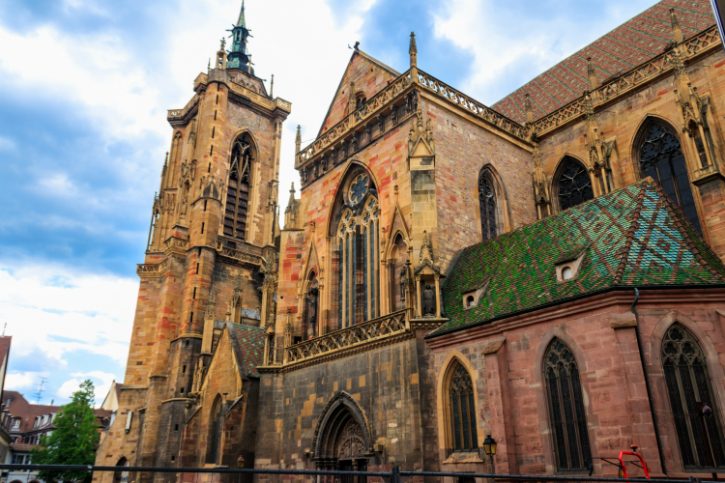
Often called the “Cathedral of Colmar”, St Martin’s is a Gothic masterpiece built between 1235 and 1365.
The church is made from Vosges sandstone, which gives it a warm hue that shifts with the sunlight. The Renaissance bell tower, added in 1575 after a fire, defines the Colmar skyline.
Inside, don’t miss the 13th-century head of Christ (unusually depicted without a beard) and the ornate Baroque organ case from 1755.
d. Unterlinden Museum
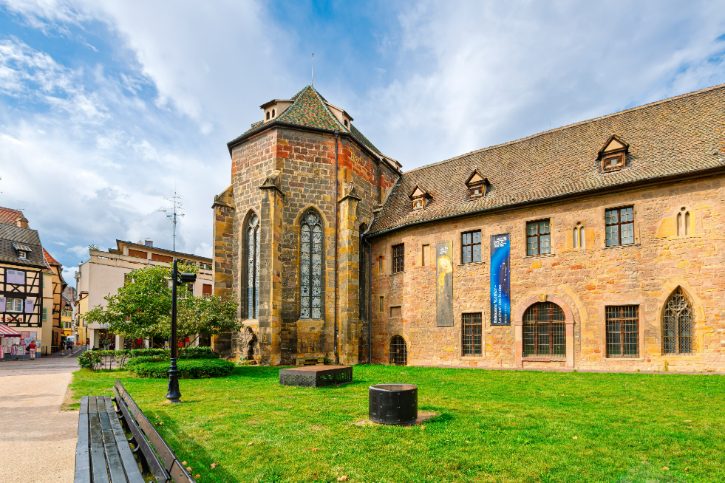
Housed in a 13th-century former convent, the Unterlinden Museum holds one of Europe’s most important collections of medieval and Renaissance art from the Upper Rhine region.
The star attraction is the Isenheim Altarpiece (1512-1516), a polyptych by Matthias Grünewald and Niclaus of Haguenau. It was originally designed to comfort hospital patients.
In 2015, architects Herzog & de Meuron expanded the museum, connecting the original convent to a contemporary wing and a former 1906 bathhouse through an underground gallery.
e. Quai de la Poissonnerie
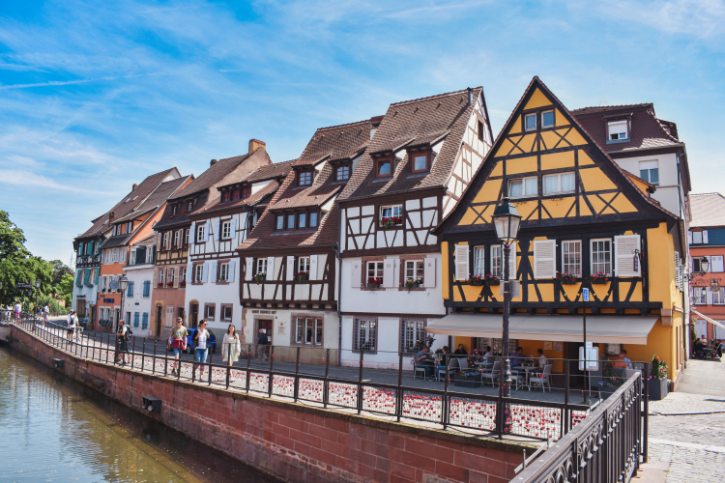
The Fishmonger District was once the center of Colmar’s fishing trade.
The small, brightly painted houses along this quay were where fishermen lived and sold their catch directly from the water. Today, it’s one of the most picturesque corners of town and serves as a gateway to Little Venice.
f. Maison des Têtes
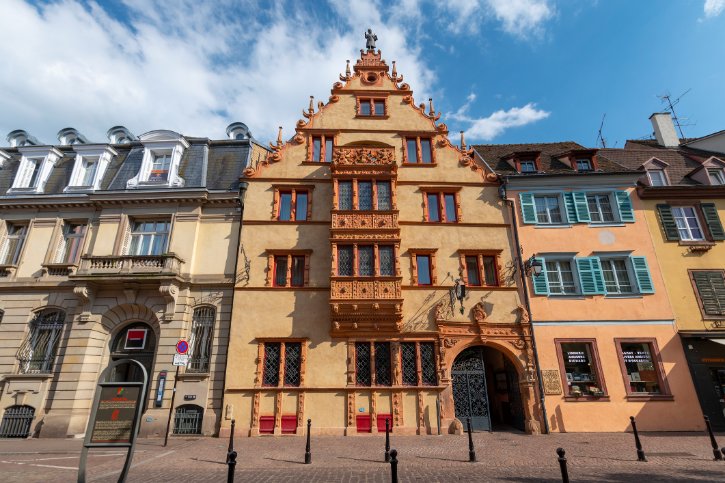
Built in 1609, the “House of Heads” is a standout example of German Renaissance architecture.
Its name comes from the 106 grotesque masks and faces decorating the facade and central oriel. At the top of the gable stands a bronze statue of an Alsatian cooper, added in 1902 by Auguste Bartholdi.
g. Place de l’Ancienne Douane
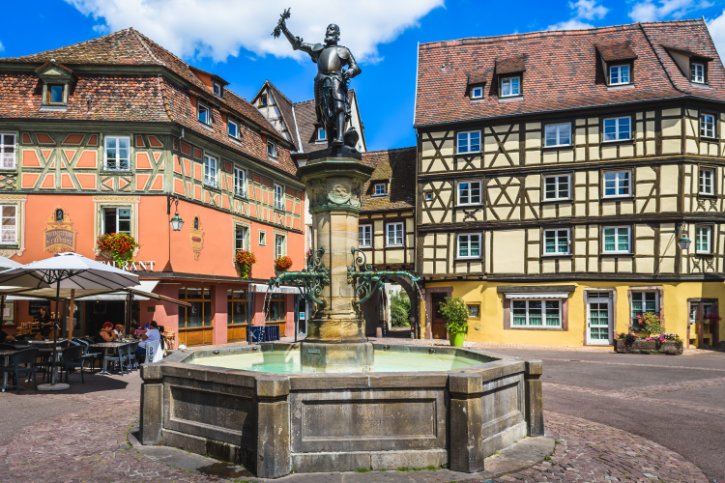
This lively square sits in front of the Koïfhus and captures the social heart of Colmar.
You’ll find artisan cafés, shops selling local pottery, and narrow lanes branching off to hidden courtyards. It’s a perfect spot to grab a coffee and watch the town go by.
h. Marché Couvert Colmar (The Covered Market)
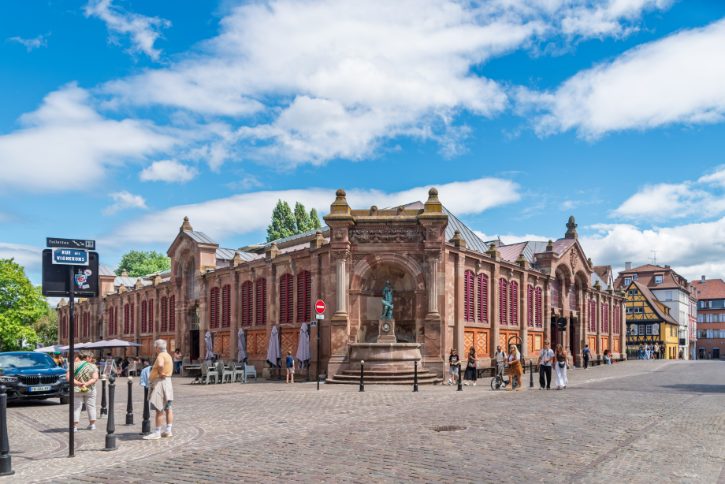
Designed in 1865, this brick-and-iron market hall sits on the banks of the Lauch.
Historically, market gardeners arrived here by boat to unload their produce. Today, local vendors sell Munster cheese, fresh bread, and Alsatian wines. It’s still a vibrant community hub.
i. Musée Bartholdi (Bartholdi Museum)
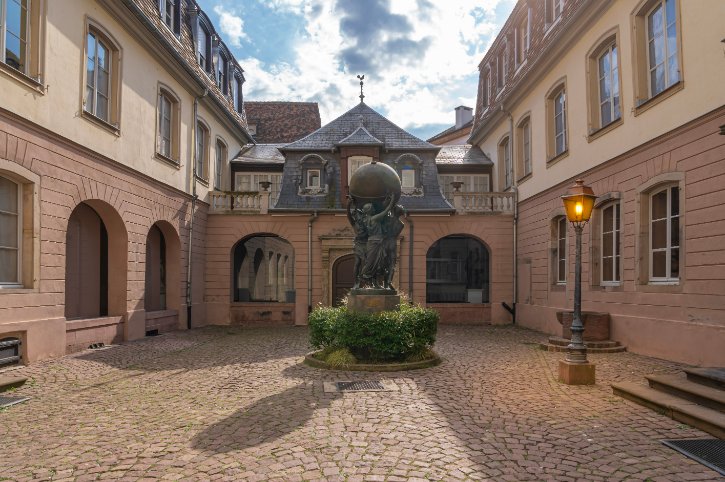
Auguste Bartholdi, the sculptor of the Statue of Liberty, was born in this very house.
Now a museum, it spans three floors and displays preparatory models for the Statue of Liberty, the Lion of Belfort, and several of Colmar’s fountains. It offers an intimate look at the artist’s creative process and his deep ties to the Alsace region.
5. Why Colmar Is Famous for Flowers
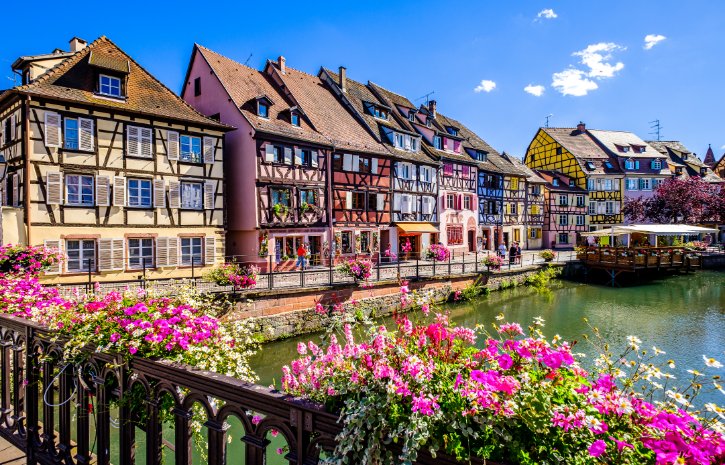
Colmar consistently earns the “Four Flowers” award from France’s Villes et Villages Fleuris committee.
This isn’t just about looking pretty. It’s a rigorous certification recognizing biodiversity, environmental management, and commitment to greenery.
From spring through summer, the town transforms.
Residents and the municipal gardening team cover every surface with blooms. Flower boxes filled with geraniums, petunias, and surfinia line the bridges over the Lauch. They hang from timber-framed balconies. They edge the cobblestone streets.
The displays go beyond traditional gardening. During Easter and Christmas, the town creates elaborate themed decorations using plants and natural materials throughout the public squares.
All that color against historic architecture? It’s what makes Colmar feel like it belongs in a storybook.
6. What to Eat in Colmar (Alsatian Food)
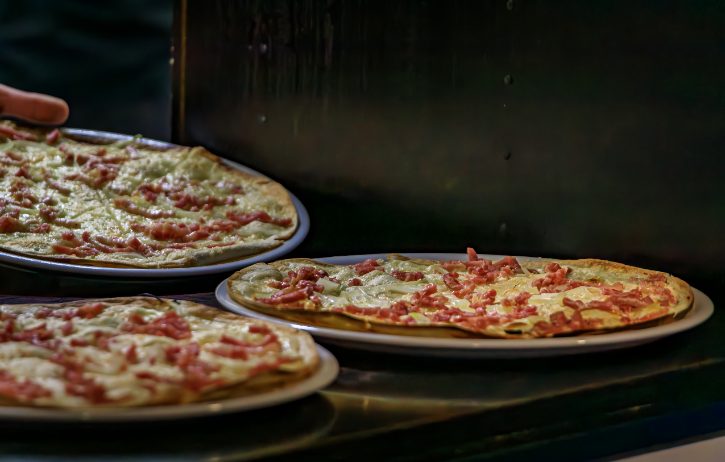
Alsatian cuisine reflects the region’s history. It’s hearty, satisfying, and blends French technique with Germanic staples.
a. Must-try dishes:
- Tarte Flambée (Flammekueche): Thin-crust dough topped with crème fraîche, sliced onions, and smoked bacon bits, baked in a wood-fired oven.
- Choucroute Garnie: The region’s signature dish. Sauerkraut cooked in white wine, served with various sausages, salted pork, and potatoes.
- Baeckeoffe: A slow-cooked casserole of beef, lamb, and pork marinated in white wine with potatoes and leeks.
- Kougelhopf: A tall, crown-shaped brioche with raisins and almonds. Available sweet or savory, often eaten for breakfast.
- Munster Cheese: A pungent, soft-ripened cheese from the nearby Munster Valley, typically served with caraway seeds.
b. Alsatian wines to try:
Colmar is the capital of the Alsace wine region. The wines here are aromatic whites, served in the tall, slender “flute of Alsace” bottle.
- Riesling: Dry, mineral, elegant. Pairs well with fish, seafood, and choucroute.
- Gewürztraminer: Full-bodied with intense notes of lychee and roses. Great with strong cheeses like Munster.
- Pinot Gris: Powerful and complex with a smoky bouquet.
- Pinot Blanc: Soft, delicate, fresh. Perfect with quiches and light salads.
- Pinot Noir: Light and fruity. The region’s only red, ideal with charcuterie.
7. Best Time to Visit Colmar
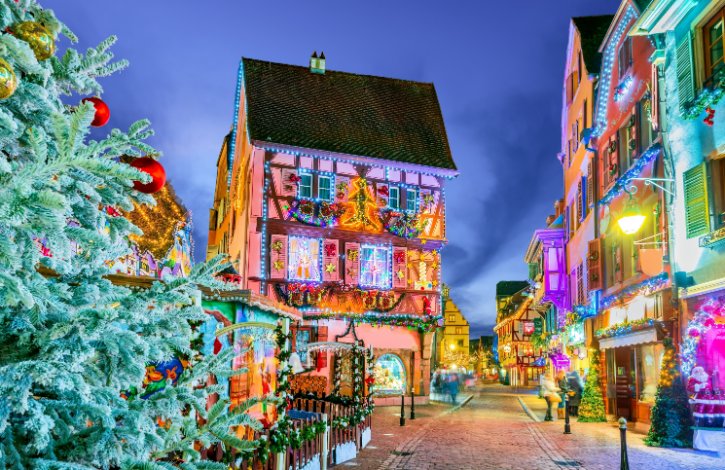
Colmar rewards visitors year-round. Each season offers something different.
Spring (April to May): Mild weather and the first blooms of the season. The “Colmar celebrates Spring” event brings markets and floral exhibitions. Fewer tourists than summer.
Summer (June to August): The town is at its most vibrant. Outdoor cafés fill up. Floral displays peak. Major events include the Colmar International Classical Music Festival and the Alsace Wine Fair (late July to early August).
Autumn (September to October): Wine harvest season. Vineyards turn gold and amber. Local wine festivals celebrate new vintages. Great for hiking and cycling the Wine Route.
Winter (late November to December): The famous Colmar Christmas Markets take over. Thousands of lights illuminate the historic center. Six themed markets sell local crafts and mulled wine.
8. How to Get to Colmar
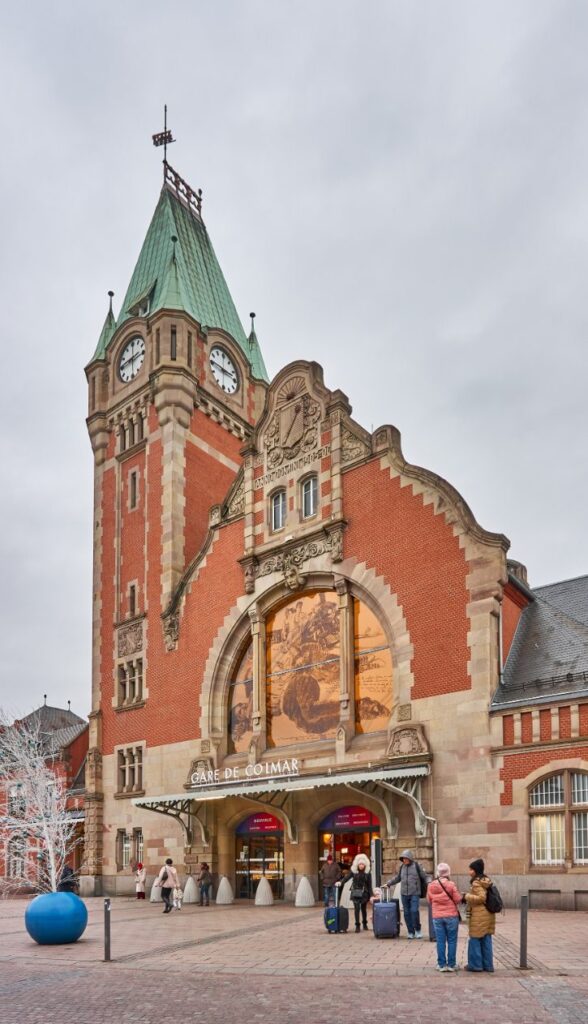
Colmar is well-connected by train and easily reached from major European cities.
a. By train:
The main station, Gare de Colmar, is a historic building within walking distance of the Old Town. Services are operated by SNCF (French national railway).
- Paris to Colmar: High-speed TGV InOui trains depart from Paris Gare de l’Est. The journey takes 2 hours 20 minutes to 2 hours 50 minutes. Most are direct, though some require a change in Strasbourg.
- Strasbourg to Colmar: Frequent regional TER trains. Travel time is about 26 to 35 minutes.
b. By air:
Colmar is about 70 kilometers from two international airports.
- EuroAirport Basel-Mulhouse-Freiburg (BSL): Serves international and budget carriers. Take a bus to Saint-Louis train station, then a direct TER train to Colmar. Total travel time is about 1 hour.
- Strasbourg Airport (SXB): Primarily serves European destinations. A shuttle train connects the airport to Strasbourg Gare Centrale (main station). From there, frequent TER trains run to Colmar in about 26 to 35 minutes.
9. How to Get Around the Town
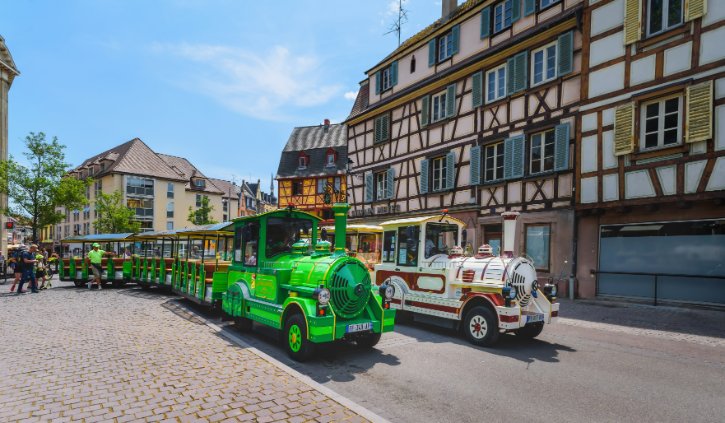
Colmar’s historic center is designed for walking. That’s the main reason it feels so immersive. You’re not navigating traffic. You’re moving through architecture.
- Walking: The Old Town is almost entirely pedestrian-friendly. Most major landmarks are within a 10 to 15 minute walk of each other. This is the best way to explore.
- Cycling: Colmar is bike-friendly with several rental shops, including Vélodocteurs and Alsa Cyclo Tours. You can explore the city or venture onto the 23-kilometer Colmar Canal bike path.
- Tourist Train (Petit Train): The “Little Tourist Train” and “Little White Train” offer motorized tours with audio commentary through the historic streets.
- Public Transport: The TRACE bus network provides access to suburbs and outlying areas, with a main hub at the train station.
10. Suggested How Long to Stay
How much time you need depends on whether Colmar is your main destination or a regional base.
- 1 day: Enough to walk the Old Town, see Little Venice, tour the Unterlinden Museum, and enjoy a meal at a traditional winstub (wine tavern).
- 2 days: Allows for a more relaxed pace. Add a boat ride, the Bartholdi Museum, a visit to the Covered Market, and a guided wine tasting.
- 3 days or more: Ideal if you want to use Colmar as a base for exploring the Alsace Wine Route. Plan half-day or full-day trips to nearby villages like Eguisheim and Riquewihr.
11. Best Day Trips from Colmar
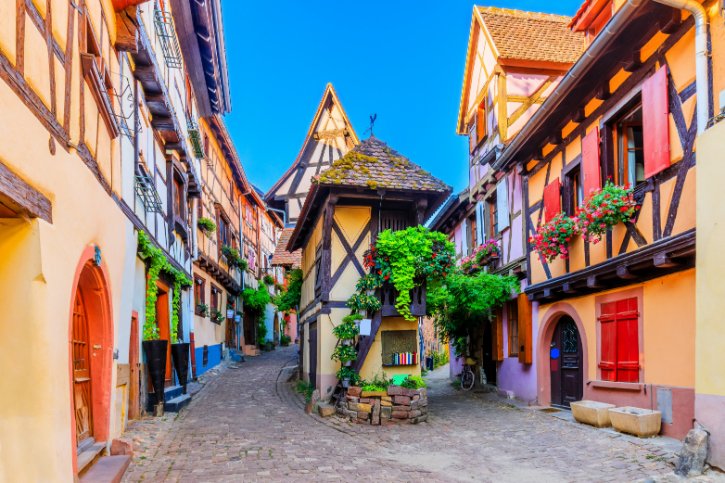
Colmar’s central location makes it perfect for exploring the wider Alsace region.
- Eguisheim (7 km): Ranked among the “Most Beautiful Villages in France”. Famous for its circular streets and flower-filled alleys. Easy to reach by bike or local bus.
- Riquewihr (15 km): A fortified medieval village that looks much as it did in the 16th century. Surrounded by vineyards, it features the iconic Dolder watchtower.
- Strasbourg (70 km): The regional capital, known for its massive pink sandstone cathedral, astronomical clock, and historic Petite France canal district.
- Alsace Wine Route: More than 170 km of official route running along the Vosges slopes. It links villages known for half-timbered houses, flower-filled streets, and historic churches. Perfect for building your own itinerary at your own pace.
12. Why Travelers Fall in Love With Colmar
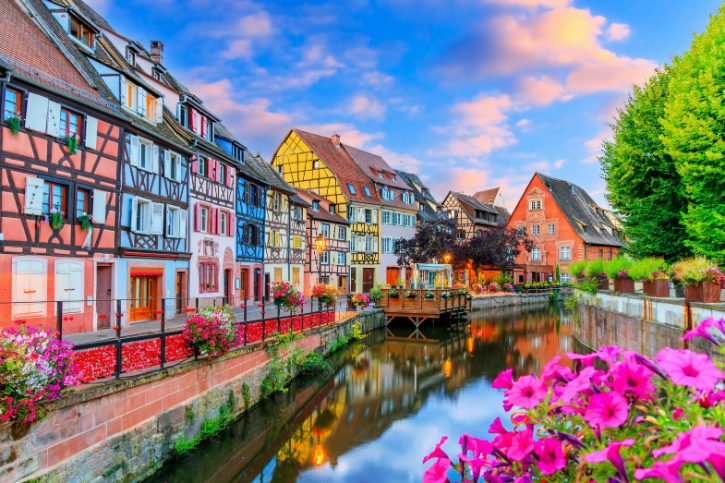
Colmar is memorable not because it’s loud or grand, but because it’s beautifully composed.
It’s the way the canals pull the eye forward, turning an ordinary walk into a sequence of reflections.
It’s the half-timbered houses, bright and slightly tilted with age, still doing what they were built to do.
It’s flowers that aren’t incidental but almost architectural: window boxes and balconies that soften timber and stone into something warm.
And it’s the pace. Colmar invites you to slow down until you notice the details. Until the town stops being “photogenic” and starts feeling quietly, unmistakably alive.