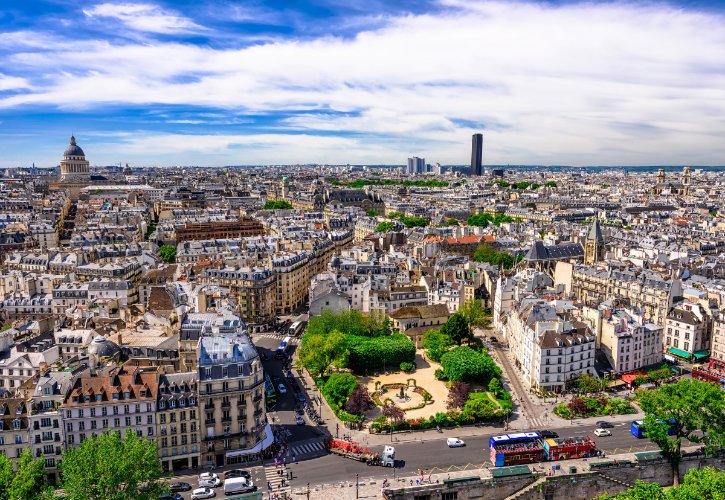
The Latin Quarter is one of the most storied neighborhoods in Paris. Tucked along the Left Bank, it carries centuries of history, from Roman ruins to medieval churches to the cafés where Hemingway once wrote.
This guide brings together 17 of the best spots in the area. You will find iconic landmarks, hidden corners, and local favorites.
The list is designed to help you explore efficiently and make sure you do not miss the highlights.
Take your time going through each one. Trust me, they are all worth knowing about.
1. Panthéon
a. Why This Spot Stands Out
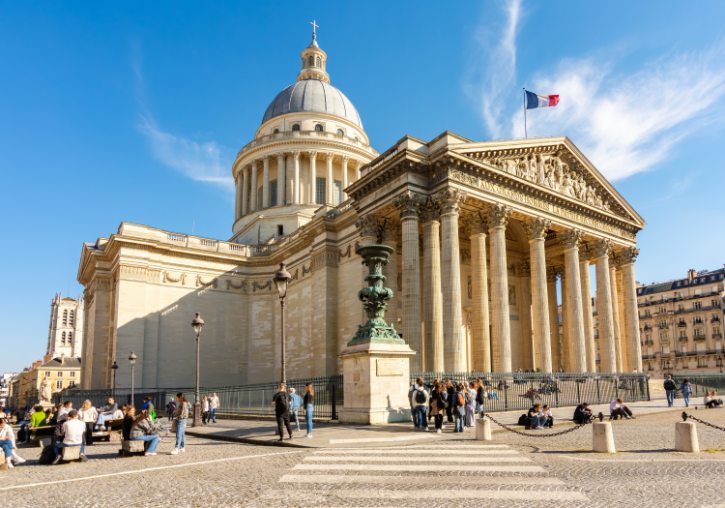
The Panthéon is the defining landmark of the Latin Quarter. It sits at the highest point of the Montagne Sainte-Geneviève, making it visible from many parts of the neighborhood.
Originally built as a church in the 18th century, it was transformed into a mausoleum during the French Revolution. Today, it honors France’s most celebrated figures, including Voltaire, Victor Hugo, Marie Curie, and Josephine Baker.
The architecture is striking. The massive dome and Roman-style portico were inspired by the Pantheon in Rome. Inside, you will find a replica of Foucault’s Pendulum, which demonstrates the Earth’s rotation.
b. Best Things to Do Here
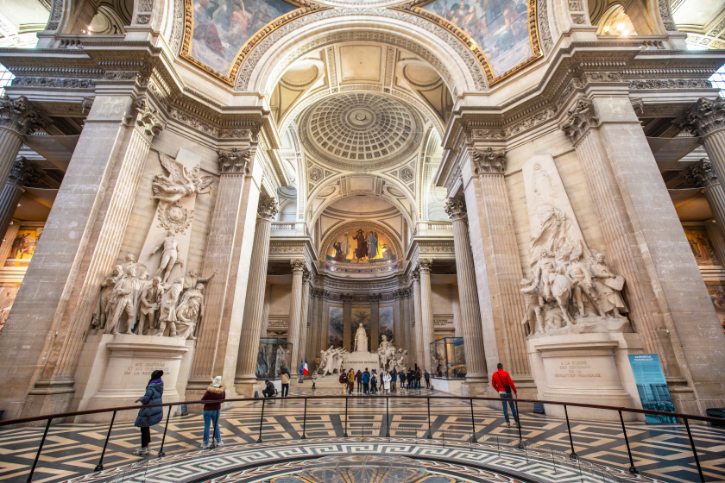
- Walk through the crypt to see the tombs of legendary French thinkers and artists
- Watch Foucault’s Pendulum swing in the center of the nave
- Admire the large-scale frescoes depicting the history of France and Saint Geneviève
- Step outside to enjoy panoramic views of the Latin Quarter from the front steps
c. Nearest Metro / RER Station
- Cardinal Lemoine (Metro Line 10)
- RER Luxembourg (Line B)
2. Église Saint-Étienne-du-Mont
a. Why This Spot Stands Out
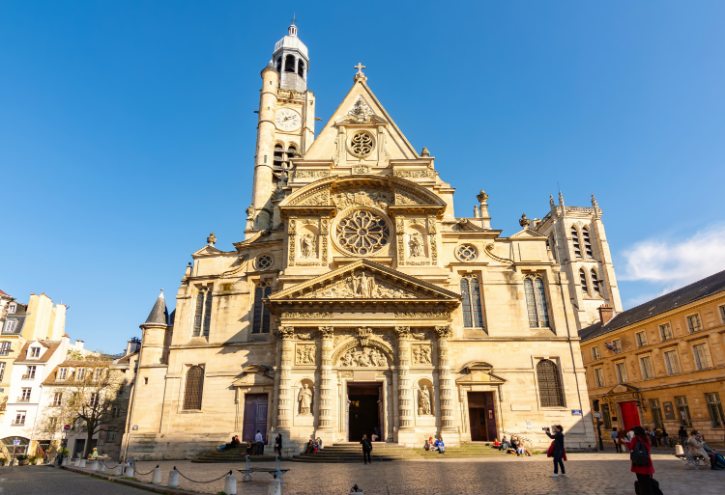
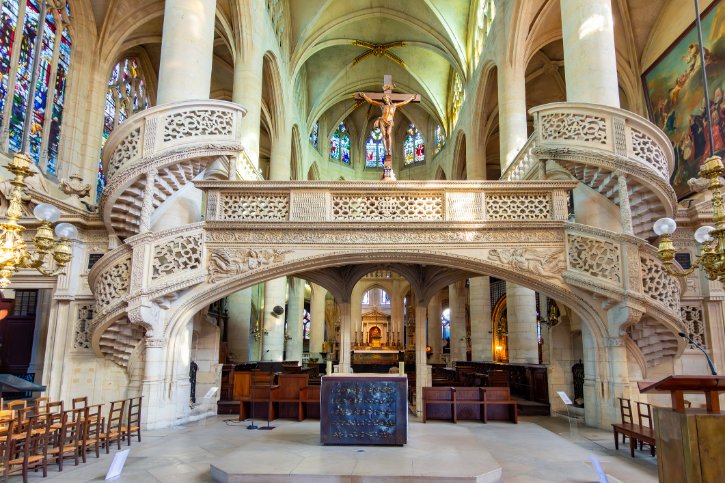
Just steps from the Panthéon, this church is one of the most unique in Paris. Église Saint-Étienne-du-Mont blends Flamboyant Gothic and Renaissance styles in a way you will not see anywhere else in the city.
The highlight inside is the rood screen (jubé), an ornate stone gallery dating back to the 1530s. It is the only one left in Paris. Two spiral staircases wrap around the pillars on either side, creating a truly stunning visual.
The church also holds the shrine of Sainte Geneviève, the patron saint of Paris, and the remains of the philosopher Blaise Pascal.
b. Best Things to Do Here
- Stand beneath the rood screen and admire the Renaissance craftsmanship
- Look up at the exceptionally high nave and intricate stained glass
- Visit the shrine of Sainte Geneviève
- Take a quiet moment in one of the most peaceful churches in the Latin Quarter
c. Nearest Metro Station
- Cardinal Lemoine (Metro Line 10)
3. Place de la Contrescarpe
a. Why This Spot Stands Out
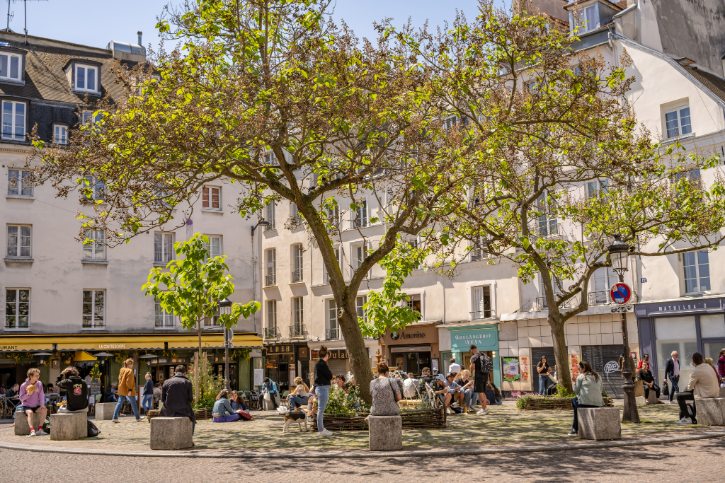
This small, circular square is the social heart of the upper Latin Quarter. Place de la Contrescarpe sits at the crossroads of several historic streets, including Rue Mouffetard.
For literature fans, this place is legendary. Ernest Hemingway lived just around the corner in the early 1920s and wrote about this neighborhood in A Moveable Feast. He described it as gritty and full of life.
Today, the square has a more polished feel. You will find plane trees, a central fountain, and popular café terraces like Café Delmas.
b. Best Things to Do Here
- Grab a coffee or a glass of wine at one of the outdoor terraces
- People-watch in the evening when the square fills with students and locals
- Use this as a starting point before walking down Rue Mouffetard
- Soak in the café culture that Hemingway once loved
c. Nearest Metro Stations
- Cardinal Lemoine (Metro Line 10)
- Place Monge (Metro Line 7)
4. Arènes de Lutèce
a. Why This Spot Stands Out
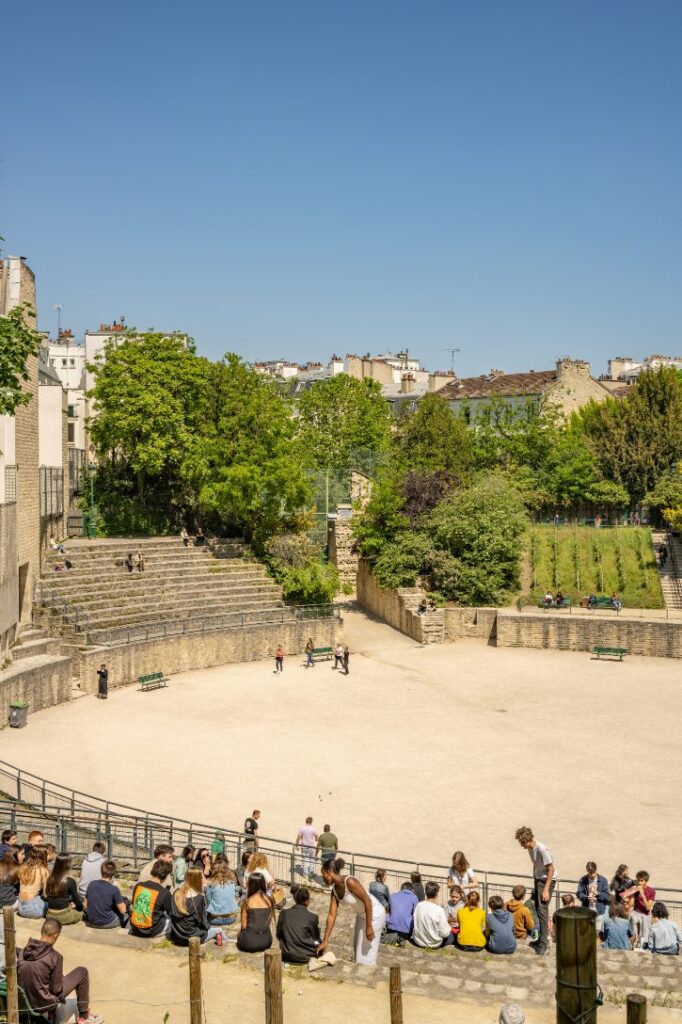
The Arènes de Lutèce is one of the last surviving traces of Roman Paris. Built in the 1st or 2nd century AD, this amphitheater once held gladiatorial combats and theatrical performances for up to 17,000 spectators.
The arena was buried for centuries and only rediscovered in 1860. Victor Hugo helped save it from being destroyed during city construction.
Today, it is a peaceful urban park, hidden behind apartment buildings. You can still see the original stone seating, the stage, and the animal cages.
b. Best Things to Do Here
- Walk through the arena and imagine what Roman Lutetia looked like
- Sit on the ancient stone gradins (seating tiers)
- Watch locals play pétanque or kids kick a football on the field
- Enjoy a quiet break away from the busy streets
c. Nearest Metro Stations
- Place Monge (Metro Line 7)
- Jussieu (Metro Lines 7 and 10)
- Cardinal Lemoine (Metro Line 10)
5. Rue Mouffetard
a. Why This Spot Stands Out
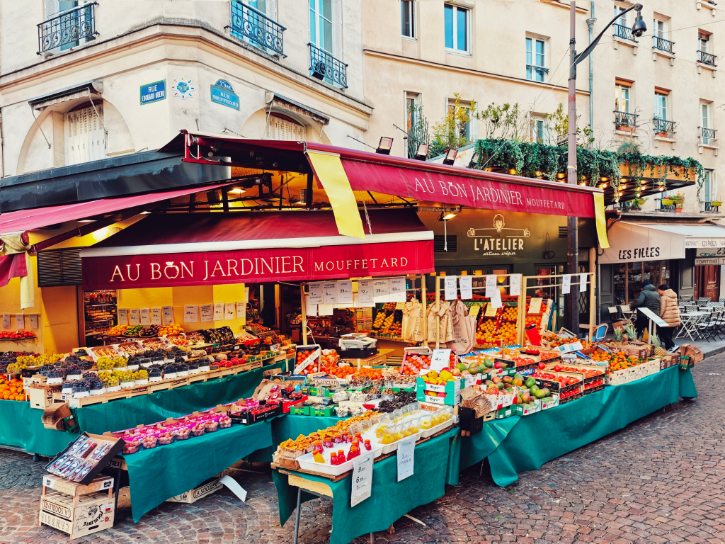
Rue Mouffetard, known locally as “La Mouffe”, is one of the oldest streets in Paris. It follows the path of an ancient Roman road and has a winding, narrow feel that escaped the wide boulevards of Haussmann’s renovation.
The street has two personalities. The upper section near Place de la Contrescarpe is full of student bars and international eateries. The lower section, closer to Square Saint-Médard, is home to one of the city’s best permanent open-air markets.
This is where you will find traditional French food shops, including fromageries, charcuteries, and boulangeries that have been around for generations.
b. Best Things to Do Here
- Browse the morning market for fresh cheeses, meats, and pastries (best on weekends)
- Stop at Gelati d’Alberto for some of the best gelato in Paris
- Look for the painted facades and old carved signs, like “A la Bonne Source” at No. 122
- End your walk at Église Saint-Médard, a 15th-century parish church
c. Nearest Metro Stations
- Place Monge (Metro Line 7) for the lower market end
- Cardinal Lemoine (Metro Line 10) for the upper Contrescarpe end
6. Grande Mosquée de Paris
a. Why This Spot Stands Out
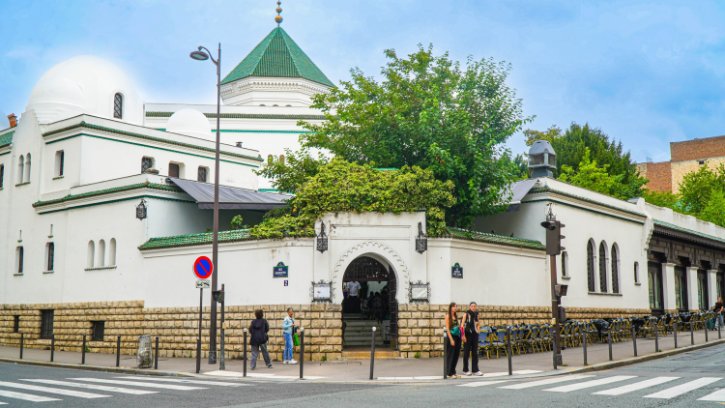
The Grande Mosquée de Paris is the oldest mosque in mainland France. It was built in the 1920s to honor the Muslim soldiers from French colonies who fought in World War I.
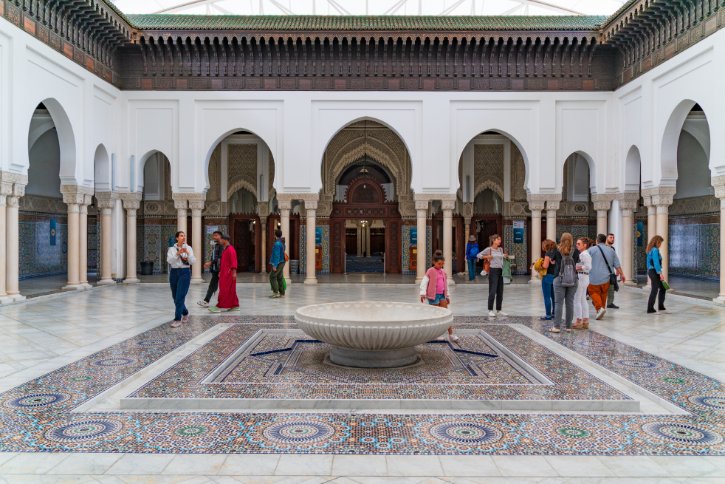
The architecture is stunning. Designed in Neo-Moorish style and inspired by the Alhambra and mosques in Fez, it features a 33-meter minaret and intricate mosaic tilework.
Beyond religion, the mosque played a heroic role during World War II. Its leaders sheltered Jewish Parisians and resistance fighters, providing forged identity papers and hiding them in the cellars.
b. Best Things to Do Here
- Stroll through the beautiful Andalusian garden with its palm trees and marble fountains
- Enjoy traditional mint tea and pastries in the tearoom
- Try the restaurant for authentic couscous and tagines
- Visit the hammam (Turkish bath) for a relaxing experience (check the schedule for men’s and women’s hours)
c. Nearest Metro Station
- Place Monge (Metro Line 7)
7. Jardin des Plantes
a. Why This Spot Stands Out
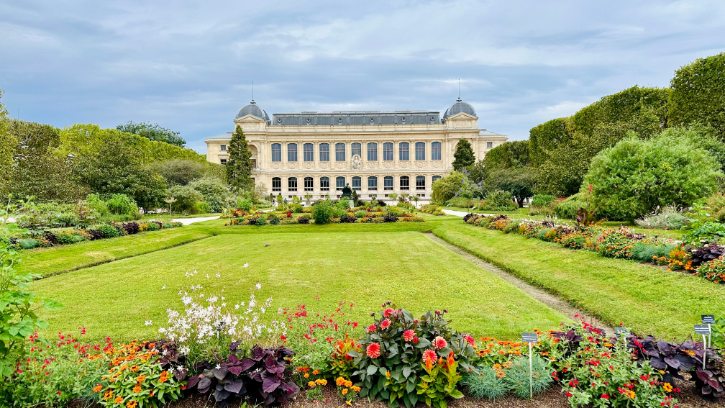
The Jardin des Plantes is far more than a park. It is France’s main botanical garden and home to the National Museum of Natural History. Established in 1635, it has nearly 400 years of scientific history.
The layout includes specialized gardens like the Alpine Garden (with 2,000 mountain species) and the Rose Garden.
The massive 19th-century greenhouses simulate tropical, desert, and New Caledonian environments.
Fun fact: these greenhouses inspired the jungle paintings of Henri Rousseau, who never actually left France.
The site also houses major museum galleries and La Ménagerie, the oldest zoo in Paris.
b. Best Things to Do Here
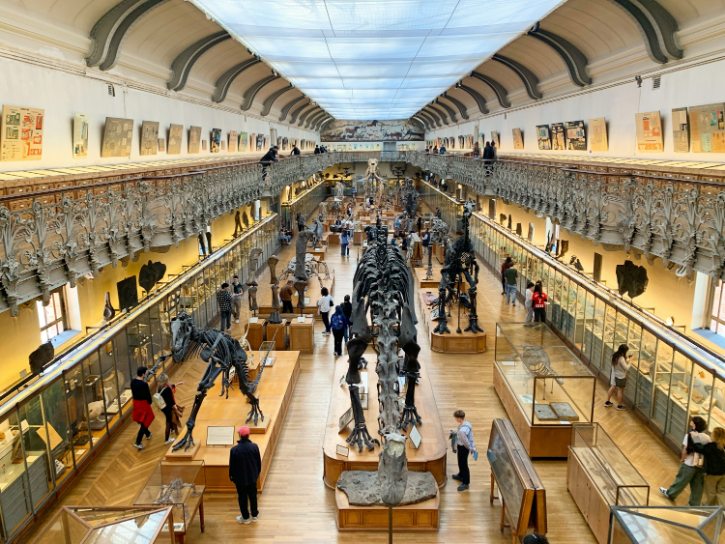
- Visit the Grande Galerie de l’Évolution for an impressive display of biodiversity
- Explore the Galerie de Paléontologie for dinosaur skeletons and fossils
- Walk through the tropical greenhouses
- Spend time at La Ménagerie to see endangered species
- Relax on the lawns or wander through the botanical collections
c. Nearest Metro / RER Station
- Gare d’Austerlitz (Metro Lines 5 and 10, RER C)
- Jussieu (Metro Lines 7 and 10)
- Place Monge (Metro Line 7)
8. Place de la Sorbonne
a. Why This Spot Stands Out
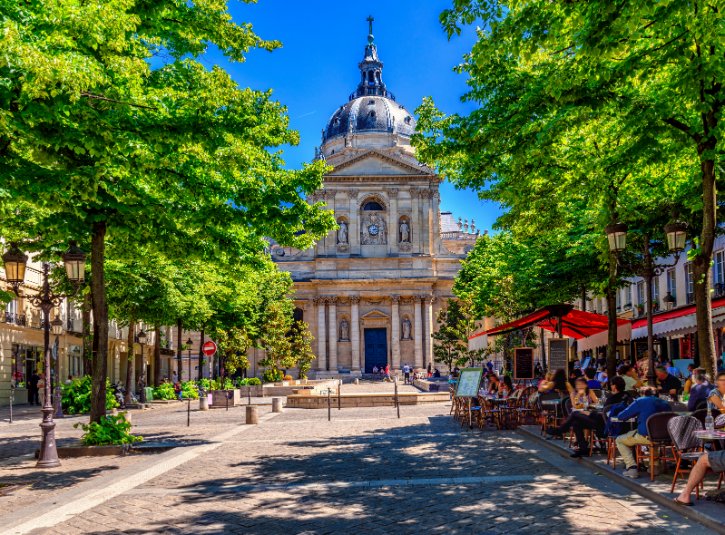
The Sorbonne is the historic heart of the Latin Quarter’s academic identity. Founded in 1257, it became one of the most prestigious universities in medieval Europe.
The name “Latin Quarter” comes from this very place. Latin was the language of instruction here until the French Revolution.
The current buildings date mostly from the late 19th century. The grand facade on Place de la Sorbonne is decorated with sculptures representing academic disciplines. Inside, the Chapelle de la Sorbonne holds the tomb of Cardinal Richelieu.
b. Best Things to Do Here
- Walk around Place de la Sorbonne, a leafy square lined with academic bookstores and cafés
- Admire the grand facade of the university
- Learn about the May 1968 student protests, which started here and reshaped French society
- Sit at a café and soak in the scholarly atmosphere
c. Nearest Metro / RER Station
- Cluny – La Sorbonne (Metro Line 10)
- Saint-Michel or Odéon (Metro Line 4)
- RER Luxembourg (Line B)
9. Institut du Monde Arabe (IMA)
a. Why This Spot Stands Out
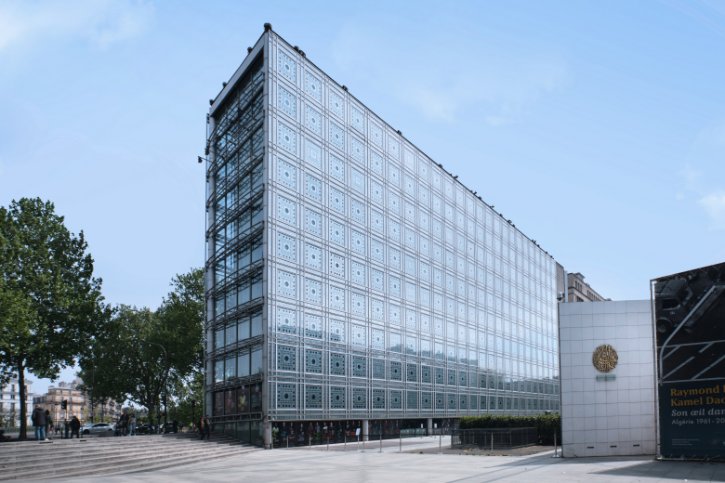
The Institut du Monde Arabe is a landmark of modern architecture right on the banks of the Seine. Designed by Jean Nouvel and completed in 1987, it was created to promote Arab culture and foster cross-cultural understanding.
The south facade is famous for its 240 moucharabiehs, mechanized apertures that open and close like camera lenses to regulate light. They form intricate geometric patterns and are an architectural marvel.
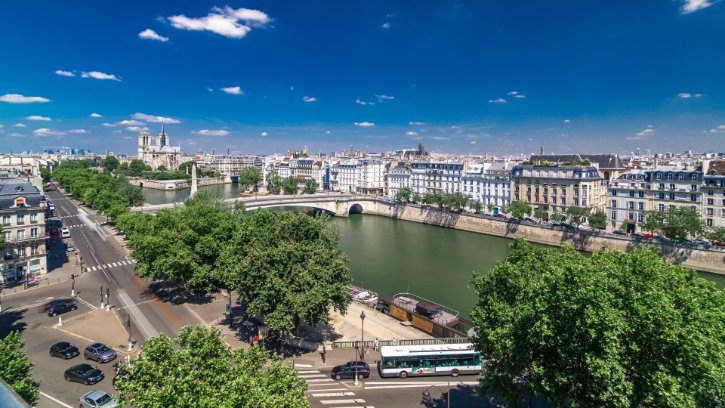
Inside, you will find a museum exploring Arab art and history, a library, and a rooftop terrace with stunning views of Paris, including the back of Notre-Dame.
b. Best Things to Do Here
- Explore the museum’s collection, from pre-Islamic archaeology to contemporary art
- Head up to the rooftop terrace for panoramic views of the Seine and Île Saint-Louis
- Check out the facade at different times of day to see the moucharabiehs in action
- Browse the bookshop for unique titles on Arab culture
c. Nearest Metro Stations
- Jussieu or Sully-Morland (Metro Line 7)
- Cardinal Lemoine or Jussieu (Metro Line 10)
10. Jardin du Luxembourg
a. Why This Spot Stands Out
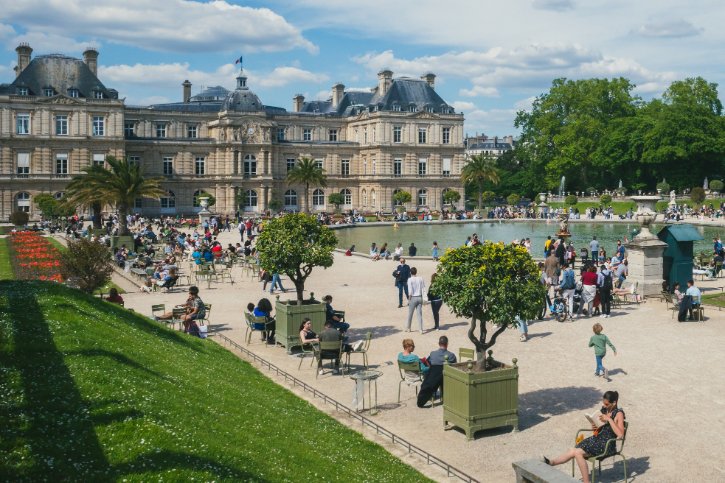
The Jardin du Luxembourg is one of the most beloved parks in Paris. Created in 1612 by Marie de Medici, it surrounds the Luxembourg Palace, which now serves as the seat of the French Senate.
The garden covers 25 hectares and blends formal French design with a more relaxed English-style section. It is a favorite spot for Sorbonne students, who study in the iconic green metal chairs scattered throughout.
You will also find over 100 statues, the beautiful Medici Fountain, and the charming tradition of children sailing model wooden boats on the Grand Bassin.
b. Best Things to Do Here
- Grab one of the famous green chairs and relax by the Grand Bassin
- Watch children sail model boats, a tradition that has continued for over a century
- Visit the Medici Fountain, the garden’s most romantic corner
- Wander past the statues, including the “Queens of France” series
- Find the miniature replica of the Statue of Liberty
c. Nearest Metro / RER Station
- RER Luxembourg (Line B) for the eastern entrance
- Odéon (Metro Lines 4 and 10) for the northern entrance
11. Musée de Cluny
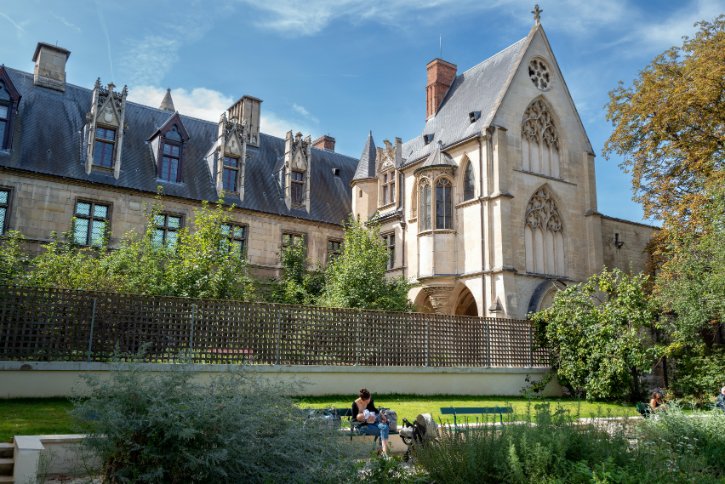
a. Why This Spot Stands Out
The Musée de Cluny, officially the National Museum of the Middle Ages, is housed in an extraordinary complex. The site combines Roman thermal baths from the 1st or 2nd century AD with a 15th-century Gothic mansion.
The museum’s star attraction is the Lady and the Unicorn tapestry series. These six 15th-century tapestries are considered the finest examples of medieval weaving in existence. Each one represents a sense, with the sixth bearing the mysterious inscription “A Mon Seul Désir”.
Recent renovations have added a modern entrance and improved access to the frigidarium, a Roman cold-water room with 14-meter-high vaults.
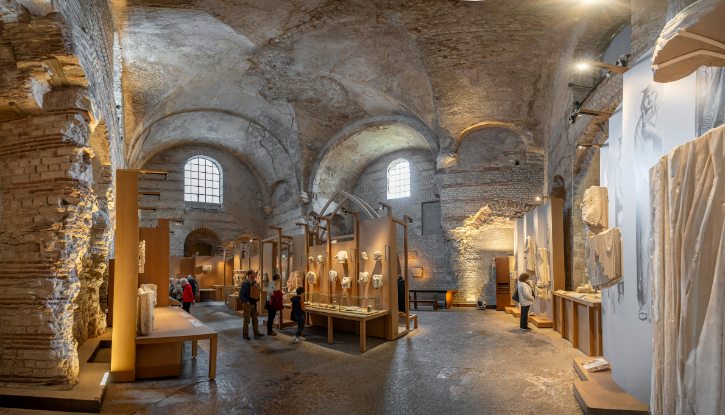
b. Best Things to Do Here
- Spend time with the Lady and the Unicorn tapestries, they are mesmerizing
- Walk through the Gallo-Roman baths, among the best preserved in northern France
- See the sculpted Heads of the Kings of Judah, once torn from Notre-Dame
- Explore medieval artifacts that bring the Middle Ages to life
c. Nearest Metro Stations
- Cluny – La Sorbonne (Metro Line 10)
- Saint-Michel (Metro Line 4)
12. The Abbey Bookshop
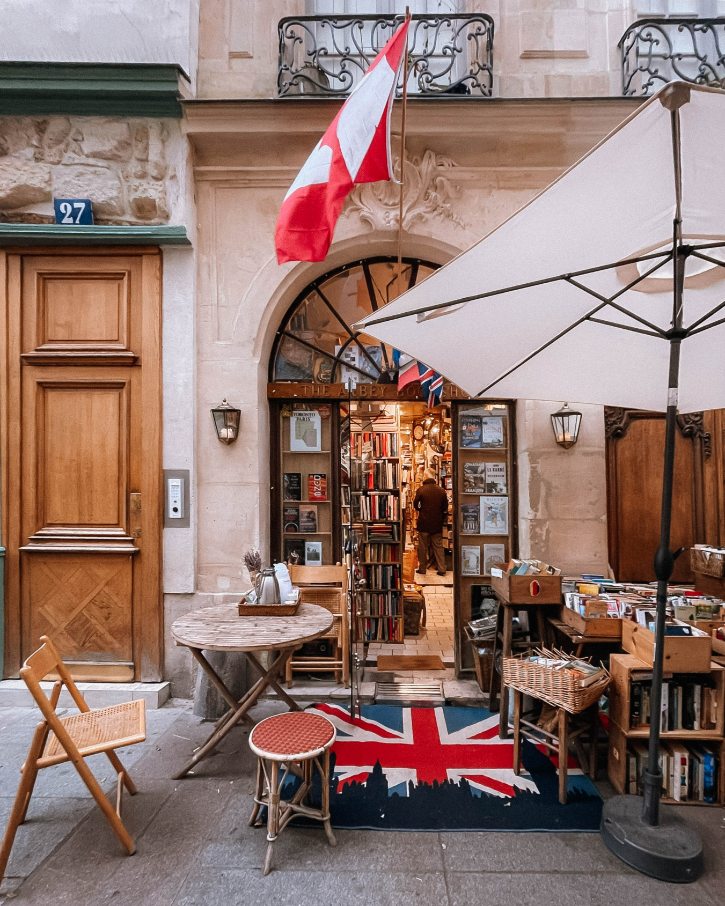
a. Why This Spot Stands Out
The Abbey Bookshop is a hidden gem for English-speaking book lovers.
Founded in 1989 by Canadian bookseller Brian Spence, it occupies an 18th-century building on Rue de la Parcheminerie, a street named for its medieval history in the parchment and bookbinding trades.
The shop is packed with over 40,000 titles, stacked floor to ceiling in narrow, winding aisles. It specializes in Canadian literature, history, and philosophy.
Unlike modern bookstores, this one feels like stepping into a private library. You might even be greeted with a cup of freshly brewed coffee.
b. Best Things to Do Here
- Browse the towering shelves for rare and eclectic finds
- Ask the staff for recommendations, they know the collection well
- Enjoy the cozy, cluttered atmosphere that book lovers dream about
- Take a photo of the picturesque facade
c. Nearest Metro Stations
- Cluny – La Sorbonne (Metro Line 10)
- Saint-Michel (Metro Line 4)
13. Église Saint-Séverin
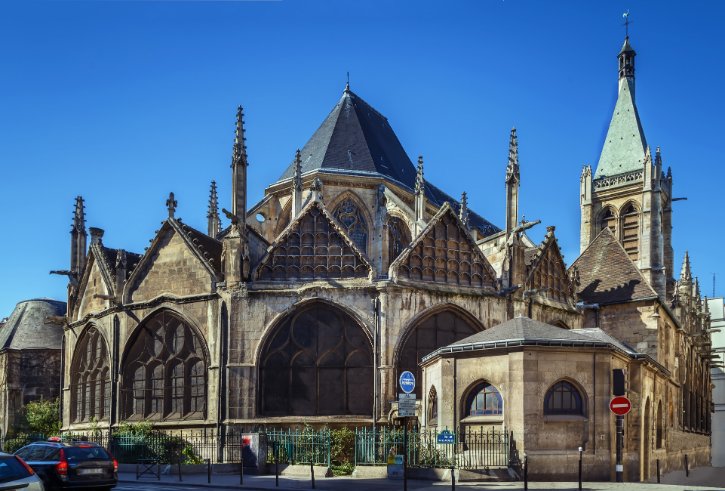
a. Why This Spot Stands Out
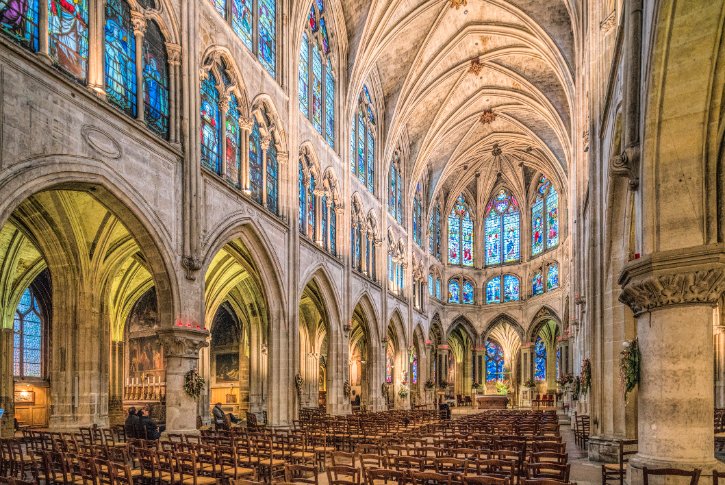
Église Saint-Séverin is one of the oldest and most beautiful churches on the Left Bank.
Rebuilt in the 15th century in the Flamboyant Gothic style, it served the growing student population of the Latin Quarter.
The interior is remarkable. The central “palm tree” pillar features a twisted column that branches into complex ribbed vaulting, mimicking the leaves of a palm. It is unlike anything else in Paris.
The church also has rare Gothic stained-glass windows and modern art installations by Jean Bazaine. Thanks to its exceptional acoustics, it regularly hosts classical and sacred music concerts.
b. Best Things to Do Here
- Stand beneath the palm tree pillar and look up at the vaulting
- Admire the medieval stained glass alongside the modern art
- Check the schedule for concerts, which continue the church’s centuries-old tradition
- Explore the peaceful garden that was once a medieval burial ground
c. Nearest Metro Stations
- Saint-Michel (Metro Line 4)
- Cluny – La Sorbonne (Metro Line 10)
14. Odette Paris
a. Why This Spot Stands Out
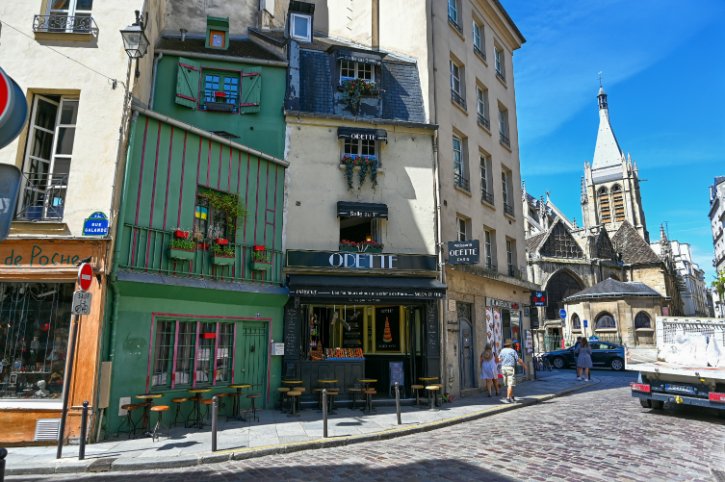
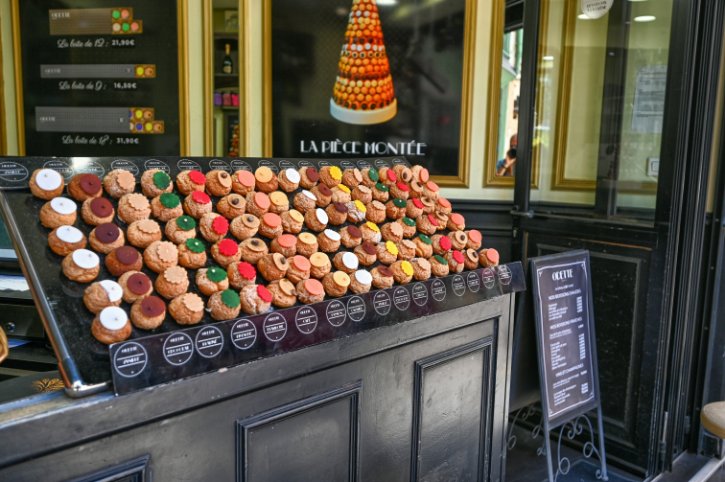
Odette is a specialty pastry shop famous for one thing: the choux à la crème (cream puff). Located in a charming 17th-century building on Rue Galande, near Notre-Dame, it was created to revive the traditional cream puff recipe of the founder’s grandmother.
The shop’s interior features Art Deco touches and a marble checkerboard floor. The upstairs tea room offers a lovely view of the oldest tree in Paris (planted in 1601) and the towers of Notre-Dame.
b. What to Try & Experience
- Try the signature choux in flavors like vanilla, lemon, passion fruit, or praline
- Sit upstairs in the tea room for the views
- Admire the colorful fondant-topped puffs, they are almost too pretty to eat
- Take a box to go if you want a sweet snack for later
c. Nearest Metro Station
- Saint-Michel (Metro Line 4)
15. Shakespeare and Company
a. Why This Spot Stands Out
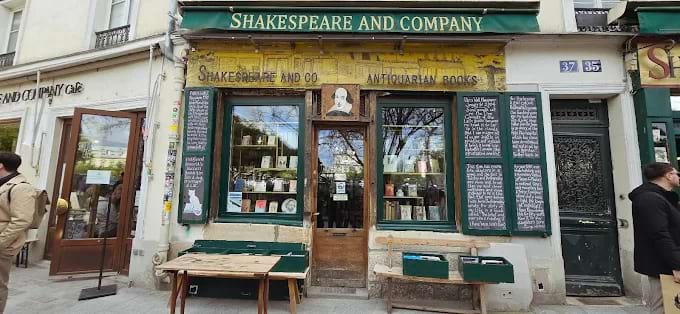
Shakespeare and Company is arguably the most famous English-language bookstore in the world.
The current shop at 37 Rue de la Bûcherie was founded in 1951 by George Whitman. It was renamed in 1964 to honor Sylvia Beach, who ran the original bookstore where she published James Joyce’s Ulysses.
Whitman turned the shop into a sanctuary for writers. For decades, “Tumbleweeds” have stayed here for free in exchange for working at the counter and reading a book a day. Over 30,000 guests have reportedly slept among the shelves.
Today, the store is run by Whitman’s daughter, Sylvia Beach Whitman. The motto painted above the door still reads: “Be not inhospitable to strangers, lest they be angels in disguise”.
b. Best Things to Do Here
- Explore the ramshackle rooms filled with new and rare books
- Climb the narrow staircases to the reading room, complete with a piano
- Get your book stamped with the shop’s iconic logo
- Grab a coffee at the café next door
- Look out the upstairs window for a view of Notre-Dame
c. Nearest Metro / RER Station
- Saint-Michel (Metro Line 4)
- Cluny – La Sorbonne (Metro Line 10)
- RER Saint-Michel – Notre-Dame (Lines B and C)
16. Rue de la Huchette
a. Why This Spot Stands Out
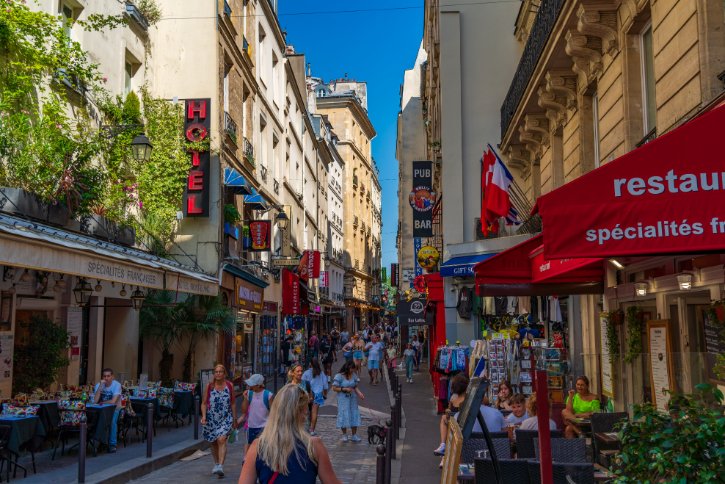
Rue de la Huchette is one of the most famous medieval streets in Paris. Just steps from the Seine, it has a narrow, winding character that feels centuries old, because it is.
The street is a hub for nightlife and culture. The Théâtre de la Huchette has been performing Eugène Ionesco’s The Bald Soprano and The Lesson for over 60 years without interruption.
For jazz lovers, the Caveau de la Huchette is legendary. This club, housed in a medieval cellar, has hosted virtually every major jazz figure of the 20th century.
Nearby, you will find the Rue du Chat qui Pêche (“The Street of the Fishing Cat”), which at 1.8 meters wide is officially the narrowest street in Paris.
b. Best Things to Do Here
- Catch a show at the Théâtre de la Huchette
- Listen to live jazz at the Caveau de la Huchette
- Wander through the narrow medieval lanes
- Find the Rue du Chat qui Pêche and snap a photo
c. Nearest Metro / RER Station
- Saint-Michel (Metro Line 4)
- RER Saint-Michel – Notre-Dame (Lines B and C)
17. The Bouquinistes (Riverside Book Stalls)
a. Why This Spot Stands Out
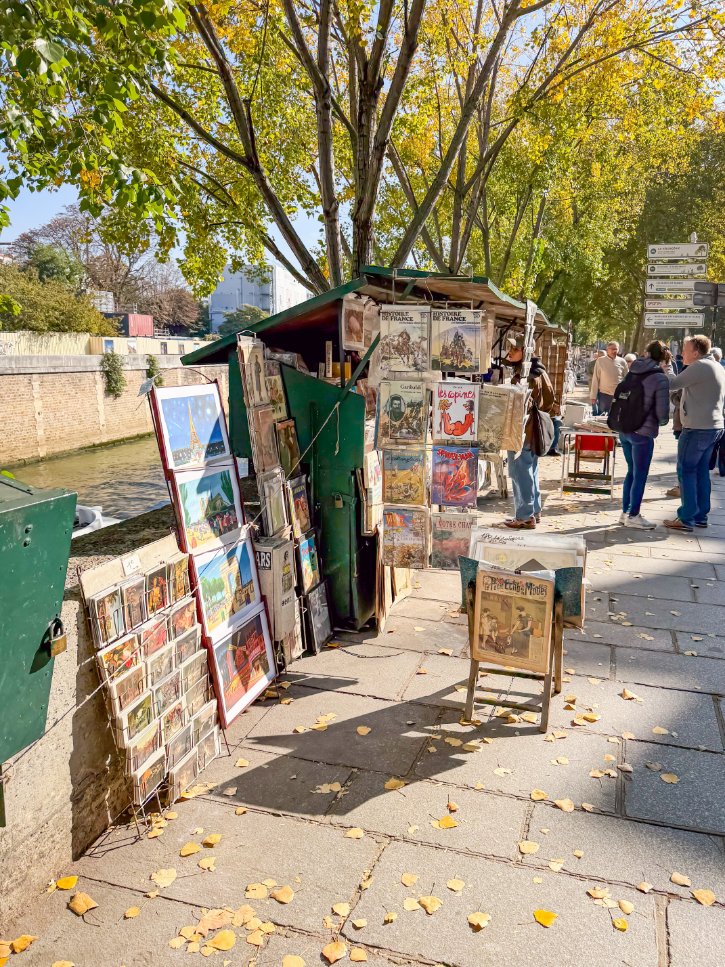
The Bouquinistes are the iconic green-boxed book stalls that line the banks of the Seine. Together, they form an open-air library that has been recognized as a UNESCO World Heritage site.
In the Latin Quarter, you will find them along the Quai des Grands Augustins, Quai de la Tournelle, Quai de Montebello, and Quai Saint-Michel. Over 200 vendors sell second-hand books, vintage postcards, old maps, and literary souvenirs.
This tradition dates back to the 16th century. The permanent green boxes were standardized in the 19th century and have been part of the Parisian landscape ever since.
b. Best Things to Do Here
- Browse for rare books, vintage prints, or unique postcards
- Chat with the vendors, many of whom are passionate collectors
- Walk the quays and enjoy the views of the Seine and Notre-Dame
- Pick up a literary souvenir to bring home
c. Nearest Metro / RER Station
- Saint-Michel (Metro Line 4)
- RER Saint-Michel – Notre-Dame (Lines B and C)