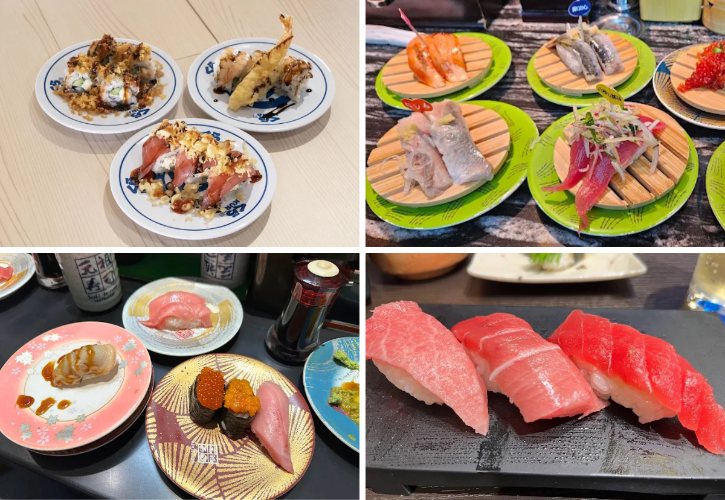
You don’t need to spend a fortune to eat great sushi in Tokyo.
The city is packed with affordable sushi spots where the fish is fresh, the portions are generous, and a full meal can cost as little as ¥1,000 to ¥3,000 per person.
Some are ultra-cheap conveyor-belt chains with high-tech ordering. Others are standing sushi bars or casual sit-down restaurants where you pay a little more but get noticeably better quality.
Here are ten restaurants worth knowing about. 😊
1. Sushiro
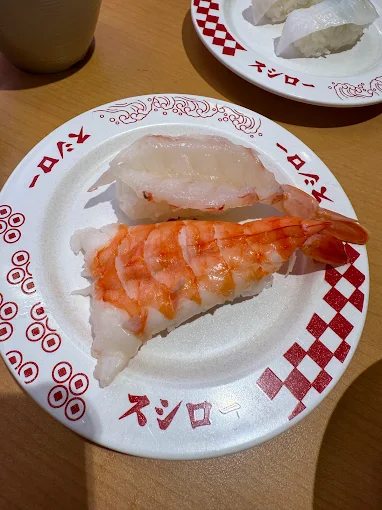
Sushiro is Japan’s most popular conveyor-belt sushi chain, originally founded by traditional sushi chefs in Osaka.
It was built on a simple goal: serve good sushi at prices everyone can afford. That philosophy still holds.
How It Works
- You sit at a counter or booth and order from a multilingual touchscreen (English, Chinese, and Korean).
- Fresh orders are delivered straight to your seat on an express lane.
What to Expect
- The atmosphere is lively and relaxed. Great for solo travelers, families, and groups.
- Busy branches can have long queues, especially in Shibuya and Shinjuku. Visiting during off-peak hours can help avoid the longest waits.
Where to Find It
- Shibuya (1-minute walk from Shibuya Station), Shinjuku Sanchome, Shinjuku Nishiguchi, Akihabara, and Ikebukuro.
2. Kura Sushi
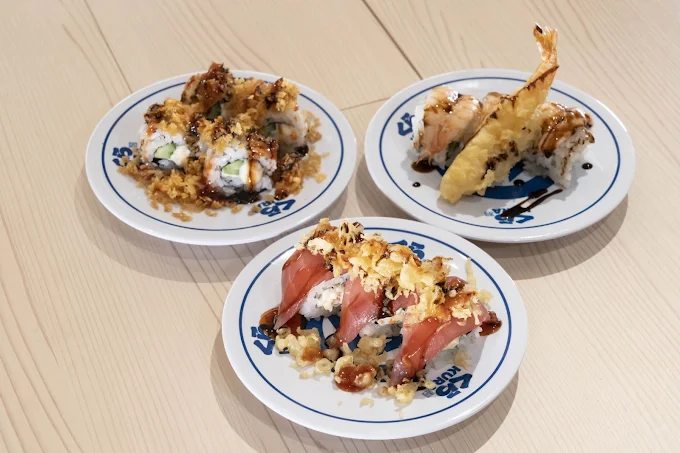
Kura Sushi is another major budget sushi chain, and it adds a playful twist to the experience.
The brand prides itself on serving sushi without artificial flavorings, colorings, or preservatives.
How It Works
- Each plate on the belt is covered by a clear protective dome (the “Mr. Fresh” system) to keep the fish fresh.
- After eating, you slide empty plates into a slot at the table. For every five plates returned, a short game plays on the touchscreen. Win, and a small toy drops from a machine above your booth. It’s called “Bikkura Pon”.
- You can also order through a touchscreen or your own smartphone.
What to Expect
- The flagship stores feature traditional Japanese decor with woodblock-print artwork and paper lanterns. They feel a step above a typical chain.
- Kura Sushi uses a numbered ticket and reservation system to manage wait times.
Where to Find It
- Asakusa ROX (the largest Kura Sushi in Tokyo), Oshiage near Tokyo Skytree, Ginza, and Harajuku.
3. Uobei
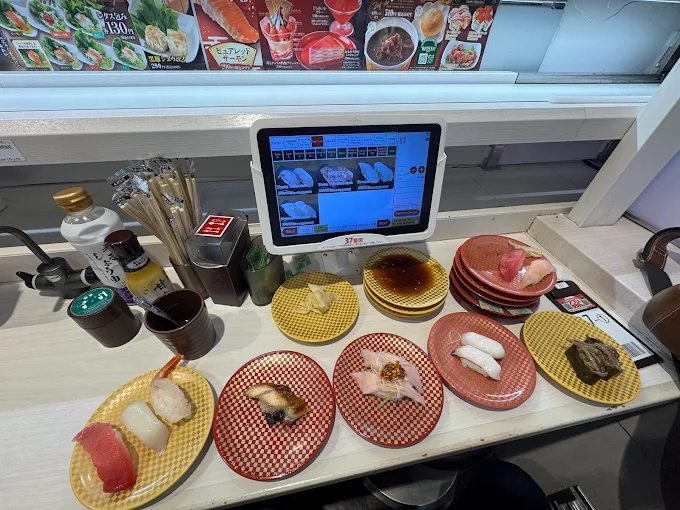
Uobei takes a different approach. Instead of a traditional rotating belt, everything is made to order and delivered to your seat at high speed on three stacked express lanes.
Some branches use miniature bullet-train carriers to bring the food to you.
How It Works
- You order through a multilingual touchscreen at your seat. There is no general rotating belt.
- Orders typically arrive within minutes. The speed makes it a great option for a quick lunch between sightseeing stops.
- Seating is mostly counter-style, which suits solo travelers and pairs.
What to Expect
- One of the most affordable sushi options in Tokyo.
- The Shibuya Dogenzaka branch is very popular with international visitors. It does not accept reservations, so try visiting during off-peak hours (around 15:00 to 17:00) to avoid long waits.
Where to Find It
- Shibuya Dogenzaka (3-minute walk from Hachiko Exit), Ueno, and Shin-Okubo.
4. Katsu Midori Sushi
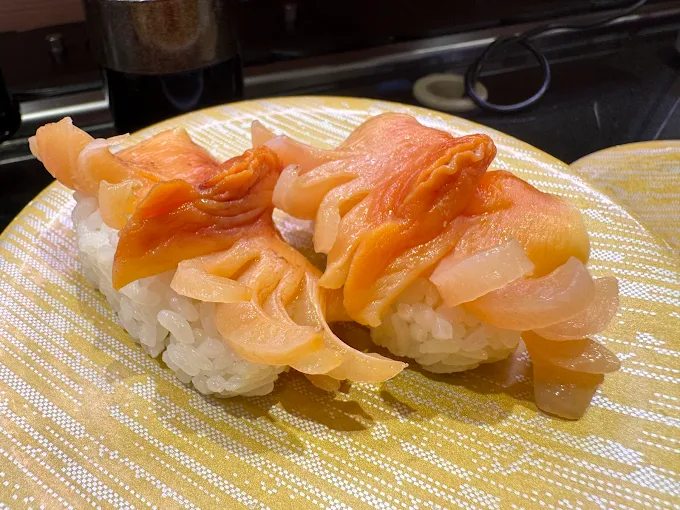
Katsu Midori is where things shift from “ultra-cheap” to “genuinely impressive value”.
It uses the conveyor-belt format, but the quality is noticeably higher than the big budget chains.
The fish is sourced directly from the Toyosu Market, and the cuts are often large enough to drape over the edges of the rice.
How It Works
- Touchscreens are available at most branches, but there’s still a strong sense of a real kitchen at work. Chefs call out greetings and announce freshly prepared specials.
- Some branches have digital queue systems that let you check your ticket status on your phone, so you can shop nearby while waiting.
What to Expect
- A substantial meal typically costs ¥1,500 to ¥3,000.
- Wait times of 60 to 120 minutes are common during peak dinner hours. Reservations are generally not accepted.
- Many food-focused travelers consider Katsu Midori the bridge between budget chains and mid-range sushi restaurants.
Where to Find It
- Seibu Shibuya (near Shibuya Station), Atre Meguro (near Meguro Station) and Granduo Kamata (JR Kamata Station).
5. Sushi Zanmai
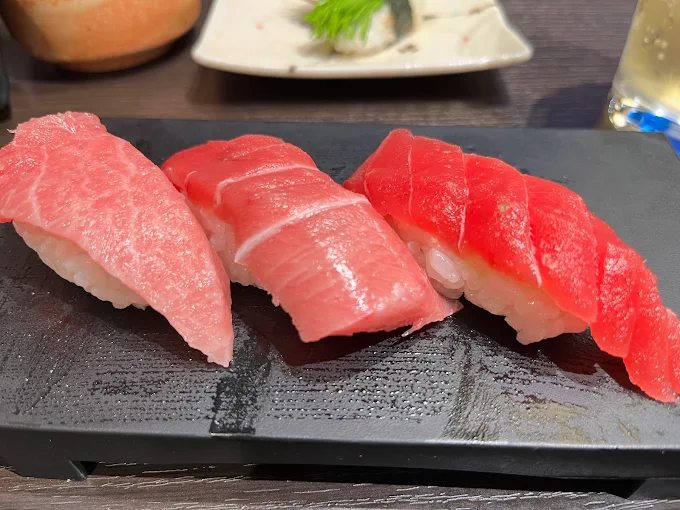
Sushi Zanmai is one of Tokyo’s most recognizable casual sushi chains.
Its founder, Kiyoshi Kimura, is famous for spending record-breaking amounts on the first bluefin tuna at the old Tsukiji market auctions, earning him the nickname “Tuna King”.
How It Works
- Unlike the automated conveyor-belt chains, Sushi Zanmai has a more traditional setup. You sit at a counter where chefs prepare sushi in front of you, or at table seating for groups.
- Photographic menus are available at most locations, making ordering straightforward for non-Japanese speakers.
What to Expect
- Not the absolute cheapest option. A casual meal usually runs ¥1,500 to ¥3,000. Premium tuna sets can go higher.
- A big advantage is convenience. Branches are in nearly every major Tokyo district, and many stay open 24 hours or very late. Good to know when you need a late-night meal.
- Weekday lunch sets tend to offer the best value.
Where to Find It
- Tsukiji (the brand’s spiritual home), Shinjuku Higashiguchi, Shibuya Dogenzaka, Asakusa Kaminarimon (near Senso-ji, over 100 seats), and Ginza/Yurakucho.
6. Sushi no Midori
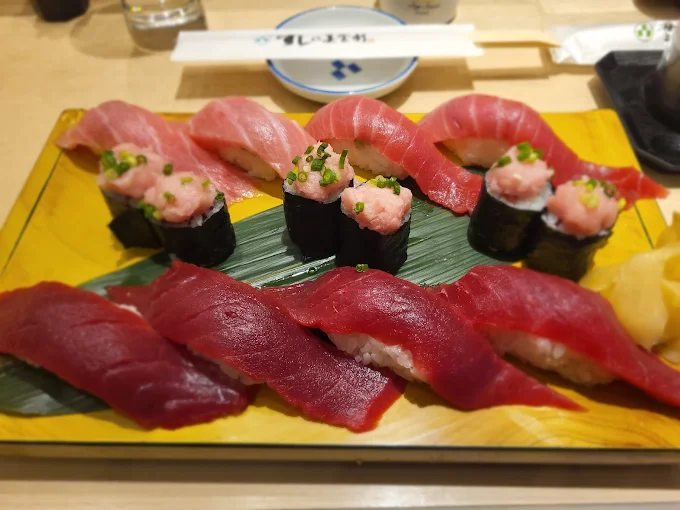
Umegaoka Sushi no Midori is a name that comes up constantly when people talk about the best-value sushi in Tokyo.
It is a different restaurant from Katsu Midori, though they share historical roots.
Sushi no Midori focuses on a traditional seated dining experience rather than conveyor-belt sushi.
Why People Wait for It
- The restaurant invests a higher share of revenue into ingredients than average, which means large, fresh portions that would cost much more at a high-end place.
- Lines are some of the longest in Tokyo. Dozens of people waiting at any given time is normal at popular branches.
- A digital ticket system lets you scan a QR code and track your position on your phone, so you can explore the area instead of standing in line.
What to Expect
- Lunch sets range from ¥1,500 to ¥3,000. A full dinner usually falls between ¥3,000 and ¥5,000.
- At the Shibuya Mark City branch, arriving 30 minutes before opening is recommended. The Akasaka branch can sometimes be a faster option during the day.
- The multilingual menu includes clear photos.
Where to Find It
- Shibuya Mark City (connected to Shibuya Station), Ginza (near Shimbashi Station), Akasaka Biz Tower, and Umegaoka (the original flagship, Odakyu Line).
7. Uogashi Nihon-ichi
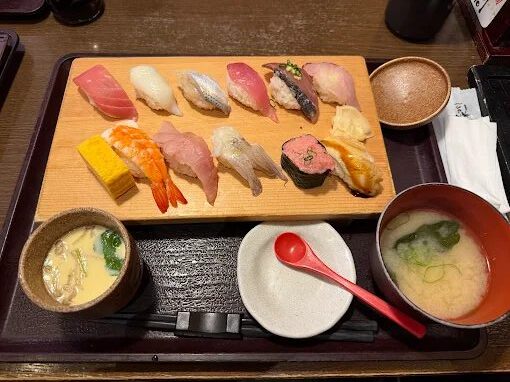
Uogashi Nihon-ichi is a standing sushi bar, and it offers something different from everything else on this list.
Standing sushi has deep roots in Japanese food culture. Sushi was originally sold as a quick snack at roadside stalls during the Edo period.
How It Works
- You stand at a narrow counter and order through a digital tablet or speak directly to the chef. There are no chairs.
- The pace is fast. Chefs often deliver a freshly made piece of sushi in under 30 seconds.
- Because customers don’t linger, waits are usually shorter than at seated restaurants.
What to Expect
- A meal of 10 to 12 pieces typically totals ¥1,000 to ¥2,000.
- Perfect for solo travelers and couples who want a quick, satisfying sushi stop. Less practical for families with very young children.
Where to Find It
- Shinjuku Nishiguchi, Shibuya Dogenzaka, Atre Akihabara (directly connected to the station), Yaesu Nakadori (near Tokyo Station), and Ikebukuro Higashiguchi.
8. Nemuro Hanamaru
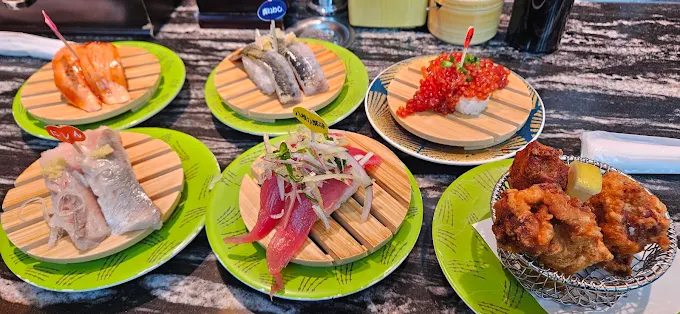
Nemuro Hanamaru brings Hokkaido-style sushi to Tokyo.
The chain comes from the port town of Nemuro, one of Japan’s most productive fishing grounds, and much of the seafood is shipped directly from there.
Why It’s on This List
- Not the cheapest option here, but included because the quality-to-price ratio is excellent. You get a taste of Hokkaido’s cold-water specialties at a fraction of high-end prices.
- The menu features seasonal items that are often unavailable at other Tokyo chains, and portions are hearty.
What to Expect
- A full meal usually costs ¥2,000 to ¥4,000.
- Peak-time queues can exceed two to three hours at main branches. A numbered ticket system lets you explore nearby while waiting.
- The standing bar at Tokyu Plaza Ginza is a good alternative if you want Hanamaru quality with a shorter wait.
Where to Find It
- KITTE Marunouchi (near Tokyo Station), Tokyu Plaza Ginza (conveyor-belt and standing bar options), and Korakuen near Tokyo Dome (often less crowded).
9. Kaiten Sushi Misaki
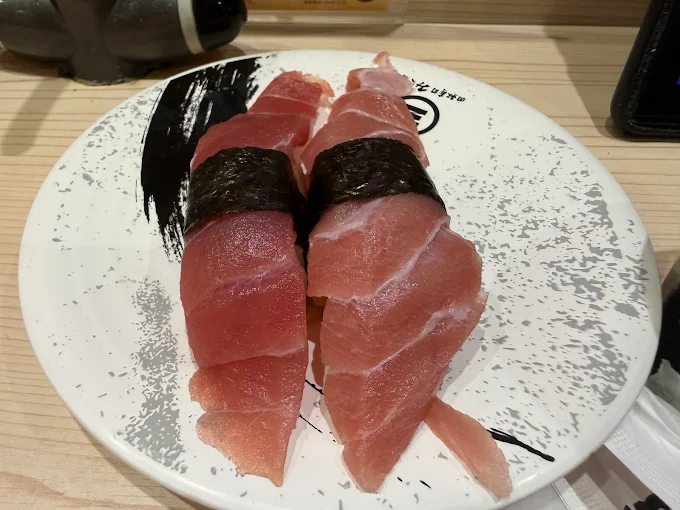
Kaiten Sushi Misaki may not have the international fame of Sushiro or Kura Sushi, but it’s a dependable budget chain that Tokyo locals rely on.
The brand emphasizes its connection to Misaki Port in Kanagawa Prefecture, a hub for tuna and fresh seafood.
Why It’s Useful
- Many branches are inside or right next to major train stations, so you’ll often find one exactly where you need it during a day of commuting.
- The atmosphere is clean, modern, and slightly more relaxed than the high-energy spots. A good option when you want a no-fuss sushi meal without a long wait.
- Works well as a backup when more famous places are too crowded.
What to Expect
- A typical meal costs ¥2,000 to ¥4,000.
- Multilingual touchscreen ordering at most branches.
Where to Find It
- Shinjuku Sanchome, Takadanobaba (across from the JR exit), Nakano Sun Mall, Sangenjaya, and Ningyocho.
10. Ganso Zushi
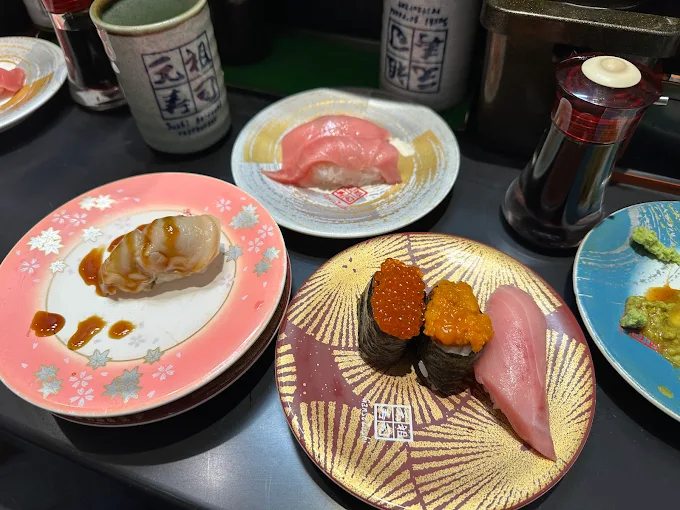
Ganso Zushi is one of Tokyo’s long-standing budget sushi chains, and it has a distinctly old-school feel.
If you’re curious about what conveyor-belt sushi was like before the touchscreens and bullet-train delivery systems, this is a good place to see it.
How It Works
- The restaurants are often small, with a single counter surrounding a rotating belt and chefs working in the center.
- You grab plates as they pass by, or ask the chef directly. No apps, no games, no express lanes. Simple and functional.
What to Expect
- You can easily leave satisfied for under ¥1,500, making it among the cheapest options in Tokyo.
- The vibe is local and relaxed. It’s the kind of place where office workers grab a quick 20-minute lunch.
- Some branches are in older buildings and may close or go through renovations. Check that the branch you’re heading to is still open before visiting.
Where to Find It
- Akihabara Manseibashi (near Akihabara Station), Shinjuku Nishiguchi (near the West Exit), and Asakusa (near the temple district).