
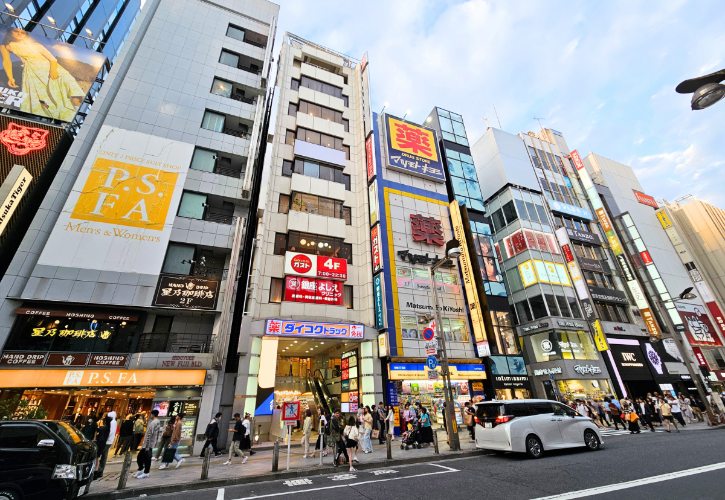
Tokyo is one of those cities that surprises you most when you slow down and walk.
Beyond the big attractions and popular landmarks, each neighborhood has its own mood, its own food, its own energy.
A ten-minute stroll can take you from towering skyscrapers to quiet temple gardens, from bustling market streets to peaceful riverside paths.
These ten walkable neighborhoods are some of the best ways to experience what makes Tokyo so special. 😊
1. Shinjuku
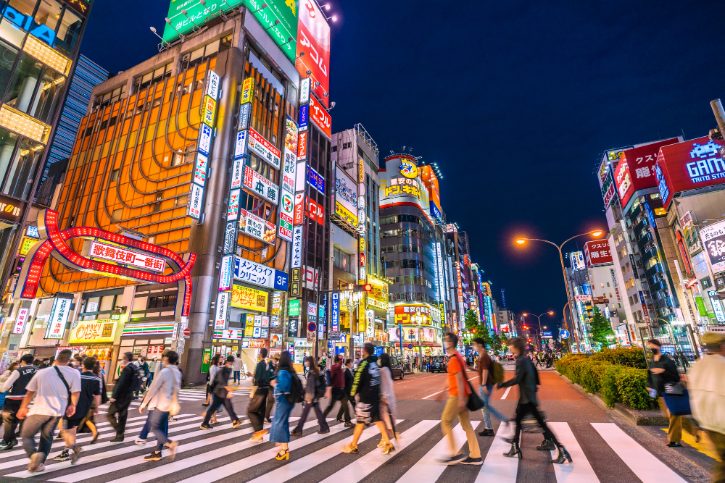
Shinjuku is Tokyo at full volume. Skyscrapers, gardens, neon streets, and food halls all packed into one neighborhood. What makes it special is how quickly the mood changes as you walk.
What You’ll See
- Corporate towers and observation decks in Nishi-Shinjuku
- Busy shopping streets and department store food halls near the station
- Neon-lit entertainment corridors in Kabukicho
- Peaceful greenery at Shinjuku Gyoen, with Japanese, French, and English garden sections
Don’t Miss
- Shinjuku Gyoen, a historic garden with Japanese, French, and English landscape sections and a tropical greenhouse
- Tokyo Metropolitan Government Building, with free observation decks on the 45th floor at 202 meters
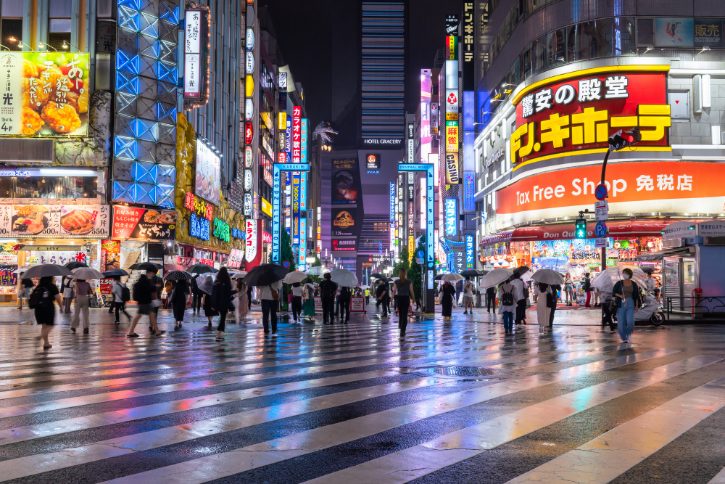
- Kabukicho, Tokyo’s iconic neon nightlife district with brilliant arches and dense entertainment streets
- Department store food halls (depachika), with massive displays of traditional bento and global pastries
- The narrow postwar dining alleys tucked behind the main shopping streets near the station
Tips
- Pick your exit before leaving the station. Shinjuku Station is huge and confusing.
- Visit the gardens during the day (closed Mondays). Save Kabukicho for the evening when the neon is fully lit.
- Stick to main streets in Kabukicho at night and stay aware of your surroundings.
Read More: 17 Best Things to Do in Shinjuku with My Perfect Itinerary
2. Harajuku
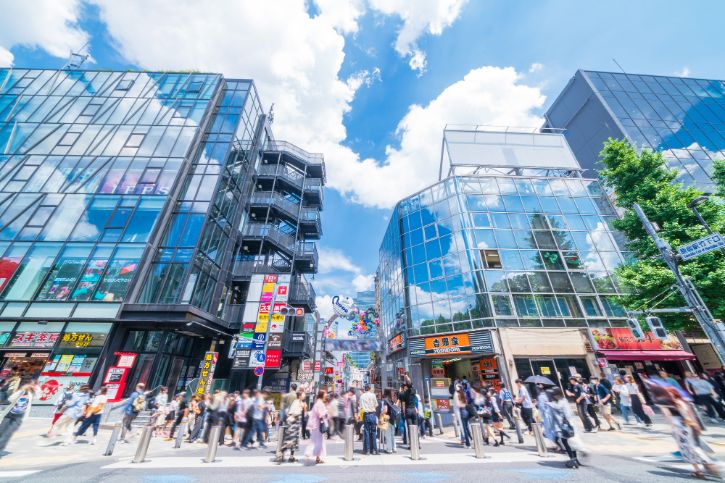
Harajuku runs on creative energy. Colorful fashion, cute dessert shops, and indie boutiques sit just minutes from one of Tokyo’s most peaceful shrines.
What You’ll See
- Takeshita Street, a 350-meter pedestrian lane packed with fashion and dessert stalls
- Quiet backstreets of Ura-Harajuku with indie boutiques and street art
- Omotesando, a tree-lined boulevard with upscale flagship stores
- Cat Street, a relaxed pedestrian path connecting Harajuku to Shibuya
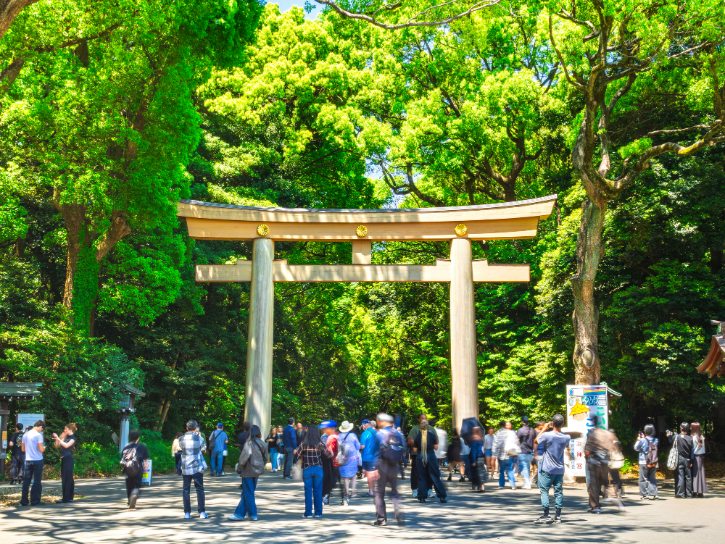
- Meiji Shrine, set inside a hand-planted forest of over 100,000 trees
Don’t Miss
- Meiji Shrine, a grand Shinto sanctuary inside a peaceful forest of over 100,000 hand-planted trees
- Ura-Harajuku backstreets, where independent designers, galleries, and hidden cafes define the local indie scene
- The oversized cotton candy, colorful crepes, and artisanal sweets from Harajuku’s famous dessert stalls
- Laforet Harajuku, a multi-level style hub for subculture fashion and creative brands
Tips
- Takeshita Street gets very crowded on weekends. Visit before 10:00 AM for easier photos.
- Eat street food right outside the shop where you bought it. Walking and eating is considered bad etiquette.
- Do not skip the side streets. That is where Harajuku really shows its personality.
3. Shibuya
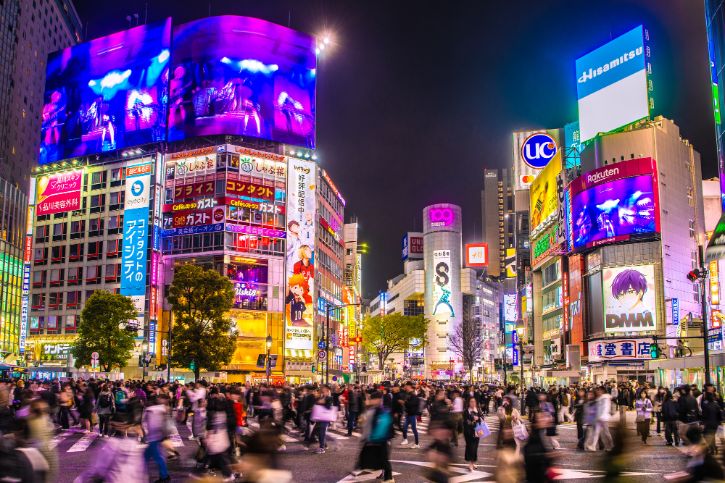
Shibuya is far more than its famous crossing. Walking reveals hidden cafe alleys, rooftop parks, narrow shopping streets, and easy connections to Harajuku.
What You’ll See
- Shibuya Scramble Crossing, where up to 3,000 people cross at once
- Hachiko Statue, Tokyo’s most famous meeting point
- Center-Gai shopping street and the stone steps of Spain-zaka
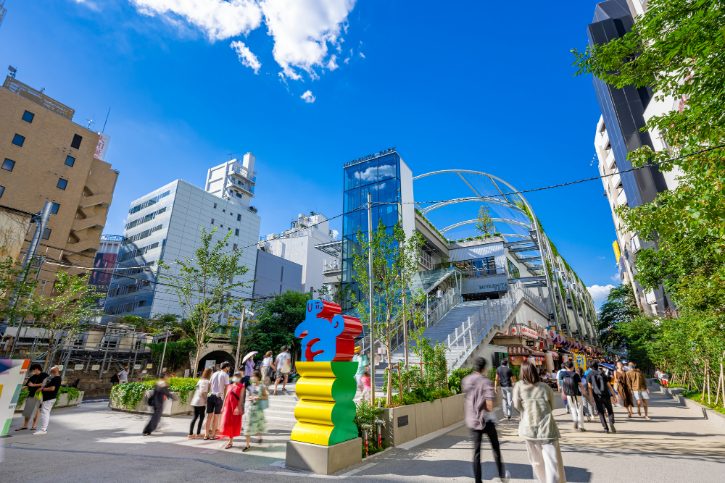
- Miyashita Park, a 330-meter elevated green space with shops below
- Nonbei Yokocho, a lantern-lit alley with tiny yakitori stalls
- Shibuya Sky, an open-air observation deck 230 meters up
Don’t Miss
- Nonbei Yokocho, a tiny lantern-lit alley lined with yakitori stalls and local draft beer spots
- Miyashita Park, a modern elevated green space with climbing walls, a skate park, and shops below
- Shibuya Sky, an open-air observation deck with 360-degree views from 230 meters up
- Shibuya Parco, a department store mixing high fashion, art galleries, and pop-culture floors
- The quiet, hidden third-wave coffee shops tucked into the residential hillsides around the edges of the neighborhood
Tips
- Visit once during the day and once at night. The mood shifts completely under the digital billboards.
- Focus on smaller zones instead of trying to cover everything at once.
- Book Shibuya Sky tickets online in advance, especially for sunset slots.
Read More: 17 Top Things to Do in Shibuya with My Ideal Itinerary
4. Roppongi
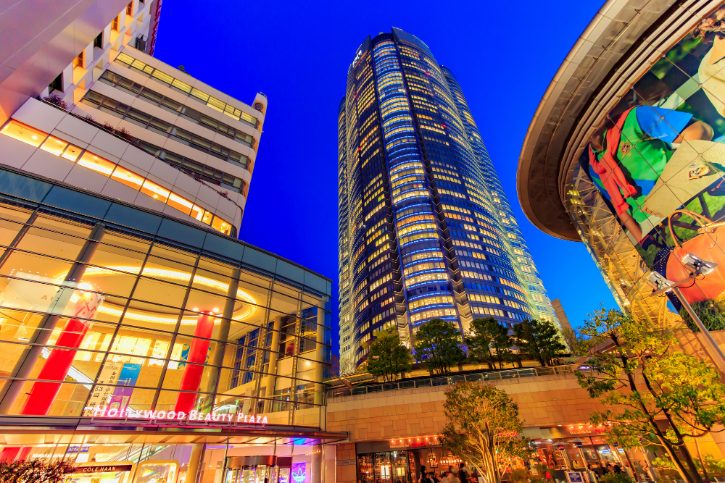
Roppongi is not just nightlife. Art museums, public sculptures, skyline views, and refined dining make it one of Tokyo’s most polished walking neighborhoods.
What You’ll See
- The National Art Center, Tokyo, a striking glass building
- Tokyo Midtown with design shops and the green pathways of Hinokicho Park
- Roppongi Hills, home to the nine-meter-tall Maman spider sculpture
- Mori Art Museum on the 53rd floor and Tokyo City View panoramic deck
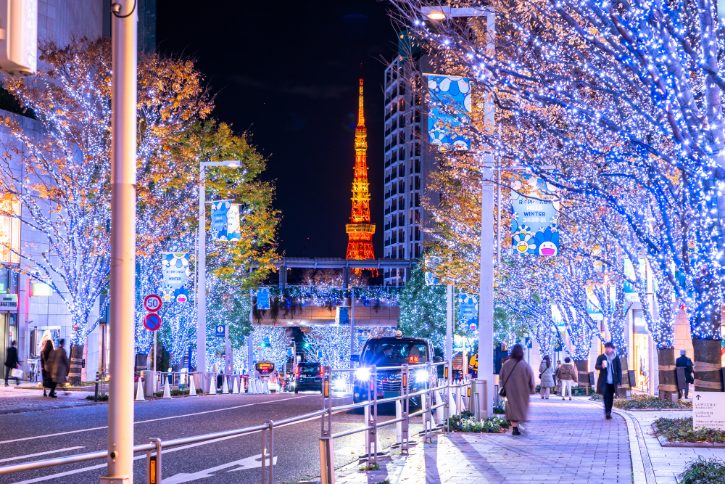
- Keyakizaka Street, beautifully illuminated in winter
Don’t Miss
- Mori Art Museum, a premier contemporary art museum on the 53rd floor with globally minded exhibitions
- Tokyo City View, a 52nd-floor indoor observation deck with panoramic views of Tokyo Tower and the skyline
- The Maman sculpture, a nine-meter-tall bronze spider by Louise Bourgeois in the Roppongi Hills plaza
- Hinokicho Park, a quiet green escape tucked behind the sleek Tokyo Midtown complex
- Keyakizaka Street, a row of zelkova trees that becomes a stunning photo spot when lit up in winter
Tips
- Plan your walk from late afternoon into evening to enjoy museums, dinner, and city lights in one visit.
- Show your ticket stub from one Art Triangle museum to get discounts at the other two.
- The nightlife area around Roppongi Crossing gets busy late at night. Early evening is calmer.
5. Ginza
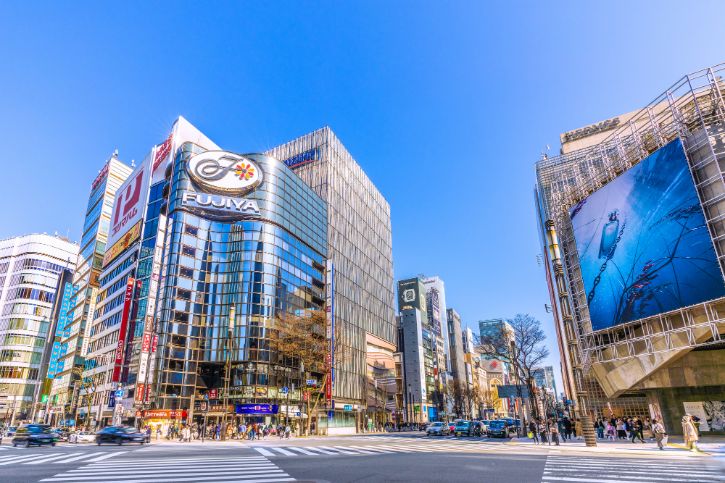
Ginza is Tokyo’s most elegant shopping district. Wide, organized streets, beautiful storefronts, and refined cafes make it one of the city’s most pleasant walks.
What You’ll See
- Chuo-dori, the main boulevard lined with department stores and luxury flagships
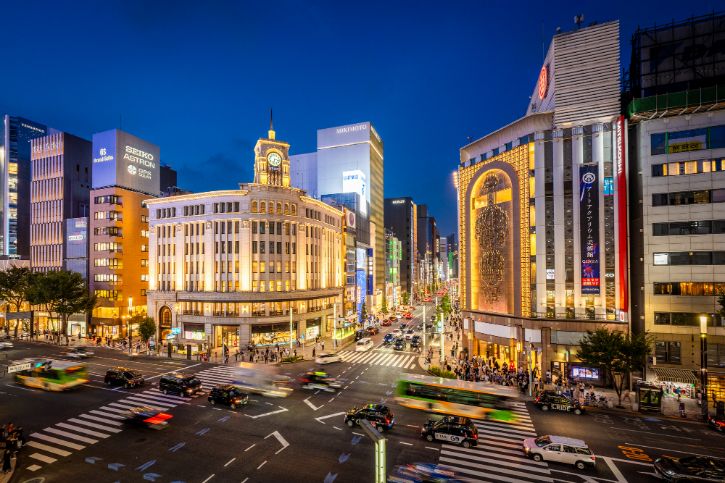
- Historic Mitsukoshi and the modern GINZA SIX complex with its rooftop garden
- Department store food halls (depachika) with stunning bento and pastry displays
- Itoya stationery, independent galleries, and elegant coffee salons in the side streets
- Nearby Yurakucho for rustic dining under railway arches, or Tsukiji for seafood
Don’t Miss
- GINZA SIX, a modern shopping complex with a beautiful public rooftop garden
- The historic Seiko House Ginza clock tower at the Ginza 4-chome junction
- Itoya, a beloved multi-story stationery store tucked into the side streets
- Kimuraya bakery, famous for introducing Japan’s anpan bean-jam buns
- The weekend “Pedestrian Paradise” on Chuo-dori, when tables and parasols are set up along the car-free avenue
Tips
- On weekends and holidays, Chuo-dori closes to traffic for a “Pedestrian Paradise” with tables and parasols set along the avenue.
- Ginza is especially comfortable to walk because the streets are wide, clean, and well organized.
Read More: Top 17 Things to Do in Ginza
6. Akihabara
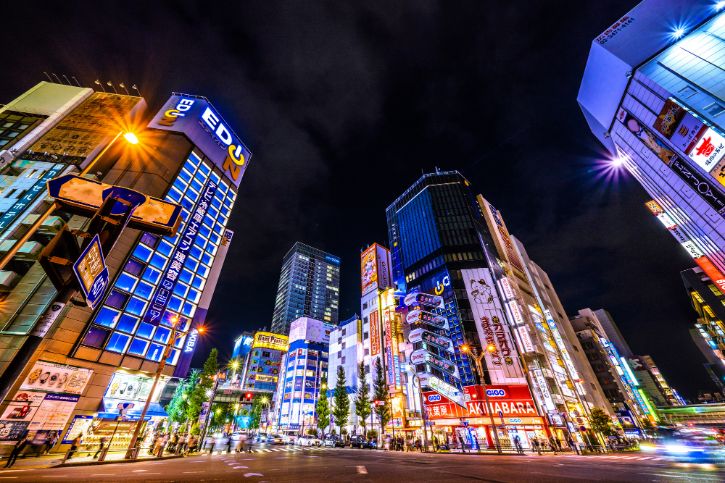
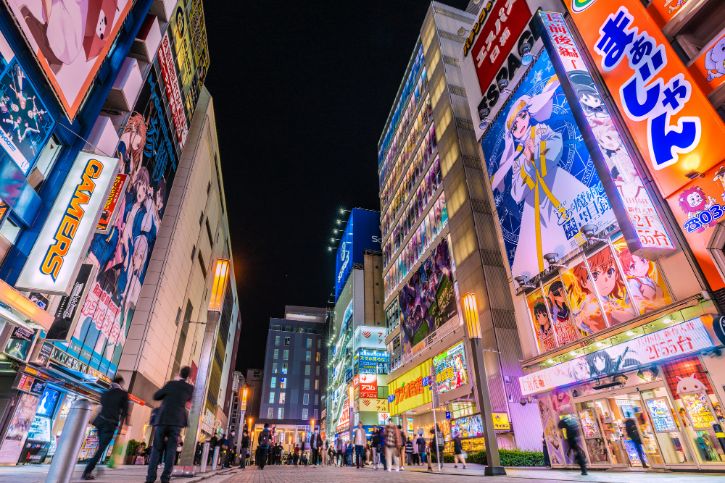
Akihabara is not traditionally beautiful, but it is visually electric. Bright signs cover entire buildings, anime murals stretch across walls, and multi-story shops overflow with electronics, games, and collectibles.
What You’ll See
- Massive electronics stores like Yodobashi Camera
- Anime and manga shops like Radio Kaikan
- Game centers with crane games, rhythm machines, and vintage arcade cabinets
- Retro gaming stores like Super Potato, filled with vintage consoles
- The preserved postwar Radio Center, a maze of tiny electronic parts stalls
Don’t Miss
- Super Potato, a famous nostalgia shop filled with vintage Japanese consoles, game cartridges, and old-school snacks
- The Radio Center, a preserved postwar labyrinth of tiny stalls selling electronic parts and micro-components
- Radio Kaikan, an iconic multi-story anime and collectibles hub blaring J-pop and anime theme songs
- The gigantic, colorful billboards and hand-painted anime murals that cover entire building facades
- Kanda Myojin Shrine, a quiet historic shrine just a short walk northwest from the main streets
Tips
- Always look up. A single building can have different specialized shops on every floor.
- Sundays, Chuo-dori becomes a pedestrian zone (1:00 PM to 6:00 PM April to September, 1:00 PM to 5:00 PM October to March).
- Give yourself extra time if you like browsing. The aisles in collectible stores are narrow and can get crowded.
7. Ueno
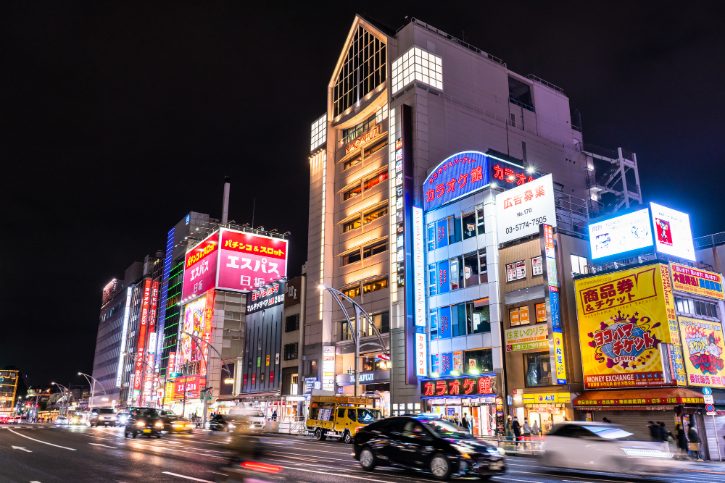
Ueno blends culture, nature, and street-food energy into one compact area. A spacious green park with museums and temples sits right next to a bustling open-air market.
What You’ll See
- Ueno Park, a vast public park with cherry trees, shrines, and peaceful walking paths
- Tokyo National Museum, Japan’s oldest national museum
- Shinobazu Pond with the floating octagonal Bentendo Temple
- Ueno Zoo, known for its giant panda programs
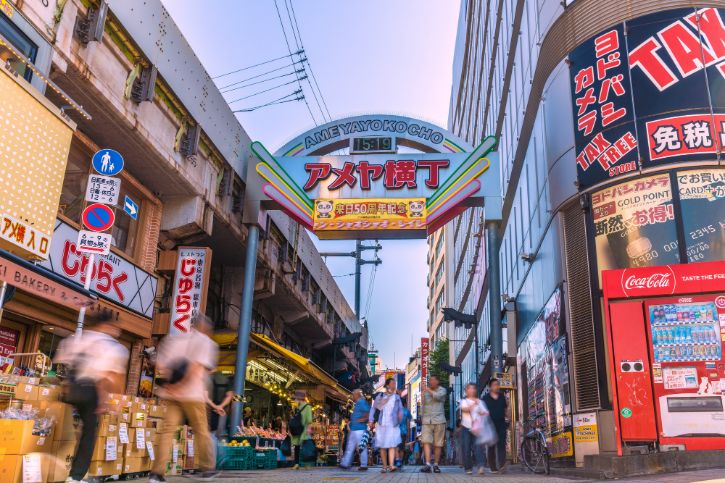
- Ameyoko, a lively market street running under the elevated train tracks
Don’t Miss
- Tokyo National Museum, Japan’s oldest national museum with an unparalleled collection of Japanese art and artifacts
- Shinobazu Pond, a massive natural pond divided into lotus, boating, and waterfowl sanctuary sections
- Bentendo Temple, a historic octagonal temple sitting on a small island in the middle of the pond
- Ameyoko, a vibrant open-air market under the train tracks with street food, fresh produce, and bargain shopping
- The cherry-tree-lined walking paths in Ueno Park during spring
Tips
- Allow extra hours if you love museums. Most galleries close on Mondays.
- Spring is the most popular time for cherry blossoms, but the park is a refreshing escape year-round.
- Ameyoko can be crowded, but it is a great spot for street food and local energy.
8. Asakusa
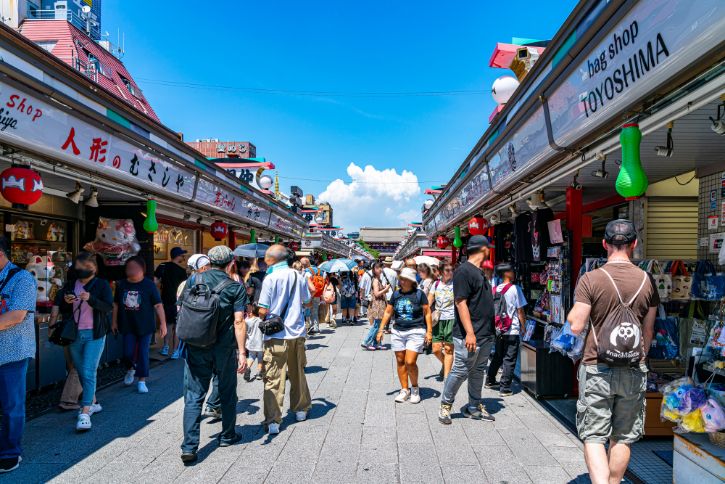
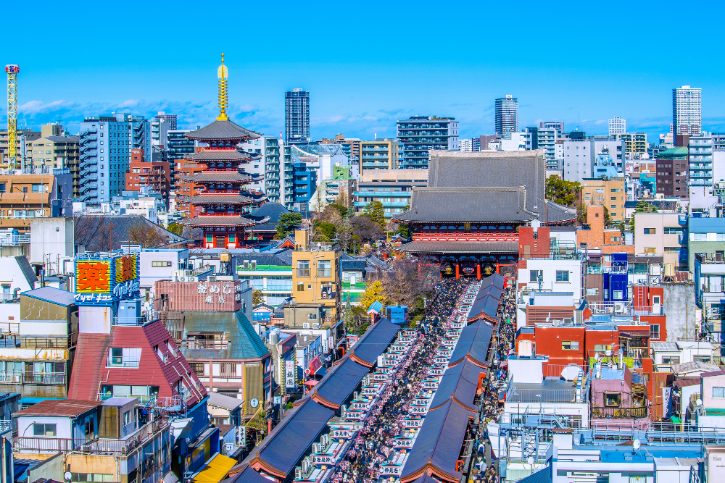
Asakusa is where you go to see Tokyo’s traditional side. Incense, temple gates, old-town shopping streets, and views of Tokyo Skytree across the river make this a must for first-time visitors.
What You’ll See
- Kaminarimon Gate with its giant red paper lantern
- Nakamise-dori, a 250-meter shopping street with traditional crafts and snacks
- Sensoji Temple, Tokyo’s oldest Buddhist temple with a five-story pagoda
- Quieter historic lanes like Denboin-dori
- Sumida River promenade with dramatic Tokyo Skytree views
Don’t Miss
- Sensoji Temple, Tokyo’s oldest Buddhist temple with a majestic main hall and a five-story pagoda
- Denboin-dori, a charming low-rise street with traditional artisans, accessories, and local dining
- Fresh, warm ningyo-yaki sponge cakes and crispy hand-grilled senbei rice crackers from the traditional snack shops
- The Sumida River promenade, with historic bridges, passing water buses, and dramatic unobstructed views of Tokyo Skytree
- The free observation deck on the 8th floor of the Asakusa Culture Tourist Information Center, directly opposite Kaminarimon
Tips
- Arrive around 9:00 AM for a peaceful walk before the crowds build.
- Come back after dark for a different experience. The temple gates and lanterns are beautifully illuminated.
- Do not only rush through Nakamise-dori. The side streets often feel more relaxed and rewarding.
Read More: 17 Wonderful Things to Do in Asakusa for First-Timers
9. Yanaka
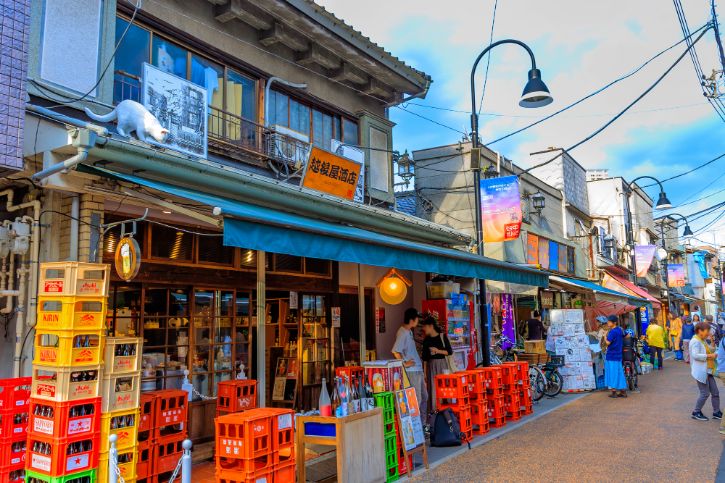
After Shinjuku, Shibuya, and Ginza, Yanaka feels like a different city. Narrow lanes, traditional wooden houses, old temples, and small family-run shops make this one of Tokyo’s slowest, quietest walking neighborhoods.
What You’ll See
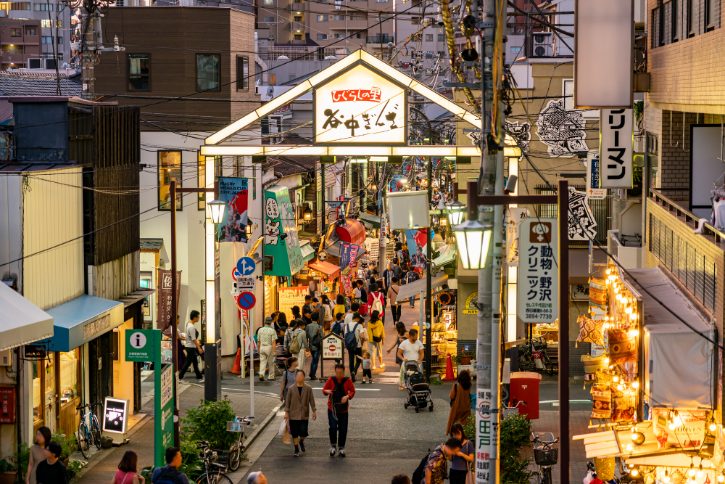
- Yanaka Ginza, a nostalgic shopping street with about 60 to 70 small local shops
- Yuyake Dandan, a stone staircase with sunset views over the low rooftops
- Cat-themed details everywhere, from wooden statues to cat-shaped pastries
- Yanaka Cemetery, with wide cherry-tree-lined pathways and the tomb of the last Tokugawa Shogun
- Nezu Shrine, a grand 1705 shrine with tunnels of red torii gates
Don’t Miss
- Yuyake Dandan, a wide stone staircase of 36 steps with famous sunset views over the low rooftops
- Cat-themed details scattered throughout the street, from handcarved wooden statues to cat-shaped pastries and souvenirs
- Yanaka Cemetery, a vast peaceful parkland with cherry-tree-lined pathways and the tomb of the last Tokugawa Shogun
- Nezu Shrine, a grand 1705 Shinto shrine with a historic wooden gate and winding tunnels of red torii gates
- The small family-run shops of Yanaka Ginza, including independent butchers, traditional sweet makers, and local woodcarvers
Tips
- Carry yen cash. Many small shops do not accept credit cards.
- Be respectful and keep your voice down around the cemetery and temple grounds.
- Visit in the afternoon when the local shops are open. This neighborhood is best explored slowly.
10. Ikebukuro
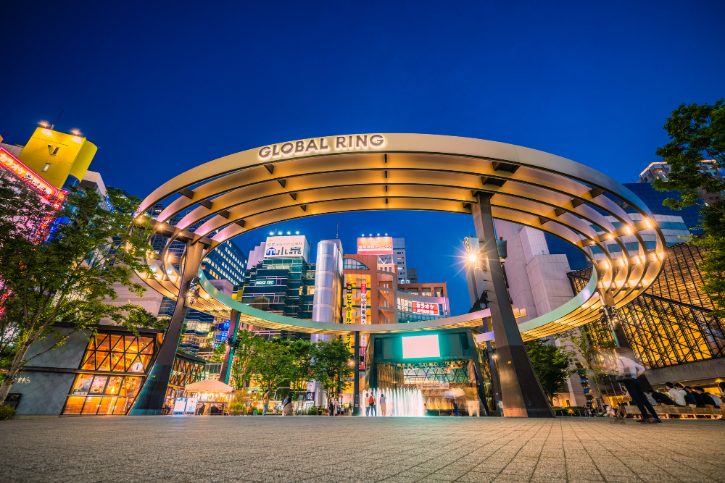
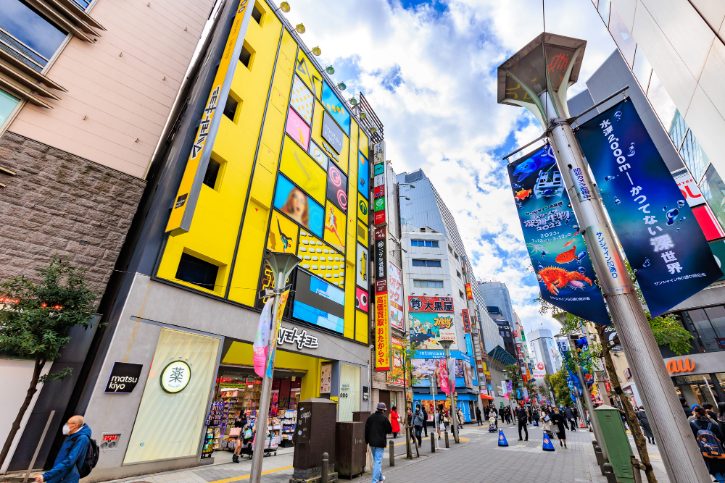
Ikebukuro is a lively, practical Tokyo hub that feels slightly more down-to-earth than Shinjuku or Shibuya. Big department stores, anime shops, food streets, and massive indoor attractions make it especially good on rainy days.
What You’ll See
- Sunshine City, a huge indoor complex with shopping, dining, an aquarium, a planetarium, and an observatory
- Otome Road, lined with anime character goods shops and cosplay boutiques
- Animate Ikebukuro, a ten-floor anime and manga flagship store
- Tobu and Seibu department stores flanking the station
- Competitive ramen streets near the East Exit
Don’t Miss
- Sunshine Aquarium, a rooftop marine sanctuary where penguins glide overhead in transparent tubes
- Sunshine 60 Observatory Tenbou-Park, an indoor high-altitude park with grassy lawns and 360-degree city views
- Animate Ikebukuro, a massive ten-floor flagship store dedicated to anime and manga
- Otome Road, the global center for female-oriented anime culture, lined with character goods shops and cosplay boutiques
- The competitive ramen streets near the East Exit, home to some of Tokyo’s most celebrated ramen spots
Tips
- Follow the underground signs to Exit 35 for the easiest route to Sunshine City.
- Ikebukuro is one of Tokyo’s best rainy-day neighborhoods. Most major attractions and shopping are indoors.
- The East Exit side has the most entertainment and anime culture. The West Exit side is better for department stores.
Related Posts

Photo Credit:
Photos by PIXTA