
Paris never stays the same for long.
If you are planning a trip, some major changes could affect how you get around, how much you pay, and how you visit the city’s most famous landmarks.
A few of these updates are easy to miss, especially if you are relying on older travel guides or advice from a previous visit.
Here are 5 important changes every tourist should know about before arriving in Paris. 😊
1. Paper Metro Tickets Are Being Phased Out
a. What Changed
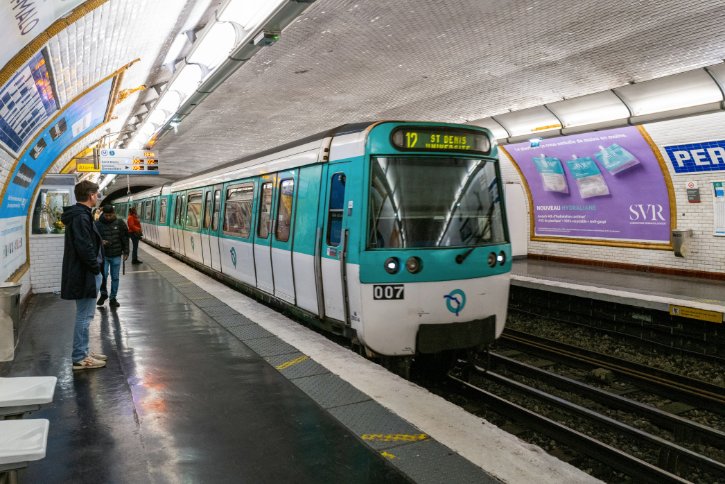
- The classic cardboard t+ and Origine-Destination tickets stopped being sold at all Metro, RER, bus, and tram stations on November 5, 2025.
- If you have been following older travel guides that mention buying a “carnet” (a booklet of ten paper tickets), ignore that advice completely. Carnets are obsolete.
b. Grace Period for Old Tickets
- Unused paper tickets can still be validated on buses and trams until May 2026.
- On the Metro, RER, and trains, paper tickets remain valid until June 2026.
- Paper tickets can no longer be used on tramway line T1 or on several select bus routes.
- Leftover tickets can be exchanged at any RATP or SNCF counter until September 1, 2026 (5 to 20 tickets per day, depending on the station). No cash refunds. The value is transferred onto a Navigo Easy card, which you need to get beforehand.
c. What to Use Instead
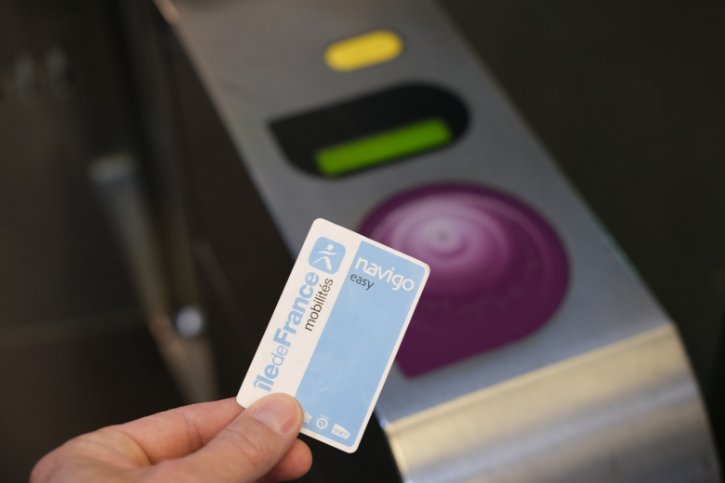
- Navigo Easy card: €2.00 to buy, €2.55 per ride. Not linked to your name, so it can be shared between trips. Best for families, groups, and anyone without a compatible phone.
- Mobile ticketing (Bonjour RATP or Île-de-France Mobilités app): Free download, €2.55 per ride. Tied to your phone and not shareable. Best for solo travelers.
- Navigo Liberté+: Free card, discounted rate of €2.04 per ride. Requires linking to a bank account. Best for long-term visitors.
- Contactless bank card on buses: Tap your credit or debit card at bus door terminals for a flat €2.50 fare. More expensive and no Metro transfers, but works as an emergency backup.
d. Who Is Affected
- Every tourist arriving in Paris who expected to buy paper tickets at the station.
- Families and groups especially, because one passenger, one pass. A single Navigo Easy card cannot be tapped for multiple people on the same journey. Everyone in your group needs their own card or phone.
e. What Tourists Should Do Now
- Decide on your transport plan before arriving based on group size, trip length, and comfort with apps.
- Solo travelers can go fully digital with the Bonjour RATP or Île-de-France Mobilités app.
- Families and groups should plan to pick up Navigo Easy cards early after arriving.
Read More: 17 Free Things to Do in Paris
2. Louvre Ticket Prices Have Increased

a. What Changed
- Starting January 14, 2026, the Louvre introduced a dual-rate pricing system that charges higher admission for visitors from outside the European Economic Area (EEA).
- This is part of a broader national policy. The Palace of Versailles, Sainte-Chapelle, and the Paris Opera are also rolling out higher rates for non-EEA visitors.
b. Current Ticket Prices
- Non-EEA visitors: €32.00 (a 45% increase from the previous standard rate)
- EEA residents/citizens: €22.00 (requires national ID or residency permit showing 90+ days)
- Under 18 (all nationalities): Free
- EEA residents under 26: Free
- Disabled visitors and one carer: Free
- Guided tour groups: €28.00 per person (capped at 20 participants)
- All tickets include the permanent collections, temporary exhibitions, and same-day or next-day entry to the nearby Musée Eugène-Delacroix.
c. Who Is Affected
- Mainly non-European tourists. A non-EEA family of two adults and two children under 18 now pays €64.00 total, since children remain free regardless of nationality.
- EEA residents and citizens are not affected by the increase.
d. Why It Matters
- At €32.00 per ticket, the Paris Museum Pass becomes a much stronger deal for non-EEA tourists, especially if you plan to visit multiple monuments that have also raised their international rates.
- The Louvre now enforces strict daily capacity limits. Walking up without a reservation is risky, and on-site counters only open during very low attendance periods.

e. What Tourists Should Do Now
- Book timed-entry tickets in advance through the official Louvre website. Walk-up entry depends entirely on daily availability.
- Compare single tickets vs. the Paris Museum Pass if you plan to visit three or more major monuments.
- Avoid unofficial sellers. Do not buy from street sellers or lookalike websites. These tickets often fail security checks at the gate.
- Bring valid ID. EEA residents need a national ID or residency permit. Free-admission visitors need photo identification with date of birth.
3. Notre-Dame Has Reopened With New Rules

a. What Changed
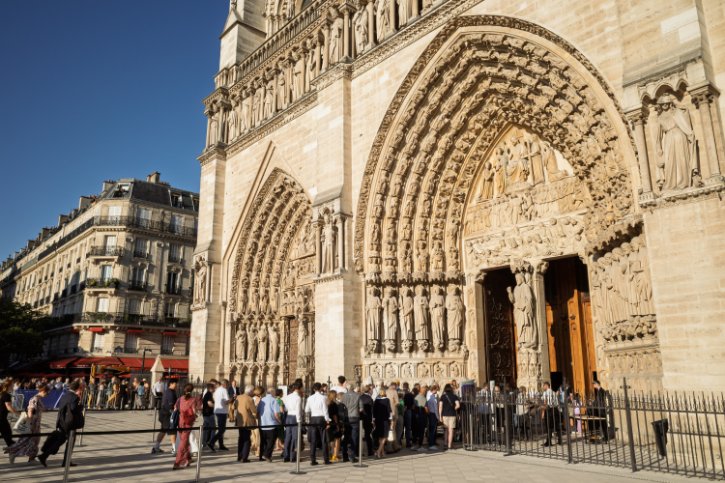
- Notre-Dame Cathedral has officially reopened to the public. The interior has been redesigned along a new biblical and symbolic visitor path starting at the central portal of the Last Judgment.
- The historic treasury is fully accessible. Some exterior restoration and surrounding square redevelopment are still in progress.
- Entry remains completely free. Any paid “skip-the-line” ticket for the cathedral interior sold by a third party is fraudulent.
b. How Reservations Work
- Free reservations can only be booked on the day of, the day before, or up to 48 hours before your visit. You cannot reserve weeks or months in advance.
- Walk-ups are allowed, but expect wait times of several hours without a reservation.
- Book only through the official Notre-Dame website or mobile app. No third-party platform is authorized to sell or distribute access slots.
c. Booking Tips
- The reservation system uses geofencing and security filters. Using a VPN, making rapid repeated attempts, or booking from far outside France can trigger an automated IP block.
- The safest approach is to book your slot while physically in Paris or the surrounding Île-de-France region to avoid triggering security filters.
- Do not try to secure a slot weeks before your trip. Wait until you are within the 48-hour booking window.
d. Nearby Paid Attractions (Separate Bookings Required)
- Notre-Dame Towers: €16.00, mandatory online reservation only, no on-site sales. A 424-step climb with no elevator, water points, or restrooms. Not recommended for pregnant women, young children, or those with heart conditions or vertigo. Large luggage, strollers, and glass bottles are prohibited.
- Sainte-Chapelle and the Conciergerie: Separate paid monuments with their own independent reservations.
- Plan for three separate bookings if you want the full Île de la Cité experience: cathedral, towers, and Sainte-Chapelle.
Read More: 10 Breathtaking Churches in Paris You Can’t Miss
4. Grand Palais Has Been Restored and Transformed

a. What Changed
- The Grand Palais completed its extensive four-year restoration in June 2025.
- The renovation restored the iconic glass skylights that flood the central Nave with natural light, highlighted mid-century structural elements, and added full modern accessibility throughout the building.
b. How It Works
- The Grand Palais is not a traditional museum with a permanent collection. It is a dynamic exhibition hall and event space.
- What you see depends entirely on what is scheduled during your visit, so there is no single “Grand Palais experience” that is the same year-round.
c. Why It Matters
- Because the Centre Pompidou is closed for renovations from 2025 through 2030, the Grand Palais is co-producing four major contemporary art exhibitions each year in partnership with the Pompidou.
- The Grand Palais d’été summer season (June to August) transforms the Nave into a multi-zone public space with concerts, performances, children’s workshops, and large-scale installations.
d. Nearby Attractions to Pair With
- The Grand Palais is in the 8th arrondissement on Avenue du Général Eisenhower.
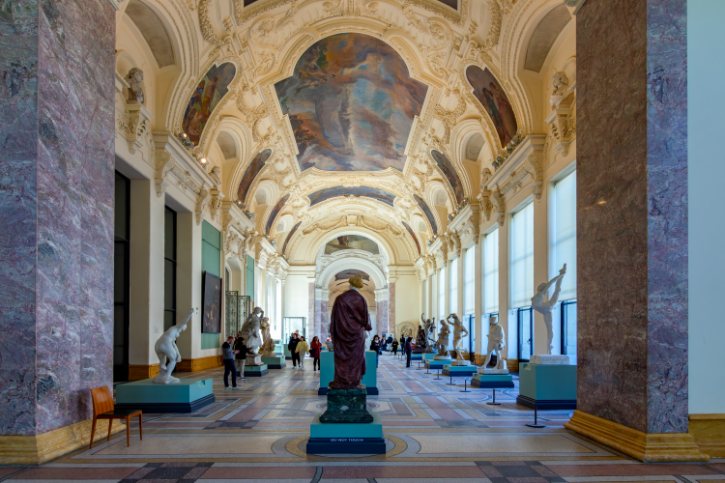
- Walk across the street to the Petit Palais (free admission).
- Continue to the Champs-Élysées, cross the Pont Alexandre III toward the Invalides, or stroll along the Seine to the Place de la Concorde.
e. What Tourists Should Do Now
- Check the exhibition calendar before your trip. Programming rotates, so confirm what is showing during your travel dates.
- Book timed admission tickets in advance for popular exhibitions. Same-day walk-ups are rarely available.
- Build the Grand Palais into a central Paris afternoon. It pairs naturally with the Petit Palais, the Champs-Élysées, and the Seine riverbanks, all within easy walking distance.
5. Eiffel Tower Group Booking Rules Have Changed
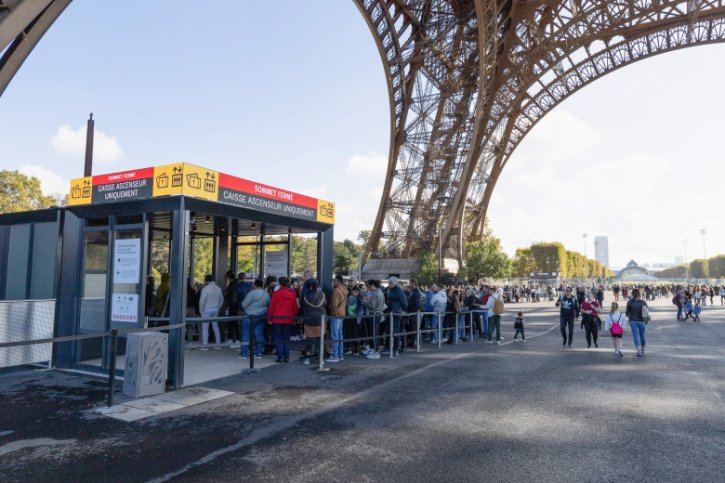
a. What Changed
- Starting September 29, 2026, the Eiffel Tower is enforcing strict new access and group booking rules to reduce overcrowding and queue chaos at the base of the tower.
- On-site ticket counters will no longer sell group tickets for any access type, including both lift and staircase.

b. New Group Booking Rules
- Groups of 10 or more (including the guide) must buy tickets exclusively online.
- Splitting groups at the ticket window to bypass this rule is strictly prohibited.
- Guides must accompany their group at least up to the second floor. They cannot just help with ticket purchases at the counter.
- Guide limits: One group per guide, maximum eight visitors, within a 30-minute time slot.
- Tourism professionals must use the dedicated platform at ticketpro.toureiffel.paris. Booking opens July 2, 2026, for visits after September 29.
c. Who Is Affected
- Guided tour groups, school groups, large families, tour operators, and anyone booking through a professional guide.
- Individual travelers too: Starting September 29, 2026, staircase tickets will also require advance online reservations. The walk-up staircase purchase option is being removed.
d. Why It Matters
- Elevator tickets for sunset and summit time slots already sell out within hours during peak season. These new rules make advance planning even more critical.
- “Skip-the-line” does not mean skipping security. It only refers to bypassing the ticket office queue. Every visitor must still go through mandatory security screening, which typically takes 15 to 45 minutes.

e. What Tourists Should Do Now
- Book elevator tickets exactly 60 days in advance through the official Eiffel Tower website.
- Book staircase tickets online after September 29. Walk-up purchases will no longer be available.
- Avoid unofficial resellers. Buy only through the official Eiffel Tower website.
- If booking a guided tour, confirm your operator follows the new group rules and has credentials through the official professional channel.
- Arrive on time with your full group. Late arrivals or incomplete groups may not be accommodated.
Read More: 10 Best Free Spots to Take Stunning Eiffel Tower Photos