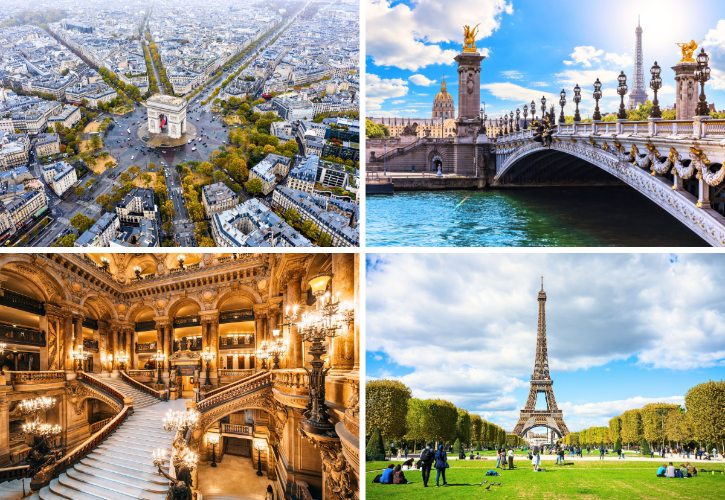
Paris is one of those cities that gets under your skin the moment you arrive. It is not just the famous landmarks that make it feel special.
It is the atmosphere, the history layered into every street, the way light hits the river at the right moment, and the quiet corners you stumble on when you least expect them.
This list covers 12 places that capture different sides of Paris, from grand monuments to hidden passageways and even the mysterious tunnels deep beneath the city. 😊
1. Arc de Triomphe
Why It Feels So Grand
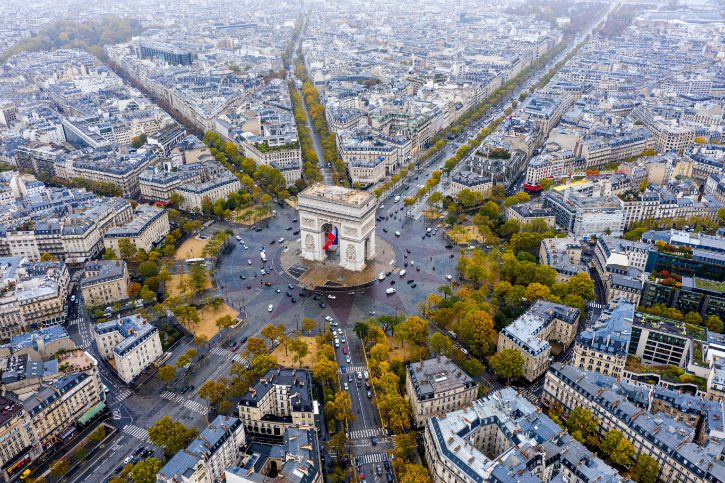
- The sheer size of the Arc de Triomphe stops you in your tracks when you see it up close.
- It stands at the center of Place Charles de Gaulle, where twelve grand avenues radiate outward in a star-shaped pattern.
- Napoleon commissioned it in 1806 to honor the French armies, and it has become a powerful symbol of national pride and remembrance.
What to Notice
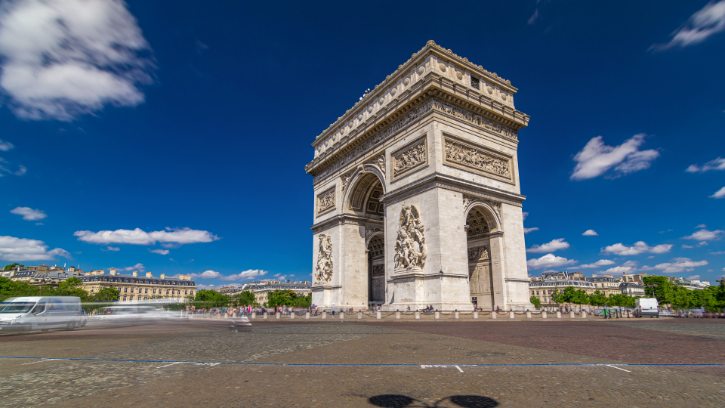
- The detailed sculpted reliefs on the stone pillars, especially La Marseillaise by François Rude, which captures the energy of the French Revolution.
- Inscriptions on the inner walls listing hundreds of French generals and historic battles.
- The Tomb of the Unknown Soldier beneath the central vault, where a flame is lit every day in honor of those who fell in World War I.
- From the top, the view stretches along the historical axis of Paris toward the Louvre and La Défense.
Practical Tip
- Do not cross the traffic circle on foot. Use the Passage du Souvenir, the underground pedestrian tunnel accessible from the top of the Champs-Élysées or Avenue de la Grande-Armée.
Nearest Station
- Charles de Gaulle – Étoile (Metro Lines 1, 2, 6 and RER Line A)
2. Eiffel Tower
Why It Hits Different in Person
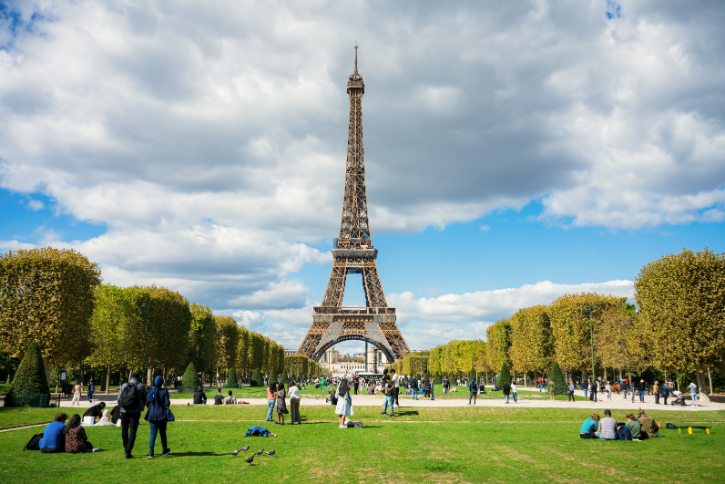
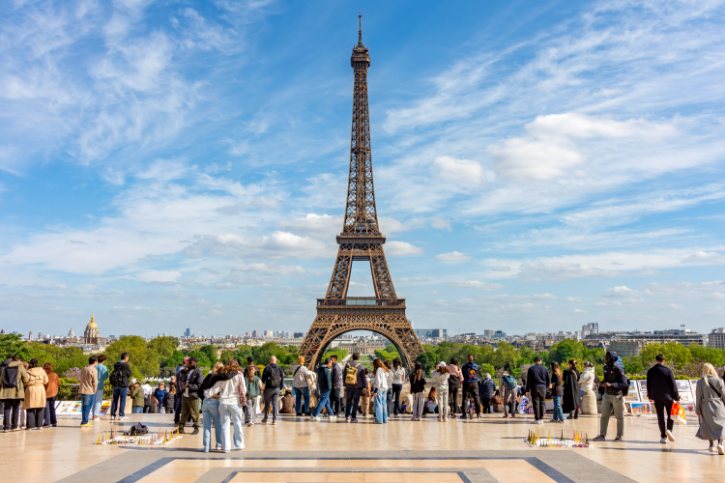
- Photos cannot capture the emotional weight of standing in front of this tower for the first time.
- For many visitors, this is the moment Paris suddenly feels real.
- The iron lattice soaring above you and the four massive arched bases create a sense of scale that surprises even experienced travelers.
Best Viewpoints
- Trocadéro for the classic, wide-open view with the tower perfectly framed.
- Champ de Mars to look straight up from the lawns beneath the tower.
- The Seine riverbanks and nearby bridges to see how the tower anchors the river landscape.
- Metro Line 6 between Passy and Bir-Hakeim, where the train crosses the Seine above ground and the tower appears dramatically from behind the rooftops.
What to Notice
- The intricate ironwork made up of around 18,000 individual components held together by warm-toned rivets.
- The painted surface shifts in tone with the changing Parisian light throughout the day.
Choosing Your Station
- Head to Trocadéro (Metro Lines 6 and 9) for the wide postcard view.
- Start at Bir-Hakeim (Metro Line 6) for a closer approach.
- Champ de Mars – Tour Eiffel (RER Line C) brings you right to the base.
Read More: 10 Best Free Spots to Take Stunning Eiffel Tower Photos
3. Pont Alexandre III
Why It Feels Magical
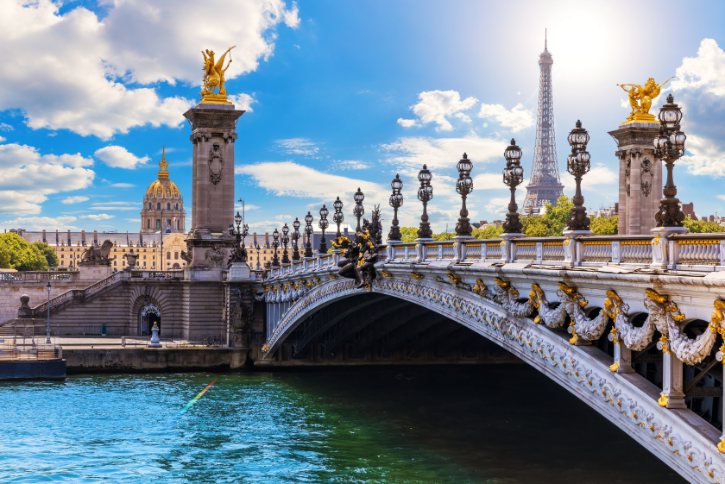
- Widely considered the most beautiful bridge in Paris, every detail here is ornate and grand.
- Built to celebrate the Franco-Russian Alliance of 1891, it was designed with a flat single-arch profile to keep the views between the Champs-Élysées and Les Invalides completely unobstructed.
What to Notice
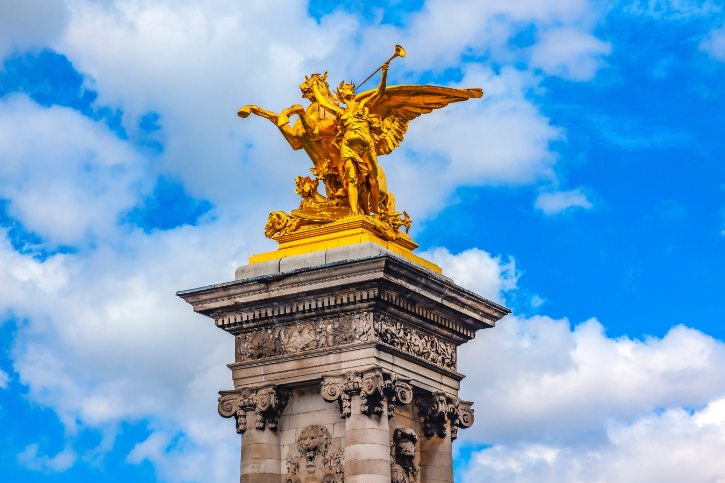
- Four gilded bronze Pegasus statues (called the Fames) representing the sciences, arts, commerce, and industry.
- Hammered copper reliefs at the center: the Nymphs of the Seine face upstream with the arms of Paris, while the Nymphs of the Neva face downstream with the arms of Imperial Russia.
- Beautiful Eiffel Tower angles framed by the Art Nouveau lamp posts.
- Views toward the Grand Palais on one side and Les Invalides on the other.
Walking Route Fit
- The bridge connects the Esplanade des Invalides on the left bank with Avenue Winston Churchill on the right bank, making it a smooth link between several key areas.
Nearest Stations
- Invalides (Metro Lines 8 and 13, RER Line C) or Champs-Élysées – Clemenceau (Metro Lines 1 and 13)
4. Musée d’Orsay
What Makes It Unique
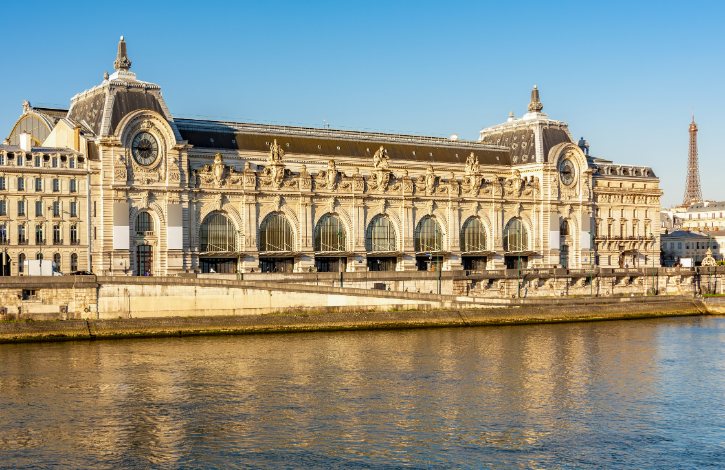
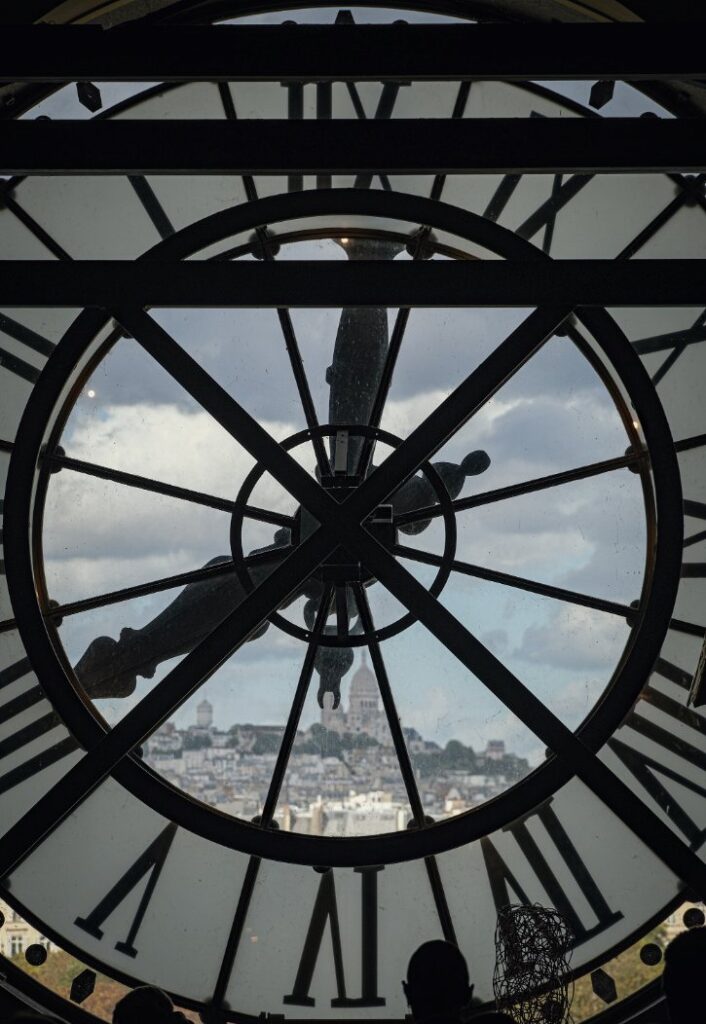
- The museum is housed in the Gare d’Orsay, a grand Beaux-Arts railway station built for the 1900 World’s Fair.
- The original iron-and-glass barrel vault of the train hall is still intact, and the monumental gilded clocks on the walls remind you this place once welcomed trains.
The Art Inside
- Best known for its world-class collection of Impressionist and Post-Impressionist art from 1848 to 1914.
- Major works by Claude Monet, Pierre-Auguste Renoir, Vincent van Gogh, and Paul Cézanne.
Why It Feels Different from the Louvre
- The Louvre can feel overwhelming. Musée d’Orsay has a more focused, linear layout that is easier to navigate.
- Many visitors find it more emotionally engaging because the space feels intimate rather than enormous.
Nearest Stations
- Solférino (Metro Line 12) or Musée d’Orsay (RER Line C)
5. Palais Garnier
Why It Feels Like a Palace
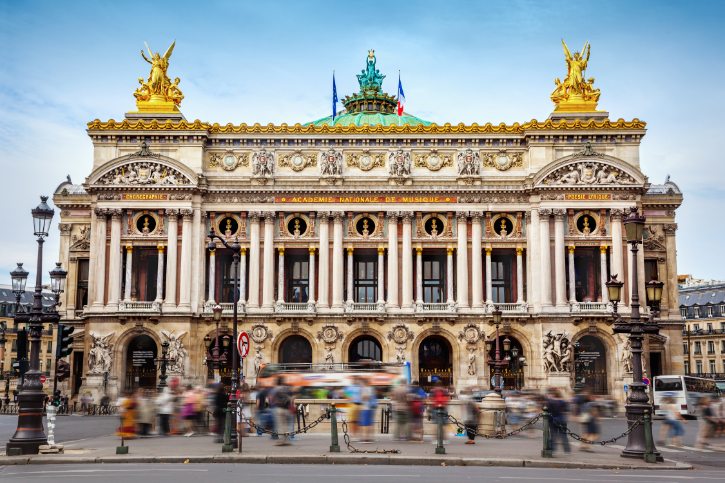
- Designed by Charles Garnier and completed in 1875, this opera house was built to embody the full grandeur of the Second Empire under Napoleon III.
- The exterior is covered in multicolored marble, stone friezes, and gilded sculptures.
What to Notice Inside
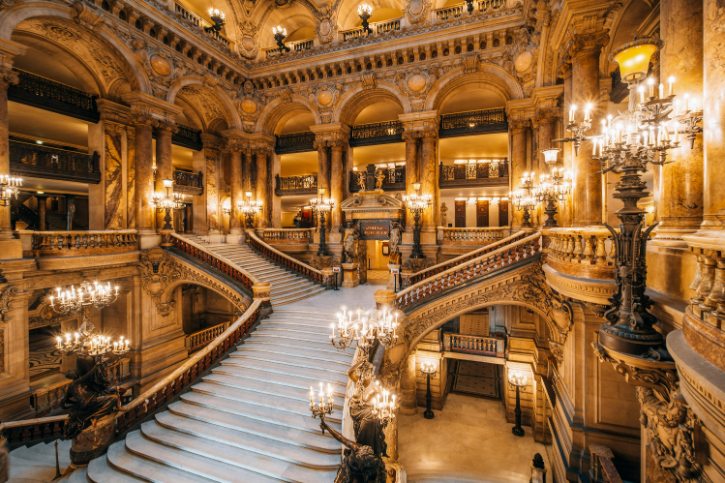
- The Grand Escalier, built from white Italian, red Spanish, and green Swedish marble, sweeping upward under soaring balconies.
- The auditorium ceiling painted by Marc Chagall in 1964, with dreamlike figures honoring fourteen major composers.
- The spectacular bronze-and-crystal chandelier hanging above the audience.
Cultural Connection
- Palais Garnier is the historic home of the Paris Opera and a symbol of classical dance and drama.
- The building’s hidden passages and underground water cistern directly inspired Gaston Leroux’s The Phantom of the Opera.
Nearest Station
- Opéra (Metro Lines 3, 7, and 8)
6. Montmartre
What Makes It Different
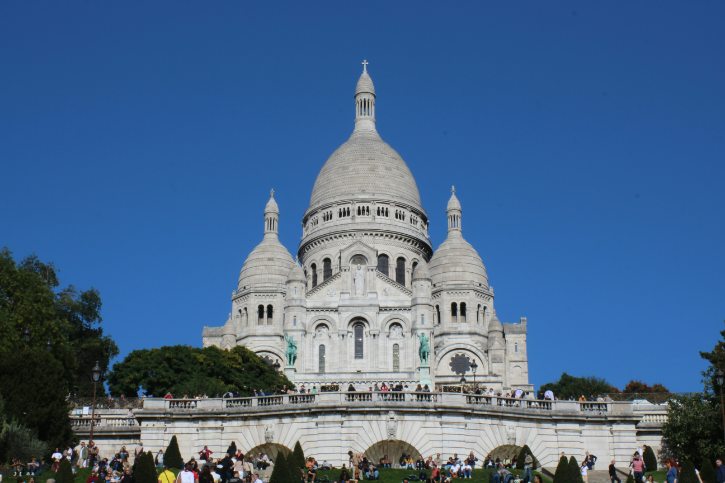
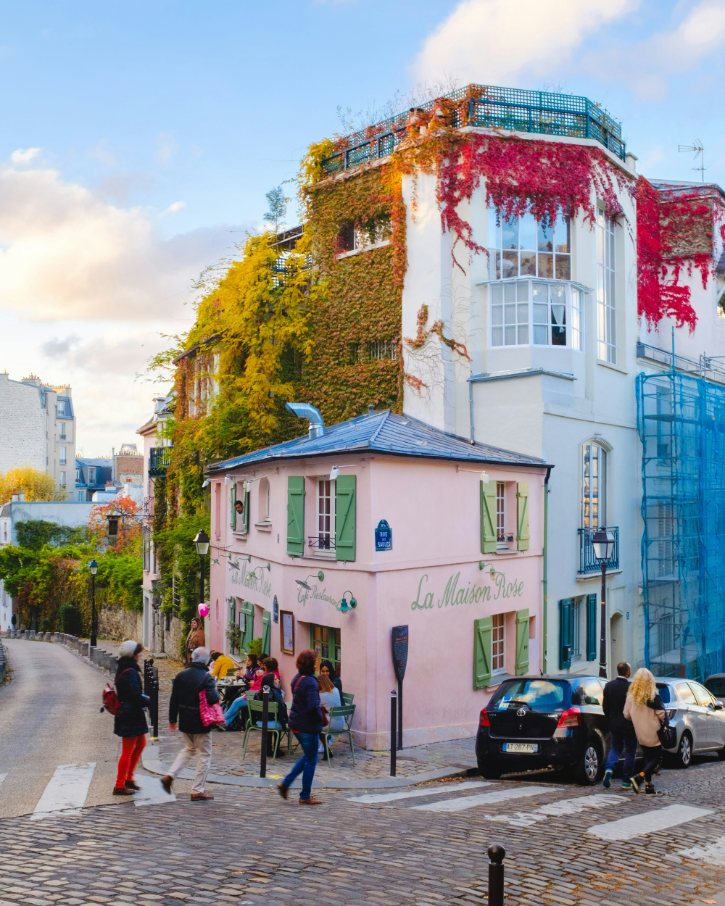
- Perched on a hill in northern Paris, Montmartre has a village-like atmosphere that feels completely separate from the rest of the city.
- Steep cobblestone streets, vine-covered staircases, quiet squares, and cozy cafés define the neighborhood.
Read More: 12 Amazing Spots You Can’t Miss in Montmartre
Places Worth Exploring
- Rue de l’Abreuvoir, a curving cobblestone street framed by historic rose-colored houses.
- Place du Tertre, where artists still gather to paint and sketch.
- Quiet side streets and unexpected viewpoints that reward wandering without a fixed plan.
Read More: 10 Beautiful Paris Streets That Make You Want to Keep Walking
Artistic History
- During the late 19th and early 20th centuries, Montmartre attracted artists like Pablo Picasso, Henri de Toulouse-Lautrec, and Vincent van Gogh. That creative spirit still lingers today.
Practical Tip
- The area involves a lot of slopes and stairs. To skip the 197-step climb to Sacré-Cœur, take the Montmartre Funicular from near Square Louise Michel. It reaches the top of the hill in under two minutes.
Nearest Stations
- Abbesses (Metro Line 12) or Anvers (Metro Line 2)
7. Galerie Vivienne
Why It Feels Hidden
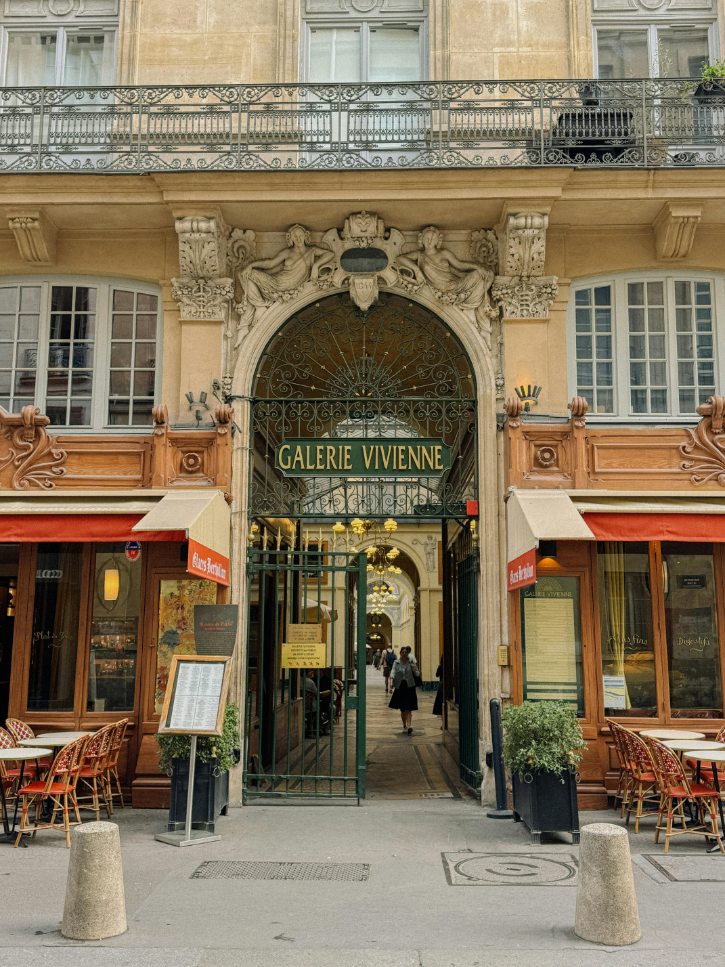
- Tucked away in the 2nd arrondissement near the Palais Royal, this covered passage feels like stepping into a different era.
- Built in 1823, it is one of the finest surviving 19th-century covered passages in Paris.
What to Notice
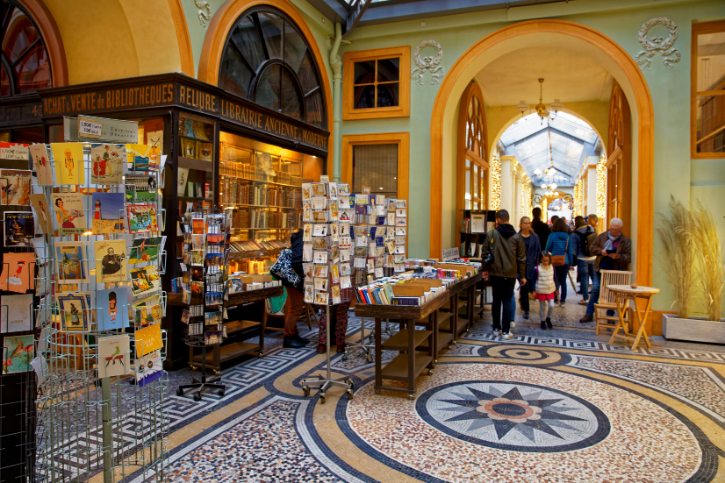
- The beautiful mosaic floor by Giandomenico Facchina and Mazzioli, featuring geometric borders and classical patterns.
- The glass roof and hemispherical dome that fill the corridor with soft natural light.
- Old-world wood-framed shopfronts and the Jousseaume bookshop, selling rare books here since 1826.
Walking Route Fit
- Pairs naturally with a stroll from the Louvre through the Palais Royal and the Columns of Buren. A lovely contrast after bigger, busier landmarks.
Nearest Stations
- Bourse (Metro Line 3) or Palais Royal – Musée du Louvre (Metro Lines 1 and 7)
8. Louvre Museum
Why It Feels Different from Other Museums
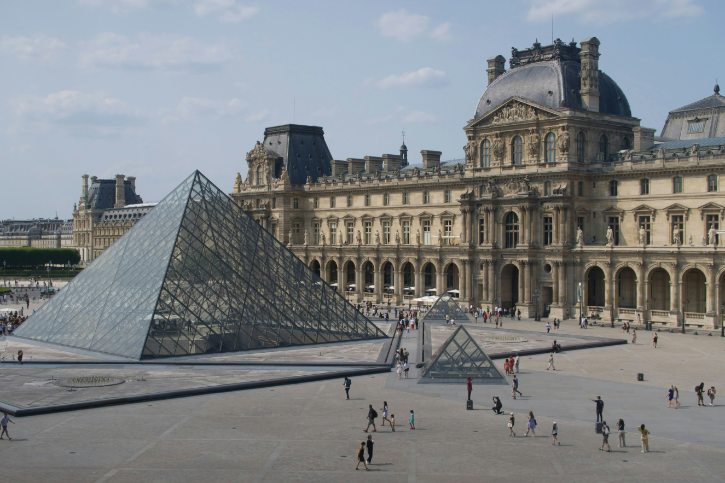
- The Louvre is a former royal palace with over eight centuries of history, and that setting shapes the entire experience.
- Arriving at the vast courtyards and classical façades, accented by the modern glass pyramid by I.M. Pei, is dramatic in itself.
Key Highlights
- The Mona Lisa and the Winged Victory of Samothrace in the Denon Wing.
- The Venus de Milo and the ancient foundations of the medieval fortress in the Sully Wing.
- The grand palace rooms, which are works of art in their own right.
Practical Tips
- Do not try to see everything in one visit. Pick two or three areas and take your time.
- Skip the main Pyramid queue by using the underground Carrousel entrance at 99 Rue de Rivoli, which connects directly from the metro.
Nearest Station
- Palais Royal – Musée du Louvre (Metro Lines 1 and 7)
9. Sainte-Chapelle
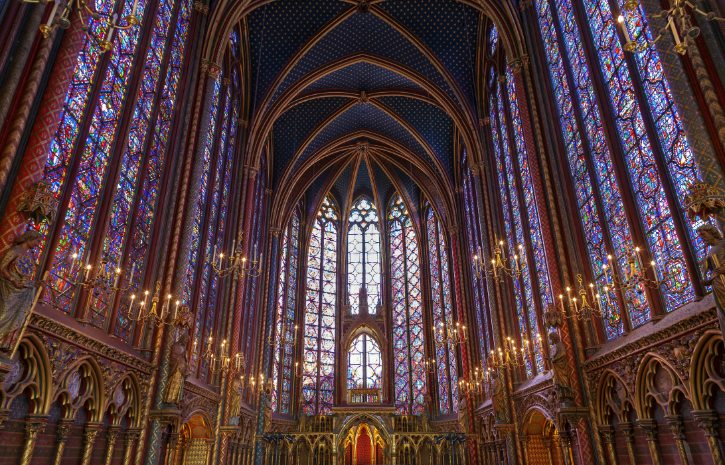
Why It Takes Your Breath Away
- Built in the 13th century by King Louis IX to house sacred relics including the Crown of Thorns.
- The upper chapel’s stone walls seem to disappear entirely, replaced by fifteen towering stained-glass windows rising 15 meters high.
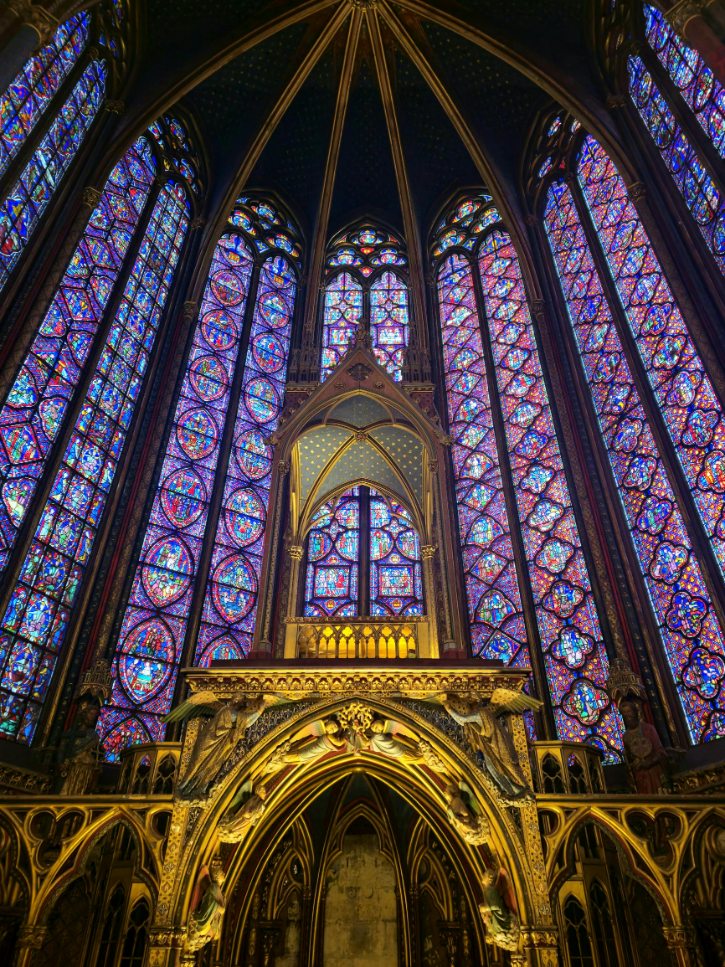
What to Notice
- The windows contain 1,113 individual biblical scenes and fill the space with an intense crimson and cobalt glow.
- The light shifts throughout the day as the sun moves, so the colors are constantly changing.
Walking Route Pairing
- Located on the Île de la Cité, it pairs perfectly with Notre-Dame Cathedral nearby, followed by a walk along the Seine.
Read More: 10 Best Spots in Île de la Cité You Can’t Miss
Nearest Station
- Cité (Metro Line 4)
10. Notre-Dame Cathedral of Paris
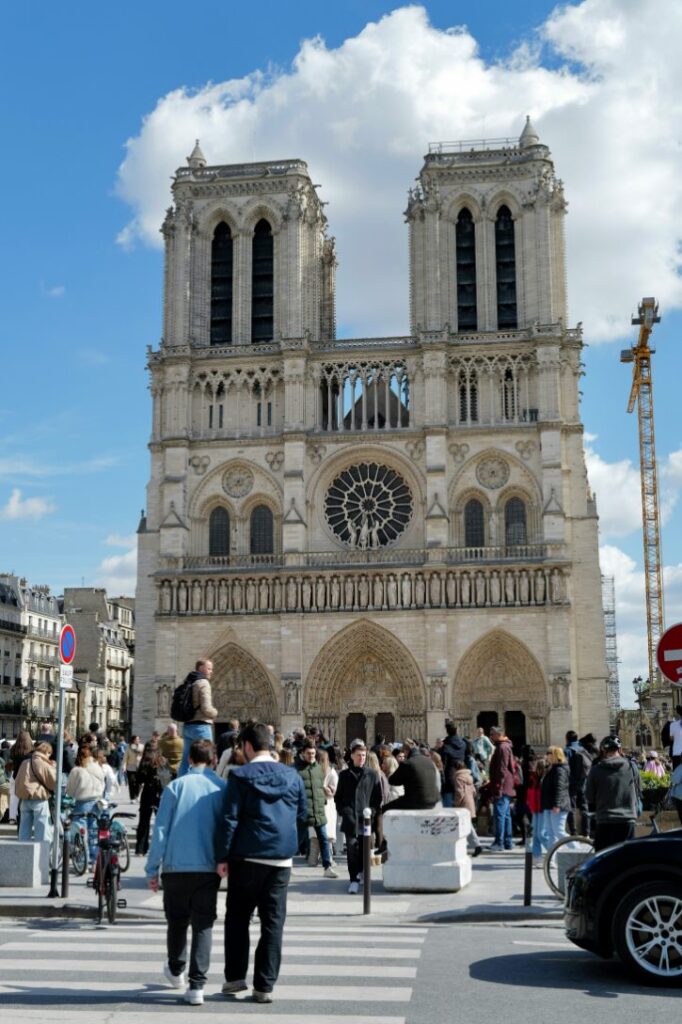
Why It Matters
- A masterpiece of Gothic architecture and a profound national symbol of Paris.
- Features soaring rib vaults, dramatic flying buttresses, and towers rising 69 meters high.
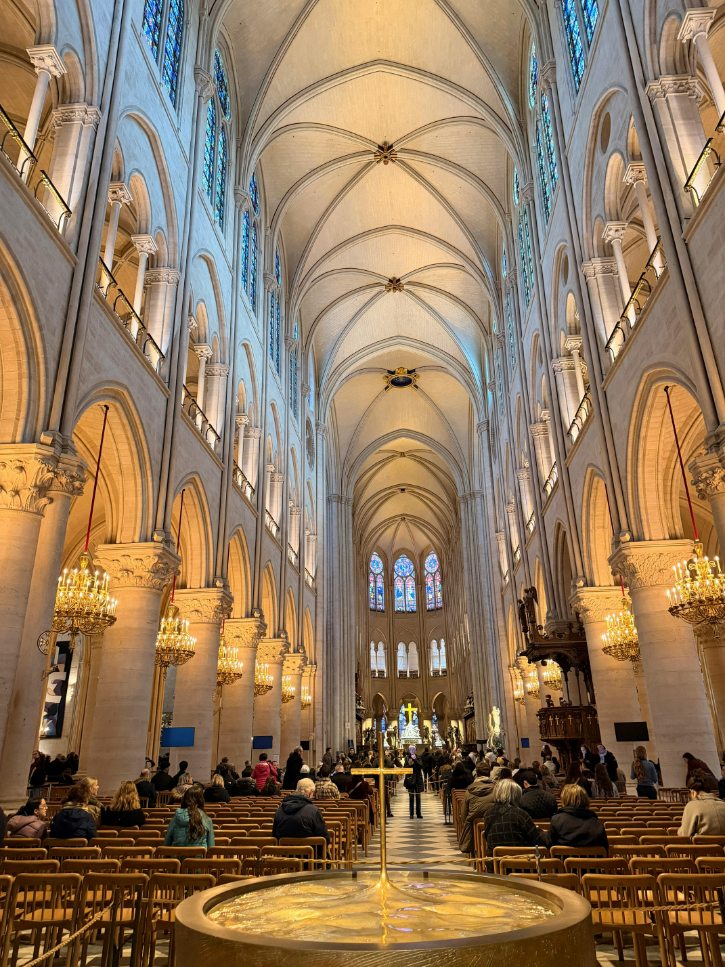
What to Notice
- The sculpted portals on the west façade, including detailed scenes of the Last Judgment.
- The iconic rose windows, best appreciated from both inside and outside.
- The restored interior with cleaned limestone vaults and new liturgical fittings following the 2019 fire.
Current Visitor Information
- Notre-Dame officially reopened on December 8, 2024. Admission is free, but booking a time slot in advance is recommended.
- The towers reopened on September 20, 2025. Visitors can climb the 424 steps to the gargoyle gallery with a separate online reservation.
Walking Route Pairing
- Walk to Sainte-Chapelle nearby, cross the Pont au Double to the Latin Quarter, or stroll along the Seine riverbanks.
Read More: 17 Best Spots in the Latin Quarter You Absolutely Can’t Miss
Nearest Stations
- Cité (Metro Line 4) or Saint-Michel – Notre-Dame (Metro Line 4, RER Lines B and C)
11. Place des Vosges
What Makes It Special
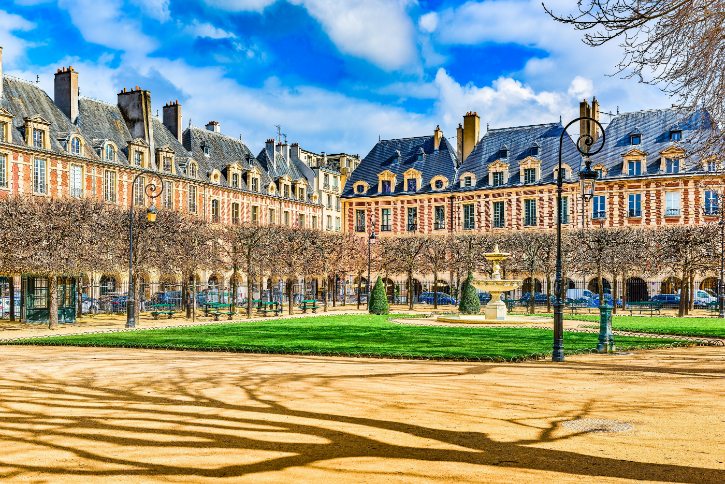
- The oldest planned square in Paris, commissioned by King Henri IV in 1605.
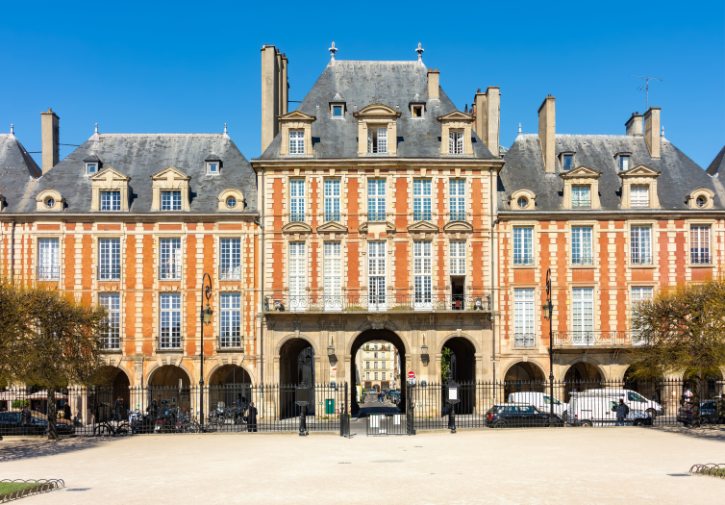
- Thirty-nine identical red-brick mansions with slate roofs form a perfectly symmetrical quadrangle around a central garden.
What to Notice
- Rows of lime and horse-chestnut trees shading the garden, with four fountains around a statue of King Louis XIII.
- The vaulted arcades at ground level, home to cafés, art galleries, and small shops.
- The Maison de Victor Hugo at No. 6, where the famous author once lived.
Why It Feels Different
- After the big monuments, Place des Vosges offers a quieter, more personal side of Paris. A place to sit, breathe, and enjoy the beauty without crowds.
Walking Route
- Fits naturally into a walk through the Marais, near the Picasso Museum, Carnavalet Museum, and the shops along Rue des Rosiers.
Read More: 15 Must-Visit Spots in Le Marais
Nearest Stations
- Saint-Paul (Metro Line 1) or Bastille (Metro Lines 1, 5, and 8)
12. The Paris Catacombs
What Makes It Different
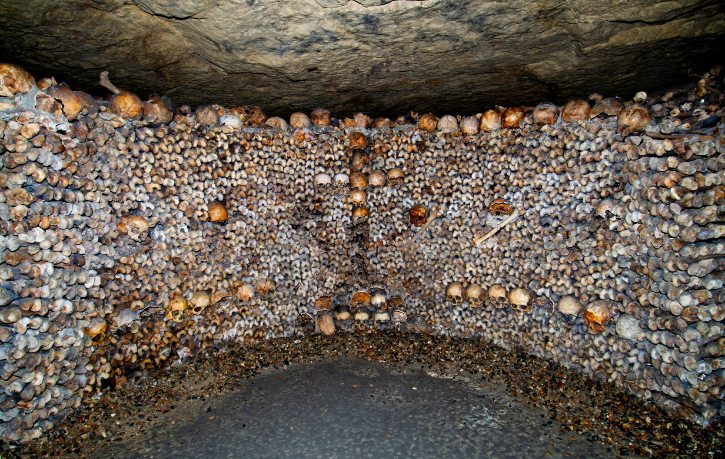
- No golden sculptures, no elegant gardens, no river views. The Catacombs reveal a darker, more mysterious side of Paris.
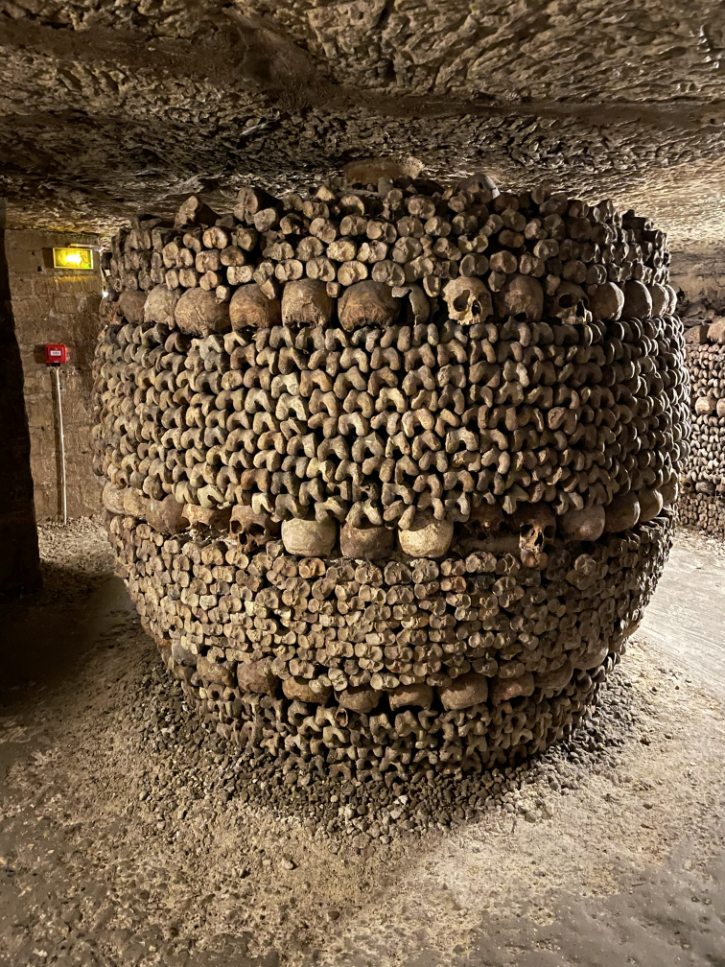
- Located twenty meters beneath the streets inside former limestone quarries, the tunnels became an underground ossuary in the late 18th century and hold the remains of over six million Parisians.
What to Expect
- A tight 131-step spiral staircase down and 112 steps back up at the exit.
- A 5-kilometer one-way route through narrow, low-lit tunnels with uneven, sometimes slippery floors.
- The tunnels are cool and humid year-round. Bring a light jacket.
- Bones arranged in geometric patterns, with walls of skulls and femurs separated by stone inscriptions about mortality.
Practical Tips
- Wear comfortable walking shoes with good grip.
- Bags must be smaller than 40 x 30 x 20 cm. No cloakroom is available, and the exit is 700 meters from the entrance.
- Not wheelchair accessible and not recommended for visitors with claustrophobia or heart conditions.
Why It Belongs on This List
- This is not a typical “beautiful Paris” experience, but it is one of the most unforgettable. While the elegant boulevards above continue their pursuit of fashion and light, the quiet bones of the Catacombs remain anchored in the stone beneath, holding the physical memory of the city’s past in the dark.
Nearest Station
- Denfert-Rochereau (Metro Lines 4 and 6, RER Line B)