Paris is full of famous landmarks, but some of the best moments happen on the streets between them.
A quiet cobblestone lane in Montmartre. A food-filled stretch where bakeries and cheese shops pull you from one block to the next. A colorful row of pastel houses that feels nothing like the rest of the city.
These 10 streets show you a different side of Paris, from village-like corners and lively market energy to grand avenues with dramatic views. Each one gives you a reason to slow down, look around, and keep walking. 😊
1. Rue de l’Abreuvoir (Montmartre)
Rue de l’Abreuvoir is one of the most romantic and postcard-like streets in Montmartre.
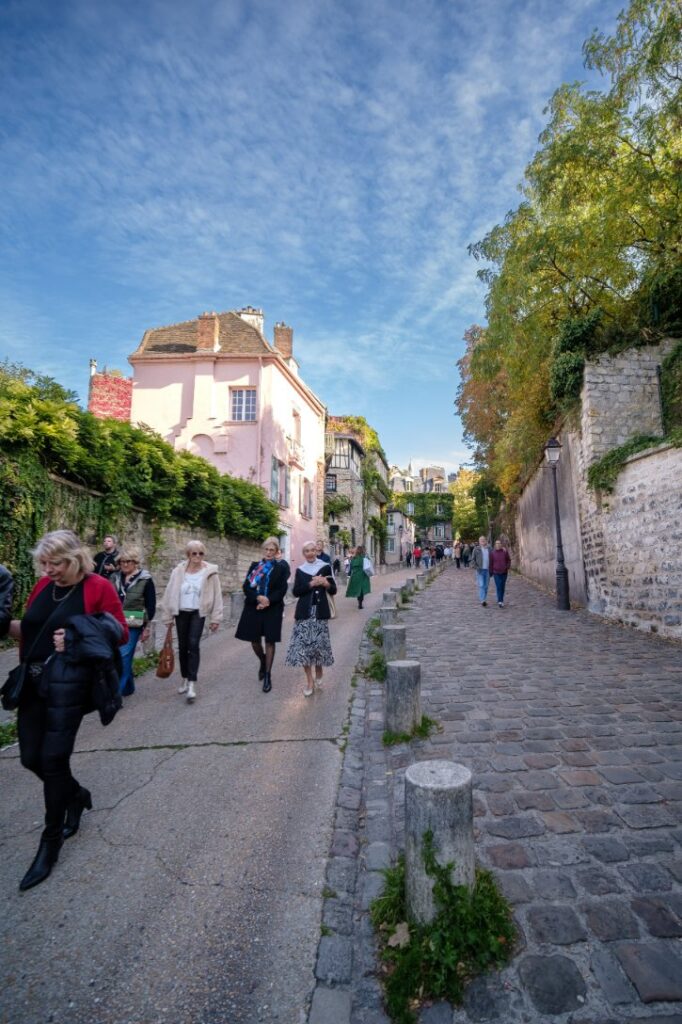
It is only about 133 meters long, but every step feels like walking through an old village painting.
Low stone houses, ivy-covered walls, and worn cobblestones give it a quiet, preserved character that most of Paris lost long ago.
What really sets this street apart is its curved, sloping layout.
As you walk uphill, each turn opens up a new view. The most famous angle is where the white domes of Sacre-Coeur appear framed between the old houses. It feels cinematic.
What to Notice
- The charming bend in the road and how each curve reveals something new
- Ivy and climbing plants covering the old stone facades
- How the buildings frame Sacre-Coeur at the top of the slope
Nearby Places
- Place du Tertre, the famous artist square
- Sacre-Coeur Basilica, for panoramic views over Paris
- La Maison Rose, the iconic pink-walled restaurant
Read More: 12 Amazing Spots You Can’t Miss in Montmartre
2. Rue Norvins (Montmartre)
If Rue de l’Abreuvoir is the quiet, romantic side of Montmartre, Rue Norvins is the lively and artistic one.
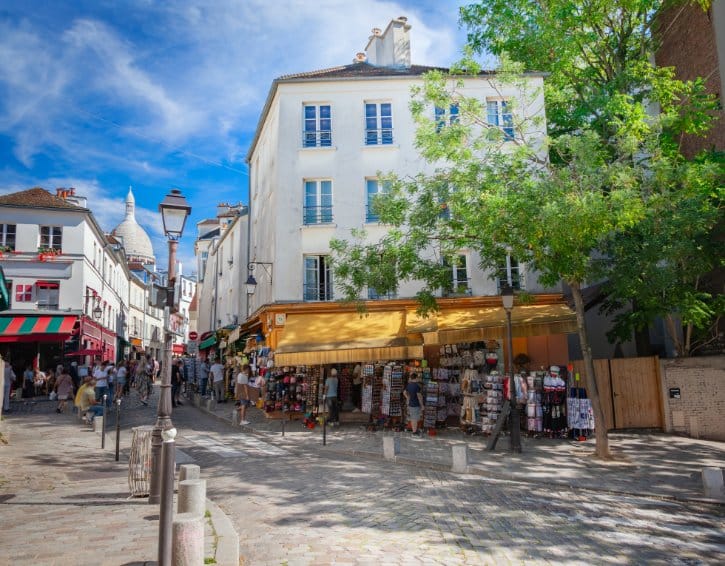
This street connects the calmer western end of upper Montmartre with the high-energy Place du Tertre, where artists set up open-air studios.
There is always something to look at. Cafe terraces, old stone facades, small restaurants, and the sound of accordion music drifting from nearby squares.
The street naturally guides you toward the most famous Montmartre corners.
What to Notice
- Cafe terraces and inviting outdoor seating
- Old facades and the mix of building styles
- The lively transition as you approach Place du Tertre
Good For
- People-watching from a cafe terrace
- A natural walking route through upper Montmartre
- Soaking in the artistic, social energy of the hilltop
3. Rue Lepic (Montmartre)
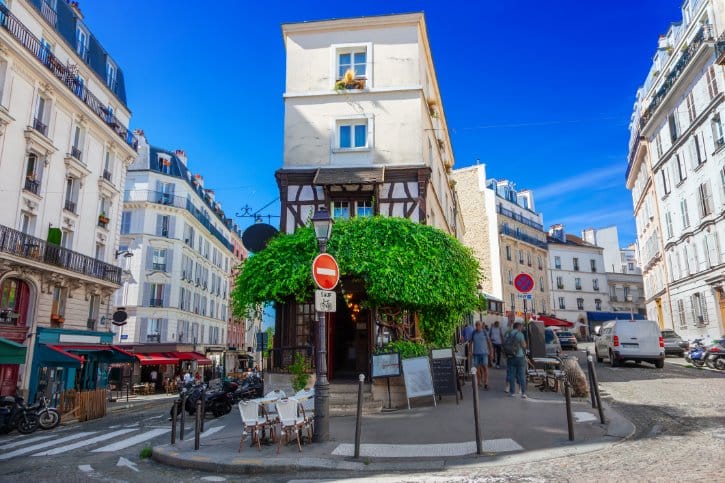
Even though Rue Lepic is also in Montmartre, it deserves its own spot.
While the first two streets capture Montmartre’s romantic and artistic highlights, Rue Lepic shows you the more lived-in, everyday side of the neighborhood.
The street winds uphill from the busy Boulevard de Clichy toward the top of Montmartre.
The lower section is lively and commercial, with bakeries, cheese shops, and cafes where locals do their daily shopping.
As you climb higher, the mood shifts to quieter, more residential blocks. That gradual change is what makes this street so interesting.
You also pass the famous Cafe des Deux Moulins, known from the film Amelie, and historic windmills near the top.
What to Notice
- The changing character of the street as you walk uphill
- Shopfronts, bakeries, and local food stores in the lower section
- Historic windmills visible near the upper section
Good For
- Travelers who want more than photo spots
- Seeing how Montmartre works as a real neighborhood
- Connecting a walk from lower to upper Montmartre
4. Rue des Martyrs (South Pigalle)
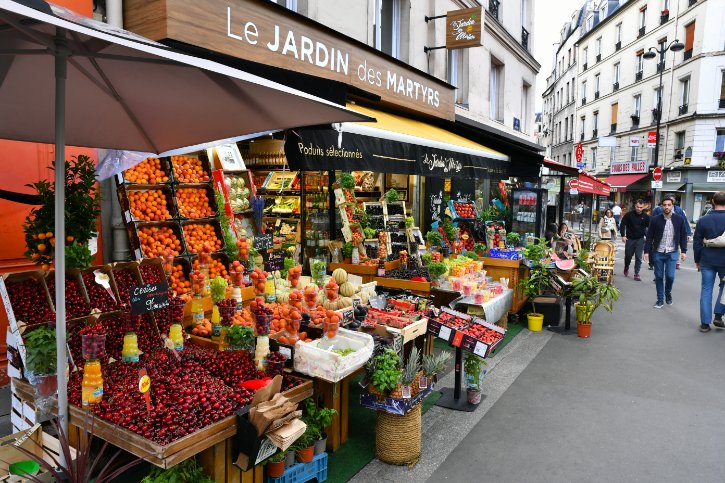
Rue des Martyrs is one of the best walking streets for food lovers and travelers who enjoy local neighborhood life.
Walking here feels like strolling through a permanent open-air food market.
Bakeries, cheese shops, pastry windows, specialty food stores, and small cafes line both sides, and the aromas pull you from one shop to the next.
What makes this street feel authentic is that it is genuinely useful to the people who live here.
Local residents come to buy bread, cheese, and fresh produce.
The street gently slopes between South Pigalle and the edges of Montmartre, connecting two very different neighborhood moods.
What to Notice
- Beautifully arranged food displays in shop windows
- Bakery and pastry fronts that are hard to walk past
- Cafe terraces where locals stop for coffee
- The mix of traditional food shops and newer concept stores
Good For
- Breakfast pastries, snacks, or casual food browsing
- A less landmark-focused Paris experience
- Seeing how Parisians shop for everyday food
5. Rue Montorgueil (Montorgueil)
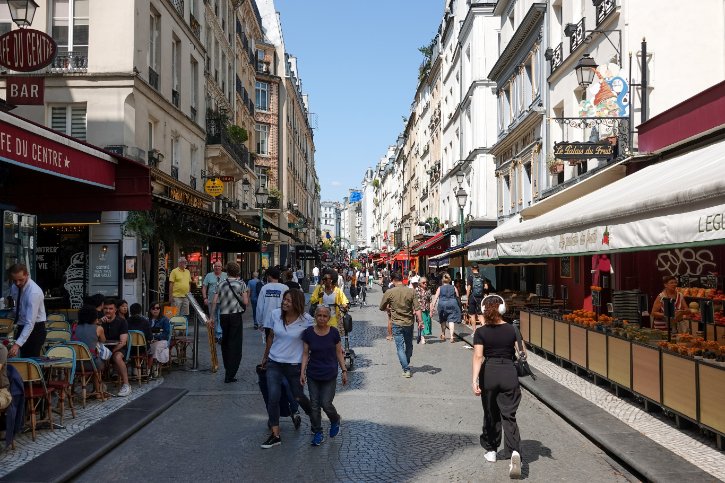
Rue Montorgueil is one of the best pedestrian-friendly food streets in Paris.
The entire street is pedestrian-friendly, so you can walk right down the center without worrying about cars. That changes the feeling completely. It becomes a social space, not just a path.
Food shops, bakeries, restaurants, and outdoor cafe terraces fill both sides.
Some of the establishments here have been open for centuries.
The street carries the legacy of the old Les Halles market district, once known as the “Belly of Paris”.
Where Rue des Martyrs feels like a neighborhood market with a gentle slope toward Montmartre, Rue Montorgueil feels more central, more social, and more outward-facing.
What to Notice
- Historic food shops and bakeries, some dating back centuries
- Cafe terraces where locals and visitors mix
- The open, pedestrian-friendly layout
- Side streets worth exploring nearby
Good For
- Lunch, coffee, pastries, or a casual dinner
- A relaxed break from sightseeing in central Paris
- Experiencing a lively food street without leaving the city center
6. Rue des Rosiers (Le Marais)
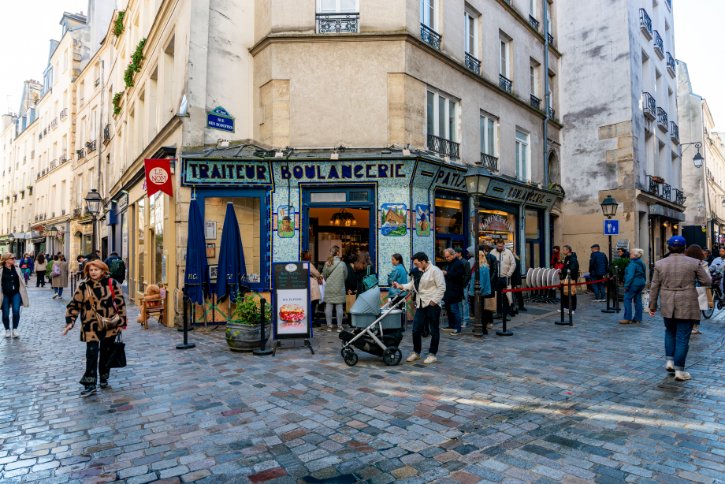
Rue des Rosiers is one of the most meaningful streets on this list, not just one of the prettiest.
Located in Le Marais, it is the historic center of Paris’s Jewish quarter and carries deep layers of culture, food, and history.
The narrow street is lined with old buildings, many dating back centuries, with hidden courtyard entrances and traditional shutters. But it is far from a quiet museum street.
Falafel shops, bakeries, cafes, and boutiques create a constant flow of energy.
The food culture reflects both Ashkenazi and Sephardic traditions.
Commemorative plaques along the street remind visitors of the neighborhood’s difficult past, adding weight and meaning to the walk.
What to Notice
- Historic building details, courtyard entrances, and traditional shutters
- The mix of old Jewish quarter identity with modern Marais energy
- Commemorative plaques and cultural landmarks
- Small storefronts and the narrow street perspective
Nearby Places
- Place des Vosges, one of the most beautiful squares in Paris
- Hotel de Ville area, a short walk south
- Nearby Le Marais side streets for more boutiques and galleries
7. Rue Crémieux (Quinze-Vingts)
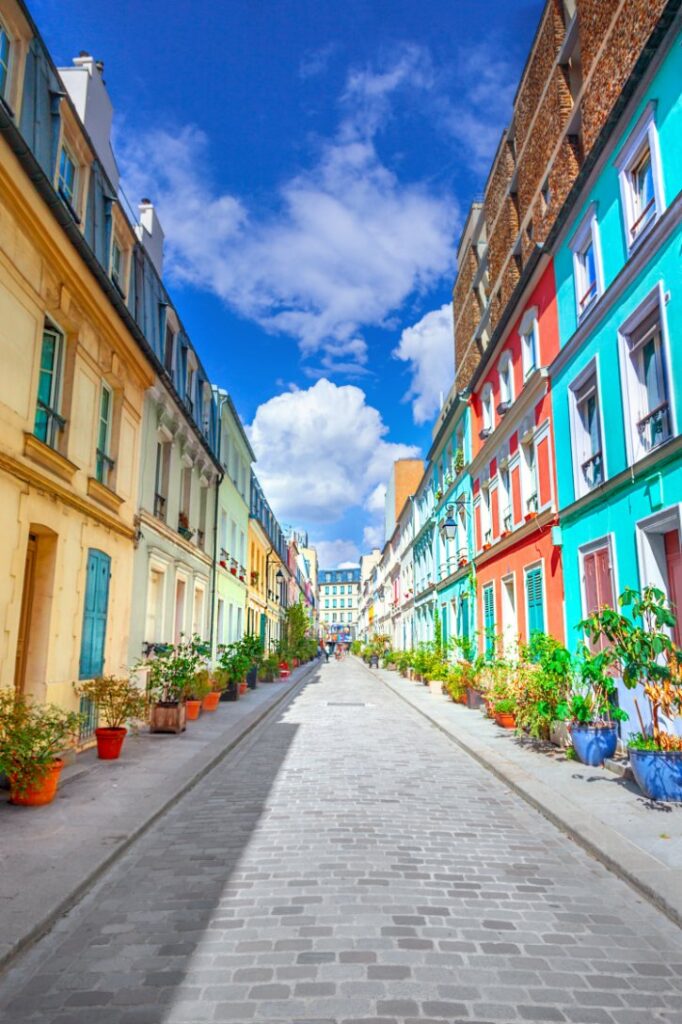
Rue Cremieux looks and feels completely different from every other street on this list.
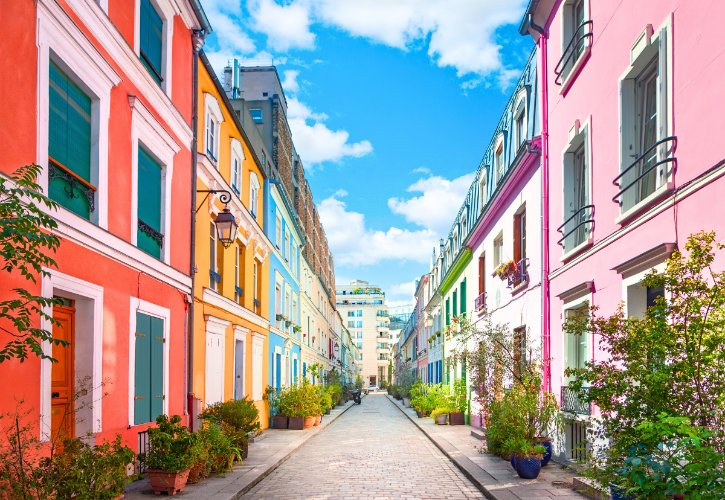
It is a short, quiet lane of colorful pastel houses that feels more like a small village than central Paris.
The street is only about 144 meters long and entirely pedestrianized.
On both sides, small houses are painted in soft, colorful shades.
Flower pots and climbing plants line the cobblestones. The charm is in the small details: painted doors, window decorations, terracotta pots, and how each house has its own personality.
What to Notice
- Colorful pastel-painted facades
- Decorative doors, windows, and small artistic details
- Flower pots and climbing plants along the street
- The calm, residential atmosphere
Visiting Tips
- This is a residential street where people live. Please visit respectfully.
- Keep noise low and avoid blocking doorways or sitting on doorsteps.
- Best enjoyed as a short photo stop or peaceful detour, not a major sightseeing destination.
8. Rue Mouffetard (Latin Quarter)
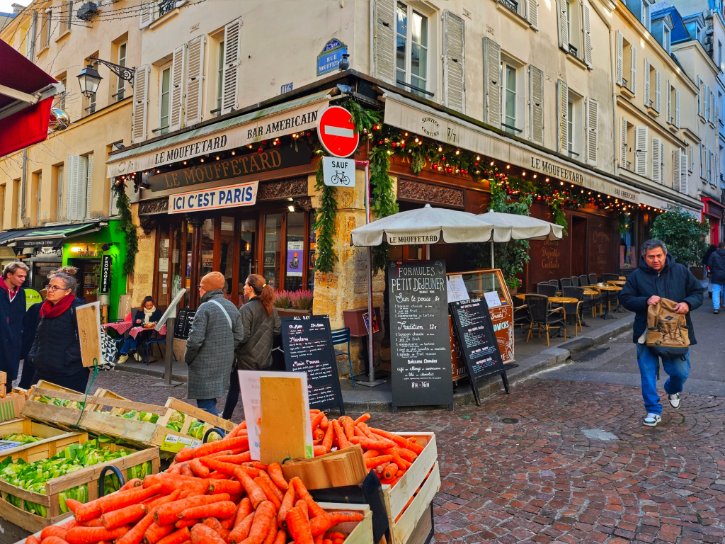
Rue Mouffetard is one of the best streets for travelers who want old-city atmosphere mixed with everyday life.
Often called one of the oldest streets in Paris, it follows an ancient path dating back to Roman times.
The street is narrow, gently sloping, and lined with old buildings that lean slightly over the cobblestones.
It feels rustic and village-like. The lower half is a sensory experience, with food shops, market stalls, bakeries, and small restaurants.
On Sunday mornings, the market is especially lively. What makes Rue Mouffetard different from Rue Montorgueil and Rue des Martyrs is its age and rougher, more Latin Quarter character.
It feels older, more historic, and slightly more rustic. The student energy of the nearby Latin Quarter adds a relaxed, unpretentious atmosphere.
What to Notice
- Historic building facades and old painted shop signs
- Food stalls and market displays, especially on weekend mornings
- The slope and curves of the ancient street layout
- The relaxed Latin Quarter mood
Good For
- Casual meals, snacks, and market-style browsing
- Walking through one of Paris’s oldest and most atmospheric streets
- Combining with a wider Latin Quarter stroll
Read More: 17 Best Spots in the Latin Quarter You Absolutely Can’t Miss
9. Rue Saint-Dominique (Invalides / Gros-Caillou)
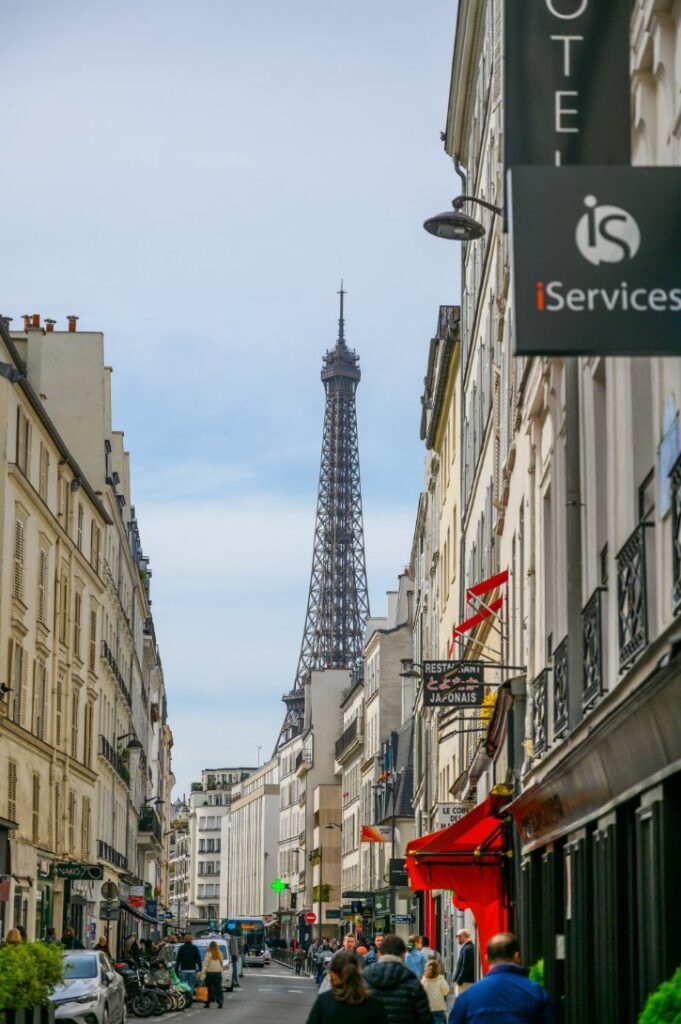
Rue Saint-Dominique is beautiful in a more polished and elegant way.
This Left Bank street sits in the 7th arrondissement, close to the Eiffel Tower, Champ de Mars, and Les Invalides.
But unlike the busy routes most tourists follow, this street feels quieter and more local.
Classic limestone facades, well-kept storefronts, and tasteful cafe terraces create a refined neighborhood feeling.
As you walk, the Eiffel Tower appears and disappears between the rooftops.
The street offers a good mix of eating, shopping, and strolling, from traditional boulangeries with antique storefronts to boutiques with well-known French brands.
What to Notice
- Elegant building facades and classic Parisian architecture
- Boutique windows and well-curated food shop displays
- Cafe terraces with a calm, refined atmosphere
- Glimpses of the Eiffel Tower between the rooftops
Good For
- A stylish walk before or after visiting the Eiffel Tower, Champ de Mars, or Les Invalides
- Experiencing the Left Bank’s elegant, neighborhood side
- Combining food, shopping, and strolling in one street
10. Avenue des Champs-Élysées (Champs-Élysées)
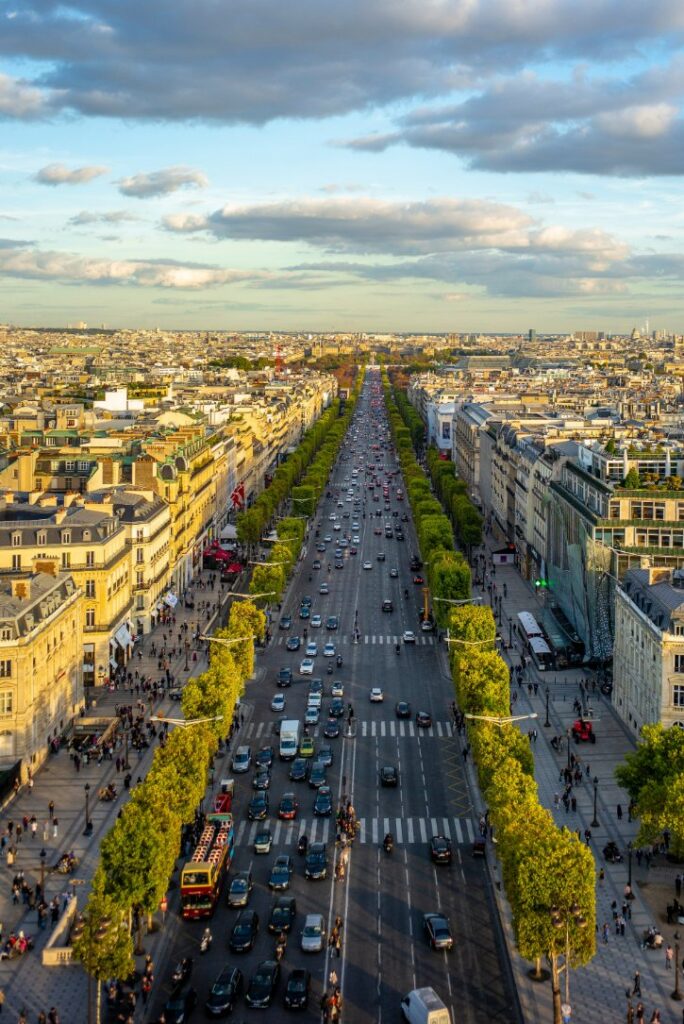
The Champs-Elysees is different from every other street in this article.
It is not quiet, not hidden, and not village-like. It is famous, busy, and full of tourists.
But it still belongs on this list because of its sheer scale, its history, and the dramatic city perspective it provides.
The avenue stretches nearly two kilometers. As you walk toward the western end, the Arc de Triomphe grows larger and more dramatic with every block.
The avenue is 70 meters wide, with perfectly lined trees on both sides, creating a powerful sense of symmetry.
The lower section near Place de la Concorde has a park-like atmosphere, while the upper section becomes a high-energy commercial stretch.
It contrasts sharply with the smaller, more intimate streets earlier in this article. Where those reward slow wandering and small details, the Champs-Elysees rewards scale and perspective.
What to Notice
- The symmetry of the wide avenue and the perfectly lined trees
- How the Arc de Triomphe becomes more dramatic as you walk closer
- The shift between the park-like lower section and the commercial upper section
Good For
- Experiencing the grand, iconic side of Paris
- Walking toward the Arc de Triomphe for one of the city’s most dramatic views
- Understanding the scale and ambition of Parisian city planning
Best walked with realistic expectations. It is busy and commercial, but the view of the avenue stretching toward the Arc de Triomphe is still one of the most powerful urban views in Paris.