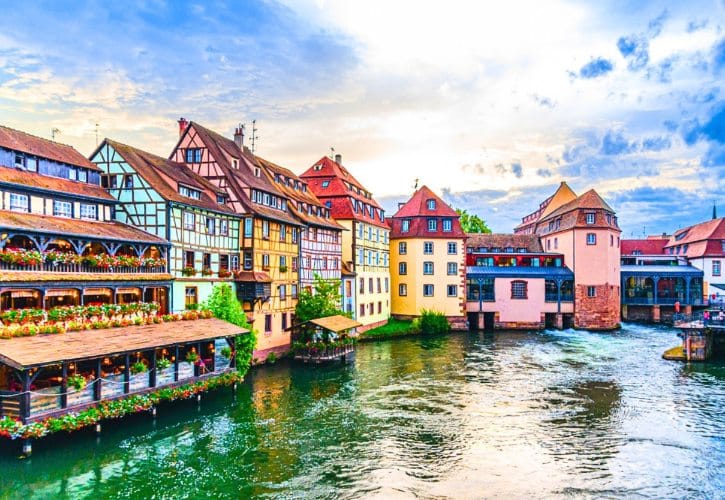
Strasbourg is one of the most beautiful cities in France, yet it feels very different from Paris, Nice, or Lyon.
Sitting near the German border, it has its own identity that blends French culture with Alsatian heritage.
You will find colorful half-timbered houses, peaceful canal-side walks, lively squares, grand churches, and major European institutions all in one place.
In this guide, you will discover the best places to see, the prettiest streets to walk, how to get there from Paris, how to get around, and how long to stay. 😊
Best Things to Do and See in Strasbourg
1. Grande-Île de Strasbourg
Grande-Île is the historic heart of Strasbourg and where every first-time visitor should begin.
The name means “Large Island”, and the area is surrounded by channels of the Ill River. In 1988, it became the first entire city center added to the UNESCO World Heritage list.
Most of Strasbourg’s key sights sit inside this one walkable zone. Good starting points include Place Kléber or the square in front of Strasbourg Cathedral.
2. Place Kléber
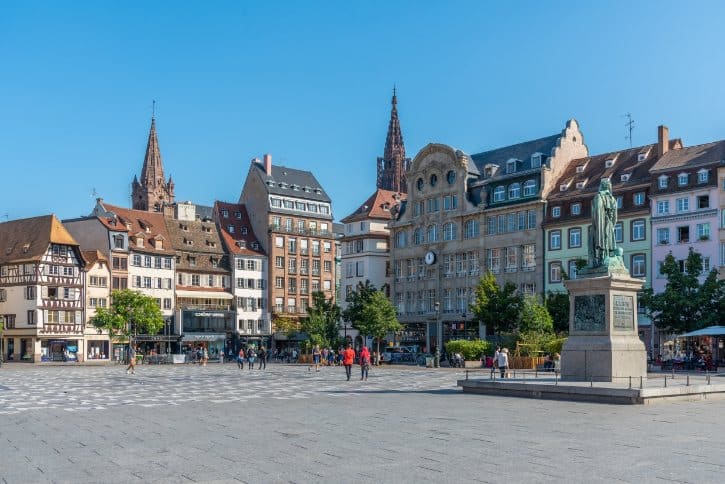
Place Kléber is Strasbourg’s main central square and works perfectly as a meeting point. The open layout is surrounded by shops, cafés, and the pink sandstone façade of the Aubette building.
In winter, the square hosts the heart of the Strasbourg Christmas Market, with the famous Grand Sapin, a fir tree from the Vosges forest standing over 30 meters tall. Use it to get your bearings before exploring the narrower streets nearby.
3. La Petite France
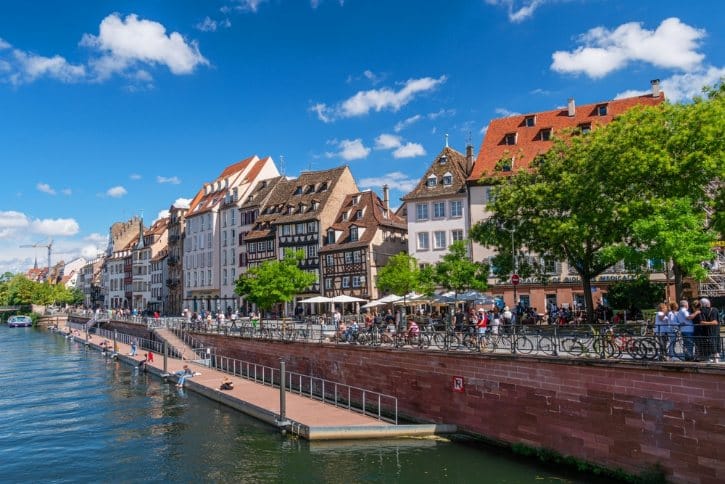
La Petite France is tucked into the southwestern corner of Grande-Île and is one of the most charming neighborhoods in the country. Narrow canals, cobblestone lanes, and flower-decked half-timbered houses give it a storybook feel.
Historically, this area was home to tanners, millers, and fishermen, who relied on the river channels for their work. The steep roofs and old drying lofts are still visible today.
Walk slowly, look up, and combine your visit with Ponts Couverts and Barrage Vauban nearby.
4. Ponts Couverts
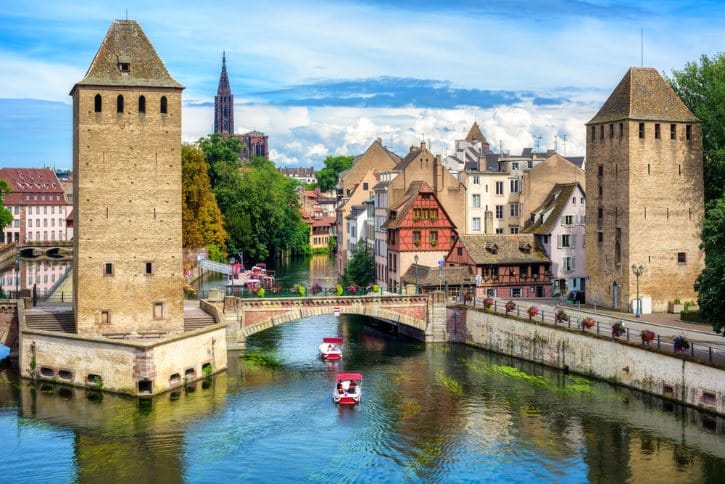
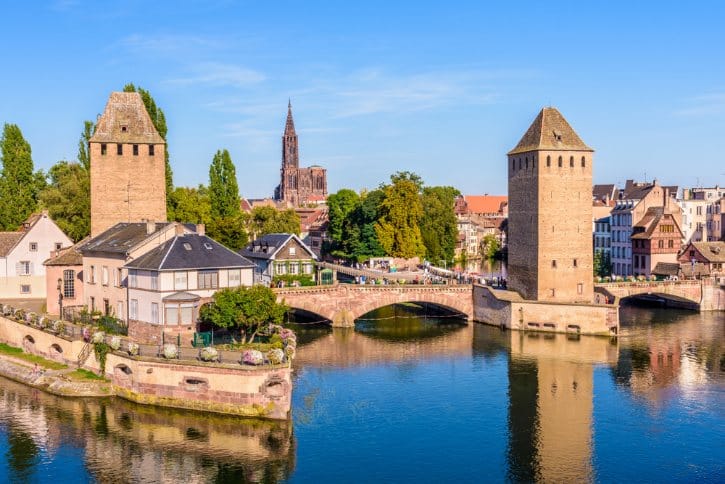
Just past La Petite France, you will find Ponts Couverts, which means “Covered Bridges”. Here is the twist. The bridges have not been covered since 1784, but the name stuck.
What you can still see are three stone bridges and four imposing defensive towers from the 13th century, which once guarded the river channels. Pair it with Barrage Vauban for the complete view.
5. Barrage Vauban
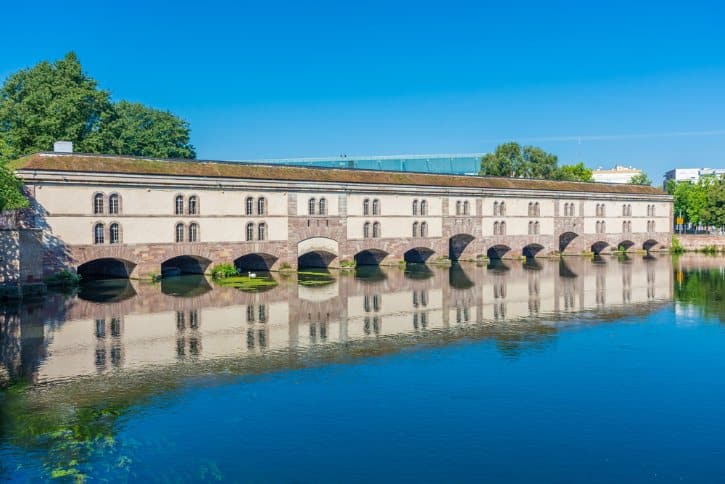
Barrage Vauban sits just upstream from Ponts Couverts. It is a monumental dam built in the late 1600s from pink Vosges sandstone, originally designed so its arches could be closed to flood the southern flatlands and stop invading armies.
Today, its flat panoramic terrace gives you one of the best wide-angle views in the city, with Ponts Couverts in the foreground and the cathedral spire on the horizon. Many visitors skip this and miss one of the best photo spots in Strasbourg.
6. Strasbourg Museum of Modern and Contemporary Art

The city’s main modern art museum looks completely different from everything around it. The bold glass-and-metal building, opened in 1998, sits on the left bank of the Ill River.
Inside, you will find a collection of over 18,000 works from 1870 to today, including pieces by Strasbourg-born artists such as Gustave Doré and Hans Jean Arp. Plan around 1 to 2 hours, and treat it as a solid rainy-day option.
7. St. Thomas Church
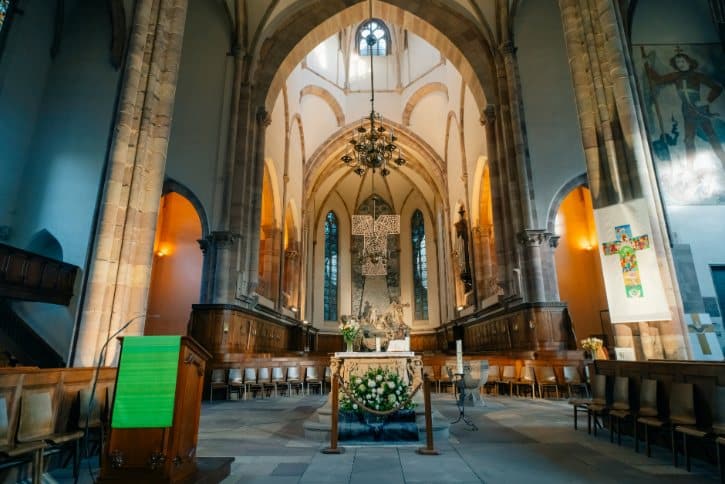
St. Thomas Church sits in its own peaceful square, a short walk from La Petite France. Completed in 1521, it is the only surviving Gothic hall church in Alsace and became the main Lutheran sanctuary in the city, earning the nickname “Protestant Cathedral”.
Highlights include the 1741 Silbermann organ, famously played by Mozart, and the grand Baroque tomb of Marshal Maurice de Saxe. The atmosphere is much quieter than at the cathedral.
8. Place Gutenberg
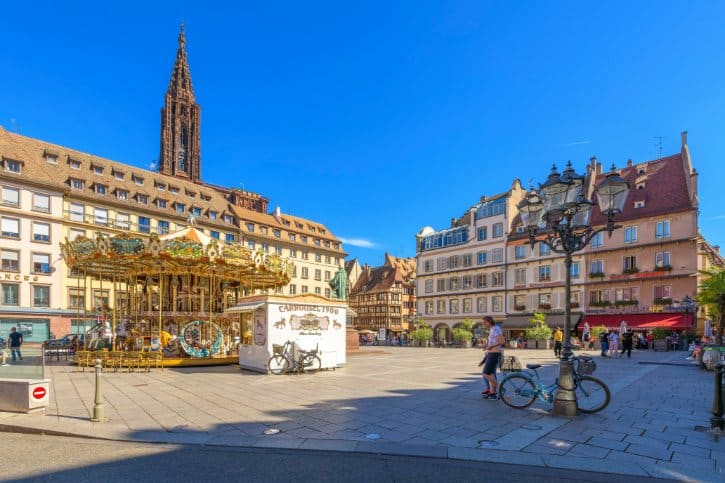
Place Gutenberg honors Johannes Gutenberg, who lived in Strasbourg between 1434 and 1444 and carried out his earliest experiments with movable metal type here.
The square features a bronze statue of Gutenberg holding a printed page from his Bible. It sits between Place Kléber and the cathedral, making it a natural stop on your walk. Check menus before sitting down, since central spots carry premium pricing.
9. Maison Kammerzell
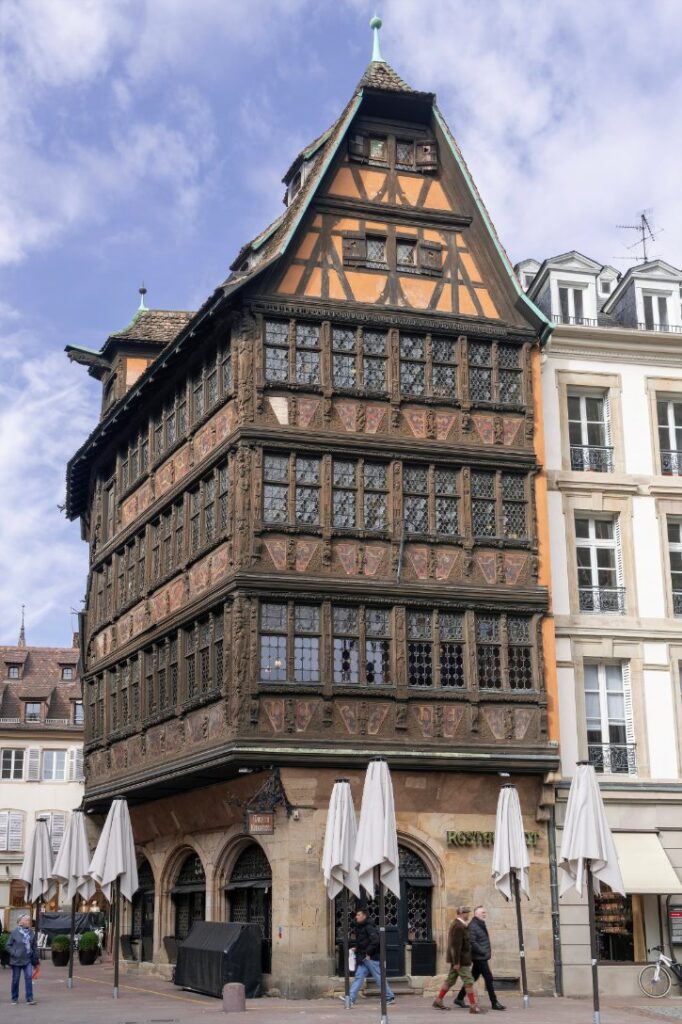
Maison Kammerzell stands directly next to Strasbourg Cathedral and is one of the finest examples of late medieval and Renaissance timber-framed architecture in Europe. The stone ground floor dates to 1467, while the carved upper stories were rebuilt in 1589.
The dark wood façade is covered in dense carvings of biblical figures, Roman scenes, and the signs of the zodiac. Even if you do not dine inside, the outside alone is worth a close look.
10. Strasbourg Cathedral
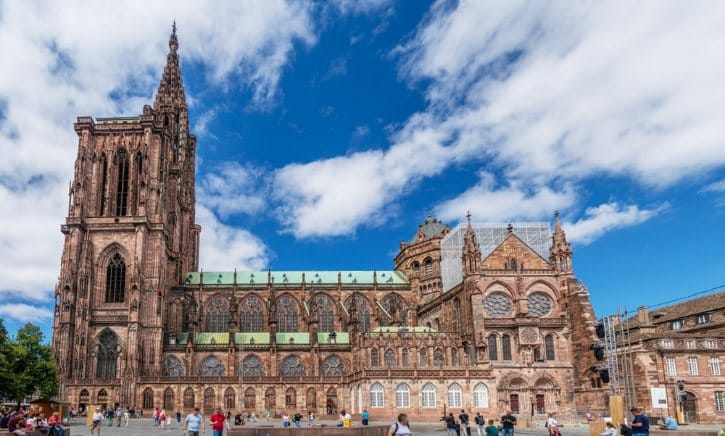
Strasbourg Cathedral is the city’s most important landmark and the reason many travelers come here.
Built between 1176 and 1439 from pink Vosges sandstone, this Gothic masterpiece has a single northern spire that reaches 142 meters into the sky. For centuries, it was the tallest building in all of Christendom.
Inside, you will find stained-glass windows from the 13th and 14th centuries, a richly carved Gothic pulpit, and the world-famous 1843 astronomical clock.
Its main daily display features a procession of the Apostles past a figure of Christ, with a mechanical rooster that crows and flaps its wings.
If you have the energy, climb the 330 steps for panoramic views of the Vosges mountains and the Black Forest. Approach from Rue Mercière for the classic framed view of the spire.
11. Palais Rohan
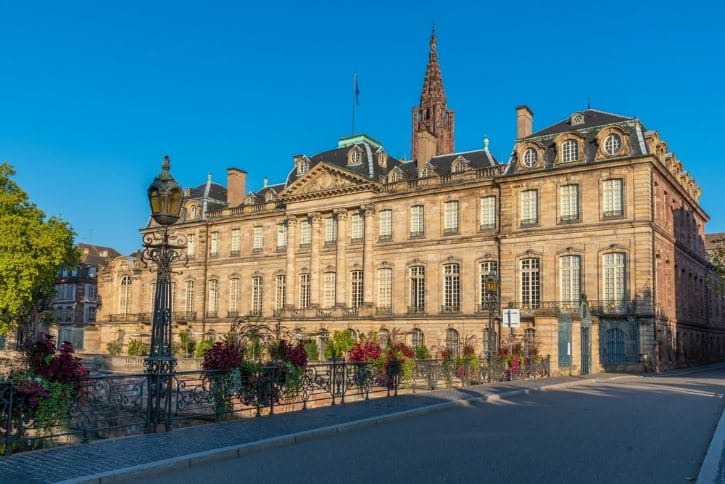
Just steps from the cathedral, Palais Rohan is a grand historic palace completed in 1742 and modeled on the noble estates of Paris.
It houses three of Strasbourg’s main municipal museums: the Archaeological Museum, the Museum of Decorative Arts, and the Museum of Fine Arts. Pick one based on your interest rather than rushing through all three.
12. Quai des Bateliers
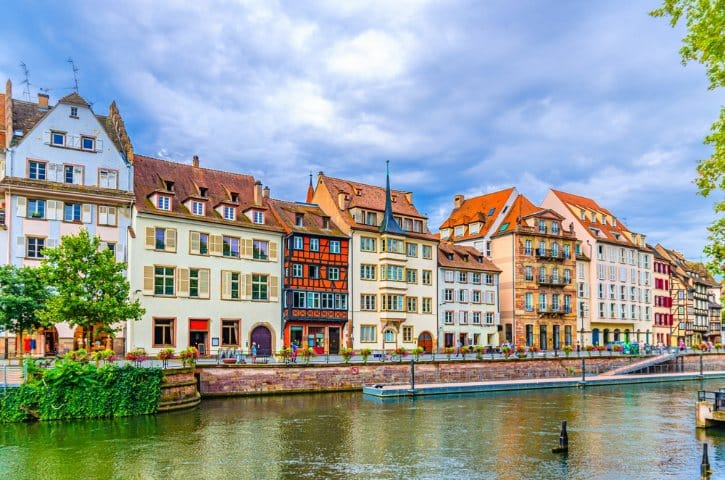
Quai des Bateliers runs along the southern bank of the Ill River, directly opposite Palais Rohan. Once the working quay of Strasbourg’s boatmen, it is now a peaceful pedestrian promenade lined with historic buildings and stone bridges.
13. Alsatian Museum
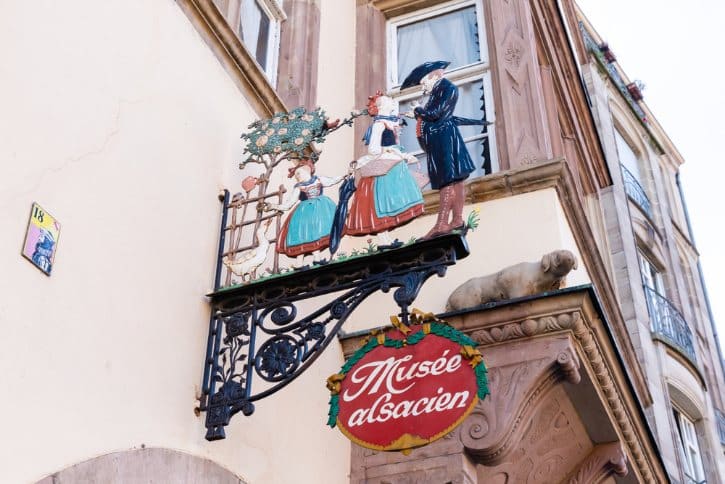
The Alsatian Museum is where you go to understand the local identity behind Strasbourg’s beautiful streets.
Set in three preserved timber-framed houses on the Quai Saint-Nicolas, it focuses on traditional Alsatian life, with costumes, painted furniture, and reconstructed farmhouse interiors.
Note that the museum is closed for major renovations until 2027, so for now you can only admire the façades from outside.
14. Palais du Rhin
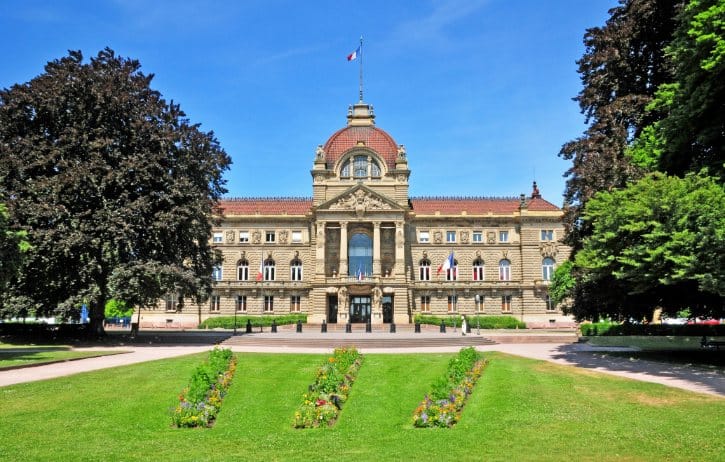
Palais du Rhin sits in the Neustadt district on Place de la République. Built between 1883 and 1889, it was originally the imperial palace of the German administration that ruled Strasbourg at the time.
The wide boulevards of Neustadt feel completely different from the medieval old town. Most visitors view it from the outside, and it is worthwhile if you want to go deeper into the city’s French and German story.
15. Parc de l’Orangerie
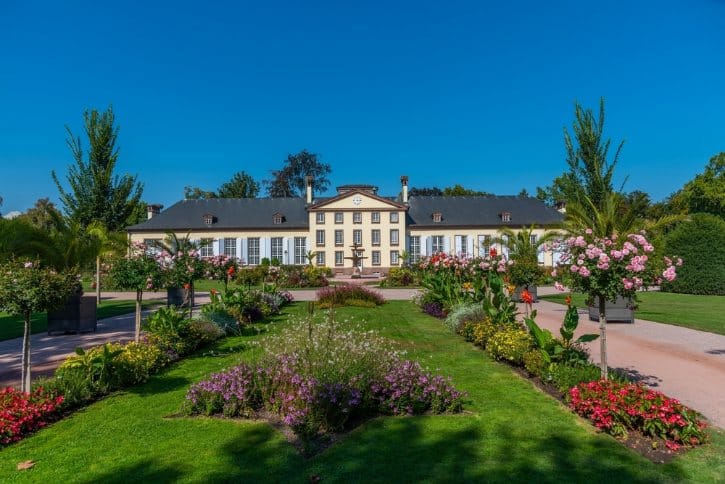
Parc de l’Orangerie is the oldest green space in Strasbourg, covering 26 hectares in the northern part of the city.
You will find an artificial lake, playgrounds, and a famous stork sanctuary that helped reintroduce the white stork to Alsace. Combine it with the European Parliament area nearby.
16. European Parliament
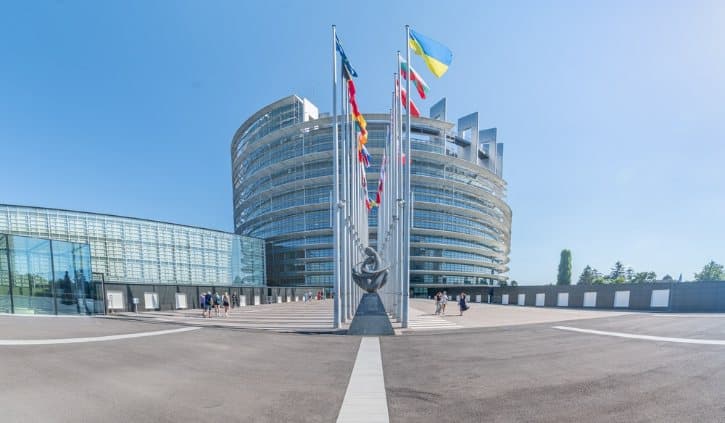
Strasbourg is one of the official seats of the European Parliament. The building, completed in 1999, has a striking glass-and-steel façade wrapped around an unfinished circular tower inspired by the Tower of Babel.
For most visitors, seeing the exterior and walking along the nearby riverbanks is plenty.
Prettiest Streets to Walk in Strasbourg
1. Rue du Bain-aux-Plantes
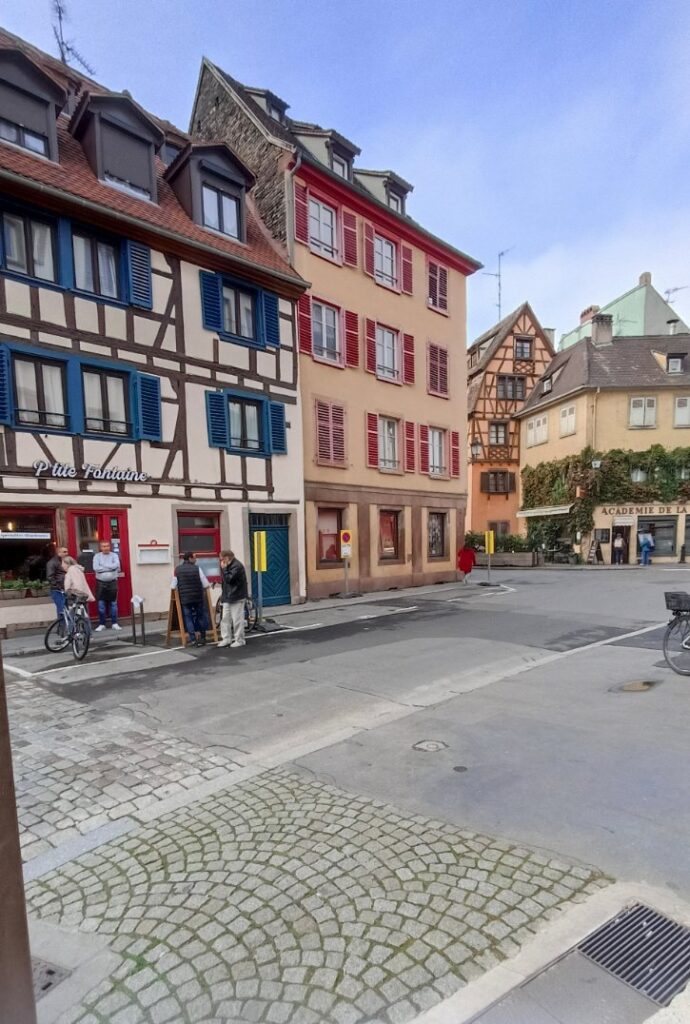
The heart of La Petite France and probably the most photogenic street in the city. The narrow cobblestone lane is framed by an unbroken line of Renaissance half-timbered homes with steep gabled roofs and flowers in every window. Walk slowly and look up.
2. Rue des Moulins
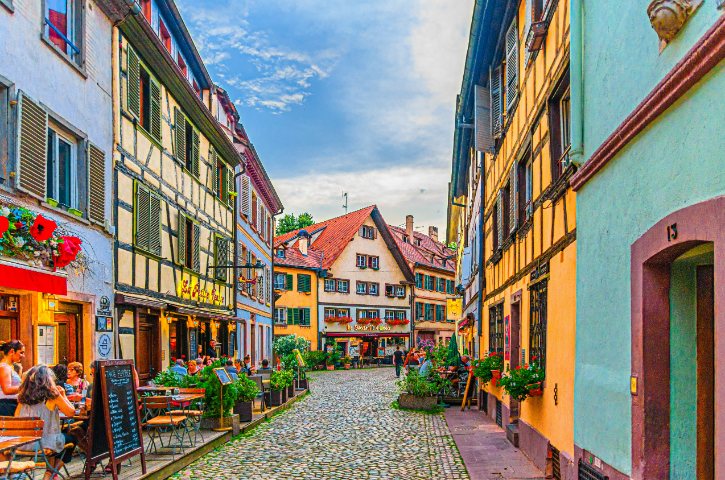
Rue des Moulins winds gracefully along the waterways of La Petite France. The name comes from the historic watermills that once powered the area’s economy. Expect serene canal-side views and quiet corners.
3. Rue des Orfèvres
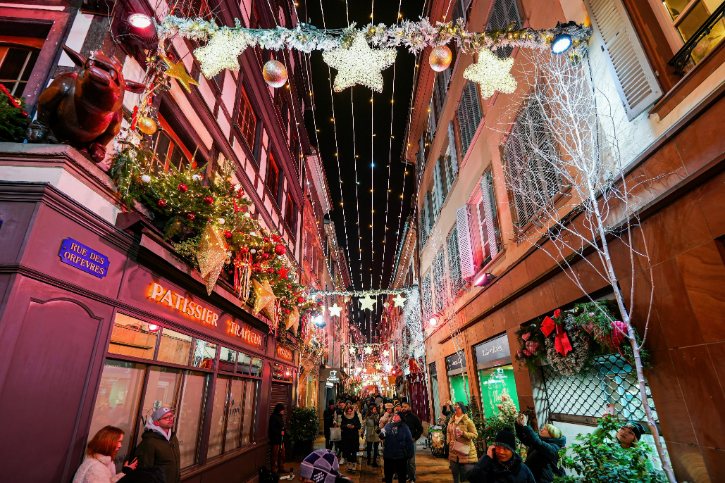
Just north of the cathedral, this narrow lane is lined with independent boutiques, jewelers, bakeries, and regional food shops. The best street for soaking up daily Strasbourg life.
4. Rue Mercière
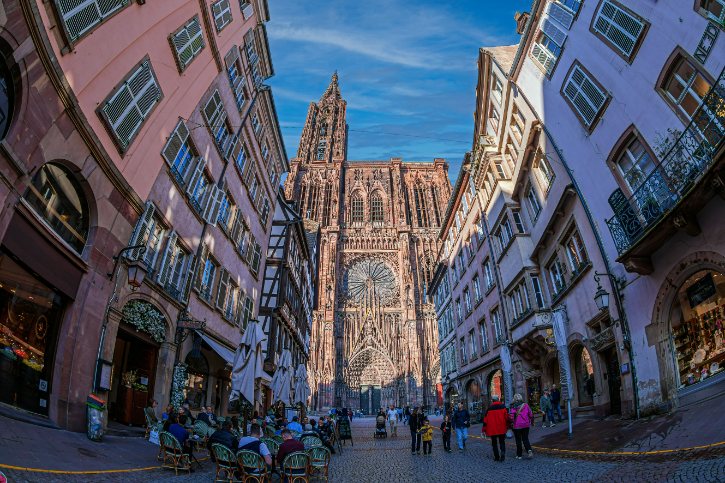
A short street with a famous view. As you walk down it, the soaring spire of Strasbourg Cathedral appears framed between the buildings on either side. Pause partway down for the classic shot.
5. Rue des Juifs
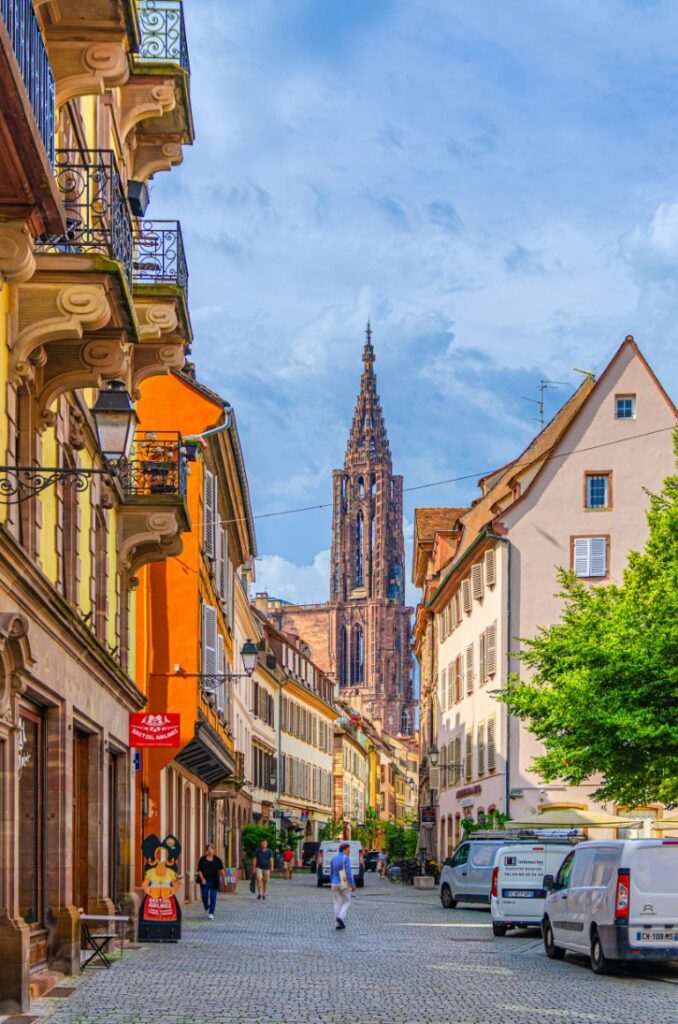
One of the oldest streets in Strasbourg, in continuous use for over 1,600 years and originally laid out along a Roman road. It has a quiet atmosphere and traces of the city’s medieval Jewish quarter.
6. Grand’Rue
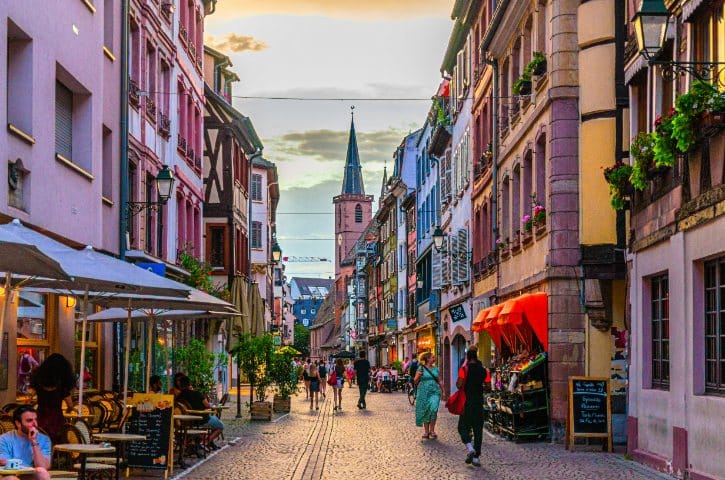
A main artery of Grande-Île, connecting Place Kléber directly to La Petite France. Always alive with shops, cafés, and traditional Alsatian winstubs.
How to Get to Strasbourg from Paris
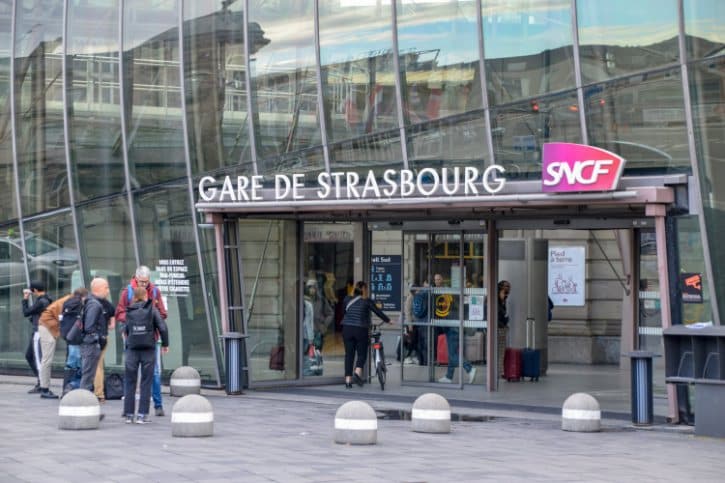
Strasbourg is one of the easiest major French cities to reach from Paris. The fastest and most practical option is the high-speed train.
Three main services run between the cities:
- TGV INOUI, the premium SNCF high-speed service with spacious seating, Wi-Fi, and good luggage space
- OUIGO Grande Vitesse, the low-cost SNCF high-speed option
- ICE (InterCity Express), operated by Deutsche Bahn in cooperation with SNCF, running through Strasbourg on routes continuing into Germany
All three depart from Paris Gare de l’Est and stop at Strasbourg-Ville station, on the western edge of the historic core.
Typical travel time:
- TGV INOUI: around 1 hour 45 minutes to 2 hours
- OUIGO: around 2 hours to 2 hours 15 minutes
- ICE: around 1 hour 45 minutes to 2 hours
Key tips:
- Book early, especially during Christmas Market season when trains sell out fast
- For a day trip, take an early departure and a late evening return
- Staying at least one night is far more comfortable than rushing a day trip
- If you have heavy luggage, pick a hotel near the station or inside the old town
- From Strasbourg-Ville, you can walk into the center, hop on the tram, or take a short taxi
How to Get Around Strasbourg
Strasbourg is one of the most walkable cities in France. Most of its top attractions sit on the compact Grande-Île, so you can cover the major sights entirely on foot.
A few things to know:
- The old town has wide pedestrian-only zones, so a rental car is unnecessary
- The tram is best for places outside the center, such as the European Parliament and Parc de l’Orangerie
- Strasbourg is one of France’s most bike-friendly cities, with over 600 kilometers of cycle paths and the Velhop bike-share system
- Taxis and ride-hailing are widely available for late nights or heavy luggage
- Wear comfortable walking shoes, since the cobblestones can be tough on your feet
Group your sights into clusters:
- Waterfront: La Petite France, Ponts Couverts, and Barrage Vauban
- Cathedral: Strasbourg Cathedral, Maison Kammerzell, Place Gutenberg, Rue Mercière, and Palais Rohan
- Northern: Parc de l’Orangerie and the European Parliament
Suggested walking flow:
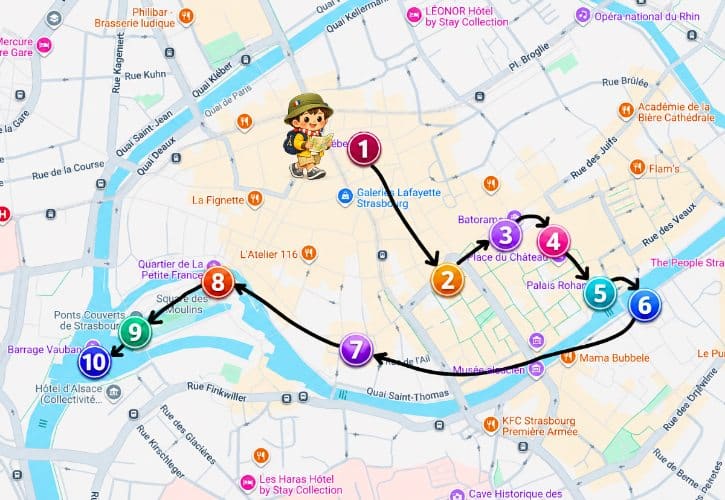
- Place Kléber
- Place Gutenberg
- Maison Kammerzell
- Strasbourg Cathedral
- Palais Rohan
- Quai des Bateliers
- Thomas Church
- La Petite France
- Ponts Couverts
- Barrage Vauban
How Long to Stay in Strasbourg
A day trip works, but the city really opens up the more time you give it. During Christmas Market season, hotels and trains fill up quickly, so plan further ahead than usual.
Option 1: Day Trip from Paris
Best for travelers with tight schedules who just want the highlights.
Focus only on the essentials:
- Grande-Île
- Strasbourg Cathedral
- Maison Kammerzell
- Place Gutenberg
- La Petite France
- Ponts Couverts
- Barrage Vauban
Skip the museums and outer-city sights. Take an early train out and a late one back.
Honest advice: A day trip is doable, but it feels rushed. You will miss the evening light along the canals.
Option 2: One Night in Strasbourg
Best for most first-time visitors.
Day 1: Explore the old town, tour the cathedral, walk the prettiest streets, and end the afternoon in La Petite France. In the evening, take a riverside stroll and enjoy a traditional Alsatian dinner.
Day 2: Visit a museum, then head north to Parc de l’Orangerie and the European Parliament before your train.
Honest advice: One night is the best balance for most tourists.
Option 3: Two Nights in Strasbourg
Best for slow travelers, families, museum lovers, and Christmas Market visitors.
With two nights, you can comfortably enjoy:
- The Museum of Modern and Contemporary Art
- Palais du Rhin and the Neustadt district
- Parc de l’Orangerie
- The European Parliament
- More relaxed meals and longer evening walks
You can also fit in a half-day trip to a nearby Alsace village like Colmar.
Honest advice: If you want a deeper, slower Strasbourg experience, two nights is the sweet spot.