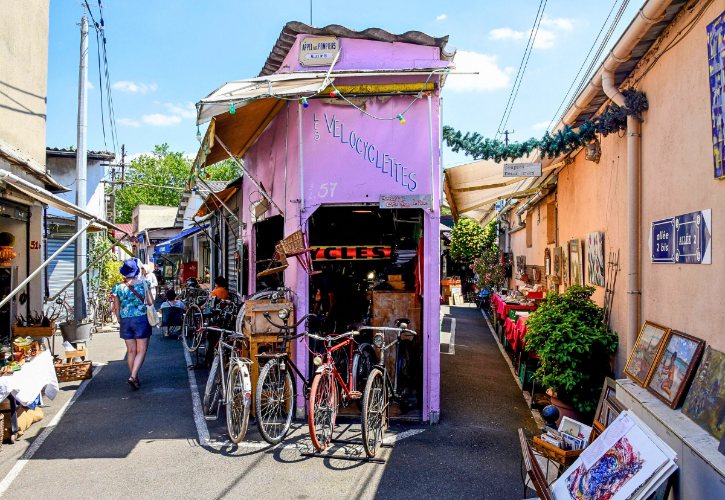
Most visitors see one Paris: the grand avenues, the famous towers, and the postcard views. But there is another Paris waiting just off the main routes.
It was shaped by antique dealers, old railway lines, artists who turned their homes into studios, quiet flower filled lanes, and villages the city grew around.
These places hold real history, architecture, and everyday life, not just pretty photos. Here are ten of them worth knowing.
1. Marché aux Puces de Saint-Ouen
a. Not an Ordinary Flea Market
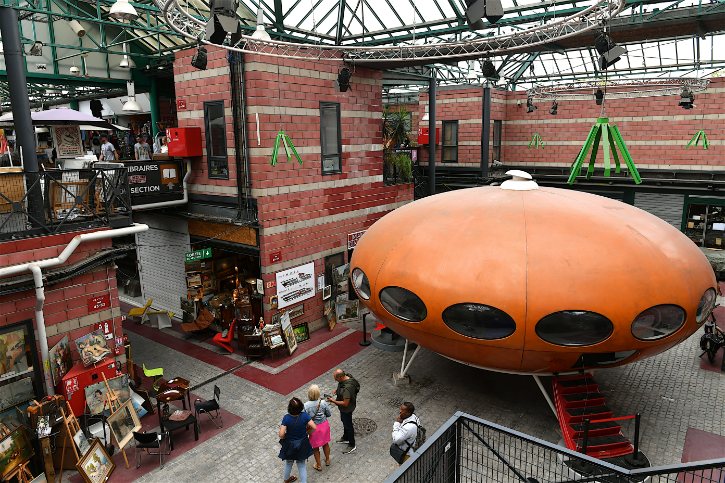
Forget the idea of a few stalls of old junk. This is a whole district built around antiques, fine art, design, restoration, and collecting. It spreads across about seven hectares, with separate specialist markets, galleries, and workshops all in one historic trading area.
One thing to know: it sits in Saint Ouen sur Seine, just north of Paris, not inside the city itself. Guides still call it a Paris attraction because it is so close and easy to reach.
b. How It Began
Back in the nineteenth century, secondhand sellers and rag traders were pushed outside the city walls. Trading there let them avoid Paris taxes. The market was officially founded in 1885, and over time it grew from a place for discarded goods into a world famous antiques center.
c. Markets to Explore
The district holds twelve official markets, each with its own feel:
- Marché Biron, the formal one, with fine furniture, art, and gilded bronzes.
- Marché Dauphine, a light filled arcade with rare books, vinyl records, and vintage pop culture.
- Paul Bert Serpette, popular with interior designers, full of mid century furniture and design.
The area also keeps skilled dealers and restoration workshops, where cabinetmakers, gilders, and clockmakers preserve traditional crafts. So the market does more than sell old things. It helps keep the knowledge to care for them alive.
d. What to See and Do
- Compare the polished galleries with the rough outdoor stalls.
- Look beyond the pricey pieces to records, posters, lighting, and old signs.
- Watch how dealers arrange objects to tell a story.
- It is open Saturday, Sunday, and Monday.
2. La Recyclerie
a. An Old Station Reborn
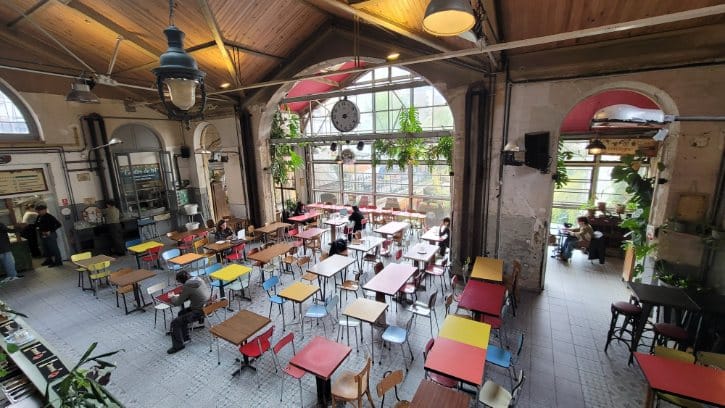
This is not just a café. It is a community space built around reuse, food, urban farming, and repair, set inside the former Gare du Boulevard Ornano.
The station opened in 1869 on the Petite Ceinture, the old railway ring around Paris. Passenger service stopped in 1934. You can still see the central hall, arched windows, and the sunken rail corridor below.
b. The Urban Farm
Along the old railway tracks, La REcyclerie keeps a 1,000 square meter farm and nature zone. It includes:
- Raised vegetable beds and permaculture gardens
- A chicken coop and a duck pond
- Rainwater harvesting and active composting
The old rail corridor now works as a small refuge for pollinators and wildlife inside the city.
c. Repair and Reuse
At the workshop, L’Atelier de REné, local people use shared tools to fix electronics, furniture, and bikes. The whole idea is to repair rather than throw away, and to learn practical skills along the way.
The venue also runs a busy calendar of talks, film screenings, seed swaps, vintage markets, and gardening sessions. Together they turn sustainability into something people actually do, not just talk about.
d. Where to Eat
The canteen is part of the green mission. You can eat seasonal, mostly plant based dishes, made with local organic produce. Food scraps are composted or sent to the farm, closing the loop. Main hall and canteen are open to all, though workshops and farm tours need booking.
3. Museum of Romantic Life
a. An Artist’s House
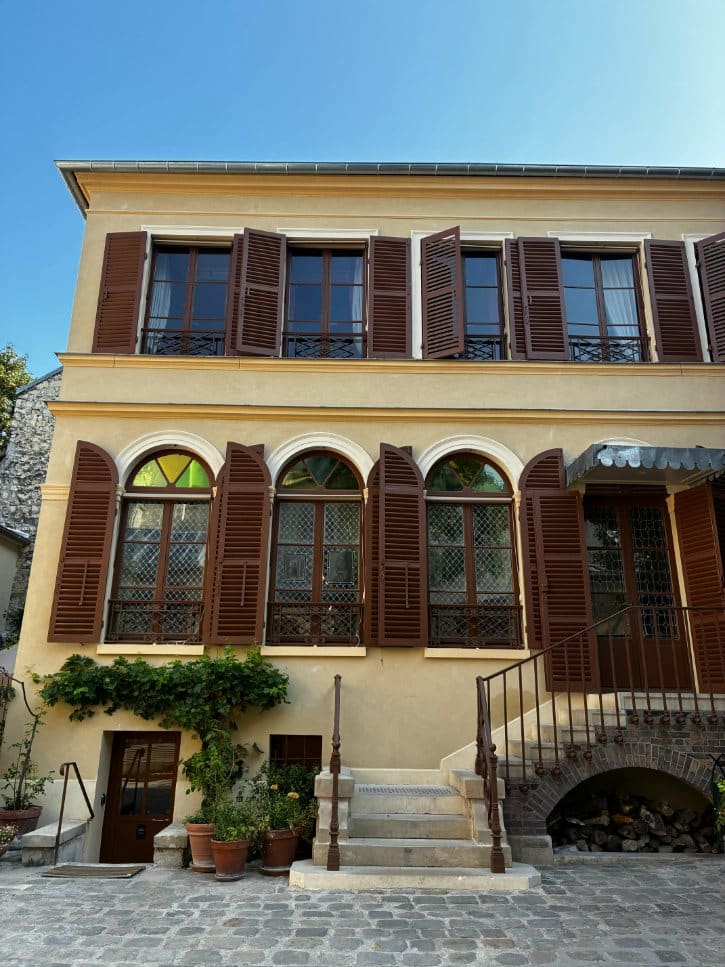
The Musée de la Vie Romantique is an intimate house museum about Romanticism, the artistic movement, not romantic love. It was the home and studio of painter Ary Scheffer (1795 to 1858), with living rooms, a courtyard, and twin glass fronted painting studios.
The house sits in Nouvelle Athènes, a district that became home to many writers, painters, and musicians of the Romantic generation. During his time here, Scheffer held famous Friday gatherings with guests like Chopin, George Sand, Delacroix, and Liszt, where music was played and ideas were shared.
b. The George Sand Rooms
The ground floor is devoted to novelist George Sand, who lived nearby. You can see her personal effects, letters, jewelry, and a portrait of her from 1838, along with family heirlooms that recreate her country home.
c. Understanding Romanticism
The displays explore the movement’s main themes in a simple way:
- Emotion and personal feeling over strict classical rules
- Nature, with wild landscapes standing in for human emotion
- Literature, drawing on Shakespeare, Dante, and old legends
- The supernatural, exploring dreams and mystery
d. Garden and Tea Room
The quiet garden is planted with roses and old perennials, and the glass greenhouse now holds a tea room where you can pause for tea, coffee, and a light bite. Compare the tall, light filled studios with the small living rooms as you go.
4. Gustave Moreau Museum
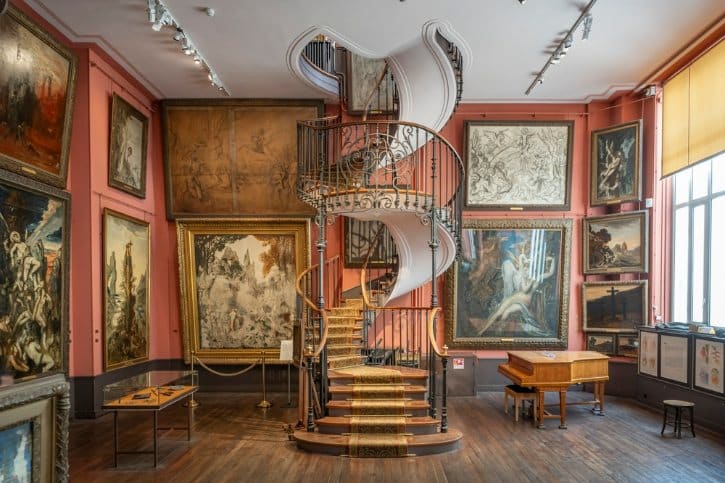
a. The Artist
The Musée National Gustave Moreau honors the Symbolist painter Gustave Moreau (1826 to 1898). He built detailed scenes from mythology and the Bible, full of symbols and rich color. His paintings reward slow, careful looking, so give them time.
Symbolism turned away from copying nature and looked instead at dreams, myth, and the inner world. Moreau taught younger artists too, including Henri Matisse, and his influence reached far beyond his own studio.
b. A Museum He Planned Himself
This is rare. Moreau arranged his own home and studios to become a museum after his death. He had the upper floors turned into huge double height studios with big north facing windows, and left thousands of works to the French State. The museum opened in 1903.
c. Staircase and Dense Display
- A famous cast iron spiral staircase curves upward without a central pillar.
- Paintings cover the walls from waist height to the ceiling, in an old salon style.
- Finished works hang beside sketches and studies, so you see how ideas grew.
- Glass cabinets with pivoting panels hold nearly 4,830 drawings you can leaf through like a book.
d. What to See
Move slowly, pick a few paintings, and study their symbols. View the staircase from different levels. The upper studios and ground floor are always open. The first floor apartments may close briefly during busy times, so treat them as a bonus.
5. Musée Jacquemart-André
a. The Collectors
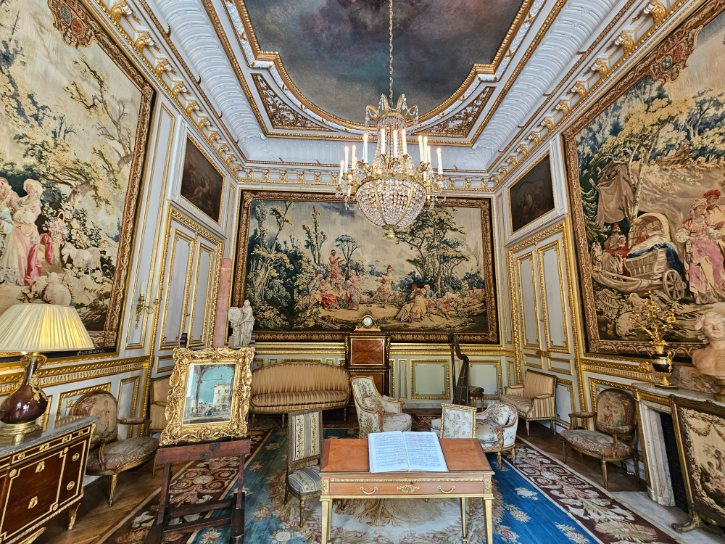
This is a preserved private mansion at 158 boulevard Haussmann, filled with the art collection of Édouard André and Nélie Jacquemart. Nélie was a professional portrait painter, and she played a central role in choosing and arranging the collection. The couple traveled across Europe and Italy to gather their treasures.
b. The Mansion
The house was built to do two jobs: host grand parties and display art. Highlights include:
- The round Grand Salon with gilded paneling
- A Music Room with balconies for musicians
- A glass Winter Garden full of plants and sculpture
- A dramatic double spiral staircase in marble and iron
Walls between the main salons could even sink into the floor to create one huge party hall.
c. The Collections
Seeing art inside furnished rooms feels very different from a plain gallery. Look for:
- French paintings by Boucher and Fragonard
- Dutch and Flemish works, including a Rembrandt
- An upstairs Italian Museum with Botticelli, Uccello, and Mantegna
d. What to See and Eat
Notice how paintings, furniture, and rooms work together, and imagine the grand receptions that once filled the space. The whole house survives as one unit thanks to Nélie, who left it and its collection to the Institut de France with orders that nothing be broken up or sold off.
When you need a break, the tea room in the historic Grand Dining Room is a lovely spot to sit.
6. Passage du Grand Cerf
a. A Covered Passage
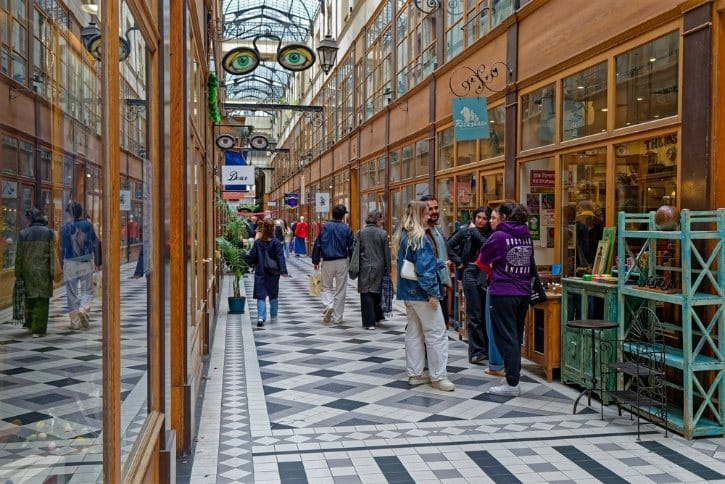
The Passage du Grand Cerf is a beautiful nineteenth century covered arcade in the 2nd arrondissement, linking Rue Saint Denis and Rue Dussoubs. Passages like this once gave Parisians clean, well lit places to shop and stroll, away from muddy streets.
Built in the mid 1820s, it stands on the site of an old coaching inn. Those early passages were a fresh idea at the time, and they helped shape the department stores and shopping arcades that came later.
b. The Tall Glass Roof
What makes this one special is its height. It rises nearly 12 meters, the tallest glass and iron roof of any surviving passage in Paris.
So do not just look at the shop windows. Look up. The slender ironwork and glass ceiling let daylight pour in, and the light shifts with the weather through the day.
c. Crafts and Design
Unlike passages full of luxury brands, this one keeps a hands on, creative spirit. Its shops and workshops are run by independent makers, including:
- Jewelry designers
- Furniture restorers
- Textile crafters
- Lighting and design boutiques
d. What to See
- Take in the tall interior and the rhythm of the iron framework.
- Spot the carved wood shop signs, including deer and dragonfly motifs.
- Browse the small independent workshops.
- The passage stays open through daytime hours, while shops keep their own schedules.
7. La Campagne à Paris
a. The Countryside in the City
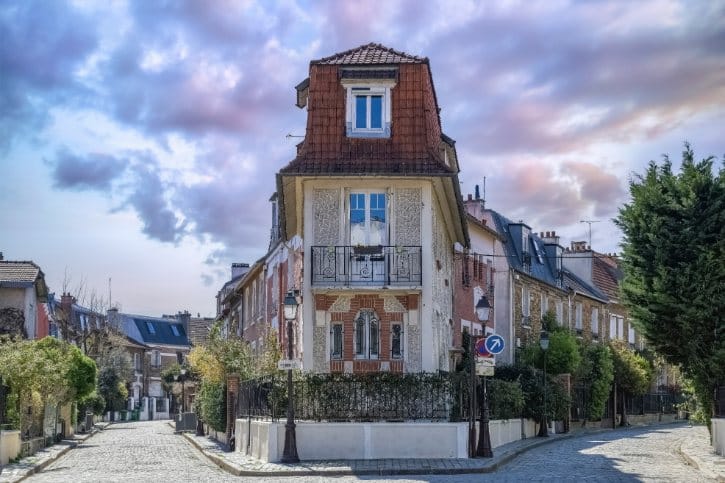
Its name means “The Countryside in Paris”, and it fits. This is a quiet enclave of small houses on a hill in the 20th arrondissement, built as cooperative housing for workers. Founded in 1907 and opened in 1926, it gave factory and transport workers a rare chance to own a home with a garden.
b. Architecture
The look blends French tradition with garden suburb style:
- Millstone stone paired with red brick and plaster
- High pitched roofs, decorative gables, and painted shutters
- Small front gardens with iron gates and climbing vines
Repeated house shapes give the streets unity, while small details make each home feel personal.
c. On the Hill
The enclave sits on raised ground, reached by steep stone stairways and narrow cobblestone lanes like Rue Irénée Blanc. That height keeps traffic out and gives the whole area a calm, village like feeling.
Climb one of the stairways and you feel the scale change all at once, from busy avenue to quiet garden street. Once a working class project, it is now a sought after address, though the little houses and gardens have kept their gentle character.
d. Visiting Respectfully
This is a living community, not a museum.
- Stay on public streets, sidewalks, and stairways.
- Do not enter private gates, paths, or gardens.
- Keep your voice low and do not photograph residents without asking.
8. Butte-aux-Cailles
a. A Village on a Hill
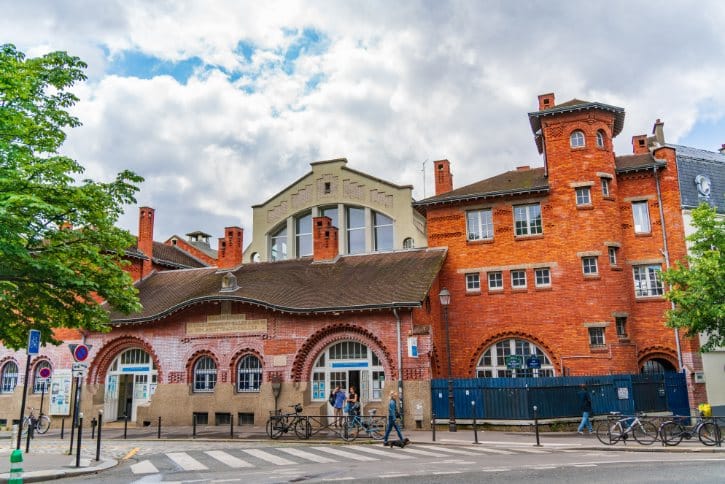
In the 13th arrondissement, Butte aux Cailles is a former village with a rich, layered past. Once a rural hill of windmills and vineyards, it was absorbed into Paris in 1860 but kept its winding, irregular streets, since quarry tunnels below stopped grand boulevards from being built.
b. Hidden River and Warm Water
This was a strong working class area, and it has a proud political past. During the Paris Commune of 1871, fighters held barricades along the hill, and plaques and square names still honor that memory today.
The Bièvre river once flowed here, powering mills and workshops before it was buried underground. You can still trace its old path in dips in the road and brass markers in the pavement.
Deep below runs a warm artesian spring. Its water feeds:
- A public fountain on Place Paul Verlaine
- The Art Deco swimming pool built over the well in 1924
c. Street Art
This is one of the great street art corners of Paris. Its low walls and narrow alleys are covered in stencils, murals, and mosaics. The area is closely tied to the artist Miss.Tic, known for her poetic, feminist stencils. Works change often, so no single piece is guaranteed to still be there.
d. What to See and Eat
- Start at Place Paul Verlaine, then walk Rue des Cinq Diamants for street art.
- Peer through the gates of La Petite Alsace to glimpse its courtyard.
- In the evening, the main streets fill with lively bistros and bars where you can grab a classic French meal or a drink. Private courtyards stay closed, so view them from the gates.
9. Quartier des Peupliers
a. A Quiet Low Rise District
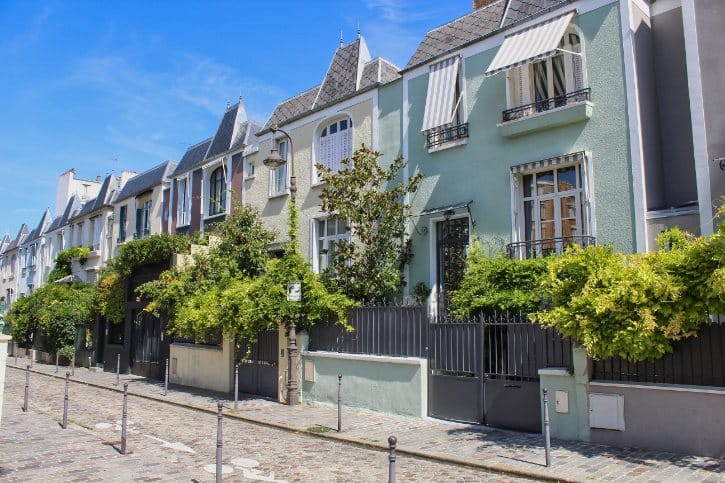
The Quartier des Peupliers, in the southern 13th arrondissement, is a broad neighborhood of small houses, planted lanes, and pastel façades. It is not one tidy enclave but a spread of quiet streets, so its charm reveals itself slowly as you wander.
Small houses survived here because the soft, watery ground near the old Bièvre could not support heavy stone blocks.
b. Rue Dieulafoy
The prettiest street is Rue Dieulafoy, created in 1912. It is lined with matching two story townhouses, each with a triangular roof and small front garden.
To avoid a dull, uniform look, the developer painted them in alternating pastel colors: pink, blue, yellow, and green. The result feels cheerful and unlike grey stone Paris.
c. Everyday Charm
The joy here is in the small details. Look for:
- Cobblestone lanes and narrow sidewalks
- Pastel plaster in blue, pink, yellow, and cream
- Red brick window surrounds and iron gates
- Front gardens with climbing vines reaching into the street
This everyday architecture shows how ordinary families lived beyond the grand center.
d. Visiting Respectfully
Explore gently and look for gradual changes rather than one big landmark. The public streets are open, but all the houses, yards, and gardens are private homes, so admire them from the pavement.
10. Cité Florale
a. A Garden Enclave
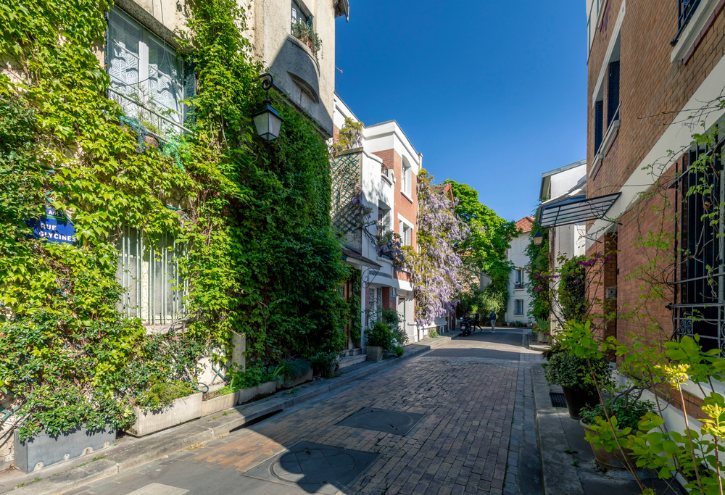
Cité Florale is one of the smallest and most charming corners of garden style Paris. Built in 1928 in the 13th arrondissement, it is a tight cluster of six flower named streets, lined with pastel houses and lush private gardens.
It stands on former marshy meadowland by the old Bièvre. Because the soft ground could not carry tall buildings, small houses were built here instead.
b. Six Flower Streets
Every street is named after a flower or plant:
- Rue des Glycines (Wisteria)
- Rue des Liserons (Bindweed)
- Rue des Iris (Iris)
- Rue des Orchidées (Orchids)
- Rue des Volubilis (Morning Glory)
- Square des Mimosas (Mimosas)
This theme was part of the original 1928 plan, giving the whole enclave a single, green identity.
c. Houses and Gardens
The style mixes Art Deco touches with garden suburb design. Smooth pastel façades sit beside red brick arches and decorative iron gates.
Over the years the gardens have grown thick, with wisteria and roses draping the walls and spilling into the cobbled lanes. Each house varies a little, yet they all share one calm, unified look.
With no shops, no advertising, and almost no traffic, the enclave feels worlds away from the grand avenues most people picture when they think of Paris. Foliage and birdsong take the place of stone and noise.
d. Visiting Respectfully
Cité Florale is a real, lived in community.
- Stay on the public cobblestone streets.
- Do not step over walls, open gates, or enter garden paths.
- Keep your voice down and avoid photographing through windows.
- Enjoy the flowers and façades, but remember these are people’s front doors.