Paris rewards travelers who plan a little. The city packs medieval churches, grand palaces, world-class art, formal gardens, and lively neighborhoods into a small, walkable core.
This guide lays out three full days, one step at a time. You will move from historic streets to riverfront views, from quiet gardens to buzzing cafés, and from famous monuments to hidden corners.
Each day flows in a smart geographic order, so you spend less time traveling and more time enjoying. Wear comfortable shoes, take the rest stops seriously, and let the city set the pace. 😊
Day 1: Historic Heart of Paris, Le Marais & Westside Riverfront
Day 1 moves from east to west, roughly following the Seine. You start at the medieval heart of the city, walk through the historic Marais, cross the grand line of the Louvre and Tuileries, and finish near the Eiffel Tower.
It is a full day with a lot of walking, some cobblestones, and busy crowds at the big sights. Keep a steady pace and take the garden breaks when they come.
8:30 AM: Notre-Dame Cathedral of Paris
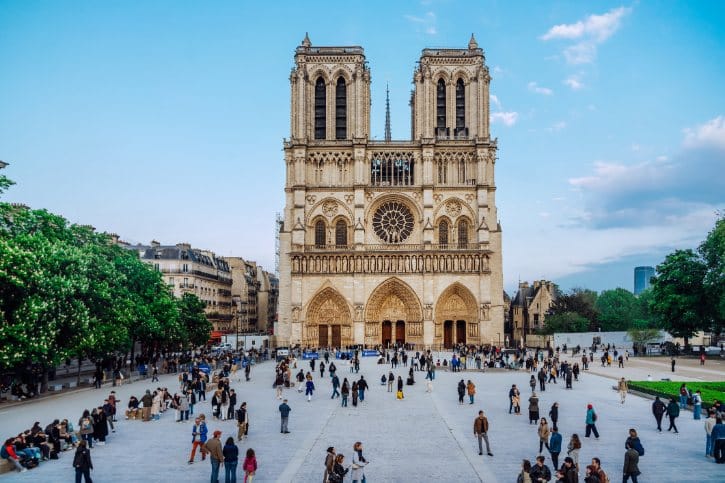
Notre-Dame is the perfect first stop. Built between 1163 and 1345, it is a landmark of French Gothic design, now reopened after its long restoration.
Inside, the cleaned stone feels bright and calm. Look for:
- The central nave and its soaring rib vaults.
- The North and South Rose Windows, which survived the 2019 fire.
- The carved choir enclosure and the restored Great Organ.
- Nicolas Coustou’s marble Pietà, with statues of Louis XIII and Louis XIV.
Step back outside to admire the western façade, with its three portals, the Gallery of Kings, and the gargoyles along the upper edges.
Good to know: Entry is free but managed with digital ticketing. This is an active church, so keep quiet and dress modestly.
Read More: 10 Breathtaking Churches in Paris You Can’t Miss
9:45 AM: Sainte-Chapelle
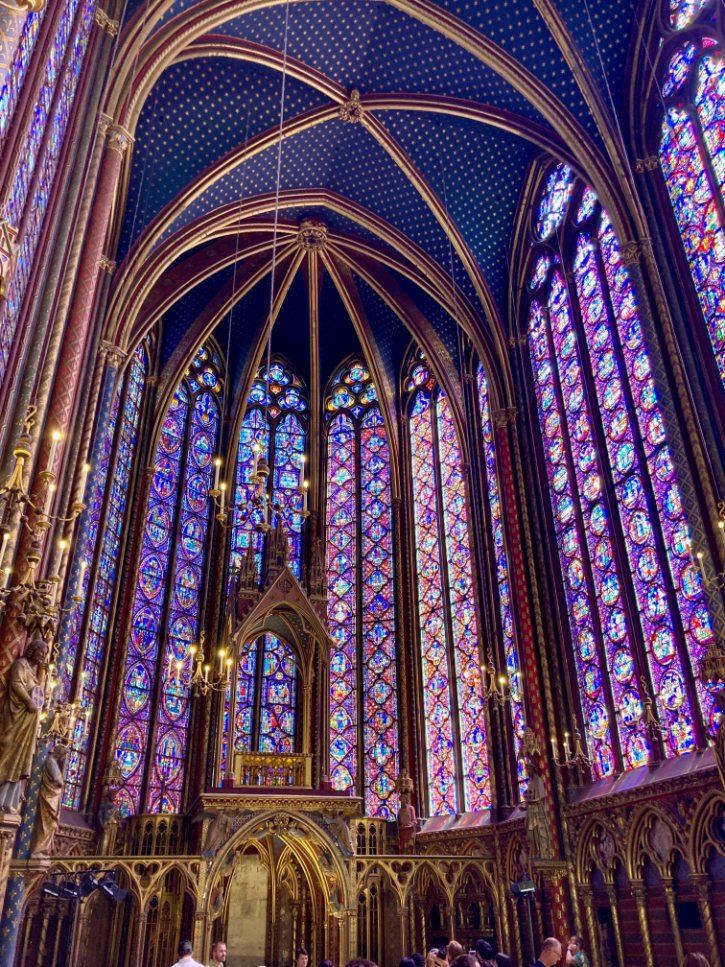
A short walk away, Sainte-Chapelle feels like the opposite of Notre-Dame. It is small, but the stained glass will stop you in your tracks.
Built in the 1240s for King Louis IX, it has two levels. The Lower Chapel is dark and richly painted. Climb the spiral stairs and the Upper Chapel opens into a hall of light about 20 meters high.
- 15 tall glass bays hold over 1,100 biblical scenes.
- More than 70% of the glass is original from the thirteenth century.
- The western rose window shows the Apocalypse.
Good to know: The chapel sits inside a courthouse, so security is strict. Knives, scissors, and metal objects are taken and not stored. An elevator and ramp are available if you cannot use the stairs.
Read More: Sainte-Chapelle in Paris: What Most Tourists Miss Inside This Famous Chapel
11:00 AM: Rue des Rosiers & Place des Vosges Historic Marais Walk
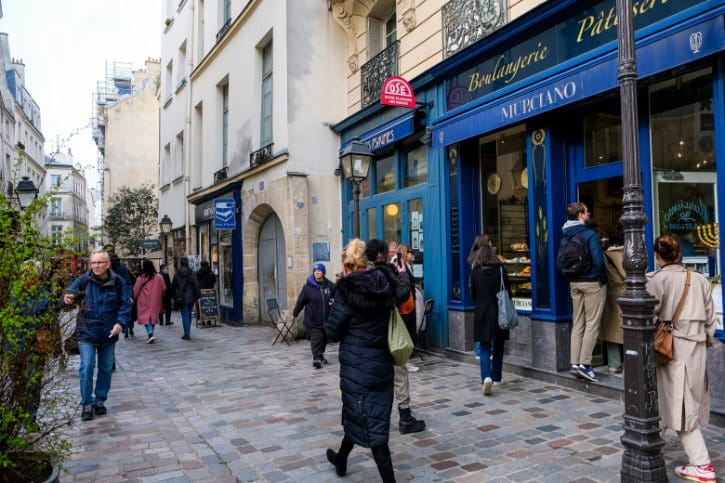
This walk carries you from grand medieval Paris into the lived-in charm of the Marais.
Rue des Rosiers is the heart of the historic Jewish quarter, known as the Pletzl. Look for old storefronts, Hebrew signage, traditional bakeries, and plaques marking events of World War II. The street is pedestrian, so it feels lively and easy to explore.
From there, head east along Rue des Francs-Bourgeois, lined with grand old townhouses. You can walk straight through the courtyard of the Hôtel de Sully and out into the corner of Place des Vosges.
Place des Vosges is the oldest planned square in Paris, opened in 1612. It is a near-perfect square ringed by 36 brick-and-stone pavilions, with shaded arcades and central lawns. Victor Hugo once lived at No. 6.
Good to know: Expect cobblestones and narrow pavements. If you are short on time, focus on Rue des Rosiers and Place des Vosges.
Read More: The Best Route to Explore Le Marais on Foot
12:30 PM: Lunch at L’As du Fallafel
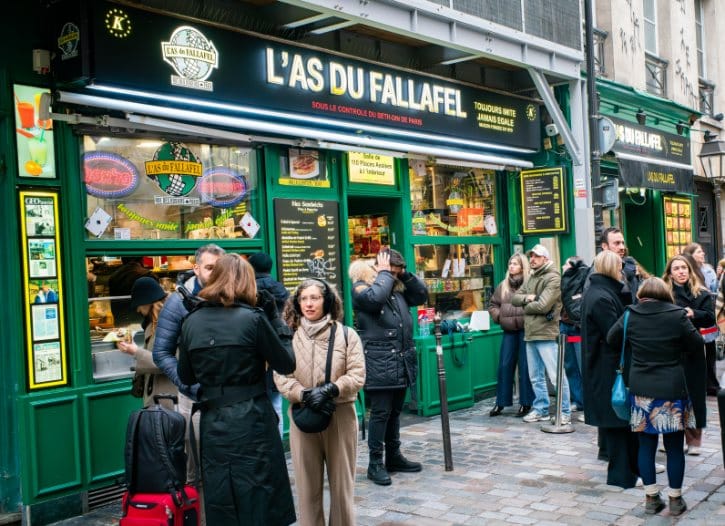
This spot fits your Marais walk perfectly. It sits right on Rue des Rosiers and has been serving since 1979.
The food is fast, fresh, and full of flavor. Think warm pita packed with crisp falafel, roasted eggplant, hummus, tahini, and pickled slaw, plus meat options and a house mint lemonade. It is a quick, informal break before the slower meals to come.
Good to know: This is a Kosher spot. It closes early on Friday afternoon and stays closed all day Saturday, so plan around that late in the week.
1:45 PM: Louvre Museum & Pyramid Courtyard
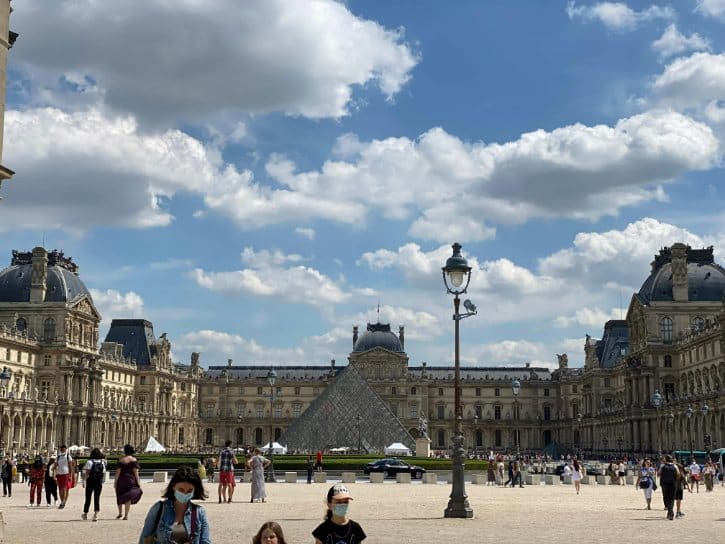
The Louvre is the largest art museum in the world, set inside a former royal palace. You cannot see it all, so do not try. Pick a short list of highlights and walk a smart path.
Start outside in the courtyard, where the glass Pyramid creates a bold, modern contrast against the old palace wings. The water basins make for lovely reflections.
Inside, a realistic highlights route includes:
- The medieval foundations, the old fortress moat and walls beneath the palace.
- The Winged Victory of Samothrace on the grand Daru staircase.
- The Mona Lisa, with Veronese’s huge Wedding Feast at Cana on the opposite wall.
- The Venus de Milo, famous for her pose and missing arms.
- The gilded Galerie d’Apollon, home to the French Crown Jewels.
- Nineteenth-century French paintings, including Delacroix’s Liberty Leading the People and Géricault’s The Raft of the Medusa.
If you still have energy, the Egyptian antiquities are a great add.
Good to know: Artworks move, so check the official live gallery map before you enter. The Mona Lisa room is the most crowded, so keep your expectations calm and take a short break during the visit.
4:00 PM: Tuileries Garden Central Allée Promenade
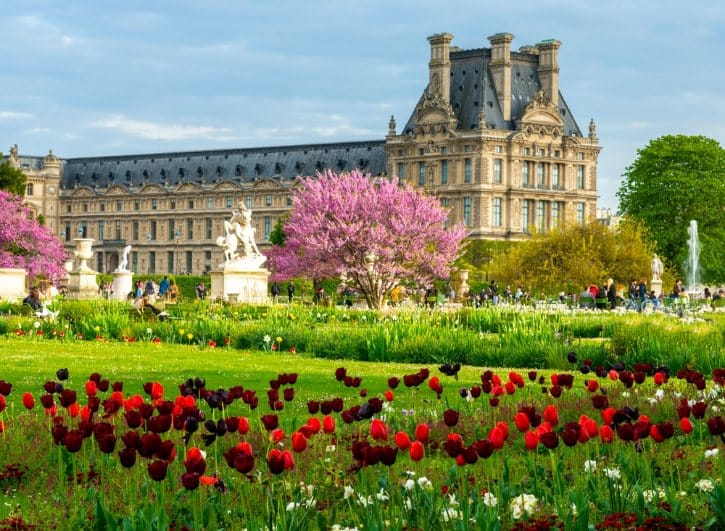
After hours indoors, this garden is the perfect reset. Keep it simple and just walk the central path.
Shaped by André Le Nôtre in 1664, this is the classic French formal garden. The wide gravel avenue frames a long view west toward the Champs-Élysées and the distant Arc de Triomphe. Turn around for the view back to the Louvre.
At the western end, grab one of the famous green chairs beside the round pond and rest your feet. The garden also holds sculptures across its lawns, so keep an eye out as you stroll.
4:45 PM: Place de la Concorde
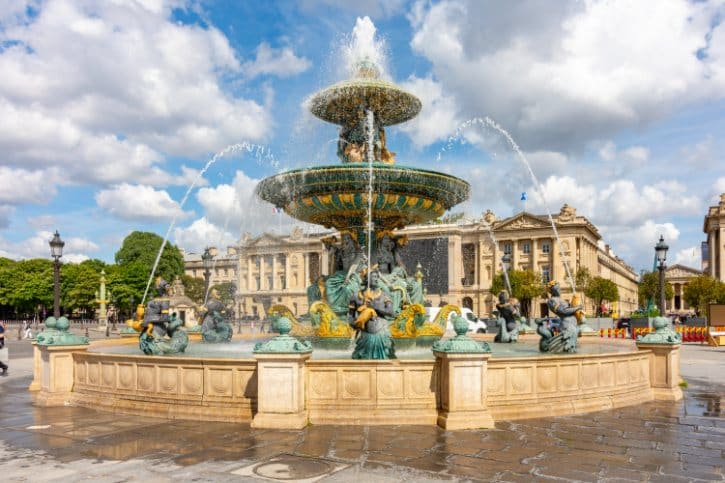
This is the largest public square in Paris, and a short, sweeping stop.
At its center stands the Luxor Obelisk, about 3,300 years old, covered in hieroglyphs and topped with a gold pyramidion. Two grand fountains sit on either side, and elegant eighteenth-century façades frame the square, including the Hôtel de la Marine.
From here you get long views toward the Tuileries, the Champs-Élysées, and the Arc de Triomphe. There is heavy history here too, since the square held the guillotine during the Revolution.
Good to know: This is a busy traffic square, so use the marked crossings and watch your footing on the wide islands.
5:30 PM: Champ de Mars & Eiffel Tower Golden Hour Viewpoint
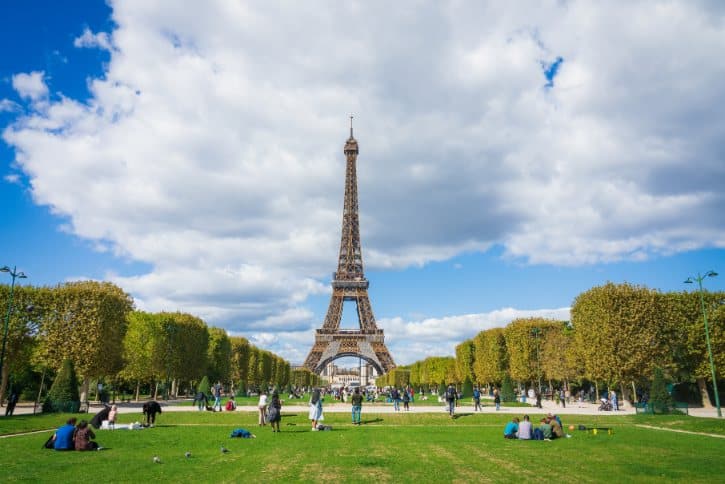
This is the classic Eiffel Tower moment from the ground. Built for the 1889 World’s Fair, the tower rises about 330 meters and remains the great icon of the industrial age.
- From far back on the park, you get the full tower in frame.
- From underneath, you can study the iron arches and the elevator mechanisms in the legs.
- The long green lawn lines up the tower with École Militaire on one side and the Palais de Chaillot across the river.
After dark, the tower glows gold and sparkles for five minutes at the start of each hour. Whether you catch it depends on the season and the time you visit.
Good to know: This stop is for exterior views only. Going up needs two to three hours of queues. Keep your bag zipped and stay aware of pickpockets near the tower.
7:00 PM: Dinner at Le Petit Cler on Rue Cler
Le Petit Cler is a warm neighborhood café-bistro on Rue Cler, a charming pedestrian market street. After a big day of monuments, this is the calm, local ending you want.
The menu is classic French café fare. Expect starters like escargots in garlic butter and French onion soup, mains such as croque-monsieur, grilled steak with fries, and duck breast, and simple desserts like crème brûlée and warm apple tart. Regional wines come by the carafe.
Day 2: Left Bank Masterpieces, Classical Gardens & Bohemian Montmartre
Day 2 has two halves. You spend the morning in the calm streets of the Left Bank, then ride the metro up to the artistic hill of Montmartre for the afternoon.
The Montmartre streets are hilly and cobbled, so the afternoon pace stays gentle. Expect a mix of gardens, café culture, great art, and village charm.
8:30 AM: Jardin du Luxembourg Morning Walk
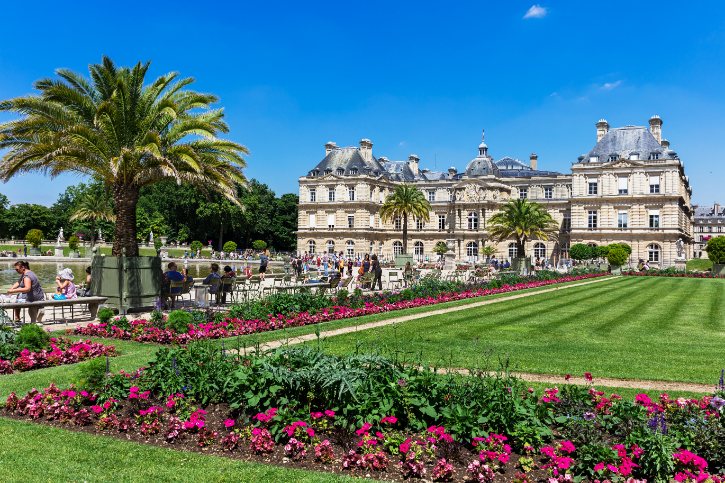
This garden is a calm, beautiful way to begin, and mornings here are quiet and lovely.
Created in 1612 for Marie de’ Medici, it mixes formal French design with everyday Parisian life. Highlights include:
- The Luxembourg Palace, now the seat of the French Senate.
- The Grand Bassin, where children sail small wooden boats.
- The romantic Medici Fountain, tucked under the trees.
- Rows of statues, including a series honoring the queens of France.
Keep it to a simple loop. Visit the fountain, circle the central basin for the palace view, then move on.
10:00 AM: Café de Flore (Boulevard Saint-Germain)
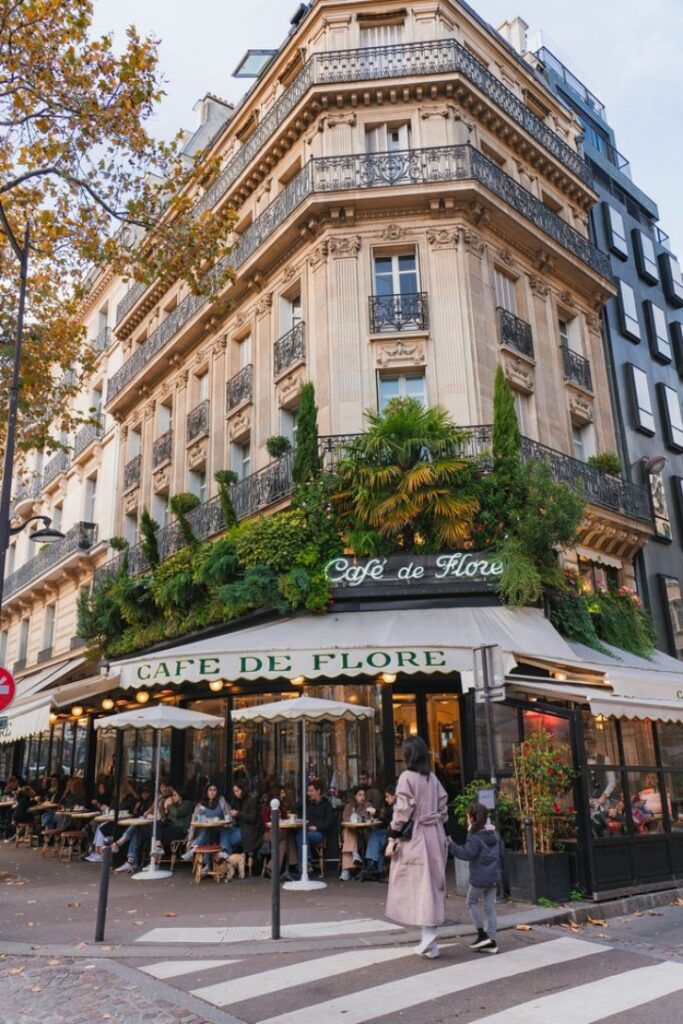
Café de Flore is a true Paris landmark. Founded in 1887, it became a gathering place for great writers and thinkers, including Sartre, de Beauvoir, Camus, and Picasso.
Come for the history and the atmosphere. Order a classic café crème and a croissant, soak up the setting, and watch the boulevard go by. This is about the feeling, not a big meal.
Good to know: Keep it to one drink and something light so your morning stays on track.
Read More: 10 Most Beautiful Café in Paris
10:45 AM: Musée d’Orsay
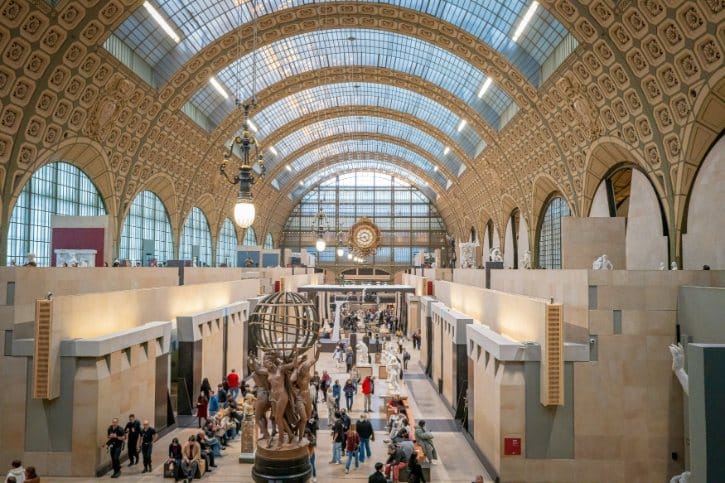
After the Louvre’s scale, the Orsay feels much more manageable, and it holds some of the most loved art in the world.
It sits inside a beautiful former railway station built for the 1900 World’s Fair. The long central hall keeps its original arches, and the giant glass clock on the upper floor gives you a wonderful view across the river.
The collection focuses on Impressionism and the art around it. Look for:
- Monet’s landscapes and his Rouen Cathedral studies.
- Renoir’s Dance at Le Moulin de la Galette.
- Degas’s dancers, including his famous little dancer sculpture.
- Van Gogh’s glowing colors and Cézanne’s still lifes.
Good to know: Head up to the top-floor Impressionist gallery first, before it fills, then work your way down. Pick a handful of works and really look, rather than racing through every room.
1:30 PM: Lunch at Les Antiquaires
Les Antiquaires is a classic Left Bank bistro just a few minutes from the Orsay. A proper sit-down meal here is a smart idea before the hills of Montmartre.
The kitchen does traditional French bistro cooking well. Think French onion soup, beef tartare with fries, and slow-cooked duck confit, followed by warm tarte Tatin or crème brûlée.
3:00 PM: Rue de l’Abreuvoir & La Maison Rose
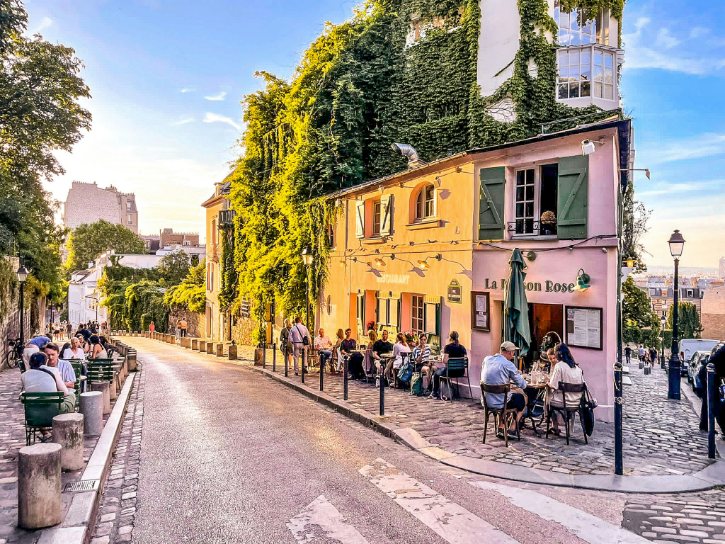
This is one of the prettiest, most village-like corners of Montmartre, and a nice calm change from the busy area near Sacré-Cœur.
Rue de l’Abreuvoir is a curving, sloping cobblestone street with ivy-draped walls, old lampposts, and preserved eighteenth-century houses. At No. 2 sits La Maison Rose, a pink building with green shutters that once welcomed artists like Utrillo, Picasso, and Modigliani.
Look back down the street to frame the dome of Sacré-Cœur above the rooftops.
Good to know: This is a real residential street. Keep your voice down, and do not block doorways for photos. It is popular, so expect other photographers around.
4:30 PM: Place du Tertre
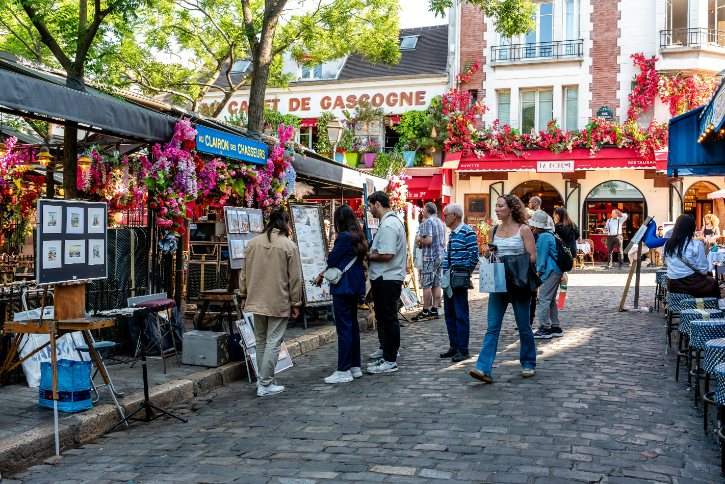
Place du Tertre is the old public square of Montmartre, back when it was its own village. It keeps the artistic spirit alive from the days when painters like Toulouse-Lautrec and Picasso worked here.
Today, licensed artists set up their easels in the square, working in rotating shifts under city rules. Around them stand historic buildings, including one of Montmartre’s oldest surviving restaurants.
If you want a portrait, agree on the style, price, and sitting time first. And before photographing an artist or their work up close, ask.
Good to know: The square can feel crowded and commercial. For a quieter, older feel, step into side lanes like Rue Saint-Rustique.
5:30 PM: Basilique du Sacré-Cœur de Montmartre
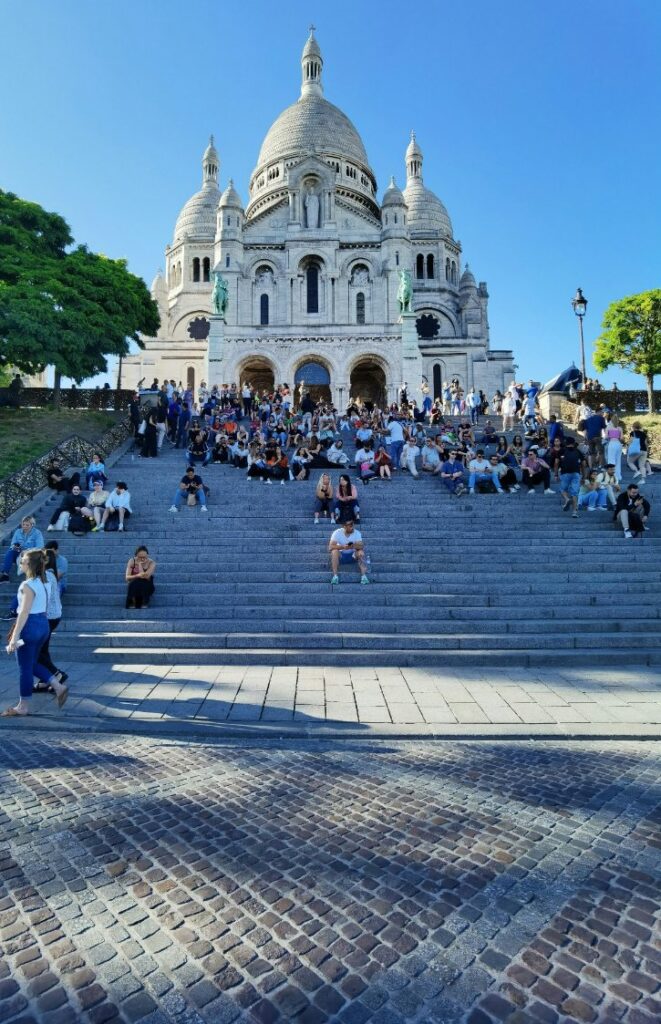
This is the high point of your Montmartre afternoon, in every sense.
Built between 1875 and 1914, the white basilica has a distinctive multi-domed Romano-Byzantine style. Its stone stays bright because it releases a natural cleaning agent when it rains.
Inside, the huge Mosaic of Christ in Majesty covers the apse ceiling and is one of the largest in the world. The basilica keeps silent prayer going day and night, so quiet and respect are expected.
From the terrace out front, you stand at the highest natural point in Paris. The wide view stretches across the city rooftops toward landmarks like the Pantheon and Notre-Dame. Trust me, this view is worth the walk up.
Good to know: Reaching the top means climbing 222 steps, or you can take the funicular. Skip the dome climb today to keep your energy.
Read More: The Best Walking Route to Explore Montmartre
7:00 PM: Dinner at Bouillon Pigalle
A bouillon is an old Paris idea: a big, lively hall serving classic French comfort food quickly and simply. Bouillon Pigalle brings that tradition back in a fun, buzzing setting.
The menu runs through French classics. Start with eggs mayonnaise or escargots, then move to hearty mains like beef bourguignon, duck confit, or sausage with mashed potato. Finish with a giant profiterole or chocolate mousse.
8:30 PM: Boulevard de Clichy & Moulin Rouge Evening Stroll
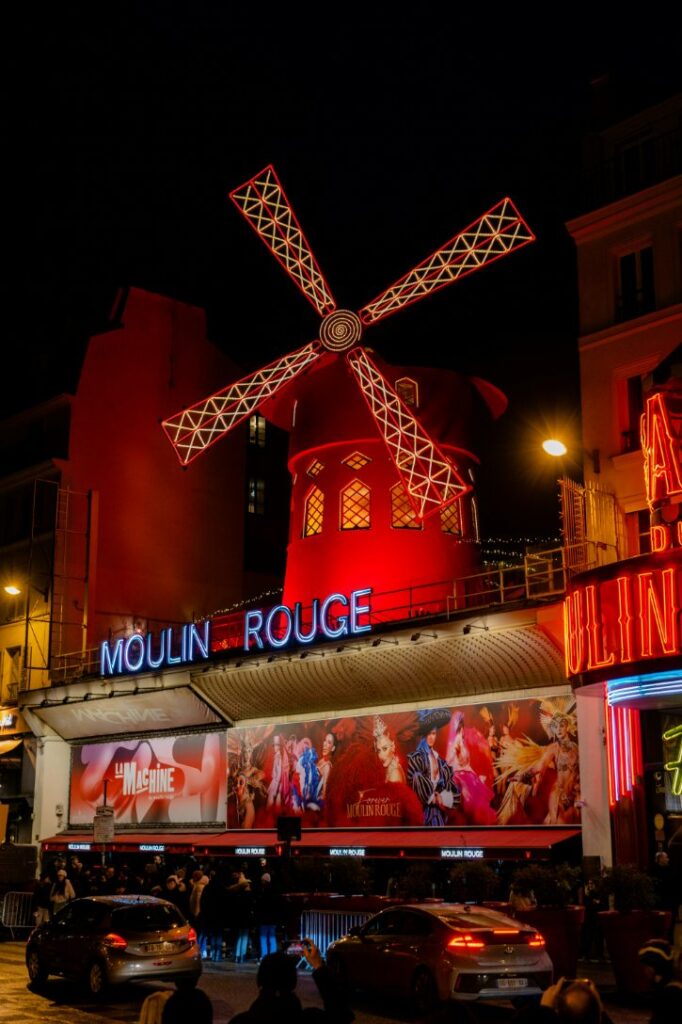
End the day with a simple evening stroll through the old nightlife heart of Pigalle. Just to be clear, this stop is about the streets and lights, not a show.
- The Moulin Rouge, with its famous red windmill, opened in 1889 and is known as the birthplace of the modern French Cancan.
- The wide boulevard gives you clear framing of glowing music halls, theaters, and classic neon signs.
Good to know: This is a nightlife district. Stick to the well-lit main streets, keep your bag secure, and be aware of pickpockets and pushy promoters.
Day 3: Grand Boulevards, Opéra Architecture & Westside Vistas
Day 3 leans into grand architecture and big views. You explore imperial design, a spectacular opera house, a glass dome, a famous avenue, a monument climb, and a final riverside walk.
There is some stair climbing, so pace the meals and take the viewpoints slowly.
8:30 AM: Place Vendôme & Rue de la Paix Architectural Walk
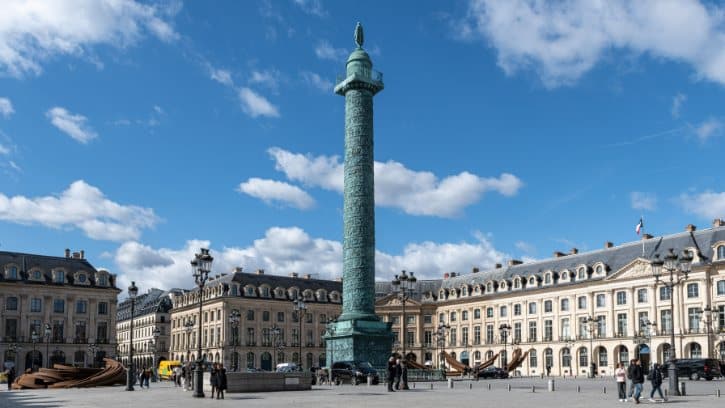
This walk opens Day 3 with elegant design and royal history, and early morning is the best time to enjoy it.
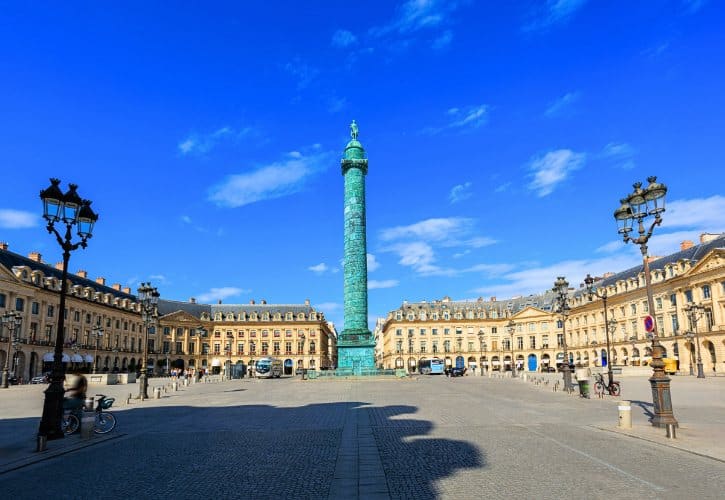
Place Vendôme is a fine example of French Neoclassical design, with a uniform octagonal layout and steep mansard roofs. At its center stands the Vendôme Column, raised by Napoleon to mark his victory at Austerlitz and wrapped in bronze from captured cannons. The square is famous today for its jewelry houses.
Walk north along Rue de la Paix and the gilded roof sculptures of Palais Garnier slowly appear at the end of the street. It is a lovely, framed reveal.
9:15 AM: Place de l’Opéra & Palais Garnier Exterior Morning Stroll
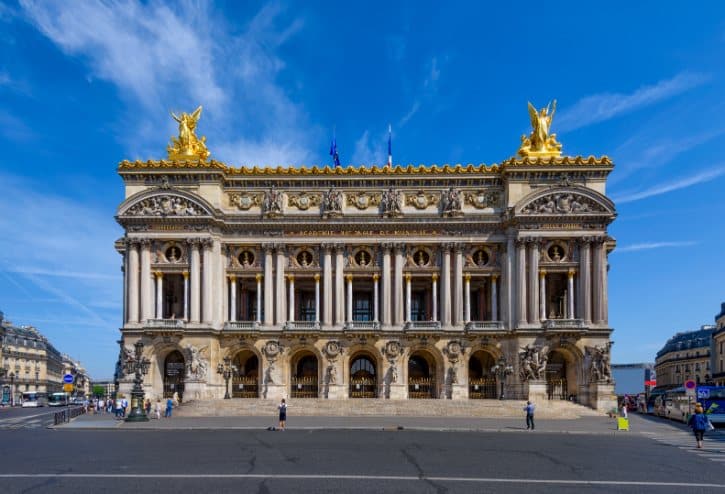
Before heading inside, take time with the outside of the Palais Garnier. Designed by Charles Garnier and opened in 1875, it is a showpiece of Second Empire style.
- Rich sculpted groups and bronze busts of great composers decorate the front.
- The copper dome is topped by a gilded statue of Apollo.
- Look down Avenue de l’Opéra, built without trees on purpose to keep the opera house in clear view.
10:00 AM: Palais Garnier Interior Tour
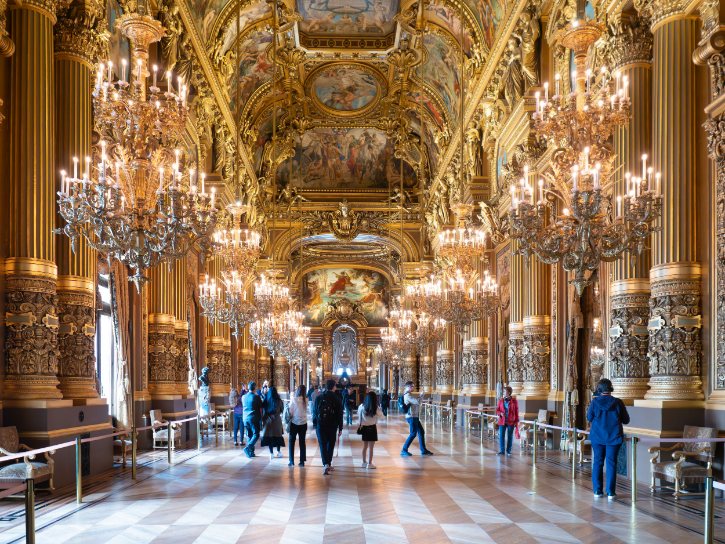
Even if you never see an opera, the inside of the Palais Garnier is pure spectacle.
- The Grand Staircase sweeps upward in colored marble, framed by balconies and ceiling paintings. It was built to see and be seen.
- The Grand Foyer feels like a royal palace gallery, with tall ceilings, crystal chandeliers, and gilded moldings.
- The auditorium holds red velvet seats, a huge chandelier, and Marc Chagall’s colorful 1964 ceiling.
Good to know: The auditorium can close without notice for rehearsals or performances, but the staircase and foyer alone make the visit worth it.
11:35 AM: Galeries Lafayette Haussmann (Glass Dome & Rooftop View)
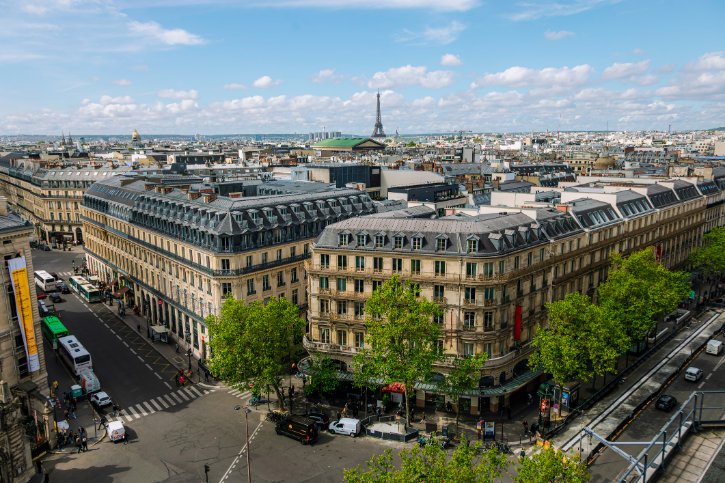
This stop is about architecture and views, not shopping.
The stained-glass dome rises about 33 meters, with steel arches and colorful glass that fills the atrium with warm light. View it from the ground floor first, then from the upper balconies.
Then head up to the rooftop terrace for sweeping views across the Paris rooftops. From here you can spot Palais Garnier, the Eiffel Tower, the golden dome of Les Invalides, Sacré-Cœur, and La Défense in the distance.
Good to know: Take the lifts or escalators straight up and skip the shopping floors. In heavy rain or high wind, the open rooftop may close, so the dome is your indoor fallback.
12:50 PM: Lunch at Café de la Paix
Café de la Paix is both a meal and a monument. Opened in 1862, it is a listed historic site known for its gilded interior and long list of famous guests.
This is the most formal meal of your three days. The kitchen leans on French brasserie classics and fresh seafood, from oysters and sole meunière to onion soup, beef tartare, and foie gras. Save room for a signature pastry like the Millefeuille or the Opéra cake.
2:00 PM: Avenue des Champs-Élysées Promenade
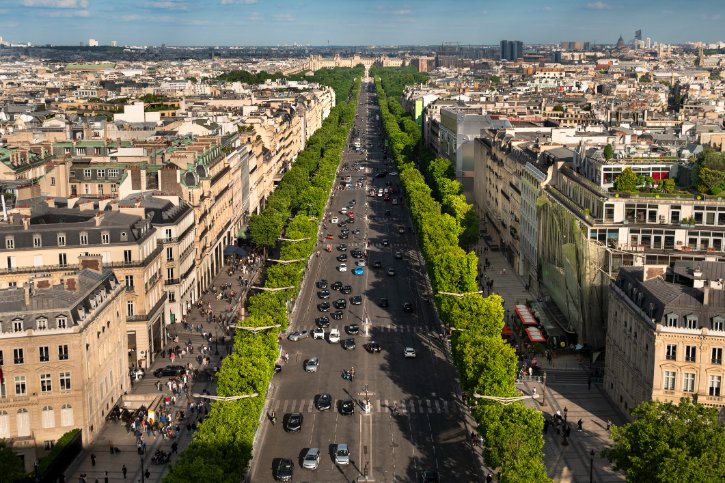
The Champs-Élysées is more than a shopping street. It is part of the historic axis of Paris, first laid out in 1667.
The avenue has two halves. The lower section is landscaped gardens with the Grand Palais and Petit Palais. The upper section is the tree-lined commercial boulevard leading toward the Arc de Triomphe.
Walking west and uphill, you keep the Arc in view the whole way. It is a satisfying march toward a giant landmark.
Good to know: Focus on the upper stretch and stick to the northern sidewalk for the clearest views of the Arc.
3:30 PM: Arc de Triomphe Observation Deck
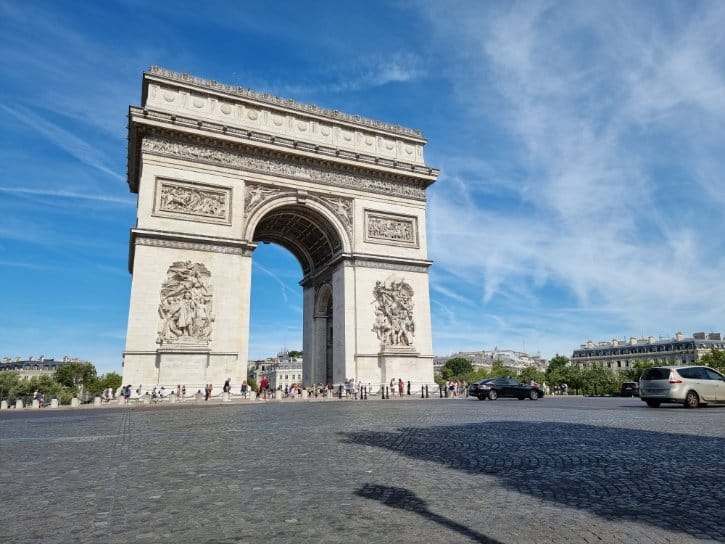
The Arc de Triomphe is both a national memorial and one of the best places to understand how Paris is laid out.
At ground level, look for the four great relief sculptures and, beneath the arch, the Tomb of the Unknown Soldier with its eternal flame.
Then climb the 284 spiral steps to the roof. From the top, you look out over Place Charles de Gaulle, where 12 avenues spread out like a star.
You can trace the historic axis down the Champs-Élysées to the Louvre, across to the Eiffel Tower, and out to La Défense.
Good to know: Never cross the traffic circle at street level. Use the underground tunnels. Large backpacks and luggage are not allowed and cannot be stored.
5:30 PM: Place du Trocadéro Sunset Viewpoint
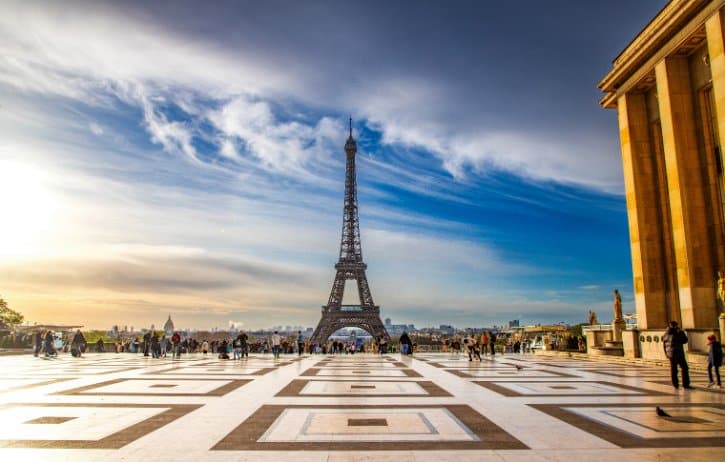
This is one of the most famous Eiffel Tower viewpoints, framed by grand architecture.
- The raised Esplanade des Droits de l’Homme looks straight across the river to the tower.
- The Jardins du Trocadéro slope down toward the Seine, with the Warsaw Fountain and its water cannons.
For photos, the central esplanade gives you the classic straight-on shot, while the side terraces offer quieter angles.
Good to know: This area draws many souvenir sellers and street performers, so keep your belongings secure.
7:00 PM: Dinner at Le Passy
Le Passy is a stylish local brasserie a short walk west of Trocadéro. After the crowds at the viewpoint, this calmer, residential spot is a welcome change.
The kitchen serves refined French brasserie cooking. Expect starters like shrimp tartare and French onion soup, mains such as pan-seared sea bass, steak tartare, and grilled ribeye with béarnaise, and classic desserts like apple tart and crème brûlée.
8:30 PM: Pont de Bir-Hakeim Twilight Promenade
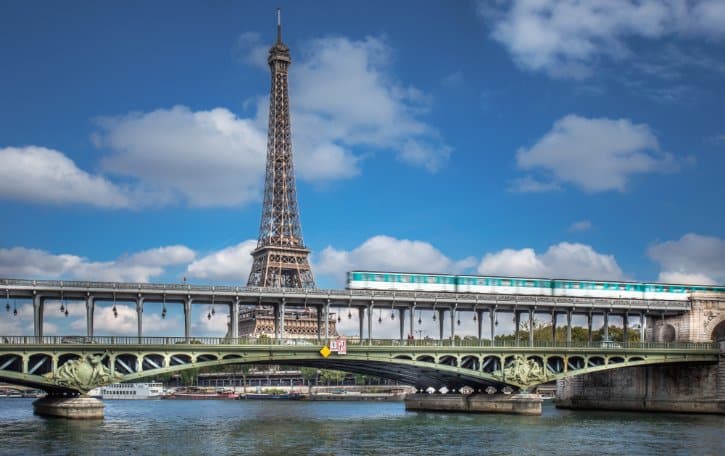
This bridge is a beautiful, quiet way to end the trip.
Built in the early 1900s, it is a striking two-level steel bridge. The upper level carries a metro line on an elevated viaduct, while the lower level is for people, bikes, and traffic. Underneath, rows of steel columns and old-style lamps create strong lines that are wonderful for photos.
From the central pier, which sits on the tip of Île aux Cygnes, you get clear views of the Eiffel Tower reflecting on the Seine.
Good to know: Pedestrian and cycle lanes are separated, so stay in the walking area when you stop for photos. The bridge sits right by rail connections, which makes it a natural place to end your three days in Paris.