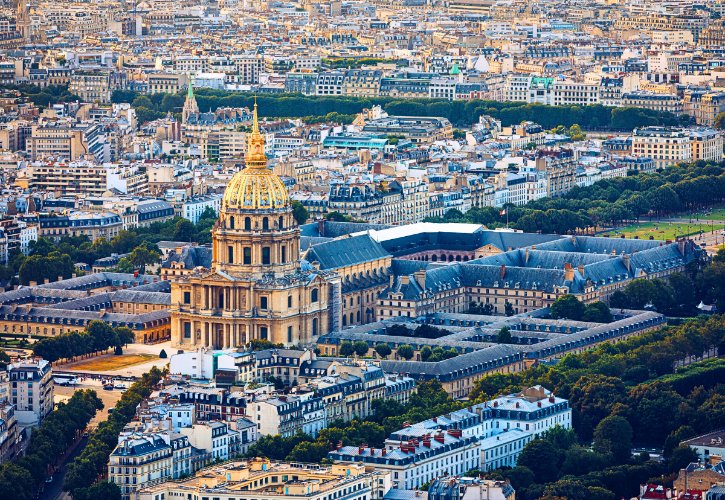
The Left Bank of Paris is the city’s slower, softer side. Here, grand monuments, quiet gardens, old churches, literary corners, and elegant food streets sit close enough to enjoy in a single day on foot.
This route carries you from a calm morning view of the Eiffel Tower to a relaxed dinner near the Seine. Along the way, you will find plenty to see and do, with just enough history to bring each place to life. 😊
8:30 AM – Champ de Mars + Eiffel Tower
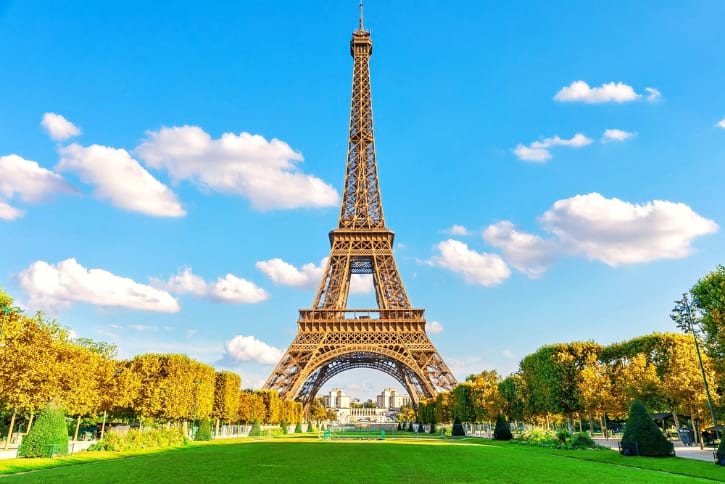
Start your day in the open green space of the Champ de Mars, in the elegant 7th arrondissement, right at the foot of the Eiffel Tower.
This land was once vegetable gardens, then a military parade ground, which is how it got its name in honor of Mars, the Roman god of war.
The park later hosted the 1889 world’s fair that gave Paris its famous tower. Early morning is the calmest and prettiest time to be here.
a. Why Visit
- It is a calm, open-air way to begin before the streets get busy.
- You get full-length views of the tower that you cannot get up close.
- The quiet morning light makes it special.
b. What to See
- Soft morning light spreading across open lawns.
- The Eiffel Tower rising above the park.
- Tree-lined paths and quiet, near-empty walkways.
c. What to Do
- Stand on the central axis for the classic, full-length photo.
- Take in the tower’s true scale from the lawns.
- Simply relax and watch Paris slowly wake up.
d. Good to Know
- Spend about 20 to 30 minutes if you are not going up.
- Skip the climb to keep the day on schedule, as the security checks are slow.
- When ready, walk east into Rue Saint-Dominique.
Read More: 10 Best Free Spots to Take Stunning Eiffel Tower Photos
9:00 AM – Rue Saint-Dominique
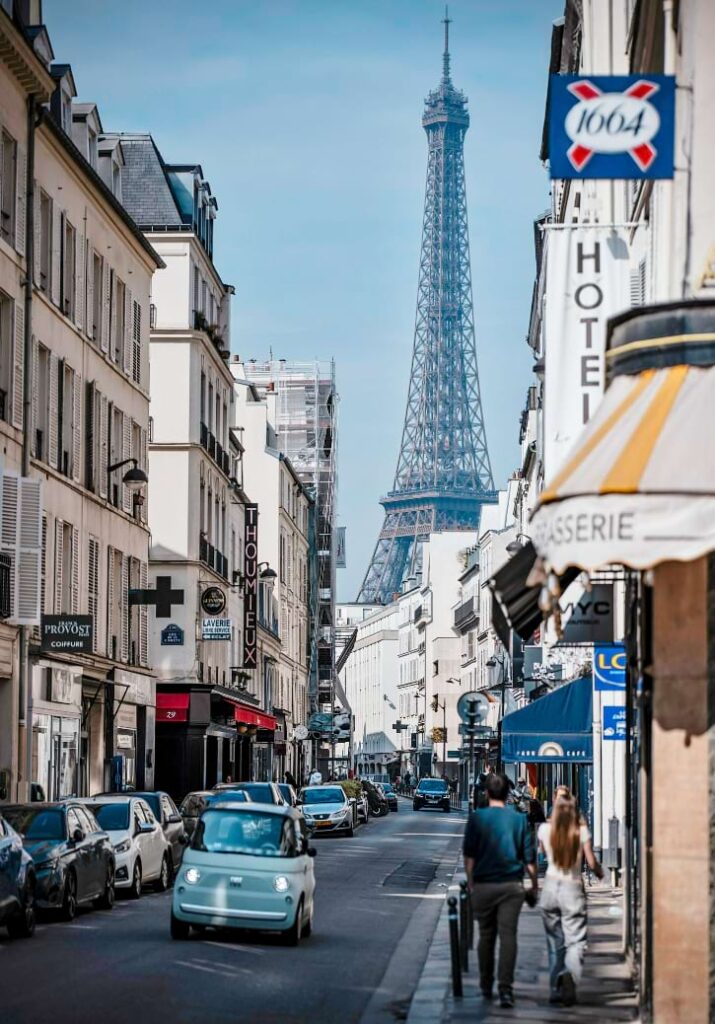
From the park, Rue Saint-Dominique leads east through the 7th arrondissement toward Invalides.
This is where postcard Paris turns into everyday neighborhood life. Elegant homes sit beside bakeries, cafés, and food shops opening for the day, giving you a real look at the local morning rhythm.
a. Why Visit
- It breaks up a day of big monuments with a softer, lived-in feel.
- It gives the morning a relaxed neighborhood pace.
- It is the perfect spot for a light breakfast or coffee.
b. What to See
- Side-street glimpses of the Eiffel Tower between classic limestone buildings.
- Bakeries, cheese shops, butchers, and florists.
- Café terraces and elegant residential façades.
c. What to Do
- Try a well-rated almond croissant at La Parisienne.
- Take a short, optional detour to nearby Rue Cler, a market street for cheese, wine, and fruit.
- Look out for the street’s famous tables: La Fontaine de Mars at No. 129, a classic bistro since 1908 that hosted the Obamas in 2009; the Michelin-starred Le Violon d’Ingres at No. 135; and relaxed spots like Les Cocottes and Bistrot des Fables.
d. Good to Know
- You do not need a long stop here.
- Keep it to a pastry, a coffee, or a little browsing before Invalides.
Read More: 10 Beautiful Paris Streets That Make You Want to Keep Walking
9:30 AM – Hôtel des Invalides
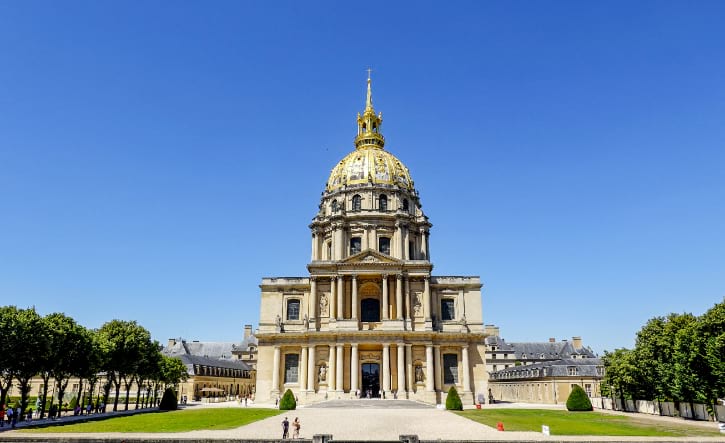
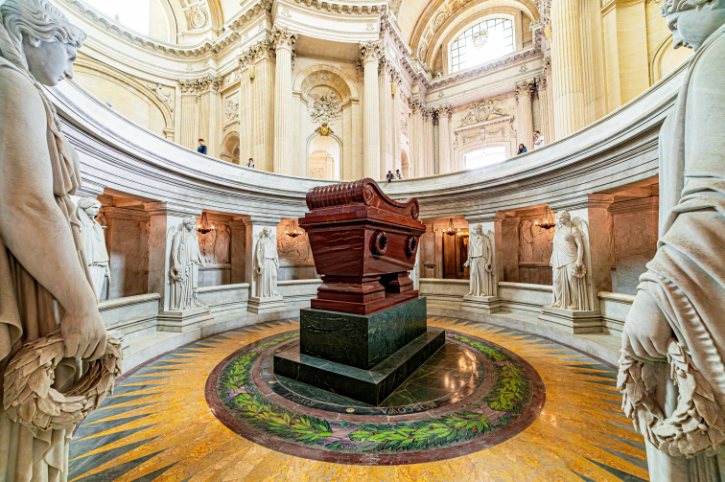
The Hôtel des Invalides is your first grand monument of the day. King Louis XIV had it built in 1670 as a hospital and home for war veterans.
Today, its golden dome is one of the most recognizable sights on the Left Bank, and inside you will find the tomb of Napoleon.
a. Why Visit
- It is a striking piece of French history and royal ambition.
- The golden dome is a true landmark you can spot across the city.
- It holds one of the most famous tombs in France.
b. What to See
- A wide esplanade and a grand, symmetrical complex.
- The 107-meter golden Dôme, covered in gold leaf.
- The bright gold standing out against the pale stone.
c. What to Do
- Admire the architecture from the esplanade if you want a light visit.
- Step inside the Dôme church to see Napoleon’s tomb, whose remains were returned from Saint Helena in 1840.
- Visit the Musée de l’Armée for French military history.
d. Good to Know
- Keep an inside visit focused on the tomb and church so you stay on time.
- From here, stroll east along the river or take a short RER C ride to the Musée d’Orsay.
11:00 AM – Musée d’Orsay
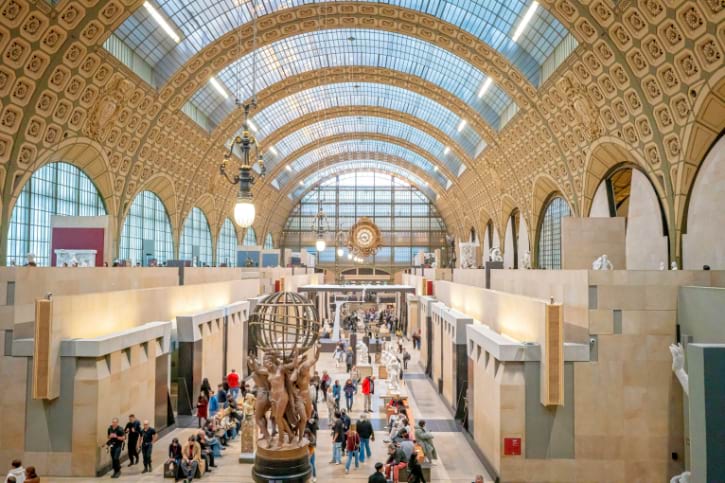
The Musée d’Orsay is the main cultural stop of your day. It began as a railway station built for the 1900 world’s fair, and after nearly being torn down, it reopened as a museum in 1986.
Today it holds one of the world’s greatest collections of Impressionist and Post-Impressionist art, set inside a beautiful old station hall.
a. Why Visit
- It blends world-class art with stunning architecture.
- The setting, a former railway station, makes it unforgettable.
- It is the cultural heart of the whole walk.
b. What to See
- The huge glass roof flooding the central hall with light.
- The preserved golden railway clocks.
- Views of the Seine through the giant glass clock face.
c. What to Do
- Start in the main hall to take in the building itself.
- Head straight to the upper level (Level 5) for the Impressionist highlights.
- Look for Van Gogh’s Starry Night over the Rhône, Monet’s Blue Water Lilies, Renoir’s Dance at Le Moulin de la Galette, and Manet’s The Luncheon on the Grass.
d. Good to Know
- Do not try to see every room. Focus on the highlights to avoid fatigue.
- Art lovers can stay longer; others can keep it short.
- Aim to leave by 1:00 PM for a good lunch pace.
1:00 PM – Le Relais de l’Entrecôte (Lunch)
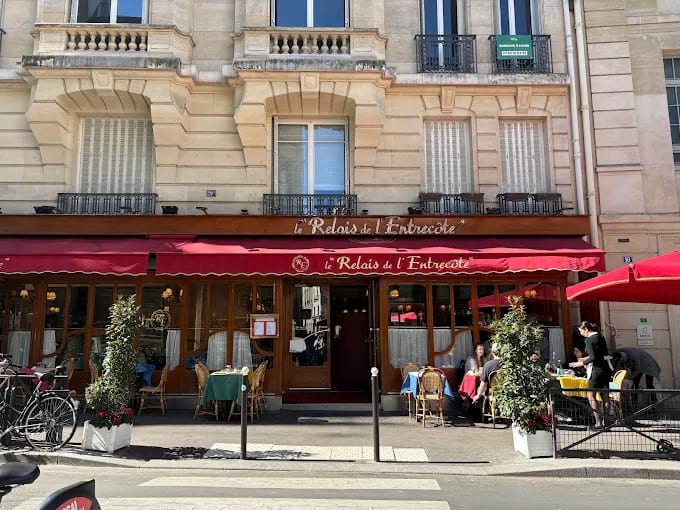
After a museum-filled morning, Le Relais de l’Entrecôte at 20 Rue Saint-Benoît is a classic Paris reset.
This old-fashioned bistro is known for one simple thing done very well: steak frites with a secret green herb butter sauce.
It is the perfect easy break between the art of the morning and the slower afternoon ahead.
a. Why Visit
- It is a true, no-fuss Parisian bistro experience.
- The simple set menu makes ordering easy.
- It sits right on your route into Saint-Germain.
b. What to See
- Dark wood paneling, red banquettes, and large mirrors.
- Fast, friendly, and efficient service.
- A bustling, old-fashioned dining room.
c. What to Do
- Enjoy the set menu: a green salad with walnuts, then sliced sirloin with hand-cut fries.
- Expect your steak in two servings, with the second kept warm and brought fresh.
- Taste the famous green herb butter sauce, a family secret since the 1960s.
d. Good to Know
- There are no reservations, so queues form before each service.
- Arrive about 15 minutes early, or keep a nearby backup like Brasserie Lipp in mind.
2:00 PM – Church of Saint-Germain-des-Prés
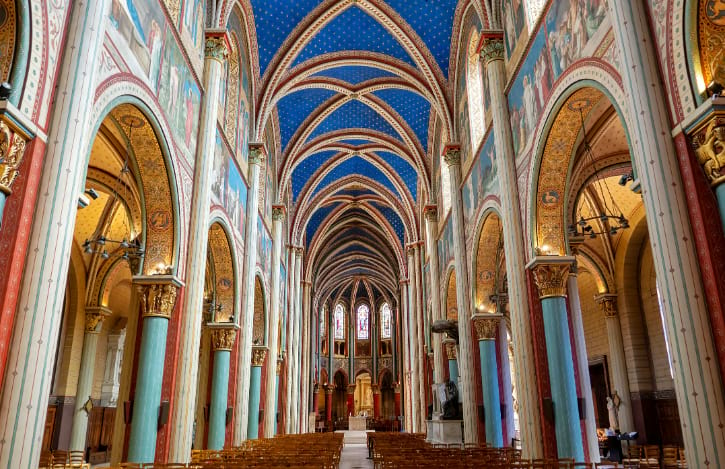
The Church of Saint-Germain-des-Prés is the emotional heart of the Left Bank and the oldest existing church site in Paris.
Founded as an abbey in 543 AD, it survived Viking raids, a revolution, and a major explosion, and was later saved from demolition with help from writer Victor Hugo.
Its old stone tower still stands today.
a. Why Visit
- It is the oldest church site in the city, full of deep history.
- Its rare Romanesque style is unusual for Paris.
- The surrounding area is famous for cafés, art, and ideas.
b. What to See
- The heavy Romanesque bell tower and rounded stone arches.
- The colorful murals inside, painted in the 1840s.
- The calm, layered stonework of the nave.
c. What to Do
- Step inside quietly to admire the old details.
- Pause in the square outside to take it all in.
- Visit the nearby legendary cafés Les Deux Magots and Café de Flore, once home to thinkers like Sartre, Beauvoir, Camus, and Picasso.
d. Good to Know
- This is an active religious space, so keep your visit quiet and respectful.
- It feels wonderfully calm after the busy lunch and museum.
Read More: 10 Breathtaking Churches in Paris You Can’t Miss
2:40 PM – Église Saint-Sulpice
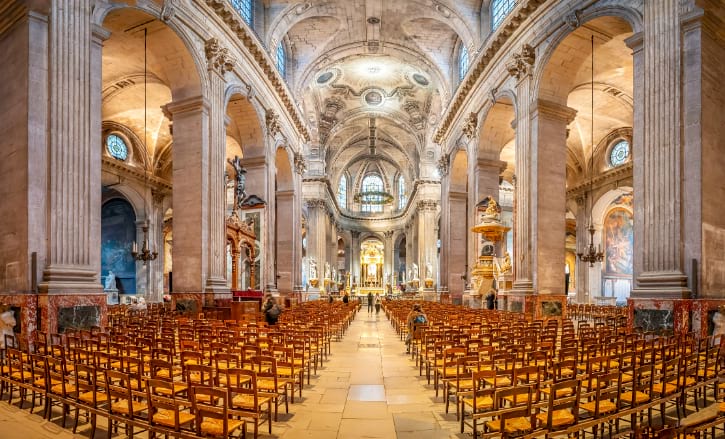
A short walk south brings you to Église Saint-Sulpice, the second-largest church in Paris after Notre-Dame.
Where Saint-Germain feels old and intimate, this one feels large, light-filled, and dramatic.
Its long construction, slowed by money troubles and the Revolution, left it with two famously mismatched towers.
a. Why Visit
- Its huge, bright interior often surprises visitors.
- It offers a striking contrast to the older Saint-Germain.
- It holds famous art and a curious astronomical device.
b. What to See
- The grand façade with its two mismatched towers.
- Three masterpiece murals by Eugène Delacroix in the Chapel of the Holy Angels.
- The huge, historic Cavaillé-Coll organ.
c. What to Do
- Find the gnomon, a brass line in the floor once used to track the sun. The “Rose Line” from The Da Vinci Code is fiction, and the church says so.
- Relax in Place Saint-Sulpice, with its grand fountain, stone lions, and café terraces.
- Browse the nearby boutiques and bookshops.
d. Good to Know
- This is your last grand church before the day softens.
- Feel free to wander a little before heading to the garden.
Read More: The Best Walking Route to Explore Saint-Germain-des-Prés
3:20 PM – Jardin du Luxembourg
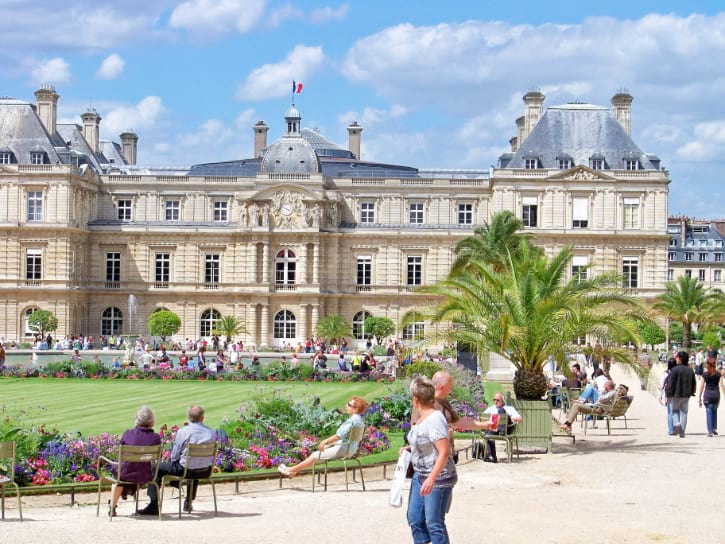
The Jardin du Luxembourg is the most restful part of your day. Created in 1612 for Marie de’ Medici, who wanted a garden that recalled her childhood in Florence, it surrounds a grand palace that is now home to the French Senate.
This is your moment to stop sightseeing and simply enjoy Paris.
a. Why Visit
- It is a peaceful break after a morning of monuments and churches.
- It offers a real look at everyday Parisian life.
- It helps you recharge before the afternoon’s final climb.
b. What to See
- The large octagonal Grand Bassin at the center.
- The romantic, shaded Medici Fountain.
- Twenty white marble statues of French queens and notable women.
c. What to Do
- Pull up one of the iconic sage-green chairs and rest.
- Watch children sail vintage toy boats on the pond.
- Notice locals reading, playing chess, or enjoying pétanque.
d. Good to Know
- Take your time here, as this should be your least rushed stop.
- The walk to the Panthéon is uphill, so rest well first.
4:50 PM – The Panthéon
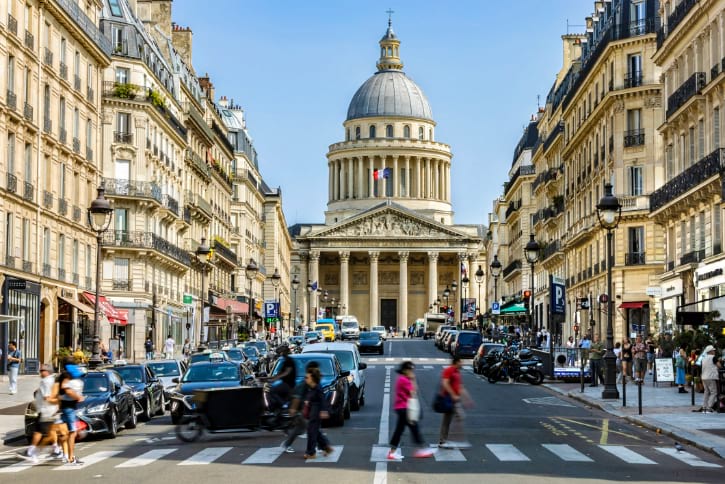
The route climbs gently into the Latin Quarter to reach the Panthéon. First planned as a church for Saint Geneviève, the patron saint of Paris, it was finished in 1790 and soon turned into a national mausoleum.
Today it honors France’s greatest writers, thinkers, scientists, and heroes.
a. Why Visit
- It is one of France’s most powerful symbolic spaces.
- Its grand neoclassical design is impressive inside and out.
- It is the resting place of many famous French figures.
b. What to See
- The grand Corinthian portico and dramatic dome.
- The inscription “Aux grands hommes la patrie reconnaissante”, meaning “To great men, the grateful nation”.
- A replica of Foucault’s Pendulum, which shows the Earth’s rotation.
c. What to Do
- Take in the façade and the wide views from the square steps.
- Visit the crypt to see figures like Voltaire, Rousseau, Marie and Pierre Curie, Victor Hugo, and Josephine Baker.
- Soak up the historic Latin Quarter setting around you.
d. Good to Know
- Arrive with enough energy to enjoy its scale.
- If tired, focus on the exterior, then head downhill toward Odette.
5:30 PM – Odette
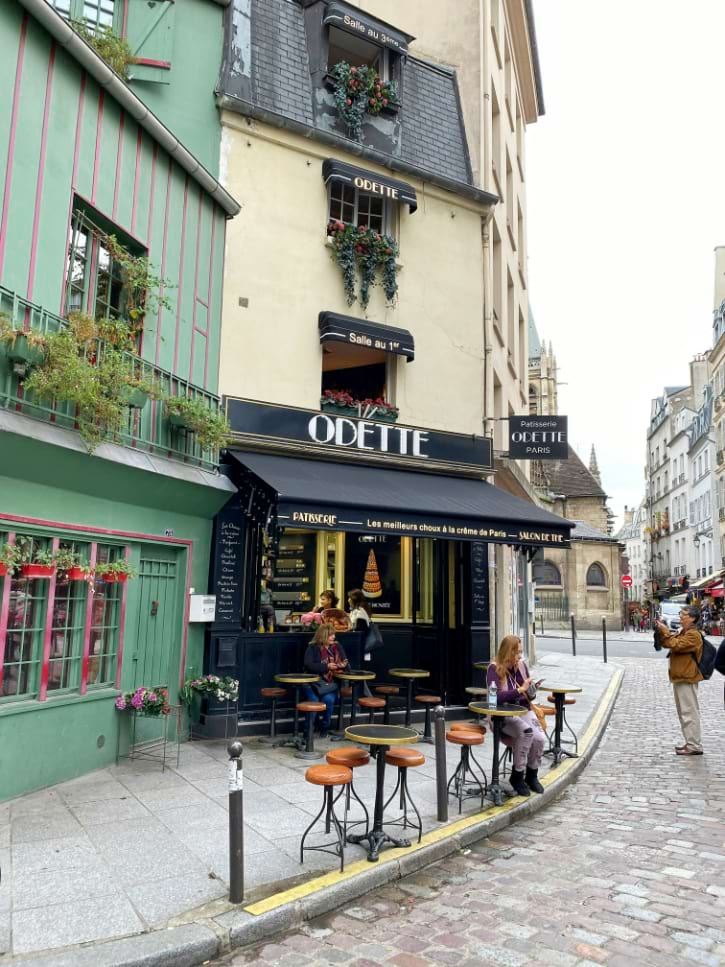
Heading downhill into the old lanes of the Latin Quarter, you reach Odette at 77 Rue Galande, a charming pastry shop in a narrow 17th-century building.
It is known for choux à la crème, or cream puffs, baked fresh each day from a family recipe. This is a sweet, easy pause among some of the city’s oldest streets.
a. Why Visit
- It is a delightful sweet break after all the history.
- The medieval streets around it are full of charm.
- The pastries are fresh, pretty, and photogenic.
b. What to See
- The narrow, historic shopfront.
- The nearby Church of Saint-Julien-le-Pauvre, one of the oldest in the city.
- A small upstairs Art Deco tea room with checkerboard floors.
c. What to Do
- Pick a few cream puffs in flavors like vanilla, chocolate, salted caramel, pistachio, lemon, and praline.
- Sit upstairs with a coffee and views toward Notre-Dame’s towers.
- Enjoy a relaxed, quiet moment.
d. Good to Know
- Keep this to a short 30 to 40 minute
- Popular flavors sell out late in the day, so now is good timing.
6:20 PM – Shakespeare and Company
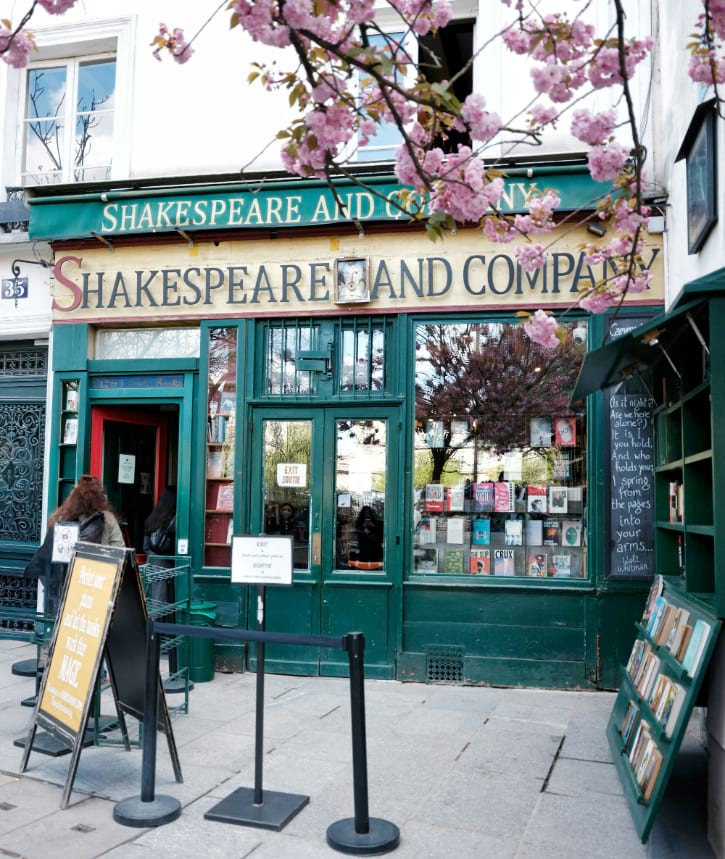
Your final cultural stop is Shakespeare and Company at 37 Rue de la Bûcherie, sitting right on the Seine with views of Notre-Dame.
Opened in 1951 by George Whitman, it carries on the spirit of an earlier shop run by Sylvia Beach, who once published James Joyce’s Ulysses.
It is the perfect literary ending to a Left Bank day.
a. Why Visit
- It is a beloved piece of Paris literary history.
- It sits in a magical spot facing Notre-Dame.
- It is a real, working bookshop full of character.
b. What to See
- Small, narrow rooms packed with new and second-hand books.
- The famous motto above the reading library: “Be Not Inhospitable to Strangers Lest They Be Angels in Disguise”.
- The cozy, well-loved literary atmosphere.
c. What to Do
- Browse slowly and treat it as more than a photo stop.
- Look for rare and antiquarian titles in the back rooms.
- Take in the riverside views just outside.
d. Good to Know
- Photography and filming are not allowed inside.
- Queues often form at busy hours, so be ready to wait a little.
7:00 PM – Le Petit Châtelet/ La Jacobine (Dinner)
After a full day on foot, your last meal should feel relaxed, with no long trip across the city.
Here are two good options close to the route, each with its own character. One keeps you by the river, while the other draws you back into the heart of Saint-Germain.
a. Why End Here
- Both spots keep your evening easy and close to the route.
- Each offers a warm, classic Left Bank atmosphere.
- They bring your day full circle, from morning views to an evening table.
b. Option 1: Le Petit Châtelet
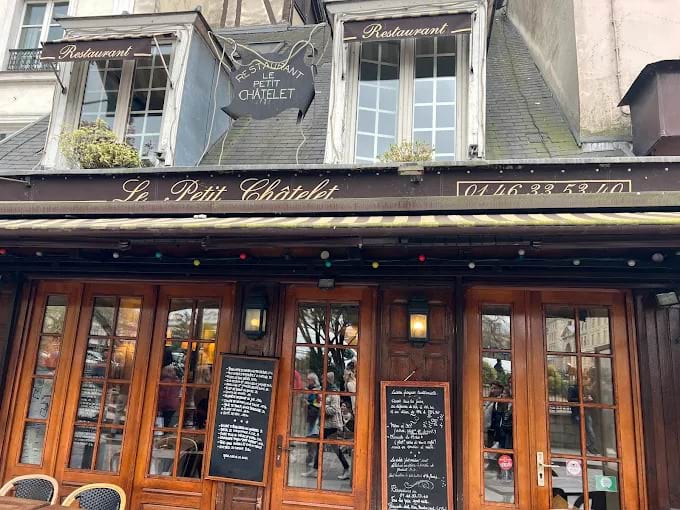
- Address: 39 Rue de la Bûcherie, right next to Shakespeare and Company.
- Cozy bistro with a terrace, Seine and Notre-Dame views, and an open fireplace.
- Classic dishes like fireplace steaks, duck confit, and Grand Marnier crêpes.
c. Option 2: La Jacobine
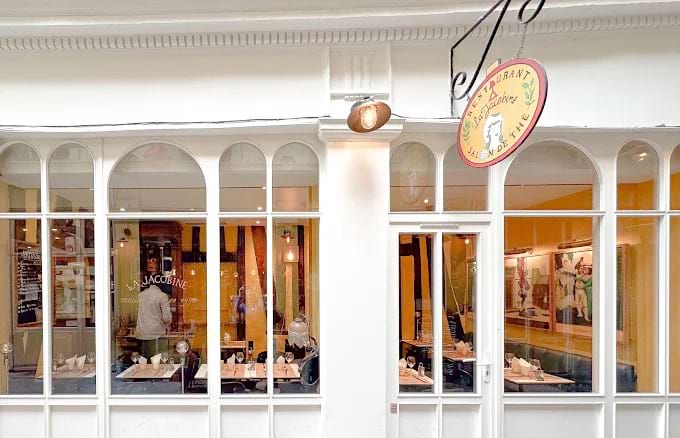
- Address: 59-61 Rue Saint-André des Arts, a 8 to 10 minute walk into Saint-Germain.
- Snug and romantic, tucked inside a historic passage.
- Hearty classics like French onion soup, coq au vin, and warm chocolate cake.
d. Good to Know
- Reservations are strongly recommended at both.
- Choose Le Petit Châtelet for the simplest finish and river views, or La Jacobine for a cozy Saint-Germain feel.