Paris is home to hundreds of churches, but most travelers only visit one or two before moving on. That’s a mistake.
Some of these 10 are world-famous icons you already know.
Others are hidden gems tucked down quiet streets, waiting to be discovered.
What they all share is something special: stunning architecture, centuries of history, and an atmosphere you won’t forget.
Ready to see what makes each one worth your time? 😊
1. Sacré-Cœur Basilica
a. Why This One Stands Out
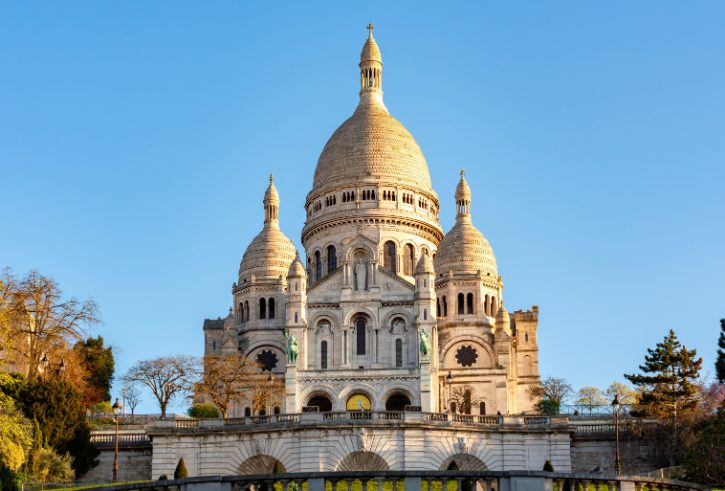
Perched 130 meters atop Montmartre, Sacré-Cœur is the highest point in Paris after the Eiffel Tower. The views alone are worth the climb.
Unlike the Gothic churches found elsewhere in Paris, this basilica features a Romanesque-Byzantine design inspired by cathedrals in southwestern France.
Its brilliant white facade never fades. The travertine stone actually cleans itself when it rains, keeping the “Giant White Cake Topper” of Montmartre pristine year after year.
The basilica is surprisingly modern. The first stone was laid in 1875, and it was consecrated in 1919 after the trauma of the Franco-Prussian War.
b. What You’ll See Inside
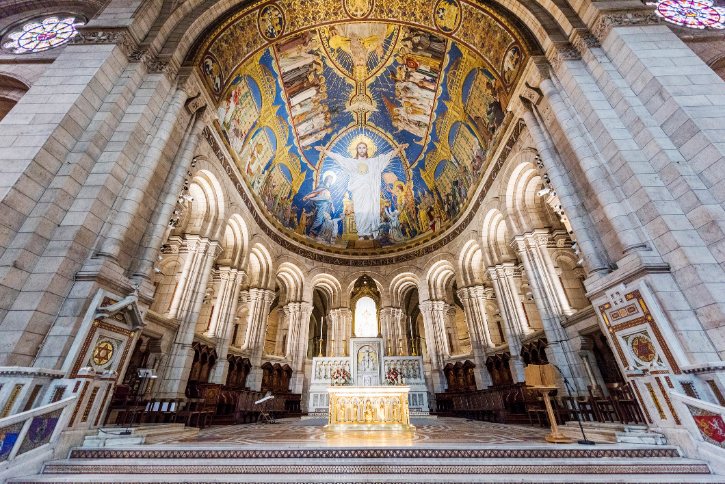
- Christ in Majesty mosaic, one of the largest in the world at 475 square meters
- 24-hour prayer relay, maintained by pilgrims since 1885
- The great pipe organ, a listed national monument installed in 1919
- La Savoyarde, France’s largest bell, weighing nearly 19 tons
- The dome, accessible via 300 steps for 360-degree views of northern Paris
- The crypt, housing religious artifacts and tombs
c. Closest Metro Station
Anvers (Line 2) is the main gateway, followed by 197 steps or a funicular ride. For a more scenic route, try Abbesses (Line 12), the deepest station in the Paris Metro.
d. Location
Montmartre, 18th Arrondissement.
2. Église de la Madeleine
a. Why This One Stands Out
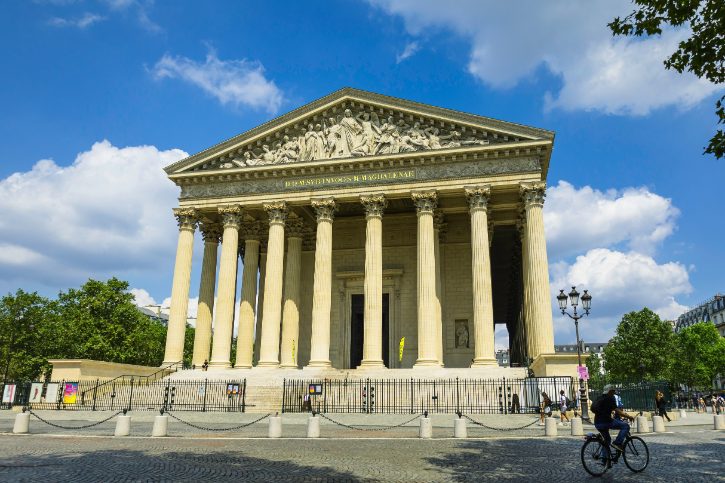
The Madeleine looks more like a Roman temple than a Catholic church. That’s because Napoleon originally wanted it as a “Temple of Glory” for his Grand Army.
With 52 Corinthian columns rising 20 meters high and massive bronze doors larger than those of St. Peter’s in Rome, this building was designed to impress.
It lacks a bell tower or visible cross on the exterior because it was built as a secular monument before returning to religious use in 1842.
The church creates a striking visual at the end of Rue Royale, connecting it to the Place de la Concorde.
A 10-million-euro restoration completed in 2023 has brought the facade back to its original brilliance.
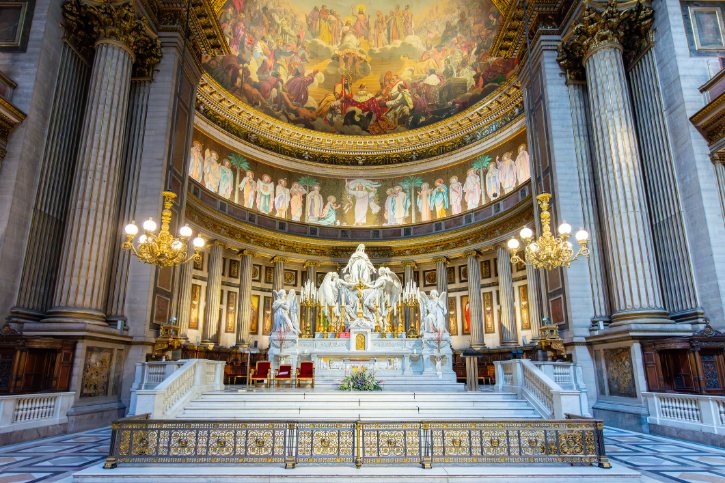
b. What You’ll See Inside
- Three hidden domes illuminated by small oculus windows
- “The History of Christianity” fresco by Jules-Claude Ziegler, featuring Napoleon signing the Concordat of 1801
- “The Ecstasy of Mary Magdalene” sculpture by Carlo Marochetti
- Bronze door reliefs depicting the Ten Commandments
- The Foyer de la Madeleine, a hidden restaurant in the crypt serving affordable meals for over 50 years
c. Closest Metro Station
Madeleine (Lines 8, 12, and 14).
d. Location
8th Arrondissement, at the end of Rue Royale.
3. Église Saint-Eustache
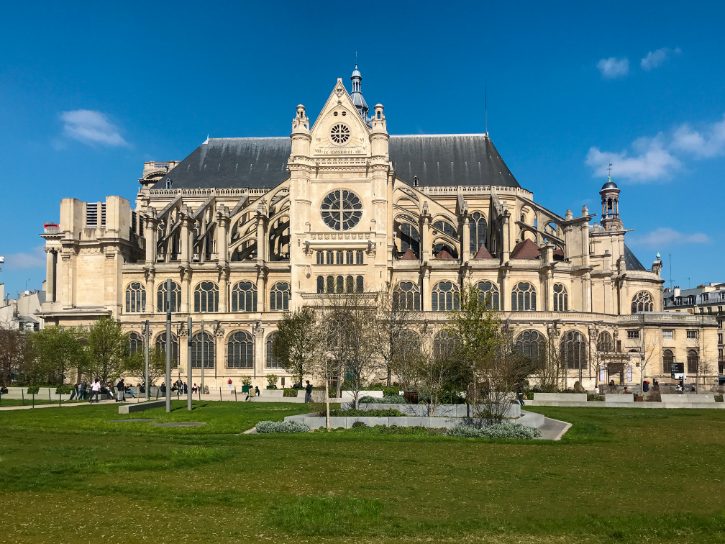
a. Why This One Stands Out
Often called the “Cathedral of the Markets”, Saint-Eustache stands near Les Halles, the historic food hub of Paris. It blends the soaring height of Flamboyant Gothic with refined Renaissance ornamentation.
The scale is immense. At 105 meters long with vaults reaching 33.5 meters, it feels more like a royal cathedral than a parish church.
This was the church of choice for both merchants and nobility. Louis XIV received his First Communion here, and Molière was both baptized and married within these walls.
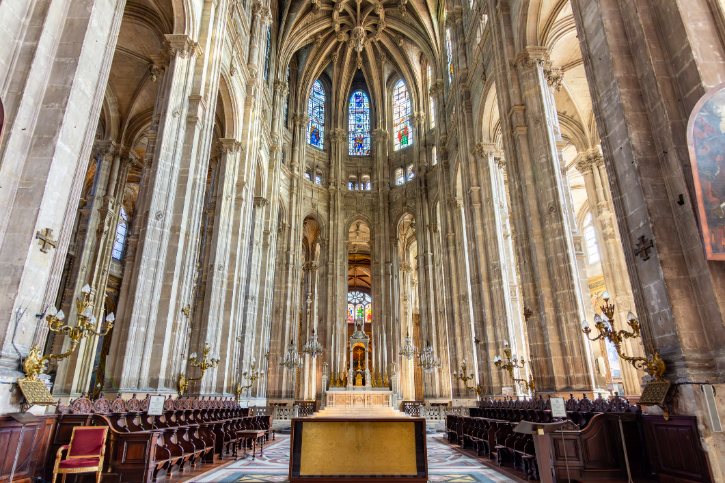
b. What You’ll See Inside
- France’s largest pipe organ, with 8,000 pipes that premiered works by Berlioz and Liszt
- 17th-century paintings by Rubens alongside a modern triptych by Keith Haring
- Stained-glass windows dating to 1632
- “Luminiscence” immersive show (2026), using 3D video mapping and live orchestra under the sacred vaults
Here’s the fun part: during the Revolution, this church was turned into a “Temple of Agriculture” and used as a barn for grain storage. It survived, and today it bridges medieval heritage with contemporary art.
c. Closest Metro Station
Les Halles (Line 4) or Châtelet-Les Halles (RER A, B, D).
d. Location
1st Arrondissement, Les Halles/Montorgueil district.
4. Sainte-Chapelle
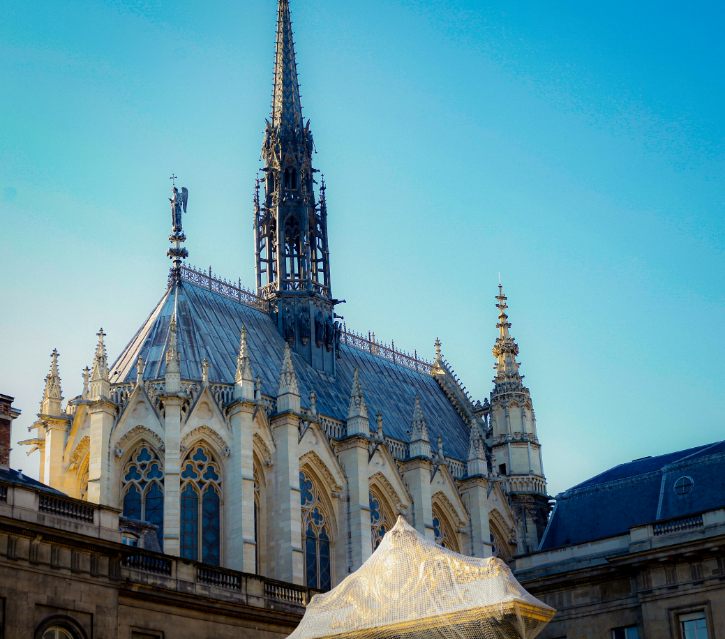
a. Why This One Stands Out
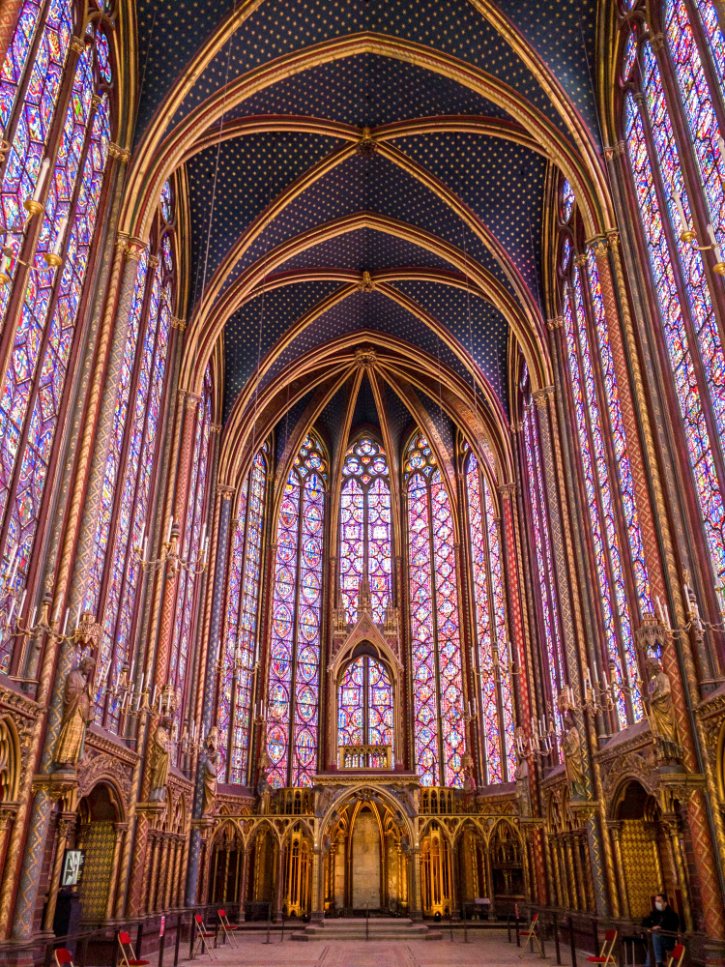
Sainte-Chapelle is the ultimate “glass vessel”. King Louis IX built it to house the most sacred relics in Christendom, including the Crown of Thorns.
Completed in just six years (1242–1248), the chapel replaced heavy stone walls with translucent stained-glass bays. The result is a kaleidoscope effect where solid stone seems to disappear in favor of colored light.
Here’s a remarkable detail: the relics cost 135,000 livres, more than three times the 40,000 livres spent on the entire building.
b. What You’ll See Inside
- 1,113 biblical scenes depicted in stained glass, like a medieval “comic book”
- 15 soaring bays with roughly 70% original glass
- 640 square meters of glass, with bays reaching about 15 meters high
- Deep blues, reds, and purples achieved through careful chromatic balance
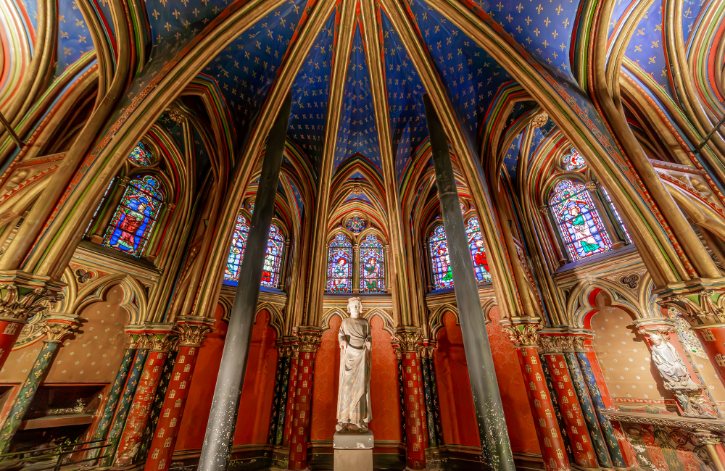
- The lower chapel, decorated with fleurs-de-lis and Castilian castles honoring the King’s lineage
During the Revolution, large filing cabinets were placed in front of the windows, accidentally protecting them from vandalism. Today, the chapel hosts classical concerts where the acoustics and light combine for a truly special experience.
c. Closest Metro Station
Cité (Line 4).
d. Location
Île de la Cité, 1st Arrondissement (inside the Palais de Justice).
5. Notre-Dame Cathedral of Paris
a. Why This One Stands Out
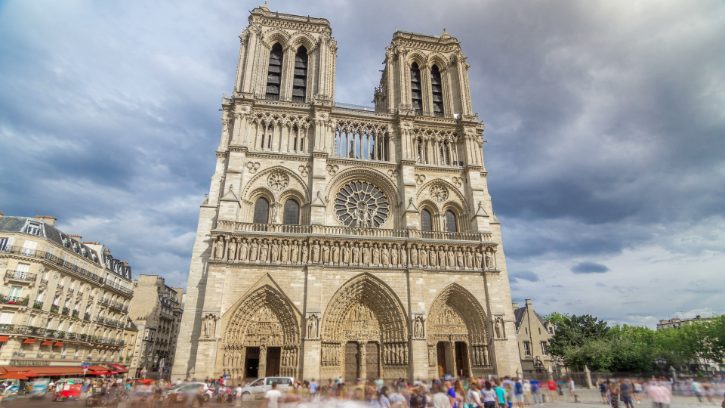
Notre-Dame is the soul of Paris. This High Gothic icon has witnessed the coronation of Napoleon and the funerals of national heroes.
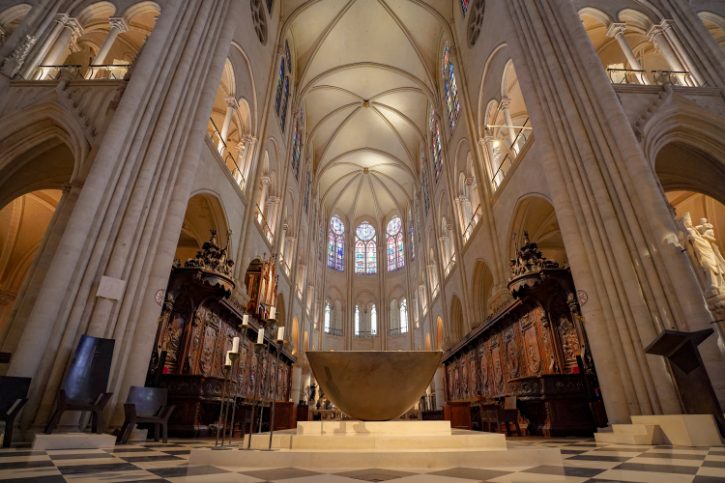
Following the tragic 2019 fire, the cathedral reopened by 2026 with a gleaming interior restored to a level of brightness not seen in centuries.
The Lutetian limestone walls have been meticulously cleaned, allowing the arches to reflect natural light through the high Gothic windows.
Admission remains free, but high demand requires a timed reservation through the official website.
b. What You’ll See Inside
- The “Mays” of Notre-Dame, large 17th-century paintings now more visible against the cleaned stone
- The great organ, cleaned and retuned after the fire
- The Treasury, housing the Holy Crown of Thorns (separate fee)
- The Virgin of the Pillar and the restored choir enclosure
Visitor Tips:
- Reservations recommended (same day or day before)
- Bag size limit: 40 x 30 x 20 cm
c. Closest Metro Station
Cité (Line 4) or Saint-Michel – Notre-Dame (RER B, C).
d. Location
Île de la Cité, 4th Arrondissement.
6. Saint-Séverin Church
a. Why This One Stands Out
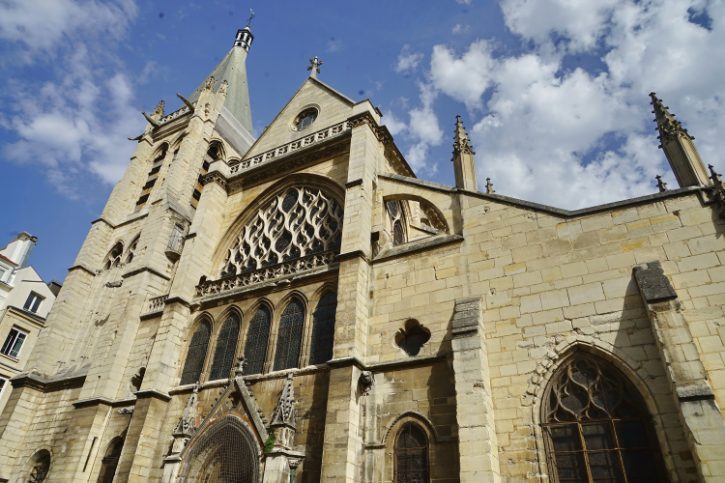
Saint-Séverin is a hidden gem of the Latin Quarter. It’s the oldest church on the Left Bank and a masterpiece of Flamboyant Gothic.
The church traces its origins to a 6th-century hermit. In the 13th century, it became the parish church for theology students at the nearby Sorbonne.
Unlike the crowded monuments elsewhere, Saint-Séverin offers a quieter experience where you can appreciate intricate stonework and centuries-old bells in peace.
b. What You’ll See Inside
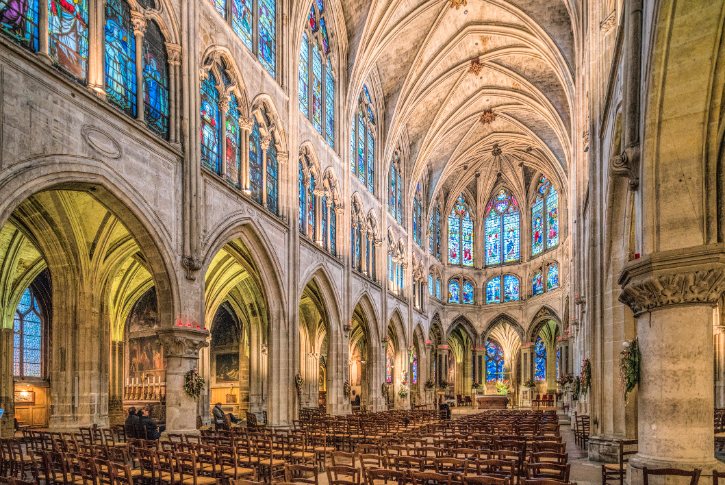
- The twisted pillar (le pilier tors), a spiral stone column resembling a palm tree with ribs spreading like branches
- 15th-century “Trees of Jesse” stained glass alongside 20th-century abstract windows by Jean René Bazaine
- Low-hanging gargoyles on the southern facade, perfect for photography
- Paris’s only intact medieval charnel house, where Gothic arcades once stored bones to free up cemetery space
- One of the oldest bells in Paris, cast in 1412
c. Closest Metro Station
Saint-Michel (Line 4) or Cluny – La Sorbonne (Line 10).
d. Location
Latin Quarter, 5th Arrondissement (near Rue Saint-Jacques).
7. Saint-Germain-des-Prés
a. Why This One Stands Out
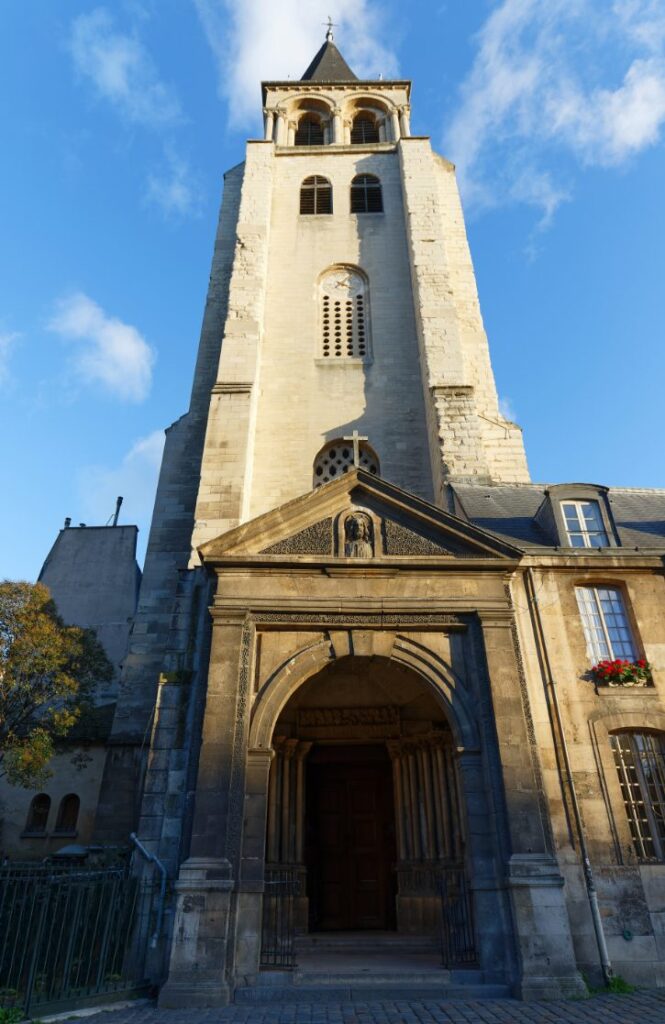
This is the oldest major church in Paris, with foundations dating back to a Benedictine abbey founded in 543 AD.
The name “des Prés” (of the meadows) is a reminder that this sanctuary once stood in open fields outside the city walls. Before Saint-Denis was completed, this was the royal burial site for Merovingian kings, including Childebert I and Childeric II.
The Romanesque nave is one of the last remaining examples of Norman art in the capital, offering sturdy, round-arched contrast to the Gothic styles found elsewhere.
b. What You’ll See Inside
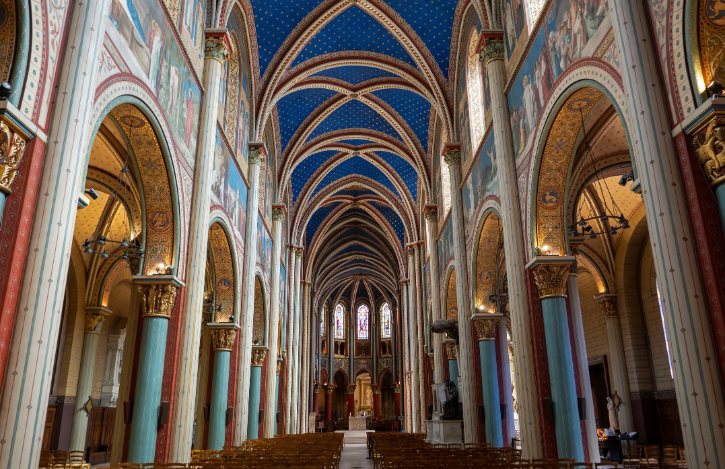
- 19th-century frescoes by Hippolyte Flandrin, inspired by Byzantine and early Italian styles
- Celestial painted vaults with brilliant stars
- The tomb of philosopher René Descartes
- 14th-century statues of “Our Lady of Consolation”
Just steps away, you’ll find the legendary cafes Les Deux Magots and Café de Flore. Combine your visit with a walk through Place de Fürstenberg, considered one of the most charming squares in the city.
c. Closest Metro Station
Saint-Germain-des-Prés (Line 4).
d. Location
6th Arrondissement, Place Saint-Germain-des-Prés.
8. Église Saint-Sulpice
a. Why This One Stands Out
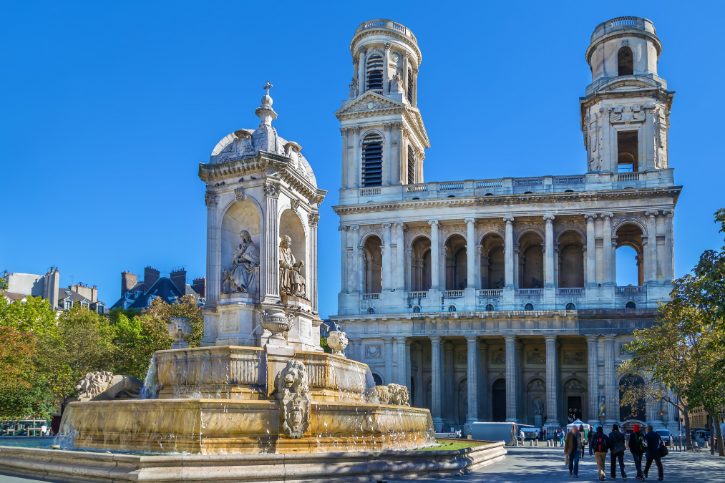
Saint-Sulpice is a massive Baroque jewel, often considered the second-largest church in Paris by square footage. You may recognize it from The Da Vinci Code, but its true claims to fame are scientific and artistic.
The “lopsided” facade, with two mismatched towers, resulted from a century of slow construction and abandoned plans during the Revolution.
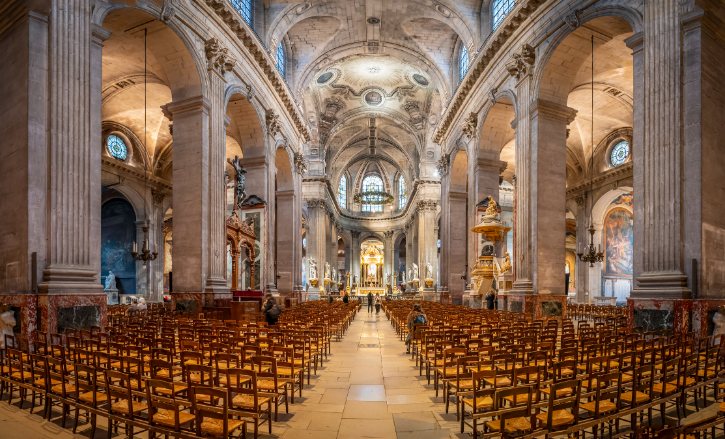
The interior is notably light and airy. Most of the stained glass is clear, reflecting an 18th-century preference for bright spaces over dark medieval interiors.
b. What You’ll See Inside
- The Gnomon of Saint-Sulpice, an 18th-century instrument designed to calculate the date of Easter, featuring a brass line on the floor leading to a white marble obelisk
- Three monumental frescoes by Eugène Delacroix, including Jacob Wrestling with the Angel
- Two giant clam shell holy water fonts, gifted by the Venetian Republic to King Francis I
- The great pipe organ, with nearly 6,600 pipes, played by masters like Charles-Marie Widor
Trust me, this one is worth the detour.
c. Closest Metro Station
Saint-Sulpice (Line 4) or Mabillon (Line 10).
d. Location
6th Arrondissement, Place Saint-Sulpice.
9. Saint-Étienne-du-Mont
a. Why This One Stands Out
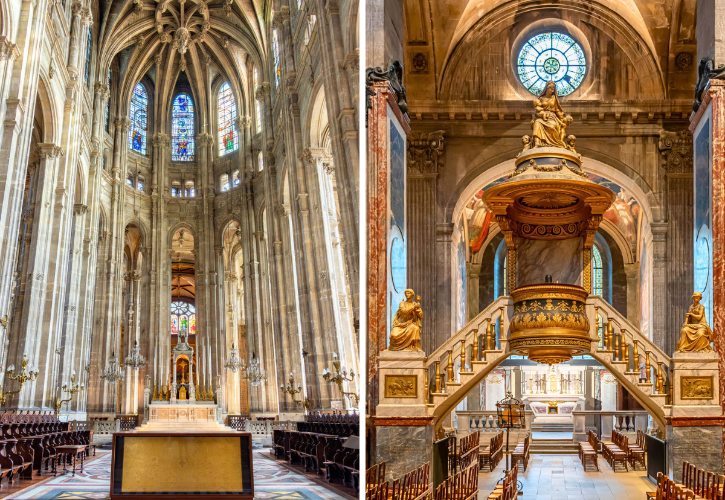
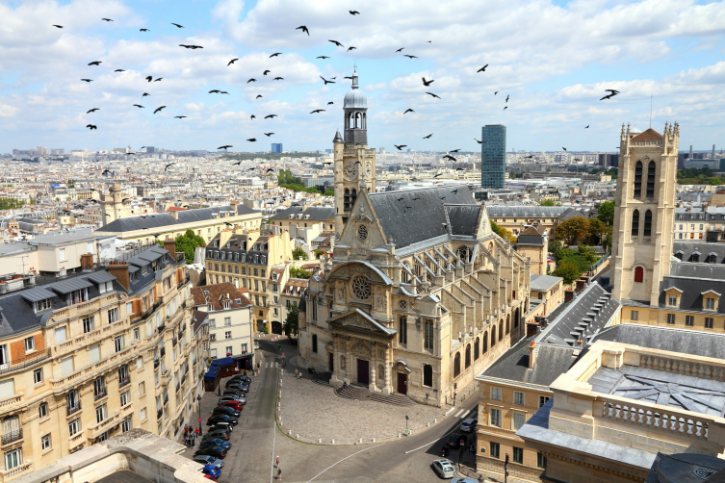
Tucked behind the Panthéon, Saint-Étienne-du-Mont is a hidden gem representing a stunning transition from Flamboyant Gothic to the Italian Renaissance.
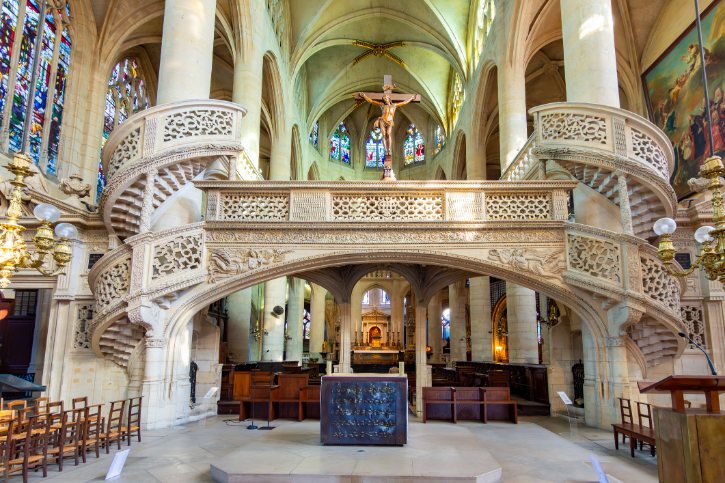
It holds Paris’s only surviving rood screen (jubé), an elaborate stone partition separating the nave from the choir. You won’t find another one like it in the city.
The church sits on the Montagne Sainte-Geneviève and serves as the primary sanctuary for the relics of Sainte Geneviève, the patroness of Paris. It also houses the remains of philosopher Blaise Pascal and playwright Racine.
For cinema fans, the north steps appeared in Midnight in Paris as the spot where the time-traveling car arrives.
b. What You’ll See Inside
- The rood screen, a masterpiece of “stone lace” with two elegant spiral staircases
- The shrine of Sainte Geneviève, where thousands of pilgrims pray each year
- The pulpit (1651), supported by a carved sculpture of Samson kneeling on a lion
- The oldest organ case in Paris, dating to 1631
- Hanging keystones and sculpted angel heads illuminated by large windows
c. Closest Metro Station
Cardinal Lemoine (Line 10) or Luxembourg (RER B).
d. Location
5th Arrondissement, atop the Montagne Sainte-Geneviève.
10. Saint-Louis des Invalides
a. Why This One Stands Out
This is where France honors its soldiers and its most famous emperor.
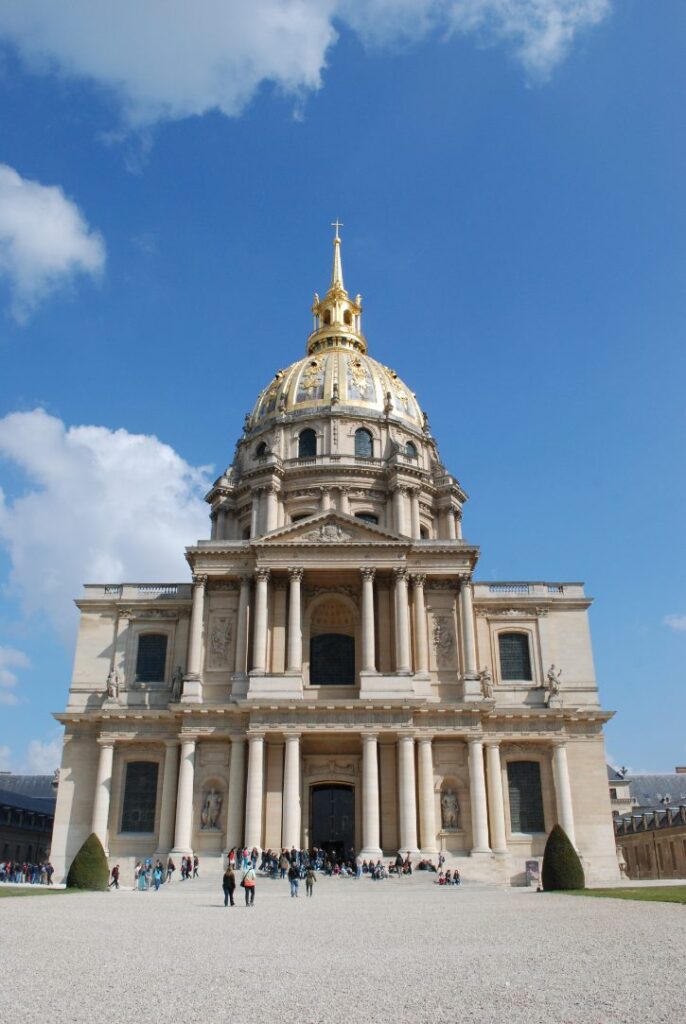
Commissioned by Louis XIV in 1676, the church was designed by Jules Hardouin-Mansart to serve wounded and disabled war veterans at Les Invalides.
The result is actually two connected churches: the Soldiers’ Church for veterans and the adjoining Dome Church (Royal Chapel) for the king.
Here’s the remarkable part: the king and soldiers attended the same mass but entered through different doors. A glass partition now separates the two spaces.
The golden dome rises 107 meters and was the tallest building in Paris until the Eiffel Tower came along. It even inspired the design of the U.S. Capitol Building.
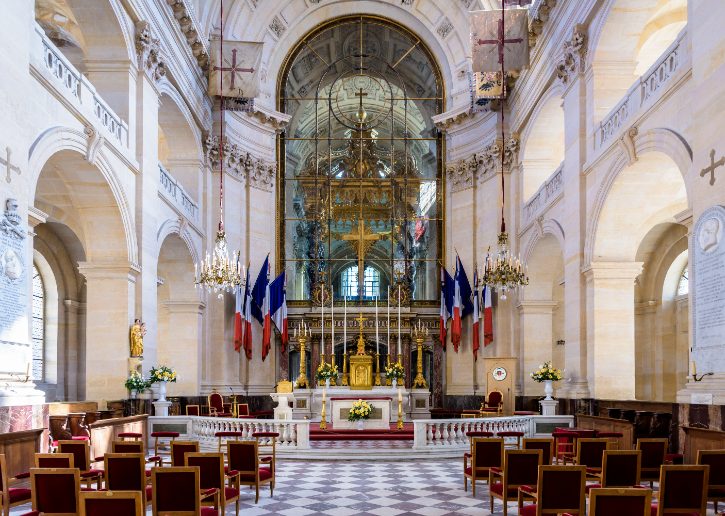
In 1986, the Soldiers’ Church became the cathedral of the French Armed Forces, making it the only cathedral in Paris where French flags permanently decorate the choir.
b. What You’ll See Inside
- Napoleon’s tomb, a massive red quartzite sarcophagus resting in an open crypt beneath the golden dome
- Historical battle flags and war trophies hanging from the vault of the Soldiers’ Church
- The grand organ, built between 1679 and 1687
- Ceiling fresco by Charles de La Fosse depicting Saint Louis handing his sword to Christ
- Tombs of French marshals and generals, including Foch, Turenne, Vauban, and Lyautey
- Tombs of Napoleon’s brothers Joseph and Jérôme, and his son Napoleon II
c. Closest Metro Station
Invalides (Lines 8, 13 and RER C) or La Tour-Maubourg (Line 8).
d. Location
7th Arrondissement, 129 Rue de Grenelle.