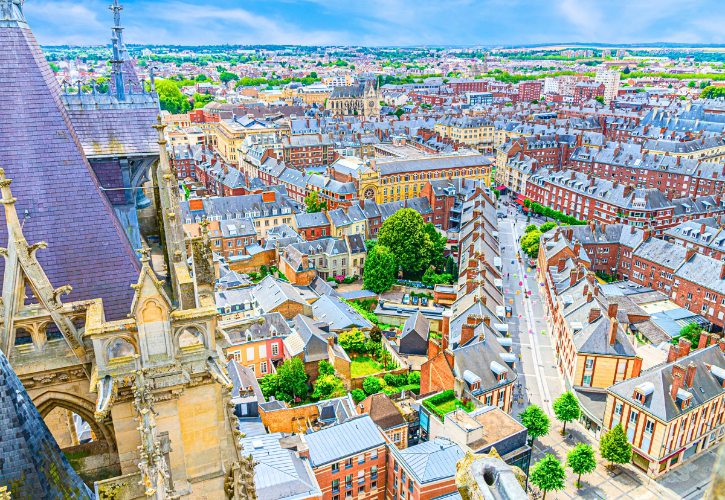
Paris gets all the attention. But some of France’s most charming cities are hiding just a short train ride away.
Amiens is one of them. This quiet canal city sits about an hour north of the capital, yet most visitors have never heard of it.
Picture colorful half-timbered houses lining peaceful waterways. A Gothic cathedral that actually dwarfs Notre-Dame de Paris. Floating gardens you can explore by boat. And the best part? Everything is within walking distance. No metro, no taxis, no stress.
If that sounds like your kind of day trip, here’s how to make it happen.
In this guide, I’ll cover how to get there from Paris, the best things to see and do, local food you shouldn’t miss, and two easy walking routes to help you explore Amiens in a single day. 😊
1. Why Amiens Is Worth Visiting (And Why Most People Miss It)
a. What Makes It Special
Amiens packs an impressive amount into a small, walkable area.
You’ll find France’s largest Gothic cathedral, a UNESCO World Heritage site that could fit two Notre-Dame de Paris cathedrals inside its walls.
You’ll wander through the Saint-Leu district, a charming neighborhood of colorful houses and canals that locals call the “Little Venice of the North”.
And if you’re a Jules Verne fan, this is where the legendary science fiction author lived and wrote for over 30 years. His house is now a museum.
There’s also a 300-hectare network of floating gardens called the Hortillonnages. These medieval market gardens have been cultivated for centuries, and you can explore them by traditional flat-bottomed boat.
b. Why Tourists Skip It
Simple. Most people don’t know it exists.
Amiens doesn’t have the marketing power of Paris or the Riviera. It quietly sits in the Hauts-de-France region, doing its own thing. That’s actually good news for you. Fewer crowds, more authentic experiences.
c. Why It’s Perfect for a Day Trip
The city center is compact and pedestrian-friendly.
Every major attraction sits within a 2-kilometer radius of the train station. You can see the cathedral, stroll the canals, visit Jules Verne’s house, and sample local specialties, all in one day without feeling rushed.
And with trains running every 30 minutes or so from Paris, the logistics couldn’t be easier.
2. How to Get to Amiens from Paris
Getting to Amiens is straightforward.
- Departure station: Paris Gare du Nord
- Train type: TER (regional train)
- Journey time: About 1 hour 10 minutes on the fastest direct trains (average is around 1h 30m)
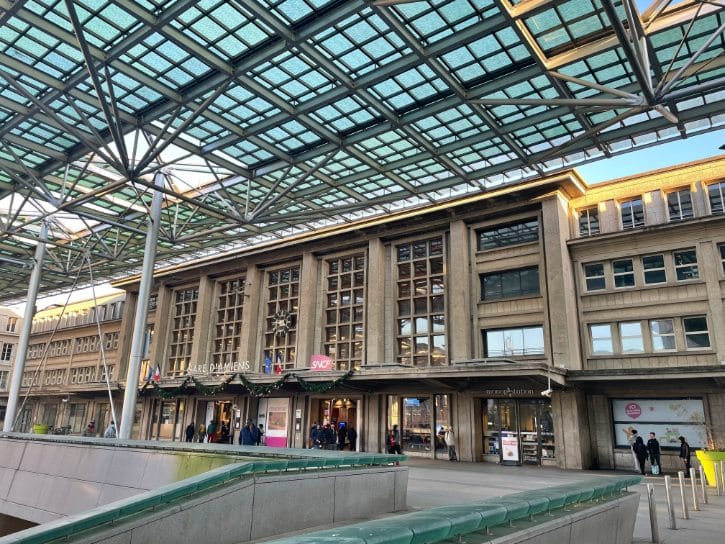
When you arrive at Gare d’Amiens, you’re already in the heart of the city. The cathedral is just a 10-minute walk from the station. No transfers, no buses, no complications.
3. Why Amiens Is So Easy to Explore on Foot
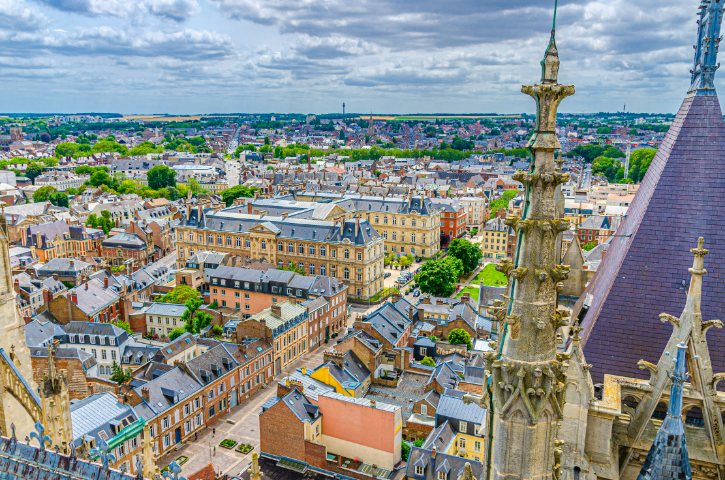
Here’s what makes Amiens a dream for walkers.
The city was rebuilt after World War II with wider streets and a pedestrian-friendly layout. Today, most of the historic center is flat, well-signed, and easy to navigate.
Key walking times from the train station:
- Cathedral: 10 minutes
- Jules Verne House: 12 to 15 minutes
- Saint-Leu district: 5 to 7 minutes from the cathedral
Terrain: Mostly flat. The Saint-Leu district has some cobblestones, so wear comfortable shoes.
Public transport needed? Not at all. The entire historic center is easily walkable in a single day.
4. Best Things to Do in Amiens
a. Cathédrale Notre-Dame d’Amiens
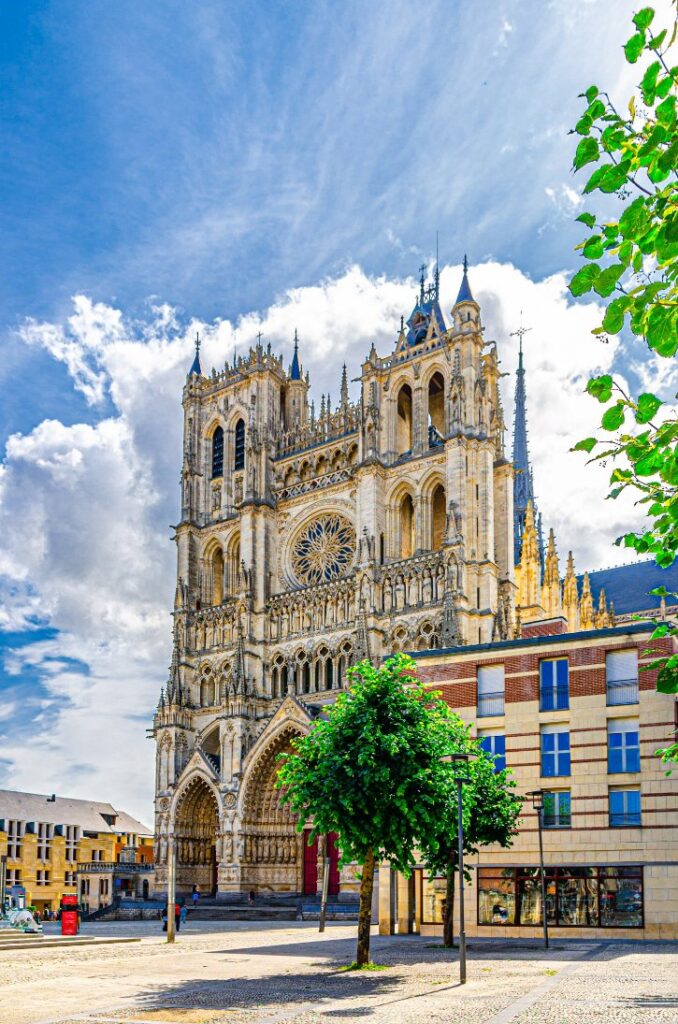
This is the star attraction, and it deserves every bit of attention.
Why it’s worth visiting: It’s the largest Gothic cathedral in France. The interior is so vast it could hold two Notre-Dame de Paris cathedrals. UNESCO calls it a “masterpiece of human creative genius”, and once you step inside, you’ll understand why.
What to expect: The nave soars to 42 meters high. The western facade features over 750 intricate statues depicting everything from the Last Judgment to local agricultural traditions. Don’t miss the octagonal labyrinth on the floor, a 234-meter symbolic pilgrimage path that medieval pilgrims would walk on their knees.
If you visit in summer or during the Christmas market, catch the Chroma light show. It projects the original medieval colors onto the cathedral’s facade, showing you what it looked like 800 years ago.
b. Maison de Jules Verne (Jules Verne House)
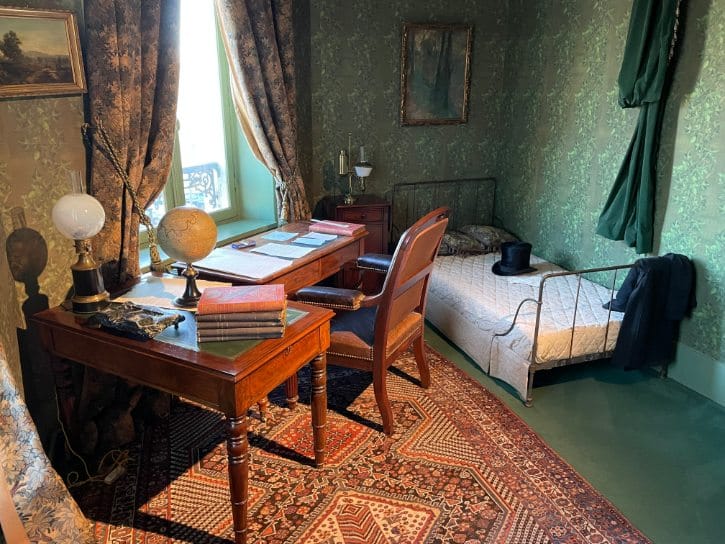
This is where the “father of science fiction” wrote some of his greatest works.
Why it’s worth visiting: Jules Verne lived in this 19th-century mansion for over 18 years. He wrote more than half of his novels here, including portions of his famous Voyages Extraordinaires series.
What to expect: The museum spans four floors. You’ll see his reconstructed study, a library with nearly 12,000 books, and an attic filled with flying machines and nautical objects. Over 700 original artifacts bring his creative world to life.
c. Quartier Saint-Leu (Saint-Leu District)
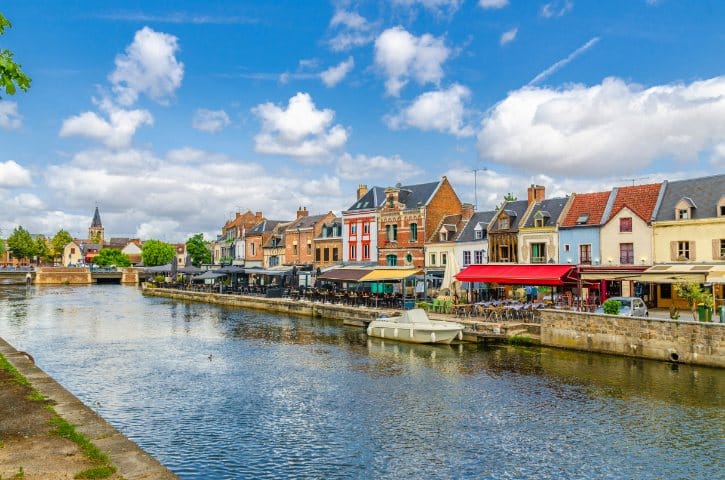
This is the oldest and most charming neighborhood in Amiens.
Why it’s worth visiting: Once an industrial zone for textile workers and tanners, Saint-Leu has transformed into a lively district of colorful half-timbered houses, waterfront restaurants, and art galleries. It’s where locals go for a drink and where the cathedral views are best.
What to expect: Wander the narrow cobbled streets along the canals. Stop at Quai Bélu for a coffee or meal with a view. The neighborhood has a youthful, creative energy thanks to the nearby university.
d. Musée de Picardie (Picardy Museum)
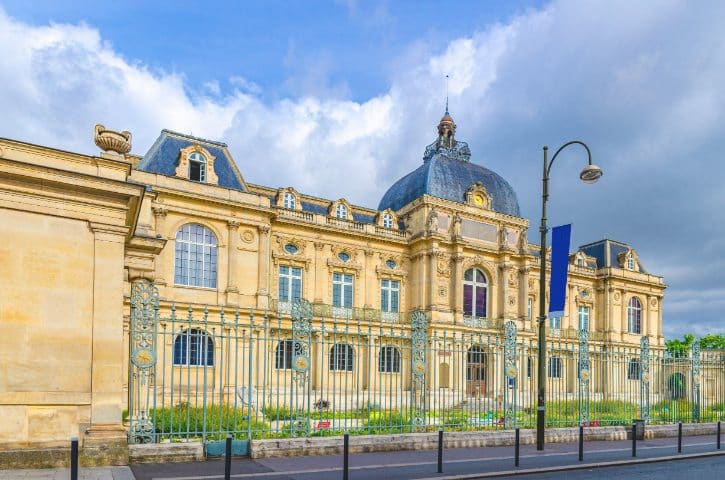
Locals call it the “Little Louvre of the North”. That’s not an exaggeration.
Why it’s worth visiting: This was the first building in France designed specifically as a fine arts museum. The Second Empire architecture alone is worth the visit.
What to expect: Collections span from prehistory to modern art. Highlights include Paleolithic tools, masterpieces by El Greco and Frans Hals, and works by Picasso and Miró. The grand staircase features stunning murals by Pierre Puvis de Chavannes.
e. Beffroi d’Amiens (Amiens Belfry)
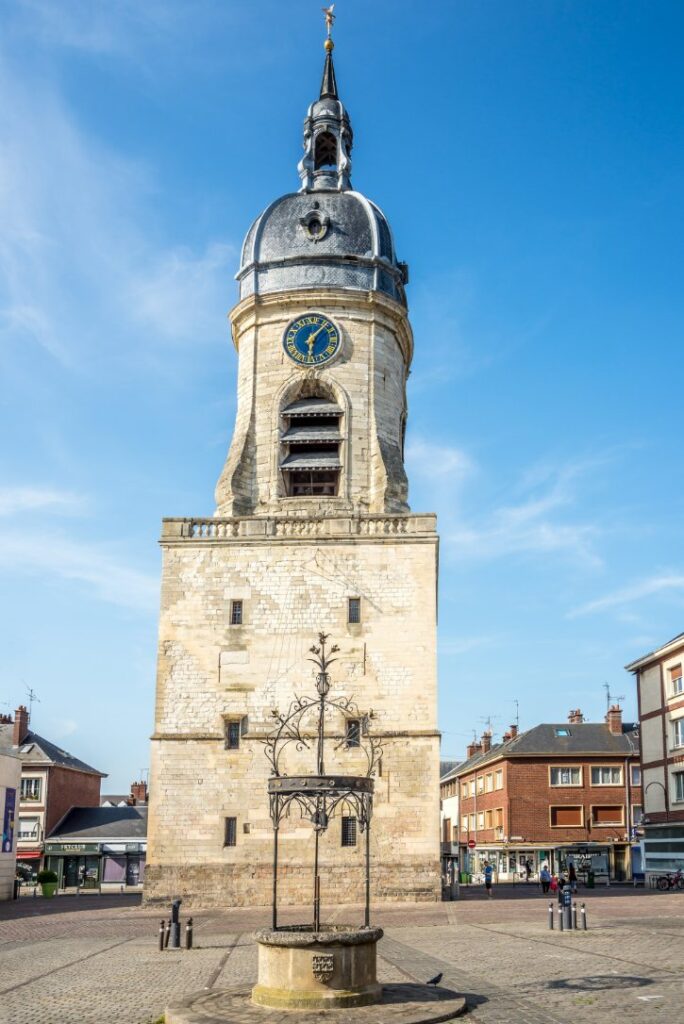
A symbol of civic pride and part of a UNESCO World Heritage collection.
Why it’s worth visiting: This medieval stone tower once served as a watchtower, prison, and meeting hall for city officials. Today, it offers panoramic views of Amiens from its 52-meter-high observation deck.
What to expect: The deck is open on weekends. From the top, you can see the contrast between the post-war commercial center and the medieval density of Saint-Leu.
f. Place Gambetta
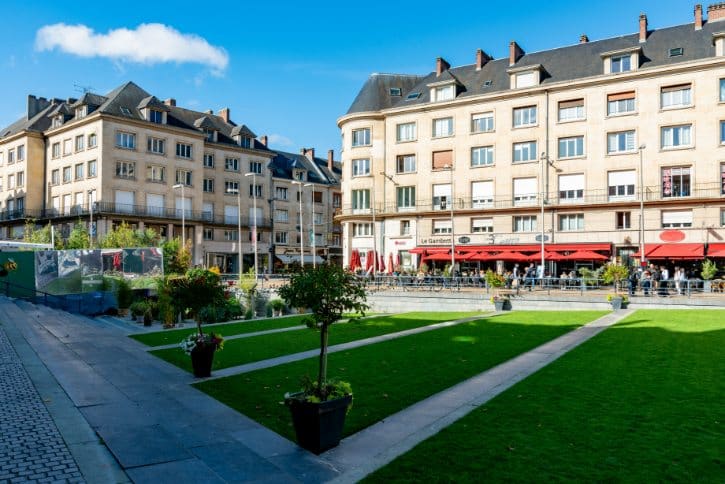
The “living heart” of Amiens.
Why it’s worth visiting: This is where locals and students gather. It’s the perfect spot for people-watching and soaking in everyday Picardy life.
What to expect: An open square with terraced lawns, fountains, and sculptures. Surrounded by cafes and shops. From here, you have easy access to the cathedral, Saint-Leu, and the main shopping streets.
g. Rue des Sergents
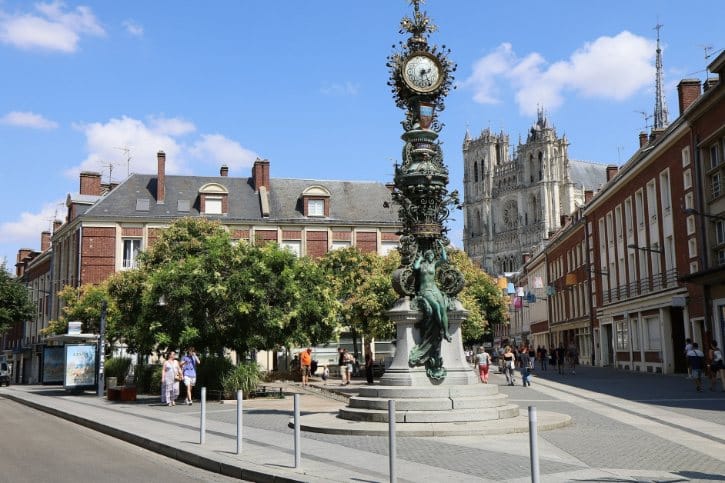
A narrow, historic street that connects Place Gambetta to the cathedral.
Why it’s worth visiting: During World War I, this street was part of the “city behind the lines”, where Allied soldiers sought rest and supplies. It still has that old-town feel.
What to expect: Look for the Horloge Dewailly, a flamboyant Rococo clock tower. Below it, you’ll find the “Marie-sans-chemise” statue, a partially nude figure that caused a scandal when unveiled in 1898.
h. Rue des 3 Cailloux
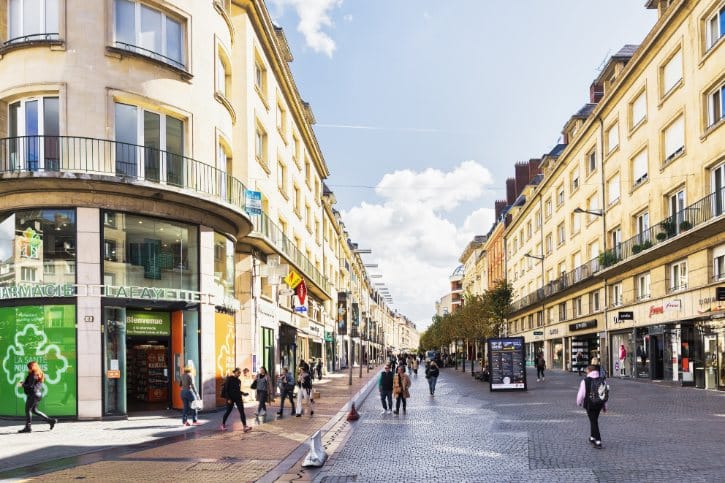
The main pedestrian shopping street.
Why it’s worth visiting: This car-free avenue connects the train station to the historic center. It’s your natural walking route into the heart of Amiens.
What to expect: Major French stores like Galeries Lafayette and FNAC. Historic facades. And during winter, this becomes the site of northern France’s largest Christmas market.
i. Les Hortillonnages (The Floating Gardens)
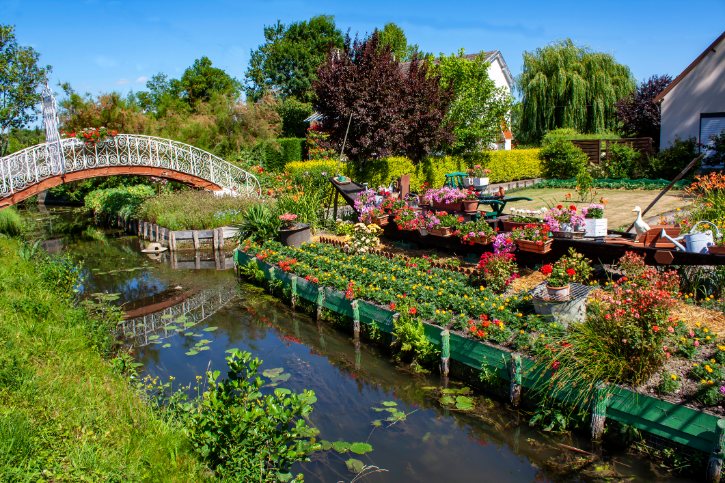
A 300-hectare network of canals and garden islands.
Why it’s worth visiting: These floating gardens have been cultivated since the Middle Ages. They’re now a protected natural space and one of the most peaceful spots in the region.
What to expect: The best way to explore is by traditional flat-bottomed boat (barque à cornet) with silent electric engines. From May to October, the International Garden Festival adds contemporary art installations throughout the islands.
5. The Perfect Walking Routes (2 Options)
Route 1: The Essential Highlights
- 9:00 AM – Gare d’Amiens Station
- 9:15 AM – Jules Verne House
- 10:30 AM – Musée de Picardie
- 12:15 PM (Lunch) – Le Piccassiette: Hearty, home-style French cooking in a cozy setting. / Crêperie La Mangeoire: A local favorite for savory galettes near the shopping district.
- 1:30 PM – Place Gambetta, Rue des 3 Cailloux and Rue des Sergents
- 3:00 PM – Beffroi d’Amiens
- 3:30 PM – Cathédrale Notre-Dame d’Amiens
- 5:30 PM – Saint-Leu District stroll
- 7:00 PM (Dinner) – Le Quai: A stylish riverside restaurant in Saint-Leu with creative dishes and a lovely canal-side terrace.
Route 2: The Scenic & Shopping Route
- 9:00 AM – Gare d’Amiens Station
- 9:10 AM – Tour Perret
- 9:30 AM – Cathédrale Notre-Dame d’Amiens
- 12:00 PM – Saint-Leu District stroll
- 1:00 PM (Lunch): Ad Hoc Café: A relaxed canal-side spot in Saint-Leu with fresh, affordable bites.
- 2:30 PM – Les Hortillonnages (Guided boat tour)
- 4:00 PM – Beffroi d’Amiens
- 4:30 PM – Rue des Sergents
- 5:00 PM – Place Gambetta
- 6:00 PM (Dinner) – Crêperie La Mangeoire: Tasty, traditional galettes at wallet-friendly prices.
- 7:00 PM – Rue des 3 Cailloux
6. What to Eat in Amiens
Amiens has its own culinary identity. Here are five local specialties to try:
- Macaron d’Amiens: A soft, dense almond biscuit made with honey and egg whites. Nothing like the colorful Parisian version.
- Ficelle Picarde: A rolled crêpe stuffed with ham and mushrooms, covered in cream and cheese, then baked until golden.
- Pâté de Canard d’Amiens: A whole deboned duck in a buttery pastry crust. A local specialty since 1643.
- Tuiles au Chocolat: Thin, curved chocolate discs with toasted almonds. Named after the terracotta roof tiles of the region.
- Gâteau Battu: A tall, airy sponge cake loaded with egg yolks and butter. Rich, light, and perfect with coffee.