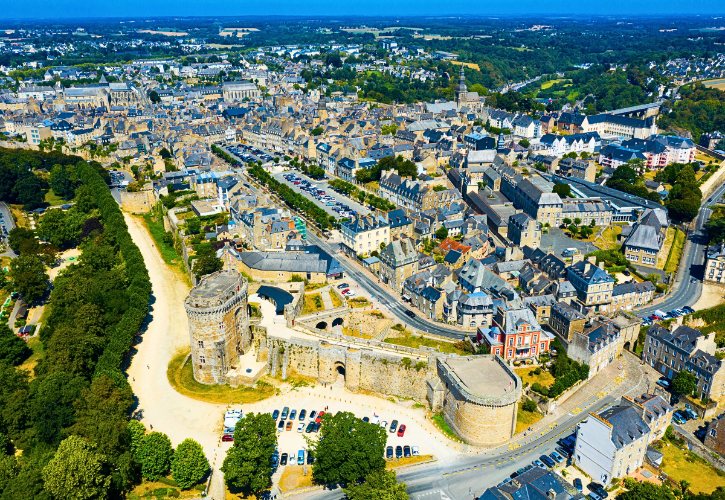
Paris gets most of the attention, and you can see why. But if Paris is all you visit, you only see a small slice of France.
Beyond the capital, you’ll find dramatic coastlines, medieval villages, vineyard regions, Alpine lakes, Roman ruins, colorful old towns, serious food cities, and entire regions that have their own culture and rhythm.
These ten places show a side of France that feels bigger, slower, and a lot more interesting than one city alone. 😊
1. Normandy
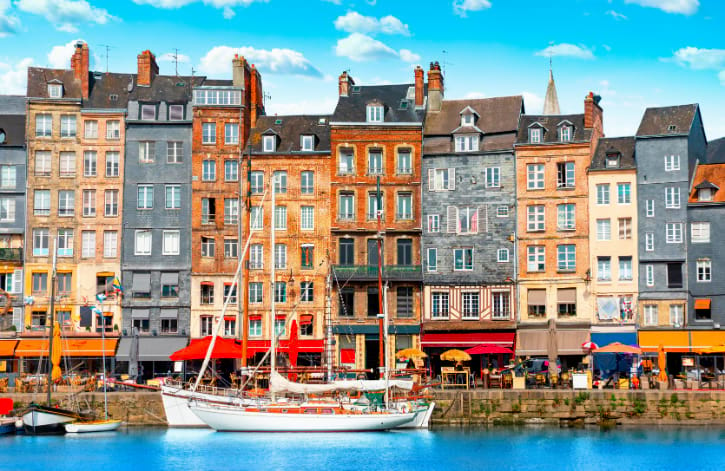
Normandy gives you a side of France that feels dramatic, emotional, and tied to history.
In one region, you get sea cliffs, tidal landscapes, fishing harbors, medieval cities, quiet countryside, and some of the most meaningful war-history sites in Europe.
a. Key Places to Explore
- Mont-Saint-Michel, a tidal island crowned by a Gothic abbey that almost looks unreal in person.
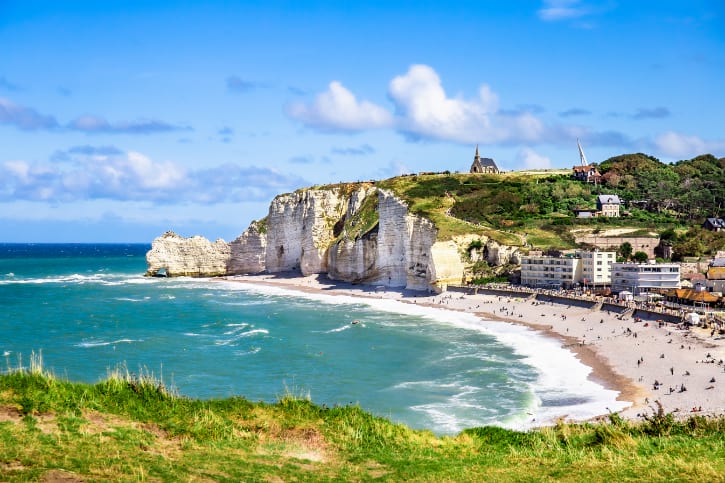
- Étretat, famous for towering white chalk cliffs and natural sea arches.
- Honfleur, a small painterly harbor town that inspired the early Impressionists.
- Bayeux, home to the medieval Bayeux Tapestry and a base for visiting the D-Day beaches.
- Rouen, a historic city of Gothic streets, half-timbered houses, and the famous Notre-Dame Cathedral.
- The D-Day landing beaches, including Omaha Beach and Arromanches, where the most moving WWII history sits right on the coast.
b. What Makes It Special
The strength of Normandy is the contrast inside one region.
Mont-Saint-Michel feels almost mythical. Étretat is all sea, wind, and chalk.
Honfleur slows you down with its harbor cafés. Bayeux carries both medieval and modern history.
Rouen gives you a real French city without the size of Paris. The D-Day beaches are quiet and powerful in a way nothing else quite is.
You get nature and history side by side, which is rare to find in a single trip.
c. Practical Travel Tips
- Plan 5 to 7 days minimum.
- A rental car helps for Étretat, Mont-Saint-Michel, and the D-Day sites.
- Rouen and Bayeux are easy to reach by direct train from Paris.
d. Best For
Best for travelers who want a mix of coast, history, and meaning. Don’t try to rush it. Normandy rewards slow travel.
2. Brittany
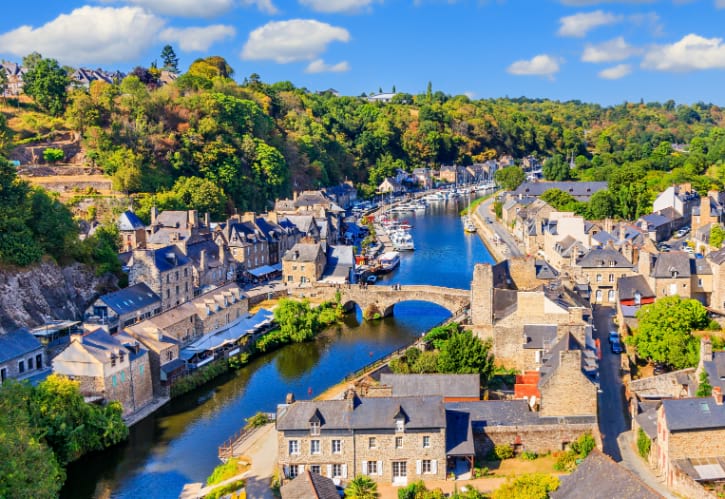
Brittany feels different from the rest of France. It’s wild, Atlantic, and proudly Celtic.
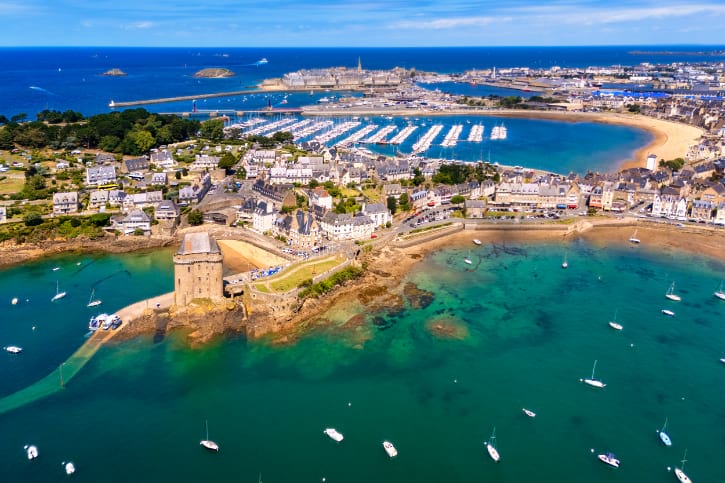
You get rugged coastline, walled towns, medieval streets, prehistoric stones, and a strong local identity built around seafood, crêpes, cider, music, and the sea.
a. Key Places to Explore
- Saint-Malo, a coastal walled city with stone ramparts and a historic corsair quarter inside.
- Dinan, a medieval town of half-timbered houses high above the Rance River.
- Rennes, the lively regional capital with a Saturday market and historic core.
- Carnac, home to thousands of prehistoric standing stones, now a UNESCO site.
- Quimper, a smaller town known for its Gothic cathedral and traditional pottery.
- Vannes, a historic walled town on the Gulf of Morbihan.
- The Pink Granite Coast, where wind-shaped pink boulders meet the sea along a famous coastal path.
b. What Makes It Special
Brittany has its own rhythm. Saint-Malo is one of the best introductions to the region, with the sea on one side and old stone on the other.
Dinan feels like stepping into a medieval painting. Carnac connects you to a much older France, long before castles or cathedrals. The Pink Granite Coast is one of the most unusual stretches of coastline you’ll see anywhere.
Food is part of the experience too. Fresh oysters, buckwheat crêpes, salted butter caramel, and crisp local cider show up everywhere.
c. Practical Travel Tips
- TGV trains from Paris reach Rennes and Saint-Malo quickly.
- A rental car is worth it for the Pink Granite Coast and Carnac.
- Saint-Malo and Dinan pair well, just 40 minutes apart.
d. Best For
Best for travelers who like coastal drives, seafood, medieval towns, and a less polished, more atmospheric side of France. Treat it as more than a one-day stop.
3. Loire Valley
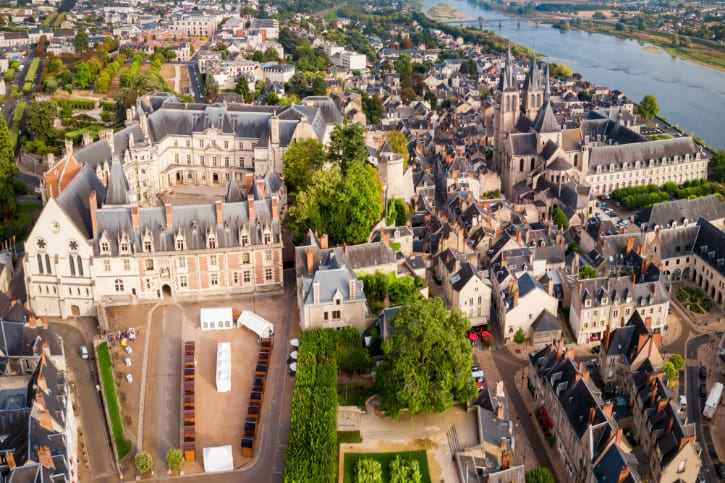
The Loire Valley is France’s fairytale castle region, but the smartest way to enjoy it is to slow down, not chase a long list of châteaux.
You get grand castles with their own personalities, plus riverside towns, formal gardens, vineyards, and easy cycling along the Loire.
a. Key Places to Explore
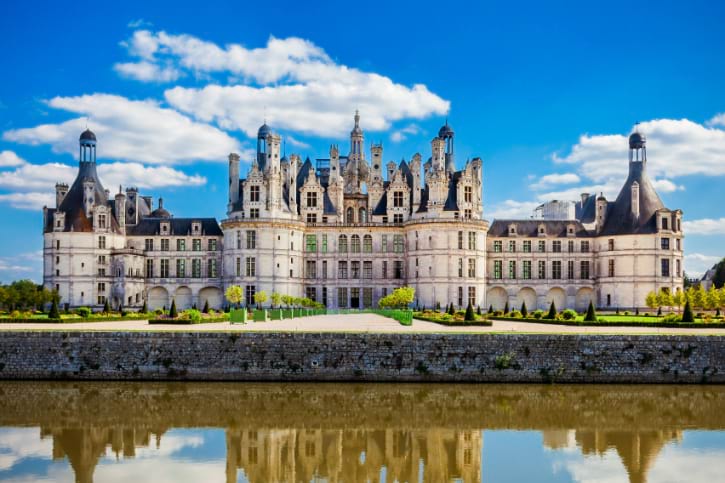
- Chambord, the biggest of the royal châteaux, famous for its massive scale and double-helix staircase.
- Chenonceau, a graceful castle built right across the Cher River.
- Villandry, known above all for its terraced Renaissance gardens.
- Amboise, a historic riverside town with a royal château and Leonardo da Vinci’s final home, Clos Lucé.
- Blois, a strong castle-town combination that shows four eras of French architecture in one building.
- Tours, a well-connected city that works as a base.
- Saumur, a Loire town with a clifftop fortress, wine cellars, and sparkling local wines.
b. What Makes It Special
Each castle has its own personality, and that’s the part most people miss.
Chambord is grand and monumental. Chenonceau is romantic and elegant. Villandry is for garden lovers.
Amboise is the friendliest mix of town life and history. Blois layers different eras into a single visit. Saumur brings wine and river scenery together.
It’s a region that mixes royal history with the simple pleasure of a slow afternoon by the river.
c. Practical Travel Tips
- Don’t visit more than two or three castles in one day.
- Use Tours or Amboise as a base. Both are well connected.
- Trains, shuttle buses, and bikes cover the main sites without a car.
d. Best For
Match the region to your style:
- Architecture lovers, focus on Chambord and Blois.
- Garden lovers, go for Villandry and Chaumont.
- Families, choose Amboise and Clos Lucé.
- Wine and slow travelers, head to Saumur and Chinon.
4. Dordogne
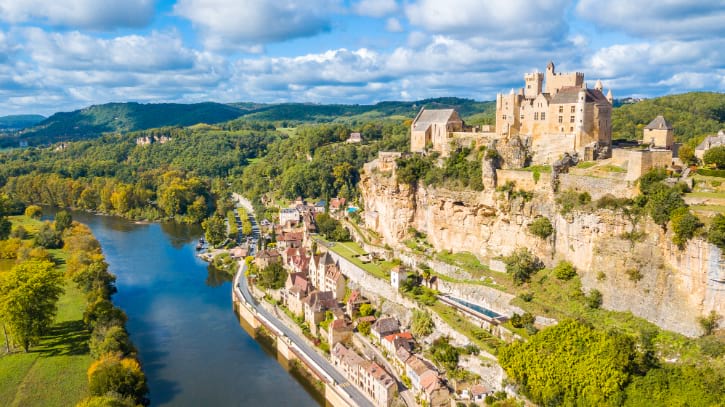
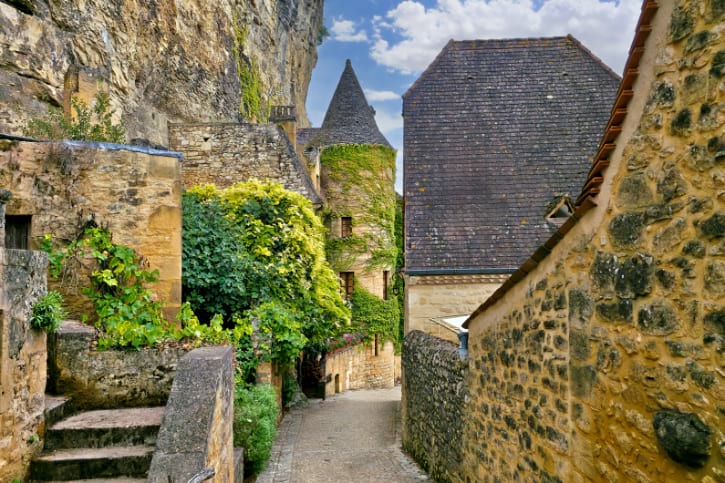
The Dordogne is where France feels old in the best way. Honey-colored villages, cliffside castles, river valleys, prehistoric caves, and slow countryside meals come together in one quiet, scenic region.
If Paris is the polished side of France, Dordogne is the storybook side.
a. Key Places to Explore
- Sarlat-la-Canéda, the cultural heart of the region, with one of the best-preserved medieval and Renaissance old towns in France.
- Beynac-et-Cazenac, a dramatic cliffside village topped by a powerful medieval fortress.
- La Roque-Gageac, a postcard village pressed against a tall stone cliff along the river.
- Domme, a hilltop bastide town with sweeping views over the valley.
- Castelnaud-la-Chapelle, home to a fortress that now houses a medieval warfare museum.
- Lascaux, where you can visit a full-scale replica of the famous prehistoric cave paintings.
- The Dordogne River, perfect for a gentle canoe ride past castles and cliffs.
b. What Makes It Special
Dordogne layers everything that makes rural France appealing into one region.
You can spend a morning at a market in Sarlat, drive twenty minutes to a medieval castle, paddle the river in the afternoon, and finish the day at a small countryside restaurant.
Markets are a real highlight here, especially the Saturday and Wednesday market days in Sarlat.
It’s not just food, though the food is excellent. It’s the rhythm of village life that stays with you.
c. Practical Travel Tips
- A rental car is essential. Most sites aren’t on the train line.
- Sarlat is the best base, central and atmospheric.
- Plan 4 to 5 days minimum to enjoy it properly.
d. Best For
Best for travelers who want a quiet, scenic, deeply French countryside experience. Don’t squeeze it into a quick stop.
5. Bordeaux
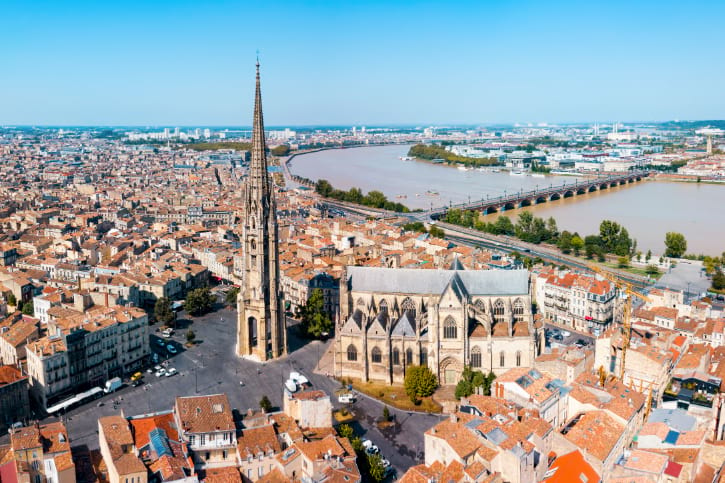
Bordeaux is another kind of French city: elegant, walkable, full of golden stone, and more relaxed than Paris.
It’s a real wine capital, but you don’t need to know anything about wine to love it. The architecture and the riverfront alone are worth the trip.
a. Key Places to Explore
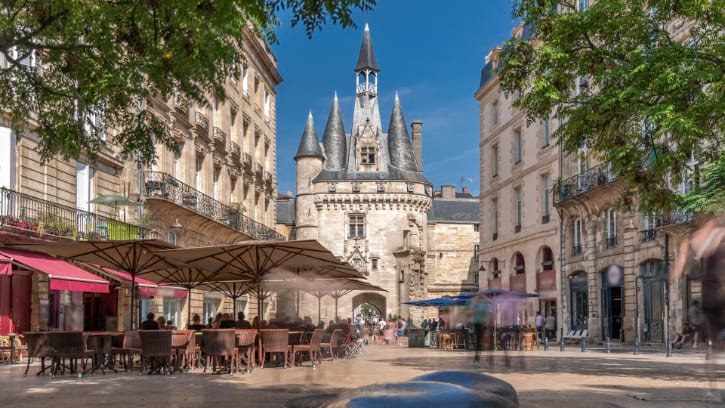
- Porte Cailhau, a striking 15th-century medieval gate that once marked the main entrance to the city.
- Place de la Bourse, an 18th-century riverfront square that defines the look of the city.
- Miroir d’Eau, the world’s largest reflecting pool, right in front of Place de la Bourse.
- La Cité du Vin, a modern museum dedicated to wine culture from around the world.
- Chartrons, a trendy old wine-trade district full of antique shops, cafés, and small boutiques.
- The Saint-Pierre district, a lively maze of small plazas and local restaurants.
- The Garonne riverfront, ideal for long walks at sunset.
- Saint-Émilion, a medieval wine village a short trip outside the city, easy as a day trip.
b. What Makes It Special
Bordeaux blends classic city beauty with a modern, forward-looking food and wine culture.
The architecture is one of the most consistent things about the city. Streets of warm stone, grand squares, and that wide riverfront give it a calm, spacious feel.
Saint-Émilion adds a different layer, with vineyards, a hilltop village, and underground churches just outside the city.
The mood is polished but not stiff. You can dress up for dinner or sit on the river with a glass of wine in jeans. Both feel right.
c. Practical Travel Tips
- 2 to 3 days in the city, plus one day for Saint-Émilion.
- The city is flat and walkable, with a strong tram network.
- You don’t need a car unless you explore deeper into the wine country.
d. Best For
Best for architecture lovers, food travelers, couples, and anyone wanting a polished French city outside Paris. Wine knowledge is welcome but not required.
Read More: A Complete Guide to Bordeaux
6. Nice
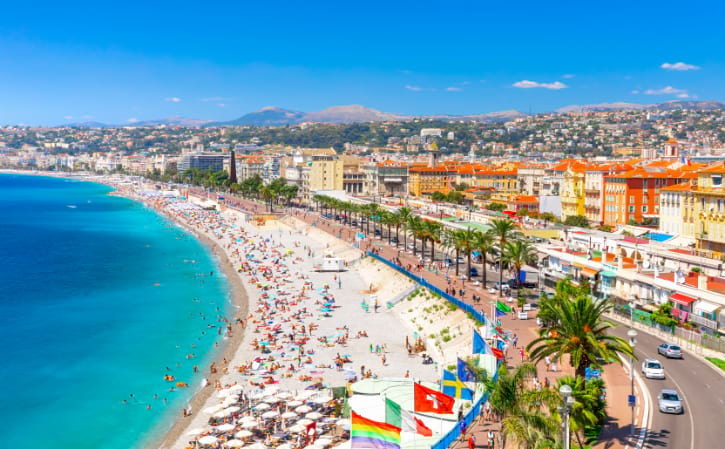
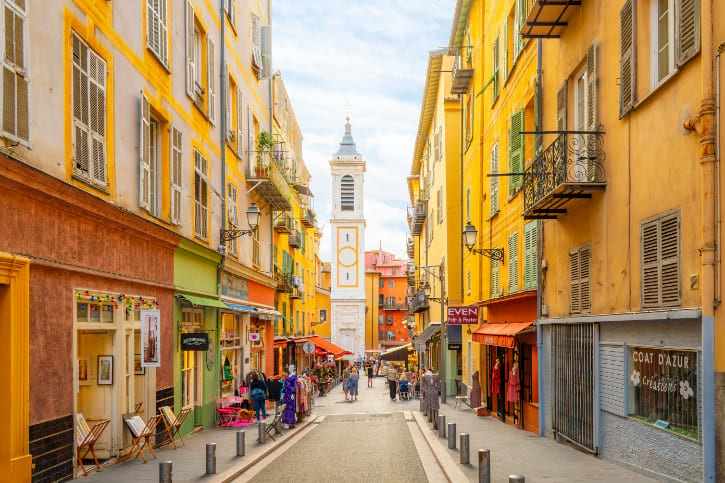
Nice is where France goes Mediterranean. You get sea light, palm trees, pastel buildings, lively markets, hilltop views, and easy day trips along the Riviera.
It’s far more than a beach city, and the Old Town carries the soul of the place.
a. Key Places to Explore
- Promenade des Anglais, the famous seafront walk along the Baie des Anges.
- Vieux Nice, a maze of warm-colored streets, baroque churches, and traditional shops.
- Cours Saleya Market, the flower and food market in the Old Town, open Tuesday to Sunday, with an antiques market taking over on Mondays.
- Castle Hill (Colline du Château), for the best panoramic view of the city and port.
- Place Masséna, the grand main square of central Nice.
- The Matisse Museum and the Marc Chagall Museum, both shaped by the artists’ love of the local light.
- Èze, a clifftop medieval village reached by bus from Nice.
- Villefranche-sur-Mer, a deep-blue harbor town with a colorful waterfront.
- Monaco, easy to reach by coastal train in about 20 minutes.
b. What Makes It Special
Nice feels different from northern France in every way. The buildings are warmer, the food is closer to Italian, and the pace is slower.
The Old Town carries the soul of the city. You can spend half a day just walking the lanes, stopping for socca, fresh fruit, or a glass of local rosé.
Up on Castle Hill, the view over terracotta rooftops and turquoise sea is one of the best in the country.
It’s also a perfect base. The Riviera coastal train turns half a dozen famous villages into easy day trips.
c. Practical Travel Tips
- Plan 3 to 4 days minimum, more for day trips.
- Use the coastal train for Villefranche and Monaco. For Èze, take bus 82 or 602 from Vauban station.
- Don’t pick up a rental car in central Nice. Parking is hard and expensive. Get the car only if you’re heading inland.
d. Best For
Best for travelers who want color, sea, art, food, and easy Riviera day trips, not just beach time.
Read More: 17 Best Things to Do in Nice
7. Provence
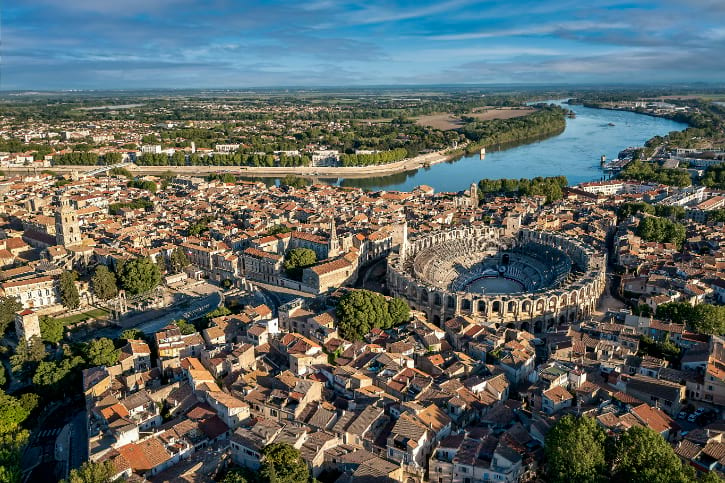
Provence is the version of France many travelers picture in their head: lavender fields, stone villages, sunlit markets, vineyards, olive trees, and Roman history.
It’s a region that works on the senses, and it always rewards travelers who slow down.
a. Key Places to Explore
- Avignon, a historic walled city with the monumental Palais des Papes.
- Aix-en-Provence, a refined town with tree-lined boulevards, fountains, and busy morning markets.
- Arles, full of well-preserved Roman ruins, including a still-active amphitheater.
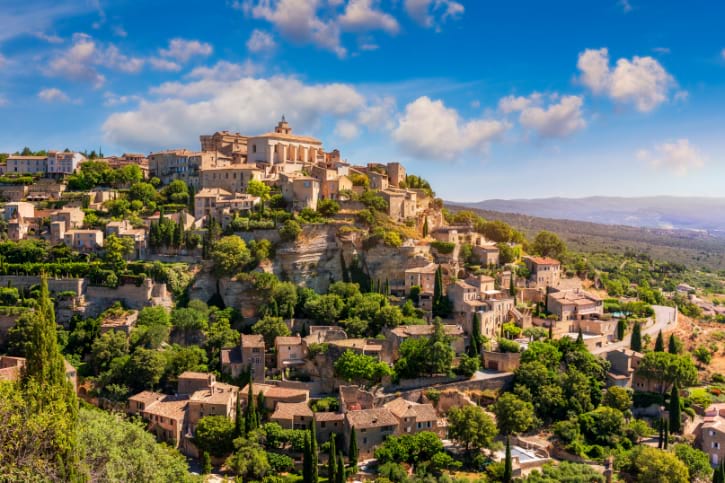
- Gordes, a famous hilltop village of white stone perched above the valley.
- Roussillon, known for its bright red and ochre cliffs.
- L’Isle-sur-la-Sorgue, a canal-lined town famous for antique markets.
- The Valensole Plateau, where the lavender fields bloom.
- Pont du Gard, a 2,000-year-old Roman aqueduct that still feels impressive in person.
b. What Makes It Special
Provence works on the senses more than most regions.
You’ll notice the warm light, the sound of cicadas, the smell of herbs, the colors of the markets. It’s also a region of clear themes:
- Lavender landscapes on the Valensole Plateau.
- Roman heritage in Arles and at Pont du Gard.
- Village life in Gordes, Roussillon, and beyond.
- Markets and food in towns like L’Isle-sur-la-Sorgue and Aix.
- Wine and countryside drives through the Luberon.
That mix is what makes it feel timeless.
c. Practical Travel Tips
- Lavender season is roughly late June to late July only.
- A rental car helps a lot for villages and Roman sites.
- Pick one base town: Avignon, Aix, or Arles.
- Don’t try to hit every famous village in one day. Build the trip around a base, a few villages, a market, a Roman site, and a slow meal.
d. Best For
Best for travelers who want countryside, light, history, and a slower southern rhythm.
8. Lyon
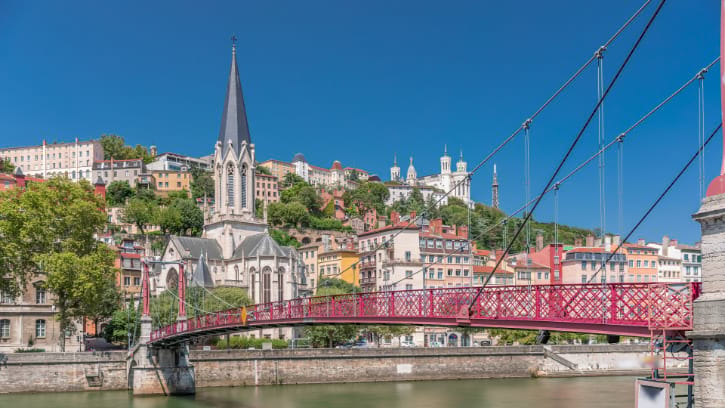
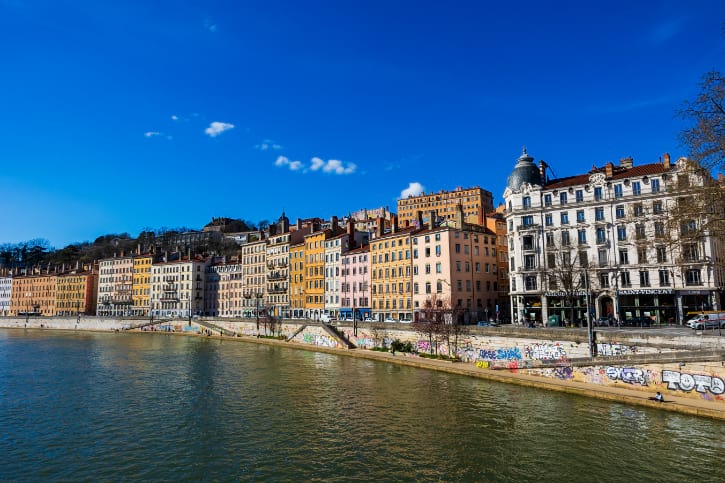
Lyon often gets called France’s food capital, and that’s fair. But Lyon is also a complete French city with Roman ruins, Renaissance streets, hidden passageways, and a slower rhythm than Paris.
If you want a city break without the Paris pressure, Lyon is the answer.
a. Key Places to Explore
- Vieux Lyon, one of Europe’s largest preserved Renaissance districts.
- Fourvière Basilica, the hilltop church with sweeping views across the city.
- The Traboules, hidden pedestrian passageways that cut through old buildings and courtyards.
- Croix-Rousse, the historic silk-workers’ hill, now full of cafés, markets, and street art.
- Presqu’île, the central peninsula between the two rivers, full of shops and squares.
- Place Bellecour, the grand main square at the heart of the city.
- Les Halles de Lyon Paul Bocuse, the legendary indoor food market.
- The Saône and Rhône riverbanks, perfect for long walks.
b. What Makes It Special
Lyon has layers most cities don’t.
You can stand at Fourvière in the morning with views that reach toward the Alps on a clear day.
You can wander down through Vieux Lyon, slip into a traboule, then cross the river to Presqu’île for lunch.
By the afternoon, you can be up in Croix-Rousse, looking at murals, browsing markets, and watching local life.
The food side is real. Bouchons serve hearty Lyonnaise classics in casual rooms, and Les Halles is worth a visit even if you only graze.
c. Practical Travel Tips
- 2 to 3 full days is a strong stay, more if you love food.
- Use the funicular up to Fourvière, then walk down through Vieux Lyon.
- A simple first-visit route: Fourvière, Vieux Lyon, Presqu’île, Croix-Rousse, in that order.
d. Best For
Best for travelers who want a real French city experience without the Paris checklist: food, history, walkable neighborhoods, and a more grounded mood.
Read More: 15 Best Spots to Visit in Lyon
9. Annecy
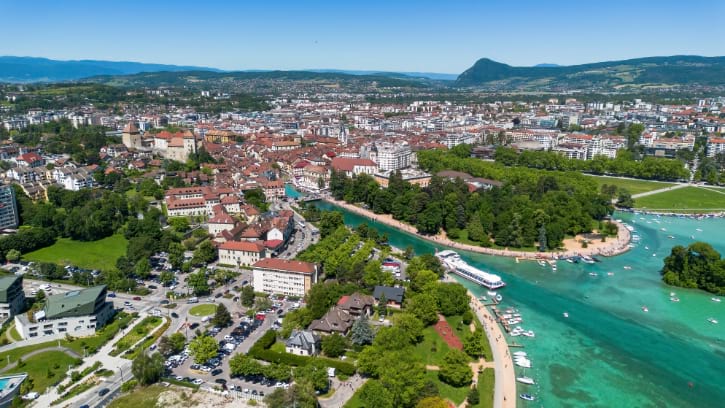
Annecy is where France gets Alpine. Turquoise lake water, mountains, canals, pastel old-town streets, and lakeside walks come together in one small city.
It’s the kind of place that surprises people who weren’t expecting France to look like this.
a. Key Places to Explore
- Lake Annecy, one of the cleanest lakes in Europe and the heart of the experience.
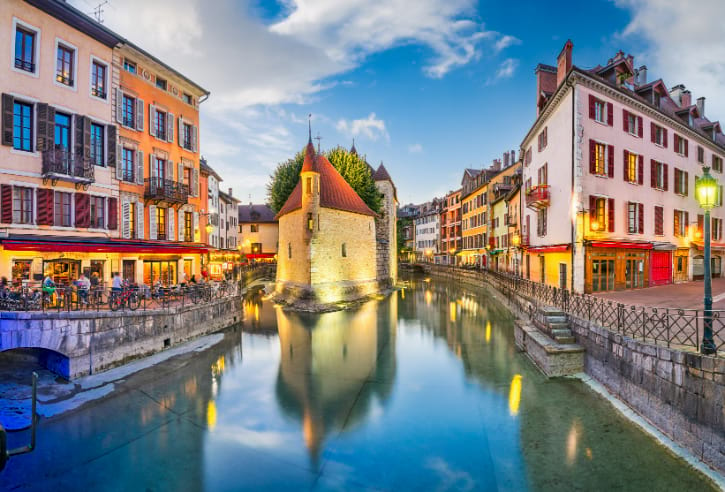
- The Old Town, with canals, flower-filled bridges, and colorful houses.
- Palais de l’Île, a 12th-century stone building shaped like a ship, sitting in the middle of a canal.
- Pont des Amours, the famous footbridge with views down the lake.
- Jardins de l’Europe, the lakeside park beside the old town.
- Château d’Annecy, the hilltop castle now home to a regional museum.
- Lakeside villages like Talloires and Duingt, easy to reach by bike, bus, or boat.
b. What Makes It Special
Annecy works because the city and the nature are right next to each other.
You can wake up in the old town, walk through canals lined with cafés, and be on the lakefront within five minutes. From there, you can rent a bike, take a boat across, or follow the path around the water.
The light on the lake, the mountains behind it, and the small canals together give Annecy a calm, romantic feeling that doesn’t try too hard.
c. Practical Travel Tips
- Plan at least 2 full days. A quick photo stop sells it short.
- The 42-kilometer cycle path around the lake is excellent.
- Boat rides and lakeside villages add real depth beyond the old town.
d. Best For
Best for travelers who want nature, mountain air, gentle activity, and a romantic, easy-paced break from bigger cities.
Read More: A Complete Guide to Annecy
10. Alsace
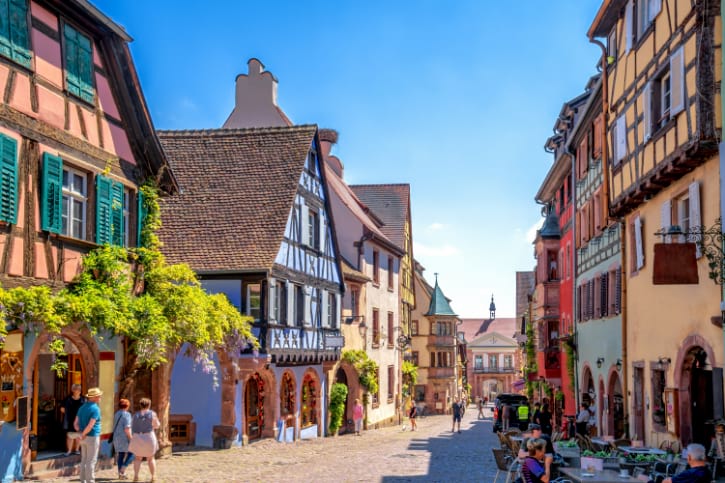
Alsace closes the list with a region that doesn’t look like the rest of France.
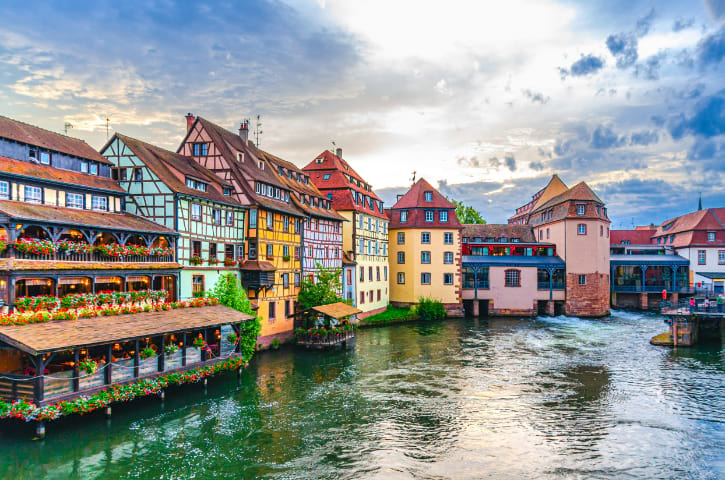
Half-timbered houses, painted shutters, flower boxes, vineyard hills, and cozy winstubs give it a real fairytale feel.
The German influence shows up everywhere, from the architecture to the food.
a. Key Places to Explore
- Strasbourg, the regional capital, with a Gothic cathedral, La Petite France quarter, and famous Christmas markets.
- Colmar, the most popular base for the Wine Route, full of canals and pastel houses.
- Eguisheim, a small village built in concentric circles around a central square.
- Riquewihr, a well-preserved 16th-century walled village.
- Kaysersberg, with its fortified bridge and forested setting.
- Ribeauvillé, a vineyard village watched over by three medieval castles.
- The Alsace Wine Route, a 170-kilometer route that links these villages through vineyards.
b. What Makes It Special
Alsace mixes two cultures in a way no other region does. The buildings, the food, the wine, the festivals, and even the local language carry both French and German influence.
Strasbourg and Colmar are the cultural anchors. Strasbourg is grander and more historic. Colmar is smaller, prettier, and easier to base yourself in. The smaller villages are where Alsace really turns into a storybook.
The atmosphere shifts with the seasons too. Spring brings flowers in every window. Autumn brings the grape harvest. December brings the most famous Christmas markets in France.
c. Practical Travel Tips
- Strasbourg and Colmar are easy by train from Paris.
- For smaller villages, use a rental car, bike, or seasonal shuttle bus.
- Plan 3 to 5 days, and aim for no more than two villages a day.
d. Best For
Best for travelers who want villages, wine, cozy food, and a region that feels both French and not quite French at the same time.
Final Thoughts
Paris is unforgettable. Nobody is arguing with that. But these ten regions prove that France is much bigger, richer, and more varied than one city.
- Normandy’s cliffs and history.
- Brittany’s wild coastline.
- The Loire Valley’s royal castles.
- Dordogne’s medieval villages.
- Bordeaux’s wine and elegance.
- Nice’s Mediterranean color.
- Provence’s villages and markets.
- Lyon’s food and history.
- Annecy’s lake and mountains.
- Alsace’s fairytale towns.
Pick a few, take your time, and let each region speak for itself. That’s how France really comes alive.