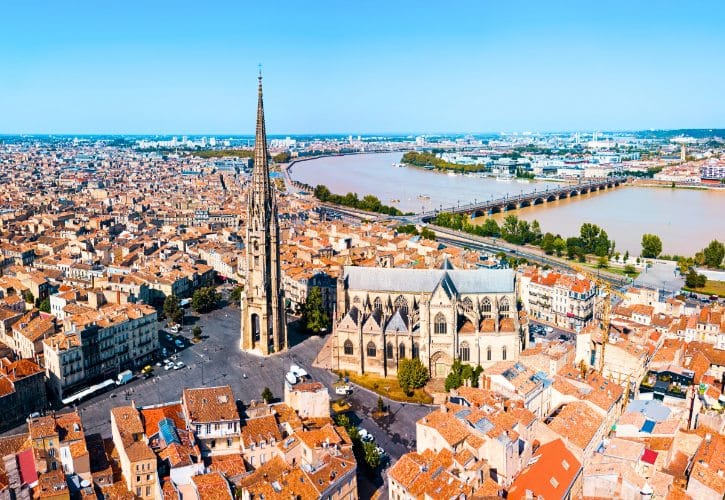
Most travelers head straight to Paris or the French Riviera. But tucked away in southwest France, Bordeaux quietly waits to be discovered.
This city offers stunning 18th-century architecture, world-famous wine culture, and a pace of life that feels refreshingly relaxed.
In this guide, you’ll find the best things to do in Bordeaux, local dishes and markets worth trying, easy day trips you won’t want to miss, and practical tips for getting around.
Whether you’re a first-time visitor or planning a return trip, here’s everything you need to know about France’s most underrated city. 😊
1. Why Bordeaux Might Surprise You
a. What Most Travelers Expect Before Visiting
Many people picture Bordeaux as “the wine place” and assume the best experiences are outside the city, somewhere in the châteaux and vineyards.
Others expect a smaller, sleepier stop. Pretty, sure, but not especially exciting.
b. Why Bordeaux Is Often Overlooked
For decades, Bordeaux was nicknamed “Sleeping Beauty” because of its soot-covered buildings and neglected waterfront.
Paris has always dominated the spotlight, leaving Bordeaux in its shadow.
Even today, many travelers simply don’t realize how much the city has transformed.
c. What the City Actually Feels Like
Bordeaux is polished and wonderfully walkable.
The riverfront is where locals treat the quays like an outdoor living room. You’ll see people walking, cycling, meeting friends, and stopping for drinks.
The city rewards slow exploration. You keep turning corners into charming squares, historic gates, bell towers, and museums that feel significant, all without the constant rush.
d. Who This Destination Is Best For
Bordeaux works especially well for:
- Travelers who like cities but want to avoid crowds and long lines
- Architecture and history lovers
- Wine-curious beginners looking for an accessible introduction
- Anyone who wants easy day trips without needing to rent a car
2. Best Things to Do in Bordeaux
a. Opéra National de Bordeaux, Grand-Théâtre
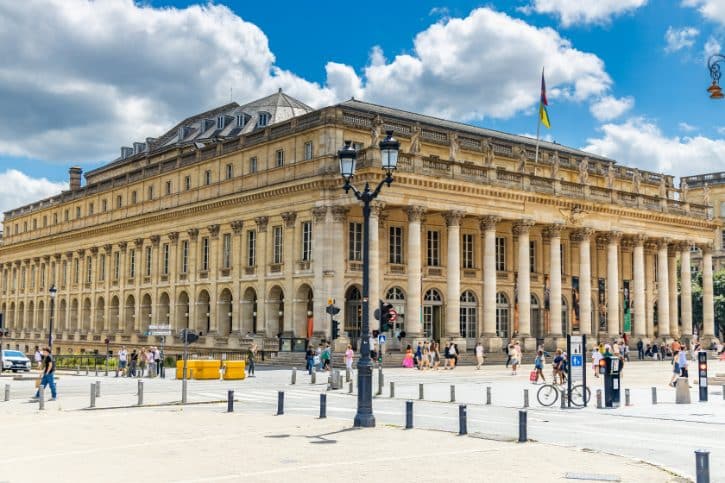
Considered one of Europe’s most beautiful 18th-century theaters, the Grand-Théâtre was completed in 1780.
Its facade features 12 Corinthian columns topped by statues of the nine Muses and three goddesses.
What to expect: Neoclassical elegance inside and out, with a royal blue-and-gold interior. Guided tours reveal the building’s secrets, or you can catch a world-class opera or ballet performance.
b. Place de la Bourse
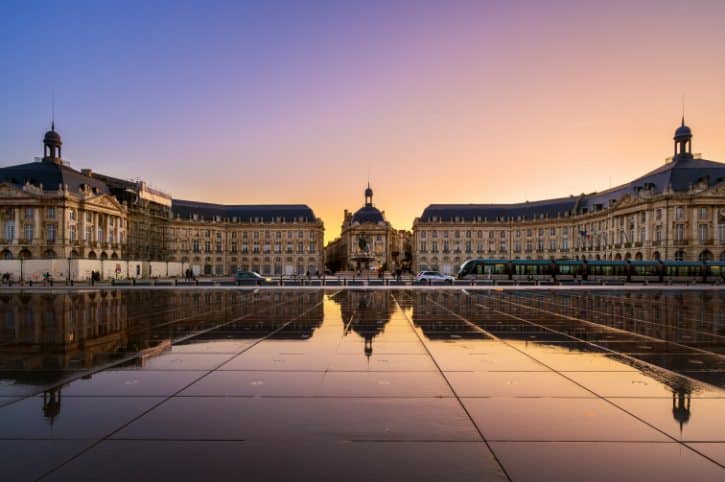
This is Bordeaux’s crown jewel.
Built between 1730 and 1775, the square was designed to welcome ships arriving on the Garonne River with a sense of grandeur and prosperity.
What to expect: Symmetrical neoclassical facades, ornate stone masks called mascarons, and one of the most photographed squares in France. It’s especially beautiful at sunset when golden light washes over the buildings.
c. Miroir d’eau
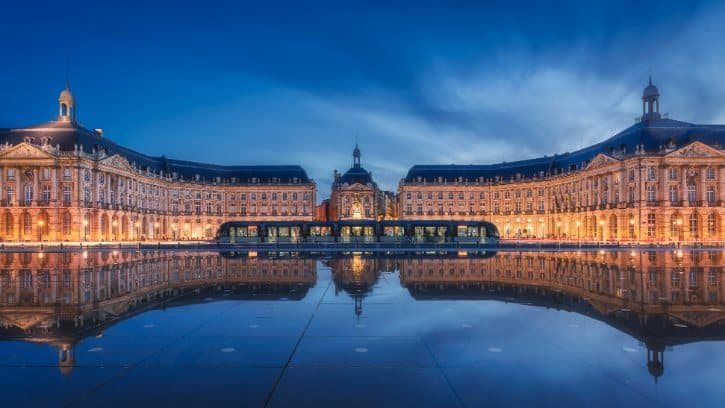
Right in front of Place de la Bourse sits the world’s largest reflecting pool.
Covering 3,450 square meters, the Miroir d’eau creates a mirror-like surface that perfectly reflects the 18th-century palace across from it.
What to expect: A mesmerizing visual experience, especially at dusk or after dark when the facades light up. The pool alternates between a reflective surface and a cooling mist, which kids absolutely love on warm days.
d. Porte Cailhau
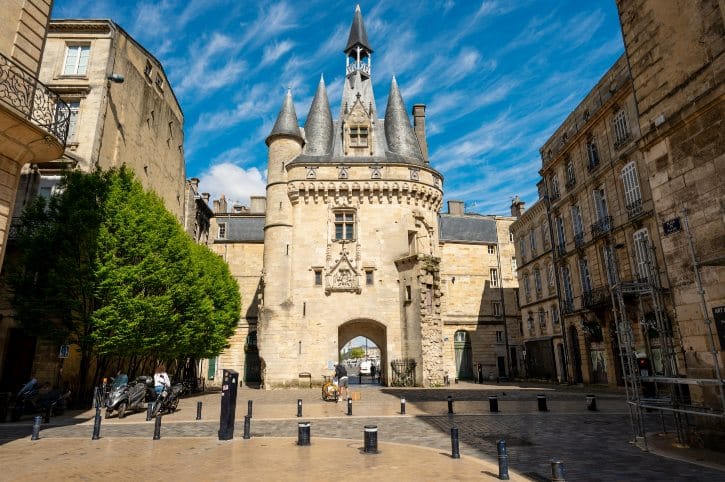
This late-15th-century gateway was built to celebrate King Charles VIII’s victory at the Battle of Fornovo.
Standing 35 meters tall with ornate sculptures and distinctive “pepper-pot” roofs, it’s a beautiful piece of medieval architecture.
What to expect: Climb to the top floor for sweeping views of the river and Pont de Pierre.
e. Cross the Pont de Pierre
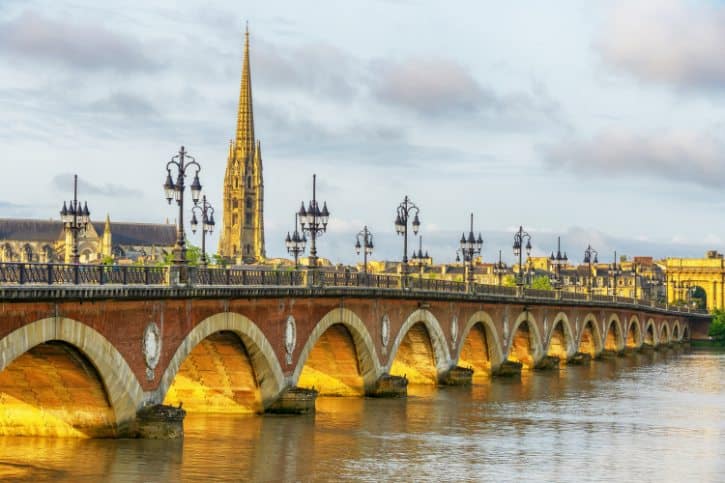
This was the first bridge ever built across the Garonne in Bordeaux.
Commissioned by Napoleon I, it was constructed between 1810 and 1822.
What to expect: A scenic walk across 17 stone arches with classic views of the “Port of the Moon”. Some say the 17 arches represent the letters in Napoleon Bonaparte’s name, though historians note this is likely a coincidence.
f. Grosse Cloche
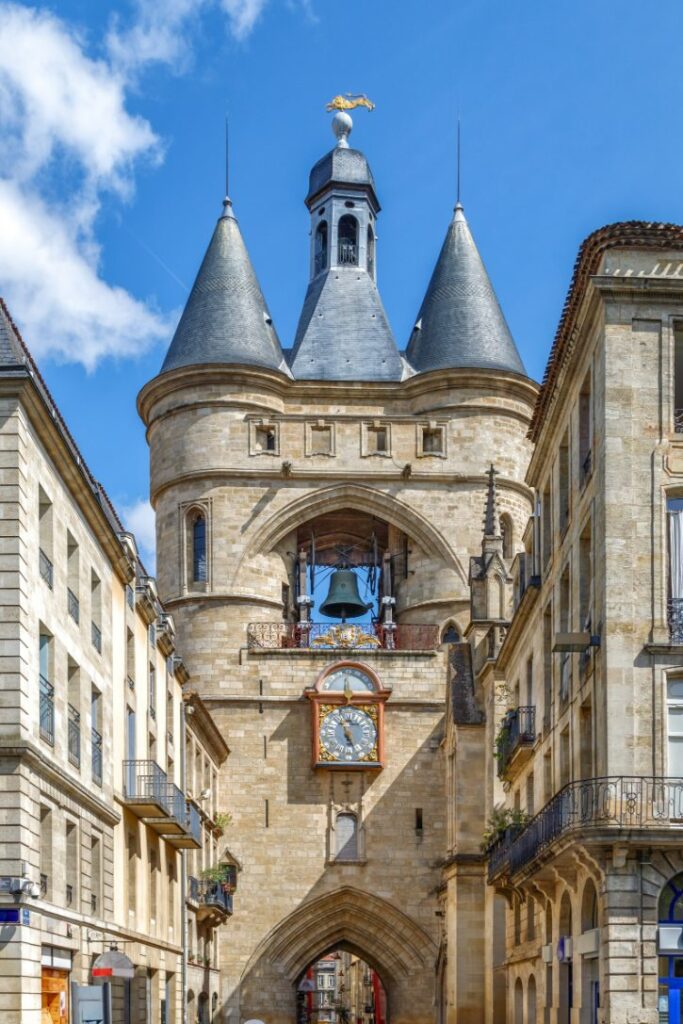
One of the few remaining medieval monuments in Bordeaux, this 13th-century gate once marked the entrance to the city.
The bell weighs over 7 tons and historically rang to announce the grape harvest or warn residents of fire.
What to expect: A fairytale-like gateway on Rue Saint-James that feels like stepping back in time. It’s one of the most photographed spots in the city.
g. Musée d’Aquitaine
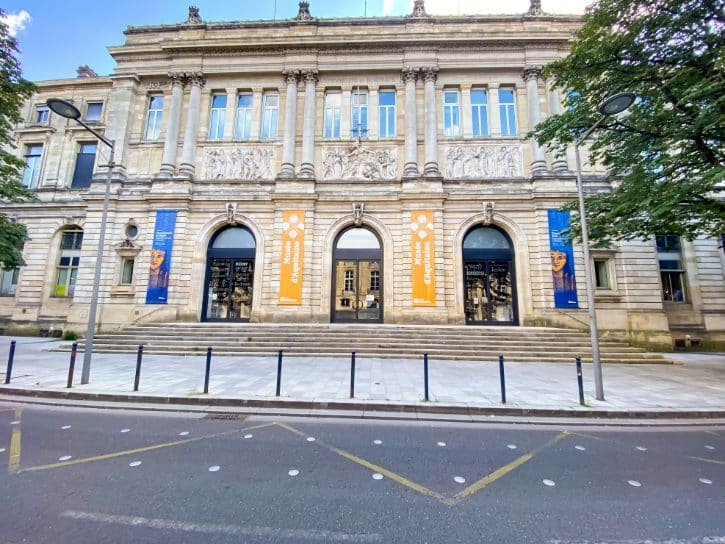
This museum traces the history of Bordeaux and the Aquitaine region from prehistory to the present.
It’s one of the largest regional history museums in France.
What to expect: Highlights include the 25,000-year-old “Venus of Laussel” bas-relief, the tomb of philosopher Michel de Montaigne, and a thoughtful permanent exhibition on Bordeaux’s role in the Atlantic slave trade.
h. Cathédrale Saint-André de Bordeaux
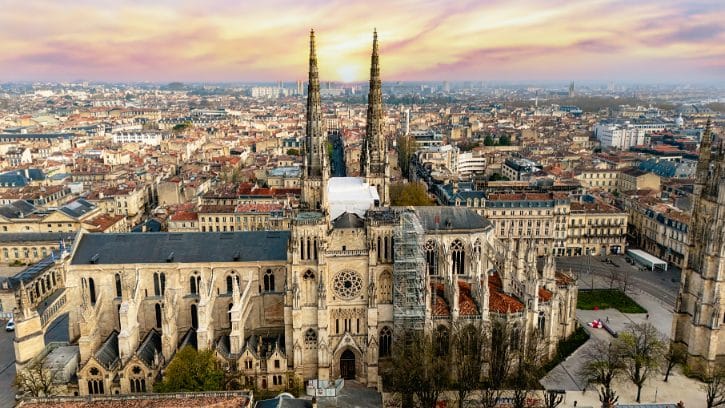
This Gothic cathedral is the largest religious building in the city.
It holds deep historical significance. Eleanor of Aquitaine married the future King Louis VII here in 1137.
What to expect: A majestic facade, soaring interiors, and centuries of French royal history. The cathedral sits in the heart of the city, making it easy to visit while exploring nearby landmarks.
i. Tour Pey Berland
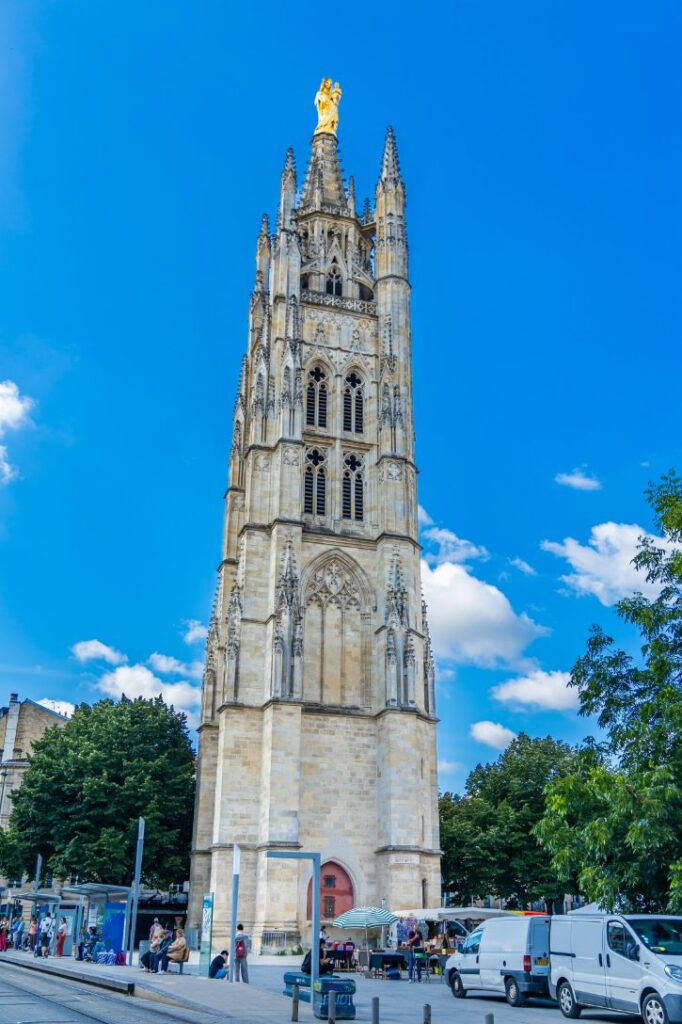
Standing separate from the cathedral, this bell tower was built between 1440 and 1450.
The tower was intentionally constructed apart from the main building so the vibrations from the massive bells wouldn’t damage the cathedral’s structure.
What to expect: Climb 229 narrow spiral steps to reach the panoramic terrace at 47 meters high. Trust me, the rooftop views of Bordeaux are worth every step.
j. Stroll Rue Sainte-Catherine
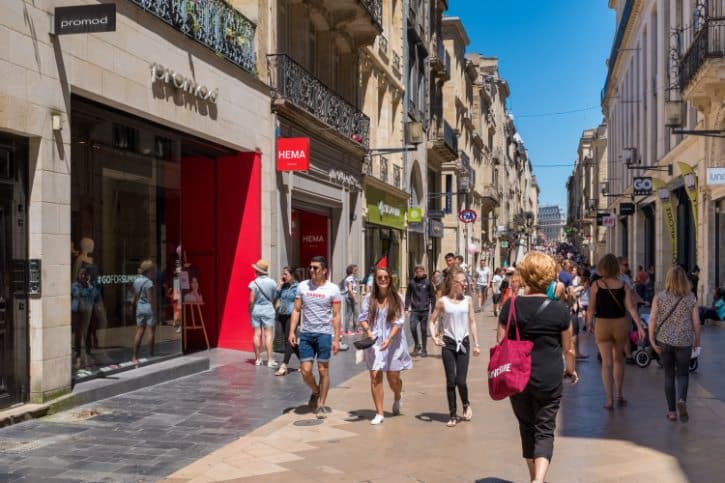
Stretching 1.2 kilometers from Place de la Comédie to Place de la Victoire, this is the longest pedestrian shopping street in Europe.
It follows the path of the original Roman north-south axis of the city.
What to expect: A lively corridor of shops, local boutiques, and cafes. It connects many of the city’s landmarks and always buzzes with energy.
k. Cité du Vin
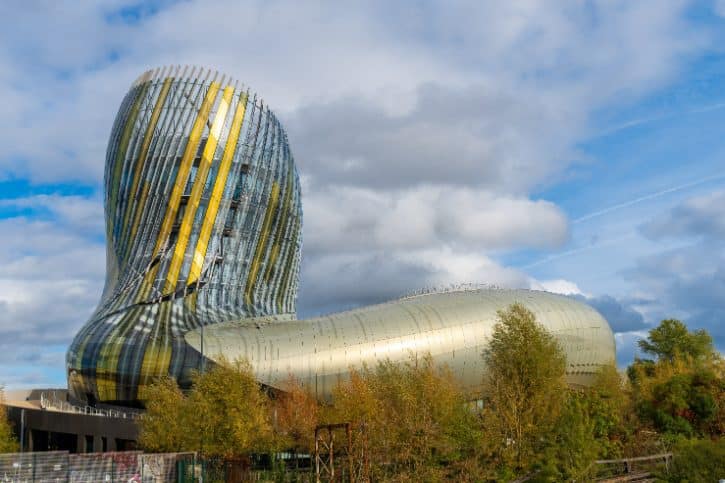
This isn’t your typical wine museum.
Located in the Bacalan district, Cité du Vin is an immersive experience center that explores wine as a cultural phenomenon. The building itself is stunning, with a curved gold-and-silver exterior meant to resemble wine swirling in a glass.
What to expect: Interactive exhibits, a digital guide, and a visit to the 8th-floor Belvedere with 360-degree views of the city. Your ticket includes a tasting from one of 50 global wine regions.
l. Bassins des Lumières
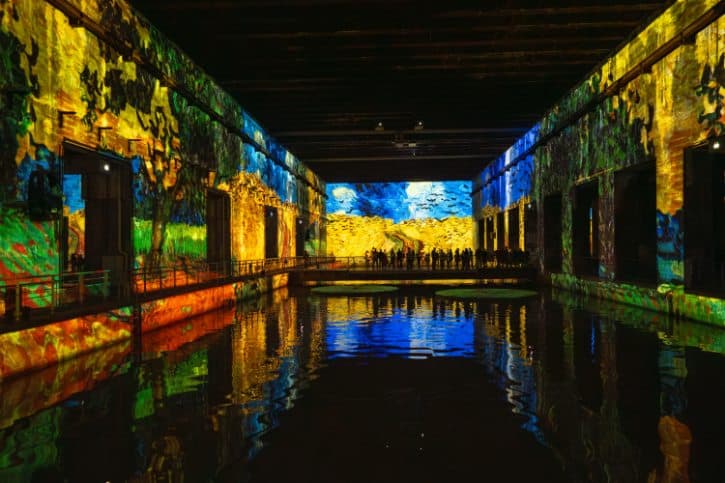
Housed in a former World War II submarine base, this is now the world’s largest digital art center.
The massive concrete chambers that once sheltered Nazi U-boats are now transformed into immersive light show canvases.
What to expect: Monumental projections of masterworks onto walls and water.
3. A City That Feels Like Paris, Without the Crowds
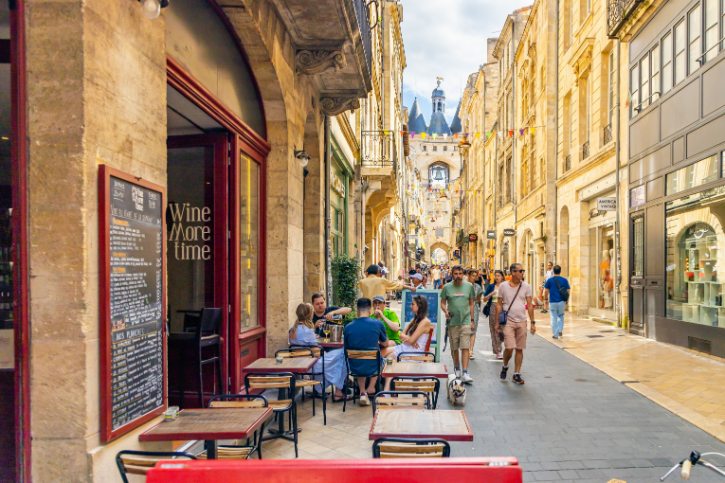
Bordeaux is often called “Little Paris”, and it’s easy to see why.
The Golden Triangle district features grand boulevards, high-end boutiques, and elegant mansions that rival anything in the French capital.
Both cities share a heritage of 18th-century architecture.
Here’s the difference.
Bordeaux is a city built on a human scale. You can walk between major monuments in 20 minutes. There’s no need to spend hours navigating the metro.
The crowd difference is real. While Paris struggles with overtourism, Bordeaux remains “breathable”. Visitor satisfaction scores in 2024 were significantly higher than the European average, specifically because the city is so easy to navigate.
The pace feels different too. Residents move at a slower, more deliberate rhythm. People here are more relaxed, more open to conversation. You won’t find the “metro-work-sleep” intensity of the capital.
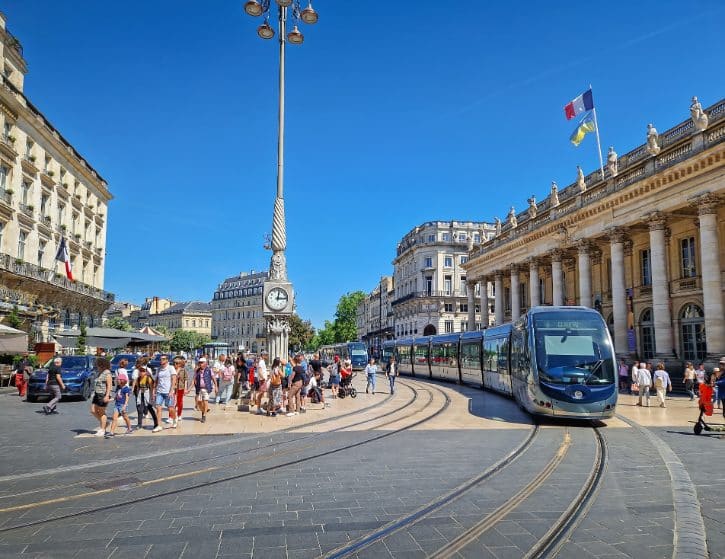
And the city is quieter. No constant sirens. The silent, wire-free tram system keeps noise pollution low.
4. One of the World’s Most Famous Wine Capitals
Bordeaux’s identity is inseparable from wine. But the city has worked hard to make wine culture accessible to everyone, not just experts.
For beginners: La Cité du Vin uses sensory technology to teach you about grape varieties and terroirs without requiring any prior knowledge. It’s genuinely fun, even if you’ve never swirled a glass before.
For casual tastings: The Bar à Vin in the city center offers 30 high-quality local wines by the glass starting at just €3. Knowledgeable sommeliers guide you without any pretension.
For explorers: Enomatic bars like Aux 4 Coins du Vin let you use a card-based system to sample small pours from up to 40 different wines.
For history lovers: The Chartrons district is filled with historic wine merchants and cellars from the 18th-century global trade era.
Understanding Bordeaux Wine
The region produces roughly 80% red wine in two main styles.
- Left Bank (Médoc/Graves): Cabernet Sauvignon-dominant, structured, built for aging, grown in gravelly soil
- Right Bank (St-Émilion/Pomerol): Merlot-dominant, softer and more approachable, grown in clay and limestone
5. A Slower, More Relaxed French Lifestyle
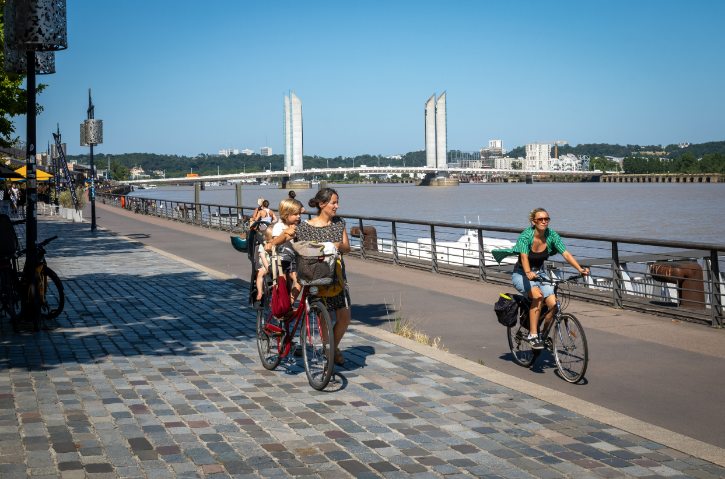
The “Art de Vivre” in Bordeaux centers on the river, green spaces, and an appreciation for the present moment.
a. Riverside Living
The Garonne River shapes daily life here.
The 4-kilometer quays serve as the city’s communal living room. Residents run, cycle, and relax along the water. In neighborhoods like Saint-Pierre and Chartrons, it’s common to see locals spending hours over a single glass of wine on a scenic terrace.
b. Green Spaces
Bordeaux is exceptionally green for a large French city.
The Jardin Public is an 18th-century English-style park with a botanical garden and a lake. It’s perfect for families or solo travelers seeking a peaceful break.
Further out, the Réserve Écologique des Barails covers 156 hectares of wild space within the metropolitan area.
6. Easy Day Trips Most Travelers Don’t Expect
One of Bordeaux’s greatest strengths is its position as a gateway to southwest France.
Regional trains connect you to stunning destinations without needing a car.
a. Saint-Émilion
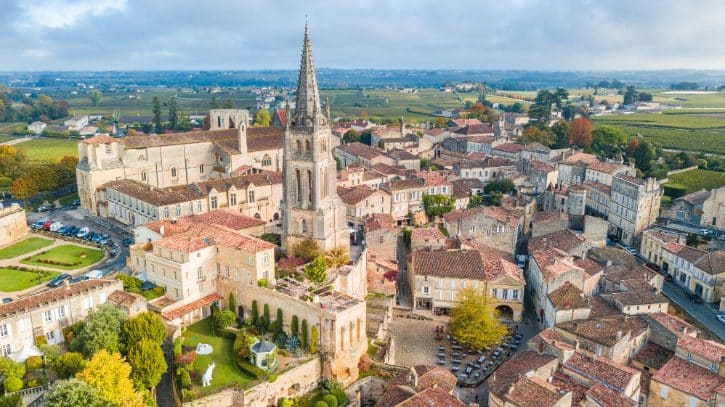
- Why it’s worth visiting: It’s an officially recognized UNESCO cultural landscape, not just a pretty wine village. The vineyard landscape has survived intact and active into the present day.
- How to get there: About 30 to 34 minutes by train from Bordeaux, with multiple daily services.
- What makes it unique: Few places make the “vineyard as heritage” idea so tangible. Churches and monastic history sit alongside vines.
b. Margaux
- Why it’s worth visiting: One of the names that defines Bordeaux for wine lovers. The local appellation welcomes visitors with estates, terroir experiences, and tastings.
- How to get there: Direct trains from Bordeaux Saint-Jean with journeys commonly in the 45 to 50 minute range.
- What makes it unique: An easy option if you want to see the Médoc without renting a car. Visit a château, do a tasting, then return to Bordeaux for dinner.
c. Arcachon Bay
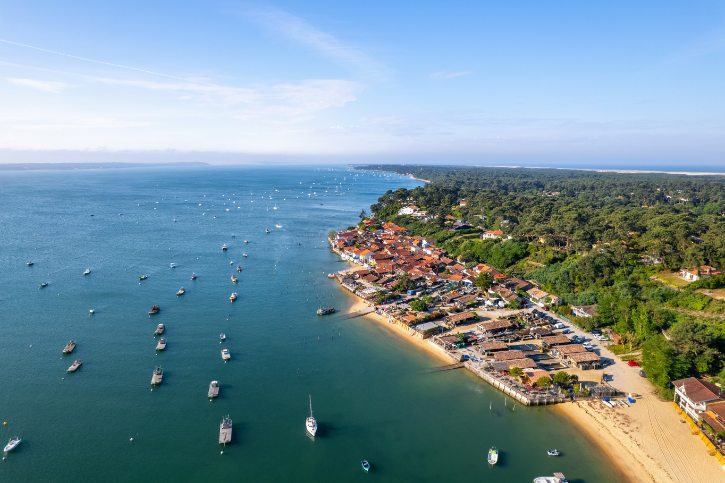
- Why it’s worth visiting: One of the region’s great nature-and-food combinations. Beaches, light, fishing villages, and oyster culture.
- How to get there: Train journey averages around 57 minutes, with the shortest route around 50 minutes.
- What makes it unique: Step off a city train and be in a totally different “France” within an hour. Salt air, seafood, and small harbors lined with oyster cabins.
d. Dune of Pilat
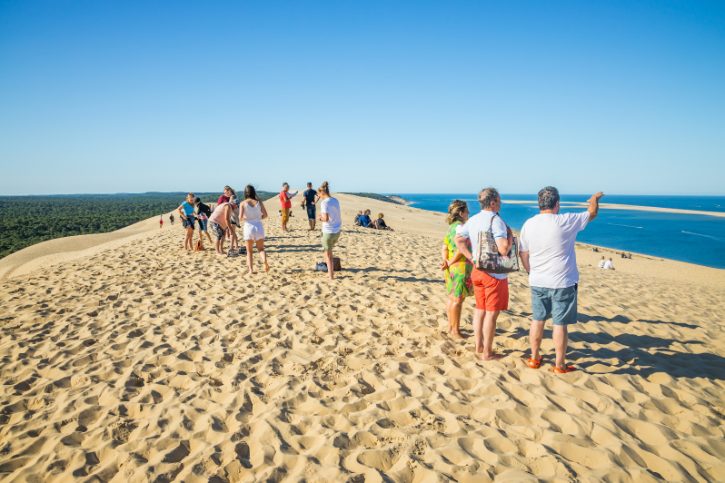
- Why it’s worth visiting: The highest dune in Europe, and it’s constantly shifting. The official site emphasizes the dune’s constant evolution.
- How to get there: From Arcachon station, take the Baïa bus (Line 3 direction Plage de la Salie) and get off at the Dune du Pilat stop in about 25 minutes.
- What makes it unique: Ocean to one side, pine forest to the other, and a scale that makes the walk up feel like a real adventure. Especially beautiful at sunset.
7. Food Scene That Quietly Competes With Paris
Bordeaux’s gastronomy blends the best of land and sea.
While it may not have the sheer volume of Paris, the density of fresh regional specialties is remarkable.
Local Dishes to Try
- The Canelé: A small, fluted cake with a dark caramelized crust and a soft, custardy interior flavored with vanilla and rum
- Arcachon Oysters: A regional obsession, often served with lemon and a small spicy sausage called crépinette
- Entrecôte à la Bordelaise: Rib steak in a rich sauce made with local red wine and shallots
Markets Worth Visiting
Marché des Capucins is essential. It’s a working market where you can sit at communal tables eating oysters, grilled prawns, or artisanal cheeses directly from producers.
On Sundays, the outdoor market along the Chartrons quays is a local favorite for rotisserie chicken and riverside oyster eating.
8. Surprisingly Easy to Explore
Logistics in Bordeaux are refreshingly simple compared to Paris or the French Riviera.
a. Walking
The UNESCO-listed historic center is flat and compact.
You can walk from the main train station (Gare Saint-Jean) to Cité du Vin in about 50–55 minutes along the scenic river quays, passing most major landmarks along the way.
b. Public Transport (TBM)
The tram system is the city’s backbone.
- Line A: Direct link to the airport (45 minutes)
- Line B: Connects the historic center to Cité du Vin and the university
- Line C: Links the train station to the city center and Place de la Bourse
- Line D: Runs through the city center and connects key neighborhoods on both banks of the Garonne
c. Biking
Bordeaux consistently ranks as one of the world’s most bike-friendly cities.
The V3 bike-sharing system has 180 stations. In 2026, the “V3 Predict” feature on the TBM app forecasts bike availability at specific stations up to 12 hours in advance.
Final Thought
Bordeaux is a city that quietly wins you over.
It doesn’t demand attention through hyper-famous landmarks like the Eiffel Tower. Instead, it offers consistent quality, a world-class food and wine scene, and a commitment to sustainable living.
For travelers seeking sophisticated, historical, and deeply relaxed France, Bordeaux isn’t just a stopover anymore.
It’s the destination.