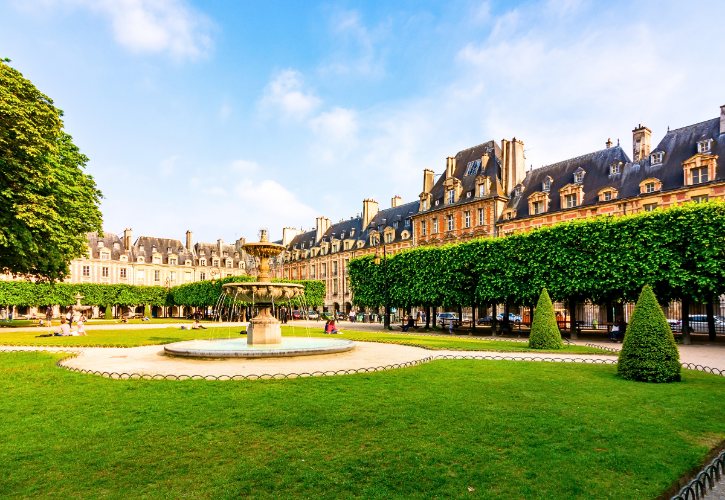
Le Marais is one of those Paris neighborhoods that rewards you the more you explore it.
Behind its winding streets, you will find historic mansions, cozy cafés, world-class museums, food-filled lanes, quiet courtyards, and some of the best boutique shopping in the city.
Whether you are here for a few hours or a full day, this guide walks you through 15 spots that capture what makes Le Marais so special. 😊
1. Carette
a. Why Visit
Carette is one of the most popular café stops in Le Marais.
It sits under the stone arcades at the northeastern corner of Place des Vosges, with an interior designed by Hubert de Givenchy in a refined Louis XVI style.
Gold-trimmed mirrors, marble-topped tables, and classic bistro chairs make it feel elegant but welcoming.
b. What to Try
- The thick, velvety hot chocolate, served with fresh Chantilly cream, is often mentioned as one of the best in Paris.
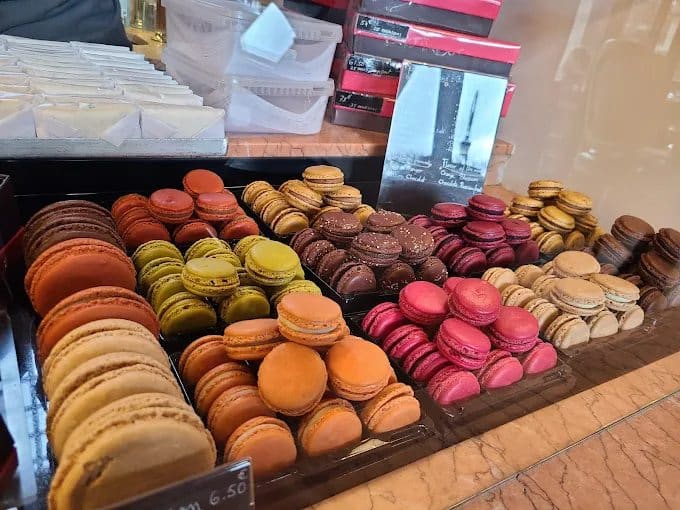
- Flaky croissants, seasonal macarons, and delicate finger sandwiches round out the pastry counter.
- It works well as a breakfast stop, a lunch venue, or an afternoon tea break during a walking route.
c. Tips
- Arrive early in the morning to keep your wait short. Peak afternoon waits, especially on weekends, can exceed 30 minutes.
- Pair this stop with Place des Vosges for a relaxed start to your Le Marais morning.
2. Place des Vosges
a. Why Visit
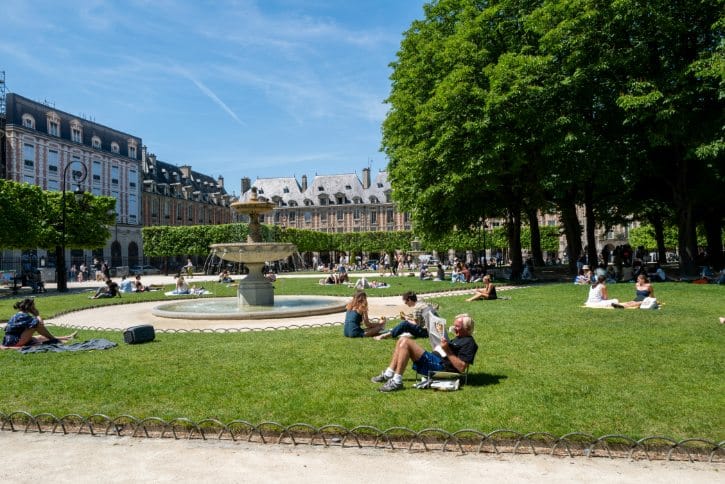
Place des Vosges is the oldest planned square in Paris, commissioned by King Henri IV and opened in 1612.
Its 36 red-brick pavilions with white stone edges and blue-slate roofs follow a style called “brique et pierre”.
The arcades along the perimeter house art galleries, antique dealers, and quiet cafés.
b. What to Notice
- The Pavillon du Roi (south) and Pavillon de la Reine (north) stand taller than the rest and served as the formal entrances to the square.
- The central garden has symmetrical lawns, linden trees, stone fountains, and an equestrian statue of Louis XIII. You are allowed to sit on the grass, which is rare in Paris.
- Street musicians often play under the arcades, and the stone amplifies their sound beautifully.
c. Tips
- Early morning gives the best natural light for photos on the red-brick façades.
- The Maison de Victor Hugo is at number 6. A small corridor in the southwestern corner connects through to the Hôtel de Sully courtyard.
3. Village Saint-Paul
a. Why Visit
Village Saint-Paul is a network of interconnected cobblestone courtyards hidden between Rue Saint-Antoine and the Seine.
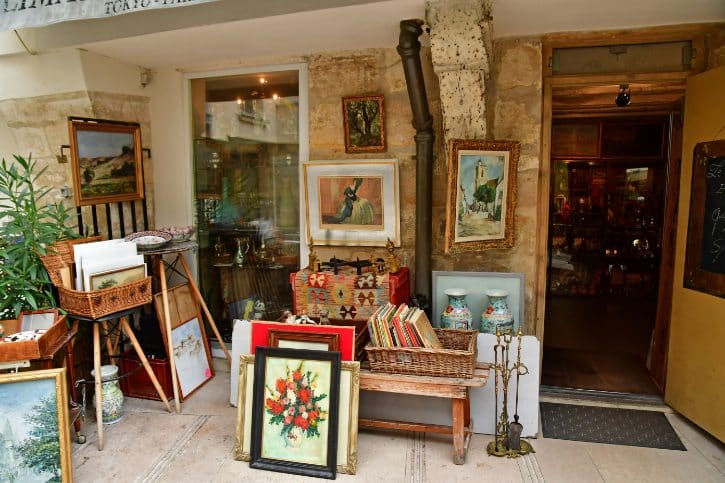
Accessible through narrow stone archways that most visitors walk right past, the courtyards house antique dealers, vintage shops, design studios, and small galleries.
Some buildings here date back to the thirteenth century.
b. What to Expect
- A slower pace and a “cabinet of curiosities” atmosphere, very different from the busier shopping streets.
- Finds ranging from mid-century furniture and medieval art to rare books and one-of-a-kind collectibles.
- Colorful flags and outdoor displays that encourage wandering rather than directed shopping.
c. Best For
- Collectors, antique lovers, and travelers who enjoy quiet corners.
- Anyone looking for a break from the busier parts of Le Marais.
- Take your time. This spot works much better as a slow wander than a fast checklist stop.
4. La Favorite Saint-Paul
a. Why Visit
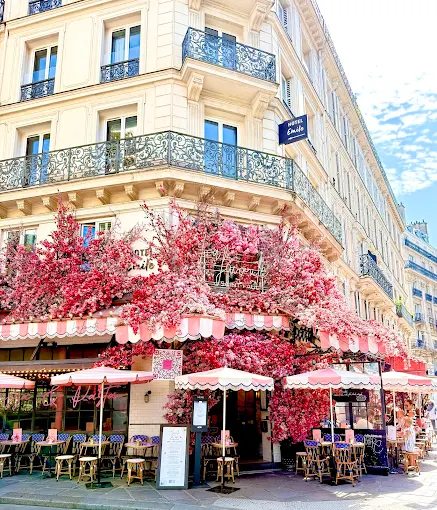
La Favorite Saint-Paul is a colorful brasserie on Rue de Rivoli, close to the Saint-Paul Métro station.
You will notice it from the street thanks to its eye-catching façade covered in pink flowers.
Inside, the décor mixes Parisian and New York influences, with black-and-white checkered floor tiles and a warm, photogenic interior.
b. What to Try
- The brunch menu is one of the main draws, with options like eggs cooked to order, fresh pastries, and artisan bread.
- Coffee, fresh juices, and cocktails are available throughout the day. The Spritz menu is popular during the evening apéro hours.
- It also serves lunch and dinner with a mix of French and international dishes.
c. Best For
- Travelers looking for a relaxed brunch or coffee stop near Village Saint-Paul and Place des Vosges.
- Anyone who enjoys a photogenic café with a lively, welcoming atmosphere.
- It fits naturally into a Le Marais walking route as a casual rest stop between sightseeing.
5. Musée Carnavalet
a. Why Visit
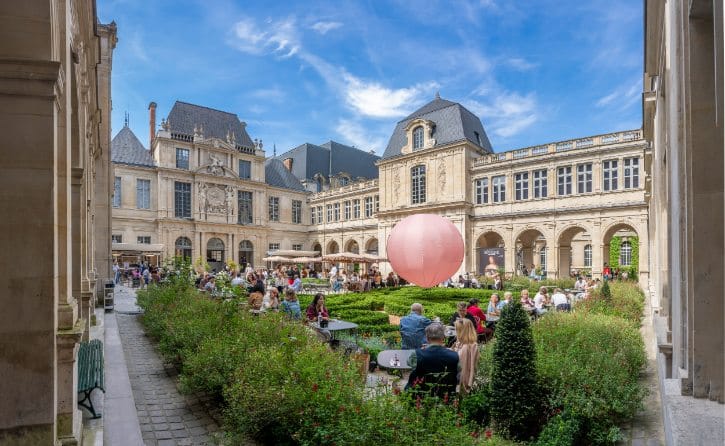
Musée Carnavalet is Paris’s dedicated history museum, covering everything from the prehistoric Seine valley through Roman Lutetia and into modern Paris.
It is housed in two historic mansions dating from 1548 and 1688, and reopened in 2021 after a five-year renovation. The permanent collection is free.
b. What to Look For
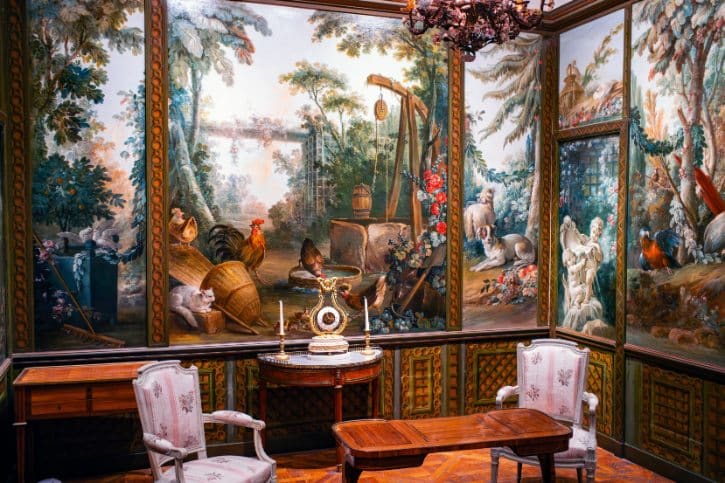
- Period rooms with reconstructed interiors from demolished aristocratic mansions, including ornate Rococo ballrooms.
- A gallery of antique shop signs showing the visual history of Parisian commerce.
- Historical artifacts such as Napoleon’s grooming kit and keys to the Bastille.
c. Tips
- Allow 2 to 4 hours if you want to see the full collection.
- A great indoor stop if the weather turns or you want a cultural break between walks.
- The courtyard garden is a pleasant spot to rest, especially in warmer months.
6. Rue des Francs-Bourgeois
a. Why Visit
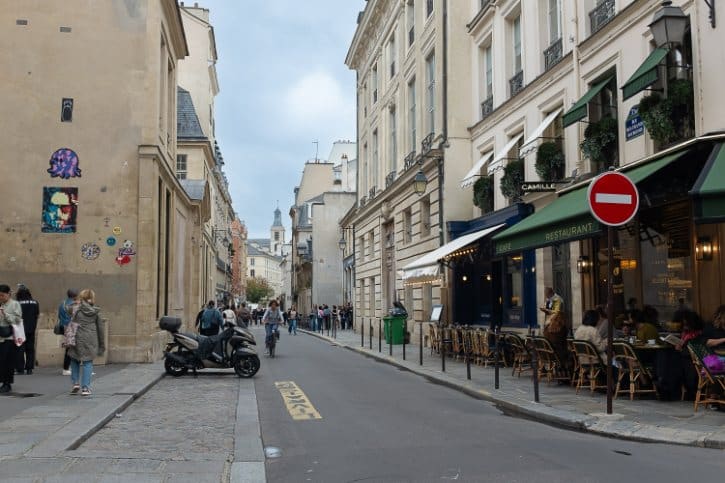
Rue des Francs-Bourgeois is the main artery of Le Marais, lined with high-end perfumeries, boutique fashion labels, and home-décor shops.
But it is also a live gallery of French architectural history.
Look upward as you walk for ironwork balconies, stone carvings, and entrances to hidden courtyards.
b. What to Notice
- The Hôtel de Lamoignon at the corner of Rue Pavée, which houses the Historical Library of the City of Paris.
- The grand entrance to the Hôtel de Soubise.
- Open gates leading to private courtyards, many of which house boutiques inside.
c. Tips
- Treat this as a slow walking route, not a shortcut between attractions. A single block can take a while if you explore the courtyards and side streets.
- Detour down Rue Payenne for the quiet Square Georges Cain, a garden filled with archaeological sculptures.
- This street connects naturally with museums, cafés, and several other spots in this guide, so you will likely walk along parts of it more than once.
7. Rue des Rosiers
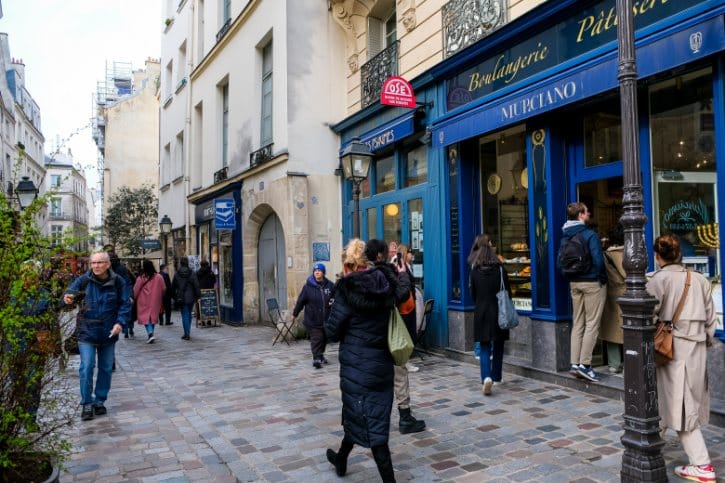
a. Why Visit
Rue des Rosiers is the heart of the Pletzl, Paris’s historic Jewish quarter.
The street’s identity stretches back to the nineteenth century, when Jewish immigrants from Eastern Europe established the bakeries and shops that still define it.
Traditional Hebrew-lettered shopfronts stand alongside modern boutiques, reflecting the layers of change the area has been through.
b. The Food
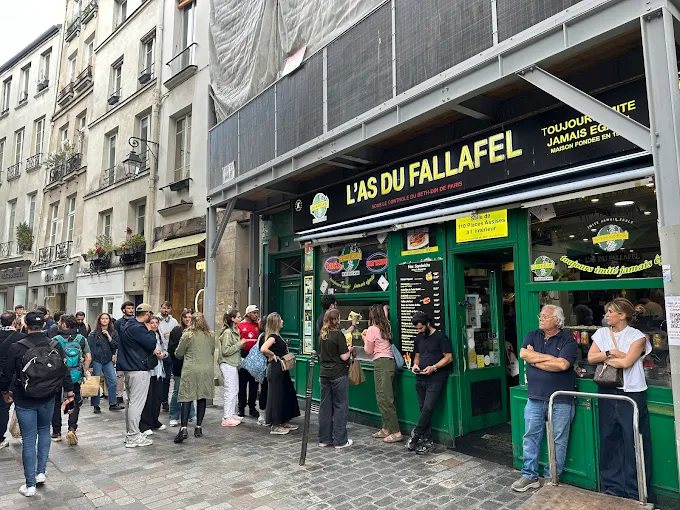
- L’As du Fallafel is the most famous spot, with long queues to match. Chez Hanna nearby offers crunchier falafel with a shorter wait.
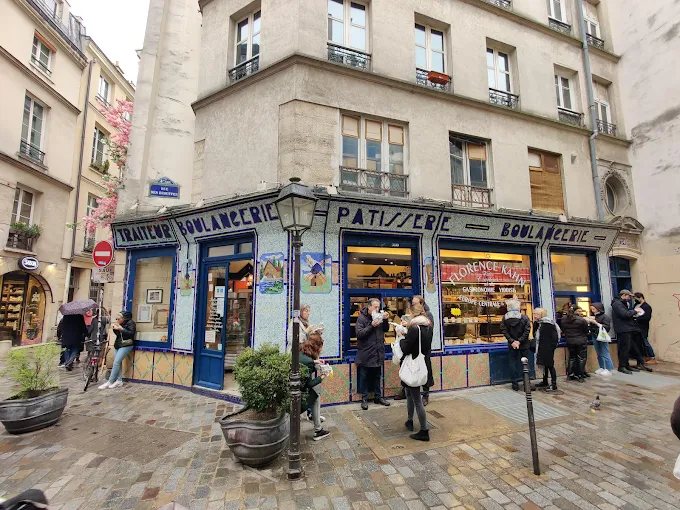
- The Florence Kahn bakery, recognizable by its blue mosaic façade, serves traditional Ashkenazi specialties such as challah, strudel, and pastrami.
- Arrive before the midday rush for shorter queues.
c. What Else to See
- The Jardin des Rosiers Joseph Migneret at number 10, a hidden community garden where you can enjoy takeaway food away from the crowds.
- On nearby Rue Pavée, the Agoudas Hakehilos Synagogue has a unique Art Nouveau façade designed by Hector Guimard.
- Please be respectful. This is both a tourist destination and an active place of worship and community life.
8. Les Philosophes
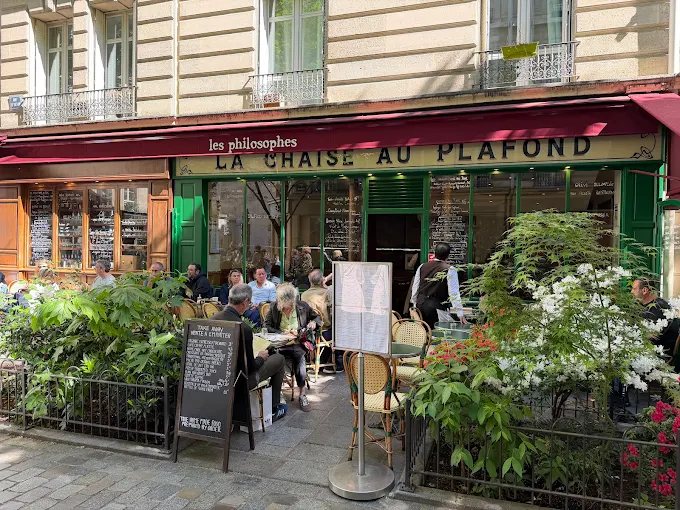
a. Why Visit
Les Philosophes is a well-loved bistro at 28 Rue Vieille du Temple, right in the heart of Le Marais.
It has the feel of a classic 1930s Parisian bistro, with wooden interiors, exposed stone walls, and a lively, bustling atmosphere.
The kitchen is committed to “fait maison” (homemade) cooking using fresh, quality ingredients.
b. What to Try
- The French onion soup is the standout dish and is widely considered one of the best in the neighborhood.
- The duck confit is another popular order, known for its crispy exterior and tender, moist meat.
- The menu is long for a Parisian café, covering everything from organic scrambled eggs and charcuterie to beef bourguignon and large salads.
c. Best For
- Travelers looking for an authentic French bistro meal without the tourist-trap feel.
- The outdoor terrace is a great spot for people-watching on one of Le Marais’s liveliest streets.
- It works well as a lunch stop or a relaxed early dinner during a walking route.
9. Le Ju’
a. Why Visit
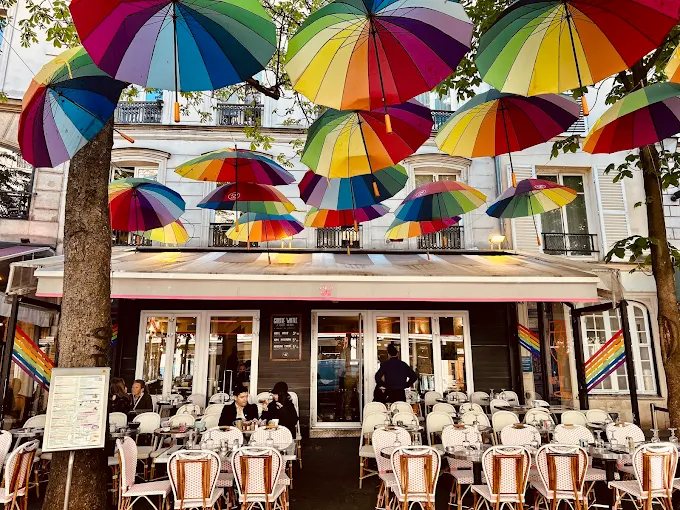
Le Ju’ is a friendly, modern brasserie on Rue des Archives, a few steps from Hôtel de Ville.
You will recognize it by its terrace decorated with colorful umbrellas.
It opened in 2017 and has become a popular spot for locals and visitors, known for its welcoming, inclusive atmosphere and reasonable prices.
b. What to Try
- The breakfast and brunch options are a highlight, with hearty choices like eggs, bacon, fresh croissants, and squeezed orange juice.
- Lunch and dinner menus change with the seasons and include a mix of French classics and international dishes.
- Coffee, cocktails, and Spritz are available throughout the day.
c. Best For
- Travelers looking for a casual, affordable meal in a lively setting.
- The terrace is especially enjoyable for people-watching along Rue des Archives.
- It is a welcoming and inclusive spot, known for its friendly, multilingual staff.
10. Rue Sainte-Croix de la Bretonnerie
a. Why Visit
This street shows the social, expressive side of Le Marais.
Since the late 1970s and 1980s, it has been at the center of Paris’s LGBTQ+ community.
Today you will find rainbow-painted crossings, an eclectic mix of cafés and boutiques, and a festive atmosphere that shifts between day and night.
b. Day vs. Evening
- Daytime: Lifestyle boutiques, café terraces, and unique spots like the bakery Legay Choc, known for playful, inclusive pastry designs.
- Evening: Venues like the Cox Bar and Raidd Bar draw a diverse crowd with DJ sets and a welcoming atmosphere.
c. Best For
- Travelers who enjoy café culture, people-watching, and lively street energy.
- Visitors interested in how history and modern social movements come together in one neighborhood.
11. Hôtel de Soubise
a. Why Visit
In French architecture, “hôtel” means a grand private mansion, not a place to sleep.
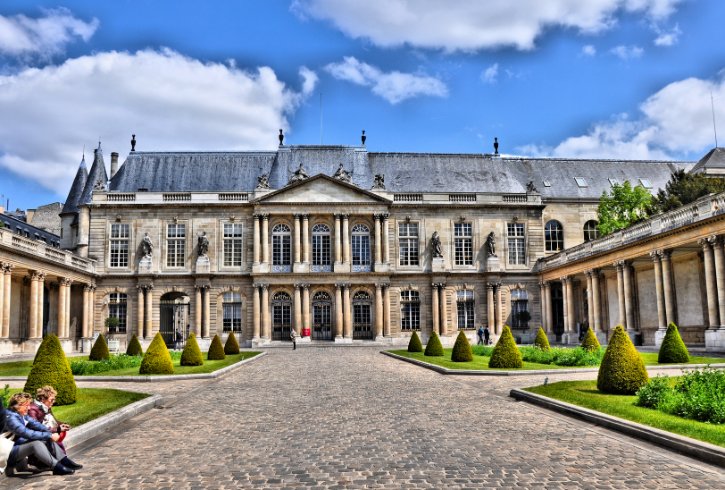
Hôtel de Soubise is one of the finest examples in Le Marais and has served as the headquarters for the French National Archives since 1808.
The entrance opens into a grand semicircular courtyard flanked by double colonnades.
b. What to See
- The Salon de la Princesse, an extraordinary Rococo room with ceiling paintings by Charles-Joseph Natoire, considered one of the finest examples of eighteenth-century French decorative art.
- The Musée des Archives Nationales, which displays significant documents including the last letter written by Marie Antoinette.
- The recently renovated gardens, which connect to the neighboring Hôtel de Rohan and offer a quiet escape from the busy streets.
c. Best For
- Visitors who enjoy architecture, French history, and quieter cultural stops away from the famous museums.
- The courtyard is free to visit and is a peaceful place to admire the building.
12. Rue Vieille du Temple
a. Why Visit
Dating back to at least 1250, Rue Vieille du Temple connects the busier lower Marais with the trendier “Haut Marais” to the north.
Medieval gabled houses stand alongside modern boutiques, respected bistros, and contemporary art galleries.
b. What to Look For
- Les Philosophes at number 28, a popular bistro known for homemade cooking and excellent onion soup.
c. Tips
- Walk slowly. This is not a street to rush through on your way somewhere else.
- Early evening is especially pleasant, when street lamps light up the stone walls and terraces fill with locals.
- The street leads naturally toward the Picasso Museum, Rue des Rosiers, and Rue de Bretagne.
13. Musée National Picasso-Paris
a. Why Visit
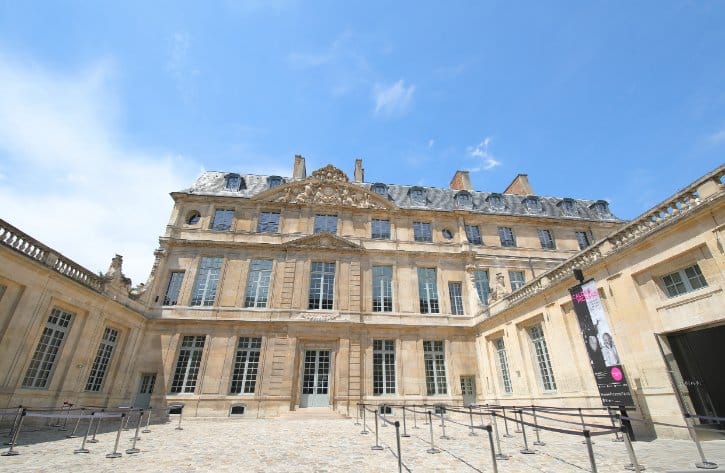
The Picasso Museum is housed in the Hôtel Salé, an impressive seventeenth-century mansion named after its original owner, who made his fortune collecting the salt tax.
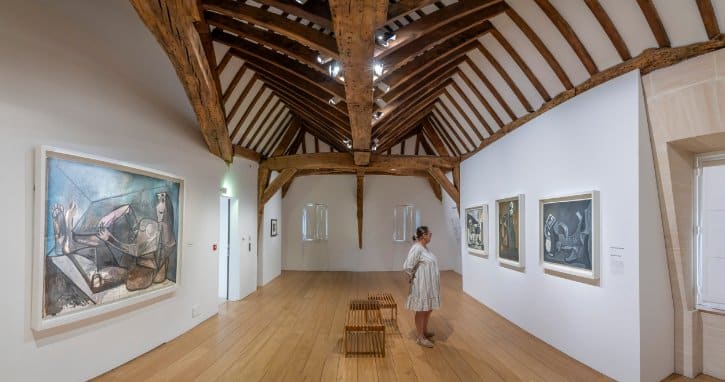
The collection includes over 5,000 works spanning paintings, sculptures, drawings, prints, and ceramics, tracing Picasso’s evolution from the Blue and Rose periods through Cubism and beyond.
b. What to See
- Notable works include the 1937 Portrait of Dora Maar, the 1938 Maya with Doll, and the 1951 Massacre in Korea.
- The grand Baroque staircase is worth seeing for its mid-seventeenth-century stone carving alone.
- A rooftop café offers views over the historic rooftops of Le Marais.
c. Tips
- Allow about 2 hours to explore the collection and building.
- After your visit, stroll down Rue de Thorigny for small independent art galleries that complement the Picasso collection.
14. Rue de Bretagne
a. Why Visit
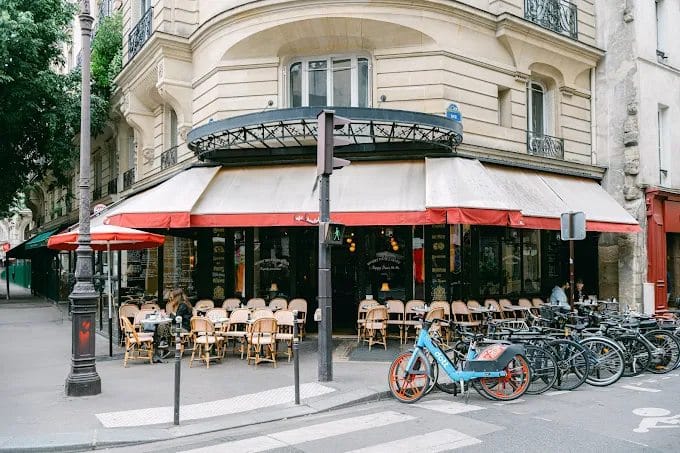
Rue de Bretagne shows you the more local, lived-in side of Le Marais.
Running through the “Haut Marais”, it is where many residents do their daily shopping.
Instead of fashion boutiques, you will find quality food shops, bakeries, fromageries, and neighborhood brasseries like Café Charlot.
b. How It Differs
- The atmosphere is noticeably more relaxed and local compared with Rue des Francs-Bourgeois.
- The vibe is what Parisians call “bobo” (bourgeois-bohemian), with brocantes (street flea markets) held throughout the year.
- This is a destination for quality daily life rather than luxury shopping.
c. Best For
- Food lovers and café people who want a more local pace.
- Gathering picnic supplies like fresh bread, seasonal fruit, and artisanal cheese.
- It is also the natural starting point for visiting Marché des Enfants Rouges, which sits just off the street.
15. Marché des Enfants Rouges
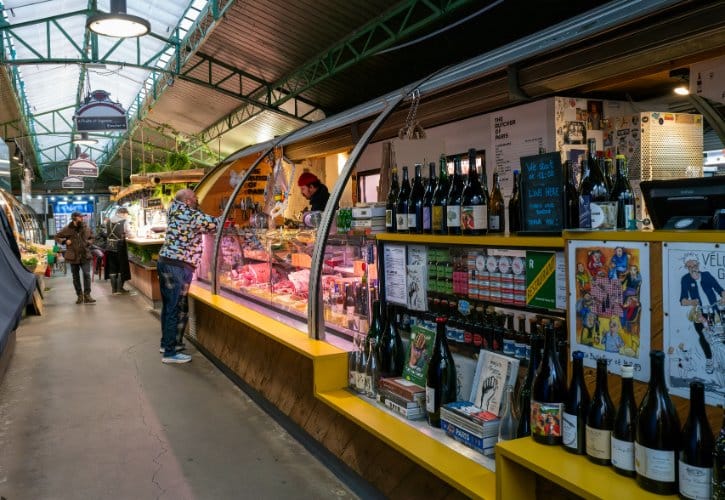
Marché des Enfants Rouges: Closed Due to Fire Damage 🙁
a. Why Visit
Marché des Enfants Rouges is the oldest covered food market in Paris, established in 1615.
Its name, “Market of the Red Children”, comes from a nearby sixteenth-century orphanage where children were dressed in red coats as a symbol of charity.
The market nearly disappeared in the 1990s, but community efforts saved it, and it has since been revitalized into one of the most vibrant food destinations in the city.
b. What You Will Find
- A global mix of food stalls: Moroccan tagines, Japanese bento boxes from Chez Taeko, Caribbean creole plates, modern Breton crêpes, and French bistro classics.
- Communal wooden tables where everyone sits together in a relaxed, unpretentious atmosphere.
c. Tips
- Walk the entire market first before deciding what to eat, so you can see all the options.
- Weekdays are generally less crowded than weekends.