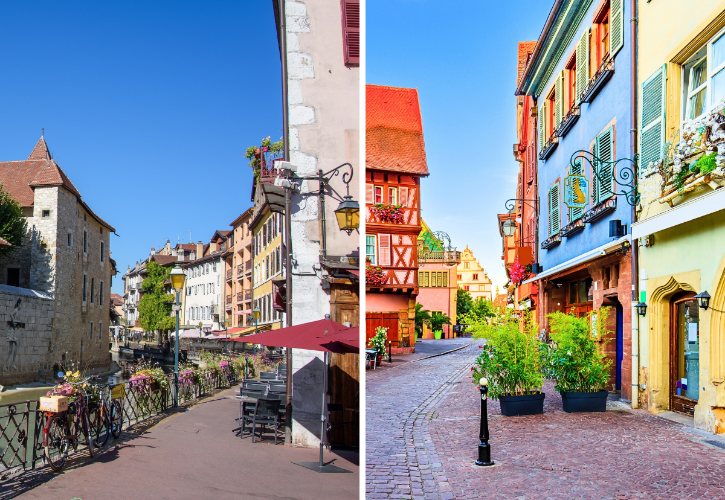
Paris is wonderful, but it’s only one piece of France. Beyond the capital, you’ll find cities with alpine lakes, medieval canals, Roman heritage, and world-class vineyards.
These places offer something Paris simply cannot: a slower pace, preserved history, and a more intimate look at French life.
If you’re ready to go deeper, here are five cities that deserve a spot on your itinerary. 😊
1. Annecy
a. Why This City Is Special
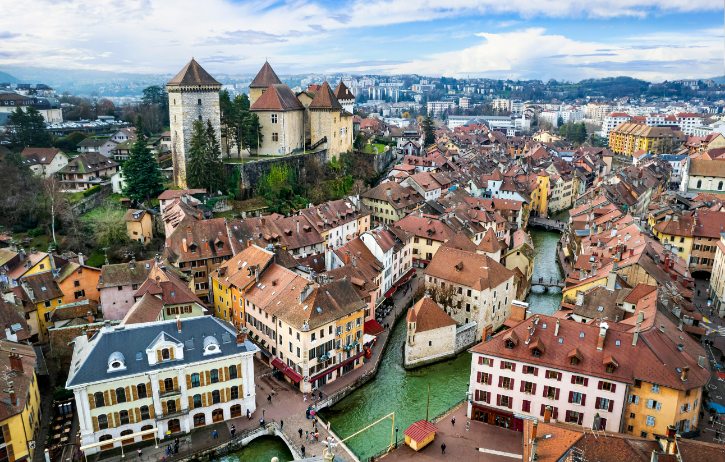
Annecy is often called the “Venice of the Alps”, and once you see it, you’ll understand why.
The old town is laced with canals fed by the Thiou River, one of the shortest rivers in Europe.
Colorful medieval buildings line the water, and behind them, the French Alps rise dramatically.
What makes Annecy stand out is Lake Annecy, one of the cleanest lakes in Europe. Its turquoise waters set the pace here. Everything feels calm, scenic, and refreshingly natural.
Unlike many Alpine towns that focus only on skiing, Annecy thrives year-round. It has deep roots in Savoyard culture and even hosts the world-famous Annecy International Animation Film Festival.
b. Best Things to Do
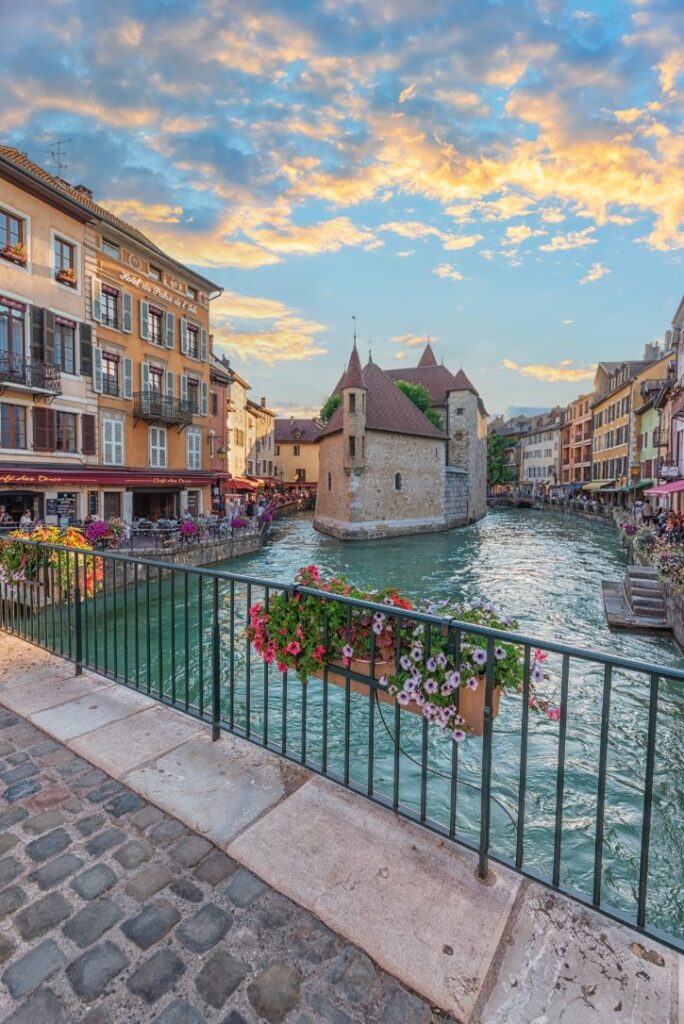
- Visit the Palais de l’Îsle. This 12th-century fortress sits on a tiny island in the middle of the canal. It’s the most photographed spot in town, and today it houses a small museum on local history.
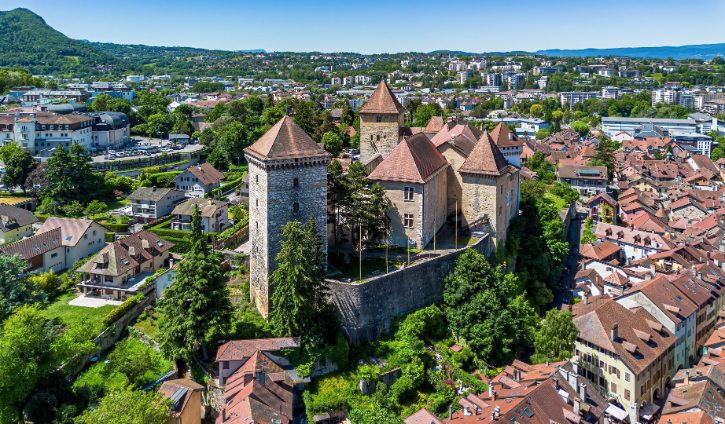
- Explore the Château d’Annecy. Perched on a hill above the old town, this castle was once home to the Counts of Geneva. The views from the ramparts are incredible.
- Cruise or cycle around Lake Annecy. Take a boat tour for panoramic Alpine views, or rent a bike and ride the Greenway path that hugs the shoreline.
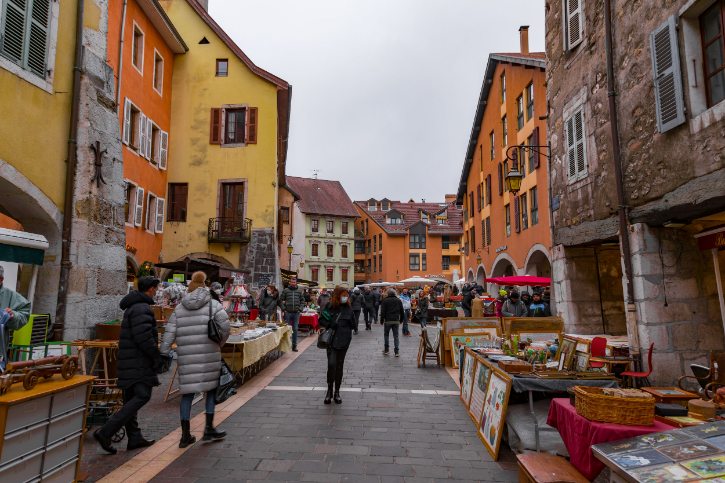
- Wander the Old Town markets. On Tuesdays, Fridays, and Sundays, the streets fill with vendors selling Reblochon cheese, local charcuterie, and fresh produce.
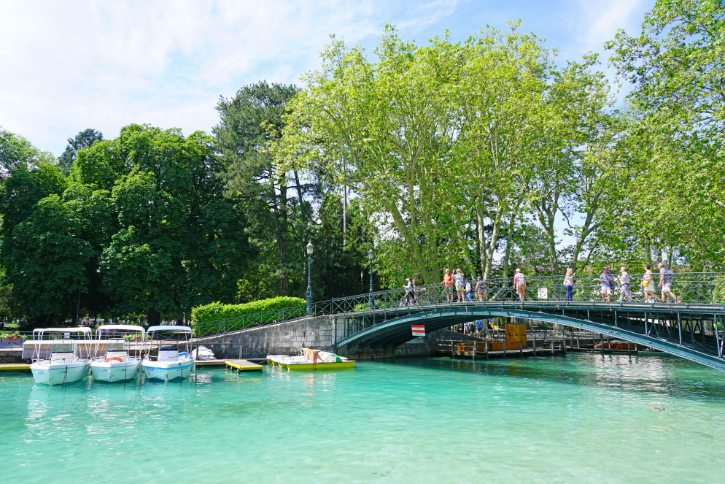
- Stroll the Pont des Amours and Jardins de l’Europe. This romantic bridge offers one of the best views in the city, looking down a tree-lined canal toward the lake and mountains.
c. Suggested How Long to Stay
- 1 day is enough to see the Old Town, the Palais de l’Îsle, and the château.
- 2 to 3 days lets you add a lake cruise, a bike ride on the Greenway, or a hike into the surrounding mountains. Trust me, the extra time is worth it.
Read More: A Complete Guide to Annecy
2. Colmar
a. Why This City Is Special
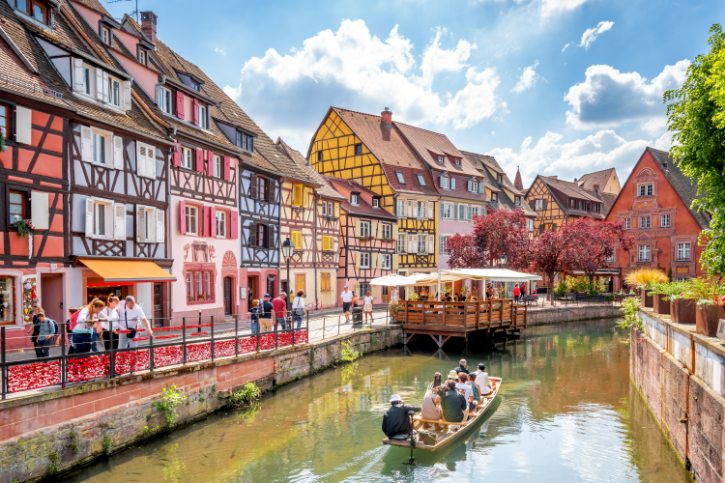
Colmar feels like stepping into a storybook.
This small city in Alsace is famous for its colorful half-timbered houses, flower-lined canals, and a district called “Little Venice”. It’s the kind of place where you’ll want to take a photo around every corner.
Colmar sits at the crossroads of French and Germanic culture. You’ll notice it in the architecture, the food, and even the local wines.
As the Capital of Alsatian Wines, it’s a gateway to the famous Alsace Wine Route.
Art lovers will want to visit the Unterlinden Museum, home to the Isenheim Altarpiece, a masterpiece of German Renaissance painting. And if you visit during the holidays, Colmar’s Christmas markets are among the most magical in Europe.
b. Best Things to Do
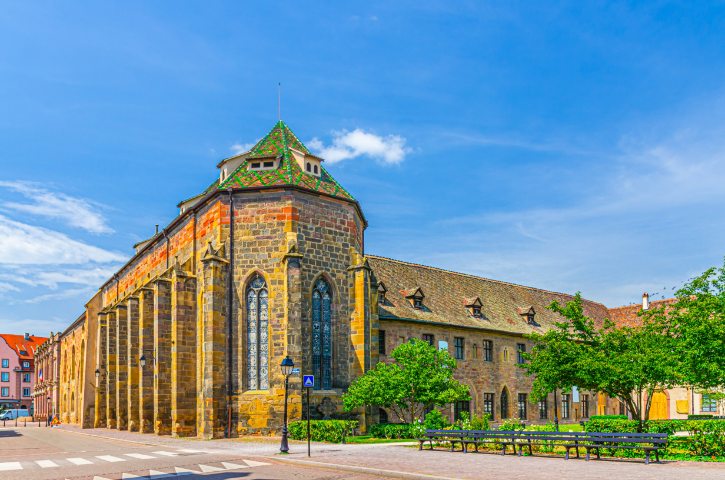
- See the Isenheim Altarpiece at the Unterlinden Museum. Housed in a 13th-century convent, this painting is one of the most important works of Renaissance art.
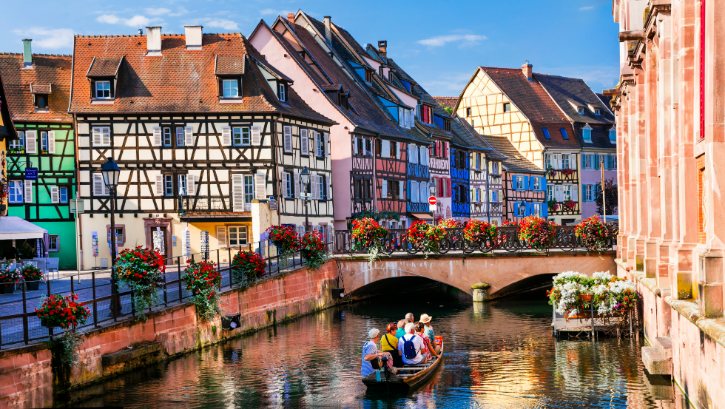
- Take a boat tour through Little Venice. Traditional flat-bottomed boats glide past half-timbered houses and lush riverbanks. It’s the best way to see this picturesque district.
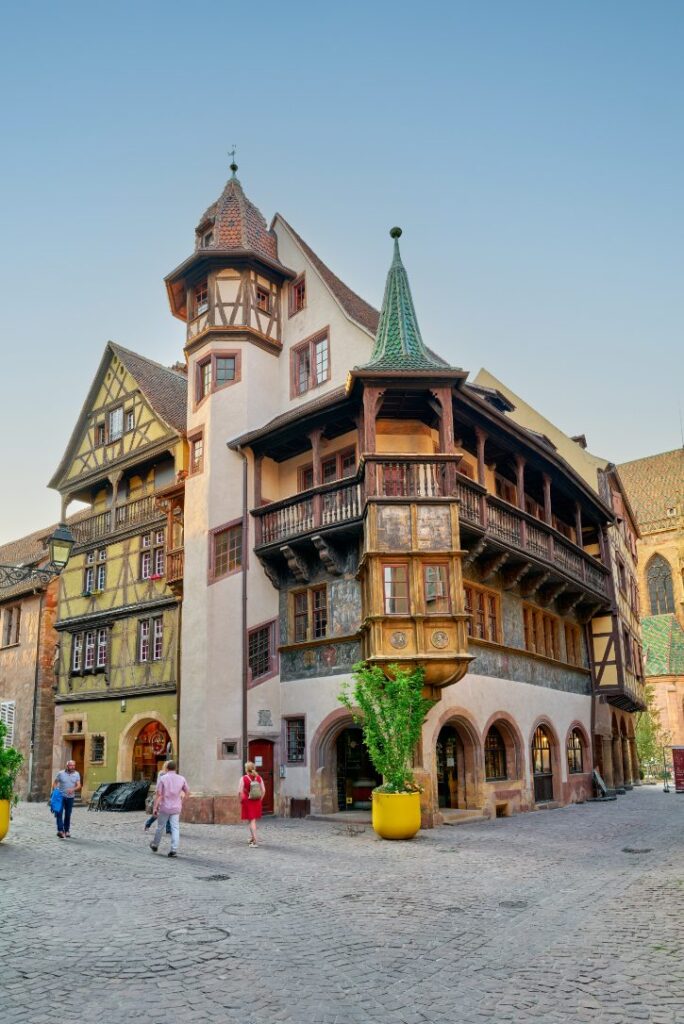
- Admire the Maison Pfister and Maison des Têtes. These two landmark houses showcase Alsatian architecture at its finest. The Maison des Têtes alone has 111 sculpted heads on its facade.
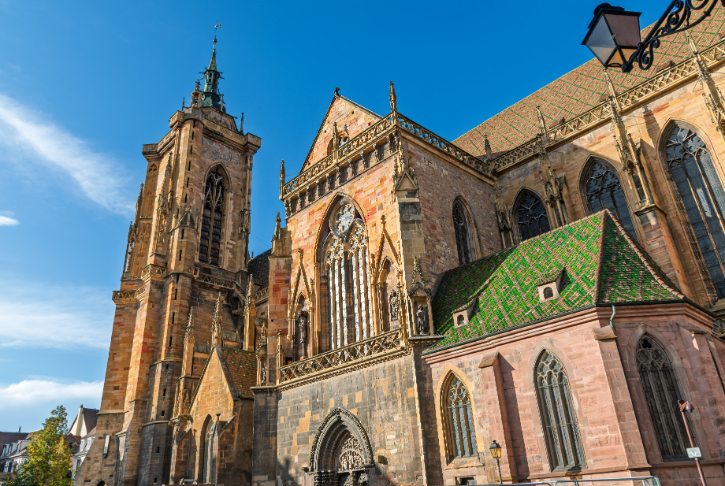
- Visit the Collégiale Saint-Martin. This impressive Gothic church, built from yellow sandstone, is one of the most important historic religious buildings in Colmar.
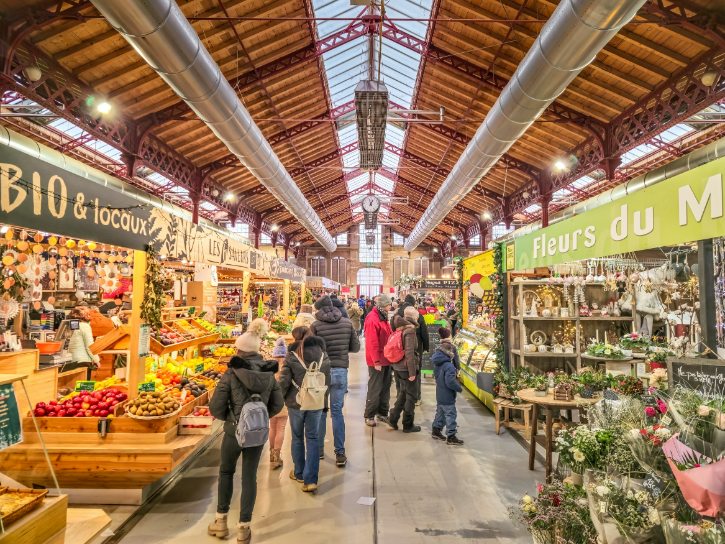
- Explore the Covered Market. Sample local specialties like Kougelhopf, Munster cheese, and artisanal charcuterie from a range of local vendors.
c. Suggested How Long to Stay
- 2 days is ideal. Spend one day in the historic center and Little Venice, and another at the museums.
- 3 to 4 days lets you use Colmar as a base to explore nearby villages like Riquewihr and Eguisheim, or visit the Haut-Koenigsbourg Castle.
Read More: A Complete Guide to Colmar
3. Avignon
a. Why This City Is Special
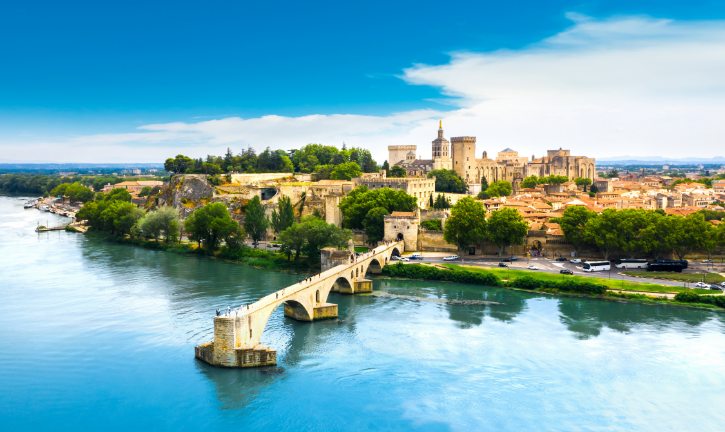
Avignon was once the center of the Catholic world.
In the 14th century, nine popes ruled from here, and they left behind the Palais des Papes, the largest Gothic palace in the world.
The building dominates the skyline and gives the city an unmistakable sense of history and power.
Surrounded by 4.3 kilometers of medieval walls, Avignon’s historic center is a UNESCO World Heritage site.
Inside those ramparts, you’ll find narrow medieval streets, hidden gardens, and elegant townhouses.
But Avignon isn’t stuck in the past. Every July, it hosts the Festival d’Avignon, one of the world’s most important performing arts festivals.
The city sits along the Rhône River, close to Provençal vineyards and lavender fields.
b. Best Things to Do
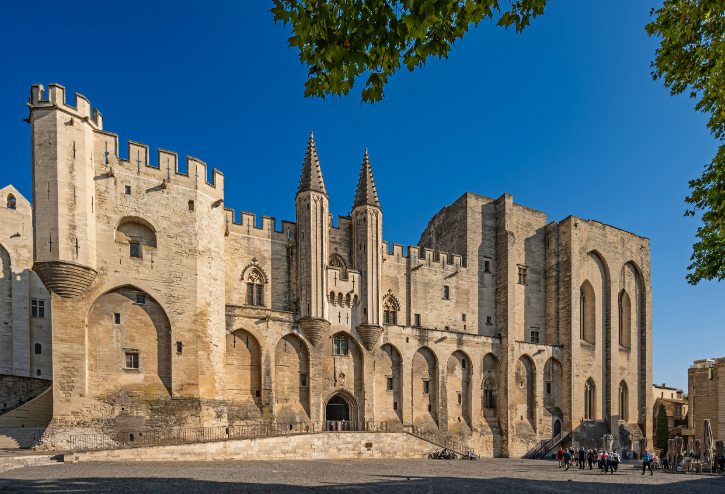
- Tour the Palais des Papes. This massive 14th-century palace was both a fortress and a papal residence. Use the Histopad tablet to see the interiors as they looked in the 1300s.
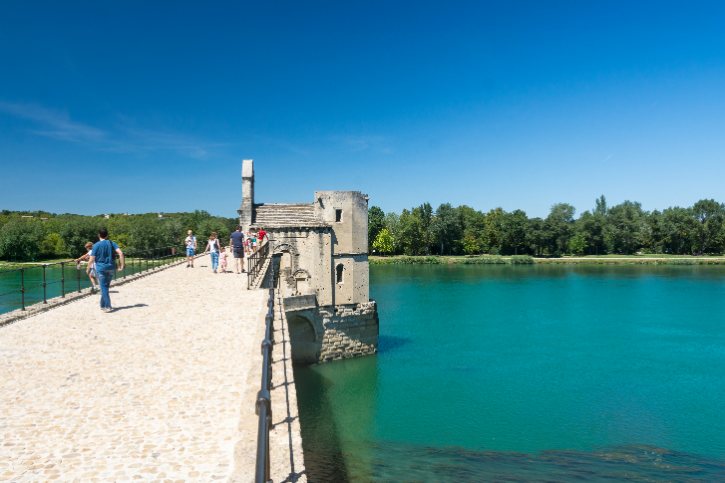
- Walk onto the Pont Saint-Bénezet. You might know it from the song “Sur le Pont d’Avignon”. Only four arches remain, but the views of the city and river are beautiful.
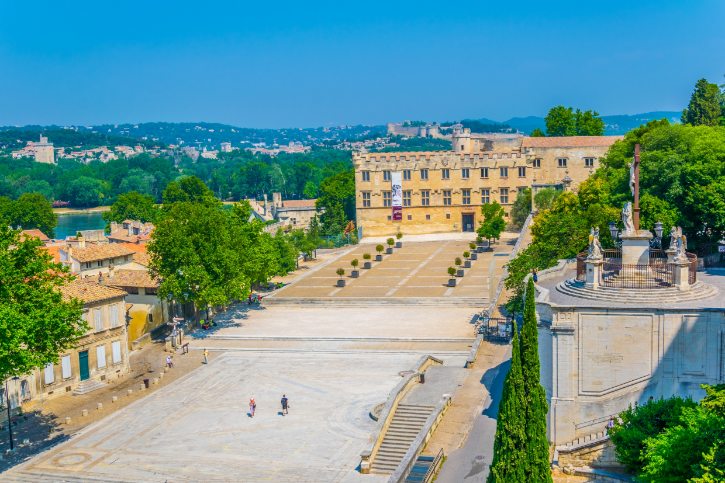
- Visit the Petit Palais Museum. This former archbishop’s residence holds an exceptional collection of medieval and Italian Renaissance paintings.
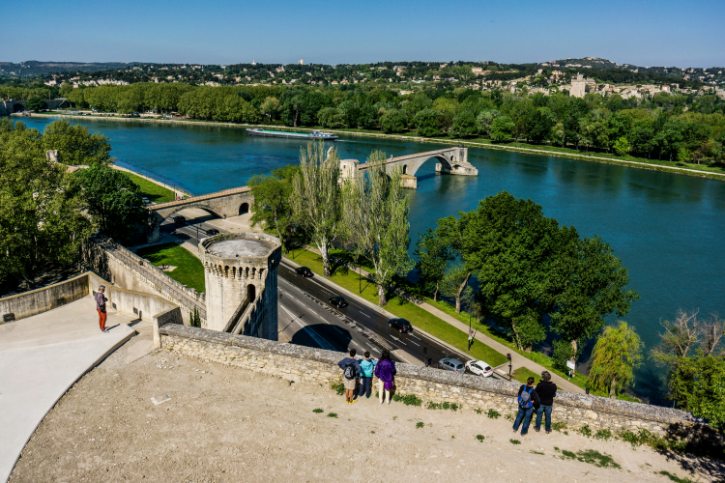
- Explore the ramparts and Rocher des Doms. Walk along the ancient walls and climb to the rocky gardens above the city for panoramic views of the Rhône Valley.
- Browse Les Halles and stroll Rue des Teinturiers. The covered market is perfect for Provençal products, and the nearby “street of the dyers” is one of the most atmospheric areas in town.
c. Suggested How Long to Stay
- 1 day (24 hours) covers the Palais des Papes, the bridge, and the cathedral.
- 2 days (48 hours) gives you time for the museums, the market, and a visit to Barthelasse Island or the medieval village across the river.
4. Bordeaux
a. Why This City Is Special
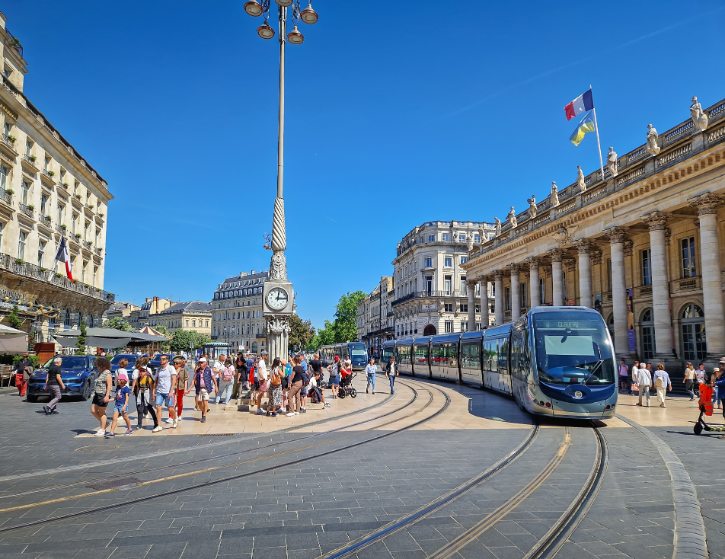
Bordeaux is France’s wine capital, but it’s so much more than that.
Known as the “Port of the Moon” for its crescent-shaped harbor on the Garonne River, the city has the largest urban UNESCO World Heritage site in the world.
Its 18th-century architecture is remarkably unified, with elegant neoclassical squares and over 347 protected buildings.
In recent years, Bordeaux has transformed its riverfront into a pedestrian paradise.
The industrial quays are now home to promenades, reflecting pools, and futuristic museums like La Cité du Vin.
Whether you’re exploring the grand opera house or cycling along the river, Bordeaux balances historic weight with modern energy. And yes, the wine is exceptional.
b. Best Things to Do
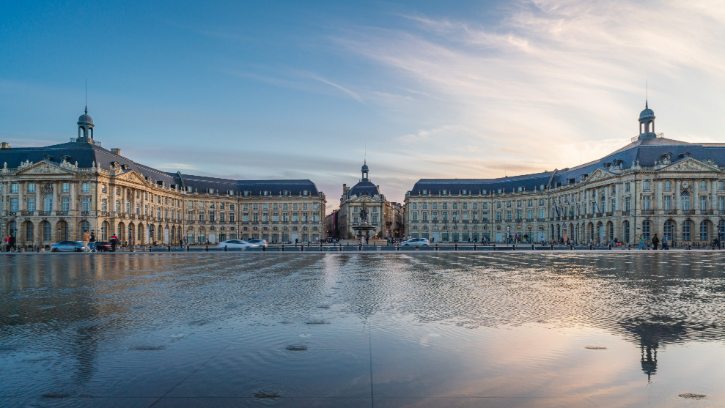
- Stand at the Water Mirror (Miroir d’Eau). This is the world’s largest reflecting pool, right across from the stunning Place de la Bourse. It’s the most photographed spot in the city.
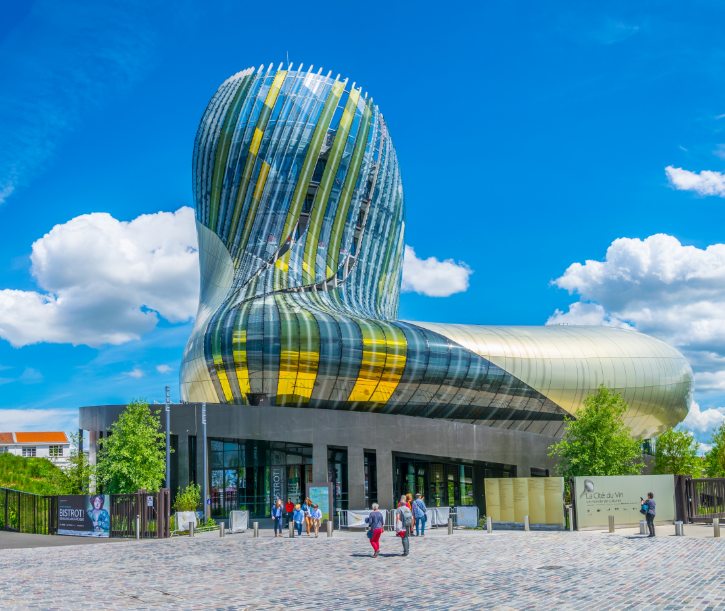
- Visit La Cité du Vin. This futuristic museum explores the global heritage of wine through immersive exhibits. Don’t miss the panoramic views and wine tasting on the 8th floor.
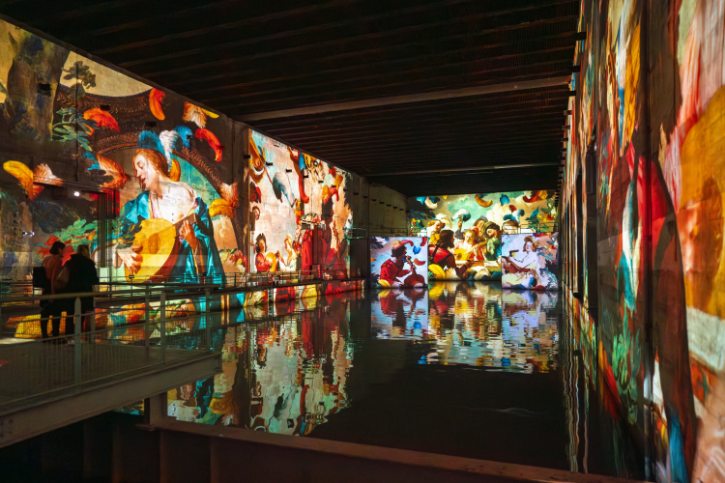
- Experience the Bassins des Lumières. Housed in a WWII submarine base, this is the world’s largest digital art center. Immersive projections cover the walls and water.
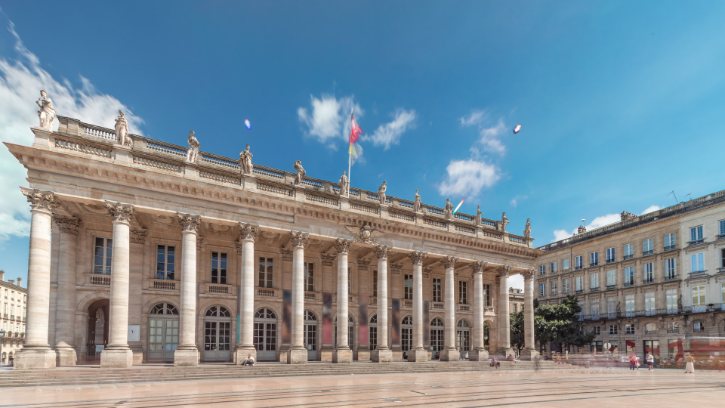
- See the Grand Théâtre. This 18th-century opera house, with its 12 Corinthian columns and ornate interior, inspired the Opéra Garnier in Paris.
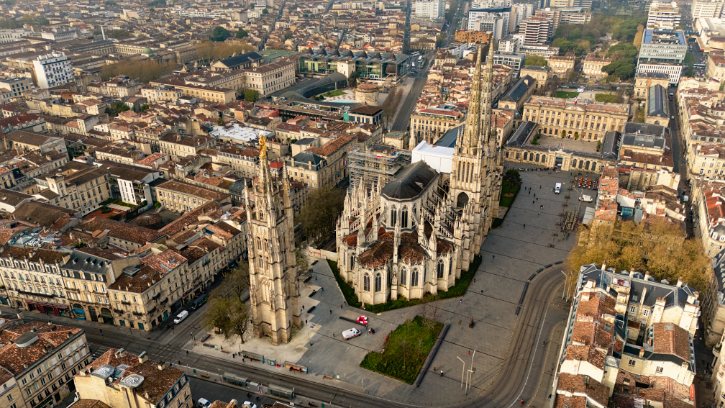
- Climb the Pey-Berland Tower. Next to the Gothic Cathédrale Saint-André, this detached bell tower offers the best views of Bordeaux’s rooftops and the river.
c. Suggested How Long to Stay
- 2 days is enough to explore the historic center, the major museums, and the riverfront.
- 3 to 4 days lets you take a half-day trip to the vineyards of Saint-Émilion or the coastal Dune du Pilat near Arcachon. Highly recommended if you have the time.
Read More: A Complete Guide to Bordeaux
5. Strasbourg
a. Why This City Is Special
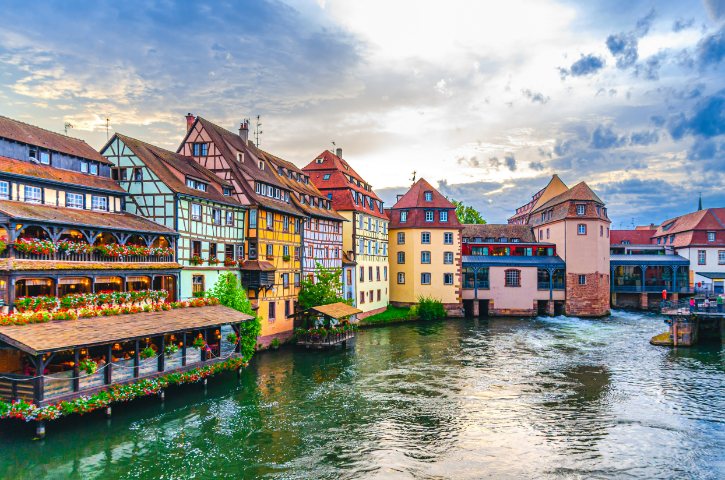
Strasbourg is where France meets Germany.
Centuries of shifting borders have given this city a unique blend of cultures. You’ll see it in the half-timbered houses, the hearty Alsatian cuisine, and the bilingual street signs.
The historic Grande Île was the first city center in France to be listed as a UNESCO World Heritage site.
Its crown jewel is the Strasbourg Cathedral, built from pink sandstone. Victor Hugo called it a “gigantic and delicate marvel”.
Today, Strasbourg is also one of the capitals of Europe, home to the European Parliament and the Council of Europe.
And if you visit in December, the city transforms into the Capital of Christmas, with France’s oldest and most beloved Christmas market.
b. Best Things to Do
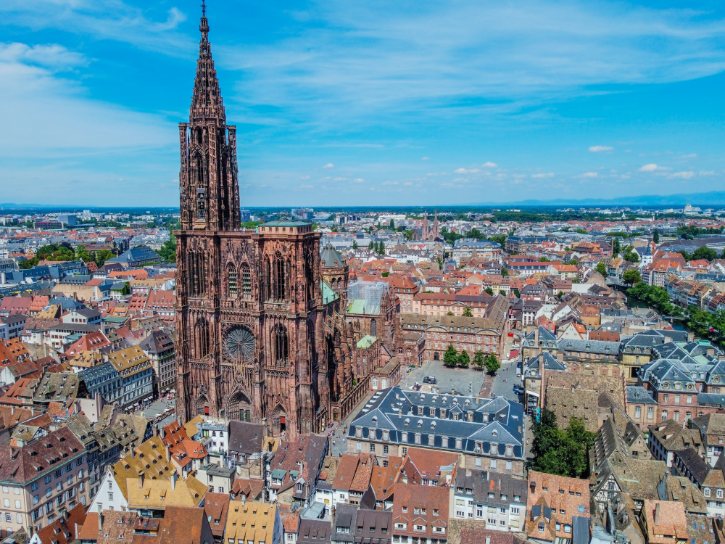
- Marvel at the Strasbourg Cathedral. This Gothic masterpiece took over 200 years to build. Inside, don’t miss the astronomical clock and the stunning stained-glass windows. Climb the 330 steps for views to the Black Forest.
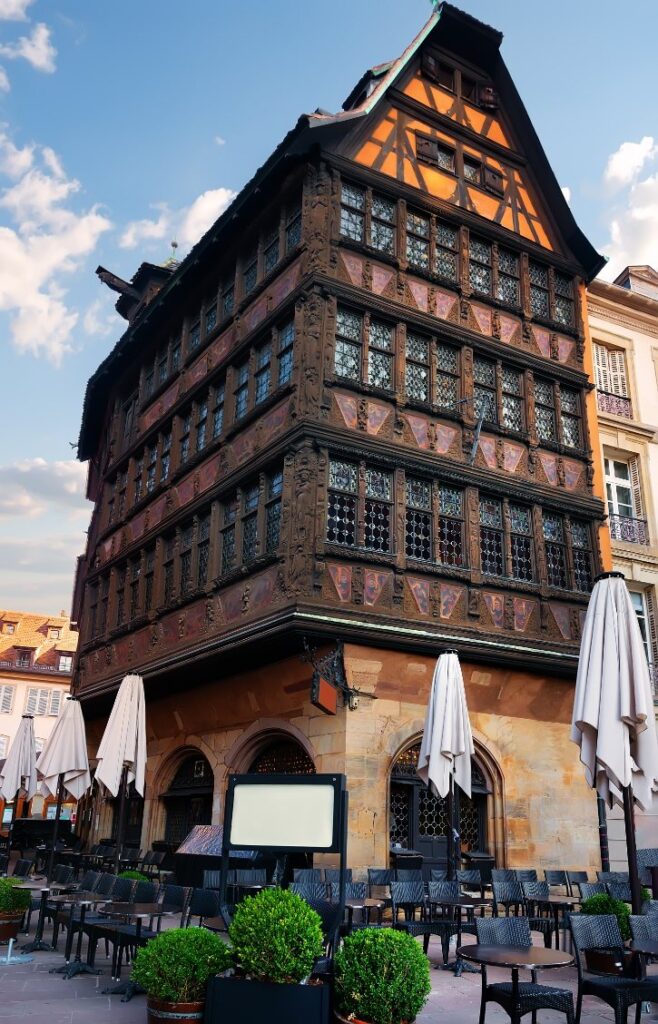
- Explore the Grande Île and Kammerzell House. The historic island is full of landmarks, but the Kammerzell House stands out with its intricate carvings and 75 wooden sculptures.
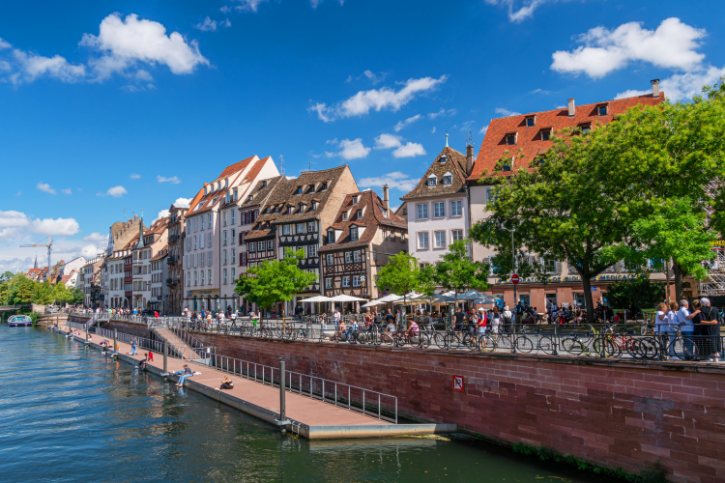
- Wander through La Petite France. This former tanners’ quarter is full of romantic timber-framed houses and waterfront views. The rooftop terrace of the Vauban Dam offers a perfect photo spot.
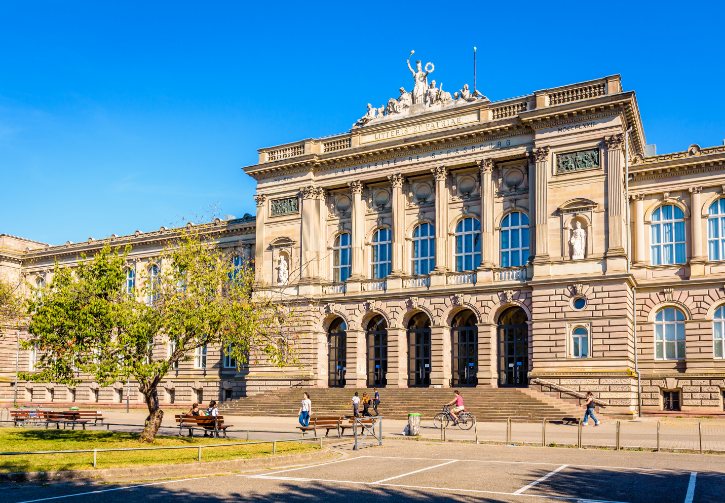
- Discover the Neustadt. This 19th-century German district, also a UNESCO site, features grand avenues and impressive architecture ranging from Art Nouveau to Neo-Renaissance.
- Visit the European District. See where modern democracy happens. The European Parliament building, with its circular design, symbolizes European unity.
c. Suggested How Long to Stay
- 1 day is enough for the cathedral and Grande Île.
- 2 days adds Petite France and the Neustadt for a “romantic weekend” feel.
- 3 days lets you explore the museums, the European District, or take a trip along the Alsace Wine Route to nearby villages.
Read More: A Complete Guide to Strasbourg
My Final Thoughts
France has so much more to offer beyond Paris. Each of these five cities gives you a different slice of the country, from alpine lakefronts to medieval walls to grand riverfront squares.
Pick one, or visit them all. Either way, you’ll come home with a richer picture of what France is really about.