Saint-Germain-des-Prés is one of the best areas in Paris to explore slowly on foot.
Gardens, historic churches, literary cafés, bookstores, elegant side streets, and classic Left Bank atmosphere all fit within a compact, walkable stretch.
This route moves naturally from the Luxembourg Gardens toward the heart of Saint-Germain, then through its most beautiful streets before ending with dinner. 😊
8:30 AM – Jardin du Luxembourg (Start)
a. Why Start Here
- The garden gives you a peaceful, scenic beginning before the busier streets ahead.
- Arriving at 8:30 AM means you catch it at its quietest, with soft morning light on wide gravel paths and tree-lined alleys.
- Starting here helps you ease into the day instead of rushing straight into cafés and crowds.
b. What to See
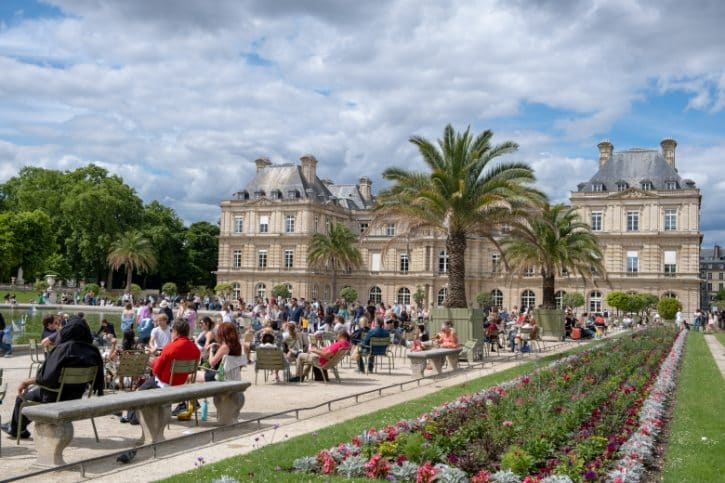
- Luxembourg Palace stands at the northern end. It was commissioned in 1612 by Marie de’ Medici and now houses the French Senate.
- The Grand Bassin is a large octagonal fountain where children traditionally sail small wooden boats.
- The grounds hold 102 statues, including figures of French queens and writers like Baudelaire and George Sand.
- The Medici Fountain, tucked into the northeast corner, features a long shaded basin, dramatic sculptures, and a hidden second fountain (Fontaine de Léda) directly behind it.
c. Details Worth Noticing
- The iconic olive-green “Sénat” metal chairs, designed in 1923, are a symbol of Parisian park culture.
- Flowerbeds, manicured lawns, and shaded walking paths give the garden an open-air museum quality.
- This is not just a photo stop. It is a place to feel the slower rhythm of the Left Bank.
d. Practical Tips
- Focus on the central area around the Grand Bassin and the Medici Fountain. You do not need to cover every corner.
- If you have time, sit in one of the green chairs near the fountain for a few minutes.
- Keep this stop relaxed. Let the garden set the tone for the day.
10:00 AM – Odéon Theatre
a. Why It Matters
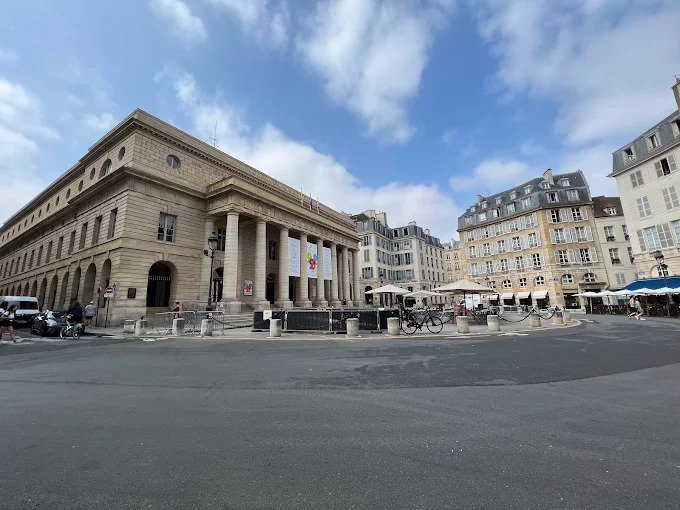
- The Théâtre de l’Odéon is one of France’s six national theaters and marks the transition from the garden into Saint-Germain’s cultural and intellectual heart.
- The surrounding streets carry serious literary history, including the original site of Sylvia Beach’s Shakespeare and Company, which published James Joyce’s Ulysses in 1922.
b. What to Notice
- The majestic neoclassical façade dominates Place de l’Odéon. It was commissioned by Marie Antoinette and opened in 1782.
- The open square feels spacious and refined, with independent booksellers and quiet cafés nearby.
- This stop shows how Saint-Germain blends culture, history, and everyday street life.
c. Visiting the Theatre
- Most visitors can appreciate the theatre from the outside. The interior is generally only accessible to ticketholders.
- The columned portico and elegant symmetry of the building are the main things to take in.
d. Practical Tips
- Keep this stop short, around 20 minutes. The route has richer walking sections ahead.
- Use this as a moment to absorb the shift from park calm to urban energy.
10:20 AM – Église Saint-Sulpice
a. Why Visit This Church
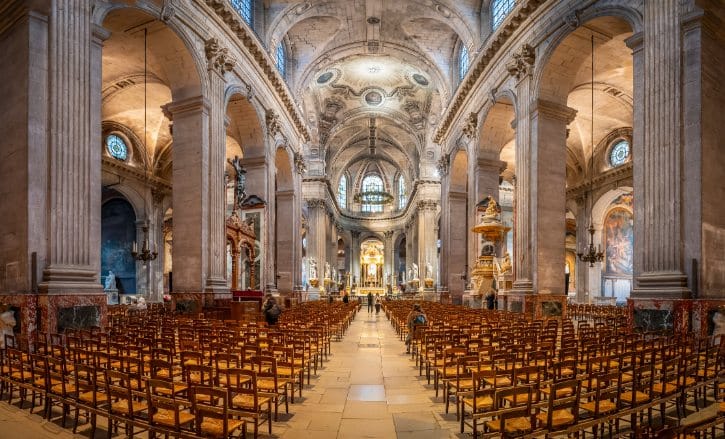
- Église Saint-Sulpice is the second-largest church in Paris, surpassed only by Notre-Dame.
- It offers grand architecture with a much calmer atmosphere than the more famous churches on the Right Bank.
- Built between 1646 and 1745, its long construction created a fascinating mix of Baroque grandeur and classical restraint.
b. What to See Outside
- The massive double-colonnade façade has two mismatched towers. The north tower stands 73 meters tall, while the south tower was left unfinished during the Revolution and is 5 meters shorter.
- The Fontaine Saint-Sulpice in front of the church features statues of four celebrated French religious figures.
c. What to See Inside
- The Chapel of the Holy Angels (immediately to the right upon entering) features three monumental frescoes by Eugène Delacroix, including Jacob Wrestling with the Angel.
- The Sulpician Gnomon is a brass meridian line in the marble floor, designed to calculate the date of Easter. It was inaccurately portrayed in The Da Vinci Code.
- The Grand Organ, expanded by Cavaillé-Coll in 1862, is one of the largest pipe organs in the world.
d. Practical Tips
- Free to enter
- Enter quietly and keep your visit respectful. Take a seat in the Chapel of the Holy Angels to appreciate the Delacroix murals.
- Spend enough time to feel the scale and calm before moving on.
Read More: 10 Breathtaking Churches in Paris You Can’t Miss
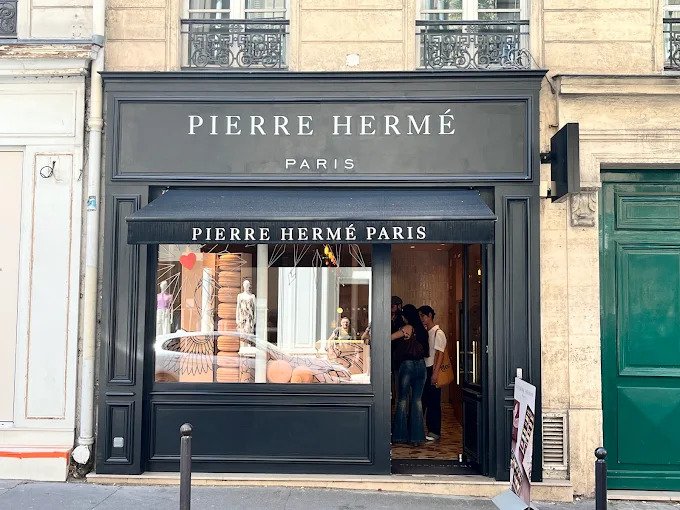
11:30 AM – Pierre Hermé
a. Why It Fits the Route
- Saint-Germain is not only about history. It is also about food, pastries, and small luxury experiences.
- Pierre Hermé at 72 Rue Bonaparte adds a famous Paris pastry moment without requiring a long café break.
b. What to Look For
- Pierre Hermé was named the World’s Best Pastry Chef in 2016.
- This shop sells fresh individual pastries and viennoiseries alongside the signature macarons, with flavors like Ispahan (rose, lychee, raspberry) and Mogador (milk chocolate, passionfruit).
- The boutique has an elegant, polished feel, almost like a jewelry shop for pastries.
c. How This Reflects the Neighborhood
- In Saint-Germain, even a quick pastry feels like a considered experience.
- This kind of stop shows the refined food culture that runs through the neighborhood alongside its literary and architectural heritage.
d. Practical Tips
- The boutique is small and takeaway only, with no seating. A queue often forms but moves quickly.
- Buy something small to enjoy while walking, or simply admire the presentation if you are not hungry.
- Keep this stop brief. The famous café area is just two blocks ahead.
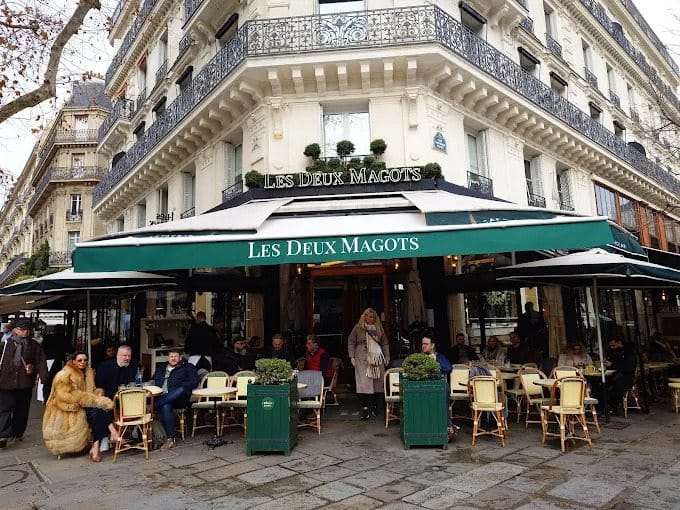
11:50 AM – Café de Flore/ Les Deux Magots
a. Why These Cafés Are Famous
- These are not just cafés. They are symbols of Saint-Germain’s intellectual identity.
- Sartre and de Beauvoir made Café de Flore their daily headquarters during the Occupation, writing there all day because the stove kept them warm.
- Les Deux Magots attracted Surrealists like André Breton and expatriates like Hemingway and Joyce.
b. How to Experience Them
- Sit down: Order an espresso or the famous hot chocolate, sit on the terrace, and accept the premium price as part of the experience.
- Walk past: If you are short on time or budget, pause to admire the historic façades, brass lettering, and Art Deco details from outside.
c. Choosing Between Them
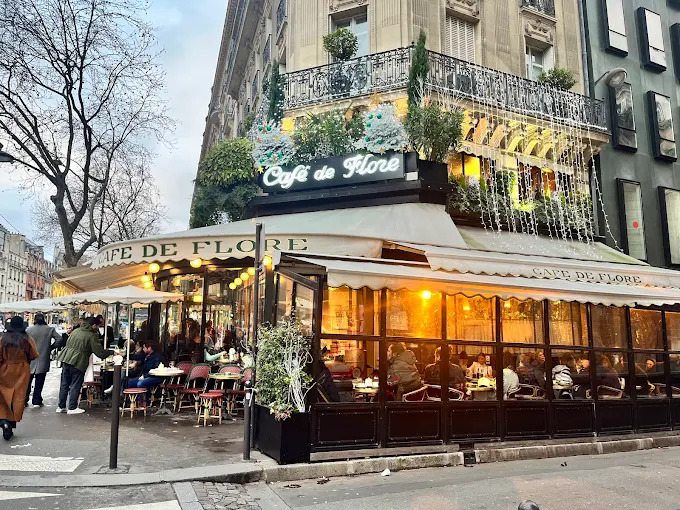
- Café de Flore (1887) is known for its Sartre connection, Sempé-illustrated placemats, and the Prix de Flore literary award.
- Les Deux Magots (1884) is named after two Chinese wooden figurines on a central pillar and has stronger Anglo-American expatriate ties.
- You do not need to visit both inside. Choose one based on mood or available seating.
d. Practical Tips
- Both attract crowds, especially on warm afternoons. Arriving at 11:50 AM puts you between the breakfast rush and lunch crowd.
- Expect premium prices. Treat this as an atmosphere stop rather than just a food stop.
12:30 PM – Eglise Saint-Germain-des-Prés
a. Why This Church Is Important
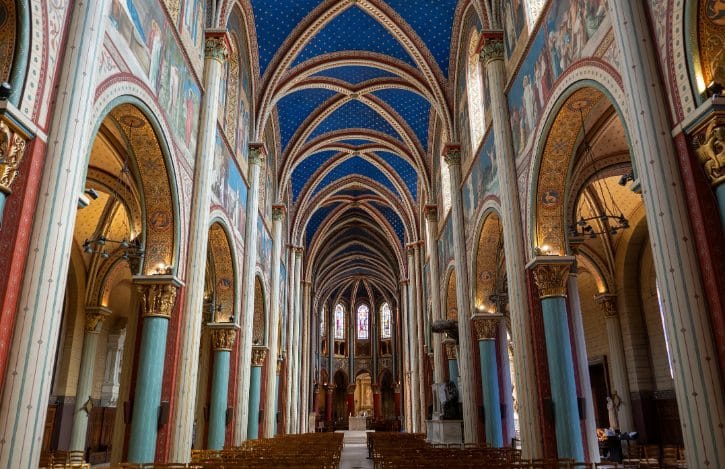
- This is the oldest church in Paris, founded in 558 AD. It gave the entire neighborhood its name.
- It originally stood in open countryside outside the medieval city walls, in “the fields” (les prés).
b. What to Notice
- The bell tower dates to the 10th and 11th centuries, representing some of the oldest Romanesque architecture in France.
- Inside, forty 11th-century carved column capitals depict biblical stories and mythological animals.
- The walls are covered in 19th-century murals by Hippolyte Flandrin, recently restored to their original vibrant colors.
c. Why It Feels Special Here
- Stepping inside after the busy café corner creates a striking contrast. The quiet is immediate and powerful.
- Standing right beside the famous cafés, this church shows how deeply layered the neighborhood is.
d. Practical Tips
- Spend at least 20 minutes here. Sit in the nave and take in the Flandrin murals.
- This is a good moment to slow down before lunch.
1:00 PM – Le Relais de l’Entrecôte/ Le Bonaparte/ Le Pré aux Clercs/ Brasserie Lipp (Lunch)
a. Why Eat Near the Heart of Saint-Germain
- Staying close to Boulevard Saint-Germain and the church keeps the route efficient.
- This is one of the best spots in the neighborhood for a classic Paris lunch atmosphere.
b. The Options
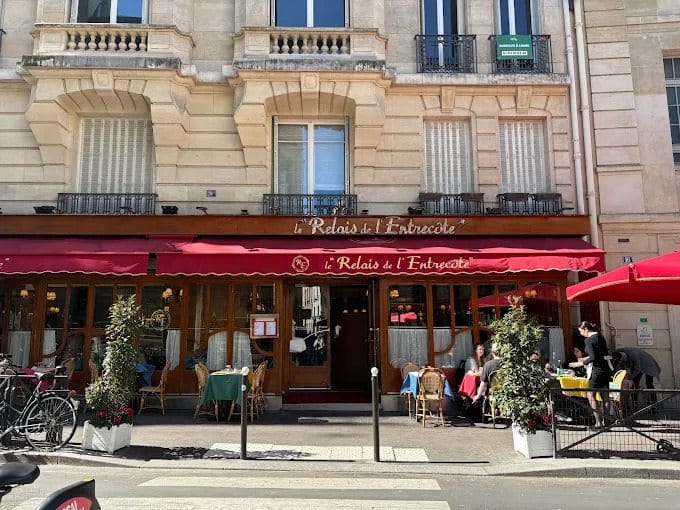
- Le Relais de l’Entrecôte (20 Rue Saint-Benoît): Famous for one dish only, steak-frites with a secret herb butter sauce.
- Le Bonaparte (corner of Rue Bonaparte): Classic brasserie with terrace seating looking directly onto the church. Walk-in, relaxed, great for people-watching.
- Le Pré aux Clercs (30 Rue Bonaparte at Rue Jacob): Historic bistro where Hemingway and Hadley dined regularly in 1921. Connects well with the Rue Jacob section later.
- Brasserie Lipp (151 Boulevard Saint-Germain): Founded 1880, listed as a Monument Historique. Alsatian classics like sauerkraut and sole meunière. Reservations accepted.
c. How to Choose
- Quick and iconic: Le Relais de l’Entrecôte
- Relaxed terrace: Le Bonaparte
- Literary history: Le Pré aux Clercs
- Classic brasserie: Brasserie Lipp
2:00 PM – Rue Jacob
a. Why Walk This Street
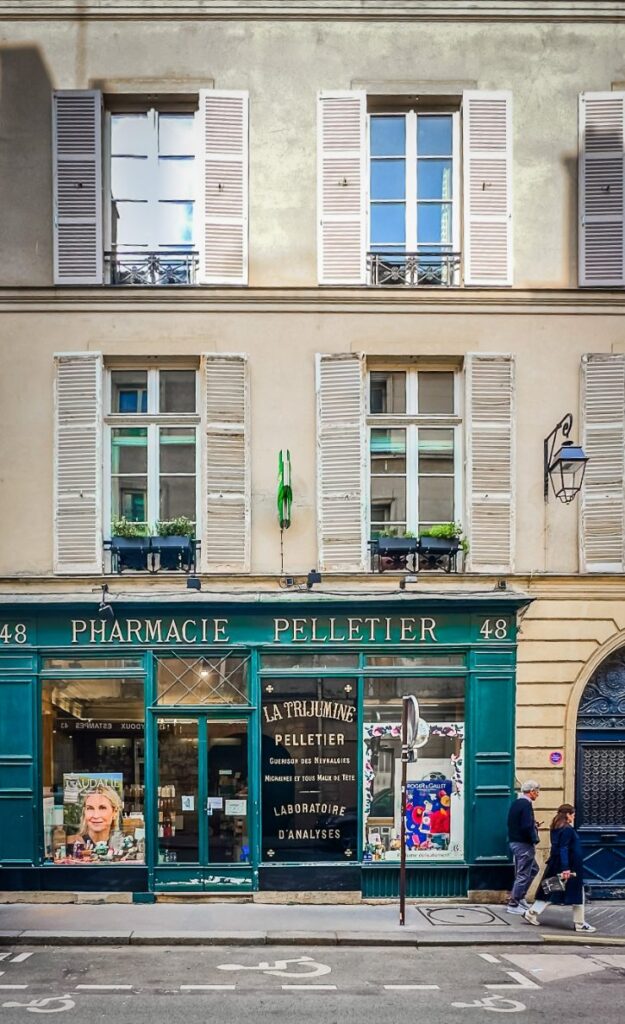
- Rue Jacob is one of the most beautiful streets on the Left Bank, with intimate 17th and 18th-century character largely untouched by modern redevelopment.
- It offers a softer, more local side of Saint-Germain after the busier café corners.
b. What to Notice
- Elegant limestone façades, heavy wooden carriage doors, and glimpses of vine-covered inner courtyards.
- Small galleries, antique shops, and high-end fabric showrooms.
- The Hôtel d’Angleterre (44 Rue Jacob) once housed the British Embassy and hosted negotiations for the 1783 Treaty of Paris. Hemingway stayed in Room 14 during his first weeks in Paris.
c. Le Pré aux Clercs
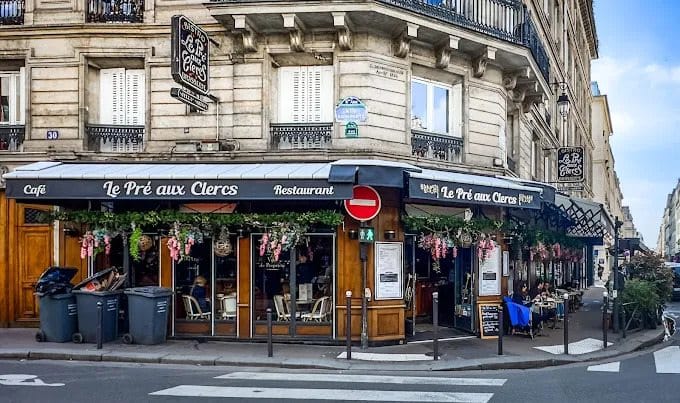
- Even if you did not eat there, notice its classic Parisian storefront at the corner of Rue Bonaparte. It shows how dining and street life blend naturally in Saint-Germain.
d. Practical Tips
- Walk slowly. This street is about atmosphere and details, not one major attraction.
- Good section for photography, window-shopping, and enjoying quieter corners after lunch.
3:00 PM – Rue de Seine
a. Why This Street Matters
- Rue de Seine is the creative spine of the Left Bank, famous for its high concentration of independent art galleries, antique dealers, and rare print shops.
- It connects to the neighborhood’s long history of welcoming painters, sculptors, and collectors.
b. What to Look For
- Gallery windows displaying everything from ancient antiquities to contemporary sculpture.
- Classic architectural details, charming façades, and narrow lanes branching toward the Seine.
- La Palette, a historic café that has long been a favorite for artists from the nearby École des Beaux-Arts.
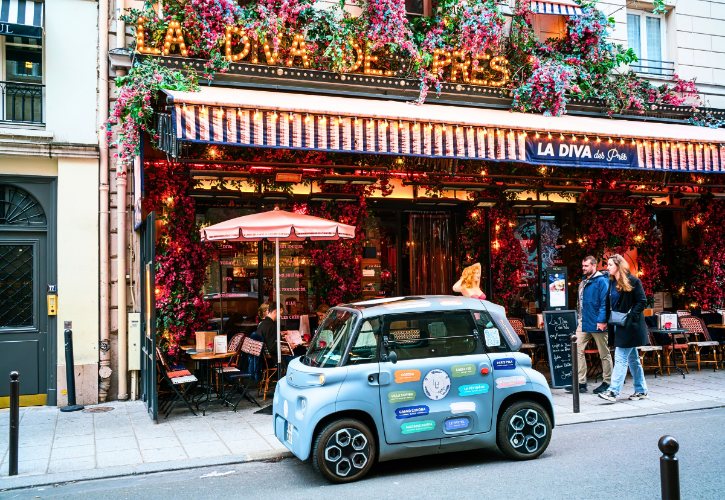
c. La Diva des Prés
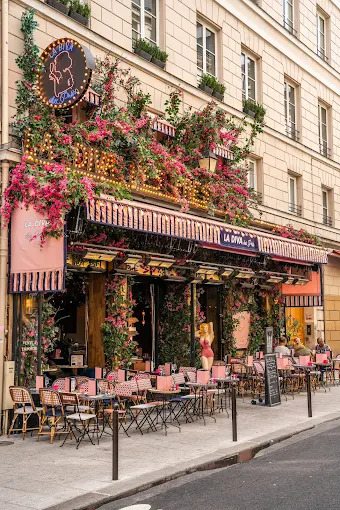
- Located at 79 Rue de Seine, this contemporary brasserie is known for its vibrant, flower-filled exterior with cascading pink bougainvillea.
- It offers a spacious outdoor terrace and adds a modern contrast to the traditional galleries.
d. Practical Tips
- Keep the walk flexible. Let your eye guide you rather than following a strict list.
- You do not need to enter every gallery. Focus on the ones that catch your interest.
3:30 PM – Rue de Buci
a. Why Stop Here
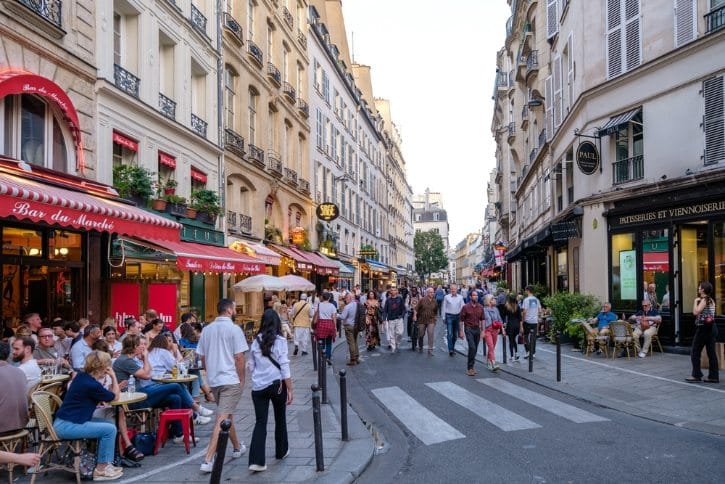
- After the quieter elegance of Rue Jacob and Rue de Seine, Rue de Buci brings a welcome burst of social energy.
- This pedestrian-friendly lane is one of the most lively streets in the 6th arrondissement.
b. What to Experience
- Vibrant café terraces, artisanal bakeries, florist displays, and specialty food shops.
- The aromas of fresh pastries, cut flowers, and roasting coffee.
- A good place to pause for an espresso, a glass of wine, or a people-watching break.
c. Maison Sauvage
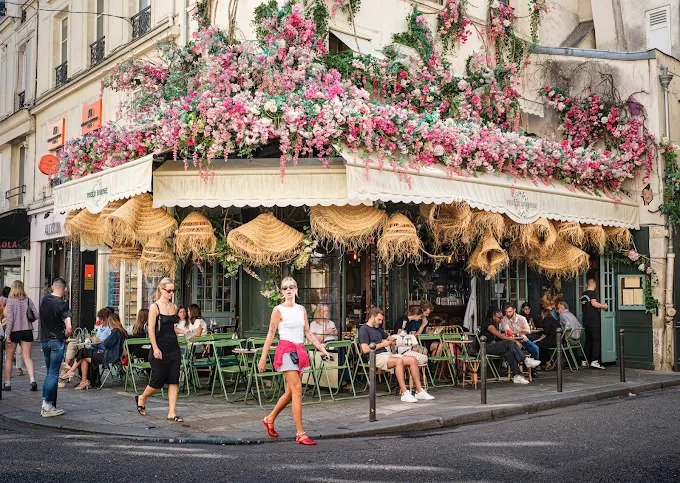
- Located at 5 Rue de Buci, Maison Sauvage is the visual centerpiece of the street.
- The multi-story restaurant is covered in branches, greenery, and seasonal flowers.
- Its wicker-chair terrace is a popular spot for photos, drinks, or simply enjoying the street scene.
d. Practical Tips
- The street can feel busy, especially on sunny weekends. Embrace it as a lively pause rather than expecting a quiet retreat.
- Do not spend too long here if you want enough time for Boulevard Saint-Germain before dinner.
Read More: 10 Beautiful Paris Streets That Make You Want to Keep Walking
4:30 PM – Boulevard Saint-Germain
a. Why This Boulevard Is Essential
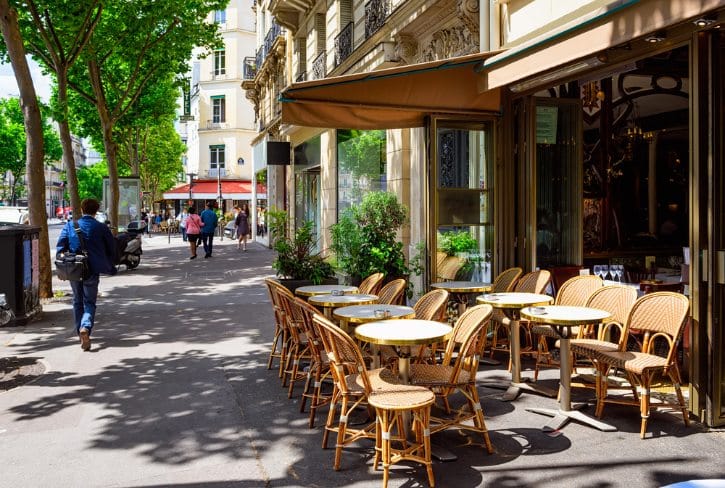
- Boulevard Saint-Germain is the grand spine of the Left Bank, created during Haussmann’s 19th-century renovations.
- It ties together publishing firms, fashion boutiques, bookstores, and historic brasseries along wide, polished sidewalks.
b. What to Notice
- Uniform Haussmannian limestone façades, wrought-iron balconies, and grand carriage entrances.
- Historic bookstores like L’Écume des Pages, which stays open late.
- By late afternoon, the terraces glow, shoppers mix with office workers, and streetlights begin warming the limestone.
c. Best Way to Experience It
- Walk slowly. Browse window displays, flip through outdoor book racks, and stop for a short coffee if needed.
- Feel the contrast between the intimate side streets from earlier and the grand boulevard scale.
d. Practical Tips
- Late afternoon light makes the architecture especially photogenic.
- Use this time to decide whether you want dinner to feel historic and traditional or modern and lively.
6:00 PM – Le Procope/ Brasserie des Prés (Dinner)
a. Why Dinner Is the Right Ending
- After a full day of walking, dinner gives you time to sit down, reflect, and enjoy the neighborhood at a slower evening pace.
- Saint-Germain becomes especially atmospheric in the evening when restaurant windows begin to glow.
b. Option 1: Le Procope
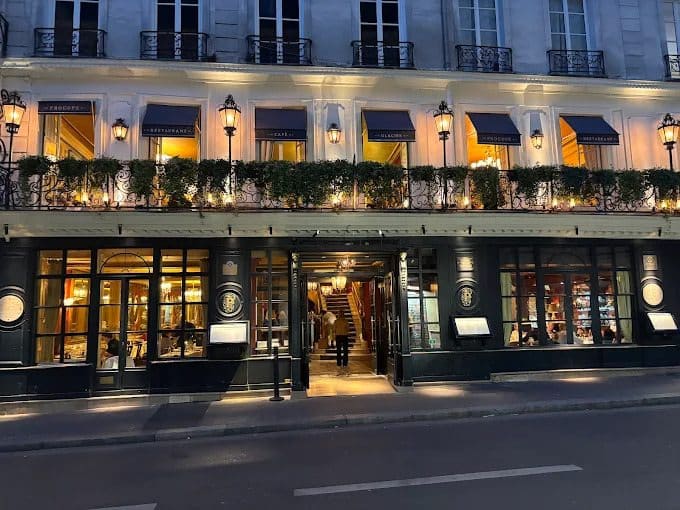
- Founded in 1686, Le Procope is the oldest continuously operating café-restaurant in Paris.
- It welcomed Voltaire, Rousseau, Diderot, and Benjamin Franklin. During the Revolution, it drew Danton, Marat, and Robespierre.
- Dining inside feels like visiting a museum, with preserved 18th-century rooms, Voltaire’s wooden desk, and Napoleon’s hat.
- Menu focuses on traditional French classics like Coq au Vin and Braised Beef Cheek.
c. Option 2: Brasserie des Prés
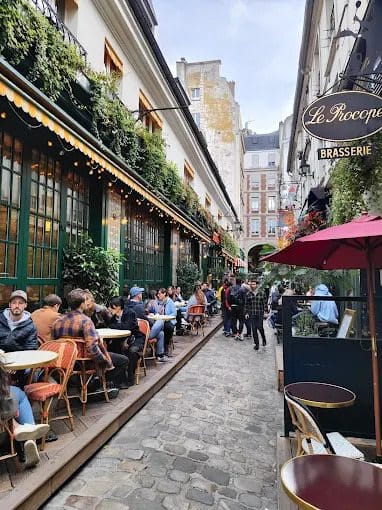
- Tucked inside the Cour du Commerce Saint-André, Brasserie des Prés offers a modern, design-forward dining experience.
- The menu is 100% homemade and seasonal. Classics include sausage and mash, beef tartare, and Paris-Brest.
- The hidden second-floor cocktail lounge Grouvie serves creative drinks by world-champion mixologist Jennifer Le Nechet.
d. How to Choose
- Le Procope for history, classic atmosphere, and dining inside a piece of Paris heritage.
- Brasserie des Prés for a modern, energetic evening with polished design and a lively crowd.