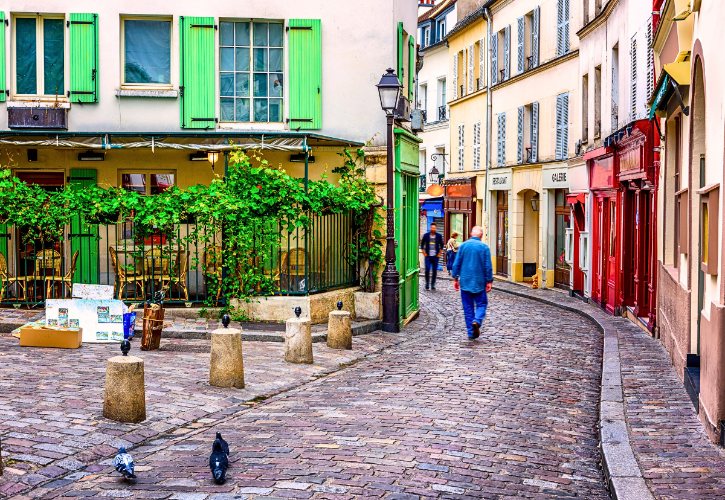
Paris is one of those cities that rewards you the most when you stop trying to see everything.
Beyond the grand landmarks, the real magic is in the quiet cobblestone lanes, riverside paths, hidden courtyards, and corner cafés where locals linger over coffee.
These seven neighborhoods are where that slower, more personal side of Paris comes alive.
1. Montmartre
Why Visit
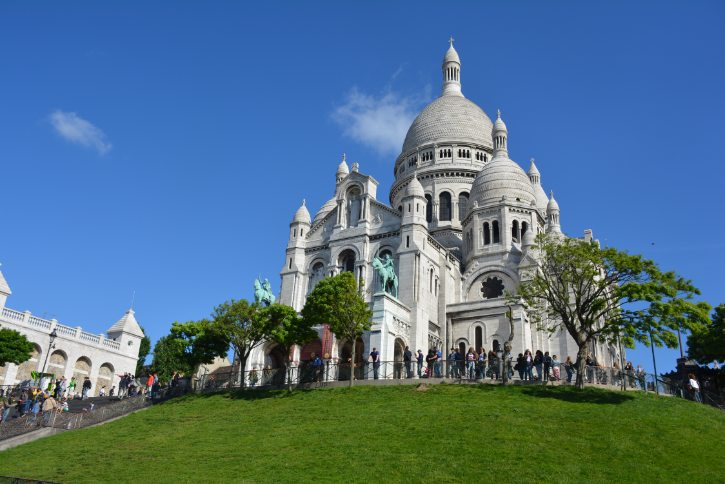
- Montmartre sits on a hilltop at about 130 meters, which kept it from being redesigned like the rest of central Paris. It still feels like a village, with cobbled lanes, ivy-covered walls, and winding streets.
- The best experience comes from walking beyond the busy Sacré-Cœur forecourt and into the quieter northern and western slopes.
What to Notice
- Steep staircases and sloping streets that frame dramatic viewpoints over the rooftops below.
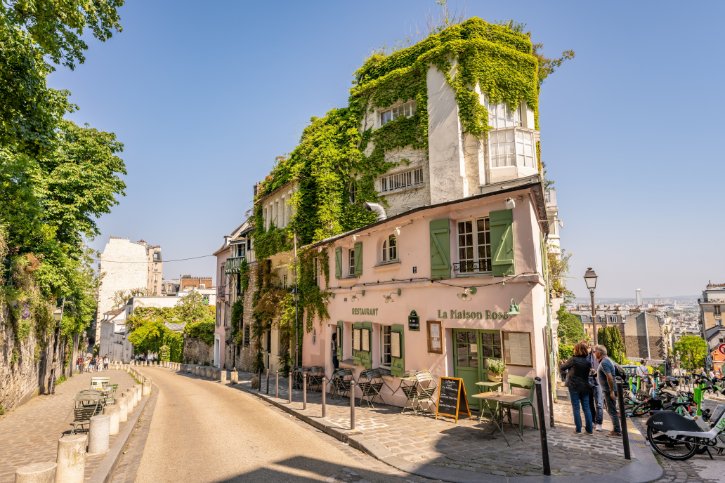
- Vintage lampposts, window shutters, climbing ivy, old artist studios, and street art on the backstreets.
Key Streets to Walk
- Rue Lepic and Rue des Abbesses for bakeries, cheese shops, and neighborhood café life.
- Rue de l’Abreuvoir, one of the oldest streets in Paris, dating back to at least 1325, with views of the Sacré-Cœur dome.
- The staircases along Rue Foyatier and Rue du Mont-Cenis for striking climbs and viewpoints.
Landmarks and Highlights
- Sacré-Cœur Basilica, built between 1875 and 1914, with panoramic city views.
- Place du Tertre, the historic artist square.
- La Maison Rose, the iconic pink house that once welcomed Utrillo, Dalí, and Picasso.
- Place Dalida, a quiet shaded square with a bronze bust of the singer.
- Clos Montmartre, the last active vineyard in central Paris.
Practical Walking Tips
- Wear comfortable shoes for the cobblestones and steep steps.
- Take the metro to Lamarck-Caulaincourt (Line 12) or ride the funicular to start at the top and walk downhill.
Best Time to Visit
- Early morning before 09:00 for quiet streets and soft light. Late afternoon for warm golden tones.
The Takeaway
- Montmartre is most rewarding when you leave the tourist path. The famous view is wonderful, but the real charm is in the hidden squares, vine-covered walls, and silent backstreets.
Read More: 12 Amazing Spots You Can’t Miss in Montmartre
2. Canal Saint-Martin
Why Visit
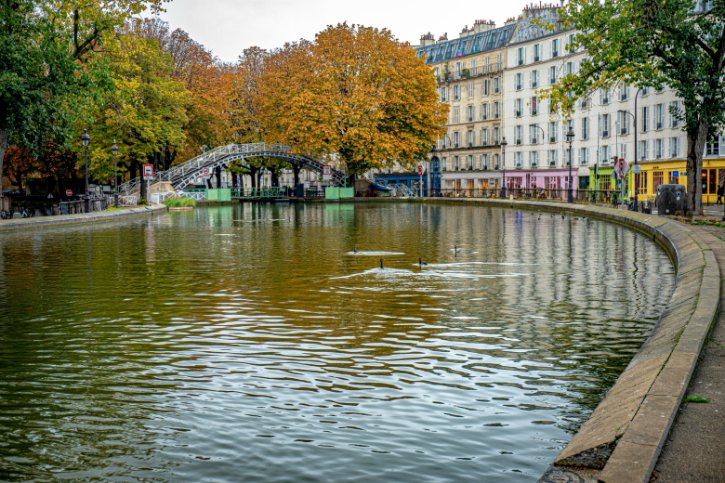
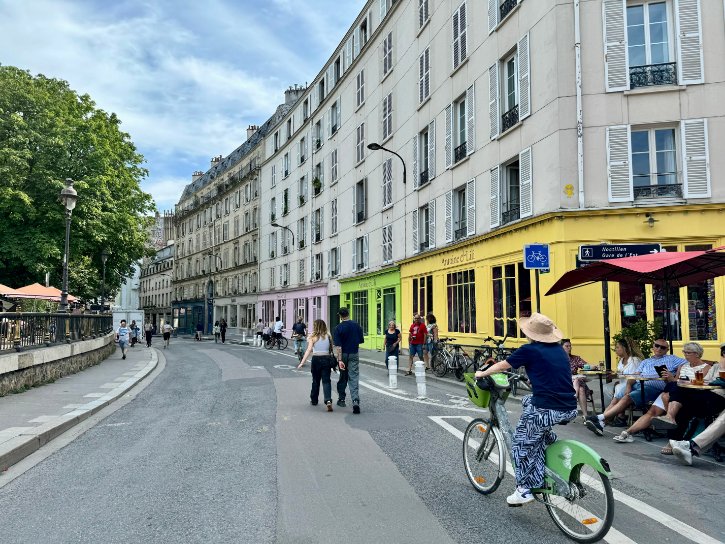
- The canal, completed in 1825, gives this neighborhood a softer, slower rhythm. The open-air section through the 10th and 11th arrondissements is perfect for a flat, easy walk.
- Everything here feels calm and unhurried compared with busy central Paris.
What to Notice
- Reflections on the water, especially in late afternoon light.
- Nine working locks and five cast-iron footbridges creating an old-world mechanical landscape.
- Locals sitting on the stone banks to read, chat, and picnic on warm days.
Key Streets to Walk
- Quai de Valmy (east bank) for pastel-colored boutiques and coffee shops.
- Quai de Jemmapes (west bank) for tree-shaded paths and the legendary Hôtel du Nord at No. 102.
- Rue des Vinaigriers for food spots and the independent bookstore Philippe Le Libraire.
Landmarks and Highlights
- Hôtel du Nord, restored to honor the 1938 Marcel Carné film, now a popular bistro.
- Jardin Villemin, a leafy park with green lawns and a historic bandstand.
- Place de la République, a natural starting or ending point just a short walk from the canal.
Practical Walking Tips
- The route is flat and accessible, with plenty of benches and grassy areas for breaks.
- Connects easily with the northern Marais or Place de la République.
Best Time to Visit
- Late afternoon and early evening, when the setting sun reflects off the water and the bistros fill with locals.
The Takeaway
- Canal Saint-Martin is not about grand landmarks. Its beauty comes from water, trees, bridges, and the feeling of everyday Paris unfolding slowly around you.
3. Le Marais
Why Visit
- One of the few Paris districts that kept its pre-revolutionary street plan. Narrow medieval lanes and grand Renaissance mansions survived while the rest of central Paris was redesigned.
- The compact streets are perfect for unplanned wandering.
What to Notice
- Hidden courtyards behind heavy stone doors. Many are open to walk through if you look carefully.
- The contrast between busy shopping streets and quiet, tucked-away corners.
- A rich mix of Jewish heritage, contemporary art, fashion boutiques, and lively cafés.
Key Streets to Walk
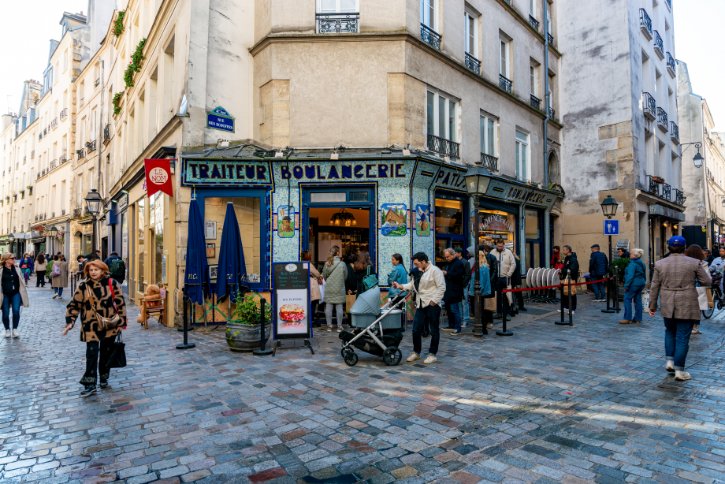
- Rue des Rosiers for food, history, and the Jewish quarter’s character.
- Rue Vieille du Temple and Rue des Francs-Bourgeois for boutiques, cafés, and classic Marais energy.
Landmarks and Highlights
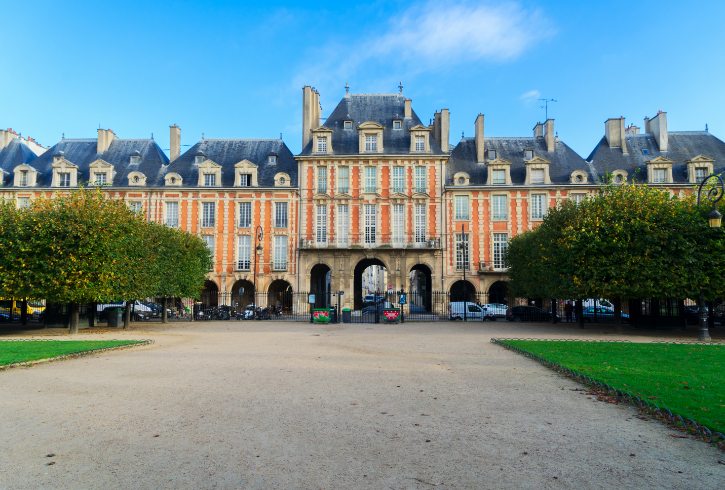
- Place des Vosges, inaugurated in 1612, the oldest monumental square in Paris. Victor Hugo’s home is at No. 6.
- Hôtel de Sully, a Louis XIII-style mansion with a courtyard connecting through to Place des Vosges.
- Village Saint-Paul, five interconnected courtyards with antique dealers and independent designers.
- Musée Carnavalet, a free museum of Paris history in two Renaissance mansions.
Practical Walking Tips
- Metro access: Saint-Paul (Line 1) or Chemin Vert (Line 8).
- Connects easily to the Seine, Île Saint-Louis, or Bastille.
Best Time to Visit
- Weekday mornings for a calmer experience. Weekend afternoons get very crowded.
The Takeaway
- Le Marais rewards curiosity. The real magic is behind the doors, through the archways, and in the forgotten corners where Paris’s medieval character is still visible.
Read More: 15 Must-Visit Spots in Le Marais
4. Île Saint-Louis
Why Visit
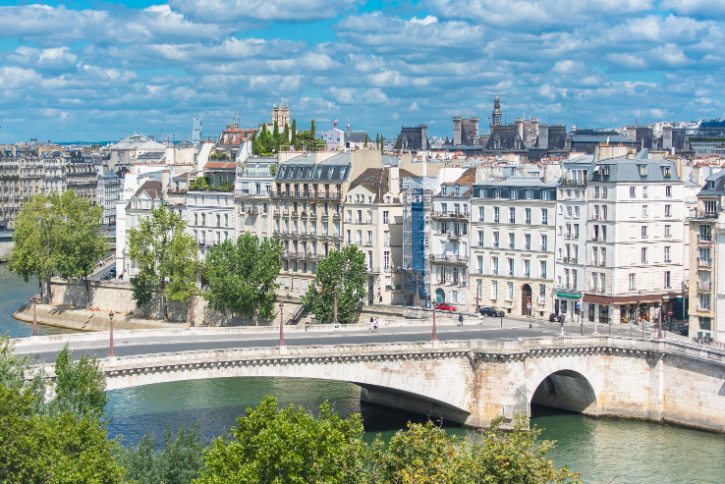
- A small, quiet residential island in the Seine, developed in the 17th century. Unlike busy Île de la Cité, it has stayed calm, elegant, and free of major tourist infrastructure.
- You can walk around the entire island in about 30 minutes, making it a gentle pause between bigger sightseeing areas.
What to Notice
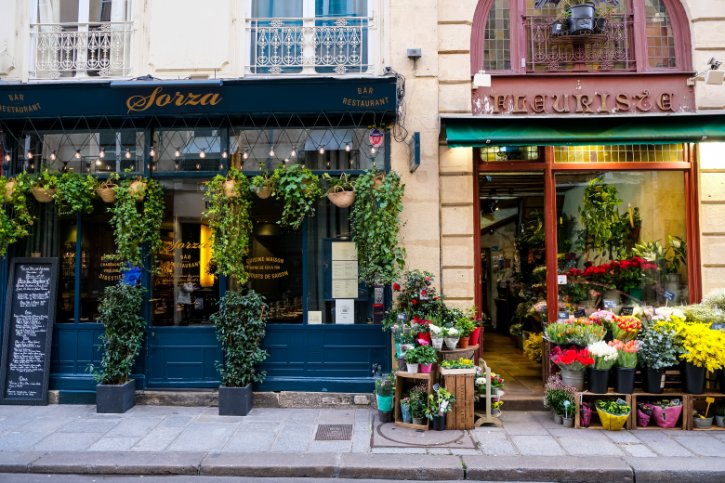
- Historic stone townhouses with decorative wrought-iron balconies and heavy oak doors.
- Seine views on both sides of the island, with cobblestone paths along the riverbanks below street level.
- The complete absence of metro stations and large chain stores, which keeps the island peaceful.
Key Streets to Walk
- Rue Saint-Louis en l’Île, the central axis, with independent shops and the village-like Église Saint-Louis en l’Île.
- Quai d’Anjou and Quai de Bourbon for the best river views along the outer edges.
Landmarks and Highlights
- Berthillon (Nos. 29 to 31 Rue Saint-Louis en l’Île), a beloved ice cream landmark.
- Hôtel de Lauzun (17 Quai d’Anjou), a 1658 mansion once home to Baudelaire and Gautier.
- Pont Saint-Louis, a pedestrian bridge to Île de la Cité with views toward Notre-Dame.
- Square Barye, a small garden at the island’s eastern tip with steps to the Seine.
Practical Walking Tips
- Walk the outer quays first for river views, then cut through the main street.
- Pairs well with Le Marais to the north, the Latin Quarter to the south, or Île de la Cité.
Best Time to Visit
- Sunrise and sunset, when warm light reflects off the stone buildings and the water.
The Takeaway
- Do not rush this island. Its appeal is in its quiet elegance, soft river light, and the calm feeling of being surrounded by the Seine.
5. Latin Quarter
Why Visit
- Built on the ruins of the Roman city of Lutetia, this Left Bank neighborhood has more layers of history per street than almost anywhere else in Paris.
- Named for the Latin spoken by medieval students, it still carries an intellectual, bookish atmosphere.
What to Notice
- Old bookshops, student cafés, and the lively energy around the university buildings.
- The transition from busy tourist streets to peaceful garden paths as you walk east.
- Stone fountains, historic statues, and ancient city walls visible along the route.
Key Streets to Walk
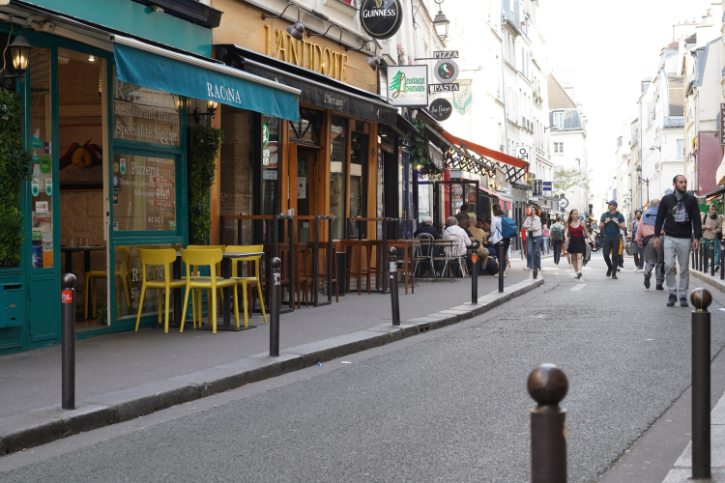
- Rue Mouffetard, one of the oldest streets in Paris, famous for its vibrant open-air market.
- Place de la Contrescarpe, a lively café-lined square that Hemingway wrote about in A Moveable Feast.
Landmarks and Highlights
- Arènes de Lutèce, a 1st-century Roman amphitheater that once held 15,000 spectators. Saved from demolition by Victor Hugo. Now a free public park.
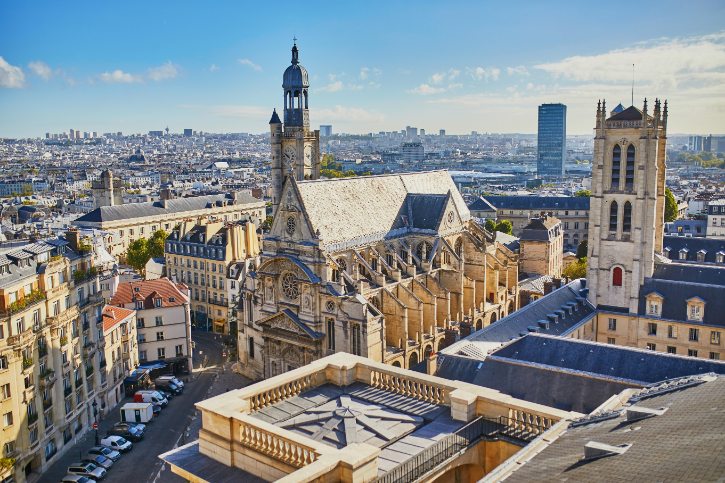
- Saint-Étienne-du-Mont, a Gothic-Renaissance church with the only surviving stone rood screen in Paris.
- Shakespeare and Company, the legendary English-language bookstore along the Seine.
- Jardin des Plantes, a botanical garden with quiet paths and one of the oldest zoos in the world.
Practical Walking Tips
- Metro access: Cardinal Lemoine (Line 10) or Place Monge (Line 7).
- The area slopes upward toward the Panthéon. Start at the top and walk downhill for an easier route.
- Best explored in sections because the area has many different moods.
Best Time to Visit
- Morning for quieter streets near the Panthéon. Afternoon for market energy on Rue Mouffetard.
The Takeaway
- In a single afternoon here, you can walk past 2,000-year-old Roman arenas, down medieval lanes, past historic churches, and through quiet botanical gardens. That kind of depth is rare, even in Paris.
Read More: 17 Best Spots in the Latin Quarter You Absolutely Can’t Miss
6. Saint-Germain-des-Prés
Why Visit
- The classic intellectual and artistic quarter of Paris. After World War II, it was the center of existentialist philosophy, jazz, and literary culture.
- The streets are elegant, compact, and easy to enjoy at a slower pace.
What to Notice
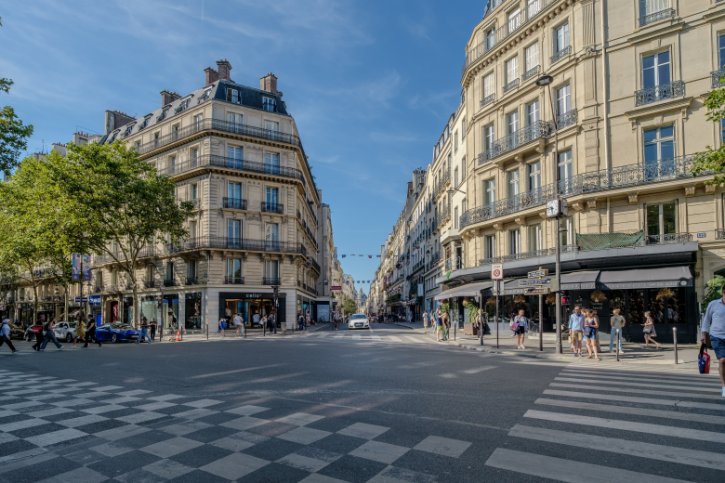
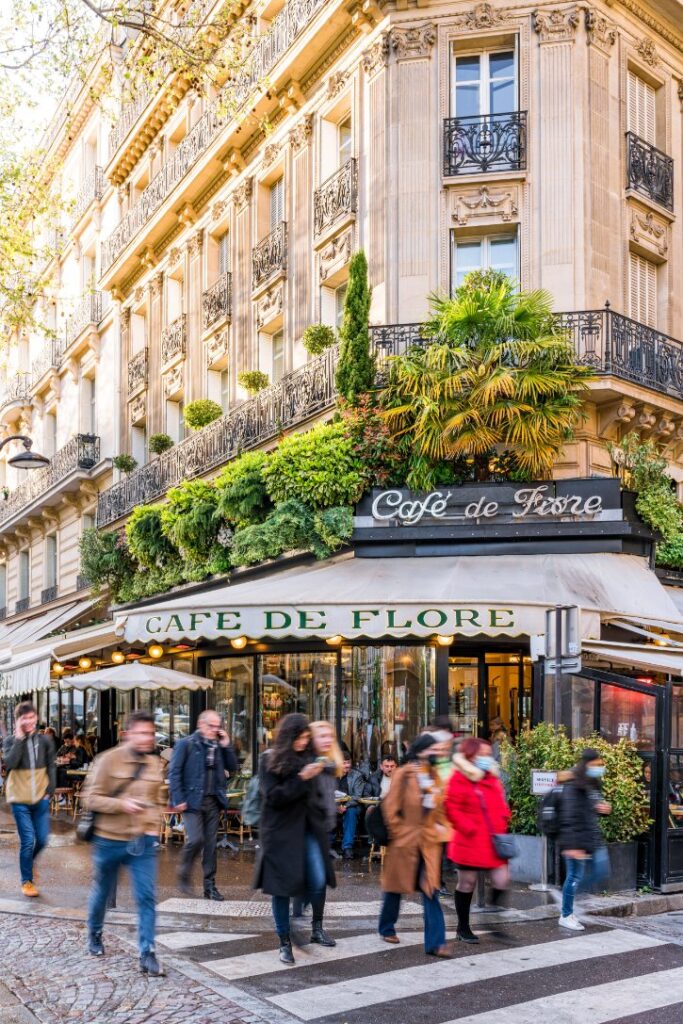
- Famous café terraces where you can sit and watch Parisian street life.
- Art galleries, antique shops, bookstores, and design boutiques along the quieter side streets.
- Beautiful 18th-century stone facades and refined architectural details.
Key Streets to Walk
- Rue Bonaparte for galleries, historic townhouses, and Pierre Hermé’s pastry shop at No. 72.
- Rue de Buci for a lively market street with outdoor cafés and flower stands.
Landmarks and Highlights
- Église de Saint-Germain-des-Prés, built in the 6th century, the oldest church in Paris.
- Café de Flore and Les Deux Magots, the legendary rival cafés of Sartre, Beauvoir, and Hemingway.
- Place Saint-Sulpice, a quiet square with the second-largest church in Paris and frescoes by Delacroix.
- Jardin du Luxembourg, a 23-hectare park with the beautiful Medici Fountain and model sailboats.
- Place Furstenberg, a tiny hidden square with a central streetlamp and paulownia trees.
Practical Walking Tips
- Metro access: Saint-Germain-des-Prés (Line 4).
- Great for building in café stops, bookshop browsing, or gallery visits along the way.
- Connects naturally with the Latin Quarter and Luxembourg Garden.
Best Time to Visit
- Morning for quieter streets. Late afternoon for the neighborhood’s famous café culture.
The Takeaway
- The beauty here is in the rhythm of the streets. Elegant shopfronts, old churches, quiet courtyards, and a strong sense of Parisian culture you can feel without visiting a single museum.
Read More: 12 Best Spots in Saint-Germain-des-Prés for a Slow Paris Walk
7. Butte-aux-Cailles
Why Visit
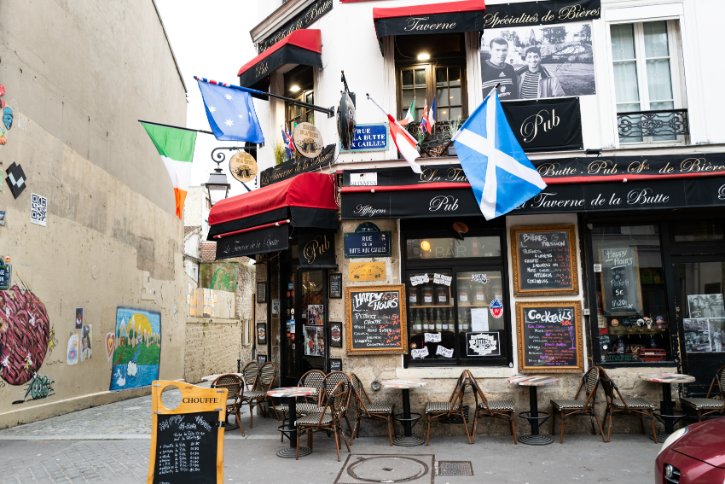
- A small hilltop village hidden in the 13th arrondissement, far from the busiest tourist areas. The unstable limestone quarries beneath the hill prevented large-scale construction, preserving its small houses and narrow lanes.
- One of the least touristy neighborhoods in central Paris, with a strong local identity.
What to Notice
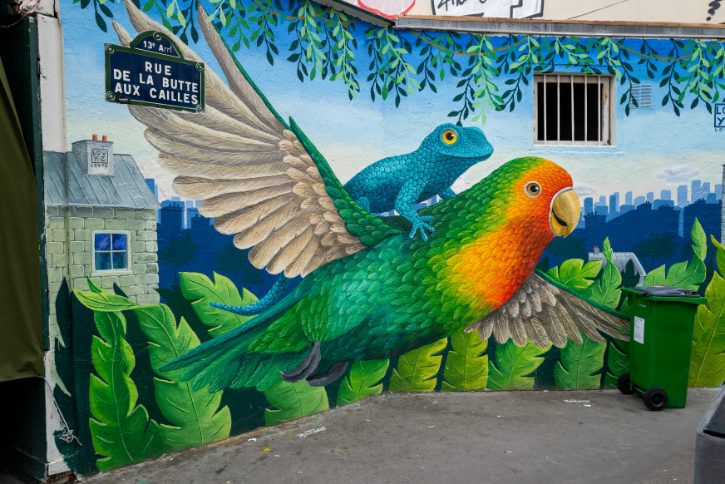
- Street art everywhere. Stencils, murals, and wheat-pasted works cover old walls throughout the neighborhood.
- Small single-family houses, brick facades, tiny gardens, and climbing ivy.
- A slower, more local rhythm that feels very different from the rest of the city.
Key Streets to Walk
- Rue de la Butte-aux-Cailles, the main street, with independent cafés, bars, and bistros.
- Rue des Cinq Diamants, a narrow cobblestone street famous for street art by Miss.Tic.
Landmarks and Highlights
- Square des Peupliers (off 70 to 72 Rue du Moulin-des-Prés), a peaceful residential lane lined with townhouses covered in ivy, wisteria, and roses. One of the most serene corners in Paris.
- Place Paul Verlaine, a quiet square with a spring-fed fountain and a beautiful Art Deco swimming pool from 1924.
- Passage Barrault, a sloping residential lane that captures the neighborhood’s village scale.
Practical Walking Tips
- Metro access: Corvisart (Line 6) or Tolbiac (Line 7).
- Comfortable shoes for cobblestones and gentle slopes.
- Please respect the peace of residential areas, especially around Square des Peupliers.
Best Time to Visit
- Afternoon, followed by a relaxed drink or meal at one of the local bars along the main street.
The Takeaway
- Butte-aux-Cailles shows you a different side of Paris. Less grand, less famous, but full of personality and creativity. It proves that some of the most rewarding slow walks happen far from the grand monuments.