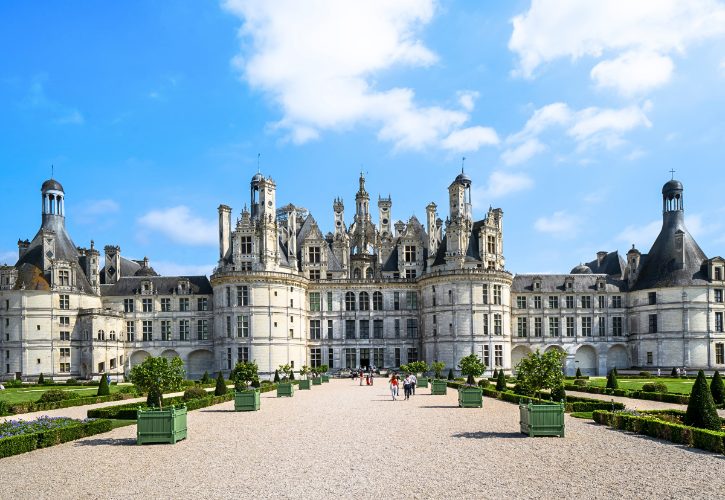
France has more stunning castles than most travelers can visit in a lifetime.
Some rise from rivers. Others sit on mountain ridges or guard entire walled cities.
What connects them is how each one tells a different story, through stone, towers, gardens, and centuries of ambition.
Whether you love dramatic fortresses, elegant estates, or fairytale silhouettes, this list covers the castles that are truly worth knowing about. Here are 10 of the most beautiful. 😊
1. Château de Pierrefonds (Pierrefonds)
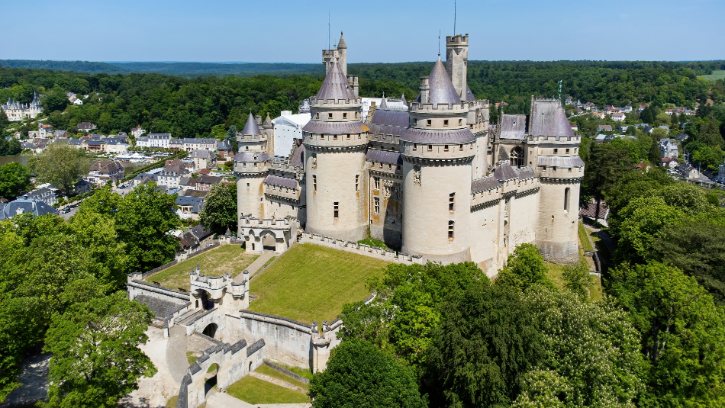
a. Why it stands out
- Pierrefonds sits on a rocky hill above a lake and village, with massive towers, battlements, and stone walls creating one of the most dramatic castle silhouettes in France.
- Unlike graceful Loire Valley châteaux, it feels darker, stronger, and more fortress-like.
b. History worth knowing
- Built in the late 14th century, the castle collapsed into ruins before Napoleon III commissioned Eugène Viollet-le-Duc to reconstruct it.
- Rather than copying the original, Viollet-le-Duc created the “ideal medieval castle”, blending historical research with creative imagination.
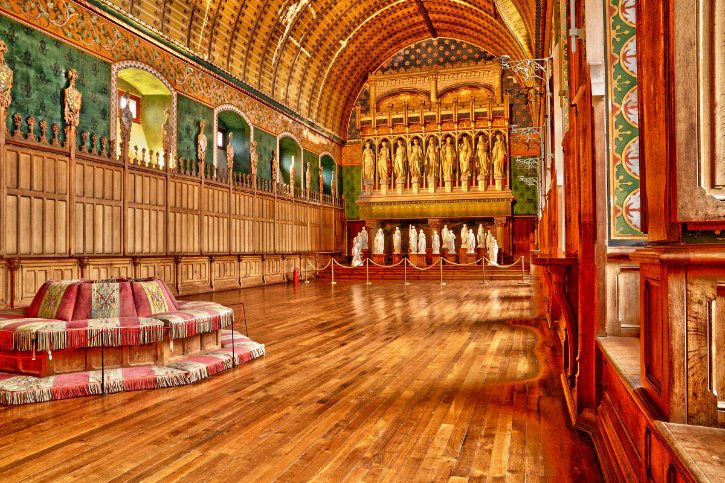
c. What makes it beautiful
- The exterior is a convincing fortress, while the interior is filled with colorful decorative apartments and sculptural details no medieval builder would have imagined.
- It is both ancient and theatrical, a romantic reimagining of medieval architecture.
d. What to notice
- The scale of the round towers and defensive walls.
- Copper downspouts sculpted into mythical salamanders in the courtyard.
- The contrast between fortress exterior and decorated interior.
e. Who will love it most
- Perfect if you love dramatic castles, medieval atmosphere, and fairytale-style architecture.
- Don’t rush the exterior. The outside views are one of the best parts.
2. Château de Chantilly (Chantilly)
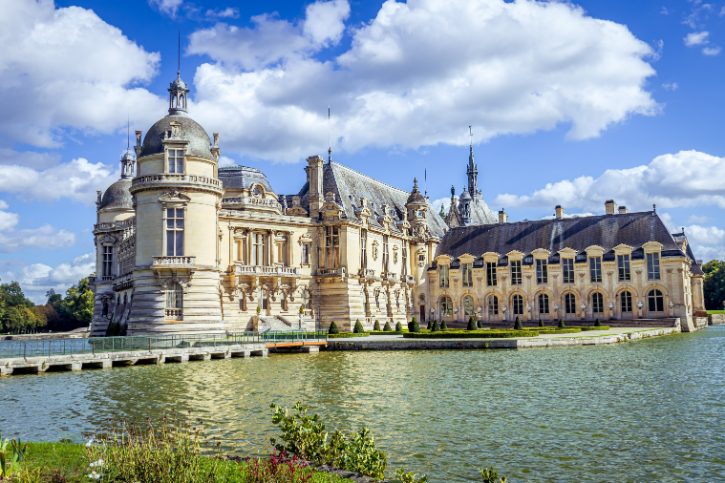
a. Why it stands out
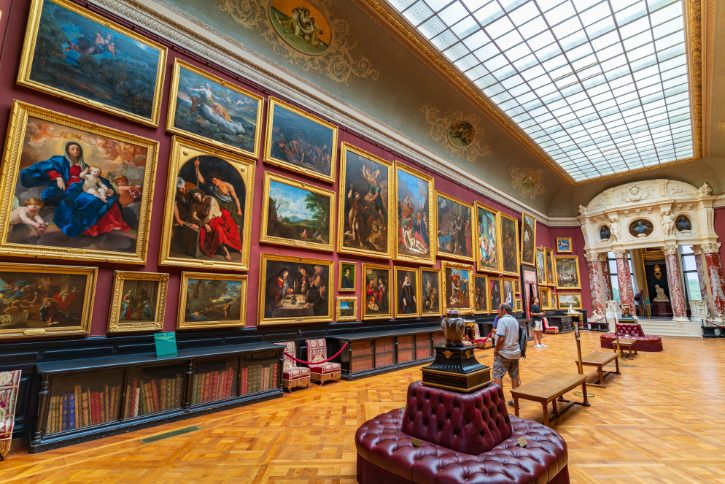
- A complete aristocratic estate combining a château, formal gardens, water reflections, world-class art, and monumental stables.
- Everything feels polished, refined, and balanced.
b. History worth knowing
- Rebuilt in the 19th century for the Duke of Aumale, who assembled one of the finest art collections in France.
- His bequest required the art to remain displayed exactly as he arranged it.
c. What makes it beautiful
- Reflecting pools surround the château, creating graceful water reflections on calm days.
- The Musée Condé holds the second-largest collection of antique paintings in France, with works by Raphael and Botticelli.
- The Grandes Écuries (Great Stables) feature a 28-meter dome, designed to house 240 hunting horses.
d. What to notice
- Water reflections around the château.
- The art collection, especially the Très Riches Heures manuscript.
- Gardens designed by André Le Nôtre.
e. Who will love it most
- Perfect if you want beauty, art, gardens, and a refined estate experience.
- One of the strongest choices near Paris for castle beauty plus cultural depth.
3. Château de Fontainebleau (Fontainebleau)
a. Why it stands out
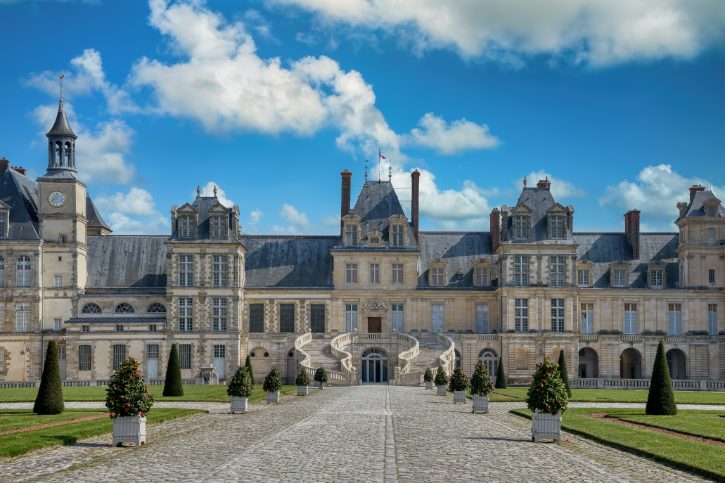
- Its beauty comes from centuries of royal rooms, courtyards, staircases, and gardens layered on top of each other.
- Napoleon called it “the true home of kings”. French rulers lived here for over seven centuries.
b. History worth knowing
- Each ruler built around existing structures, creating an organic architectural history from medieval times to the Napoleonic era.
- Under Francis I, Italian masters transformed the palace into the cradle of the French Renaissance.
c. What makes it beautiful
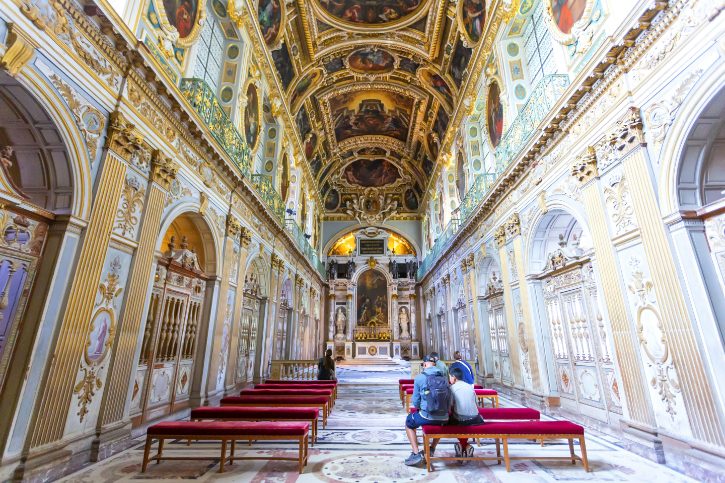
- Grand staircases, royal apartments, decorated ceilings, and formal gardens reward slow exploration.
- The Gallery of Francis I fuses Italian fresco painting with French woodcarving.
- Napoleon’s throne room is the only surviving example in France.
d. What to notice
- The 17th-century Horseshoe Staircase in the Court of Honor.
- The Golden Gate with its classical Renaissance symmetry.
- The grand Ballroom with coffered ceilings and mythological paintings.
e. Who will love it most
- Perfect if you love royal interiors, Renaissance art, and UNESCO-listed heritage.
- Best appreciated slowly. The value is in the details, not only the exterior.
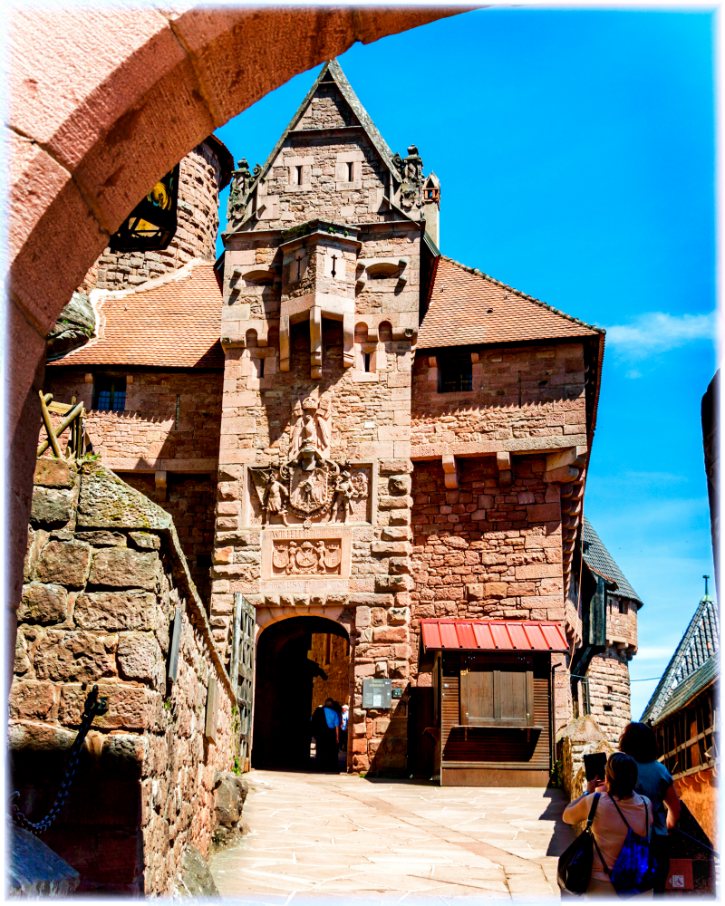
4. Château de Haut-Koenigsbourg (Orschwiller)
a. Why it stands out
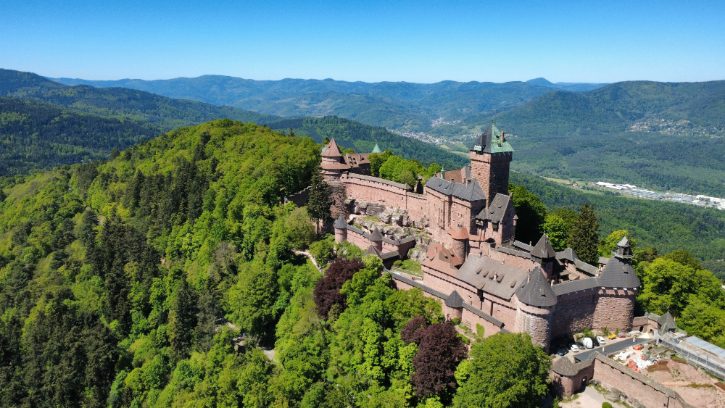
- Sitting 757 meters above the Alsace plain on pink sandstone, this castle has a rugged fortress atmosphere most French castles lack.
- It feels genuinely medieval in a way Loire Valley châteaux do not.
b. History worth knowing
- First built in 1147, then destroyed during the Thirty Years’ War.
- Kaiser Wilhelm II commissioned Bodo Ebhardt to restore it in 1899, producing a faithful recreation of a late medieval stronghold.
c. What makes it beautiful
- The Vosges forest, mountain elevation, and massive stone walls create a remote, powerful setting.
- Furnished medieval rooms and armor displays complete the atmosphere. Alsace’s French-German cultural history adds extra meaning.
d. What to notice
- The high donjon crowned with an imperial eagle.
- The star-shaped bastion designed for early artillery.
- The Kaiser’s Hall with medieval armor, and views over the Rhine Valley.
e. Who will love it most
- Perfect if you want an immersive medieval fortress experience.
- If elegant châteaux leave you wanting something grittier, this delivers.
5. Château de Chambord (Chambord)
a. Why it stands out
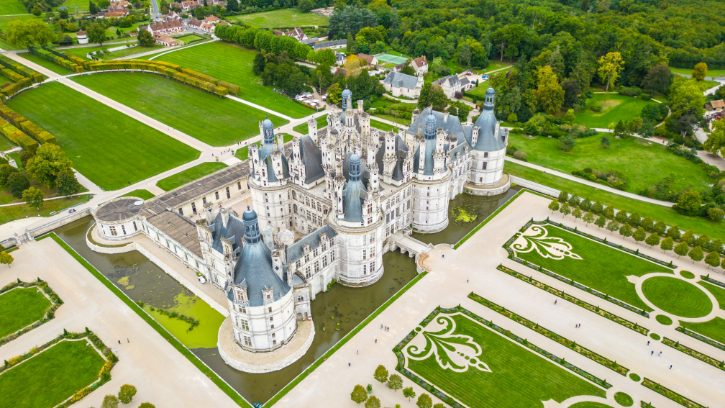
- Rising from the marshes of Sologne, Chambord is the ultimate expression of French Renaissance ambition.
- Its layout centers on a keep in a Greek cross plan, unprecedented in France.
b. History worth knowing
- Begun in 1519 by King Francis I as a display of royal majesty.
- Louis XIV later hosted grand hunting parties here and watched the premiere of Molière’s Le Bourgeois Gentilhomme.
c. What makes it beautiful
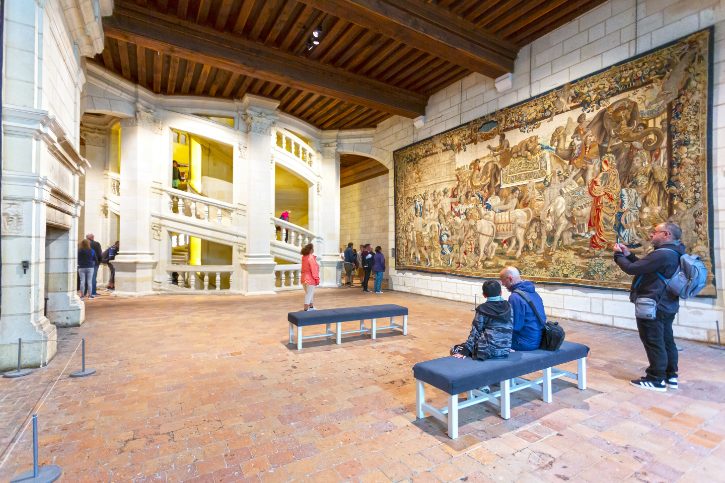
- The double-helix staircase, believed designed by Leonardo da Vinci, lets two people ascend and descend simultaneously without meeting.
- The rooftop terraces reveal a dense forest of chimneys, gables, and lanterns. Trust me, the roofscape alone is worth the visit.
- Eighty carved coffers depict the royal monogram “F” and the fire-breathing salamander.
d. What to notice
- The double-helix staircase and its open central shaft.
- The rooftop terraces and their skyline of chimneys.
e. Who will love it most
- First-time Loire Valley visitors who want a truly iconic château.
- Appreciate it from different distances: far for the silhouette, close for details, and from the terraces for the roofscape.
6. Château d’Amboise (Amboise)
a. Why it stands out
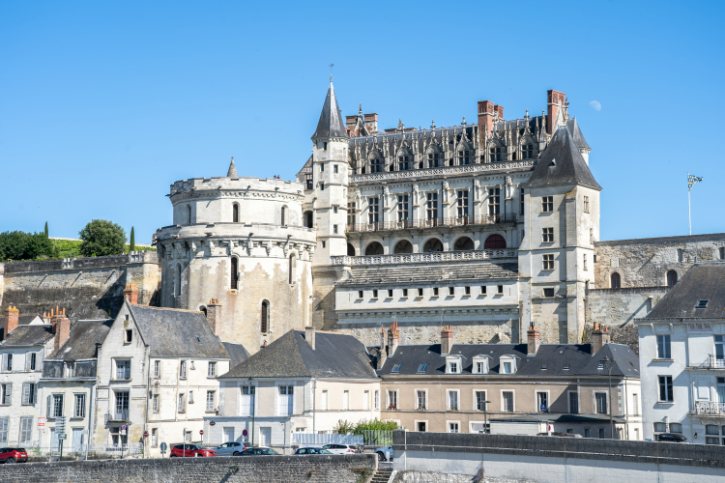
- Standing on a rocky promontory above the Loire, Amboise offers 360-degree views of a UNESCO-listed landscape.
- More compact and elevated than Chambord, it delivers a more intimate beauty.
b. History worth knowing
- A favored residence of the Valois kings and a nursery for royal children.
- Leonardo da Vinci arrived in 1516, spent his final years at nearby Clos Lucé, and is buried in the castle’s Saint-Hubert Chapel.
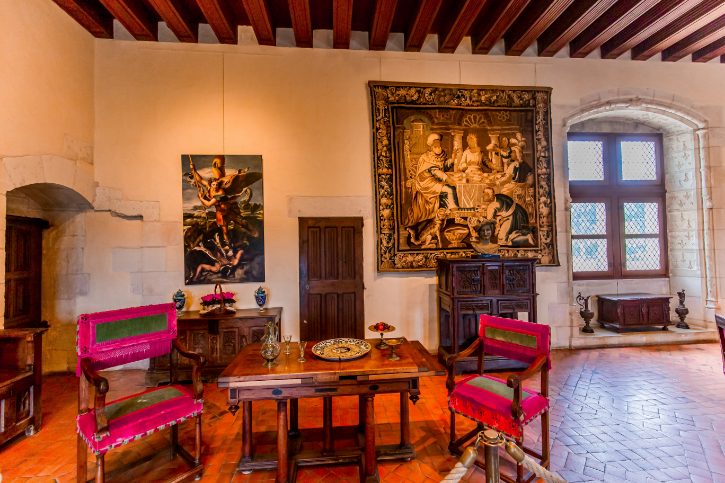
c. What makes it beautiful
- The château rises above the town, connecting with rooftops, river, and terraced gardens.
- The Minimes Tower has a wide spiral ramp designed for horses to climb to the gardens. The terraced gardens feel suspended between earth and sky.
d. What to notice
- The Saint-Hubert Chapel with Leonardo’s tomb.
- The terraces and panoramic Loire views.
- The contrast between royal architecture and the surrounding town.
e. Who will love it most
- Perfect if you want scenic views, royal history, and a more personal château experience.
- Less monumental than Chambord, but more scenic and elevated.
7. Château de Chenonceau (Chenonceaux)
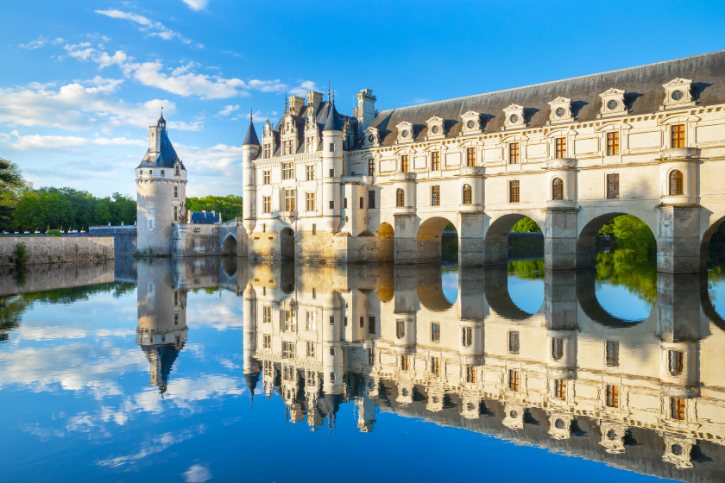
a. Why it stands out
- Chenonceau stretches across the River Cher on graceful arches, appearing to float above the water. No other castle on this list looks like this.
- One of France’s most romantic castles, with a human story as powerful as its architecture.
b. History worth knowing
- Shaped by powerful women. Diane de Poitiers built the arched bridge. Catherine de’ Medici added the 60-meter gallery on top. Louise Dupin saved the castle during the Revolution.
- During WWI, the galleries became a military hospital. During WWII, the south door was used to smuggle refugees into the Free Zone.
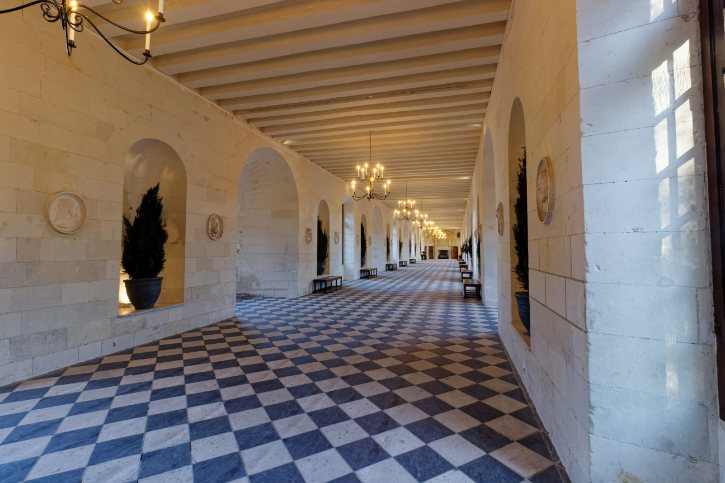
c. What makes it beautiful
- The arches, reflections, long gallery, and gardens on either bank create an effortlessly romantic scene.
- The gallery’s checkered flooring, arched windows, and river setting make it one of France’s most graceful interiors.
d. What to notice
- Arches reflected in the water below.
- The 60-meter gallery stretching across the river.
- Diane’s bedroom with its carved fireplace, and the gardens on each side.
e. Who will love it most
- Perfect if you want romance, beauty, riverside scenery, and a strong human story.
- Graceful and emotional in a way that goes far beyond architecture.
8. Château de Villandry (Villandry)
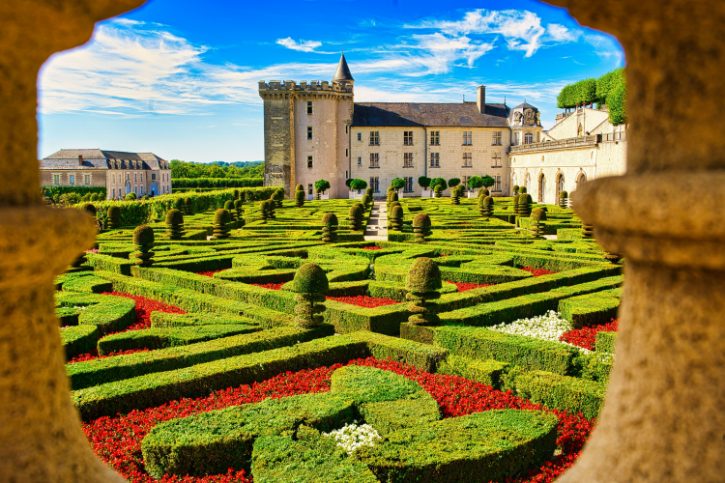
a. Why it stands out
- Villandry may not be the most dramatic building on this list, but its gardens are unforgettable.
- Seven hectares of themed gardens are arranged like living artwork across terraces.
b. History worth knowing
- Joachim Carvallo and Ann Coleman purchased the decaying property in 1906 and restored the Renaissance gardens using old plans.
- Since 2009, the gardens have been maintained using fully organic methods.
c. What makes it beautiful
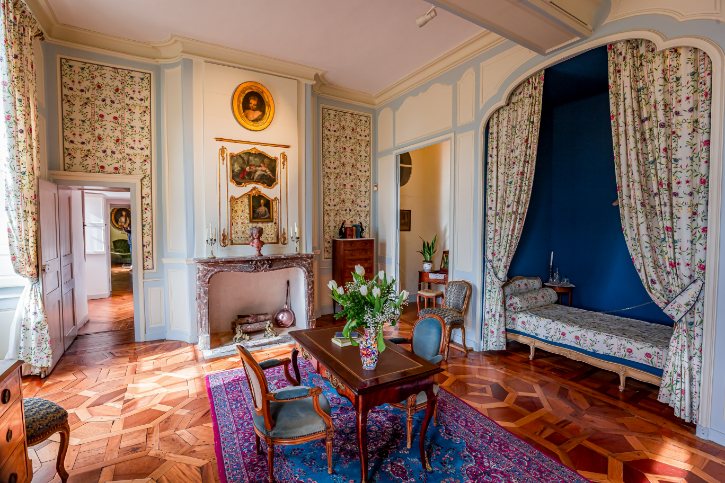
- The Ornamental Kitchen Garden uses seasonal vegetables in geometric patterns alongside 324 tree roses.
- The Love Garden has boxwood hedges shaped into hearts, fans, and sword blades, each symbolizing a different kind of love.
- The Garden of the Crosses features boxwood carvings of the Maltese, Languedoc, and Basque crosses.
d. What to notice
- The kitchen garden and its seasonal vegetable patterns.
- Upper viewpoints where the full garden geometry becomes visible.
- The relationship between the château and the gardens below.
e. Who will love it most
- Perfect if you love gardens, symmetry, elegant landscapes, and photography.
- Best appreciated from higher viewpoints where the patterns reveal themselves.
9. Château d’Ussé (Rigny-Ussé)
a. Why it stands out
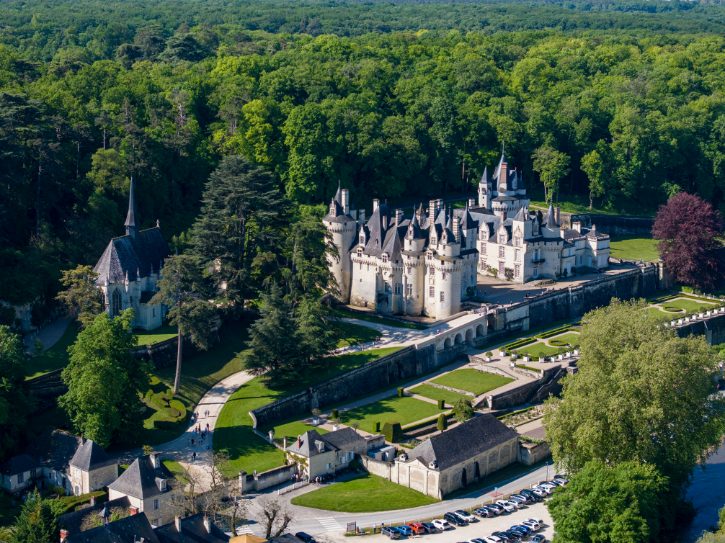
- Nestled against the Chinon Forest along the Indre River, Ussé is the castle said to have inspired Charles Perrault’s Sleeping Beauty.
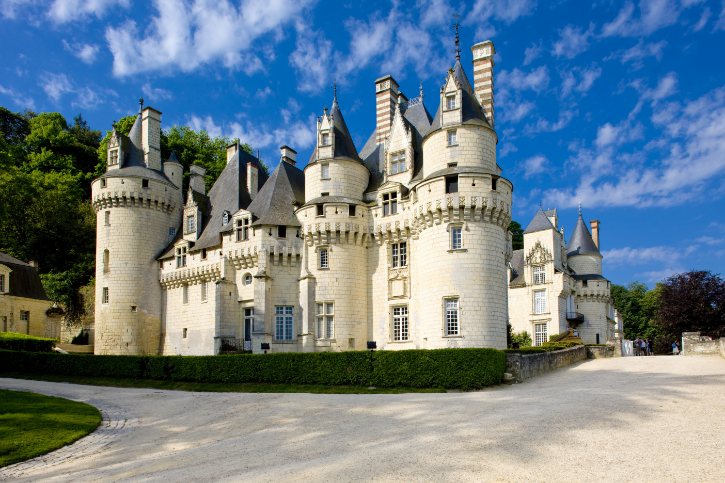
- Pale stone, pointed roofs, and romantic turrets give it the most storybook silhouette on this list.
b. History worth knowing
- Blends medieval and Renaissance elements with contributions from François Mansart (grand staircase), André Le Nôtre (gardens, 1664), and Vauban (terraces).
- The only privately owned Loire Valley castle lived in by the same family for over two centuries.
c. What makes it beautiful
- Softer and more magical than fortress-style castles. Its beauty comes from romantic approach views, wooded surroundings, and a dreamy tower skyline.
- The formal gardens contain orange trees over 200 years old.
d. What to notice
- The turreted skyline and storybook silhouette.
- The romantic approach views from below.
- The Vauban Salon with a 16th-century Italian cabinet containing 49 secret drawers inlaid with precious stones.
e. Who will love it most
- Families, fairytale lovers, romantic travelers, and anyone looking for a magical atmosphere.
- Ussé makes you feel like you have stepped into a story.
10. Cité de Carcassonne (Carcassonne)
a. Why it stands out
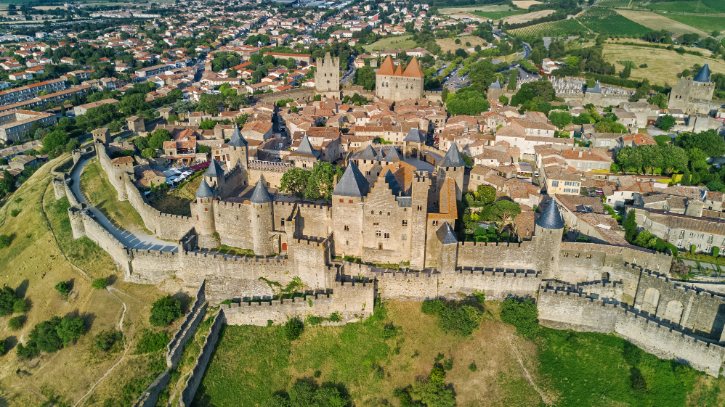
- Not a single château but an entire medieval fortified city, one of the largest in Europe, with over 2,800 years of history.
- Listed as a UNESCO World Heritage Site in 1997.
b. History worth knowing
- The inner walls date back to the 3rd century. Outer walls were added in the 13th century, creating a double-ring defense.
- After centuries of decay, the site was saved by Prosper Mérimée and Viollet-le-Duc in a 50-year restoration.
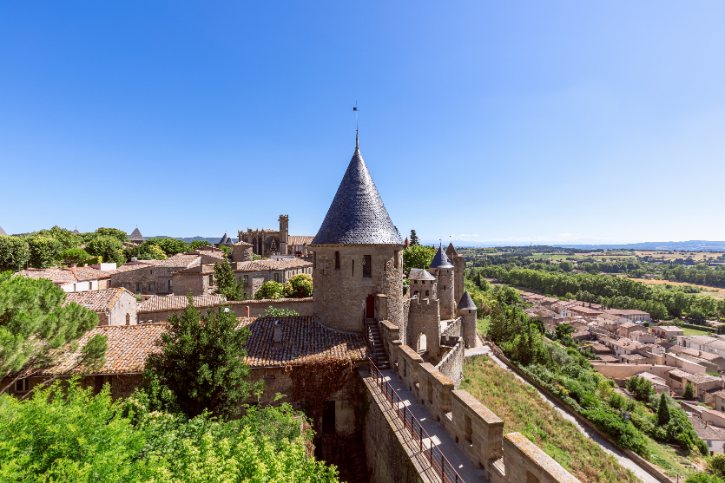
c. What makes it beautiful
- Double walls, 48 towers, four main gates, and medieval stone streets create the feeling of stepping into another world.
- The Lices, a corridor between the two walls, reveals construction differences across centuries.
- The Château Comtal sits at the highest point, protected by its own wall and dry moat.
d. What to notice
- The Porte Narbonnaise, the most imposing gate.
- The Lices corridor between the double walls.
- 12th-century murals inside the Château Comtal.
- The full fortified silhouette from outside the walls.
e. Who will love it most
- Perfect if you want an immersive medieval experience rather than a traditional château visit.
- Carcassonne expands the idea of what a “castle” can be, from a single building to an entire medieval world.