Paris has a way of turning a single day into a story when you pick your stops in the right order.
This Right Bank-led walk starts with grandeur, then moves through elegant avenues, gardens, and palaces into riverside history, stained glass, memory, and a relaxed Marais dinner.
You are not rushing through a checklist here. Instead, you get a full day with rhythm, purpose, and a natural flow.
8:30 AM: Arc de Triomphe
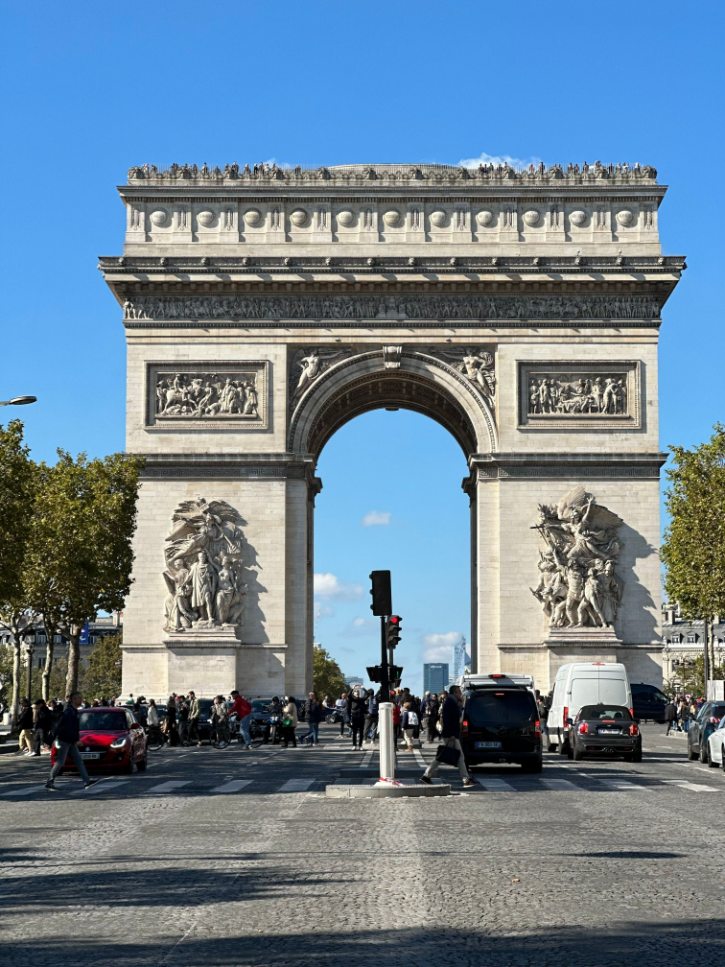
Your day begins at the Arc de Triomphe, the ceremonial starting point of this walk.
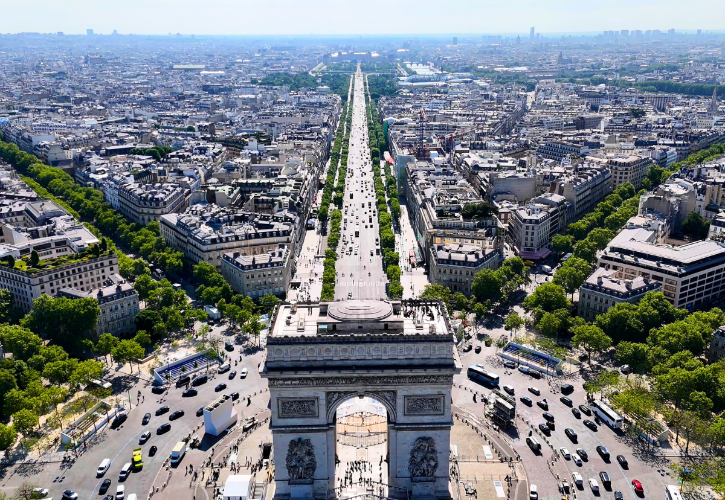
Napoleon commissioned it in 1806 to honour the victories of his Grande Armée, and it sits at the centre of the Place Charles de Gaulle, where twelve grand avenues spread out in a star.
Arriving early gives you a calm moment before the crowds build.
What to Look For
- François Rude’s La Marseillaise relief, showing the volunteers of 1792.
- The engraved names of Napoleonic battles and generals.
- The Tomb of the Unknown Soldier beneath the central vault, with its eternal flame.
Optional Rooftop
- A climb of 284 steps leads to an open platform about 50 metres up.
- From the top you can trace the historic axis toward the Louvre, plus the Eiffel Tower and Sacré-Cœur.
- Adding the rooftop changes your morning pace, so adjust the rest of your schedule.
Photo Ideas
- The monument framed by the avenues fanning out around it.
- Close shots of the carved reliefs and battle names.
Safety Note
- Never cross the traffic circle on foot. Use the Passage du Souvenir, the underground tunnel reached from the metro area.
Read More: 17 Free Things to Do in Paris
8:45 AM: Champs-Élysées Walk + Ladurée (Breakfast)
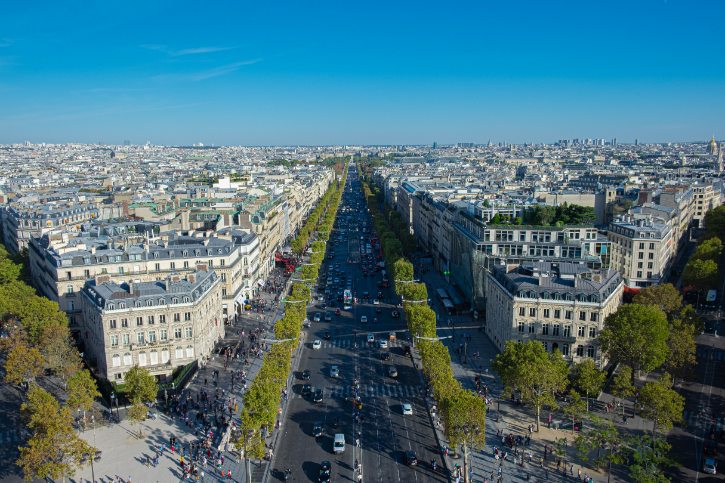
The mood now shifts from a grand monument to a refined boulevard. You walk down the Champs-Élysées, which links the Arc de Triomphe toward the Place de la Concorde.
In the early morning it is quiet, with soft light on the limestone façades, and your breakfast stop sits just a short walk down the avenue.
Why Stop Here
- Ladurée is a historic salon de thé, not just a macaron shop.
- The interior has painted ceilings, gilded mirrors, and green-and-gold woodwork.
- A seated breakfast here sets an elegant, unhurried tone.
What to Order
- Freshly baked croissants and pains au chocolat.
- Signature coffee, tea, or rich hot chocolate, with a few macarons to finish.
Photo Ideas
- The empty avenue and limestone façades in morning light.
- The decorated interior and a neat plate of macarons.
Practical Tips
- Book a table online in advance.
- Arriving earlier keeps the room calm and atmospheric.
Read More: The Best Left Bank Walking Route in Paris for One Beautiful Day
9:30 AM: Place de la Concorde
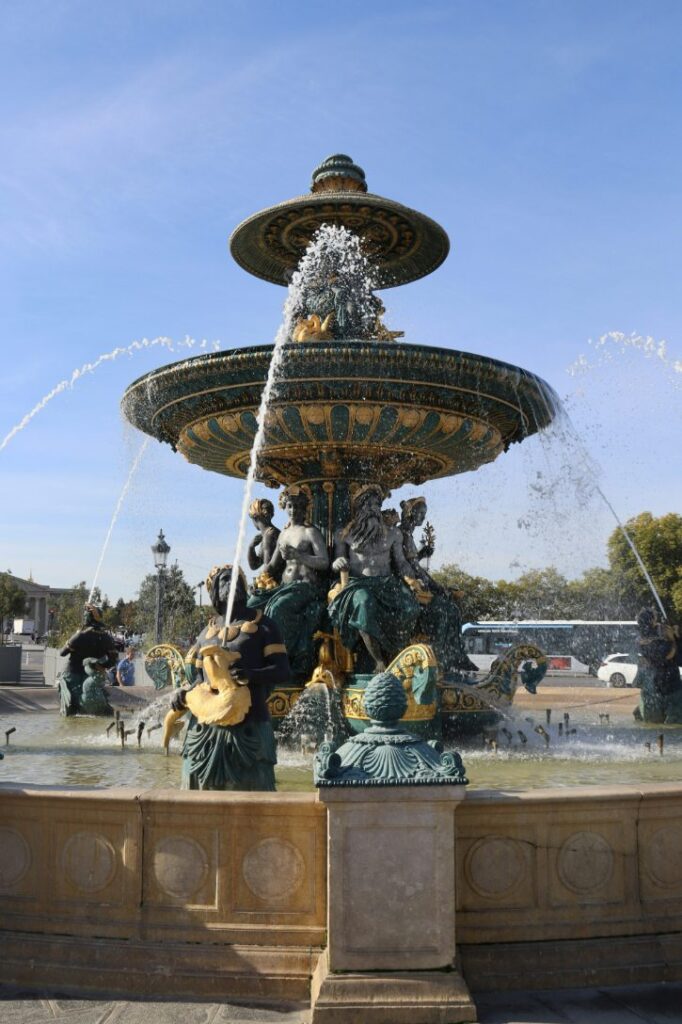
At the eastern end of the avenue, you reach the Place de la Concorde, the largest public square in Paris.
It carries a heavy, layered history, moving from royal celebration to Revolutionary terror to civic peace.
This is where the guillotine once stood, and King Louis XVI and Queen Marie Antoinette were among those executed here.
What to Look For
- The Luxor Obelisk, a 3,000-year-old Egyptian monolith gifted to France in 1831.
- The gold-leafed hieroglyphs celebrating Ramesses II.
- Two bronze fountains by Jacques Hittorff flanking the obelisk.
The Views Around You
- The Arc de Triomphe to the west.
- The Madeleine church to the north.
- The Palais Bourbon across the Seine.
Photo Ideas
- The obelisk with the long avenue behind it.
- The fountains framed against the open square.
Practical Tips
- An exterior view of the north side reveals the Hôtel de la Marine, a fine idea for a future visit.
- Expect localised fences and detours as work continues in the square.
9:45 AM: Tuileries Garden
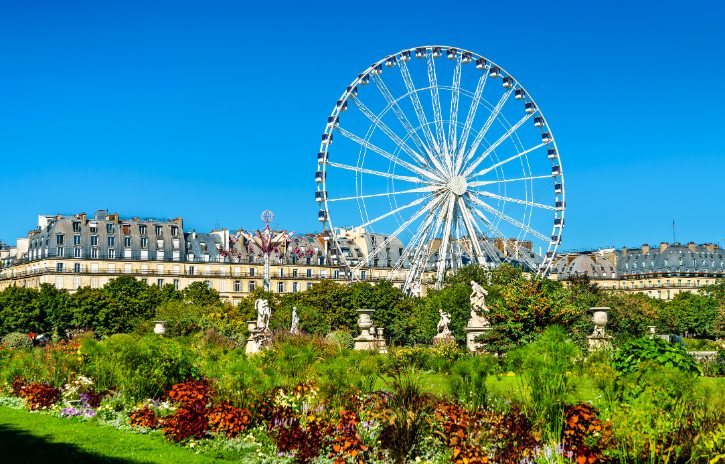
From grand stone avenues, you now slow down in the Tuileries Garden, which connects the Place de la Concorde to the Louvre.
Catherine de’ Medici first commissioned it in 1564, and André Le Nôtre later redesigned it in the classic French style.
Pull up one of the green metal chairs by the water and reset before the busy museum ahead.
What to Look For
- Strict geometric symmetry, gravel paths, and clipped lime trees.
- Sculptures along the Grand Allée, including works by Rodin and Maillol.
- The Terrasse du Bord de l’Eau, with raised views over the garden and the Seine.
Worth a Future Visit
- The Musée de l’Orangerie at the western edge holds Monet’s huge Water Lilies in oval galleries.
Photo Ideas
- The long central path with round basins and green chairs.
- A clean line of sight down the axis toward the Louvre.
Practical Tips
- Facilities include kiosks, open-air cafés, and restrooms.
- The garden may close in high winds or extreme weather.
10:30 AM: Louvre Museum
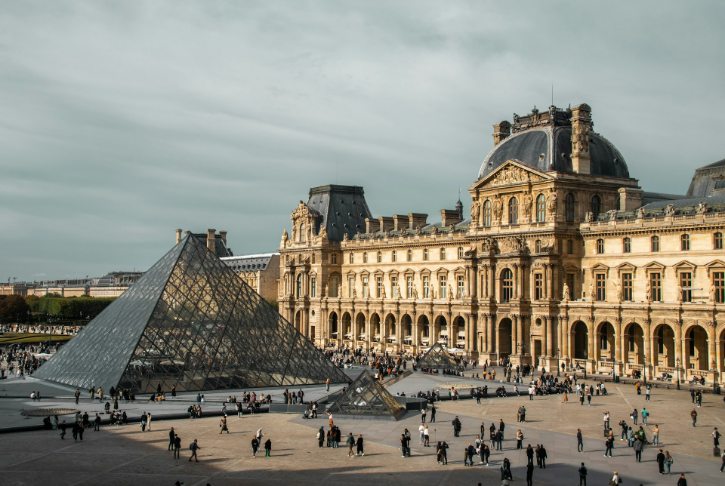
The Louvre was once a medieval fortress and royal seat, and it is now the largest art museum in the world.
It is so big that trying to see everything will wear you out, so keep to a focused two-hour highlights visit. You enter at the Cour Napoléon, home to the famous glass pyramid.
Getting In Smartly
- Use the Carrousel du Louvre entrance at 99 Rue de Rivoli to skip the longest queues.
- It is reached from the Palais-Royal / Musée du Louvre metro and is weather-protected.
- Pre-book a timed slot online, and remember the museum is closed on Tuesdays.
Highlights to Target
- The Winged Victory of Samothrace on the Daru staircase.
- The Mona Lisa in the Salle des États.
- The Venus de Milo in the Sully Wing.
If the Crowds Build
- View the large Venetian paintings opposite the Mona Lisa, including Veronese’s The Wedding at Cana, then return when the line thins.
- The quieter Richelieu Wing offers sculpture courts and decorative arts.
Photo Ideas
- The glass pyramid against the palace walls, shot from the edges of the Tuileries.
- The Cour Carrée, a quiet courtyard many visitors miss, on your way out.
12:30 PM: Domaine National du Palais-Royal
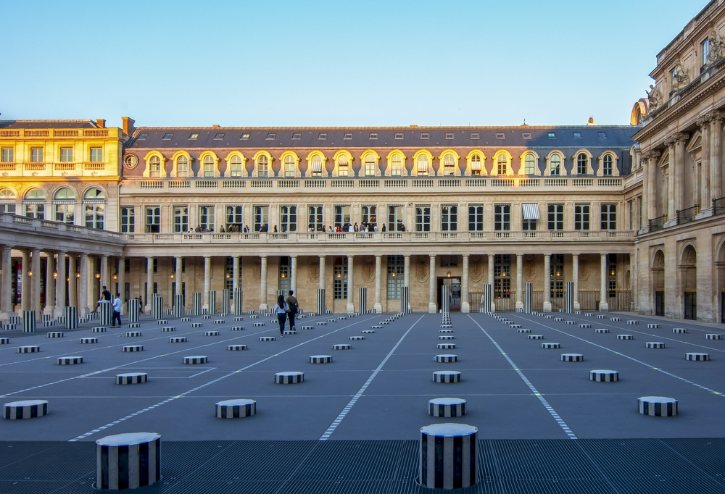
Just across the Rue de Rivoli from the Louvre lies the Domaine National du Palais-Royal, a quiet, elegant space that feels like a hidden retreat.
Built in 1633 for Cardinal Richelieu, it later became the childhood home of King Louis XIV. The palace itself is closed, but the courtyard, gardens, and arcades are open to you.
What to Look For
- Les Deux Plateaux, Daniel Buren’s 1986 installation.
- Its 260 black-and-white striped marble columns set in a neat grid.
- The symmetrical garden framed by three historic shopping arcades.
Photo Ideas
- The striped columns, especially as you weave between them.
- The calm garden paths and covered galleries.
Food Guidance
- Café Kitsuné, in the Galerie de Montpensier, is a great spot for a quick espresso.
1:15 PM: Bistrot Victoires (Lunch)
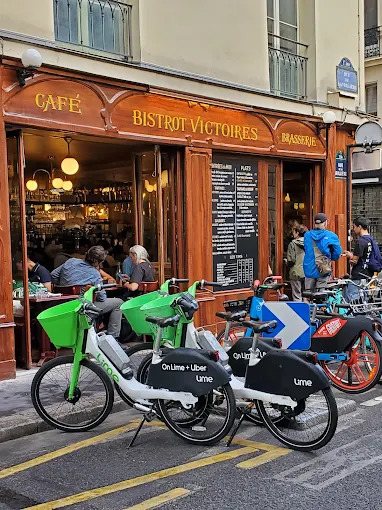
For lunch, head to Bistrot Victoires, a classic, unfussy French bistro in the central first arrondissement.
It is warm and affordable, with retro decor, brass mirrors, and closely set wooden tables. This is your proper midday rest before the island chapter.
What to Order
- Confit de canard: slow-cooked duck leg with crispy skin and potatoes.
- Entrecôte-frites: ribeye topped with a sprig of burning thyme, lit at the table.
- Escargots in garlic and parsley butter, and crème brûlée to finish.
Good to Know
- The restaurant is walk-in only, with no reservations for smaller tables.
- It is popular, so arriving may mean a short wait on the list.
- Use the facilities before you continue toward the island.
A Small Detour
- Take a two-minute walk through the nearby Place des Victoires, a circular royal square with a statue of King Louis XIV at its centre.
Photo Ideas
- The lively, traditional bistro interior.
- The elegant circle of the Place des Victoires.
2:15 PM: Pont Neuf
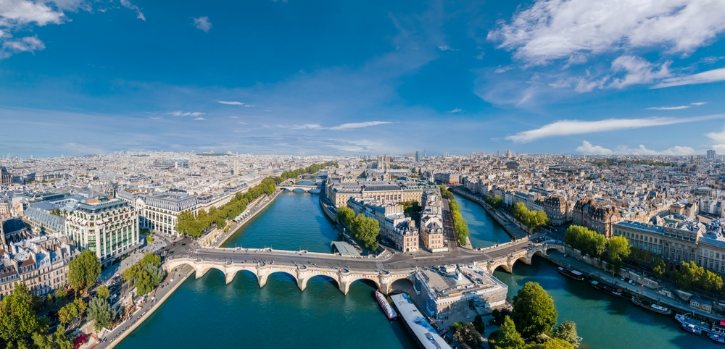
Now you move south to the Seine and cross to the Île de la Cité via the Pont Neuf.
Despite its name, which means “New Bridge”, it is the oldest surviving bridge in Paris, finished in 1607, and the first built without houses along its sides, which opened up clear river views.
This is the moment the day turns from the Right Bank into the historic island heart of Paris.
What to Look For
- The 12 stone arches spanning the two arms of the Seine.
- The 381 carved stone mascarons, expressive stone masks along the cornices.
- The bronze statue of Henri IV at the centre, restored in 1818.
A Quiet Detour
- Below the bridge lies the Square du Vert-Galant, a triangular park at the western tip of the island with lovely water-level views.
Photo Ideas
- The arches and river views from the middle of the bridge.
- Water-level shots from the Square du Vert-Galant.
2:30 PM: Sainte-Chapelle
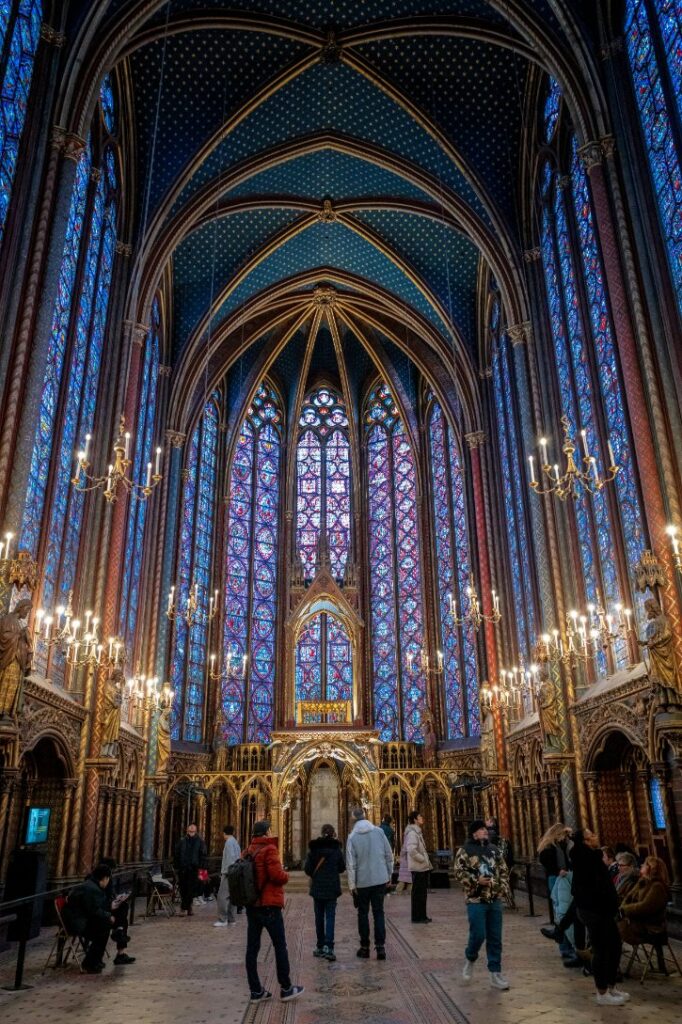
Sainte-Chapelle is a masterpiece of Gothic architecture, built in the 13th century by King Louis IX as a giant reliquary for relics of Christ’s Passion, including the Crown of Thorns.
It sits inside the active Palais de Justice, which makes it a dramatic island stop, and the afternoon light here is the reason to come.
The Two Levels
- The Lower Chapel: an intimate space with deep blue vaults and golden fleur-de-lis.
- The Upper Chapel: the main reveal, where the walls are almost entirely stained glass.
- Fifteen lancet windows, each 15 metres high, show 1,113 biblical scenes.
What to Look For
- Afternoon light pouring through the upper windows.
- The late Gothic rose window glowing at the western end.
Practical Tips
- Book a timed-entry slot online in advance.
- Arrive 20 to 30 minutes before your slot for security.
- Travel light, as bulky bags and glass bottles are not allowed.
Photo Ideas
- The glowing upper chapel from the centre of the room.
- The contrast between the dim lower space and the bright upper one.
Read More: 10 Breathtaking Churches in Paris You Can’t Miss
3:30 PM: Notre-Dame Cathedral of Paris
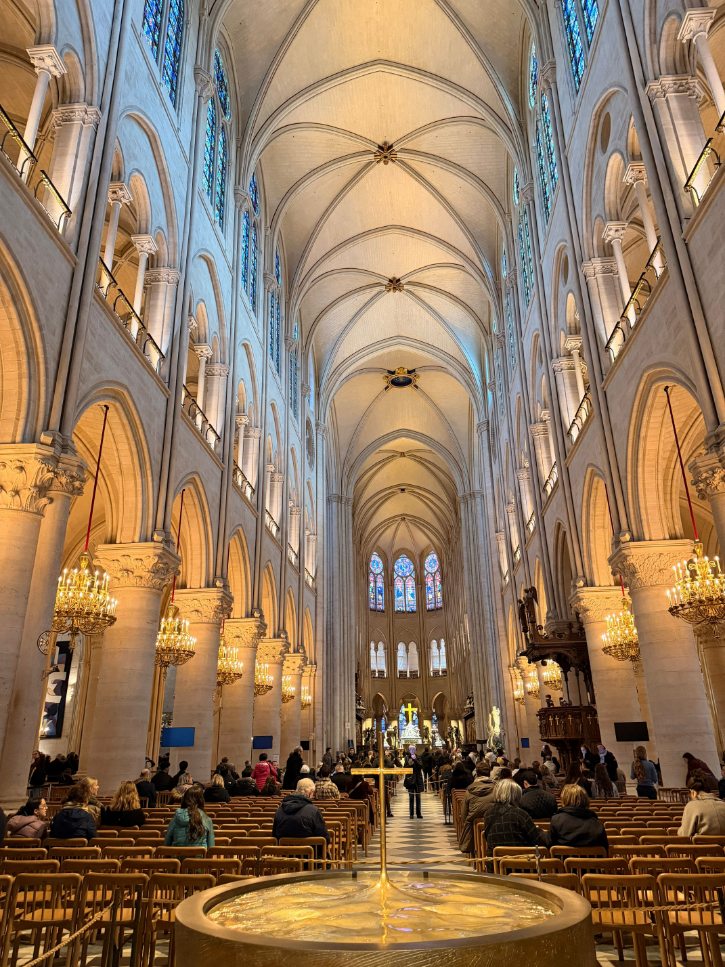
Notre-Dame is a global landmark of Gothic design. Construction began in 1163 and continued for nearly two centuries.
After the fire of April 2019, the cathedral underwent a massive restoration and reopened in December 2024 with a rebuilt spire, a restored roof, cleaned stone, and a renewed interior.
What to Look For
- Pointed arches, flying buttresses, and three carved portals on the west façade.
- The restored nave and the medieval rose windows.
- The new lighting system that fills the interior.
Practical Tips
- Book a free timed-entry slot through the official website or app.
- Slots open only the day before or the day of your visit.
- Walk-in entry is allowed but may mean long queues.
Photo Ideas
- The west façade and its carved portals.
- The exterior apse and flying buttresses from nearby bridges.
Good to Know
- It is an active place of worship, so stay quiet and respectful.
- There are no public restrooms inside.
5:00 PM: Deportation Martyrs Memorial
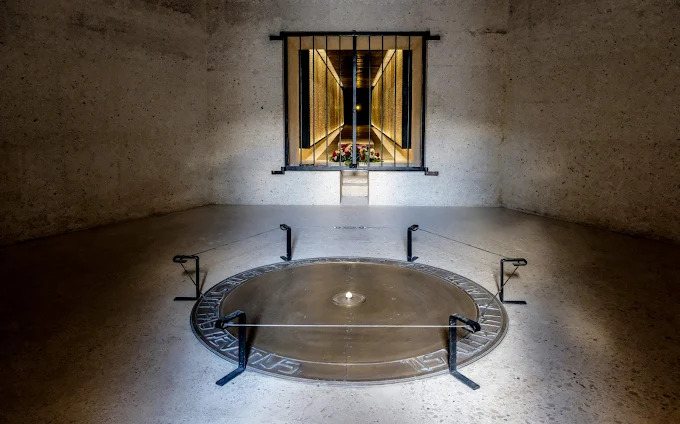
At the quiet eastern tip of the Île de la Cité stands the Mémorial des Martyrs de la Déportation, a solemn monument opened in 1962.
It honours the roughly 200,000 people deported from France to Nazi concentration camps during World War II, and its design creates a sense of confinement and quiet reflection.
What You Will Experience
- A narrow staircase down into a stark triangular courtyard.
- High walls that leave only a sliver of sky and a framed view of the river.
- A crypt corridor lined with thousands of small glass crystals, each for a life lost.
Respect and Conduct
- Silence is required throughout.
- No casual photography or posing.
- Treat the site with full respect.
Practical Tips
- Entry is free.
- Allow a short, quiet pause rather than a long visit.
5:45 PM: Hôtel de Ville
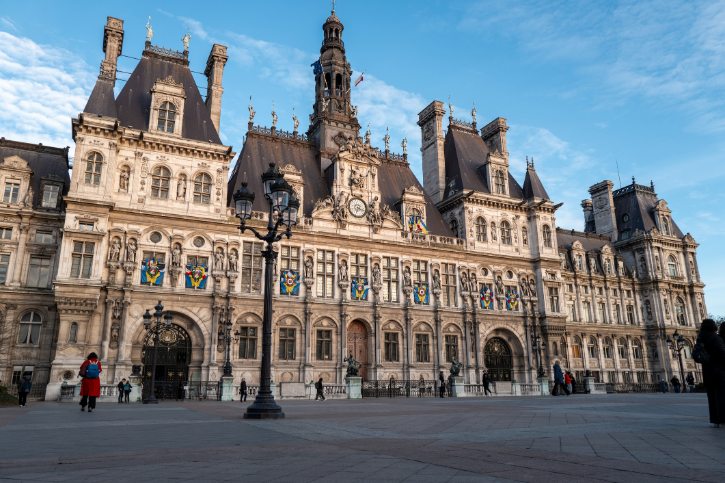
Cross back to the Right Bank via the Pont d’Arcole and you reach the Place de l’Hôtel de Ville, the seat of Paris city government since 1357.
The current building is a grand 19th-century Neo-Renaissance structure that replaced an earlier city hall burned down during the Paris Commune of 1871.
What to Look For
- The long stone façade with 338 statues of famous Parisians.
- The monumental central clock, flanked by figures of Art and Science.
- The wide pedestrian plaza, the Parvis, often used for events and installations.
Practical Tips
- The interior is closed except for scheduled exhibitions or guided tours.
- Treat this as a short exterior stop and a transition into the Marais.
Photo Ideas
- The full façade and its rows of statues.
- The clock and central entrance from across the plaza.
6:00 PM: Le Ju’ (Dinner)
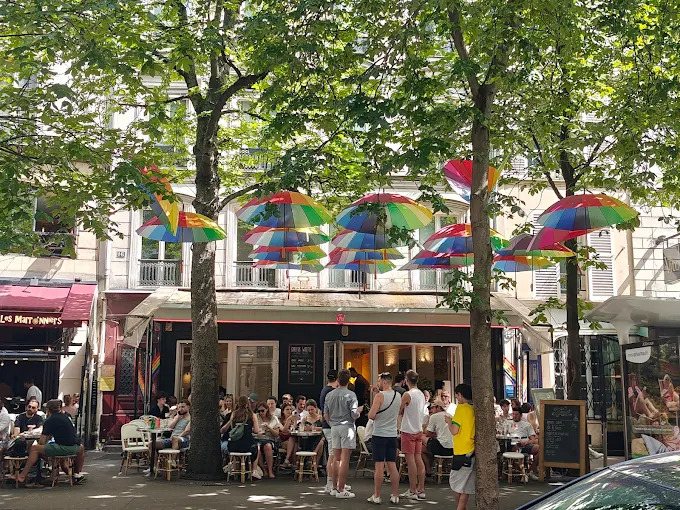
Your walk ends in the historic Marais district at Le Ju’, an easygoing neighbourhood restaurant with a lively street-front terrace.
Its generous, all-day menu makes it a perfect low-pressure place to finish a long day on your feet.
What to Order
- Tapas and shared plates: fries, roasted sweet potatoes, hummus with pita, and cheese and charcuterie boards.
- Salads and mains: the Juju chicken Caesar, salmon poke, truffle tagliatelle, beef Bo Bun, or chicken Pad Thai.
- Burgers and pizzas: beef cheeseburgers, crispy chicken burgers, and flatbread pizzas.
Good to Know
- Walk-ins are accepted, but booking is advised on weekends.
Stay a While
- The Marais stays lively into the night.
- Nearby streets like the Rue des Rosiers and the historic Place des Vosges are worth a wander.
Read More: 15 Must-Visit Spots in Le Marais