Most visitors spend their whole trip in Paris and a few famous day trips. But France’s rail network quietly connects the capital to very different historic towns and cities, and you don’t need a rental car to reach any of them.
Direct trains fan out toward fortified hilltops, grand cathedral cities, and royal riverfront towns. Each feels like a separate world. Let me show you seven that are easy to reach and far too easy to overlook.
1. Laon: A Fortified Gothic City High Above the Plains
a. Why Visit Here
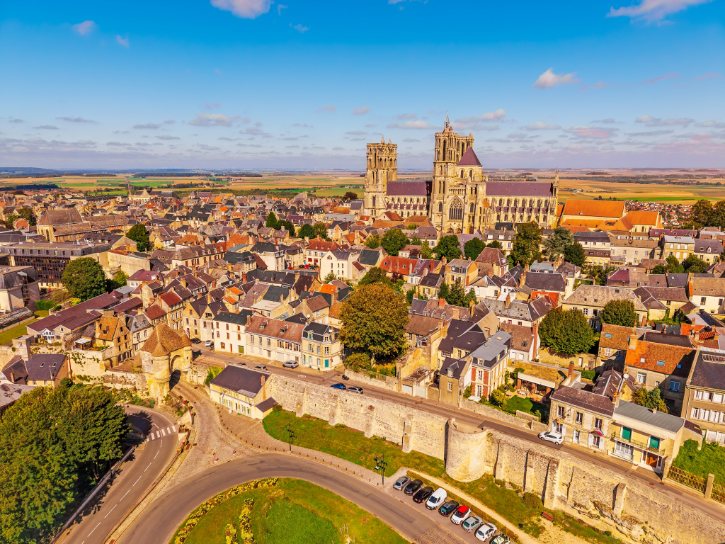
Laon’s whole appeal is its setting. The old city sits on a limestone ridge about 100 meters above the Picardy plains, once nicknamed the Montagne Couronnée, or Crown Mountain.
The station sits in the lower town, and the medieval city waits above, wrapped inside roughly 7 kilometers of medieval ramparts holding an intact 12th and 13th century townscape.
It’s a natural fit for architecture lovers, photographers, and anyone who enjoys a walled medieval city.
b. Best Things to See and Do
- Cathédrale Notre-Dame de Laon: An Early Gothic masterpiece from 1150 to 1235, predating Notre-Dame de Paris and Chartres. Note the four-tier interior and the sixteen stone oxen carved into the towers, honoring the animals that hauled limestone up the hill.
- The ramparts and gateways: They trace the plateau’s edge and open onto wide countryside views.
- Abbaye Saint-Martin: A former Premonstratensian abbey showing late 12th century transitional design.
- Chapelle des Templiers: A rare octagonal Templar chapel in the museum gardens.
- Secrets sous la ville: The official guided tour through chalk quarries and casemates beneath the citadel, a constant 11°C, so bring a layer. Collect tickets at the tourism office on the cathedral square 30 minutes before departure, and book ahead.
c. How Much Time You Need
Laon works as a full day trip, and a half day feels rushed once you add the climb. Aim for 7 to 8 sightseeing hours covering the cathedral, ramparts, medieval streets, lunch, and an underground tour.
Overnight? Worth it for sunset photography along the ramparts.
d. How to Get There From Paris by Train
- Depart from: Paris Gare du Nord
- Arrive at: Gare de Laon
- Operator: TER Hauts-de-France, direct
- Typical journey: about 1h35 to 1h48, some off-peak up to 2h11
Skip any routing via Reims, which adds needless connections and time.
e. Practical Tips for Visiting
- Gare de Laon sits in the lower town.
- To reach the upper city, either walk a steep 5 kilometers up over 200 steps, or take the municipal bus to the cathedral plateau.
- Take the bus uphill if you’re short on time, and save your legs for the old town.
- Up top, expect cobblestones and slopes.
2. Arras: Monumental Squares Above a Hidden Underground City
a. Why Visit Here
Arras gives you two experiences in one. Above ground, grand civic squares. Below ground, an entire hidden world.
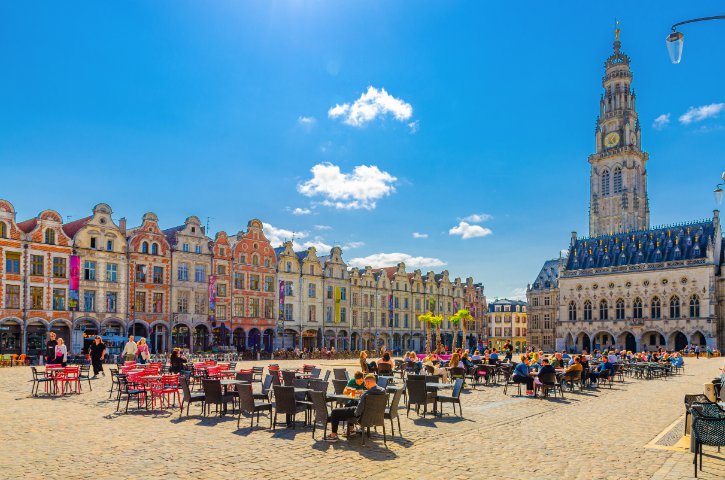
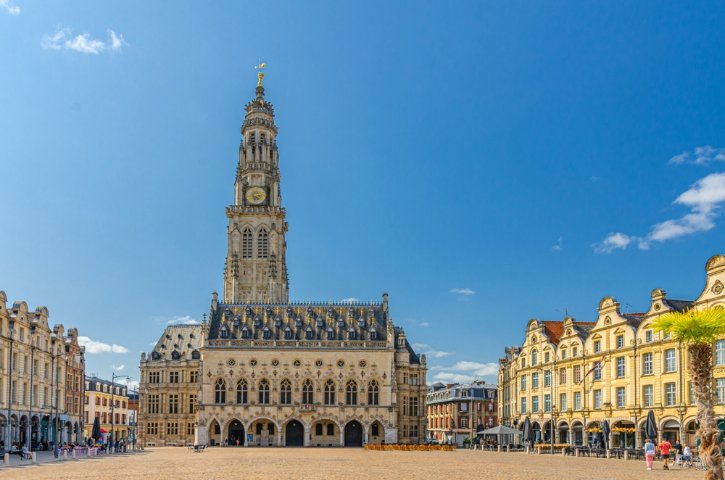
The city centers on two connected squares, Place des Héros and Grand’Place, framed by 155 matching townhouses in the Flemish Baroque style, with the 75-meter UNESCO-listed Belfry rising above. Beneath the streets lie chalk quarries and a strong link to First World War history.
That mix makes it especially rewarding for history travelers and architecture fans.
b. Best Things to See and Do
- Place des Héros and Grand’Place: The social heart of Arras. Walk through slowly and notice the gabled façades and arcades. Market days can be lively, though arrangements vary.
- The Belfry: A UNESCO-listed tower with sweeping views across Artois, reached by elevator plus a final stair climb.
- Les Boves: Limestone quarries dug 12 meters below the center from the 10th century. Enter through the Town Hall basement on a 45-minute guided tour.
- Carrière Wellington: A separate WWI site 1.5 kilometers south. In 1916 and 1917, tunnelers linked chalk quarries into a barracks that secretly housed 24,000 Allied soldiers before the Battle of Arras, now seen on an audio-guided tour.
- Time in the squares: Leave room for a café or the market.
Keep the two sites straight. Les Boves are ancient town quarries under the center. Wellington Quarry is a WWI site to the south. Doing both works if you plan around the timed entries.
c. How Much Time You Need
Arras is one of the strongest day trips here, with a fast train and compact center. Plan for 7 to 9 hours: the squares, belfry, lunch, and one or both underground sites.
Overnight? Not needed for central Arras. It helps mainly if you add WWI memorial sites outside the city, like the Canadian National Vimy Memorial.
d. How to Get There From Paris by Train
- Depart from: Paris Gare du Nord
- Arrive at: Gare d’Arras
- Fastest: direct TGV INOUI, about 50 to 52 minutes
- Slower: some TER services take up to 1h50 due to stops
Aim for a direct TGV INOUI. Departures aren’t evenly spread, with gaps around midday, so book outbound and return together.
e. Practical Tips for Visiting
- Gare d’Arras is about 800 meters from Place des Héros, a flat 10-minute walk, and the squares and belfry are easy on foot.
- The Les Boves entrance is inside the Town Hall on Place des Héros.
- Wellington Quarry is about a 20-minute walk south, or a short bus ride.
- Both underground sites need advance online reservations, so book them first.
3. Troyes: Timber-Framed Streets in the Heart of Historic Champagne
a. Why Visit Here
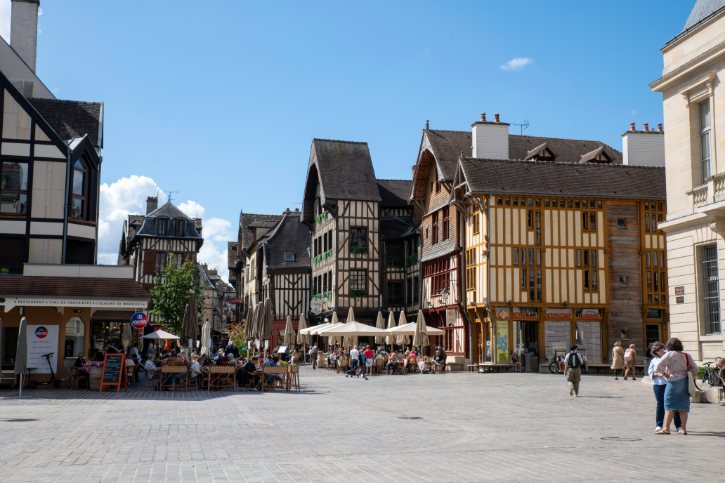
Troyes is all about atmosphere at street level. Think colorful timber-framed lanes, world-class stained glass, and a deep link to Champagne.
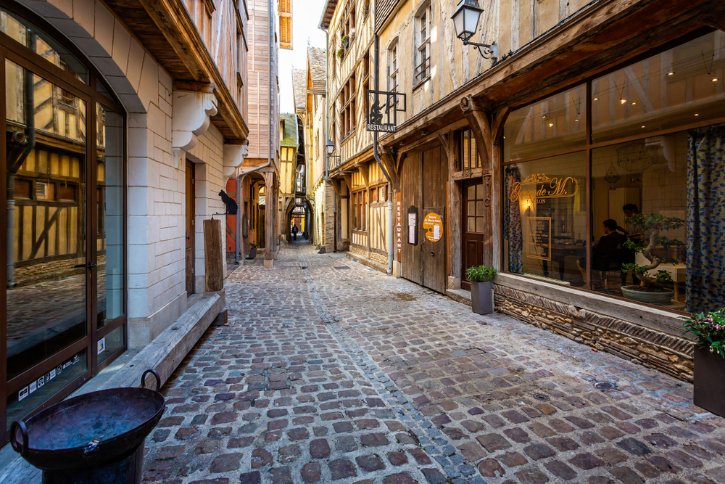
The old town even has a famous shape, tracing the outline of a Champagne cork, the Bouchon de Champagne. After a fire in 1524, the city rebuilt in timber frame, leaving colorful streets and narrow lanes.
Where Arras feels monumental, Troyes feels intimate and made for wandering, ideal for architecture lovers and photographers.
b. Best Things to See and Do
- The Bouchon de Champagne on foot: The best way to see Troyes is walking its timber-framed streets, focusing on the central pedestrian area rather than a long checklist.
- Ruelle des Chats and nearby lanes: The narrowest alley in town, where opposing roofs almost touch. Explore the surrounding lanes too.
- Cathédrale Saint-Pierre-et-Saint-Paul: Over 1,500 square meters of stained glass from the 13th to 19th centuries, plus a notable treasury.
- Basilique Saint-Urbain: A Gothic gem with tall windows and delicate stone tracery.
- Cité du Vitrail: In the restored Hôtel-Dieu-le-Comte, it tells the story of stained glass across the centuries.
- Musée d’Art Moderne: Beside the cathedral, with works by Derain, Vlaminck, and Matisse. The standout if you want one museum.
c. How Much Time You Need
Under normal schedules, Troyes works as a full day trip. Plan for about 6 to 8 hours: the old town, churches, lunch, and one museum.
Overnight? Worth it for a slower day.
d. How to Get There From Paris by Train
Normal service:
- Depart from: Paris Gare de l’Est
- Arrive at: Gare de Troyes
- Operator: TER Fluo Grand Est, direct
- Typical journey: about 1h25 to 1h30
e. Practical Tips for Visiting
- Gare de Troyes is about 800 meters from the central area, a flat 10-minute walk.
- The old town is very walkable. Wear comfortable shoes for the cobbles.
- Municipal museums, including the Musée d’Art Moderne, close on Mondays, and some close over lunch off-season. Pick your priority museum and check its schedule.
4. Amiens: A Gothic Cathedral, Canals, and Floating Gardens
a. Why Visit Here
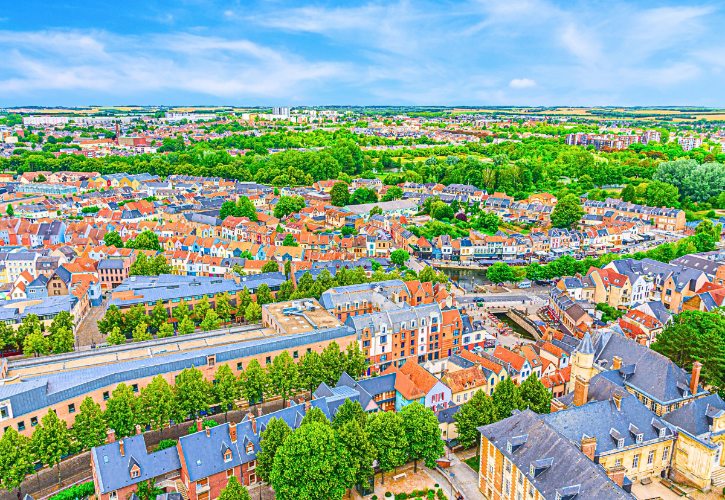
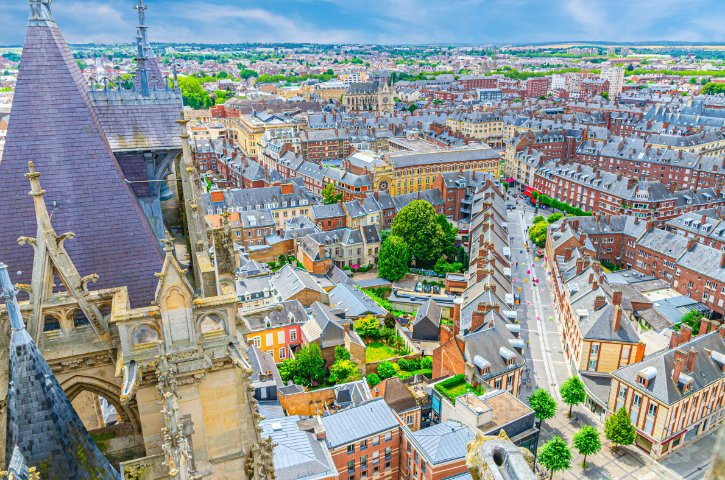
Amiens is where soaring architecture meets water and gardens. On the Somme River, it’s anchored by the Cathédrale Notre-Dame d’Amiens, a UNESCO site and the largest Gothic cathedral in France by internal volume.
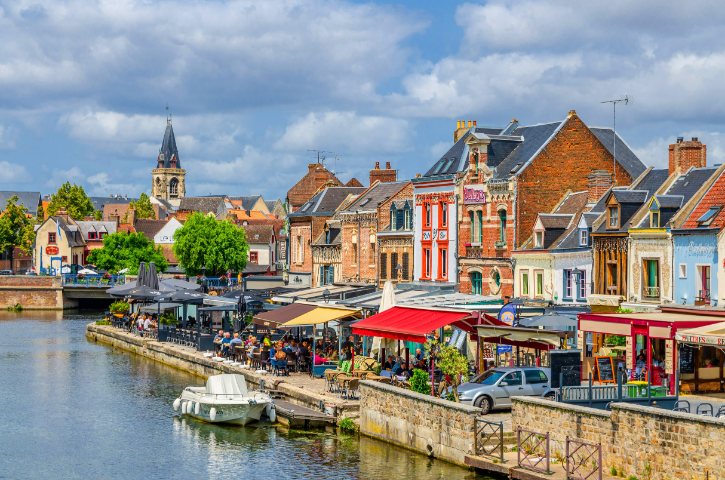
Just north sits Saint-Leu, a waterside quarter of canals and cafés. Then come the Hortillonnages, floating market gardens threaded by canals. Together they create something you won’t find elsewhere, a treat for anyone who loves architecture and nature on the same day.
b. Best Things to See and Do
- Cathédrale Notre-Dame d’Amiens: Built from 1220 to 1270, this UNESCO cathedral is famous for its harmony. Look for the 42-meter nave, the western façade sculptures, and the carved choir stalls.
- Saint-Leu: Head for the canals and riverfront lined with timber-framed houses and cafés, perfect for a slow lunch.
- Les Hortillonnages: 300 hectares of floating gardens, cultivated since the Middle Ages. See them by traditional flat-bottomed boat from April through October, or by walking path off-season.
- Maison de Jules Verne: The restored townhouse where the author lived from 1882 to 1900, with his library and manuscripts. The strongest indoor stop.
- Musée de Picardie: France’s first purpose-built fine arts museum, with paintings by Fragonard and El Greco. A great poor-weather backup. Closed Mondays.
Remember the boats are seasonal.
c. How Much Time You Need
Amiens works comfortably as a full day trip. Plan for 7 to 9 hours covering the cathedral, Saint-Leu, a boat trip or canal walk, lunch, and one indoor stop.
Don’t cram the cathedral, gardens, Jules Verne house, and a museum into one day. Pick a boat trip or a museum, not both. An overnight helps for seasonal evening events or awkward boat times.
d. How to Get There From Paris by Train
- Depart from: Paris Gare du Nord
- Arrive at: central Gare d’Amiens
- Operator: TER Hauts-de-France, direct and simplest
- Typical journey: about 1h07 to 1h20, frequent departures
One warning. Book to central Gare d’Amiens, not TGV Haute-Picardie, which sits 40 kilometers out and needs a shuttle.
e. Practical Tips for Visiting
- Central Gare d’Amiens is about 800 meters from the cathedral, a 10-minute walk.
- Saint-Leu sits beside the cathedral, so the two form one easy route.
- The boat point is about 15 minutes northeast of Saint-Leu.
- Boats need reservations on summer weekends and run April through October
- November to March, shift toward the Jules Verne house and Musée de Picardie.
5. Blois: A Royal City Where Several Centuries Meet in One Château
a. Why Visit Here
If you want a real Loire Valley château without a car or rural transfer, Blois is the easiest introduction there is.
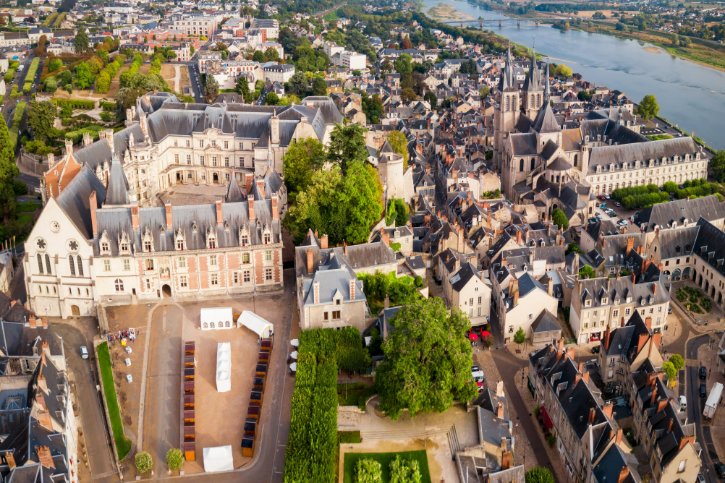
On hills above the Loire, the city is built around the Château Royal de Blois, once home to seven kings and ten queens. Its four wings each represent a different architectural period, so French style evolves before your eyes in one visit.
That range under one roof sets Blois apart from Amboise and Tours. It’s ideal for a substantial royal château day out with simple logistics.
b. Best Things to See and Do
- Château Royal de Blois: Move between the four wings, from the 13th-century fortress to Renaissance and Classical design. Don’t miss the famous openwork spiral staircase.
- The old town: Sloped lanes, stone staircases, and Renaissance mansions surround the château.
- Escalier Denis Papin: A monumental staircase rising through the old town, with rooftop and river views.
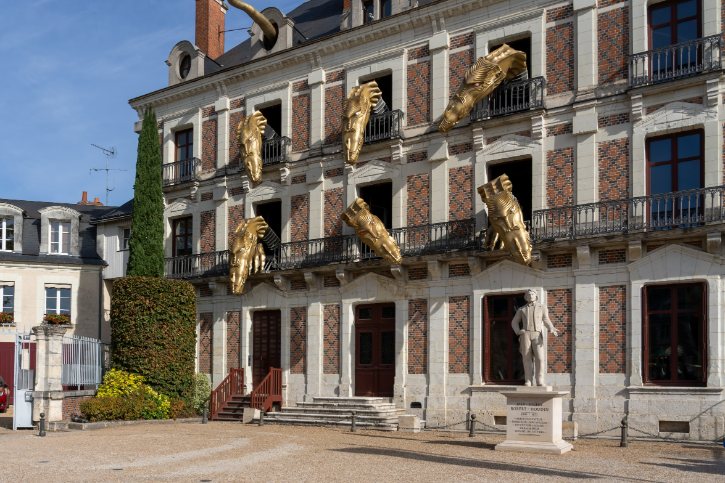
- Maison de la Magie Robert-Houdin: Across the square, with mechanical illusions and hourly mechanical dragons from its windows. It runs April through August plus school holidays, so check dates.
- The Loire riverfront: The best views back toward the city on its hill.
Staying overnight in season, the evening Sound and Light show lights up the courtyard walls. Check its current dates.
c. How Much Time You Need
Blois makes a strong long day trip. Plan for 7 to 9 hours, with two to three hours at the château, plus the old town, riverfront, lunch, and the magic museum.
Overnight? Don’t book one automatically. The château and old town are very doable in a day. Stay over mainly for the Sound and Light show or to reach another Loire site.
d. How to Get There From Paris by Train
- Depart from: Paris Gare d’Austerlitz
- Arrive at: Gare de Blois-Chambord
- Operator: TER Rémi, direct
- Typical journey: about 1h20 to 1h30, regular through the day
Some searches show high-speed journeys via Montparnasse with a transfer, but for a day trip the direct Austerlitz service is simplest. Filter for direct trains.
e. Practical Tips for Visiting
- The station is called Blois-Chambord, but it sits inside Blois, 800 meters (a flat 10-minute walk) from the château.
- Arriving there means you’ve arrived in Blois. The Château de Chambord is actually 17 kilometers east and needs a separate shuttle. Keep that trip separate.
- The center has slopes and stone stairs, worth noting for mobility concerns.
6. Amboise: Royal Loire Views and Leonardo da Vinci’s Final Home
a. Why Visit Here
Amboise pairs Renaissance royal history with one of the most famous names in history, Leonardo da Vinci.
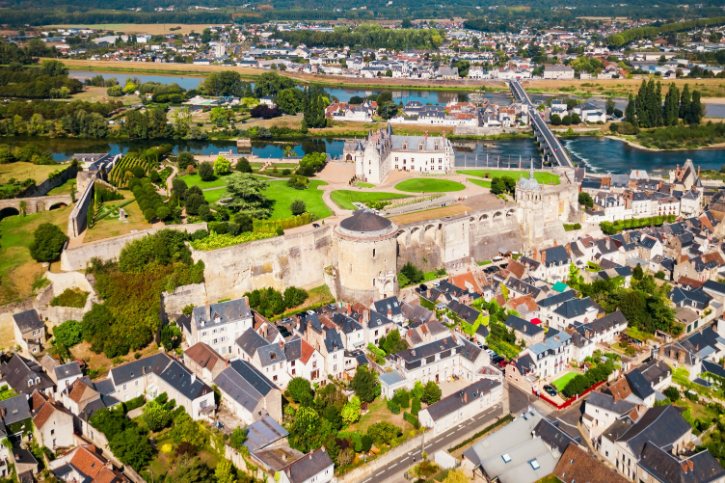
On a rocky promontory over the Loire, the Château Royal d’Amboise was home to Charles VIII and Francis I. A short walk away sits Château du Clos Lucé, where Leonardo spent his final years. Where Blois shows grandeur, Amboise tells a more personal Renaissance story, ideal for families and Leonardo fans.
b. Best Things to See and Do
- Château Royal d’Amboise: Explore the royal apartments and gardens, then the high bastion terraces for panoramic Loire views.
- Chapelle Saint-Hubert: This Flamboyant Gothic chapel holds the recognized burial site of Leonardo da Vinci. It reopened after a multi-year restoration.
- Château du Clos Lucé: 500 meters away, this is where Francis I invited Leonardo in 1516. Inside are his apartments and workshops, and the gardens hold forty working models of his inventions.
- The old town: Walk the streets between the two châteaux to experience Amboise as a real town.
- The Loire bridge and river views: The Pont Michel Debré gives the best views of the castle above the water.
Don’t try to add a third château. The two here already fill a day.
c. How Much Time You Need
Amboise is a little different. A day trip is possible, but it’s noticeably better with at least one night.
Seeing both châteaux properly takes about 5 to 6 hours on site, before travel, the walk into town, and lunch. You can still make a long day trip with an early train, just at a tighter pace. One night adds a relaxed visit, evening dining along Rue Nationale, and quiet time by the river.
d. How to Get There From Paris by Train
Direct regional:
- Depart from: Paris Gare d’Austerlitz
- Arrive at: Gare d’Amboise
- Operator: TER Rémi, direct, about 1h50
High-speed connecting:
- TGV INOUI from Paris Gare Montparnasse to Saint-Pierre-des-Corps, then a TER for the final 15 minutes. Total about 1h25 to 1h40.
The connecting route is faster, but the direct TER from Austerlitz avoids the transfer. Plan for roughly 1h25 to 1h50, and choose faster or simpler.
e. Practical Tips for Visiting
- Gare d’Amboise sits on the north bank of the Loire.
- Reaching the center is a 2-kilometer walk (15 to 20 minutes) across the bridge, with excellent castle views. With luggage or children, a taxi may be easier.
- Between the two châteaux, expect a moderate uphill walk.
- Check the final admission times for both, since entry closes before the sites do. This matters most on a same-day trip.
7. Tours: A Lively Loire City Rather Than Another Château Stop
a. Why Visit Here
Tours flips the script. It isn’t just a base for châteaux. It’s a genuine city with its own neighborhoods, food culture, and evening scene.
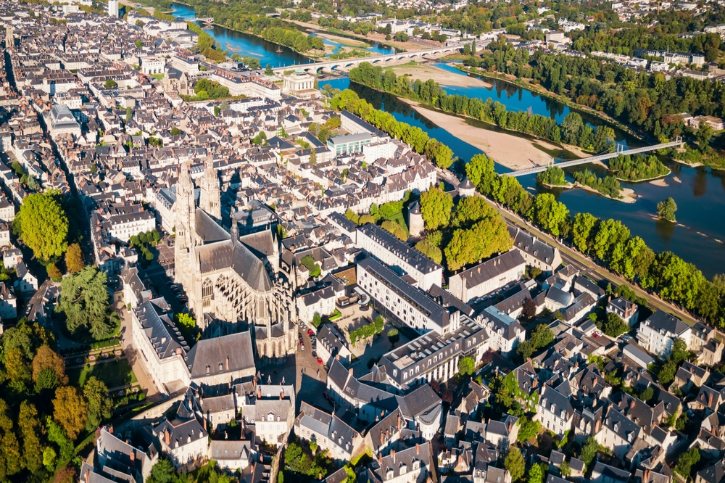
As the largest city in Indre-et-Loire, it has distinct quarters. The east holds the Cathedral Quarter around Saint-Gatien, the west holds Vieux Tours around Place Plumereau and the Basilique Saint-Martin.
That range, from religious history to food and nightlife, separates Tours from Blois and Amboise. It’s perfect for travelers who want to live in a city for a day rather than tour a monument.
b. Best Things to See and Do
- Cathédrale Saint-Gatien: A Flamboyant Gothic façade, twin towers, and preserved medieval stained glass.
- Cloître de la Psalette: A quiet 15th-century cloister beside the cathedral.
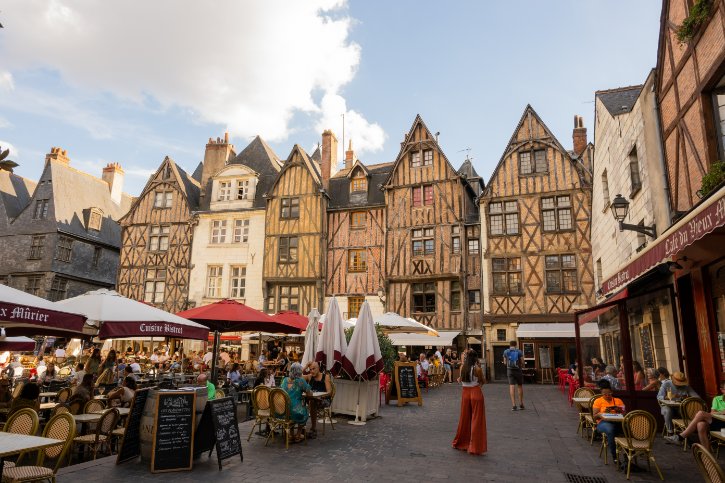
- Vieux Tours and Place Plumereau: The lively heart of the old town. Wander beyond the square into the timber-framed streets and mansions.
- Basilique Saint-Martin: A major pilgrimage site with the tomb of Saint Martin and the medieval Tour Charlemagne and Tour de l’Horloge
- Musée du Compagnonnage: A distinctive museum in a former abbey, celebrating French craft guilds with works in stone, wood, metal, and leather.
- Centre de Création Contemporaine Olivier Debré: A contemporary art center, the best modern alternative to a historical museum.
- Food and wine: Visit Les Halles de Tours for regional specialties and local wines from Vouvray, Montlouis, and Chinon.
c. How Much Time You Need
With a well-timed high-speed train, Tours works as a full day trip. Plan for 8 to 10 hours covering the cathedral quarter, Vieux Tours, the Saint-Martin area, lunch, and one museum.
Extra nights change the experience. One day covers the main quarters and one museum. One night adds the evening atmosphere and restaurants a day trip misses. Two or more nights make sense only to use Tours as a base for other Loire destinations.
d. How to Get There From Paris by Train
Fastest pattern:
- Depart from: Paris Gare Montparnasse
- Arrive at: Central Gare de Tours
- Operator: TGV INOUI (OUIGO also available), about 1h12 to 1h20
The catch: some trains stop at Saint-Pierre-des-Corps, a junction 4 kilometers out, not central Tours. From there, take a 5-minute shuttle into the center.
Slower direct: TER Rémi from Paris Gare d’Austerlitz runs straight to central Tours in about 2h10. One train, no transfer, but longer. Times vary widely, so check the full journey.
e. Practical Tips for Visiting
- Central Gare de Tours sits right downtown. The Cathedral Quarter is about 800 meters (10 minutes) east, and Vieux Tours and Place Plumereau about 5 kilometers (20 minutes) west.
- Line A of the tramway links the station to both quarters.
- If you arrive at Saint-Pierre-des-Corps, take the shuttle in. When booking from Paris, search for Tours as your final destination, not just the leg to Saint-Pierre-des-Corps.