Imagine opening your front door and stepping straight into solid stone. Across France, ordinary people did exactly that for hundreds of years. They carved kitchens into cliffs, dug farms beneath their own fields, and tucked whole houses under giant rock overhangs.
These homes are still standing, and you can walk right through many of them. Each one shows how clever people turned bare stone into a warm place to live. 😊
1. Graufthal, Alsace
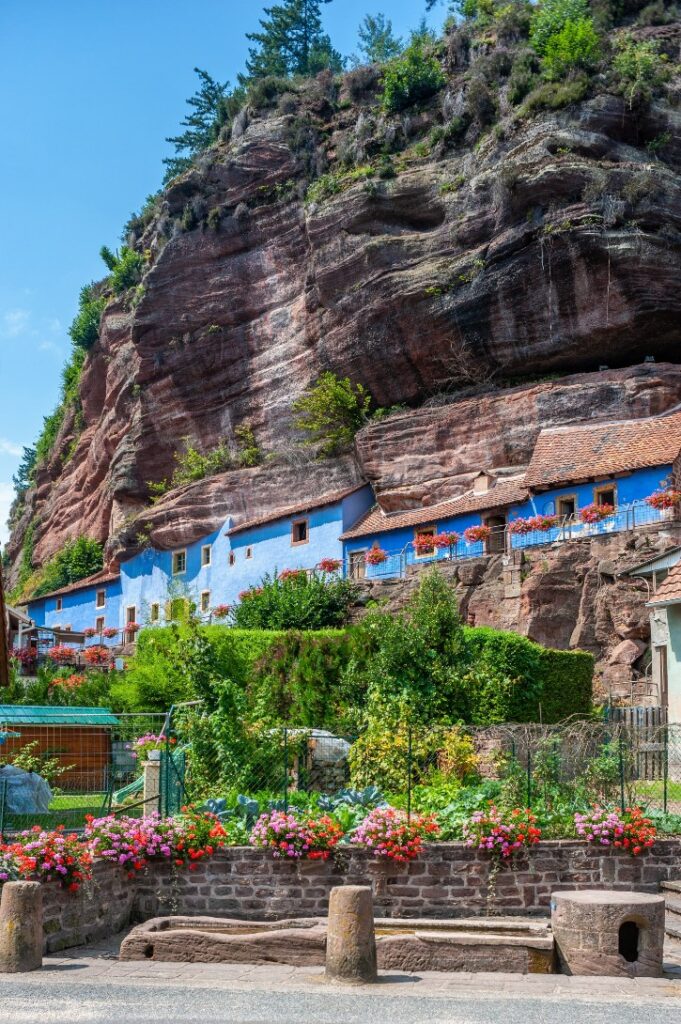
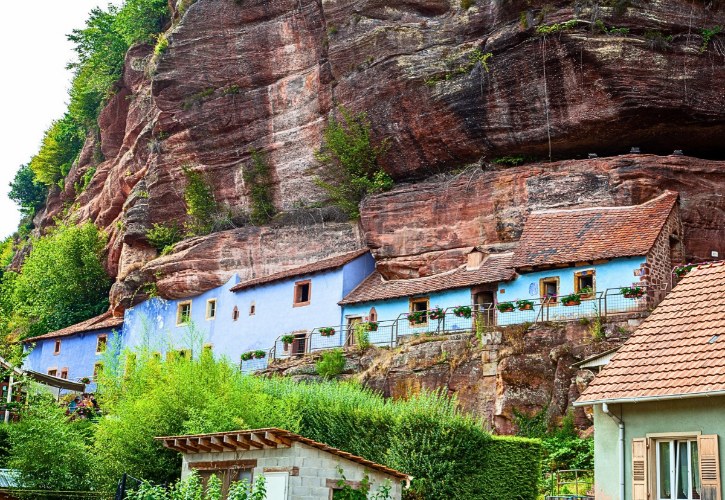
In the quiet hamlet of Graufthal, in the Northern Vosges, families once lived inside a pink sandstone cliff. The houses here, called the Maisons des Rochers, lean right against the rock, letting the cliff serve as back wall, side walls, and ceiling.
a. Why These Homes Are Unlike Any Other
Most cave homes in France are dug deep into a hillside. In Graufthal, the cliff already gave builders a back wall, two side walls, and a solid stone roof. Families only had to add a painted front wall and a small roof to close the gap. That made a home possible for people who could never afford to build one from scratch.
b. How the Rock Shaped Daily Life
- Warm: The houses face south, so they caught the sun for much of the day, a real comfort through the cold Alsatian winters
- Safe: They sit high above the valley, well clear of the floods that threatened homes near the water
- Damp: The same soft stone held moisture, so the inside stayed humid and far from comfortable
c. From Abbey Store to Family Home
- People have sheltered under this cliff since the Middle Ages
- Nuns from a nearby 12th-century abbey first used the overhang to store grain and farm goods
- Poor families turned the space into permanent stone homes in the 1600s and 1700s, seeking safety from conflict
- The whole site is now protected as a historical monument
d. The Families Who Stayed to the End
- Three houses survive today: the Weber, Wagner, and Ottermann homes
- Catherine, nicknamed “Felsekaeth”, was the last person to live in the cliff, until 1958
- At its most crowded, the small Ottermann house held eighteen people under one roof
- A former match factory higher up shows how families earned extra money with hard, risky work
e. What Waits Inside Today
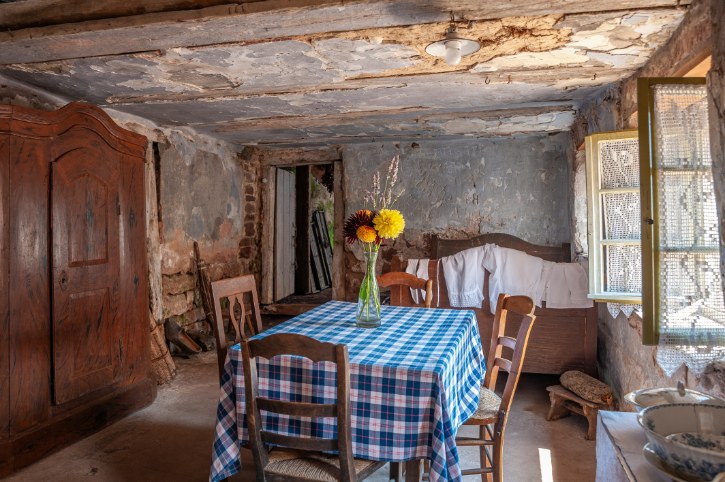
Step inside and you walk into rooms rebuilt from old photographs and filled with real antique furniture. The walls and ceilings are the original sandstone, so the stone you touch is the same stone these families knew. The painted fronts look cheerful. The bare rock inside tells a harder story.
2. Trôo, Loir Valley
Trôo climbs a steep hillside above the Loir River, with cave homes stacked in three levels. The whole village is carved from soft tuffeau limestone, reusing old quarries that stoneworkers left behind long ago.
a. A Village Built Straight Up the Hill
- Three levels of homes linked by narrow lanes and eight stone staircases cut through the rock
- Houses stack tightly, so nearly every level gives you a wide view over the valley
- Old ramparts still frame the village, a reminder of its days as a fortified stronghold
b. The Landmarks You Should Not Miss
- Saint-Martin’s Church, a Romanesque collegiate church founded in 1049 by Geoffroy Martel and rebuilt in the Angevin style in the 1100s
- The Talking Well, a 45-meter shaft famous for its strange echo and a cheeky local legend
- The Petrifying Cave, the village’s oldest visitor site, where mineral-rich water slowly coats objects with a crust of stone
c. Step Inside a Real Cave Home
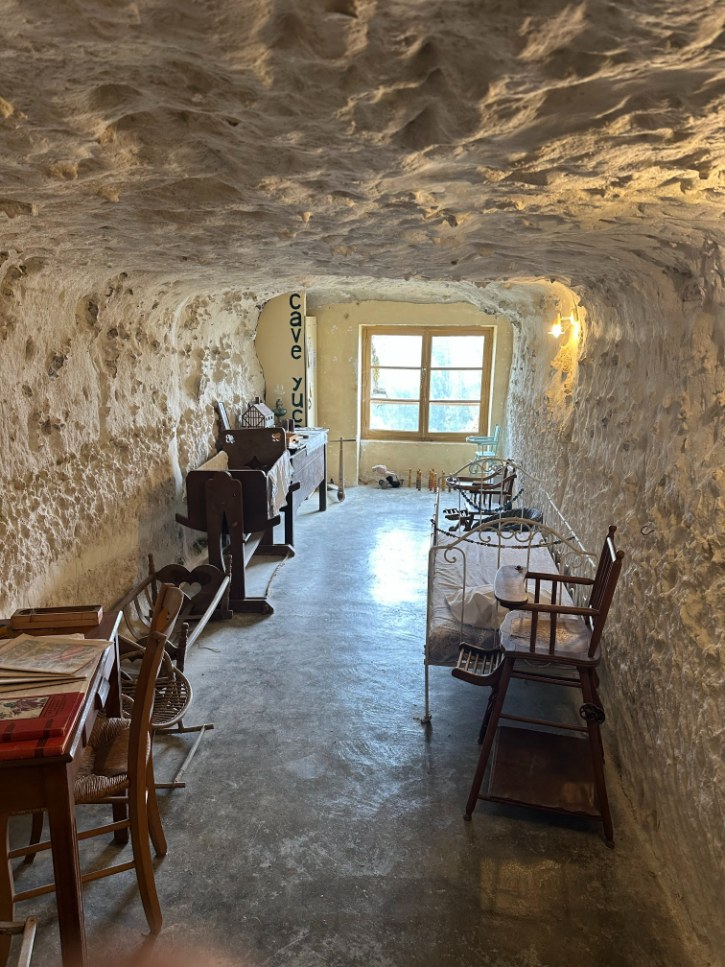
- Visit La Cave Yuccas, a real cave home turned small museum
- People lived in it right up until the 1960s
- Its six rooms still hold kitchens, sleeping areas, and old household tools
- They show how families kept an even temperature and held back the damp
d. A Village Still Alive in Its Caves
- People still live in and around the old caves today
- Some owners are restoring empty hollows into eco-friendly homes
- Explore on foot along the terraces and staircases for the best views
- Many caves are private homes, so admire those from the street
3. Haute-Isle, Paris Region
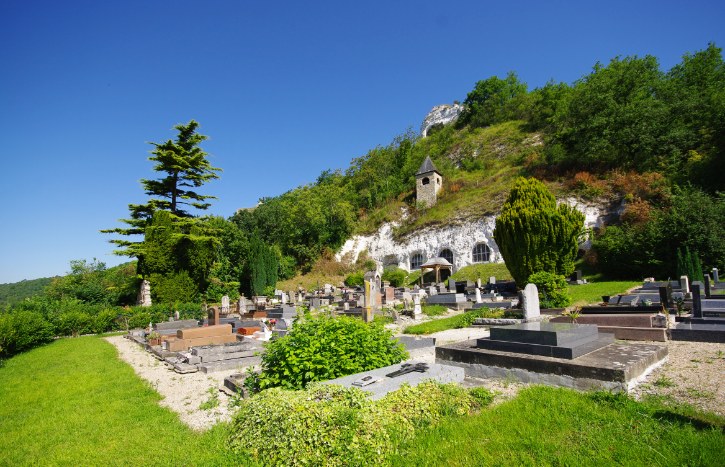
Haute-Isle sits under tall white chalk cliffs above a bend in the Seine, inside a protected natural park. For a long time nearly the whole village lived inside the rock, and its crown jewel is a church carved right into the cliff.
a. A Village Hidden in the Chalk
- Villagers once lived in chalk caves called boves, cut into the soft white stone
- Most boves are no longer homes and now serve as garages or workshops
- You can still spot them along the lanes, framed by the pale cliffs and the Seine below
b. A Church Carved Into the Cliff
- The Église de l’Annonciation is the only fully rock-cut church in the Paris region
- Workers carved it straight into the chalk between 1670 and 1673, paid for by the local lord, a secretary to the king
- It has no stone front at all, so the outside is simply the raw cliff face
- Inside, a single long nave runs under a smoothly carved stone vault
c. The Small Details That Surprise You
- Four windows were cut right through the rock and left without stained glass, keeping a calm, bare mood
- A small bell tower pokes out of the grass at the top of the cliff, the only sign from above
- Inside, a gilded wooden screen and a carved altarpiece stand against the plain chalk walls
d. A Living Church the Village Fought For
This is still a working church with regular services. Years ago it closed for a while because of falling rock. When officials wanted to reinforce the cliff with modern materials, the villagers refused, afraid it would spoil the natural face. They won, gentler repairs were made, and the church reopened.
4. Rochemenier, Loire Valley (Anjou)
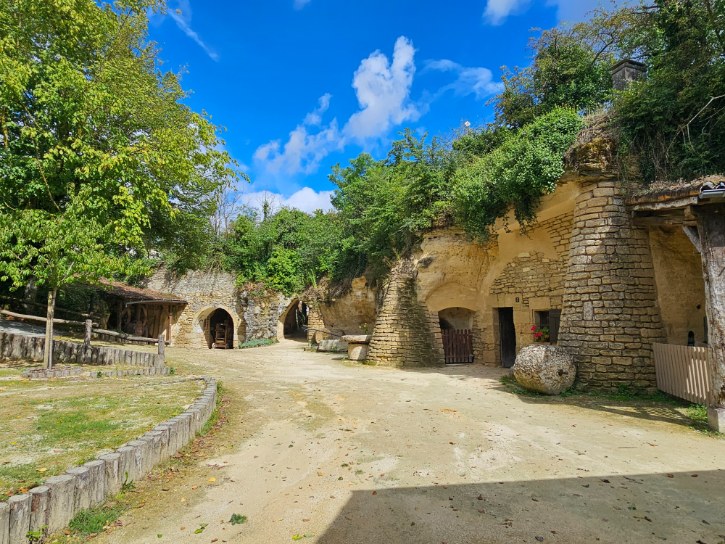
Rochemenier breaks the pattern. Instead of carving into a cliff, its farmers dug straight down into flat ground and built a whole village beneath the fields.
a. A Farm Village Beneath the Fields
Farmers first dug a deep open pit to use as a sunken courtyard. From there they tunneled sideways to make homes, stables, barns, and wine cellars. At its height the village had around 250 rooms across 40 farms, hidden entirely under the surface.
b. The Rock That Made It Possible
- The ground here is falun, a soft, crumbly rock left behind by an ancient sea
- Because it is soft, builders shaped wide arched ceilings to hold the weight of the earth above
- The dug-out sand was valuable and sold to enrich fields or make building mortar
- The village is documented from the 13th century, and most of its cave homes were dug in the 1600s and 1700s
c. A Clever Link Between Field and Cave
- The roofs of the rooms below were the farmers’ fields and gardens above
- Small chimneys poked through the soil for air and smoke
- At harvest time, farmers dropped grapes down the chimneys straight into the wine presses below
d. What You Will See in the Museum
- Two restored farms with living rooms, stables, barns, and wine cellars
- A gathering room and a well room with a sagging ceiling that shows the real risk of cave-ins
- A 13th-century underground chapel with carved Gothic arches, once a secret church in a time of religious war
e. The Ups and Downs of Life Below
Living underground had real comfort. The rock stayed cool in summer and mild in winter, and it hid families from danger. It was risky too, since ceilings could slowly collapse. In time, the small caves could not fit modern farm machines, and the farms were finally left empty.
5. Goupillières, Loire Valley (Azay-le-Rideau)
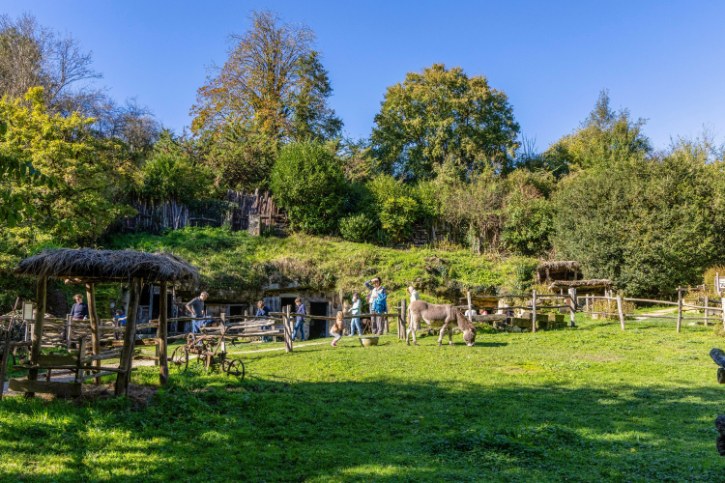
Hidden in a forest near Azay-le-Rideau, Goupillières is a set of three old cave farms carved from tuffeau stone. It gives you an honest look at the hard lives of the farmers who dug the Loire Valley’s famous stone.
a. The Peasant Side of the Loire
- While nobles lived in bright stone châteaux, poor workers cut that very same stone
- They built their own homes from the leftover hollows
- You see their world up close: bread ovens, deep grain stores, hand-dug wells, and stables
- It holds everything a self-reliant farm once needed
b. Lost to the Forest, Then Found Again
- Families lived here from the Middle Ages until the early 20th century
- The farms were then abandoned and slowly swallowed by the growing forest
- A local man rediscovered the ruins in the 1960s and spent his life restoring them
- The site later opened to the public
c. A Farm That Feels Alive
- Donkeys, goats, pigs, and poultry roam the valley freely
- On visit days you can watch traditional bread baked in the restored wood-fired cave ovens
- When the ovens are lit, you can often taste the bread warm and fresh
d. The Hidden Refuge Below
- Beneath the farms lies a secret underground refuge, first dug in the 13th century
- It was made larger during the long wars of the Middle Ages
- Families hid here with their animals and food for days when raiders came
- Its dark, silent corridors are a striking example of an underground refuge in Touraine
6. Turquant, Loire Valley (Saumur)
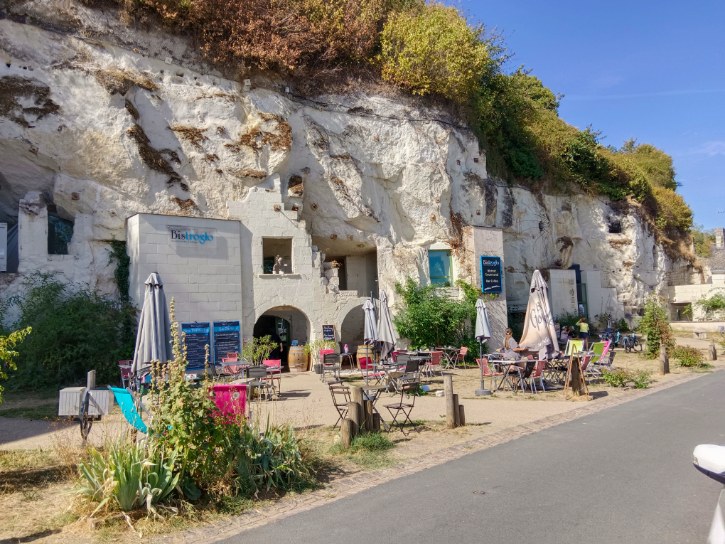
Turquant stretches along tuffeau cliffs above the Loire, between Saumur and Montsoreau. Its caves have served as homes, wine cellars, and workshops for centuries, and today artists have brought them back to life.
a. A Cave Village Among the Vines
- Wine shapes everything here, and the caves once stored the valley’s wine and sheltered its workers
- The cliffs are full of old quarries and cave homes
- The village has become a home for artists and craftspeople who now work inside the rock
b. The Surprising Story of Tapped Apples
- When the phylloxera disease destroyed the vineyards in the late 1800s, families turned to drying fruit to survive
- They peeled and oven-dried apples, then flattened each one with a hammer, which is how the fruit got its name
- At its peak, more than 200 apple ovens were working in Turquant
- The trade faded after the First World War, but two ovens were later revived, so the tradition lives on
c. A Noble Manor Carved in Stone
- La Grande Vignolle is a 15th-century seigneurial home carved into the tuffeau cliff
- It brings together cellars, a chapel, and a dovecote, with fine views over the Loire
- The lord of La Vignolle is said to have given it to his daughter as a wedding dowry
- A winegrowing family runs it today, so you can tour it and taste the local wines
d. A Village That Still Works Its Rock
Turquant never turned its caves into a museum. Old cave entrances now open into studios and galleries, where sculptors and glassmakers work in the stone. Up on the plateau, old windmills recall the millers who worked above and lived in the caves below. Here the rock is still a home and a workshop, not a relic.