Montmartre is one of those Paris neighborhoods that rewards you most when you resist the urge to rush.
Its hilltop views, old village streets, working artists, quiet cafés, and cinematic corners all add up to something you can only really feel at a slow pace.
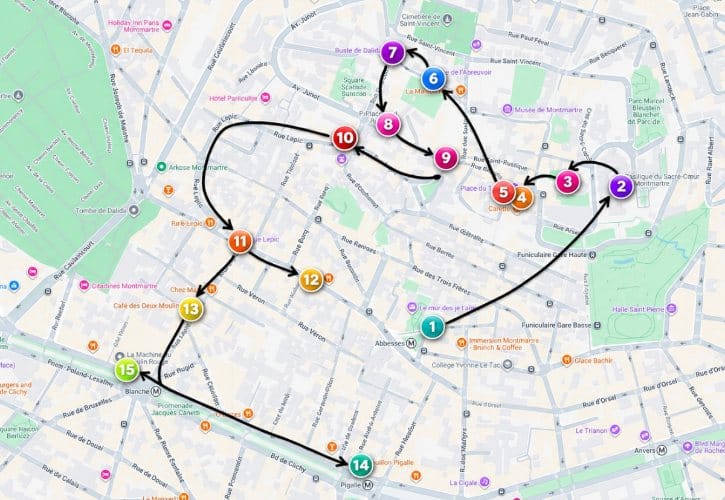
This walking route takes you through Montmartre step by step, from a calm breakfast and morning views at Sacré-Cœur through peaceful lanes and postcard-worthy streets, finishing with dinner and evening lights near Pigalle. 😊
8:30 AM: Kozy (Breakfast)
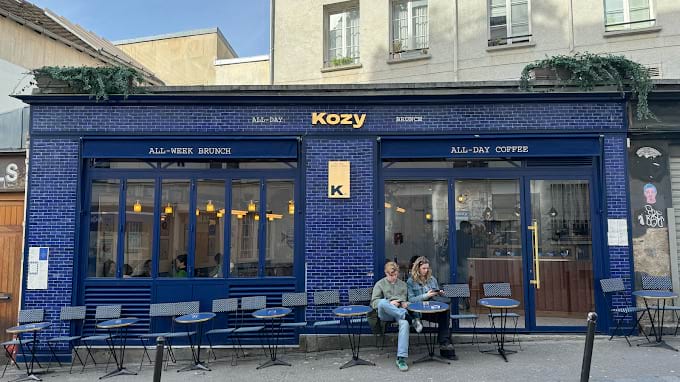
Montmartre involves hills, stone steps, and a lot of walking, so eating first is essential.
Kozy Montmartre sits slightly away from the main tourist core, making it a calm place to begin the day.
What You Can Expect
- A solid range of breakfast options from hearty brunch plates to lighter choices
- Specialty coffees, fresh pastries, avocado toast, and eggs benedict including smoked salmon and halloumi versions
- A relaxed atmosphere that sets the right tone before the busier parts of Montmartre
Tips for Your Visit
- Pace breakfast to around 45 to 60 minutes so the day starts slow
- Verify the latest opening hours online before visiting
Getting to the Next Stop
- Head northeast along Rue La Vieuville, turn onto Rue d’Yvonne Le Tac, and continue toward Square Louise-Michel to begin the climb toward Sacré-Cœur
9:30 AM: Sacré-Cœur Basilica
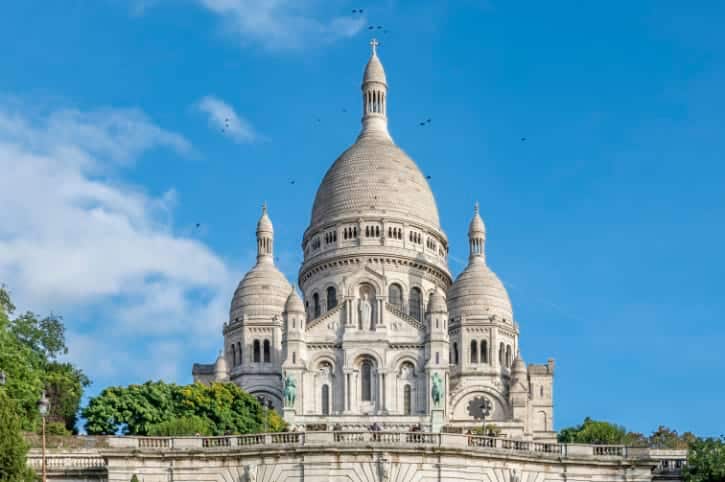
Sacré-Cœur sits at the highest natural point in Paris, and the views from up here are some of the most memorable in the city.
The contrast between the gleaming white basilica, the grand domes, and the Paris basin stretching out below makes it a powerful way to open the day.
Arriving by 9:30 AM helps you avoid the worst crowds.
What to Notice Outside
- The dramatic stone staircase and terraced gardens
- Street musicians and performers who often gather in the open square
- The panoramic view over Paris stretching far on a clear morning
What to Notice Inside
- A quieter atmosphere with vast arches, monumental mosaics, and shadow-filled spaces
- A clear contrast to the lively energy outside
- Respectful silence and appropriate attire are expected
Tips for Your Visit
- Allow 5 to 2 hours for walking up, photos, and a slow visit inside
- You can climb the stone steps or take the Montmartre Funicular
- Step to the side terraces for calmer photo angles
- Slowing down here helps you understand why this hilltop became such a famous lookout point
Read More: 10 Breathtaking Churches in Paris You Can’t Miss
11:30 AM: Église Saint-Pierre de Montmartre
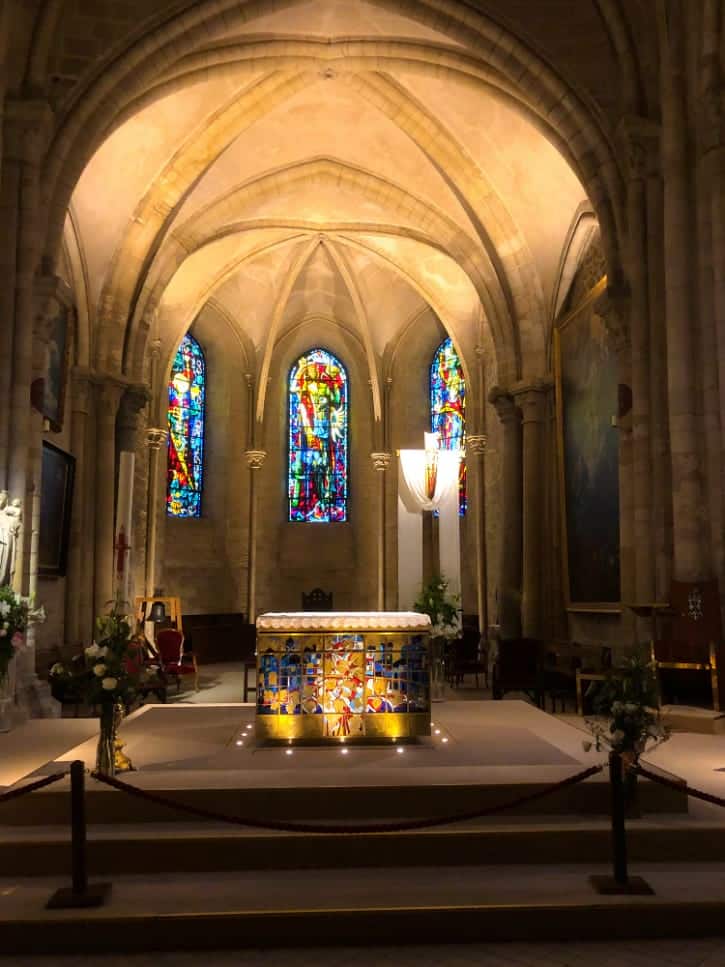
Just steps from the busy plazas around the basilica, this church is easy to miss if you are in a hurry.
The Église Saint-Pierre de Montmartre is the second-oldest surviving church in Paris, and its quiet Romanesque interior offers an immediate contrast to the grandeur of its famous neighbor.
Why It Matters
- Originally begun in 1133, it served as the spiritual center of a royal Benedictine abbey
- Inside, you will find ancient Roman marble columns with 6th-century capitals and the oldest pointed arch in Paris
- It reflects the medieval side of Montmartre that predates its bohemian era by centuries
Tips for Your Visit
- Allow 15 to 25 minutes for a slow interior visit
- Keep voices low inside
- Do not skip this if you enjoy old churches or historic atmosphere
Getting to the Next Stop
- Walk less than a minute westward along Rue du Mont-Cenis to reach Place du Tertre
12:00 PM: Place du Tertre
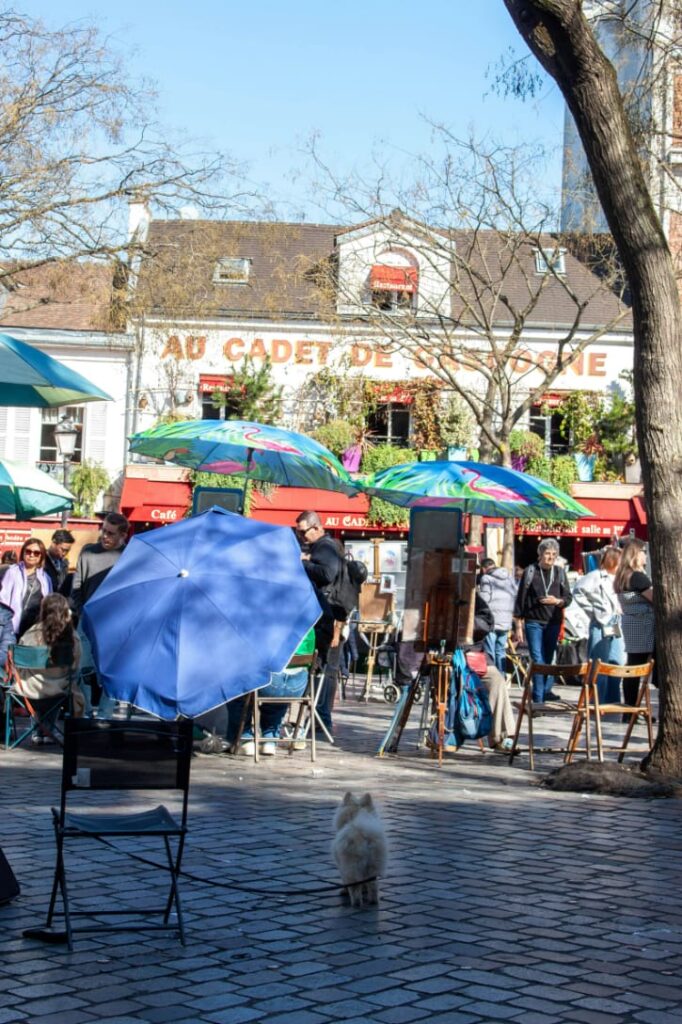
The mood shifts fast when you step into Place du Tertre. It is one of Montmartre’s most recognizable squares, known for portrait artists, café terraces, and lively street energy.
It can feel touristy, but it still represents a major part of Montmartre’s artistic identity.
What Makes It Worth Seeing
- Licensed painters and caricaturists display their work under mature trees, continuing a long artistic tradition
- The outdoor café terraces, old façades, and active artists form a scene that is distinctly Montmartre
- It connects to the neighborhood’s creative history, even if the atmosphere today is commercial
Tips for Your Visit
- Allow 20 to 30 minutes as an atmospheric stop rather than a long stay
- Walk the perimeter slowly instead of standing in one spot
- Step into the side streets if the crowd feels overwhelming
Getting to the Next Stop
- Lunch is just steps away on the western edge of the square
12:30 PM: La Crémaillère 1900 (Lunch)
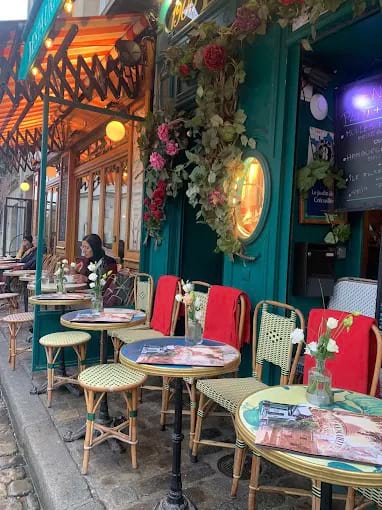
After a morning of climbing and sightseeing, this is the right moment to sit down properly.
La Crémaillère 1900 sits directly on Place du Tertre, so there is no detour needed.
The interior features authentic Art Nouveau decor, and there is a hidden back garden terrace that offers a peaceful retreat from the busy square.
What to Expect
- Traditional French bistro fare including Burgundy snails, French onion soup, and duck confit
- A distinctive historic atmosphere with period paintings and vintage accents
- A calm break to recharge before the afternoon walking section
Tips for Your Visit
- Allow about 60 minutes for a relaxed lunch
- Reservations are recommended, especially for the garden seating
- Keep lunch enjoyable but not too long, because the best afternoon streets are still ahead
Getting to the Next Stop
- The route leaves the busiest areas and moves into the softer, residential side of Montmartre
1:30 PM: Rue de l’Abreuvoir
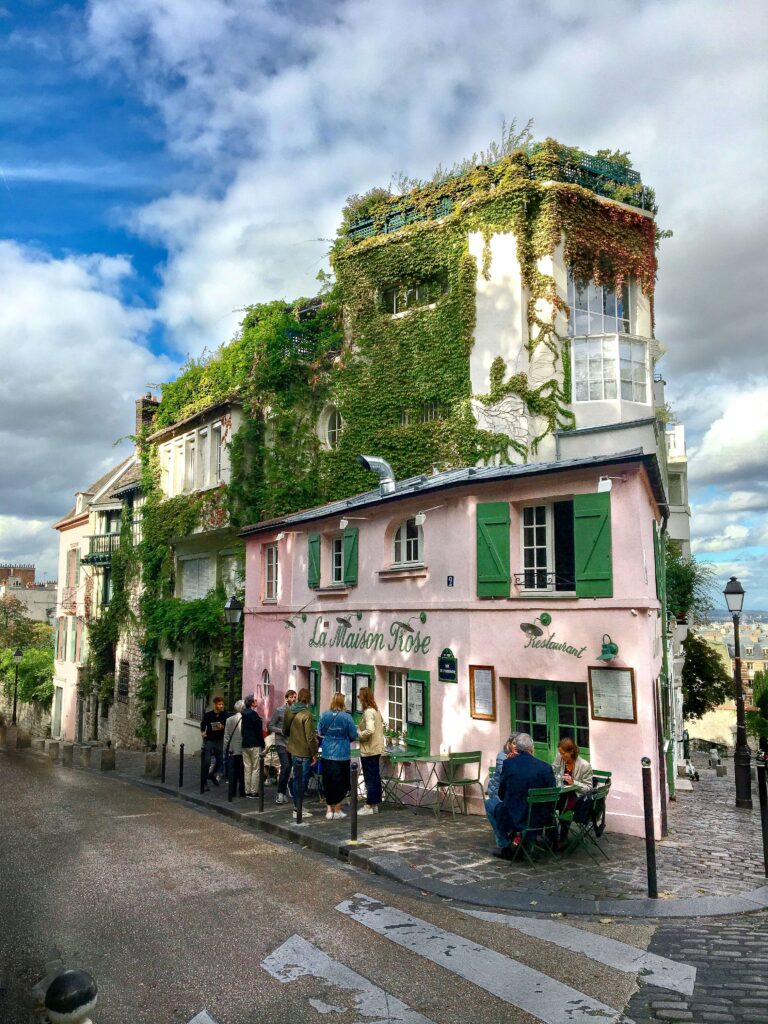
This is where the walk starts to feel different. Rue de l’Abreuvoir is one of the most beautiful streets in Paris, a gently curving cobblestone lane with ivy-covered façades and a village-like character far removed from the tourist squares above.
What Makes It Special
- The famous La Maison Rose sits at the upper junction, a pink-walled cottage once frequented by Picasso, Modigliani, and Utrillo
- As you walk down the slope, look back for a classic view of the Sacré-Cœur domes framed by the curving street
- The beauty here is in the atmosphere, not a ticketed attraction
Tips for Your Visit
- Allow 10 to 20 minutes, or more if you are taking photos
- People live on this street, so avoid blocking doorways or entrances
- Walk slowly and look back as you go. The perspective shifts with every few steps
Getting to the Next Stop
- At the bottom of the street, the route opens into a small public square just ahead
1:45 PM: Place Dalida
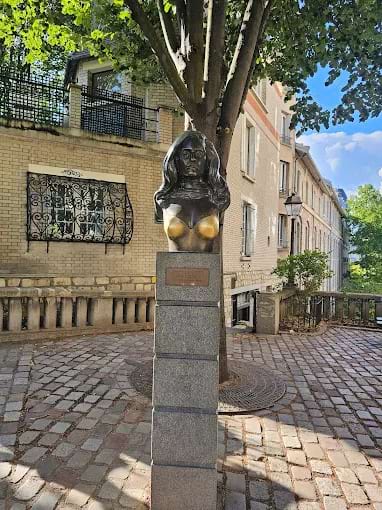
Place Dalida is a small, quiet square at the intersection of Rue de l’Abreuvoir and Rue Girardon.
It features a life-sized bronze bust of Dalida, the beloved Italian-French singer who lived in Montmartre from 1962 until 1987.
The bust was sculpted by Aslan and installed in 1997.
Why It Is Worth a Pause
- It adds music history and local memory that is different from the art and architecture stops
- The views down the cobblestone lanes from here are lovely
- More of a pause than a destination, but it gives the walk personality
Tips for Your Visit
- Allow 5 to 10 minutes for a quick rest, photo, and route reset
- It can get crowded because it is a popular stop
- Be mindful of nearby residents
Getting to the Next Stop
- Head south along Rue Girardon toward Le Passe-Muraille
2:00 PM: Le Passe-Muraille
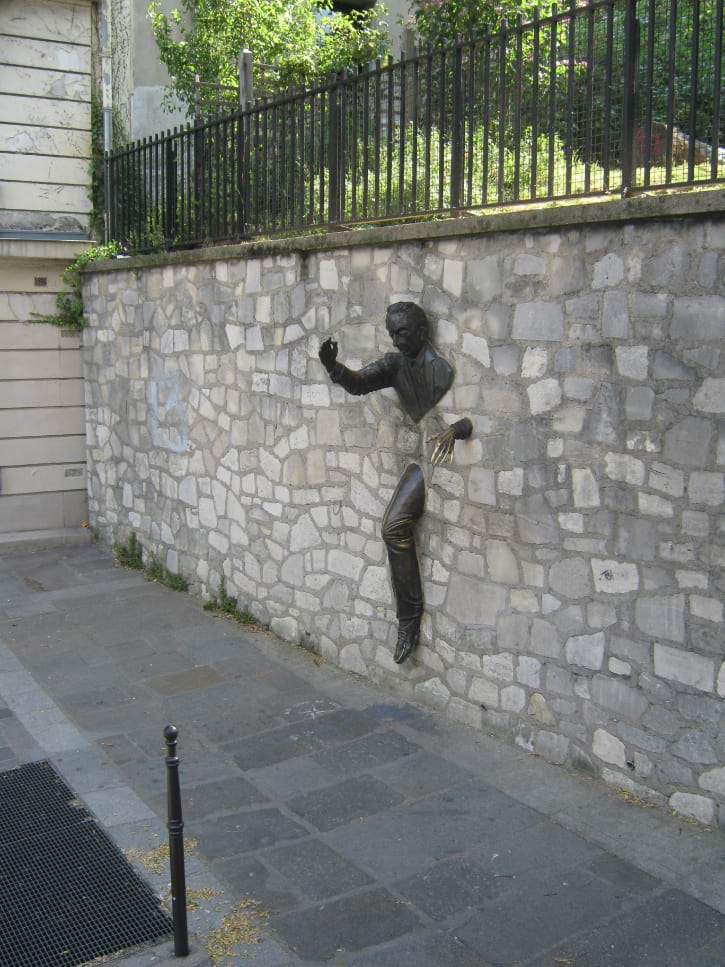
This stop is unexpected, playful, and very Montmartre. Le Passe-Muraille is a bronze sculpture by Jean Marais showing a man frozen mid-step as he emerges from a solid wall.
It is a tribute to writer Marcel Aymé, who lived nearby and wrote a whimsical story about a clerk who discovers he can walk through walls.
Why It Fits the Route
- It shows Montmartre’s creative and literary personality beyond the visual arts
- The statue’s face was modeled after Marcel Aymé himself, and the polished left hand comes from visitors shaking it for luck
- It adds humor and character in a way that bigger landmarks cannot
Tips for Your Visit
- Allow 5 to 10 minutes for a quick photo and to read the story behind it
- It pairs naturally with nearby Rue Norvins and Le Consulat
Getting to the Next Stop
- Continue east along Rue Norvins
2:15 PM: Rue Norvins + Le Consulat
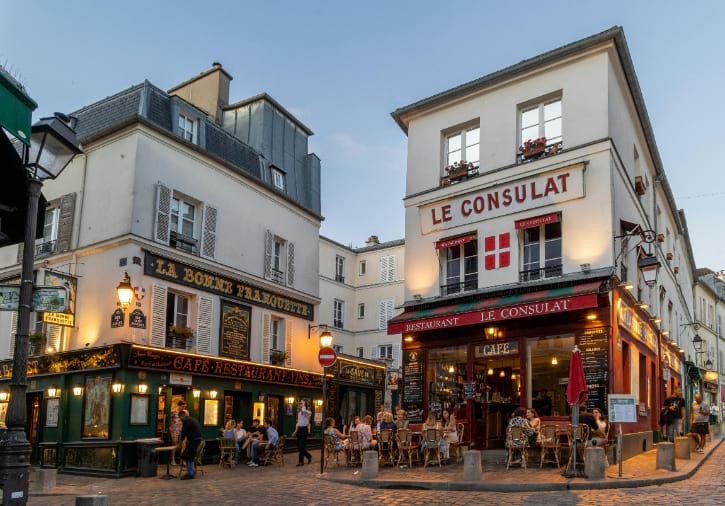
Rue Norvins is a narrow, curving cobblestone lane running through the heart of upper Montmartre.
The standout landmark here is Le Consulat, a café with an iconic red-and-white façade that served as a gathering place for Monet, Picasso, Van Gogh, and Toulouse-Lautrec.
After some walking and sightseeing, this is a great place to sit down for a coffee or a light bite and soak in the atmosphere.
What to Notice
- The café terraces, old buildings, and movement of people create a scene that feels distinctly Montmartre
- Street musicians often add to the atmosphere
- The area is beautiful but almost always crowded, so accept the energy and move slowly through it
Tips for Your Visit
- Allow about 1 hour for photos, slow walking, and a rest at Le Consulat
- Keep bags close in crowded areas
- Photograph Le Consulat from across the street and avoid blocking café service or pedestrian flow
Getting to the Next Stop
- Continue toward Moulin de la Galette on Rue Lepic
3:30 PM: Moulin de la Galette (Take Photo)
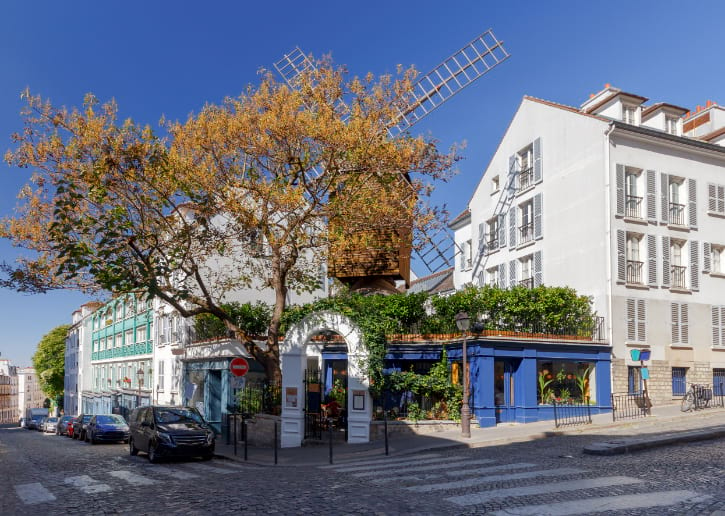
Moulin de la Galette is more than a photo stop. In the 18th and 19th centuries, the hill was dotted with roughly 30 windmills.
Today, only two survive here. The site later became a popular dance hall that inspired Renoir’s famous 1876 painting.
Why It Matters
- It connects to Montmartre’s rural and social history, not just its artistic side
- The site was converted into an outdoor dance hall that inspired Impressionist paintings
- The surrounding area feels more residential and quieter than the Sacré-Cœur zone
Tips for Your Visit
- Allow about 10 minutes for this exterior photo and history stop
- Watch for vehicle traffic on the narrow corner sidewalks
Getting to the Next Stop
- Follow Rue Lepic downhill into everyday Montmartre
3:40 PM: Rue Lepic
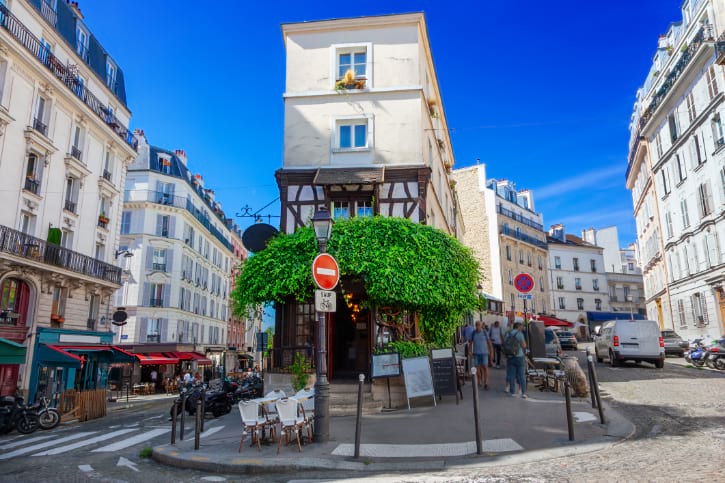
Rue Lepic is a long, character-filled street that shows you the Montmartre people actually live in.
As you walk downhill, the postcard views give way to food shops, bakeries, cheese merchants, and neighborhood cafés.
The downhill direction is welcome relief after the morning’s climbs.
What to Look For
- Fromagerie Lepic (No. 20), with an excellent selection of regional cheeses
- Les Petits Mitrons (No. 26), known for traditional sweet and savory fruit tarts
- The sloping streets, old corners, and everyday rhythm of a real Paris neighborhood
Tips for Your Visit
- Allow 45 to 60 minutes depending on stops
- Browse slowly, pause for coffee, or detour into quiet side lanes
- Sidewalks can be narrow in places
Getting to the Next Stop
- The street flows naturally into Rue des Abbesses
4:40 PM: Rue des Abbesses
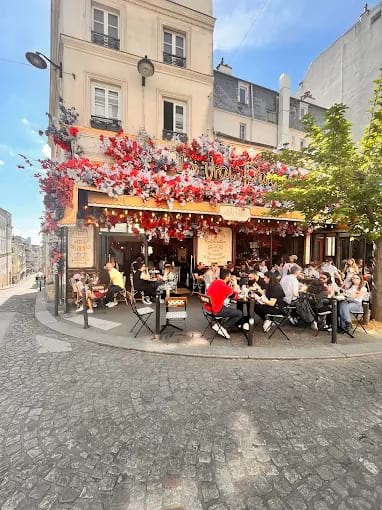
Rue des Abbesses offers a strong contrast to the Sacré-Cœur area.
This is one of the liveliest shopping streets in lower Montmartre, with bakeries, boutiques, outdoor café terraces, and a more everyday atmosphere.
What to Look For
- Place des Abbesses, home to an original Art Nouveau metro canopy by Hector Guimard
- The quiet Square Jehan-Rictus nearby
- Bakeries like Au Levain d’Antan
- Neighborhood cafés and bars such as Le vrai Paris, Le Sancerre, and Le Chinon
Tips for Your Visit
- Allow 45 to 60 minutes for a coffee break, pastry stop, or a slow wander
- If you still have energy, nearby Rue des Martyrs is a worthwhile extension
Getting to the Next Stop
- The route moves to Café des Deux Moulins on Rue Lepic
5:40 PM: Café des Deux Moulins
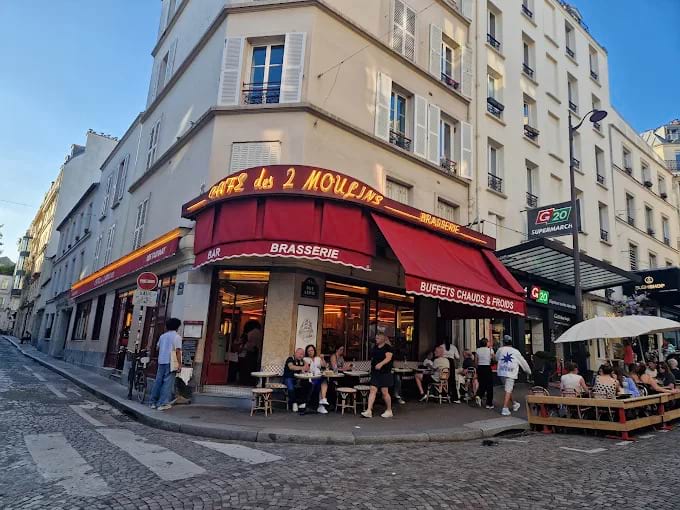
By this point, you have been walking for hours. Café des Deux Moulins is best known as the primary setting for the 2001 French film Amélie.
It retains its mid-20th-century Parisian interior with a classic zinc bar, retro neon lighting, and tiled floors.
Why It Fits the Route
- It gives you a natural pause as the evening begins
- The value is in sitting down, people-watching, and letting the day slow down
- Try the house-made Crème Brûlée d’Amélie
Tips for Your Visit
- Allow 30 to 45 minutes
- Walk-ins are widely accommodated
- Keep this stop light if dinner is planned soon. Coffee, a drink, or dessert works well
Getting to the Next Stop
- Head downhill toward Pigalle for dinner
6:40 PM: Bouillon Pigalle (Dinner)
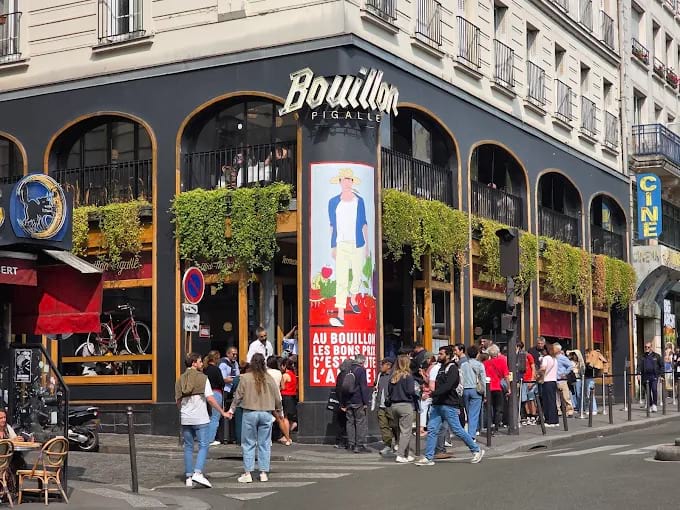
After a full day of walking, Bouillon Pigalle delivers exactly what you need.
It is part of the modern revival of the 19th-century “bouillon” concept, traditional French cuisine served quickly at remarkably low prices.
The atmosphere is loud, bustling, and social, fitting the shift from quiet Montmartre to vibrant Pigalle.
What to Expect
- Classic French dishes at affordable prices, including egg mayonnaise, French onion soup, and beef bourguignon
- A lively, busy dining room that is casual rather than romantic
- Works well as a final stop or a pause before the optional Moulin Rouge visit
Tips for Your Visit
- Allow 60 to 75 minutes
- Peak dinner hours can involve a wait, so arrive with flexibility
Getting to the Next Stop
- End your day here, or walk a short distance for one last Paris night photo
8:00 PM: Moulin Rouge (Optional)
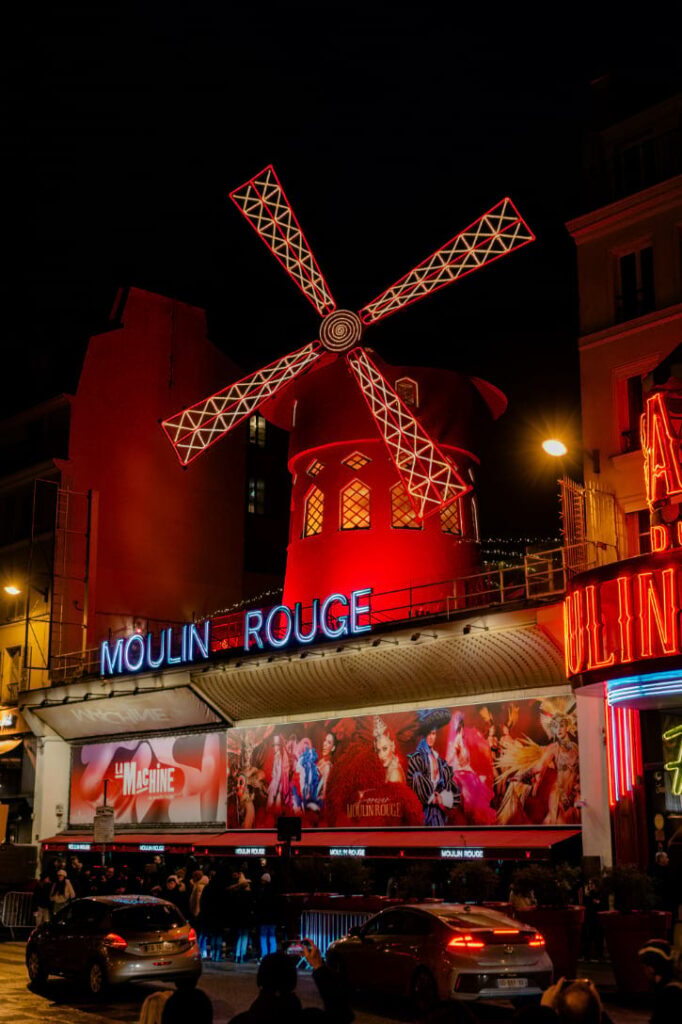
This final stop is entirely optional, but it gives the day a strong visual ending.
The Moulin Rouge, established in 1889, and its glowing red windmill sit just a short walk west along Boulevard de Clichy. For most travelers, this is an exterior photo stop.
Why It Completes the Route
- The illuminated windmill against the dark sky is a classic Paris image
- It shows the nightlife edge of Montmartre, contrasting with the peaceful village streets earlier
- It rounds out the full picture of the neighborhood
Tips for Your Visit
- Allow 10 to 15 minutes for an exterior visit and photos
- Stay aware of your surroundings and keep belongings secure
If You Want to See a Show
- Book tickets weeks in advance
- Smart dress code applies, no shorts, sportswear, or running shoes
- Interior photography is strictly prohibited
How Long This Montmartre Walking Route Takes
This is a slow, full-day route running from around 8:30 AM to 8:00 PM. It includes breakfast, lunch, a café break, dinner, sightseeing stops, and plenty of unhurried walking.
It is built for travelers who want a complete Montmartre day, not just a two-hour visit.
Shortening the Route
- Skip breakfast and start at Sacré-Cœur
- Replace lunch with a quicker meal
- Cut the Café des Deux Moulins stop
- End at Bouillon Pigalle instead of Moulin Rouge
Metro Stations
- Start: Abbesses Station, located steps from the breakfast stop
- End at Bouillon Pigalle: Pigalle Station
- End at Moulin Rouge: Blanche Station