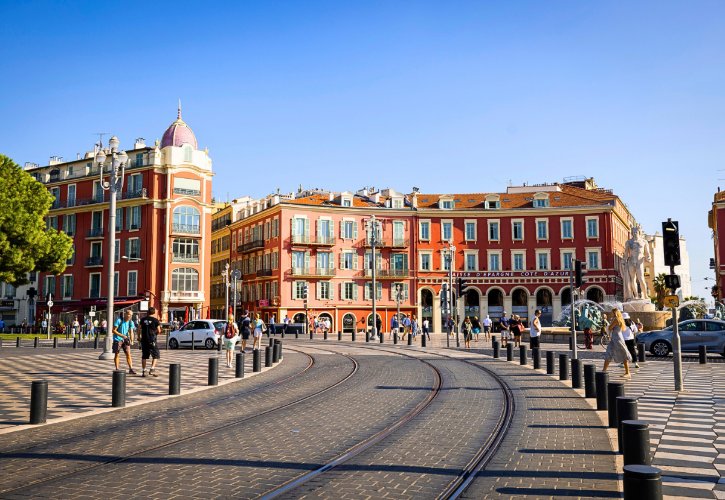
Some cities ask you to rush. Nice is not one of them. Tucked along the Baie des Anges, it packs old streets, a bright coastline, world-class art, and hilltop views into a space small enough to explore on foot.
Three days gives you just the right rhythm to enjoy the local atmosphere, wander the historic quarters, linger over long lunches, and still slip away for one memorable day trip. Here is how to make each day count. 😊
Day 1: Old Nice, Castle Hill and Port
Your first day stays close to the heart of the city. You begin in the grand main square, drift into the old town, climb up for the best view in Nice, then wind down by the harbor. It all flows in one easy loop, so you spend your energy exploring, not backtracking.
8:30 AM: Place Masséna and the Promenade
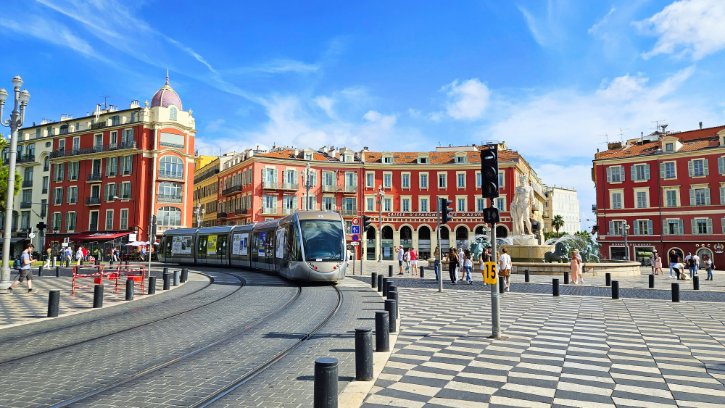
Place Masséna is where modern Nice meets the old town, and it makes a beautiful place to begin. Start early, while the light is soft and the square is still quiet. Here is what to look for:
- The warm red ochre arcades in the Savoyard Neoclassical style, a nod to the city’s Piedmontese past.
- The Fontaine du Soleil (Sun Fountain), with its tall marble statue of Apollo ringed by bronze figures of planetary gods.
- Conversation à Nice by Jaume Plensa, seven glowing resin figures on steel poles that light up in shifting colors after dark.
From the square, drift into Jardin Albert 1er, a leafy garden with palm groves, a classic carousel, and the striking steel sculpture Arc 115.5° by Bernar Venet.
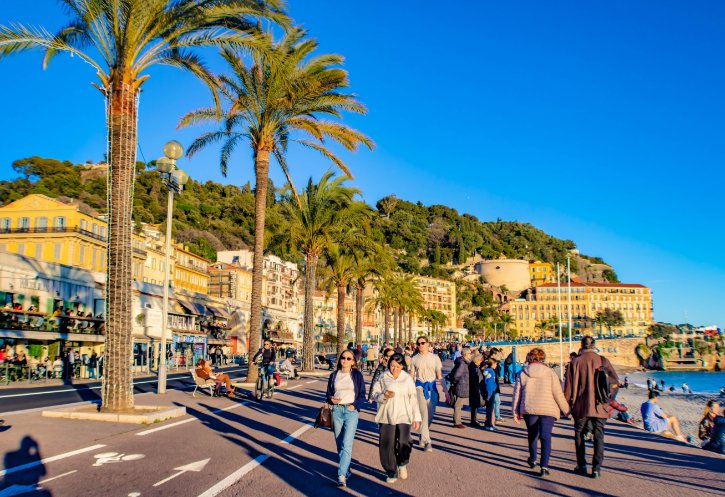
Then step onto the famous Promenade des Anglais, where the whole curve of the bay opens up.
Keep an eye out for the blue chairs, the chaises bleues, and the grand face of the Hotel Negresco to the west. Trust me, this first stretch of sea is a lovely way to wake up.
9:20 AM: Vieux Nice and the Cours Saleya Market
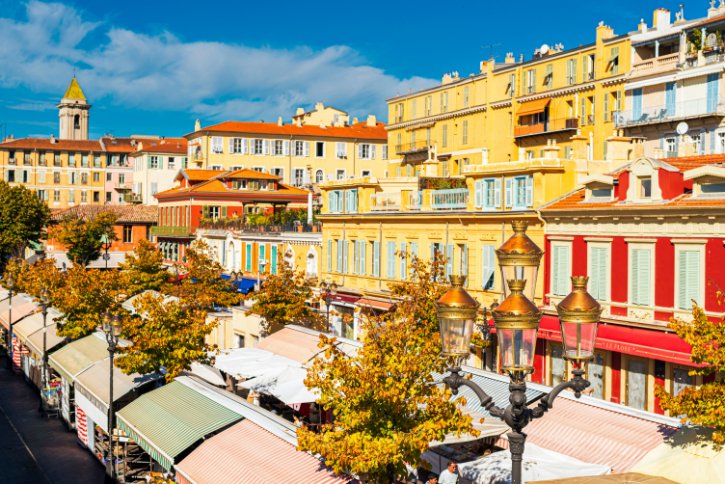
Cours Saleya is the lively main avenue of the old town, and what you find depends on the day. Most mornings it fills with a flower and produce market.
On Mondays it becomes an antiques and flea market instead, and on summer evenings a craft market takes over after dark.
Keep an eye out for these local treats:
- Socca, a thin chickpea flour crepe cooked until crisp.
- Pissaladière, a savory tart of soft onions and anchovies.
- Tourte de blettes, a Swiss chard pie that comes both sweet and savory.
- Candied fruit and other artisanal specialties.
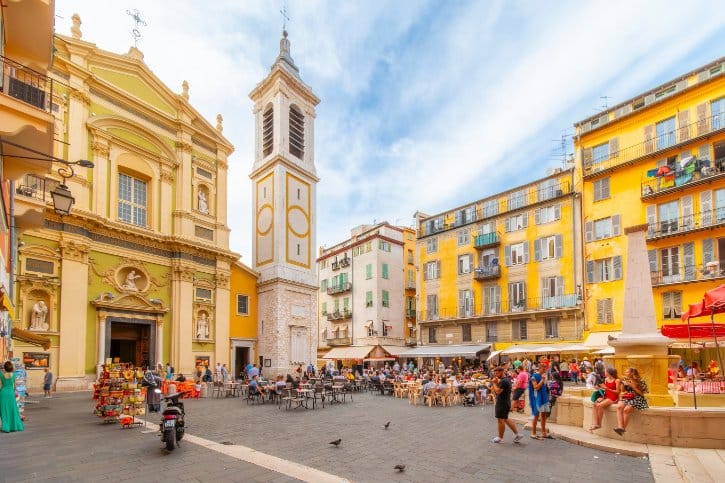
Stalls change often, so treat these as happy finds rather than sure things. From the market, wander deeper into Vieux Nice, where the narrow alleys stay cool even on hot days:
- Look for pastel walls, wooden shutters known as persiennes, and painted trompe l’oeil details.
- Step into the Cathédrale Sainte-Réparate on Place Rossetti, with its gilded interior and tiled Genoese dome.
- Visit Palais Lascaris on Rue Droite for its grand frescoed staircase and a famous collection of historic musical instruments.
12:00 PM: Lunch, Then Up to Castle Hill
For lunch, Chez Palmyre on Rue Droite is a real slice of old Nice. This tiny, traditional bistro opened in 1926 and reached its 100th year in 2026, and the short menu changes with the market. A few dishes to look for:
- Daube niçoise, a comforting slow-cooked beef stew, a great first taste of local food.
- Duck leg in orange sauce or roasted lamb neck.
- Simple desserts like chocolate mousse or rum baba.
If it is full, Le Bistrot d’Antoine or La Merenda nearby offer the same kind of local meal.
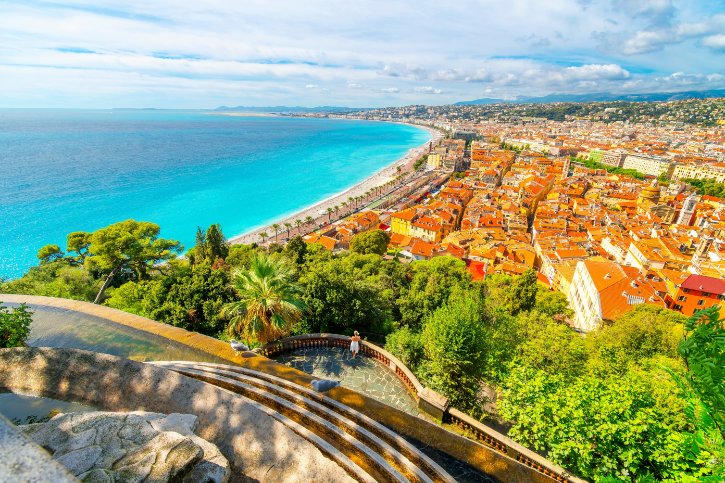
After lunch, head up Castle Hill around 1:00 PM. There is no castle standing today, but the park holds the finest views in the city:
- Cascade du Château, a dramatic man-made waterfall built in 1885 on the old fortress bastions.
- Tour Bellanda, a round tower turned viewing terrace over the Baie des Anges, once home to composer Hector Berlioz.
- The stone foundations of an ancient cathedral, still visible among the pines.
The trees offer plenty of shade, and the mist from the waterfall keeps things cool even on a warm afternoon.
3:45 PM: The Old Port and Quai des États-Unis
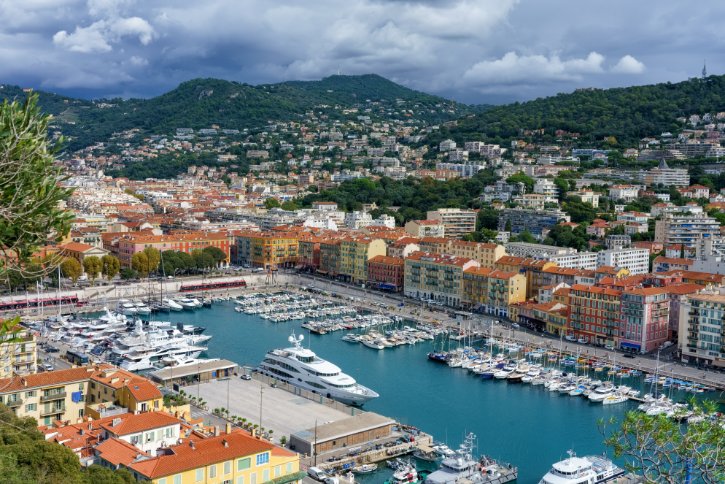
Come down the eastern side of the hill and you land right at Port Lympia, built in the 18th century and framed by handsome red ochre buildings. As you stroll, look for:
- The traditional wooden Niçoise fishing boats called pointus, with their sharp bows. Several are usually moored here, though not every one will be in port on a given day.
- The Monument aux Morts, a striking war memorial carved into the cliff face.
- Quiet benches and seafront cafes, perfect for a pause by the water.
6:00 PM: Dinner on Cours Saleya
For dinner, settle in at Casa Leya on Cours Saleya, a bright Italian and Mediterranean spot built around fresh Riviera produce:
- Burrata with tomatoes and truffle arancini to start.
- Wood-fired pizzas and fresh pasta like linguine alle vongole.
- Grilled sea bass and octopus risotto.
There is a big outdoor terrace on the old market square, a lovely place to end your first day.
Day 2: Cimiez, Museums and Central Nice
Day two lifts you into the calm hill district of Cimiez, home to Roman ruins and one of the city’s finest art museums, then brings you back down to elegant central Nice. A short bus ride (Line 5) connects Place Masséna to Cimiez in about 15 minutes, so the day flows easily.
9:00 AM: Roman Ruins and Gardens in Cimiez
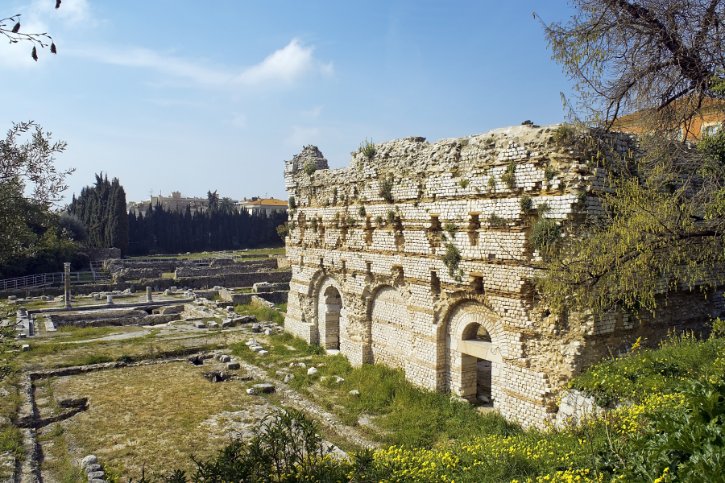
Begin your morning in Parc des Arènes de Cimiez, a peaceful hilltop park built on the site of a Roman city. Its two big draws:
- An ancient olive grove with over 2,000 old trees.
- A Roman amphitheatre from the 1st and 2nd centuries AD. The interior is currently closed for stone conservation, but you can see the full oval shape from the surrounding paths.
Next door are the Monastère de Cimiez gardens, tied to the Franciscan monastery where painters Henri Matisse and Raoul Dufy are buried:
- Neat Italian-style beds, geometric rose gardens, and citrus trees.
- Central fountains and shaded corners.
- A south terrace with sweeping views across the Paillon valley, Mont Boron, and the eastern city.
This is an active monastery, so keep your voice low. It is a quiet, unhurried way to begin the day.
10:00 AM: The Marc Chagall Museum
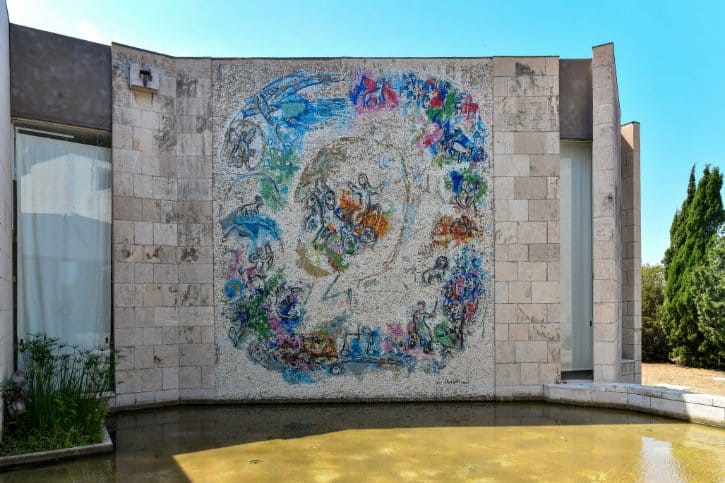
A short stroll away is the Musée National Marc Chagall, a light-filled national museum that the artist himself helped design during his lifetime. It is one of the most rewarding stops in the whole city, and you do not need to be an art expert to feel its pull.
The heart of the collection is the Message Biblique, a series of 17 large paintings showing scenes from Genesis, Exodus, and the Song of Songs. The colors are deep and dreamlike, and the rooms are arranged so the works breathe.
Beyond the paintings, look for the concert hall with its three blue stained-glass windows showing the Creation, and step outside to the reflecting pool, where a large Chagall mosaic mirrors in the water. This is the kind of place that rewards a gentle pace, so give yourself time to slow down.
12:15 PM: A Brazilian Lunch and the Masséna Museum
For lunch, try something a little different. O Corcovado on Rue Meyerbeer is a warm, family-run Brazilian restaurant serving home-style cooking that is approachable even if it is new to you:
- Feijoada, a rich black bean stew with pork and beef, served with rice and orange.
- Picanha grelhada, grilled rump cap steak, a real crowd-pleaser.
- Pão de queijo (cheese bread) and coxinhas (chicken croquettes) to nibble.
- Sweet brigadeiros and fresh caipirinhas to finish.
If you would rather stick with classic French cooking, Le Séjour Café nearby serves market-fresh seasonal dishes.
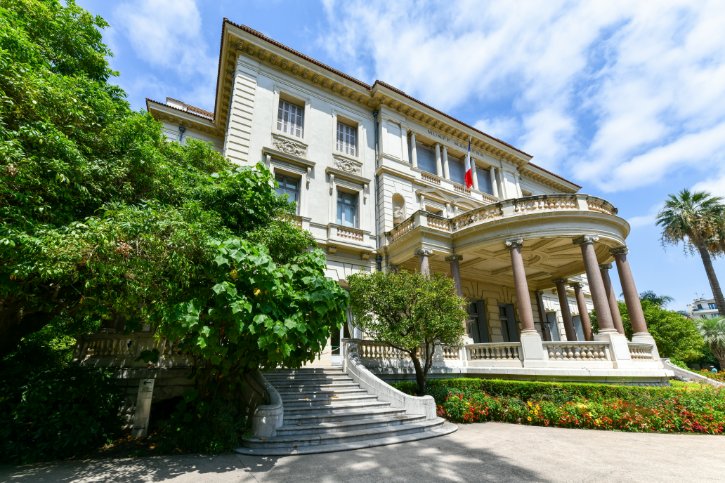
Afterward, around 2:00 PM, visit the Villa Masséna Musée on Rue de France, set in a beautiful Belle Époque mansion. Inside, you trace the story of Nice from its Savoyard days through the Belle Époque:
- Napoleon Bonaparte’s gold-embroidered waistcoat and his death mask.
- Empress Eugénie’s pearl and diamond diadem.
- Grand period salons, wrapped in formal gardens with palm avenues and fountains.
4:30 PM: The Carré d’Or and Place Magenta
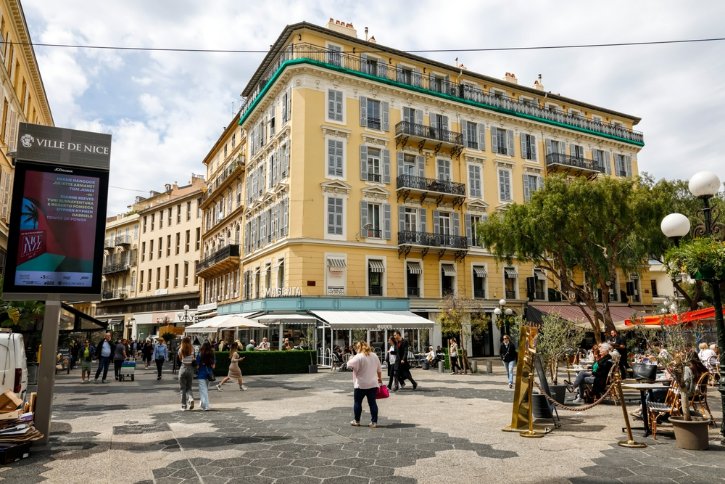
Spend the late afternoon in the Carré d’Or, or Golden Square, Nice’s smart 19th century shopping district:
- Walk Rue Paradis and Rue Alphonse Karr, lined with elegant Haussmann-style buildings and upscale boutiques.
- Pause at Place Magenta, a pedestrian square with cafe terraces, flower beds, and stone benches.
- Sit with a coffee and rest your feet before dinner.
6:30 PM: Dinner in the Center
Taverne Masséna on Rue Gioffredo is a classic French brasserie with a broad, crowd-friendly menu. It is a solid choice when you want a filling dinner without any fuss:
- French onion soup, escargots, and charcuterie to start.
- Grilled ribeye with béarnaise, roasted sea bass, or wood-fired pizza.
- Crème brûlée and tarte Tatin for dessert.
With its dark wood panels and red leather seats, the setting feels warm and traditional, a nice way to close the day.
Day 3: Villefranche-sur-Mer and Villa Ephrussi de Rothschild
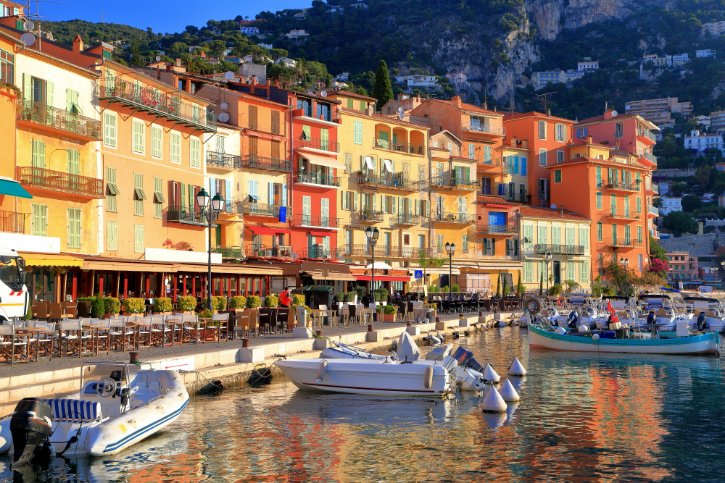
For your day trip, the coast just east of Nice is hard to beat. A TER train links Nice-Ville to Villefranche in about seven minutes, and a short bus ride connects the town to the villa. You get a charming old fishing town in the morning and a dreamlike garden palace in the afternoon.
8:30 AM: The Old Town and Citadelle of Villefranche
Start at the Citadelle Saint-Elme, a stone fortress built in 1557 to guard the bay. It is a relaxed place to begin, with ramparts, courtyards, gardens, and small art collections to explore. As you wander the old town, seek out these gems:
- Rue Obscure, a covered stone passageway from 1260 that runs along the town’s original medieval wall. It is lantern-lit and feels like stepping into the past.
- The Chapelle Saint-Pierre on the harbor, a 16th century fishermen’s chapel painted inside in 1957 by artist Jean Cocteau.
- Steep cobbled lanes and stairs that open onto pretty harbor views at every turn.
Wear comfortable shoes and take your time. Half the pleasure here is simply getting a little lost.
11:45 AM: Lunch in a Stone Cellar
For lunch, Les Garçons sits inside a vaulted stone cellar in the old town, exactly the sort of tucked-away spot that makes a day trip feel special. The kitchen serves modern French bistro food made with seasonal ingredients:
- Goat cheese crostini with lavender honey or tuna carpaccio to start.
- Slow-braised beef cheek, pan-roasted salmon with herb risotto, or duck breast with fig reduction.
- Fresh gnocchi and other seasonal plates.
You can sit inside the atmospheric cellar or grab a table outside along a stepped alleyway. Either way, it is a calm, characterful break before the afternoon’s big highlight.
1:45 PM: Villa Ephrussi de Rothschild
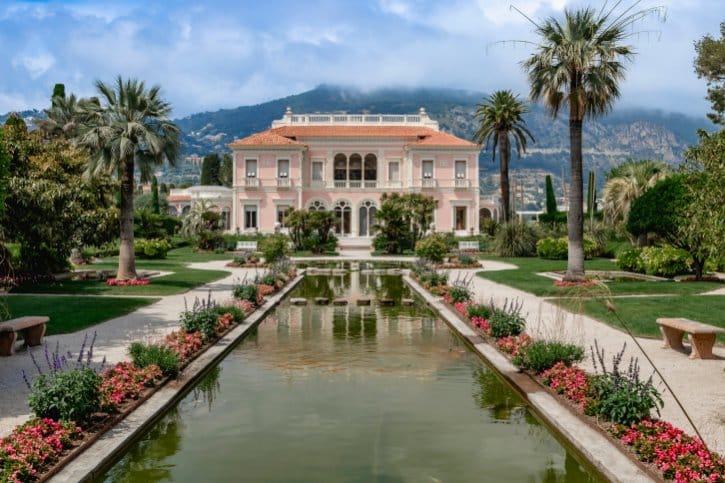
This is the showstopper. The Villa Ephrussi de Rothschild is a rose-pink palace on the Cap-Ferrat peninsula, built in the early 20th century for Baroness Béatrice de Rothschild in an Italian Renaissance style, with pink marble columns and open loggias.
The real magic is outside, in the nine themed gardens:
- French Parterre, the main garden, shaped like a ship’s deck with water basins and a small Temple of Love.
- Spanish, Florentine, and Japanese gardens, each with its own quiet character.
- Exotic Garden, with terraces of giant cacti and succulents.
- Stone, Rose, Provençal, and Sèvres gardens rounding out the collection.
Here is the fun part. The musical fountains in the French Parterre put on a show set to classical music every 20 minutes, so you rarely wait long to catch one. Take your time wandering from garden to garden, and pause at the terraces, where the views stretch across the bay.
6:30 PM: A Traditional Niçoise Dinner
Back in Nice, end the day with true local flavor at Chez Acchiardo on Rue Droite in Old Nice. Run by the same family since 1927, it feels like eating in someone’s home. For an authentic taste of Nice, look for:
- Daube niçoise, beef slow-braised in red wine and herbs, served over fresh ravioli.
- Les petits farcis, local vegetables stuffed with seasoned meat and baked.
- Stockfish à la niçoise, salt cod stewed with tomatoes, garlic, and olives.
- Merda de can, Swiss chard gnocchi in a rich beef sauce.
The daube and the petits farcis are the two I would steer a first-timer toward. If those doors are closed, La Rossettisserie or Lu Fran Calin nearby serve the same kind of traditional cooking, so you will still eat well.
Alternative Day 3: Saint-Paul de Vence
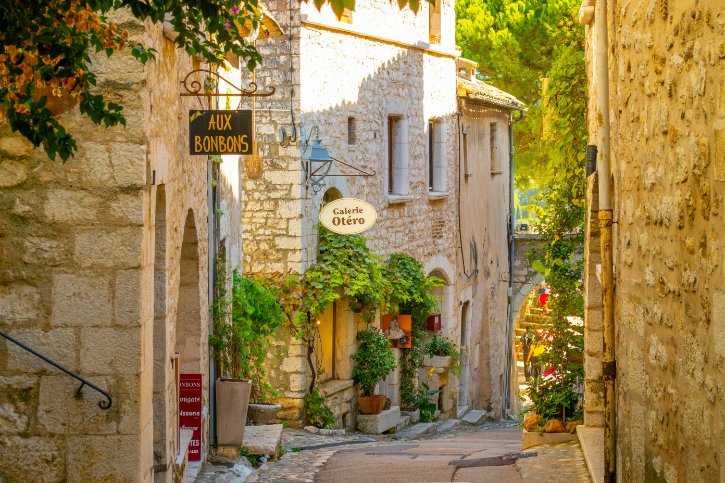
If you would rather trade the coast for the hills, swap in Saint-Paul de Vence and the Fondation Maeght. This inland village is a maze of stone lanes and art galleries, paired with one of France’s great modern art museums just a short walk away. A regional bus (Line 655) connects Nice to the village in about 45 minutes, and the pace here is slow and easy.
8:30 AM: Exploring the Fortified Village
Saint-Paul de Vence is a walled hilltop village ringed by stone ramparts built in the 1530s and 1540s under King Francis I. Arrive early and you will have the lanes mostly to yourself. A few things to seek out:
- Rue Grande, the central cobbled street, lined with old stone houses, family crests, and modern art galleries.
- Place de la Grande Fontaine, home to a charming 17th century vaulted washhouse.
- The small cemetery at the southern end of the village, where the artist Marc Chagall is buried. He lived here for nearly 20 years, so visit quietly and with respect.
The streets are steep and cobbled, so wear sturdy footwear and take it slowly.
12:00 PM: A Provençal Lunch
For lunch, Le Tilleul sits right at the village entrance and serves modern French-Provençal cooking with regional ingredients. Its best feature is the terrace, shaded by a large lime tree, with open views over the valley.
The menu leans seasonal and fresh. You might start with a warm goat cheese tartlet or a duck foie gras terrine, then move on to pan-seared sea bass with fennel, roasted rack of lamb, or a summer truffle risotto. It is a refined but relaxed spot, and the shaded terrace makes it an easy place to linger before the afternoon.
1:30 PM: The Fondation Maeght
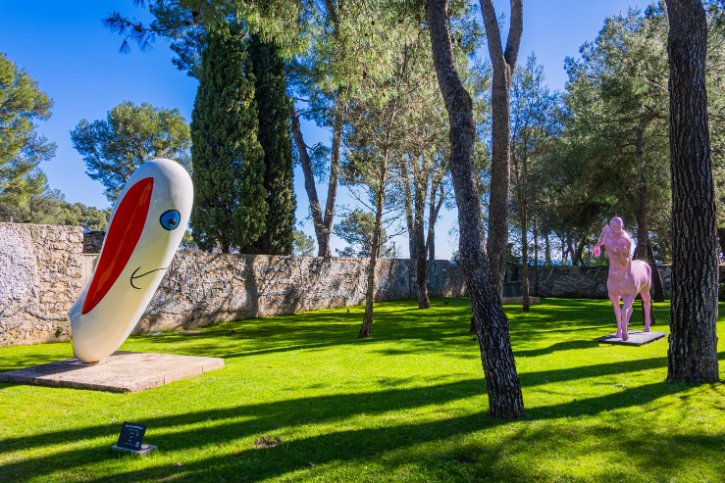
A short walk from the village, the Fondation Maeght is a modern and contemporary art museum set in a pine forest, in a striking white building designed by architect Josep Lluís Sert. The art spills out into the gardens as much as it fills the galleries:
- Cour Giacometti, a courtyard of slender bronze sculptures by Alberto Giacometti, including The Walking Man.
- Labyrinthe Miró, an outdoor sculpture maze by Joan Miró, blending stone and ceramic figures into the terraces.
- Mosaics and mobiles by artists such as Marc Chagall, Georges Braque, and Alexander Calder.
Wander slowly and let the setting do its work. The mix of art, architecture, and forest makes this one of the most memorable stops on the whole trip.
6:30 PM: A Lively Italian Dinner
Round off the day back in Nice at La Favola on Cours Saleya, a lively Italian brasserie known for generous, sharable plates in a buzzing setting. Expect hearty favorites:
- Seafood linguine cooked in parchment, truffle garganelli, and homemade lasagna.
- Thin-crust pizzas and veal Milanese.
- An oversized tiramisu served family-style, big enough to share.
With its energetic dining room and a terrace right on the old market square, La Favola sends you off on a warm, easygoing note. It is the perfect low-key finish to three memorable days in Nice.