
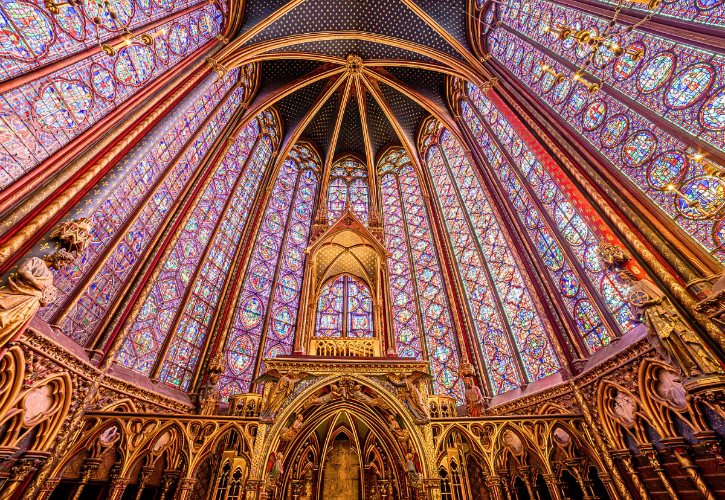
Most people step into Sainte-Chapelle expecting gorgeous stained glass. They take a few photos, feel impressed, and leave.
But here is the thing. This is not just a pretty Paris landmark.
It is a royal treasure box, a political message, a sacred reliquary, and a glowing story told through glass, stone, sculpture, and light.
This guide will help you slow down and notice what most visitors walk right past.
1. The Royal Palace Context Most Visitors Never Connect
Sainte-Chapelle makes far more sense once you stop seeing it as a standalone church. It was built inside the Palais de la Cité, the medieval home of the French kings and the political heart of Paris.
a. What most visitors miss
- They see a lovely chapel and stop there.
- They never connect it to royal power or the old palace.
- They walk past the nearby Conciergerie without a second thought.
b. A piece of the royal palace
- Sainte-Chapelle and the Conciergerie are two rare survivors of that huge palace.
- The chapel sat right inside the king’s own residence.
- The upper chapel linked directly to the king’s private apartments by a covered walkway.
c. The hierarchy built into the stone
- The lower chapel served palace staff and servants.
- The upper chapel was reserved for the king, his household, and important guests.
- This split by rank is built into the two-level design.
d. More than a church
- It was also a royal statement about power and divine favor.
- Holding sacred relics inside the palace showed the king’s special status.
e. Visitor tip
- Pair your visit with the Conciergerie, just before or after.
- Its huge medieval halls help you feel the old royal center of Paris.
Read More: 10 Best Spots in Île de la Cité You Can’t Miss
2. It Was Never Just a Chapel. It Was a Royal Reliquary and a Power Move
Here is the part most people never learn. Sainte-Chapelle was built to hold some of the most important relics in the Christian world, above all the Crown of Thorns and fragments of the True Cross.
a. What most visitors miss
- They admire the glass but never ask why the chapel exists.
- Without the relic story, it is just a pretty Gothic chapel.
- With it, the room becomes a royal treasure chest.
b. The relic that started it all
- Louis IX acquired the Crown of Thorns in 1239.
- It came from Baldwin II of Constantinople, who had pawned it and could not repay his debt.
- More Passion relics, including the True Cross, followed soon after.
c. The relics cost more than the building
- The relics reportedly cost around 135,000 livres tournois.
- That was roughly half the kingdom’s yearly income.
- The chapel itself cost far less to build.
- The relics were the treasure. The chapel was the container.
d. The political message
- Paris could be shown as a kind of “new Jerusalem”.
- France could look like a kingdom favored by God.
- Louis IX could appear as a saintly protector of Christianity.
e. What to look for
- The tall, jewel-box shape of the upper chapel.
- The glowing, gem-like atmosphere.
- The raised relic tribune where the reliquary once stood.
3. The Lower Chapel Is Not Just a Waiting Room
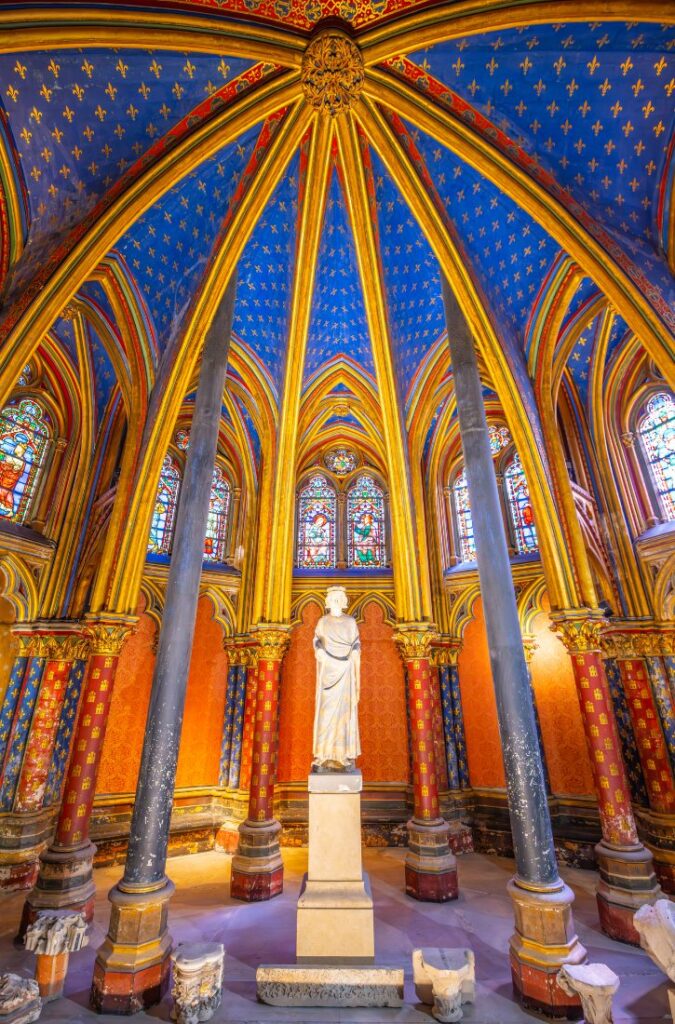
Most people rush through the lower chapel to reach the famous upstairs. Slow down here first. This space has its own beauty, meaning, and quiet charm.
a. What most visitors miss
- They treat it as a passageway, not a place.
- They miss the royal symbols and the clever engineering.
- They skip the oldest wall painting in Paris.
b. A space for the palace staff
- This level served servants and palace workers.
- They did not have the king’s access to the upper chapel.
- The low ceiling creates a snug, intimate mood.
c. Royal symbols everywhere
- Deep blues, warm reds, and gold cover the walls.
- Fleurs-de-lis stand for the French monarchy.
- Castilian castles honor Blanche of Castile, the king’s mother.
d. Hidden craft and clever support
- Around 140 carved capitals show Gothic plant motifs.
- Small struts called étrésillons help spread the weight.
- This level physically holds up the chapel above.
e. Visitor tip
- Spend 5 to 10 quiet minutes here before going up.
- Find the Annunciation mural at the back.
- It makes the upstairs reveal far more powerful.
4. The Staircase and Reveal Are Part of the Experience
The climb from the lower chapel to the upper chapel is not just practical. It is part of the show. You move from a darker, enclosed space into a glowing royal sanctuary.
a. What most visitors miss
- They rush up the narrow spiral stairs.
- They miss the suspense and contrast the building creates.
- They reach for the phone before really seeing the room.
b. A journey designed on purpose
- The climb acts like a symbolic rise.
- The lower chapel keeps you grounded and in shadow.
- The upper chapel suddenly opens into height and light.
c. Why the contrast works
- The heavy feeling below makes the light above feel dramatic.
- This links to medieval ideas of heavenly light.
- The “wow moment” was planned, not accidental.
d. Visitor tip
- Pause when you step into the upper chapel.
- Let your eyes adjust before taking photos.
- Those first few seconds are part of the experience.
5. The Engineering Miracle Nobody Talks About
The upper chapel is not just beautiful. It is a daring piece of engineering. The walls almost seem to disappear, replaced by glass.
a. What most visitors miss
- They look at the windows but not the structure.
- They never notice how little solid wall there is.
- They miss how bold the design really is.
b. Rayonnant Gothic in plain terms
- The style pushes stone as thin as possible.
- Slender piers carry the load instead of heavy walls.
- This frees huge areas for glass.
c. The numbers that amaze
- Around 670 square meters of stained glass.
- About 36 meters long and 17 meters wide.
- Roughly 5 meters tall.
- Built in under 7 years, fast for the Middle Ages.
d. What to look for
- The very slim supports between the windows.
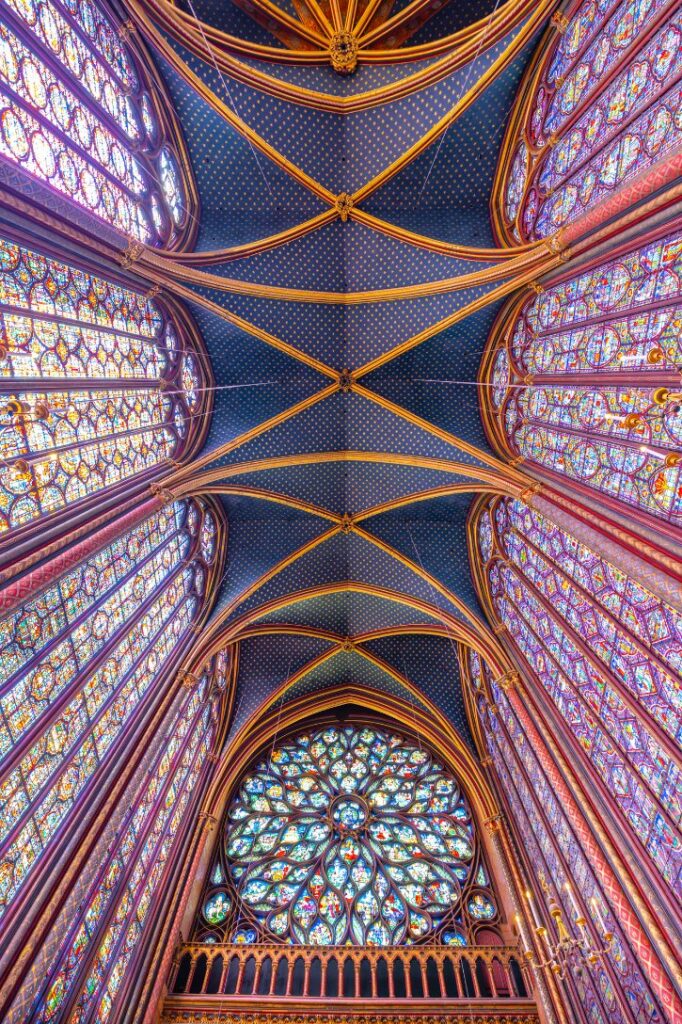
- The ribbed vaults overhead.
- The dark-blue ceiling scattered with gold stars.
- The feeling that the upper walls are made of glass.
e. Visitor tip
- Stand in the center
- Slowly look from the floor upward.
- You will notice the architecture before the windows pull you in.
6. The Upper Chapel Is a Masterpiece of Light, Not Just Stained Glass
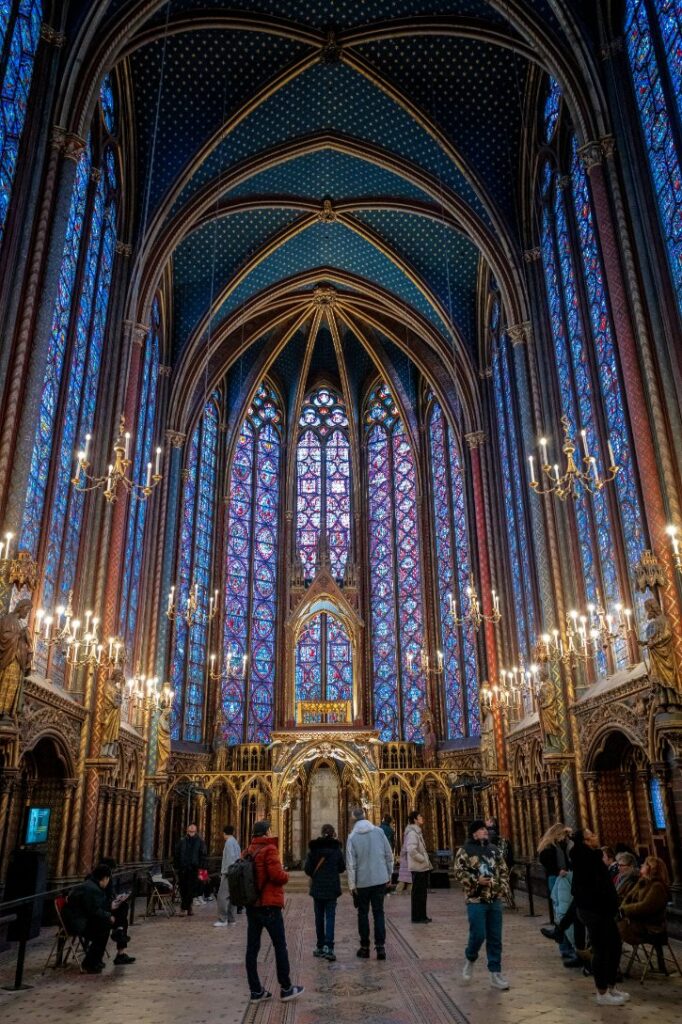
The real magic here is not the windows alone. It is how glass, height, color, and light all work together to turn daylight into something close to sacred.
a. What most visitors miss
- They say “the windows are beautiful” and stop there.
- They miss that the whole room shapes the light.
- They do not notice how the mood keeps shifting.
b. Light is the main material
- The glass shapes the feeling of the space, not just the look.
- The starry blue ceiling makes the colors feel richer.
- The slim supports make the room feel weightless.
c. A room that never looks the same
- Light changes with weather, season, and time of day.
- Colors shift from deep indigo to bright crimson.
- No two visits look exactly alike.
d. Visitor tip
- Spend a few moments without taking photos.
- A phone cannot capture how it feels inside.
- The room makes more sense when you slow down.
7. The 1,113 Stained-Glass Scenes Are Not Random Decoration
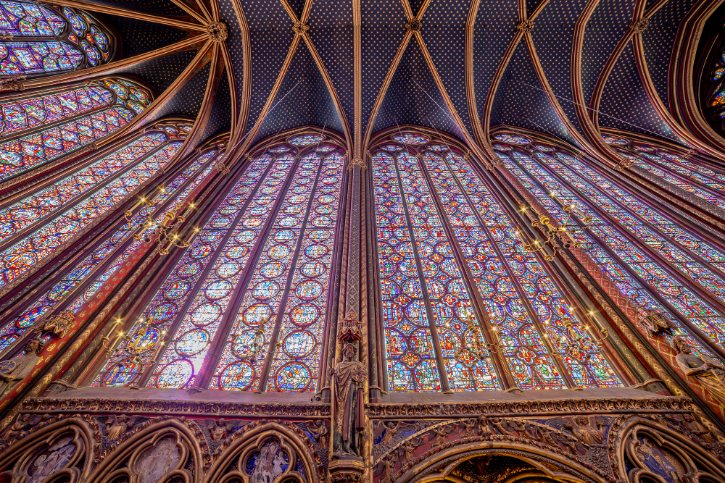
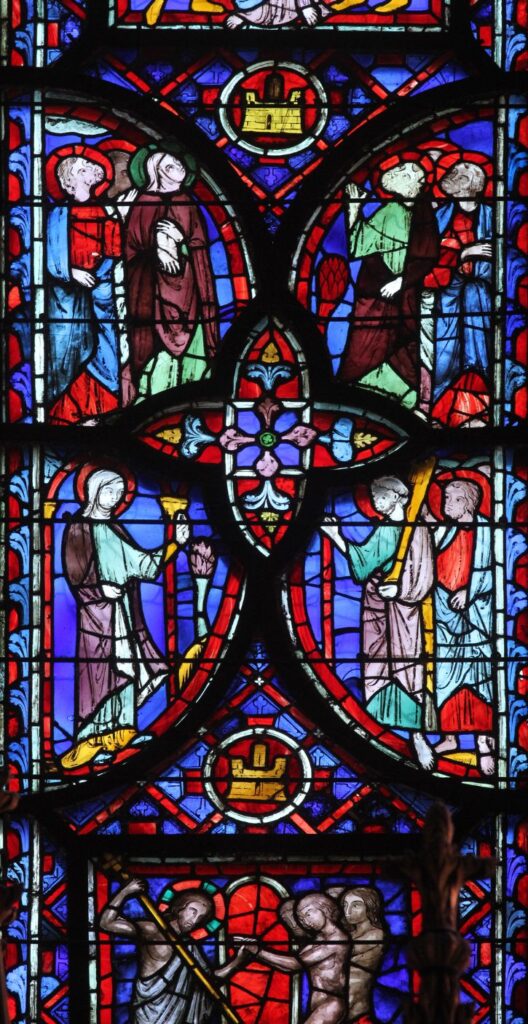
The windows are not just pretty patterns. Together they tell one enormous story, from the start of the world to its end.
a. What most visitors miss
- They assume the glass is purely decorative.
- They do not realize it forms a full narrative.
- They feel overwhelmed by the sheer amount of detail.
b. The scale of the story
- 15 major windows in total.
- 1,113 individual scenes.
- The story runs from Genesis to the Apocalypse.
c. A few themes to follow
- Genesis and Exodus.
- The Passion of Christ.
- The relics and royal imagery.
- The Apocalypse in the rose window.
d. What to look for
- Small round medallion scenes.
- Repeated deep blues and reds.
- Borders dotted with royal symbols.
e. Visitor tip
- Do not try to read all 1,113 scenes.
- Download the official “Sainte-Chapelle Stained Glass”
- Point your phone at a window for close-up explanations.
8. The Reading Order Most Visitors Never Receive
There is a clear reading order built into the glass. Most people just never learn where the story starts or how it moves, so the windows feel random.
a. What most visitors miss
- They stand in front of the glass feeling lost.
- They admire the color but lose the story.
- They never learn the simple starting point.
b. Where the story begins
- Start at the north-west window, on your left at the top of the stairs.
- That window begins with Genesis.
- Move clockwise around the chapel.
c. How the story flows
- Old Testament along the north side and apse.
- New Testament and relic scenes along the south side.
- The Apocalypse in the west rose window.
d. How to read each window
- Read 14 of the 15 windows left to right, bottom to top.
- This mirrors medieval manuscripts.
- The rose window is the exception, read from the center outward.
e. Practical tip
- Start at the Genesis window and walk clockwise.
- Focus on the main themes.
- Save the rose window for last.
9. The Donor Window: The Window That Is Also a History Book
This is one of the most rewarding windows in the chapel, and most people walk straight past it. From a distance it looks like the others, but up close it holds real history.
a. What most visitors miss
- They see it as just another tall window.
- They miss the unusual, documentary-style scenes.
- They overlook tiny details near the bottom.
b. Why it is special
- It is usually called Window 13, on the south wall.
- It shows Louis IX receiving the Crown of Thorns.
- Most donor windows only show a ruler kneeling in prayer.
c. A window that tells the chapel’s own story
- Louis transporting and installing the relic.
- Sainte-Chapelle itself shown under construction.
- Tiny medallions of masons and carpenters at work.
d. Why that matters
- The chapel pictures its own building inside its own glass.
- That is rare in medieval art.
- It ties back to the message of Louis IX as a sacred king.
e. Visitor tip
- Study it slowly, not just from the center.
- Use the app or a zoom lens to reach the low panels.
10. The Passion Window, Burning Bush, and Tree of Jesse: Three Details Worth Slowing Down For
The glass can blur into one big wash of color. Slow down for these three details and the chapel rewards you.
a. What most visitors miss
- They rarely stop to identify a single scene.
- They miss how placement and color carry meaning.
- They treat the windows as one big blur.
b. The Passion window
- It sits at the east end of the apse, the most sacred spot.
- It glows with the deepest reds in the chapel.
- Its crucifixion panels are among the finest medieval glass here.
c. The Burning Bush
- Found low in the Exodus window on the north wall.
- It rewards close looking.
- It can glow beautifully when the light hits well.
d. The Tree of Jesse
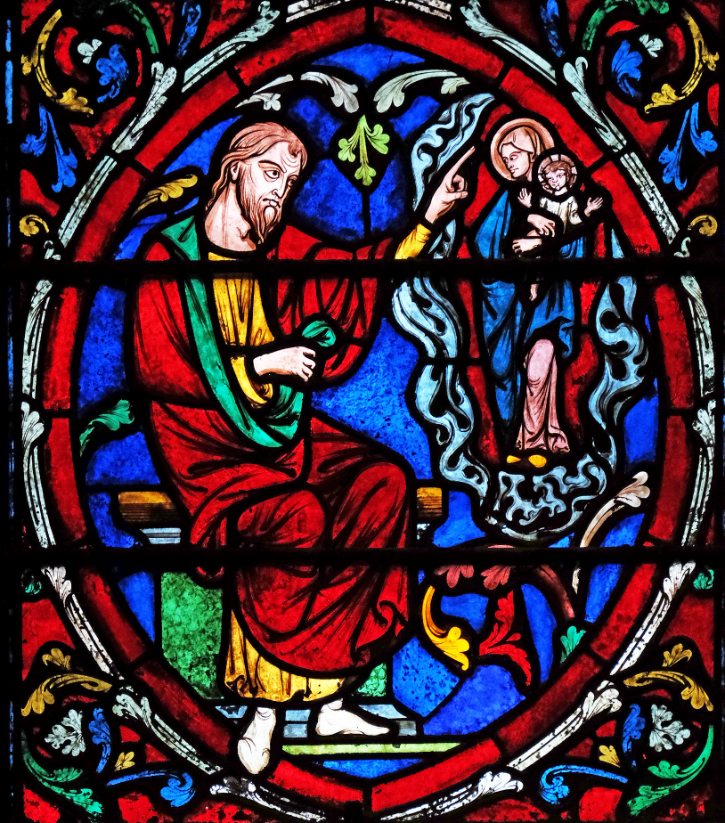
- It shows Christ’s family line.
- Jesse lies at the base, with branches rising through his descendants.
- It is easy to mistake for a generic family tree.
e. Visitor tip
- Spend several minutes with just one or two windows.
- One window you understand beats 15 rushed photos.
11. The Rose Window Is Not Just a Pretty Ending
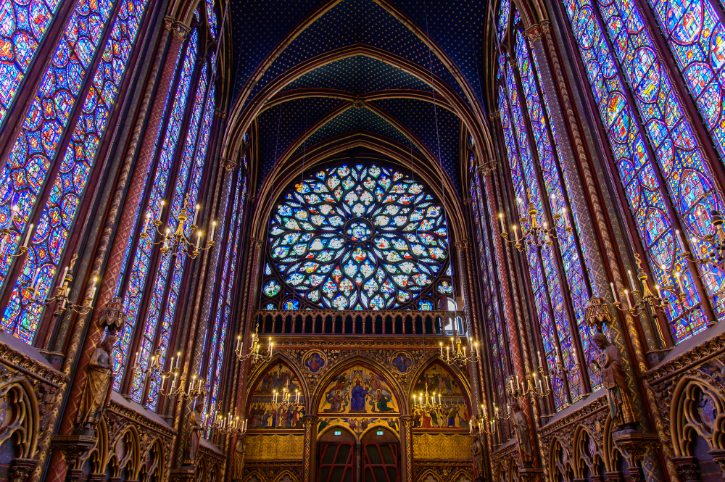
Many visitors photograph the tall side windows and forget to turn around. Do not make that mistake. The west rose window closes the whole story.
a. What most visitors miss
- They never turn fully toward the west wall.
- They miss one of the chapel’s grandest features.
- They skip its very different style and colors.
b. A later, different window
- Rebuilt around 1485 under Charles VIII.
- Built in the later Flamboyant Gothic
- It carries more yellow and green than the older glass.
- Look for the crowned “K” of Karolus.
c. What it shows
- It is dedicated to the Apocalypse.
- Christ in glory and the Four Horsemen.
- The New Jerusalem and the Last Judgment.
d. What to look for
- Flame-like stone tracery.
- A swirling circular design, about 9 meters across.
- It is read from the center outward, not bottom to top.
e. Visitor tip
- Turn around before leaving the upper chapel.
- Late afternoon light suits it best, especially in summer.
12. The Best Way to Experience the Light
Light changes everything here. Many people visit at a random moment and assume they saw it all. The chapel’s mood shifts hour by hour.
a. What most visitors miss
- The room looks different at every time of day.
- They assume one quick look shows everything.
- They do not plan around the light.
b. Sun or clouds, both work
- Bright sun makes colors intense and throws patterns on the stone.
- Cloudy skies create a softer, quieter glow.
- There is no single perfect time.
c. Timing for specific windows
- Morning light suits the east-facing apse windows.
- Late afternoon suits the west rose window.
- Very early arrivals may find the rose darker.
d. Viewing positions to try
- Stand in the center first for the whole effect.
- Move slowly along the side walls.
- Look at the floor, ceiling, and details, not just windows.
- Turn around often, as the view changes.
e. Practical tips
- Allow time for security checks.
- Do not schedule your visit too tightly.
- Spend part of your visit without taking photos.
13. Original Glass vs. Restored Glass: Can You Spot the Difference?
Sainte-Chapelle is often called untouched since the 1200s. The real story is more layered, and more interesting.
a. What most visitors miss
- Some assume everything is original.
- Others think restoration makes it less special.
- The truth sits in between.
b. How much is original
- Roughly two-thirds is original 13th-century glass.
- About one-third is mainly restoration.
c. A chapel that survived a lot
- Fire damage in 1630.
- Damage during the French Revolution.
- Years of use as storage and archives.
- A major restoration from 1840 to 1868 by Duban, Lassus, and Boeswillwald.
- A careful cleaning from 2008 to 2014.
d. How to spot the difference
- Original glass has ridges and uneven thickness.
- Its blues and reds feel rich and warm.
- Restored glass looks flatter and slightly cooler.
e. Visitor tip
- Compare panels in the Passion window.
- Knowing what is original makes the old glass feel precious.
14. The Apostle Statues: Guardians Most Visitors Walk Past
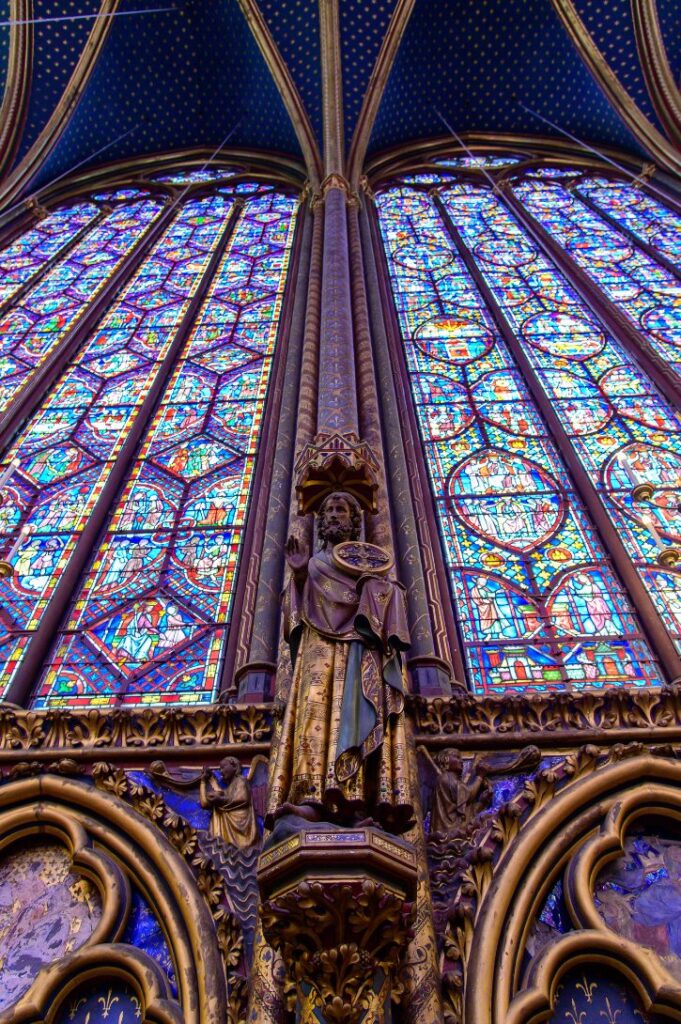
The glass is so dazzling that almost everyone forgets to look down. Do not skip the sculptures standing quietly around the room.
a. What most visitors miss
- The apostles and small carvings near eye level.
- Surfaces that were once brightly painted.
- Hidden creatures tucked into the foliage.
b. Twelve guardians of the relics
- 12 apostle statues line the pillars.
- They were carved in the 13th century to guard the relics.
- Some are original and some are replicas.
c. Once painted, not plain
- The statues were once covered in bright color.
- Damaged originals were moved to the Musée de Cluny.
- By candlelight at night, the painted figures stood out.
d. Figures you can name
- Saint Peter with his keys.
- Saint Paul with a sword.
- Saint John as a youthful figure.
e. Visitor tip
- After looking up at the windows, lower your gaze.
- Find the carved consecration crosses and small creatures.
- The chapel rewards people who look both high and low.
Related Posts

Photo Credit:
Photos by PIXTA