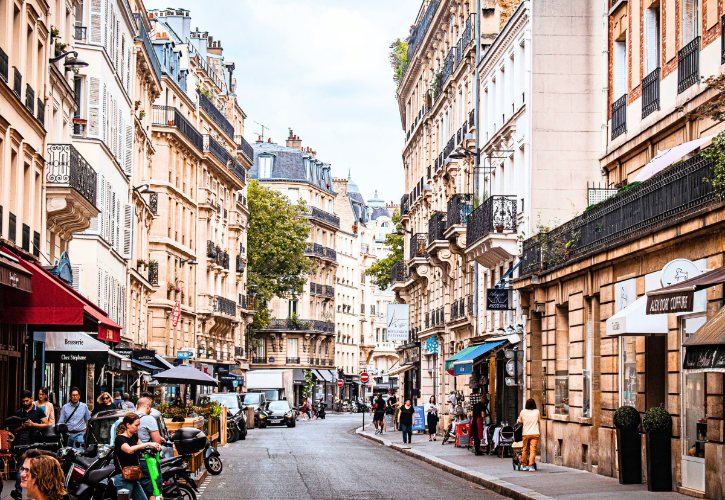
Where you sleep in Paris can quietly make or break your whole trip.
The city has 20 arrondissements, and they do not feel the same. One can be calm, walkable, and full of good food. The next can be loud, pricey, and packed with crowds.
Some areas are genuinely worth booking. Others look perfect on a map but turn out to be expensive, busy, or poor value once you arrive.
Here are the five I would choose, and three I would gently steer you away from.
1. Le Marais (3rd & 4th Arrondissement)
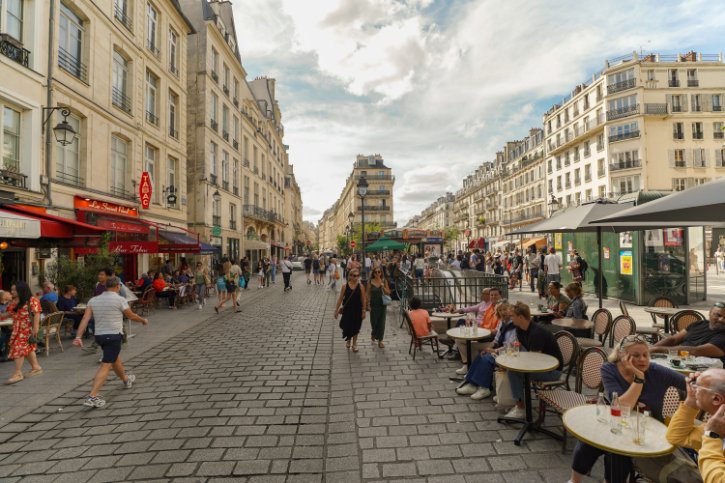
The Most Versatile Neighborhood in Paris
Le Marais is one of the easiest places to fall in love with in Paris. The moment you step outside, you get old streets, historic mansions, and pretty shopfronts.
Most of central Paris was rebuilt in the 1800s, but Le Marais kept its medieval layout, and that is a big part of its charm. It suits midrange and higher-budget travelers best.
a. Why this area works well
Le Marais still feels like a real, living neighborhood, shaped by locals, the LGBTQ+ community, artists, and the historic Jewish quarter around Rue des Rosiers. It is lively without feeling chaotic, and you can find a quiet street just one block off the main lanes.
b. Best for
- First-time visitors who want a beautiful, central, walkable base.
- Couples who enjoy romantic streets and evening walks.
- Food lovers who want bakeries, falafel spots, and small bistros.
- Travelers who want to walk rather than rely on the Metro.
Read More: The Best Route to Explore Le Marais on Foot
c. Vibe and character
The 3rd arrondissement (Haut-Marais) is calmer and more local, known for galleries and specialty coffee. The 4th arrondissement is more classic and central, close to the Seine, Notre-Dame, and Hôtel de Ville.
d. Key places nearby
- Place des Vosges, one of the most beautiful squares in the city.
- Musée Carnavalet, a free museum on the history of Paris.
- Picasso Museum, inside the grand Hôtel Salé.
- Notre-Dame, reopened in December 2024, with a free timed reservation through the official app.
One note: the Centre Pompidou is closed for a major renovation until 2030.
e. Food and nightlife
- A great mix of Jewish delis, falafel shops, bakeries, and wine bars.
- On Rue des Rosiers, L’As du Fallafel is famous, but closes for Shabbat from Friday afternoon through Saturday daytime.
- Nightlife is relaxed and stylish, built around cocktail and wine bars, not big clubs.
f. Getting around
Handy stations include Saint-Paul (Line 1), Hôtel de Ville (Lines 1, 11), and Rambuteau (Line 11), with République and Bastille on the borders. The area is very walkable, but check the walk from your hotel to the nearest station.
g. Budget and value
Le Marais is not cheap, but you walk to so much that you save time and transport money daily. Compared with Saint-Germain or the Champs-Élysées, it offers more neighborhood life and better dining value.
h. Possible downsides
- Rooms can be small, and prices rise at peak dates.
- Streets get crowded, especially on weekends.
- Some shops on the main lanes feel tourist-focused.
i. The takeaway
Le Marais is one of the strongest choices if you want Paris to feel beautiful and lively the moment you step outside, and you value atmosphere over the lowest price.
2. Latin Quarter (5th Arrondissement)
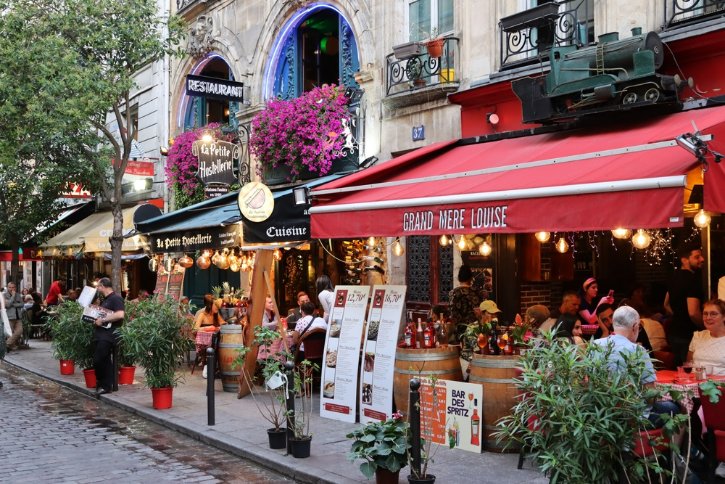
The Literary Left Bank: Calm, Central, and Underrated
The Latin Quarter gives you that classic “old Paris” feeling, with history, bookshops, cafés, and a gentle student energy.
Here is the fun part: it offers much better value than its fancy neighbor Saint-Germain-des-Prés, while still feeling central and full of charm.
a. Why this area works well
The neighborhood mixes university history, bookshops, markets, and green spaces. It feels central but calmer than the busiest postcard areas, and suits travelers who want charm without heavy nightlife.
b. Best for
- First-time visitors who want a central but calmer base.
- History fans, book lovers, and slow travelers who like to wander.
- Families and midrange travelers who want a Left Bank stay without top prices.
c. Vibe and character
Near Saint-Michel and the Seine it is lively and touristy. As you head south toward the Panthéon and Luxembourg Gardens, it turns leafy, local, and calm.
d. Key places nearby
- Panthéon, the resting place of Victor Hugo, Marie Curie, and Voltaire.
- Luxembourg Gardens, one of the loveliest green spaces in Paris.
- Cluny Museum, home to the “Lady and the Unicorn” tapestries.
- Rue Mouffetard, a market street full of food shops. Arrive after 9 or 10 in the morning, and avoid Mondays.
Literary fans will like knowing Hemingway lived near Place Contrescarpe in his early years.
e. Food and nightlife
- Rue Mouffetard and Place Monge are full of bakeries, cheese shops, and affordable bistros.
- Avoid Rue de la Huchette near Saint-Michel, full of low-value tourist traps.
- Nightlife is relaxed, with student pubs, wine bars, and a few historic jazz clubs.
f. Getting around
Transport is excellent, with Saint-Michel Notre-Dame (Line 4, RER B, RER C), Cluny-La Sorbonne (Line 10), Jussieu (Lines 7, 10), and Luxembourg (RER B). The RER B can be handy for airport trips.
g. Budget and value
The Latin Quarter gives you a true Left Bank base for a lot less than Saint-Germain-des-Prés, with the same classic look and friendlier hotel prices.
Read More: The Best Left Bank Walking Route in Paris for One Beautiful Day
h. Possible downsides
- The area near Saint-Michel feels touristy and crowded.
- Rooms can be small, and older buildings may lack lifts or air conditioning.
- It lacks the trendy shopping and buzz of Le Marais.
i. The takeaway
The Latin Quarter is a great pick for history and walkability with a more affordable Left Bank base, as long as you book away from the crowded Saint-Michel strip.
Read More: 17 Best Spots in the Latin Quarter You Absolutely Can’t Miss
3. Saint-Germain-des-Prés (6th Arrondissement)
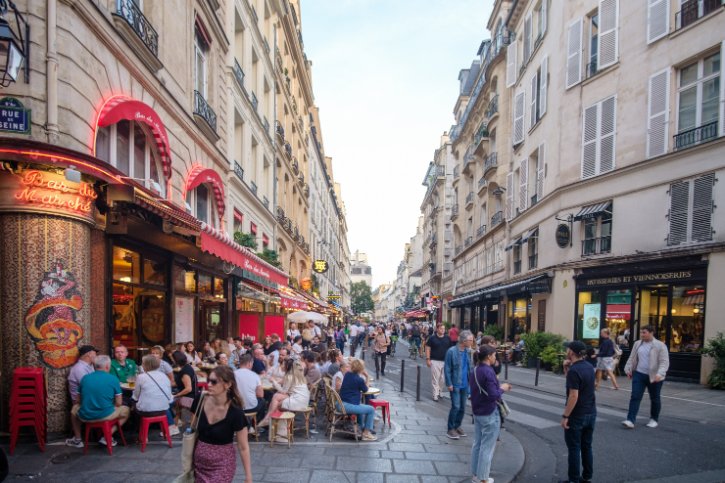
Classic Left Bank Elegance: Beautiful, Central, and Walkable
Saint-Germain-des-Prés is the polished, literary heart of the Left Bank, and one of the very best areas to stay in Paris. You get elegant streets, famous cafés, art galleries, and bookshops, with the Luxembourg Gardens and the Seine close by.
It is the more upmarket neighbor of the Latin Quarter, so it suits midrange and higher-budget travelers who want classic, romantic Paris right outside the door.
a. Why this area works well
It offers real Left Bank elegance in a very central, walkable spot. You can reach the Louvre, the Musée d’Orsay, Notre-Dame, and the Latin Quarter on foot.
It stays lively with cafés and shops by day, then turns calmer and more refined at night than the party districts.
b. Best for
- First-time visitors who want classic, romantic Paris right outside the door.
- Couples and special-occasion travelers.
- Culture and history lovers drawn to literary cafés, galleries, and churches.
- Walkers who want to reach many sights on foot.
- Midrange and higher-budget travelers happy to pay for location and elegance.
c. Vibe and character
The feel is chic and a little bourgeois, but newer cocktail and wine bars have added fresh energy. It is quieter and more polished than Le Marais or Bastille, with art galleries along Rue de Seine and the lively Rue de Buci market street.
d. Key places nearby
- Église Saint-Germain-des-Prés, one of the oldest churches in Paris, across from Les Deux Magots.
- Café de Flore and Les Deux Magots, historic literary cafés, lovely to see but pricey.
- Luxembourg Gardens, a short walk south.
- Le Bon Marché, the elegant Left Bank department store.
- Musée d’Orsay, a short walk along the Seine.
e. Food and nightlife
- Grand cafés, brasseries, bakeries, and fine dining sit side by side.
- Newer spots, like natural wine bars and cocktail bars, have added a younger buzz.
- La Palette and similar cafés are great for a relaxed glass of wine.
- Nightlife is refined and easygoing, not a club scene.
- Note: the famous cafés charge premium prices, so treat them as an experience rather than an everyday stop.
f. Getting around
The neighborhood is served by Saint-Germain-des-Prés (Line 4), Mabillon (Line 10), and Odéon (Lines 4, 10). It is so central that you can walk to many major sights, and buses run along Boulevard Saint-Germain.
g. Budget and value
Let us be honest: this is one of the pricier areas to stay, and you are paying for the elegant, central location.
If your budget is tight, the Latin Quarter next door gives a similar Left Bank feel for less. But if you can stretch, the walkability and atmosphere are worth it.
h. Possible downsides
- It is expensive, and rooms can be small in older buildings.
- The famous cafés are pricey and tourist-heavy.
- It is calm at night, which may feel too quiet for some.
- It has less local, market-style daily life than the eastern neighborhoods.
i. The takeaway
Saint-Germain-des-Prés is a wonderful base if you want classic, elegant, walkable Paris and you are happy to pay a bit more. It is best for travelers who value atmosphere and location over the lowest price.
Read More: The Best Walking Route to Explore Saint-Germain-des-Prés
4. Bastille (11th Arrondissement)
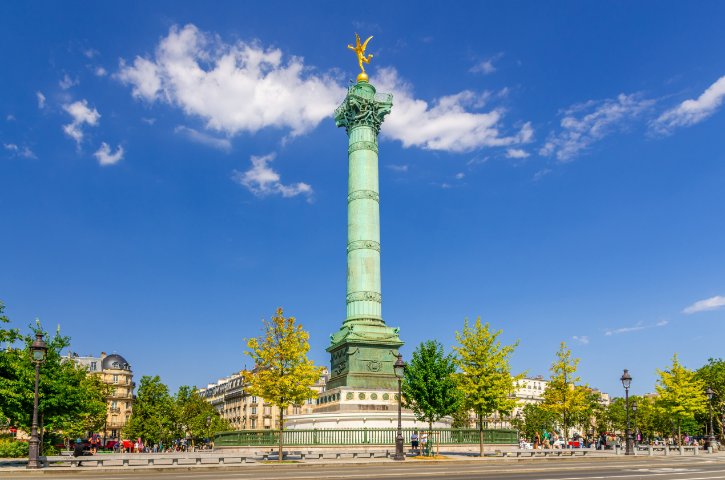
The Smart Choice: Food, Nightlife, and Better Value
Bastille is one of the smartest bases in Paris. It is lively, full of great food, and it sits right next to Le Marais, often for noticeably lower hotel prices. If you want central access without paying for a postcard address, this is a clever spot.
a. Why this area works well
Bastille sits between central Paris and the lively eastern neighborhoods, so you can easily reach Le Marais, Canal Saint-Martin, and the Latin Quarter. For most first-timers, it is central enough to work very well.
b. Best for
- Travelers who love restaurants and nightlife, in one of the best dining areas in the city.
- Midrange travelers looking for strong value.
- Couples and groups who want an energetic base near Le Marais.
c. Vibe and character
Place de la Bastille is a famous spot in French history, the symbolic start of the French Revolution. Today the area feels mixed, energetic, and a little gritty, with daily markets and neighborhood cafés.
d. Key places nearby
- Place de la Bastille, the Colonne de Juillet, and the modern Opéra Bastille.
- Promenade Plantée, a lovely elevated park on an old railway line.
- Marché Bastille (Thursday and Sunday mornings) and Marché d’Aligre, loved by locals.
e. Food and nightlife
- Great streets include Rue de Charonne, Rue de la Roquette, and Rue Oberkampf.
- You will find neo-bistros, wine caves, craft beer bars, and casual restaurants.
- Le Baron Rouge is a classic wine cave with fresh oysters on weekend mornings from mid-September.
- Nightlife runs strong from Thursday to Saturday.
f. Getting around
Bastille is a major hub, with Bastille (Lines 1, 5, 8) and Ledru-Rollin (Line 8). Line 1 gives a fast link across central Paris, while Line 5 reaches the northern and southern train stations.
g. Budget and value
Bastille gives you a great balance of location and cost. You get easy access to Le Marais while paying noticeably less on many hotels, and the affordable bistros keep your daily spend reasonable.
h. Possible downsides
- Some streets are noisy at night near the bars.
- The look can feel grittier than the Left Bank.
- It is not the right pick for a quiet luxury stay.
i. The takeaway
Bastille is a smart base for food, nightlife, and good transport without top central prices. It is especially strong for midrange travelers who care more about great meals than luxury scenery.
5. Montparnasse (14th Arrondissement)
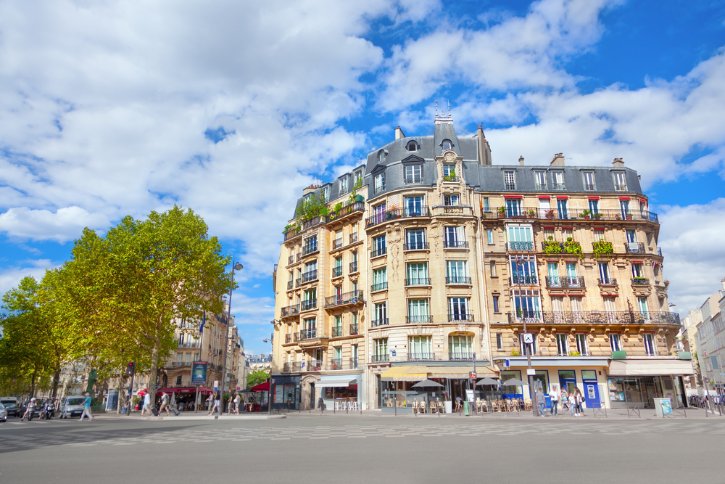
The Quiet Overachiever: Practical Paris Without the Chaos
Montparnasse does not get much hype, and that is exactly why it is so useful. It gives you better hotel value, bigger rooms, strong transport, and calm evenings, without the heavy tourist crowds. For many travelers, it is simply more practical.
a. Why this area works well
Montparnasse has great transport links, local food streets, and a real residential feel. It is also handy for day trips, since Gare Montparnasse runs trains to Versailles, Chartres, and western France.
b. Best for
- Budget and midrange travelers who want better value and larger rooms.
- Visitors planning day trips from Gare Montparnasse.
- Families and solo travelers who want a calm, secure base.
c. Vibe and character
Right by the station, the area is modern and a bit commercial. A few blocks away you find pretty Left Bank residential streets and traditional brasseries. Writers and artists like Hemingway, Picasso, and Simone de Beauvoir once filled its cafés.
d. Key places nearby
- Montparnasse Cemetery, the resting place of Sartre, Simone de Beauvoir, and Baudelaire.
- Rue de la Gaîté for theaters, and Rue Daguerre, a pedestrian market street.
- The Catacombs, near Denfert-Rochereau. Book ahead, dress warmly, and be ready for many steps.
Two recent changes: the Tour Montparnasse observation deck has closed for a long renovation, and the Fondation Cartier has moved to a new home opposite the Louvre.
e. Food and nightlife
- The grand brasseries along Boulevard du Montparnasse, such as La Coupole, Le Select, and Le Dôme, still serve classic French food.
- Thanks to its Breton history, the area has some of the best crêperies in the city.
- Nightlife is calm, built around brasseries and theaters, not late-night clubbing.
f. Getting around
Montparnasse has excellent connections, with Montparnasse-Bienvenüe (Lines 4, 6, 12, 13), Vavin (Line 4), and Denfert-Rochereau (Lines 4, 6, RER B). One tip: Montparnasse-Bienvenüe is huge, so check the closest exit to your hotel.
g. Budget and value
Montparnasse offers some of the best hotel value in central Paris. Because it sits just south of the busiest tourist zone, you often get bigger rooms, modern bathrooms, working lifts, and air conditioning for the same price as cramped older hotels in the center.
h. Possible downsides
- Not every street is charming, especially near the station.
- It is not as romantic as Le Marais or the Latin Quarter.
- You will use public transport more often, and it can feel quiet at night.
i. The takeaway
Montparnasse is a smart base for value, comfort, easy transport, and calm evenings while staying close to central Paris. It is a top pick for families, day-trippers, and practical travelers.
6. Avoid: Gare du Nord (10th Arrondissement)
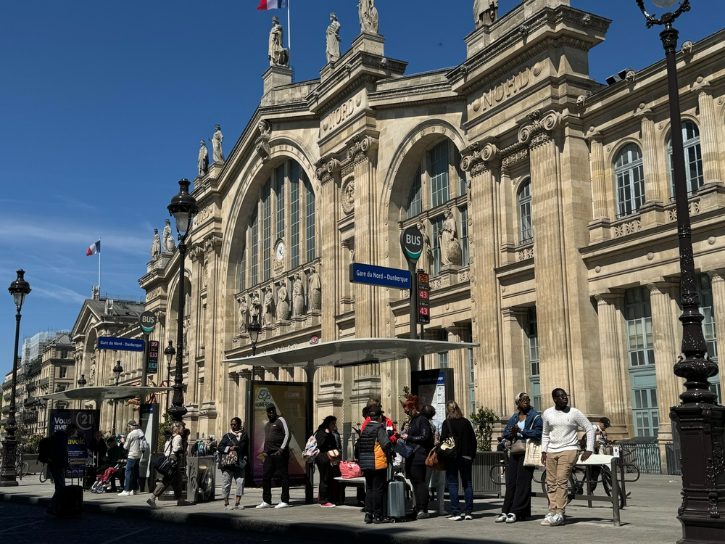
Great for Trains, Not for Sleeping: A Busy Hub, Not a Home Base
Gare du Nord is one of the best-connected spots in Paris, with Eurostar trains to London, fast trains across France, and a direct line to the airport. That convenience tempts travelers to book a hotel right beside it.
But the immediate area is busy and short on charm, and most visitors enjoy Paris far more from a nicer base nearby.
a. Why travelers are tempted
- Eurostar to London, plus fast trains across France and Europe.
- A direct RER B line to Charles de Gaulle Airport.
- Plenty of budget hotels right by the station.
- It looks very convenient on a map.
b. Why I’d avoid staying here
- The streets right around the station are busy, commercial, and not very pretty.
- It feels transient, with crowds rushing to and from trains.
- There is little of the calm neighborhood charm most people come to Paris for.
- Budget hotels here often trade atmosphere for a spot you will mostly use to catch a train.
c. The reality on the ground
The station is one of the busiest in Europe, so the area buzzes by day and feels fine when the crowds are around. Like most big station districts, it draws pickpockets, so keep your bag and phone secure.
It is quieter and less pleasant late at night, especially on the streets right by the tracks, so many travelers prefer not to wander here after dark. It is not a no-go area, just not a relaxing one.
d. What it’s good for
This is a place to pass through, not to stay. If you have a Eurostar or an early airport train, it is handy to know how close and well-connected it is. Use it for travel, and enjoy Paris from somewhere with more character.
e. When it might still make sense
- A single night before a very early Eurostar or airport departure.
- Tight budgets, where the lowest room price near the station wins.
- Travelers who only need a bed between trains and do not plan to linger.
Tip: booking a hotel one Metro stop away often gives you calmer streets for a similar price.
f. The takeaway
Gare du Nord is brilliant for getting in and out of Paris, but it is a weak base for enjoying the city. Stay somewhere with more charm nearby, like Le Marais, the Latin Quarter, or Bastille, and simply use the station when you travel.
Read More: The Best Walking Route to Explore Saint-Germain-des-Prés
7. Avoid: Eiffel Tower, Invalides & Trocadéro (7th & 16th Arrondissement)
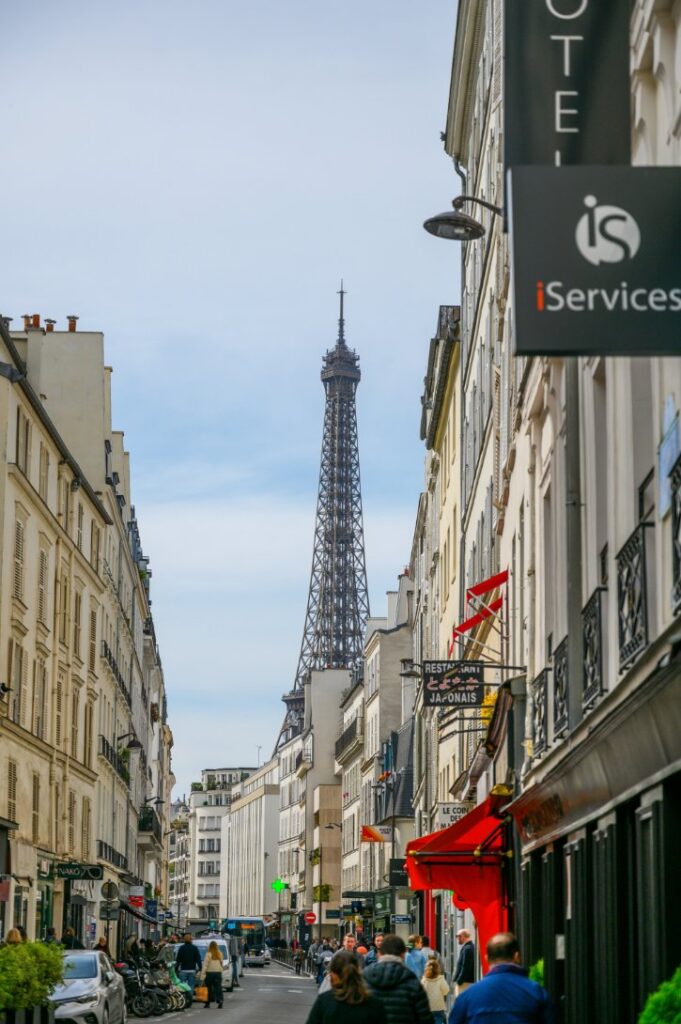
Great View, Wrong Base: Why the Postcard Neighborhood Can Disappoint
Staying right by the Eiffel Tower sounds like a dream. In practice, it is one of the most common booking mistakes first-time visitors make. The area is beautiful, but it is spread out, often quiet at night, and not very practical as a daily base.
Read More: 10 Best Free Spots to Take Stunning Eiffel Tower Photos
a. Why travelers are tempted
- The dream of opening the curtains to the Eiffel Tower.
- Famous postcard scenery and easy photos.
- Grand, elegant streets and a calm, prestigious feel.
b. Why I’d avoid staying here
- Hotels with tower views often charge steep premiums.
- You pay a lot for a view, then spend most of the day elsewhere.
- The streets can feel quiet at night, with fewer casual restaurants and bars.
- It is a slow base for reaching lively areas like Le Marais, Bastille, and Canal Saint-Martin.
c. The tourist and value reality
Around the Champ de Mars and Trocadéro, the crowds are heavy and the souvenir sellers are everywhere. Many restaurants are overpriced for the quality, and even the charming Rue Cler has become quite touristy.
d. The transport and movement problem
The area is spread out, with big avenues and open spaces between stations, so the walk to the Metro is often longer than you expect. Reaching the lively eastern neighborhoods usually means a transfer along the way. The 16th is also large, so the exact location of your hotel really matters.
e. An important point
To be clear, the Eiffel Tower area is iconic and unforgettable to visit. The issue is value and practicality, not beauty. For most travelers, it works far better as a planned visit than as a home base.
f. When it might still make sense
This area can work for families whose main dream is the tower, or couples who want a quiet, romantic stay and do not mind paying more.
g. The takeaway
The Eiffel Tower district is unforgettable to visit. But do not assume it is the best place to stay, unless the view is your top priority and you are happy to pay for it.
8. Avoid: Champs-Élysées & the Golden Triangle (8th Arrondissement)
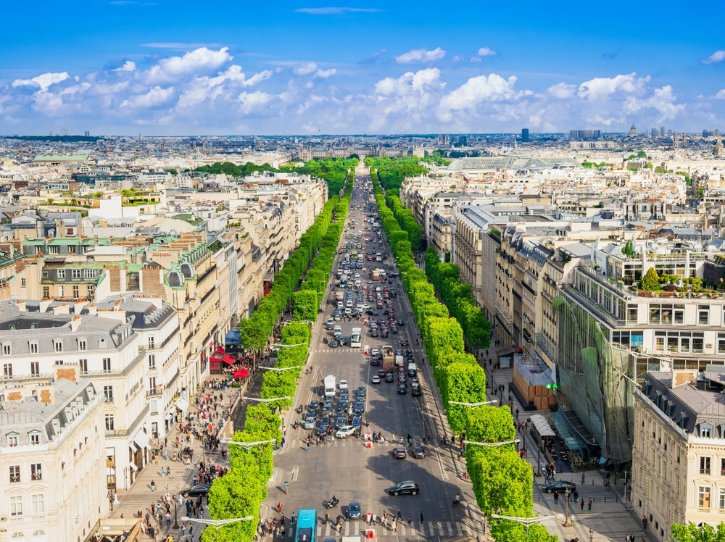
Paris’s Luxury Zone: Impressive to Visit, Poor Value for Most Travelers
The Champs-Élysées and the nearby Golden Triangle (around Avenues Montaigne, George V, and the Champs-Élysées) are famous, grand, and built for luxury.
They are impressive to walk through, but as a base they offer weak value for most budget and midrange travelers.
a. Why travelers are tempted
- The world-famous avenue and the Arc de Triomphe
- Luxury shopping, grand hotels, and designer boutiques.
- Easy name recognition and a central spot on the map.
b. Why I’d avoid staying here
- Hotels are often very expensive.
- The area feels commercial and luxury-focused rather than local.
- It rarely gives you the cosy Paris neighborhood feeling you came for.
c. The tourist, traffic, and commercial reality
In many ways, the Champs-Élysées is the Times Square of Paris: crowded, full of chain stores, and busy with traffic and noise. Many locals avoid it, and once the shops close, the wide boulevards can feel empty.
d. The accommodation reality
The 8th is one of the most expensive hotel areas in Paris, home to famous palace hotels. For a midrange traveler, the same budget goes much further in Le Marais, Bastille, or Montparnasse, where you find stylish boutique rooms with more space.
e. The experience problem
This area has very few open-air markets, local bakeries, or casual neighborhood cafés. The feel is polished and corporate, so many visitors miss the very Paris atmosphere they hoped for.
f. When it might still make sense
This area suits luxury shoppers, business travelers, and high-budget visitors who value grand hotels and prestige.
g. The takeaway
The Champs-Élysées and the Golden Triangle are impressive to see for an afternoon. But for most budget and midrange travelers, they do not offer the best Paris stay for the money.