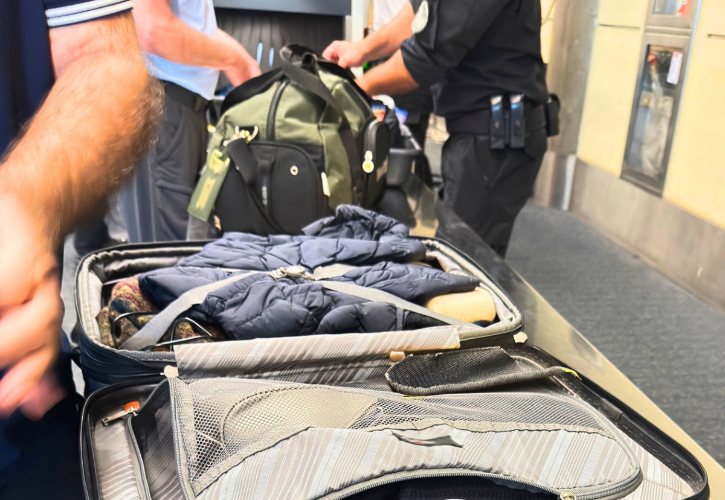
Arriving in or leaving France can feel simple when everything runs on time.
But one small rule mistake can turn into long queues, extra checks, a missed connection, a refused refund, or trouble at the border.
New border systems, biometric checks, tax refund steps, and updated security rules have changed how things work.
Advice that worked a few years ago can now slow you down. Here are the seven rules worth knowing before you fly.
1. Have Your Passport, Visa, ETIAS, and Arrival Documents Ready Before Landing
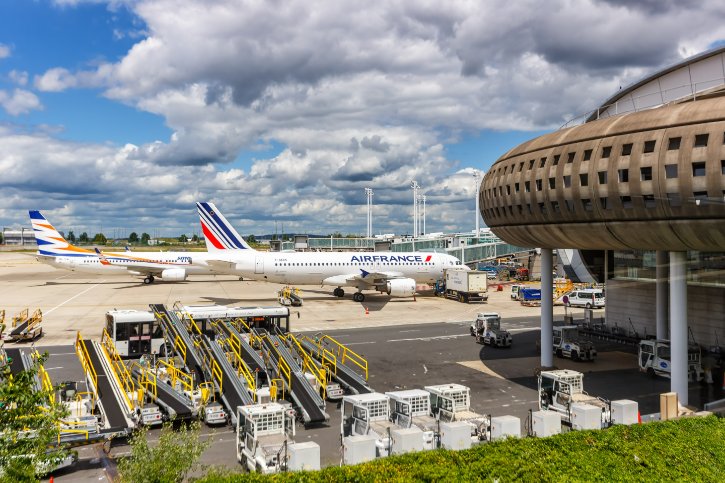
Getting into France through Paris airports, or other French airports, is about more than holding a plane ticket.
Border officers at Paris-Charles de Gaulle (CDG) and Paris-Orly check your documents and your right to enter carefully, so the work starts before you land.
a. Passport and Visa Basics
- Your passport must be valid for at least three months beyond the day you plan to leave the Schengen Area.
- It must have been issued within the last ten years. For some visa-exempt travelers this is applied strictly, so a passport near that mark can be refused even with time left.
- Citizens of the US, UK, Canada, and Australia can visit visa-free for up to 90 days, but visa-free does not mean automatic entry.
Border guards often ask for proof of your trip, such as a hotel booking, a return or onward ticket, proof of sufficient funds, or travel insurance.
b. The Entry/Exit System (EES)
The EES has been fully operational since 10 April 2026, recording entries and exits digitally instead of hand-stamping passports.
- It applies to non-EU and non-Schengen travelers on short stays of up to 90 days in any 180-day period.
- On your first entry, you go through biometric registration, meaning four fingerprints and a digital face photo at a kiosk or staffed desk.
- Your data is stored for three years after your last trip.
That first registration can roughly double your time at the border desk, especially at Paris-CDG’s Terminal 2E, which handles many non-EU flights.
c. The ETIAS Travel Authorization
ETIAS is not a visa. It is an online approval you apply for before you fly.
- The launch has been delayed again. In mid-July 2026 the EU removed the “last quarter of 2026” date from its official ETIAS website, which now only says the system is not yet in operation. A 2027 start is now the most likely outcome, though no exact date is confirmed.
- The EU has promised to announce the start date several months in advance, so you will have time to prepare before it becomes required.
- It is for visa-exempt travelers, who apply online with basic details.
- The fee is €20 for ages 18 to 70. Travelers under 18 or over 70 pay no fee but still need the authorization.
Only use the official EU website ending in europa.eu. The application portal is not open yet, so any site taking ETIAS payments right now is a scam.
d. EES and ETIAS Are Not the Same
Keep the two clear. EES is already running. It has been fully operational at every external Schengen border crossing since 10 April 2026, and it records your entry and exit using your fingerprints and face, with no fee.
ETIAS is a pre-travel approval you apply for online, with a small fee, and it is not live yet. EU, EEA, and Swiss citizens do not use either the same way.
e. Simple Document Habits
- Keep offline backups or printed copies of bookings, tickets, insurance, and proof of funds, since phone signal in arrival halls can be weak.
- A simple document folder moves you through checks faster, and remember that first-time EES registration takes extra time.
2. Know the Schengen 90/180-Day Rule and New EES Border Checks
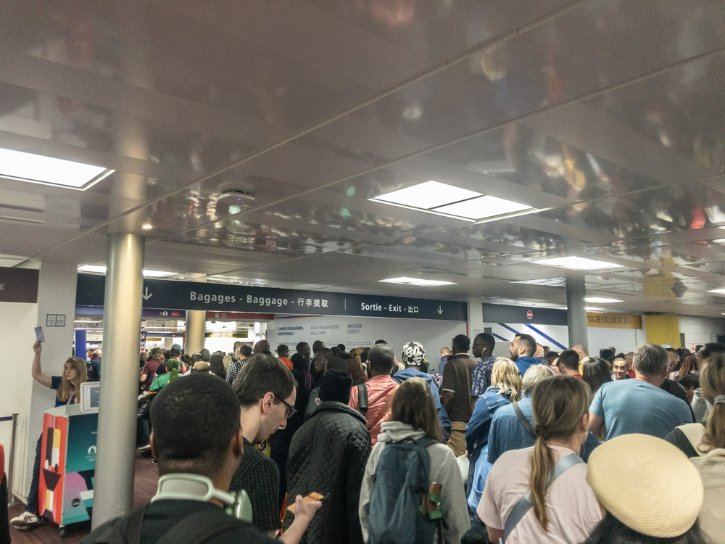
Paris sits inside the Schengen Area, so the short-stay limit covers the whole zone, not just France. This matters most across a multi-country trip.
a. How the Rule Works
- As a non-EU traveler without a long-stay visa or residence permit, you can stay up to 90 days within any rolling 180-day period.
- It covers all 29 participating countries together, so days in France, Spain, Italy, or Germany all count toward one total.
- The 180-day period rolls and does not reset at the start of a new month or year.
- To check any day, look back over the past 180 days and add up your days inside the zone.
- Past trips by flight, train, ferry, or bus all count.
A new year does not give you a fresh 90 days.
b. How EES Changed the Counting
Officers used to count your days by reading ink stamps, which was easy to get wrong. Now every entry and exit is recorded digitally, the system works out your exact stay, and it flags overstays right away.
Overstaying can lead to fines, deportation, and a formal record that may cause refusals of future visas.
c. Who the Rule Applies To
- EU, EEA, and Swiss citizens are exempt from the limit and from EES.
- Non-EU visa-exempt tourists (US, UK, Canada, Australia) are subject to the limit and must register biometrically at first entry.
- Schengen short-stay visa holders are subject to the limit and also register.
- Long-stay visa or French residence permit holders are exempt and are not recorded in EES.
d. Practical Steps Before You Travel
- Check all your entry and exit dates from the last 180 days, and keep old tickets and confirmations.
- Use the official European Commission short-stay calculator to audit your days.
- Leave a buffer. Planning to leave on day 90 is risky, since strikes and delays happen, so keep a few spare days.
3. Understand Who Can Use PARAFE E-Gates at Paris Airports
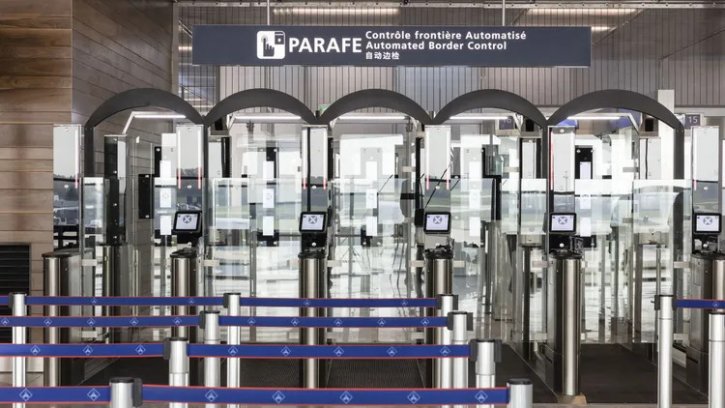
The PARAFE e-gates use facial recognition to speed up border crossings at French airports such as CDG and Orly, but not everyone can use them.
Eligibility depends on nationality, age, passport type, and direction of travel, and you need a valid biometric passport with the electronic chip symbol on the cover.
a. Entry Versus Exit Rules
Entering Schengen:
- Eligible travelers include all 27 EU countries, plus Iceland, Liechtenstein, Norway, Switzerland, Andorra, Monaco, and San Marino.
- Some third countries also qualify, such as the UK, US, Canada, Australia, New Zealand, Japan, and Singapore.
- Minors must be at least 12 to use the gates for entry, and must be with an adult.
Leaving Schengen:
- For exit, France has opened PARAFE to all nationalities, as long as you are at least 18 with a valid biometric passport.
- Minors cannot use the gates for departure and must go through manual lanes with their families.
b. The Important EES Exceptions
- First-time EES entry. Since April 2026, non-EU travelers, including US and UK passport holders, cannot use PARAFE on their first entry. The first enrollment must be done at a staffed booth or EES kiosk, after which the gates work on later entries.
- Residency permit holders. Since late 2025, non-EU nationals with French long-stay residence permits (cartes de séjour) or Brexit Withdrawal Agreement documents can no longer use PARAFE and must use manual passport control.
c. Small Tips for a Smooth Gate
- Remove glasses, hats, scarves, and masks before the scanner.
- Hold your passport correctly and follow the prompts and signs.
- If the gate rejects you, move calmly to a staffed booth.
Being eligible does not always mean a fast crossing, since open gates and first-time EES registration can slow you down.
4. Check Whether Your Paris Layover Requires Immigration, Security, or a Terminal Change
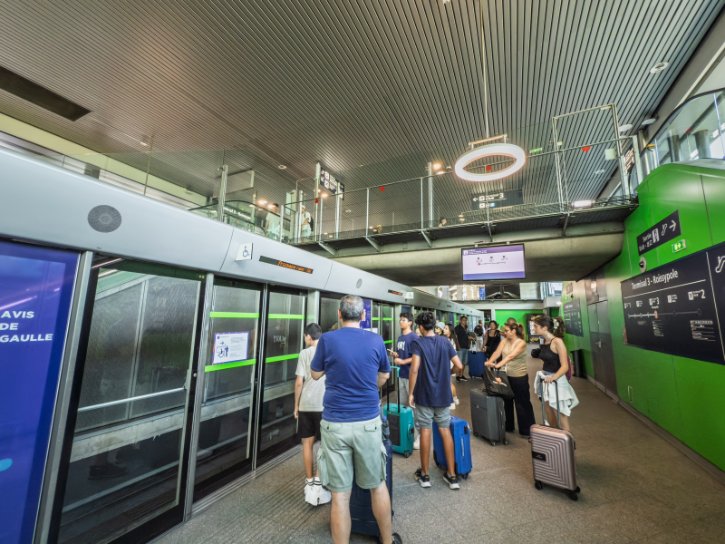
A connection at a big French airport is rarely a simple walk from one gate to the next.
Paris-CDG is large and spread across several terminals, and what you face depends on where you come from, where you are going, and how your tickets are booked.
a. The Main Connection Types
- Schengen to Schengen. No passport control, and security re-screening is usually avoided if you stay in the secure domestic zone of Paris-CDG’s Terminal 2.
- Non-Schengen to Schengen. You enter Schengen in Paris, so you face passport control, EES checks, and security re-screening.
- Schengen to Non-Schengen. You clear exit passport control. Security re-screening varies and is often skipped within the Paris-CDG’s Terminal 2 airside corridor.
- Non-Schengen to Non-Schengen. You stay airside, with immigration bypassed and EES not triggered. Security re-screening is usually needed when you change terminal halls.
- Self-transfer on separate tickets. You must exit, clear entry passport control, collect your bags, and check in again, with security re-screening required.
Separate bookings get risky here, since checked luggage does not always transfer on its own.
b. Getting Around Paris-CDG
- The CDGVAL is a free, automated train linking Terminals 1, 2, and 3. It runs landside, so arriving from a non-Schengen country means clearing immigration to use it.
- Inside the secure zone, color-coded shuttle buses and the LISA shuttle in Terminal 2E connect halls and gates airside.
If your incoming flight is delayed and your transfer gets very tight, Air France and Groupe ADP offer the Short Connection Pass, a digital priority pass sent to your phone that opens priority lanes.
c. One Heads-Up on Terminal Names
From 16 March 2027, Groupe ADP will renumber all Paris-CDG terminals from Terminal 1 to Terminal 7, and some 2026 bookings may already show the new names, with 2E becoming Terminal 5, 2F becoming 6, and 2G becoming 7.
d. Your Quick Layover Checklist
Before you travel, confirm:
- Arrival and departure terminals
- Whether both flights are on one ticket or separate ones
- Whether your bags are checked through
- Whether your next flight is Schengen or non-Schengen
- The minimum connection time and your onward boarding pass
- The entry rules for your final destination, and whether you need a transit visa
Allow extra time for terminal changes and tight layovers that involve a terminal switch or a change in Schengen status.
5. Know What to Declare at Customs After Baggage Claim
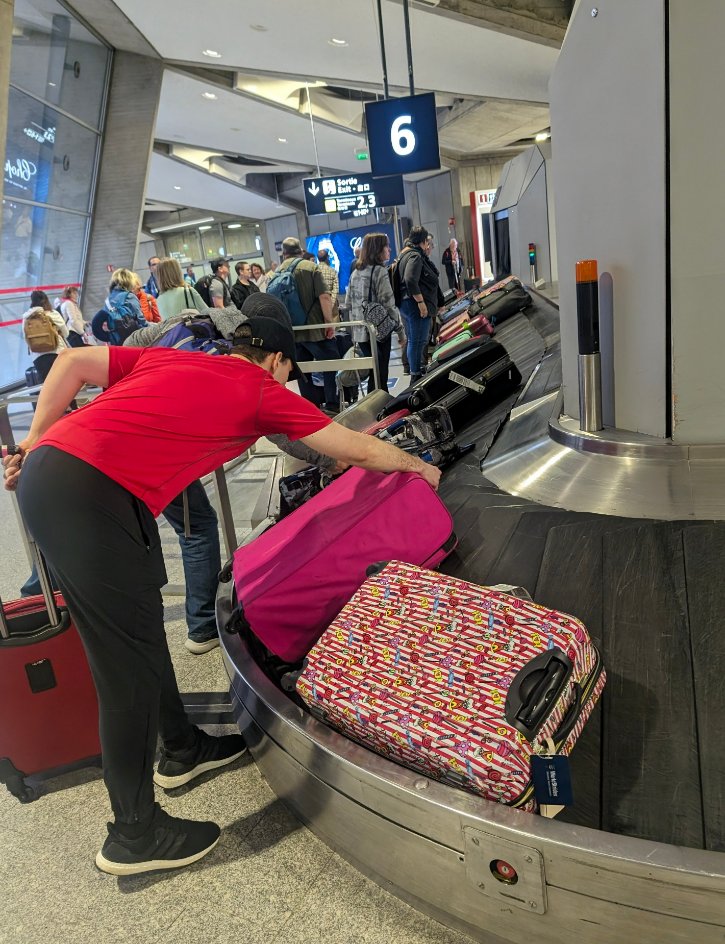
Customs comes after passport control and baggage claim.
French Customs uses a two-channel system: the green channel for nothing to declare, and the red channel for goods, cash, or restricted items.
Choosing green with items over the limits is a serious offense that can lead to confiscation, heavy tax, and fines.
a. Cash and Money
If you carry cash, checks, gold, or prepaid cards worth €10,000 or more combined, you must declare it, either online through the official DALIA portal up to 30 days before travel, or in the red channel on arrival.
b. Shopping and Personal Allowances
From outside the EU by air or sea, you can bring purchases tax-free up to €430 per adult, or €150 for travelers under 15. These allowances are per person and cannot be pooled.
c. Duty-Free Allowances (Non-EU Arrivals, Age 17+)
- Still wine: 4 litres
- Beer: 16 litres
- Spirits over 22% ABV: 1 litre, or intermediate drinks under 22% ABV: 2 litres
- Cigarettes: 200, or cigarillos: 100, or cigars: 50, or smoking tobacco: 250 grams
You cannot add the maximum of each together. A proportional mix is fine.
d. Banned and Restricted Items
- Meat and dairy from non-EU countries, including cheese, are strictly prohibited.
- Counterfeit goods carry zero tolerance, with confiscation and fines based on the genuine product’s value.
- Prescription medicine is allowed for personal use, up to a three-month supply or the length on your prescription.
- Controlled medicines, including ADHD stimulants like Adderall, Ritalin, and Concerta, need their original labeled bottles, a valid prescription, and a medical certificate.
e. Choosing Your Lane
Before you pick a lane, check the value of your goods, the cash you carry, your flight origin, your receipts, prescriptions, and any food or plant products. When in doubt, choose the red lane on purpose, and never carry items for someone else.
6. Validate Your Tax Refund Before Check-In or Before Leaving the EU
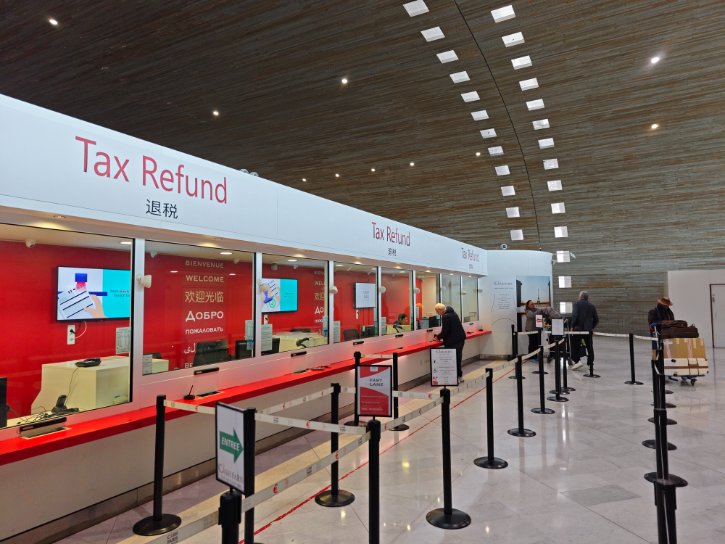
A VAT refund, known in France as détaxe, is not automatic. You must validate your forms correctly before you leave the EU, and timing matters if your goods are in checked luggage.
a. Who Qualifies and How Much
- You must be a non-EU resident aged 16 or older.
- The standard French VAT rate is 20%, but after fees you usually receive about 10% to 12%.
- You need to spend more than €100.01 including VAT in a single store on the same day.
Apps like ZappTax or Wevat can combine smaller receipts to reach the threshold.
b. The PABLO Validation Steps
At French airports including CDG and Orly, you validate at PABLO kiosks, the blue touchscreen machines in the departure halls, before check-in and security.
- Step 1. Find a PABLO kiosk before check-in and security.
- Step 2. Have your tax-free form with barcode, passport, and boarding pass
- Step 3. Scan the barcode. A green screen means approved and the refund begins. A red screen means you take your documents and goods to the staffed customs desk.
c. The Rules That Protect Your Refund
- Validate before you check your bags. Customs can inspect your goods. If they are already on the belt, validation is denied and the refund is forfeited.
- Validate at your final EU exit point. If you fly from CDG but connect through Frankfurt before leaving Europe, you scan in Frankfurt, unless bags are checked straight through to a non-EU destination. Leaving by Eurostar to London, the kiosks are inside Gare du Nord.
- Mind the three-month deadline. Goods must leave the EU before the end of the third month after the month of purchase.
d. If Something Goes Wrong
If the kiosk shows a red screen or fails, go to the staffed customs desk near the terminals.
If no officer is present, you have a six-month window after departure to get a certified stamp from the French embassy or consulate at home.
Once validated, you can collect a cash refund at airport booths or wait for a card or bank refund.
e. A Simple Refund Checklist
Have ready your passport or proof of non-EU residence, your tax-free forms with the barcode, the goods themselves unused, and your boarding pass.
Validate before checking your bags, pack the goods near the top, and arrive earlier if you have large purchases or many forms.
7. Prepare for Departure Security: Liquids, Batteries, Cabin Bags, and Boarding Checks
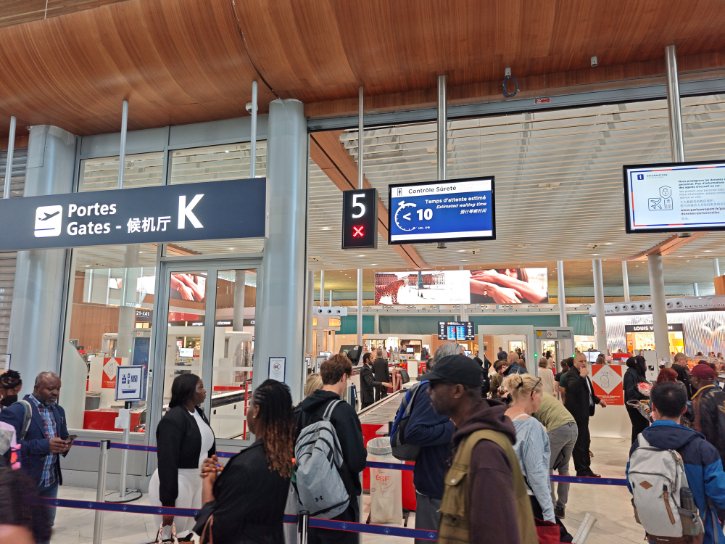
Even after check-in, small packing mistakes can slow you down. French airports apply the standard rules strictly, so pack smart.
a. The Liquids Rule Still Applies
Despite talk of new scanners handling larger volumes, CDG and Orly have not rolled these out across all lanes, so the traditional 100ml rule remains.
- All liquids, gels, aerosols, pastes, and creams must be in containers of 100ml or less, including perfumes, toothpaste, and sunscreen.
- They must fit in one transparent, resealable bag of up to 1 litre.
- Only one bag per passenger, and anything over 100ml is confiscated and destroyed.
b. Power Banks and Lithium Batteries
- All spare lithium batteries and power banks must go in your cabin baggage and are not allowed in checked luggage.
- You can carry up to two power banks, each 100 Wh or less (about 27,000 mAh).
- Banks of 101 to 160 Wh need airline approval, and anything over 160 Wh is banned.
- The watt-hour rating must be printed and readable, or security may take the device.
Under IATA rules effective January 2026, charging power banks from in-seat ports is banned onboard. Over twenty carriers, including the Lufthansa Group, also ban using or charging them in flight, requiring them off and under your seat.
c. Electronics and Duty-Free Liquids
- Laptops and tablets usually need to be removed for separate screening. In checked luggage, they must be completely powered off.
- Duty-free liquids bought after security are allowed in the cabin even over 100ml, but the shop must seal them in a secure tamper-evident bag (STEB) with the receipt visible.
On a connection with another security check, do not open the sealed bag too early. Opening it cancels the exemption, and the liquids can be confiscated.
At the gate, staff make a final check of your passport, boarding pass, and any visa or travel authorization, so keep these easy to reach.
A rule accepted at your first airport can be checked again during a Paris connection, so pack liquids the night before and keep your documents handy.
A Few Final Reminders Before You Fly
- Arrive early. Aim for at least three hours before an international departure, and four hours during busy periods or EES backlogs.
- Verify your layover if you connect from a non-Schengen flight, validate tax refunds before checking bags, and audit your Schengen days with a safety margin.
Prepare these before you reach the airport, and your trip through Paris will feel a lot smoother.