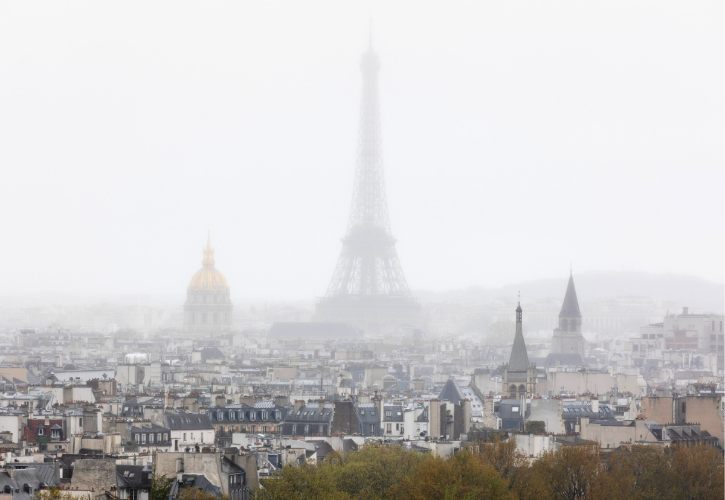
Paris is never just one city. Visit in the right month and you get gentle weather, quiet museum halls, easy café tables, and prices that leave room for an extra pastry.
Visit in the wrong one and you may face heatwaves, shuttered shops, gray skies, or queues that swallow your afternoon.
The month you choose shapes everything. So, let’s break it down honestly, month by month, so you can pick the trade-offs that actually fit your trip. 😊
1. Understanding Paris’s Four Seasons at a Glance
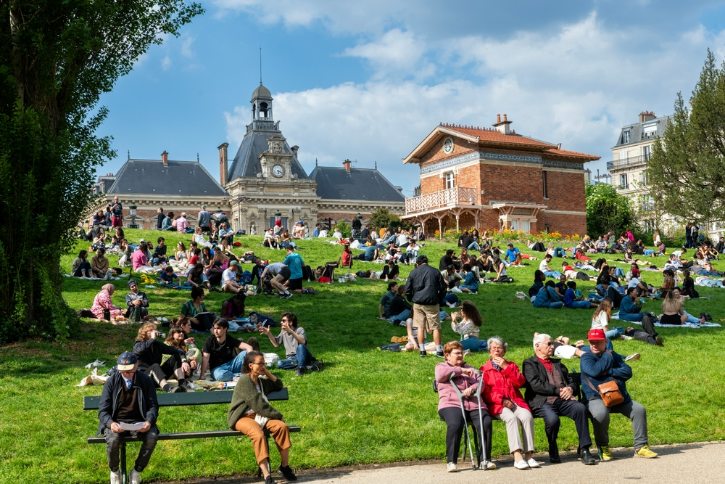
Paris has a mild oceanic climate with four clear seasons, but the weather is famously unpredictable. Light rain can show up in any month, so a small umbrella is always worth packing.
Here’s how each season feels:
- Spring (March to May): Blossoms and a softer mood, but plenty of rain and chilly spells.
- Summer (June to August): Warm to hot, with long days, big crowds, and real heat at times.
- Autumn (September to October): Golden leaves, a calmer pace, and the cultural scene back in full swing.
- Winter (November to February): Cold and gray with short days, but festive moments and the lowest prices of the year.
The travel calendar splits into three parts:
- Peak season: June through August, plus a business spike in late September. Highest prices, biggest crowds, lowest availability.
- Shoulder season: April to early May, and late September through October. A better balance of weather, crowds, and price.
- Off-season: November, and January through early March. The quietest streets and best deals, but the grayest weather.
The key point: no month is truly “wrong” for Paris. Each just comes with its own mix of weather, price, crowds, closures, and events, and your job is to match those trade-offs to what you care about most.
2. Spring (March–May): Beautiful, but Be Prepared
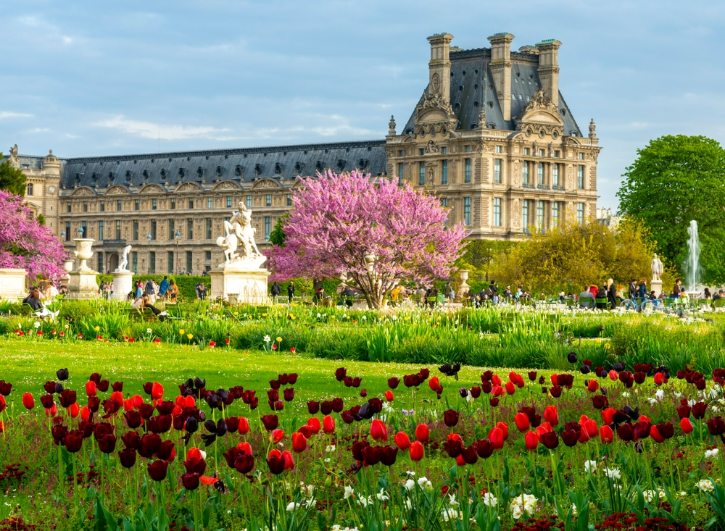
Spring is lovely, but not the flawless postcard some imagine. You get early blossoms and a gentler city, along with rain, shifting temperatures, and growing crowds.
a. March
March bridges out of winter, with highs around 12.8°C (55°F), lows near 5.6°C (42°F), and about 12 hours of daylight by mid-month.
It is still off-season or low-shoulder season, which means fewer tourists, lower prices (occupancy around 71% to 79%), and wide flight availability.
The catch is the weather. March is damp and changeable, with rain on about 9 or 10 days, which can cut short long walks and leave terraces relying on heaters.
Late in the month, the historic Foire du Trône funfair opens at the Bois de Vincennes, drawing family crowds to the eastern edge of the city.
March suits you if you are budget-conscious, museum-focused, flexible with plans, and fine with moody weather.
b. April
April is the spring sweet spot. Highs warm to about 16.6°C (62°F), lows sit near 7.9°C (46°F), daylight grows to nearly 14 hours, and cherry blossoms fill the parks. Pack layers and a light jacket, since short showers are still common.
Crowds start to climb, with occupancy around 78% to 83%. Lines get longer but stay far more manageable than summer. Two dates to watch:
- The Paris Marathon in mid-April brings 50,000 runners, higher hotel rates, and road closures downtown.
- Zone C spring school holidays (mid-April to early May) add domestic families at theme parks and family sights.
April suits you if you are a first-time visitor, a couple after an easy trip, a café lover, or anyone wanting spring charm with fewer crowds than summer.
c. May
May brings some of the best spring weather: highs near 20.2°C (68°F), lows around 11.1°C (52°F), and 15 hours of daylight, perfect for gardens and evening strolls.
But honestly, May is one of the wettest months of the year, so expect sudden, heavy afternoon downpours.
Crowds rise, and the city starts to feel like early summer, with occupancy around 83%.
May also has a cluster of public holidays, including Labor Day (May 1), Victory Day (May 8), Ascension, and Whit Monday.
On these dates, offices, banks, and many independent shops and bakeries close, transit schedules change, and monument crowds spike.
Events bring both upsides and crowds:
- The European Night of Museums offers free evening entry, which is wonderful but creates huge lines.
- The Saint-Germain-des-Prés Jazz Festival adds energy, and Roland Garros begins in late May, raising luxury hotel prices in western Paris.
May suits you if you value long days, gardens, and terrace culture more than low crowds or low prices.
3. Summer (June–August): Peak Everything
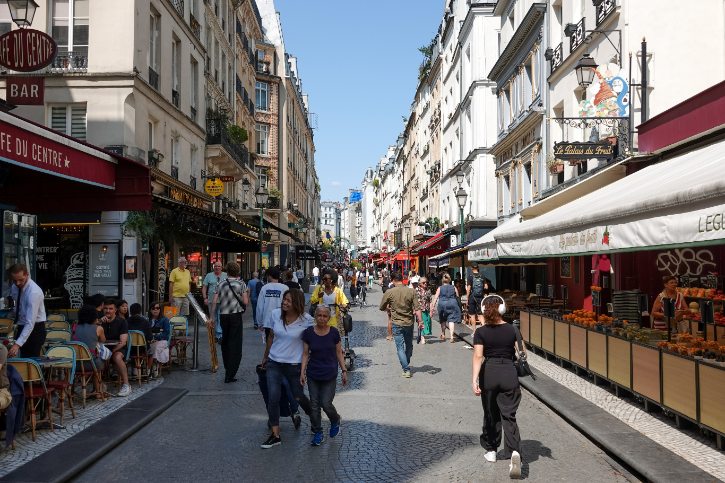
Summer is Paris at full volume: long days, big events, and warm evenings, set against heat, heavy crowds, and the year’s steepest prices.
a. June
June opens the high season with warm, comfortable weather. Highs average 23.4°C (74°F), lows about 14.2°C (58°F), and you get the year’s longest days, up to 16 hours.
But demand peaks too. Occupancy runs from 79% to 91%, June sits near the top of the price curve, and walk-up lines at the Eiffel Tower often hit two or three hours.
June is packed with events: Nuit Blanche (the contemporary art night, now held in early June), the Fête de la Musique on June 21 with free live music, and Men’s Spring/Summer Fashion Week in late June, which lifts boutique hotel rates.
June suits you if you love festivals and long days and care more about warm evenings than saving money.
b. July
July turns up the heat. Highs average 25.7°C (78°F), but Paris increasingly sees heatwaves above 32°C (90°F), sometimes near 40°C (104°F), which makes busy walking days, crowded metros, and sleep uncomfortable.
A key thing to check before booking: many older buildings and mid-range hotels lack real air conditioning, and a non-AC room during a heatwave can wear you down.
The big day is Bastille Day on July 14: a military parade on the Champs-Élysées, fireworks at the Trocadéro, free Louvre admission, plus heavy crowds, large security zones, and altered transport. To cool off, Paris Plages turns the riverbanks into a free summer resort, with deck chairs, water misters, and riverside activities.
The bottom line: July pairs very high crowds and prices with long, lively days. It is exciting for some and exhausting for others.
July suits you if you thrive in a high-energy atmosphere, want Bastille Day, and will confirm your room has working air conditioning.
c. August
August is its own kind of Paris. The weather stays warm and sunny, with highs around 25.6°C (78°F) and a real chance of heatwaves. The defining feature is the August vacation tradition, when many locals leave the city. As a result:
- Many small shops, family bakeries, cheese shops, and neighborhood restaurants close for weeks, especially in residential areas like the 11th and 20th arrondissements.
- Major museums, monuments, department stores, and tourist restaurants stay fully open.
With business travel paused, occupancy dips to around 71% to 76%, which brings slightly lighter queues and marginally better deals than June or July. Still, this is not a quiet tourist month.
August suits you if you are focused on major sights and landmarks and don’t mind a quieter, less local neighborhood feel.
4. Autumn (September–October): The Sweet Spot
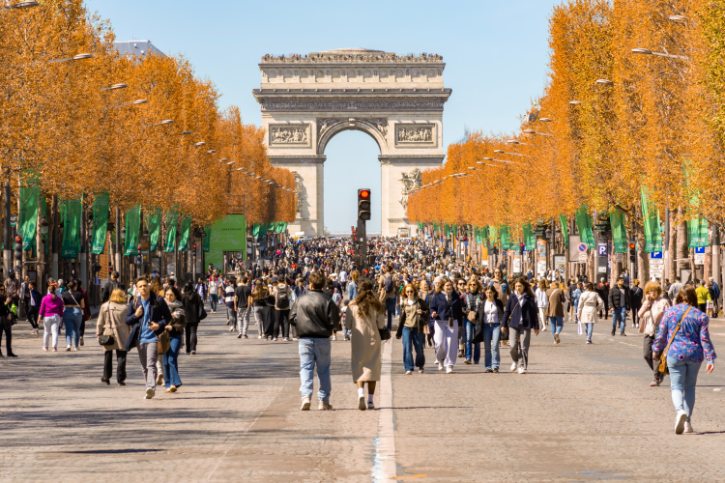
Autumn is one of the strongest times to visit Paris: comfortable weather, less rain, and a city back to life. September and October feel quite different, though.
a. September
September brings la rentrée, when locals return, schools and offices restart, and the cultural calendar reopens. The weather is very pleasant, with highs near 21.5°C (71°F), lows around 13°C (55°F), and the lowest seasonal rainfall, for crisp, clear walking days.
Here’s the budget trap: even as family crowds thin, occupancy surges to 83% to 88%, driven by trade shows and the prestigious Paris Fashion Week (Women’s Spring/Summer, September 28 to October 6, 2026), when central rates can double. A highlight is European Heritage Days in mid-September, with rare free entry into restricted state buildings, including the Élysée Palace.
September suits you if you want great weather and a fully active city, and can accept the higher prices.
b. October
October is widely seen as one of the best months of the year. Highs sit around 16.5°C (62°F), lows near 9.9°C (50°F), and the great gardens like the Luxembourg and the Tuileries turn gold and amber.
A light coat is enough for comfortable walking, and although rain ticks up slightly, conditions stay pleasant.
On price, October usually beats September. Once the Fashion Week crowds leave in early October, rates drop and steady out into strong mid-range value.
Culture keeps flowing too, including the Fête des Vendanges de Montmartre, the early-October grape harvest festival with food stalls, parades, and tastings.
October suits you if you love walking, photography, or a couples’ trip, and want the best balance of weather, price, and crowds.
5. Late Autumn (November): Underrated Quiet Season
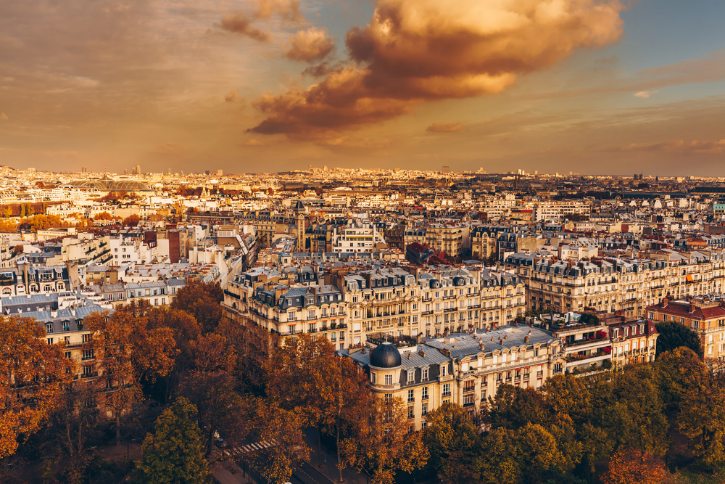
November rarely makes a dream list, and the weather is why. But for the right traveler, it is one of the most rewarding and affordable months.
The climate, honestly, is cool, damp, and gray, with highs around 11.1°C (52°F), lows near 6.2°C (43°F), shrinking daylight, and steady drizzle. With a good coat and flexible plans, it is very manageable.
The payoff is a dramatic drop in tourists: calm museums, easy bistro bookings, and walk-up lines that nearly vanish.
It is also one of the cheapest months, with flights at annual lows and hotels up to 40% below summer peaks.
And by late November, the festive season begins, as Boulevard Haussmann and the Champs-Élysées switch on their lights and early Christmas markets open, all without the December crush.
November suits you if you are a budget traveler, a museum lover, a solo or repeat visitor, and okay with moody weather.
6. Winter (December–February): Festive Highs and Bleak Lows
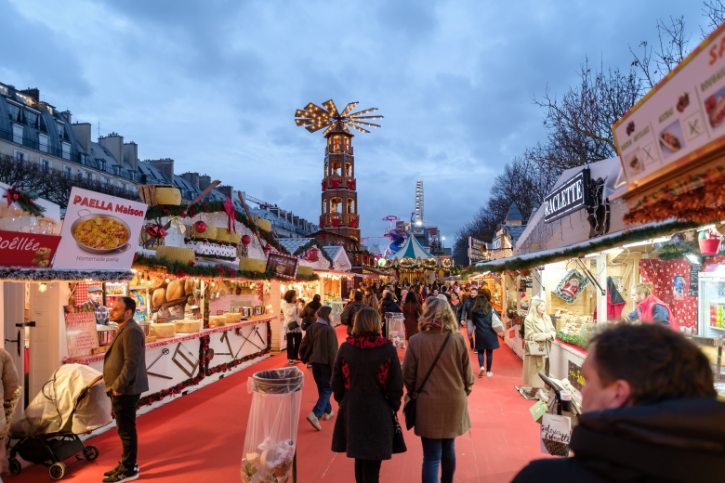
Winter has two faces. December is festive, decorative, and busier, while January and February turn quiet, cold, and often much cheaper.
a. December
December is cold and very cloudy, with highs around 8°C (46°F), lows about 3.8°C (39°F), and overcast skies roughly 73% of the time. Short days and frequent rain mean planning around indoor breaks and early sunsets.
Still, the charm is real. Christmas markets open at the Tuileries, Saint-Germain-des-Prés, and the Hôtel de Ville, and grand department stores reveal giant trees and animated windows.
Early-December weekdays can be quiet and affordable, but costs and crowds spike sharply around Christmas and New Year.
One heads-up: December is a peak risk window for transport strikes, which can cut train frequencies or close lines. Lower your risk with flexible bookings, official updates, and a backup plan for day trips.
December suits you if you want festive lights and markets and can accept higher prices, cold, and possible disruption.
b. January
January is the coldest month, with highs around 7.6°C (46°F), lows near 3.2°C (38°F), short days, and common frost.
The upside is price: once holiday crowds leave after January 7, it becomes the cheapest time of year, with hotels up to 50% below summer and very affordable flights.
The big draw is Les Soldes, the state-regulated winter sales that start in early-to-mid January and run several weeks, with discounts of 30% to 70%.
One thing to plan around: Men’s Autumn/Winter Fashion Week and Haute Couture Week, both in late January, briefly raise boutique hotel prices in Le Marais and the Golden Triangle.
January suits you if you are a budget traveler, a sale shopper, a museum-first visitor, or fine with cold, gray days.
c. February
February stays cold, close to January, with highs near 8.8°C (48°F), lows around 3.3°C (38°F), and it is the windiest month. Low-season pricing largely continues, so stays stay affordable.
The main exception is the winter school holidays: the local Zone C break, which usually falls in late February and early March, brings more domestic families to central museums and Disneyland Paris.
Culturally, there’s plenty on: Chinese New Year parades in the 13th arrondissement, Carnival season, and Valentine’s Day (February 14), which gives a brief, local boost to romantic bookings. Paris has the reputation, but it’s still worth checking demand and prices around that date.
February suits you if you are a couple after a quieter trip, a budget traveler, or a culture-focused visitor.
7. Special Situations: When “Best” Depends on You
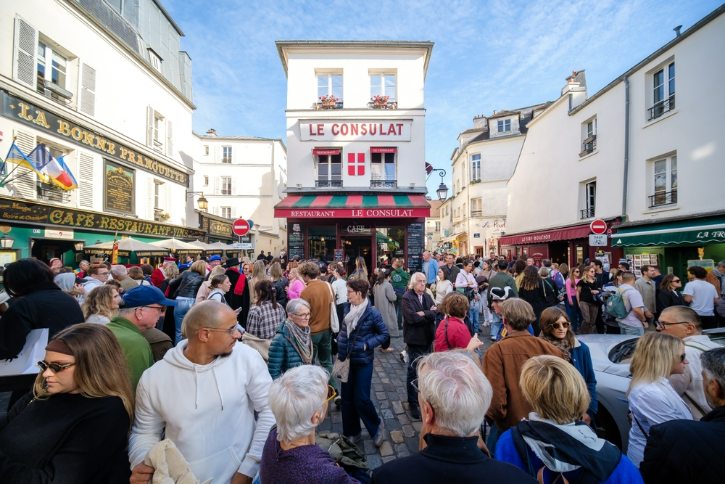
There is no single best month for everyone. Here’s a quick decision helper.
a. If you hate crowds
- October: Comfortable weather and lovely light, after the Fashion Week rush fades.
- April: Shoulder-season calm with longer days, before the summer crush.
- Late October to early November: A quiet, atmospheric lull.
b. If budget is king
- January: The cheapest month, with rooms up to 50% below summer and the sales on.
- November: Flights at annual lows and hotels up to 40% below summer.
- February: Low-season pricing continues.
c. If weather matters most
- September: Crisp, clear days with the lowest rain of the warm season.
- June: The longest daylight hours and warm evenings.
- May: Fresh blooms and long days, if you accept some showers.
d. If you love events and festivals
- June: The Fête de la Musique and a packed cultural calendar.
- September: Paris Fashion Week and Heritage Days.
e. If you’re traveling with kids
- Late April: Long daylight and manageable waits, without extreme heat.
- Early June: Warm, lively days that avoid the worst summer heatwaves.
The takeaway: pick your month around your top priority, whether that’s crowds, money, weather, school schedules, or experiences, rather than chasing one “perfect” month for everybody.
8. Practical Tips That Apply to Any Month
A little planning makes Paris far smoother, no matter when you go.
a. Pre-Book the Major Sights
Same-day tickets rarely work anymore, so reserve timed entry well ahead.
- Eiffel Tower: Often sells out 4 to 6 weeks ahead, and up to 8 weeks in summer.
- Louvre: Requires timed-entry reservations for everyone, even free-admission visitors, with peak summer slots filling 90 days out.
- Palace of Versailles: Also enforces timed slots. Miss your window and you may be turned away.
b. Check French School Holiday Dates
Staggered Zone A, B, and C breaks drive crowds at family sights and on regional trains.
- Cross-check your dates against the official Ministry of Education calendar.
- Pay closest attention to Zone C, which covers the Paris region.
- Watch the May public holidays too, since they bring widespread closures.
c. Watch for Transport Strikes
French transport is heavily unionized, with strikes most common in December.
- Workers must give 48 hours’ notice, and alerts usually appear by 5 p.m. the night before.
- Download Bonjour RATP for the metro and RER.
- Download SNCF Connect for national trains.
- Keep a flexible backup plan for any day trips.
d. Confirm Air Conditioning in Warm Months
AC is not standard in older Paris buildings.
- Between June and August, check that your room has real in-room air conditioning, not just a fan.
- A non-AC room can make sleeping very uncomfortable during a heatwave.
e. Beat the Heat for Free
Paris has over 1,200 free public drinking fountains run by Eau de Paris.
- The historic green Wallace fountains have offered safe water since 1872.
- Modern Mât Source fountains include cooling misters.
- A few even pour free chilled sparkling water, like the one in the Reuilly Garden.
- Carry a reusable bottle, and lean on shaded parks, covered passages, and air-conditioned museums.
f. Mind the Fashion Weeks
Paris Fashion Week runs four times a year, in January, March, June, and late September or early October.
- During the big Women’s Ready-to-Wear editions in early March and late September, boutique hotel prices in Le Marais, Saint-Germain, and the Golden Triangle can double.
- If you’re not attending, avoid those weeks to save money.
- If the shows are why you’re coming, target them on purpose.